


New technology could cut steel production costs 20%, Hertha CEO says
Hertha Metals has developed a new technology that it says can replace traditional coal-based steelmaking. To that end, the sustainable steel startup is preparing to break ground on a new plantagainst a backdrop of rising support for domestic steelmaking capacity.
Hertha was founded in 2022 by CEO Laureen Meroueh, who invented the company’s technology, which enables single-step steel and high-purity iron production. The process, yet to be commercially proven at scale, uses any grade of domestic iron ore to produce steel that’s more than 20% cheaper with 50% fewer emissions than traditional steelmaking methods,according to the company.
Hertha will break ground on a 10,000 metric ton/year plant in July, located next to its operating Texas pilot plant. It will be operational by the end of next year, Meroueh said.
Meroueh spoke to Platts, part of S&P Global Energy, on March 26 at the CERAWeek by S&P Global energy conference in Houston. The following is an edited transcript of the conversation.
Platts: Can you describe this new technology and how it works?
Laureen Meroueh: Our technology is within one furnace, which is continuously charged and semi-continuously tapped. You’re charging iron ore and what comes out is a refined liquid iron or steel.
We realized that at scale, you need really efficient heating and melting. Electric arc furnaces already exist at scale. We use them every single day to recycle our scrap steel. They’re very efficient in heat transfer, and so we have no issue with heating in the steel industry. What we have a challenge with is being able to process any grade of iron ore in any form.
Today, to make steel, you first have to sinter or pelletize the iron ore and it has to be of a certain grade, which results in a large reservoir of iron ore in our grounds that is unusable.
We need to be able to leverage abundant resources that the world has, and therefore, we looked at how do we make a system work with any form in any grade. That’s how we realized doing everything in the molten phase is the most efficient.
How do you compete economically with this technology?
We can produce steel that’s more than 20% cheaper than the incumbent process. That is not true for other leading innovations. We are one of a handful of startups working on this problem and it is a very important problem to solve — reintroducing competitiveness and the sustainability in primary steelmaking.
Hertha’s whole game is we want to have a negative green premium, because we are in a commodity industry, and the only way you’re going to really take market share in steel production is through price. That’s the only way the billions in capital investment already in the ground are going to eventually switch over to this cleaner technology.
How do you see tariffs impacting the steel market and the work you’re doing?
Steel is more than just a commodity. Steel is a matter of national security. The production of steel is a signal of economic strength. There’s far more to it than just, “We’ll import the cheapest steel available.” We have to be able to make steel domestically and so these tariffs are a protectionist measure to allow the industry to continue to thrive domestically.
You have countries that are selling steel at a loss. China, for the last two years, has been selling up and down at negative margins. How can any steel mill compete with steel that’s being sold at a loss? I can do as much as I want to lower the cost of production, but if you’re going to just keep lowering it and sell it at a loss, there’s nothing you can do.
Tariffs, to a degree, are necessary until countries stop overbuilding and then selling at less than the cost of production.
What kind of policy action could help support these innovative steelmaking efforts?
It is funding. Whether that’s funding through the form of loans, credit or debt financing, non-dilutive funding, or very large funding deals in exchange for equity.
There needs to be support for the innovators trying to make steel production more competitive due to the capital intensity. This is not a venture capital-style business. Who else will step up to ensure that the country you operate in is more competitive? It needs to be administrative support.
How do you see the steel market evolving in the next five to ten years?
Definitely increased domestic production. No doubt that we’re going to do whatever we can to increase domestic production. We already see announcements for new builds of iron-making facilities and restarting blast furnaces that were previously idled. Without a doubt, domestic production is going to increase.
On the innovation side, I’m not positive where it will go because we have some unfortunate examples out there for steel innovation. There have been a lot ofburns due to technologies not scaling — going 10 times over the budget when they get to scale. That’s why I’m really uneasy about the outlook of more innovation coming online until we have a success.
We’re working so hard to be that success story as soon as possible, to encourage investors that this can happen, and there are innovations in steel that can get to scale and be more cost-competitive. That’s what we’ll do.
Author: Rachel Looker


EU initiates GOES, transformer steel safeguarding investigation
The European Commission has initiated a safeguard investigation concerning imports of grain-oriented electrical steel (GOES), as well as transformer laminations and cores.
These products were not covered under the existing EU steel safeguard measures. Their inclusion in a new investigation marks a notable development in the evolution of EU trade defence policy.
Grain-oriented electrical steel is a critical input for the manufacturing of transformers and plays a key role in supporting Europe’s electrification and energy transition objectives. The investigation will assess whether increased imports are causing or threatening serious injury to EU producers.
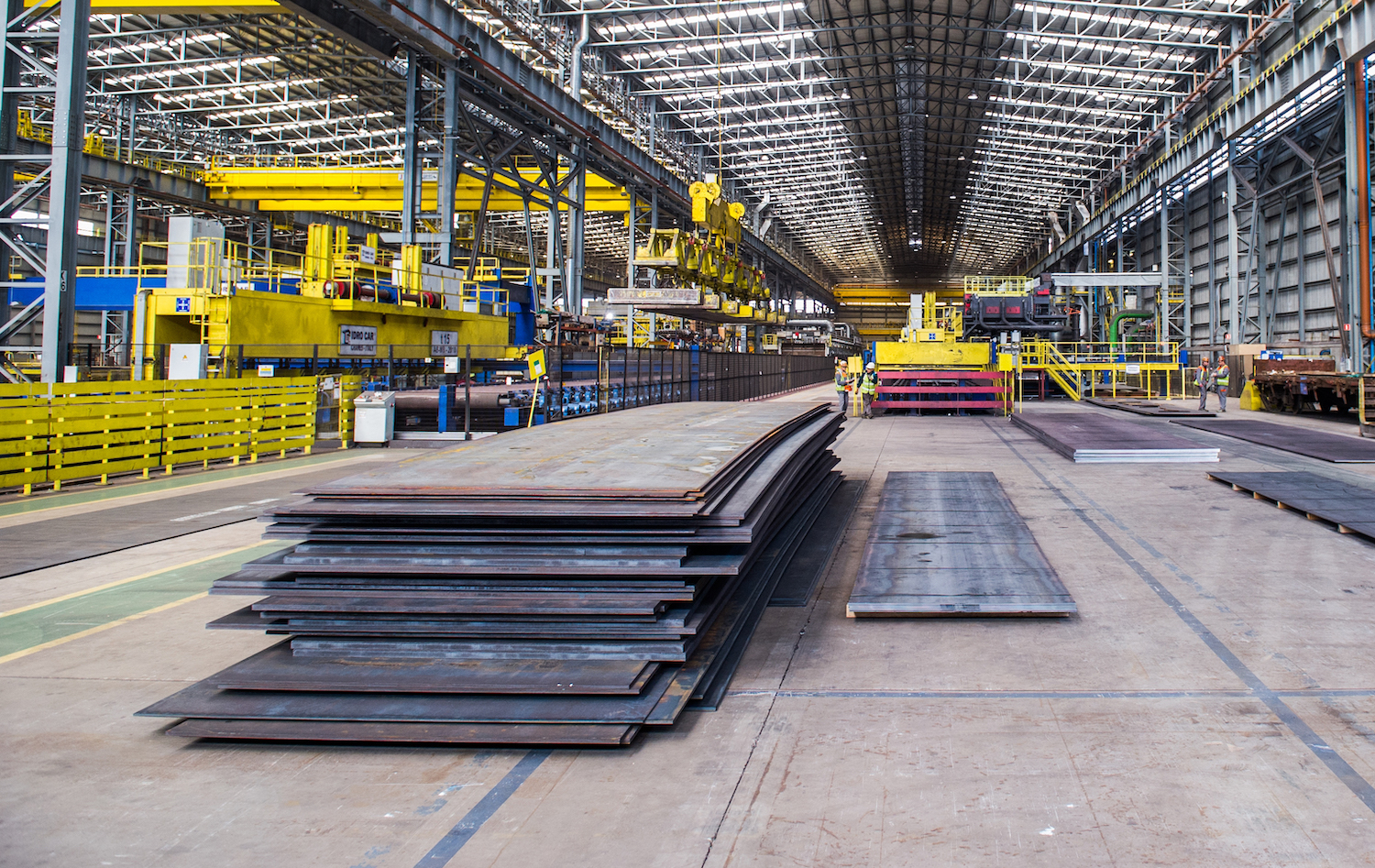
European steel plate prices stable as cost pressures persist
This followed earlier increases driven by rising production costs for re-rollers.
Southern Europe
A producer reported local sales of plate in Italy at €760-770 ($875-886) per tonne ex-works, while most offers in the market were heard at €800 per tonne ex-works. These levels were broadly unchanged from offers of €750-800 per tonne ex-works reported a week earlier.
One trader reported lower prices of €720-750 per tonne ex-works on Monday. But according to the latest market trends, rising production costs for re-rollers, including higher natural gas costs and slab feedstock prices, have pushed workable plate prices up to around €750-760 per tonne across much of Europe.
Fastmarkets’ weekly price assessment for steel slab, import, cif Italy, was $550-580 per tonne on Thursday, widening upward by $20 per tonne from $550-560 per tonne a week earlier.
On March 19, Fastmarkets heard that some re-rollers could face production stoppages. When asked about this, a producer said that, in a worst-case scenario, some extended stoppages could occur in July-August, although this was not certain.
During the second quarter of 2026, mills will continue to use slab purchased at relatively low prices, the producer said, and the recent jump in slab prices was expected to be felt in the third quarter of the year. Supply shortages could also become an issue, particularly if the conflict involving Iran persists, the source said, because the country was a major exporter of slab to the Middle East, South Asia and Southeast Asia.
In addition, the upcoming reduction in EU import quotas for steel products could affect trade flows [LINK], market sources said, potentially lowering the volume of finished flat steel products imports from July onward.
But a second trader said that as long as energy remains available, production will continue, noting that most mills purchase energy through a mix of yearly, quarterly and floating contracts, which reduces the risk of production disruptions.
Fastmarkets’ weekly price assessment for steel domestic plate, 8-40mm, exw Southern Europe, was €750-770 per tonne on Thursday, unchanged week-on-week.
No new prices were heard for plate imports in Southern Europe during the week while market activity remained muted.
Japan was offering S235-grade material at €680 per tonne CFR to both Northern and Southern Europe on March 19, but no recent trading has been reported.
Fastmarkets’ weekly price assessment for steel plate (8-40mm), import, cfr main port Southern Europe, was €650-664 per tonne on Thursday, unchanged week on week.
Northern Europe
Prices for domestic plate in Northern Europe also remained stable during the week. The first trader reported an offer at €720-750 per tonne ex-works, adding that workable prices could vary by €15-20 per tonne. No significant new deals were heard.
Offers were reported at €800-830 per tonne ex-works on March 19, when a deal was also heard at €750-770 per tonne ex-works in Germany. Market sources said at the time that re-rollers in the country reacted to the rising production costs by raising their prices for plate.
Fastmarkets’ weekly price assessment for steel domestic plate, 8-40mm, exw Northern Europe, was €750-770 per tonne on Thursday, unchanged week-on-week.
The plate imports market in Northern Europe also remained quiet during the week. Import options were limited and costly on March 19, when Indian mills offered plate at €637-645 per tonne CFR Antwerp for June shipment.
Fastmarkets’ weekly price assessment for steel plate (8-40mm), import, cfr main port Northern Europe, was €637-650 per tonne on Thursday, unchanged week on week.


European green steel demand stalls as buyers resist premiums, spot activity dries up
Buyers across Europe have remained reluctant to pay significant premiums for low-carbon steel, pointing to weak market conditions and continuing structural challenges facing the region’s steel industry.
Under Fastmarkets’ definition, European green flat steel is steel made with combined Scope 1, 2 and 3 emissions of no more than 0.8 tonnes of CO2 equivalent per tonne of steel produced.
Scope 1 covers direct emissions from production, while 2 and 3 refer to indirect emissions linked to energy use and the wider value chain.
Market participants said premiums quoted by European mills capable of meeting that emissions threshold were generally in the range of €200-300 ($231-346) per tonne, broadly unchanged from recent months.
Discounts were possible for larger volumes, seller sources said, but no transactions were concluded in the assessment week.
According to seller sources, buyer interest exists at an initial stage, but resistance increases sharply once discussions turn to price, particularly when premiums move into the triple-digit range.
On the demand side, buyers continued to indicate lower workable levels, most commonly around €100-150 per tonne in the week to Thursday. Some market participants said spot business could be done at even less than €100 per tonne, with one source estimating the premium at €0 per tonne, arguing that premiums were more likely to be achieved through longer-term offtake deals rather than in the spot market.
Sell-side estimates for realistic premiums on green flat steel were reported at €150-170 per tonne.
Against that backdrop, Fastmarkets’ weekly assessment for the green steel domestic, flat-rolled, differential to HRC index, exw Northern Europe was €100-170 per tonne on March 26, narrowing from €100-180 per tonne in the previous week.
In contrast, sentiment in the long steel segment was described as even weaker, with market sources reporting almost no appetite for paying extra for greener products.
One supplier said customers were unwilling to pay any premium at all for green long steel, noting that the company’s conventional long products were already widely viewed as low emission because they are made via electric-arc furnace routes supported by relatively clean power mixes in the countries where production assets are based.
Fastmarkets’ methodology defines European green long steel as steel produced with Scope 1, 2 or 3 emissions at a maximum of 0.5 tCO2e per tonne of steel.
The aftermath of the US-Iran conflict was said to be another factor contributing to a stronger decline in demand for green long steel. The rise in oil and gas prices resulted in higher transportation costs as well as higher production costs inside Europe, which is expected to strengthen inflation. The financial sector was also affected, with banks increasing interest rates.
The combination of inflation and higher interest rates will result in higher construction costs, which may lead to a slowdown in construction activity and thus affect demand for regular steel.
“In such conditions people will be trying to cut costs as much as possible so ecology will not be the priority,” one trader said.
A second mill source, however, said he believes the conflict in the Middle East should have only a temporary effect on demand for green steel and that demand should return to previous levels in the near term.
Fastmarkets’ weekly green steel, differential to steel reinforcing bar (rebar) domestic, delivered Northern Europe was €0-50 per tonne on Wednesday March 25, stable week on week.
Offers varied within the wide range of €30-50 per tonne, while estimates of workable prices varied within the wide range of €0-50 per tonne.
The trader source noted that demand for green long steel is coming mainly from specific projects in Nordic countries and the size of the premium is negotiated individually.

OECD: Global steel capacity reaches record high
Steel excess capacity increased to 640 million metric tonnes in 2025, exceeding total Organization for Economic Cooperation and Development steel production by more than 200 million mt, and is projected to continue rising through 2028, the OECD’s Steel Committee said March 24.
According to the organization, global steelmaking capacity has increased for four consecutive years, reaching a new high of 2.45 billion mt in 2025, with the OECD area contracting while non-OECD economies recorded growth during this period.
India and Southeast Asia have been significant drivers of the Asian capacity expansion, supported by relatively strong demand growth and, in the case of Southeast Asia, inward foreign direct investment.
China’s share of global excess capacity rose during 2025, surpassing 50% in the latter part of the year, resulting in higher exports to international markets, the OECD said. China’s annual exports have nearly doubled over the last three years, with its 131 million mt export volume last year surpassing the combined exports from the rest of Asia for the first time in recent history.
“This excess capacity is putting enormous pressure on international markets by displacing production in the committee’s member countries, driving prices and industry profitability down,” Sheryl Groeneweg, chair of the OECD Steel Committee, said in a statement.
Circumvention concerns
Steel Committee members reviewed their trade policy actions, noting that exporters continue to develop new and increasingly sophisticated methods of evading steel tariffs, highlighting the need to strengthen trade enforcement.
In 2025, a total of 75 antidumping and countervailing duty investigations were initiated, and the stock of steel AD/CVD measures rose. Despite these efforts to safeguard steel industries, the effectiveness of OECD members’ trade actions is being hampered.
Based on a new dataset covering over 260 product-level and country-level cases, new work discussed by the committee reveals significant transhipment activity between China and some Southeast Asian countries of steel subject to trade measures taken by OECD countries.
The latest data show that, in 2024, the median Chinese firm received 15 times more subsidies relative to its asset size than the median firm elsewhere, up from 10 times more in previous years, the OECD said. Moreover, China’s steel subsidy rate has nearly doubled since 2019, a trend that will sustain excess capacity in the years ahead absent fundamental structural reforms, the OECD said.
Platts, part of S&P Global Energy, assessed SS400 HRC of 3 mm thickness at $477/mt FOB China on March 24, unchanged day over day. The same grade was assessed at $520/mt CFR Southeast Asia, unchanged over the same period.
Author: Annalisa Villa

Romanian longs spot prices increase amid rising costs, firm import offers, low stocks
Romania’s long steel market has moved upward this week, with prices increasing mainly on the traders’ side, while the sole domestic producer has kept its price levels stable.
However, expectations for a potential price increase from the producer and ongoing rumors of higher targeted levels have continued to support overall market sentiment. Rising production costs, particularly higher energy prices, along with the continued upward trend in EU prices and firmer import offers, have further reinforced the upward direction. Despite ongoing liquidity constraints and cautious purchasing behavior, demand has remained acceptable, allowing traders to test higher levels. In the rebar segment, stock levels are still considered sufficient, which has somewhat limited the pace of increases compared to other long products, though some purchases from Italy and Bulgaria have also been heard during the week. However, in the wire rod segment, price rises have been more pronounced, mainly due to significantly lower stock availability, with sources noting that this tighter supply has even led to some purchases from Greece.
According to market reports over the past week, rebar sales from Italy and Bulgaria have been concluded at around €600/mt FCA and €630/mt CPT, respectively. Meanwhile, Bulgarian offers have moved upward following renewed interest, increasing to €630-640/mt CPT compared to the previous week. In the wire rod segment, some purchases have also been heard from Greece, at around €620/mt FCA. On the other hand, no purchases have been heard from non-EU suppliers. An Egyptian mill has significantly increased its offers amid rising freight costs, with April shipment rebar quoted at €555-560/mt CFR and wire rod at €565-570/mt CFR, compared to €530/mt CFR and €540/mt CFR previously. Turkish suppliers have also raised their rebar offers to €535-550/mt CFR, from €500-520/mt CFR earlier, based on an exchange rate of €1 = $1.15 and estimated freight costs of €25-30/mt, up from €15-20/mt in previous weeks.
In the local market, Romanian spot rebar prices are now reported at €600-615/mt ex-warehouse, compared to €590-600/mt ex-warehouse in the previous week. The domestic producer’s latest indications remain at €590-595/mt ex-works, while higher price ideas of €600-605/mt ex-works are still being tested in the market, though not confirmed by the time of publication. In the wire rod segment, offers have increased more sharply, to €620-630/mt ex-warehouse, rising significantly from €585-590/mt ex-warehouse in the previous week, mainly due to limited stock availability.


ArcelorMittal and Lio-Metal expand Magnelis partnership to replace conventional galvanized steel
ArcelorMittal has strengthened its partnership with Romanian metal products company Lio-Metal, as the latter moves to replace conventional galvanized steel with ArcelorMittal’s Magnelis® coated steel across its product portfolio.
The shift marks a strategic move toward more durable and sustainable steel solutions in construction and infrastructure applications.
Transition toward Magnelis-coated steel
Lio-Metal aims to phase out conventional galvanized steel in the coming years, adopting Magnelis® on a large scale. The company stated that the transition represents more than a simple material change, describing it as a “paradigm shift” in its production approach.
According to Lio-Metal, the new material will provide: double the durability, significantly lower maintenance costs, and longer service life for end-use applications.
ArcelorMittal highlighted that Magnelis® is a zinc-aluminum-magnesium coated steel offering enhanced corrosion protection compared to traditional galvanized products.
The company described the product range as a “game changer in metallic coatings”, citing its strong resistance in aggressive environments, and self-healing properties at cut edges. Field performance data indicate that certain Magnelis® grades can achieve a design life of 15 to more than 50 years, depending on application conditions. The adoption of Magnelis® is expected to enhance performance across these applications, particularly in environments exposed to corrosion.
Partnership supports decarbonization goals
Lio-Metal stated that its 2026 strategy focuses on improving efficiency, productivity and energy performance, contributing to broader decarbonization efforts. The collaboration with ArcelorMittal is seen as a key element in achieving these goals, combining product innovation with sustainable material solutions.

Thyssenkrupp Steel invests €2.4 million in iron ore of future
Germany-based steelmaker Thyssenkrupp Steel has announced an investment of €2.4 million to expand its laboratory infrastructure at its Duisburg-Schwelgern site, aiming to support the evaluation of iron ores for future low-carbon steel production.
The project forms part of Thyssenkrupp Steel’s ongoing efforts to transition toward low-emission steel production, with a focus on improving raw material quality control and process optimization.
The new facility is part of the company’s broader transition toward climate-neutral steelmaking, focusing on raw material testing for hydrogen-based direct reduction (DR) processes. The facility will assess key properties such as reduction behavior, resistance to breakdown, and the tendency to stick or agglomerate during processing.
Supporting hydrogen-based steelmaking
Thyssenkrupp Steel stated that the new laboratory will simulate realistic hydrogen-based operating conditions, allowing for more accurate evaluation of future feedstocks. Testing conditions will reflect increasing hydrogen content over time, aligning with the company’s planned transition toward hydrogen-based steel production.
Two test furnaces will also allow steam injection experiments, helping to better understand reduction rates and process performance.
The company highlighted that its future production route will combine direct reduction and electric smelting, enabling greater flexibility in raw material use. This approach will allow the use of both DR-grade pellets and conventional blast furnace pellets, increasing sourcing options while maintaining process efficiency.

EUROFER warns of growing steel glut, calls for urgent EU measures
The European Steel Association (EUROFER) has warned that the latest OECD data confirm a worsening global steel crisis, while urging the EU to swiftly adopt its new steel trade measure to protect the market.
According to the OECD, global steel excess capacity reached around 640 million mt in 2025 and is expected to continue increasing, highlighting growing pressure on global markets, as SteelOrbis previously reported. The OECD data show that total global steelmaking capacity has climbed to a record 2.4 billion mt, reflecting continued expansion despite weak demand conditions. Excess capacity remains significantly higher than output in OECD countries, exceeding their total steel production by more than 200 million mt.
“Existential threat” to European steel
EUROFER described the situation as critical for the European steel sector. Axel Eggert, director general of EUROFER, said, “The OECD findings are clear: global steel overcapacity is not only massive, it is growing. This is an existential threat to European steelmaking, investment and jobs.”
Against this backdrop, EUROFER stressed that the EU’s new steel trade measure currently under negotiation is urgently needed to prevent further market destabilization.
The proposed system would introduce a tariff-rate quota (TRQ) mechanism aimed at:
- controlling import volumes,
- limiting trade diversion,
- and protecting the EU market from the impact of global overcapacity.
EUROFER cautioned that any dilution of the proposed measure would reduce its effectiveness in addressing import pressure. The association emphasized that the new framework must remain robust and enforceable to ensure meaningful protection for the industry.
With the current EU steel safeguard measures set to expire in June 2026, EUROFER warned that timing is critical.
Mr. Eggert stated, “The EU negotiators must not dilute the new trade measure currently on the table. It must remain robust, enforceable and in place before the existing safeguard expires in June. Any gap would leave the EU steel market exposed at a critical moment for Europe.”

EU-MERCOSUR Agreement to provisionally apply from 1 May 2026
The European Commission has formally notified Mercosur countries of the European Union’s decision to proceed with the provisional application of the EU-Mercosur interim Trade Agreement (iTA).
The notification was made through a note verbale addressed to Paraguay, the legal custodian of Mercosur treaties, completing the final procedural requirement in line with the Council Decision of 9 January 2026.
As a result, the agreement is set to apply provisionally from 1 May 2026 between the European Union and those Mercosur countries that have completed their ratification procedures and notified the EU before the end of March. Argentina, Brazil and Uruguay have already completed this process, while Paraguay has recently ratified the agreement and is expected to notify shortly.
Immediate trade effects and safeguards
The provisional application of the agreement will enable the removal of tariffs on selected products from the outset, providing greater predictability for trade and investment flows between the two regions.
According to the European Commission, the agreement includes safeguards to protect sensitive sectors of the EU economy, while allowing businesses, consumers and farmers to benefit from improved market access.
Commenting on the development, Maroš Šefčovič stated:
“Provisional application ensures the removal of tariffs on certain products as of day one, creating predictable rules for trade and investment. EU businesses, consumers and farmers can thus start reaping the benefits of the deal immediately, while sensitive sectors of the EU economy are fully protected by robust safeguards.”
Strengthening cooperation and supply chains
Beyond tariff reductions, the agreement is expected to enhance cooperation between the EU and Mercosur countries on key global issues, including labour standards and climate change.
It also aims to support the development of more resilient and reliable supply chains, particularly in relation to the flow of critical raw materials, which are increasingly important for European industry.
Maroš Šefčovič also emphasised the broader strategic importance of the agreement:
“Provisional application will also ensure stronger EU-Mercosur collaboration on pressing global issues such as labour rights and climate change. It will create more resilient and reliable supply chains, crucial in particular for the predictable flow of critical raw materials.”
With provisional application expected to begin on 1 May 2026, exporters will be able to access detailed information on the use of the agreement through the Access2Markets platform, where guidance will be made available.
The provisional phase will allow the agreement to start delivering practical benefits while the remaining democratic ratification procedures continue at EU and Member State level.
Highlighting the significance of the step, Maroš Šefčovič concluded:
“This is an important step in demonstrating our credibility as a major trading partner. The priority now is turning this EU-Mercosur agreement into concrete outcomes, giving EU exporters the platform they need to seize new opportunities for trade, growth and jobs.”