


EU initiates safeguard investigation into GOES, SLCs
The European Commission has initiated a safeguard investigation into imports of grain-orientated flat-rolled products of silicon-electrical steel (GOES), perceiving sufficient evidence to assess the necessity of new trade protections.
The investigation, launched on 27 March, will also cover steel laminations and cores (SLC), whether or not stacked or wound, for transformers and inductors.
Imports of GOES are not under the scope of the EU’s existing steel safeguard, nor its July replacement. The Commission notice cites an increase of 109% and 82% for GOES and SLC imports, respectively, in the year to 30 June 2025, stating that the “increase in imports appears to be the result of unforeseen developments such as increased production capacity in third countries and the ensuing risk of further increased imports on the Union market.”
Excess global capacity for GOES is said to exceed EU consumption by 64%, leading the Commission to conclude that further injury to domestic industry is likely “even if only part [of the excess] is redirected to the Union market.” The Commission also highlights the imposition of trade barriers to GOES imports in other jurisdictions in compounding the threat to the EU market.
Interested parties have 21 days from today’s publication of the safeguard notice in the Official Journal to submit issued questionnaires, written views, and supporting evidence. Market participants or other relevant parties should notify the Commission, ideally within 15 days, to register their interest.
The investigation will cover CN codes 72251100 and 72261100 for GOES, and 85049013 for SLCs.
GOES steels from China, Japan, South Korea, Russia, and the United States are currently subject to anti-dumping duties composing of minimum import prices, and maximum ad-valorem rates.
European steelmaker Thyssenkrupp announced this week that it would extend shutdowns of its GOES production in Isbergues, France to September 2026 due to import pressures, stating 1,200 jobs across Germany and France were at risk from non-competitiveness in the EU market.
According to McCloskey’s sources, relevant steelmakers have been pushing hard for an inclusion of GOES and SLC-related products in the downstream extension proposal for the CBAM, potentially offering double-shielding from import pressures if both the safeguard investigation and CBAM extension result in new barriers to GOES or SLC accessibility.
“The Commission’s announcement shows that Brussels is not finished with its efforts to shield the EU steel market,” said Yuriy Rudyuk, Partner at trade-specialist law firm Van Bael & Bellis. “In fact, the decision reflects a broader policy direction: safeguards remain a relevant instrument, and we may well see more safeguard actions across additional product sectors in the near future.”
Rudyuk’s comments are particularly relevant as the EU labours to replace its current safeguard system – necessarily expiring in June under WTO maximum 8-year term rules – with a new permanent framework, pursued under Article 28 of the WTO’s General Agreement on Tariffs and Trade and requiring extensive negotiations with trading partners. Safeguards, on the other hand, offer a unilateral solution to ‘short-term’ import pressures – and as demonstrated by efforts on the wider steel framework, these temporary solutions may well become permanent once term limits are reached.
Author: Benjamin Steven


EU’s Chinese wind tower anti-dumping duties nearing expiry
The European Commission has published a notice of the impending expiry of anti-dumping measures on imports of certain utility scale steel wind towers from China, with the measures set to expire on 17 December 2026 unless an expiry review is requested, Kallanish notes.
The current AD duties were imposed on 15 December 2021.
Union producers may request an expiry review if they can provide sufficient evidence that the expiry of the measures would likely result in a continuation or recurrence of dumping and injury.
Any request for an expiry review must be submitted no later than three months before the expiry date, meaning the deadline for review requests is 17 September 2026.
If a review is initiated, the measures will remain in force during the investigation.


Austria decreases steel production in February
Austria increased its crude steel production in February compared with the previous month, according to worldsteel data.
Output amounted to 560,000 tonnes, down 9.6% month-on-month, but 4.7% higher year-on-year, Kallanish notes.
Austria remained 22nd in the ranking of top global steel producers in February, data shows.
In January-February, the country produced 1.18 million tonnes of steel, versus 1.1mt in the first two months of 2025, bucking the overall EU and global output downward trend.
Overall EU output in February was down 3.6% on-year to 9.83mt. January-February production was 20mt compared with almost 20.6mt in the first two months of 2025.
Austria’s voestalpine Stahl has selected Primetals Technologies to upgrade the laminar strip cooling line at its 5 mt/year hot strip mill (HSM) in Linz. The company is also pursuing production cutbacks and layoffs in Austria and Germany, because it does not expect the economic situation to improve in the coming months (see Kallanish passim).
In the group’s first fiscal half-year – April through September 2025 – revenue declined by 5.6% on-year to €7.6 billion ($9.1 billion). Consolidated earnings before taxes increased by 12% to €278 million, while profit after tax rose by 8.6% to €199m.

‘Made in Europe’ policy key to DRI/HBI uptake
The Industrial Accelerator Act’s (IAA) “Made in Europe” requirement should be extended to steel to help support uptake from domestic DRI/HBI production being planned in the region, Kallanish learns from sources.
The European Commission confirmed in March that its IAA legislative proposal includes a stipulation of 25% of steel volume procured for public projects launched from 2029 must be low-emission. However, given the forthcoming new steel trade regime, a “Made in Europe” requirement has not been included, and neither has the voluntary label for low-emission steel.
One source says the current situation reflects compromises reached in Brussels, noting that while “there is the green steel concept which is a good signal,” it does not yet include a strong “Made in Europe” component.
They describe the IAA as “a missed opportunity” although discussions are said to be still ongoing. “They say it’s not over, some negotiations are still happening, but some countries’ position was to not include a made in Europe steel for public procurement. We need to have a very clear Made in Europe criteria.”
While the current uptake of green steel remains sluggish, some segments are beginning to show signs of momentum. Industry sources say the European Commission is working on defining and labelling green steel, with many pushing for a simplified classification system.
Automotive and component manufacturers are beginning to drive demand pushed by the need to lower the carbon emissions of their European supply chain. Recent purchases of low-carbon steel by carmakers prove demand is growing. “They will need green steel in the future which implies increased demand for HBI as part of the low-carbon steel value chain,” the source says.
“If you want to preserve the industry that is struggling, you cannot work with the old model of making and selling steel, it’s not sustainable anymore. You need to reduce costs of electricity, you need to incentivise people to invest and you need to create demand for a true transformation to happen,” they add.
Another source questions how such a label would be defined in practice, asking “what is green steel? What is made in Europe? How far back along the value chain the definition should extend and will raw materials such as HBI be included?”. “A compromise in Brussels on public procurement rules remains necessary,” they add.
Regarding the potential impact of geopolitical tensions on future DRI/HBI projects, market participants express limited concern. Although current and future conflicts will be pushing up logistics and energy costs, the supply chains for green iron particularly from South America are expected to remain unaffected, thanks to the political stability of the Western Hemisphere.

Iberian HRC prices rise, demand subdued
The Iberian hot rolled coil market saw prices rise in the last full week of March. Demand, however, remains weak amid cautious buyer behaviour, market sources tell Kallanish.
“Rising prices are curbing consumption, and most retailers anticipate further risks to demand due to the increased costs resulting from geopolitical tensions,” says one seller. “It is difficult to predict when the market will recover.”
Apart from the effects of the US-Israel-Iran war, customers are also concerned about the impact of the Carbon Border Adjustment Mechanism (CBAM) on their HRC bookings since January.
“The implementation of CBAM makes import prices uncompetitive compared to those in Spain, which are already higher. This, combined with rising transport and energy costs, is significantly discouraging consumer interest at the moment,” a source explains.
Spanish steel distributors say that HRC prices for April deliveries will remain high, confirming that local steelmakers are resisting making concessions.
Spanish HRC prices currently stand at €700-710/tonne ($807.98-819.50) ex-works. Distributors’ levels surpass €730/t delivered.

Revista InfoAcero Marzo 2026
Aquí pueden ver la edición de MARZO de nuestra revista InfoAcero
Destacamos a continuación algunos de sus contenidos:
- Opinión – D. Jose Velasco- Junta Directiva UAHE
- Índice UAHE: Evolución precios de aprovisionamiento Septiembre 24 – Enero 26.
- Siderurgia: Consumo real y aparente del acero, evolución y perspectivas- Informe Eurofer 1T
- Steel Net Forum Santander: Programa preliminar, 27 y 28 abril 2026
- Información Asociativa – Resumen Asamblea General Unió de Magatzemistes
- Colaboración RRHH –D. Agustín Barroso– Director RRHH HIEMESA

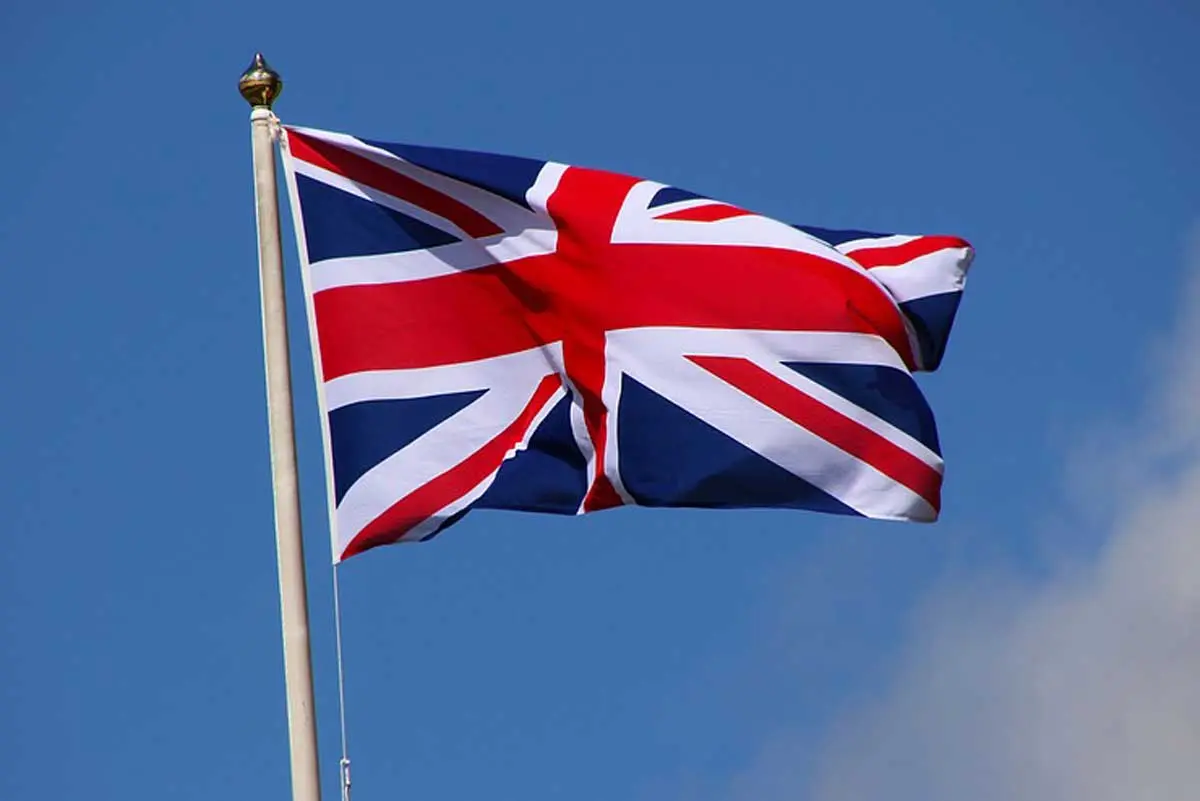
UK to prioritize domestic steel for national security

Most EU steel import quotas exhausted as Q1 ends, usage exceeds 90% in key segments
As the first quarter of the EU quota period from January 1 to March 31 is approaching its end, some of the import quotas for certain steel products allocated for South Korea, China, Turkey and Macedonia have already been exhausted, while over 70 percent of quotas for some steel products have been used up, according to the European Commission’s data.
Looking at the exhausted quotas, South Korea has used all of its 38,622 mt quota for electrical steel sheets (3B) and its 37,148 mt quota for metallic coated sheets (4A), while the country has exceeded its 70,318 mt quota for organic coated sheets, with 222 mt of the products waiting for customs clearance. China has exceeded its 126,937 mt and 138,863 mt quotas for metallic coated sheets (4B) and merchant bars and light sections, respectively, with 4,468 mt and 3,386 mt of the respective products waiting at EU ports. In addition, Turkey has exhausted its 93,454 mt quota for rebar, while Macedonia has exceeded its 25,948 mt quota for hollow sections, with 21 mt of the product waiting for customs clearance.
Meanwhile, South Korea has used 95.72 percent and 93.27 percent of its 159,532 mt quota for HRC (1A) and its 164,743 mt quota for metallic coated sheets (4B), respectively, while the UK has used 96.73 percent of its 35,001 mt quota for metallic coated sheets (4A). Turkey has used 92.62 percent of its 105,174 mt quota for merchant bars and light sections, while Macedonia has used 92.95 percent of its 6,955 mt quota for gas pipes.
Regarding the quotas allocated under “other countries”, Taiwan has used 99.95 percent of its 116,832 mt quota for metallic coated sheets (4A), while Vietnam has used 99.99 percent of its 14,924 mt quota for wire rod. In addition, 97.22 percent of the 103,731 mt quota for metallic coated sheets (4B) allocated for other countries has been used up.
Quota usage of the other products can be seen in the table below.

Author: SteelOrbis Editorial Team


Germany adopts 2026 climate program, steel sector calls for stronger measures
The German government has announced that it has adopted its 2026 climate protection program, marking a further step toward achieving greenhouse gas neutrality by 2045.
The program, approved by the cabinet, will now be reviewed by the Council of Experts on Climate Issues before implementation. The measures are designed to align with legally binding climate targets and support emissions reductions by 2030 and 2040.
€2.9 billion support for industrial decarbonization
A key pillar of the program is the allocation of approximately €2.9 billion to the industrial sector.
The funding will support electrification of industrial processes, decarbonization of process heat and the development of circular economy solutions. Electrification is expected to reduce emissions while improving long-term energy efficiency and lowering dependence on natural gas imports.
According to government estimates, these measures could cut carbon emissions by at least 4.3 million mt by 2030 and reduce natural gas imports by around 2.5 billion cubic meters.
Renewable expansion and green lead markets
The program also includes accelerated expansion of renewable energy capacity, particularly an additional 12 GW of onshore wind. This expansion is expected to reduce reliance on fossil fuels and cut carbon emissions by around 6.5 million mt by 2030.
In addition, the government has introduced the concept of green lead markets for the first time, aiming to stimulate demand for low-carbon materials such as climate-friendly steel and cement, particularly through public procurement and the automotive sector.
Steel sector calls for stronger implementation
German Steel Federation (WV Stahl) CEO Kerstin Maria Rippel stated that the program provides a comprehensive framework for achieving climate targets but emphasized that its success will depend on effective implementation. She welcomed the inclusion of lead markets for low-carbon steel, noting that stable and predictable demand is essential for scaling up production. However, Rippel criticized the absence of concrete measures in the rail sector, describing it as a missed opportunity given its importance for industrial decarbonization.
She also stressed that the design of lead markets will be critical, particularly in upcoming legislation such as the Public Procurement Acceleration Act. According to her, without a “Made in Europe” criterion, public funding could support decarbonization outside Europe, weakening domestic industry.
WV Stahl emphasized that Europe must create strong lead markets specifically for low-emission steel produced within the EU. Rippel concluded that climate policy and industrial competitiveness must be addressed together, warning that only a balanced approach can ensure both successful decarbonization and the preservation of Europe’s industrial base.
Author: SteelOrbis Editorial Team

Automative OEMs rethinking electrification strategy: Worthington Steel
Automotive original equipment manufacturers (OEMs) are shifting away from battery electric vehicles (BEV) and toward hybrid vehicles, top executives at Worthington Steel said at the company’s third-quarter earnings call on Thursday March 26.
The pivot is due to multiple factors, Geoffrey Gilmore, chief executive officer, president and director, said on Thursday, citing the removal of the fuel economy mandate and of the $7,500 federal tax credit.
In December 2025, President Donald Trump’s administration proposed rolling back the Biden-era Corporate Average Fuel Economy (CAFE) standards, a move that has the potential to reduce compliance pressure on automakers to raise fleet-wide miles-per-gallon and could lessen incentives to deploy fuel-saving technologies or electrification to meet federal targets.
Months before that, the Trump administration reduced government support for EV purchases by signing the “One, Big, Beautiful Bill Act” into law on July 4, 2025, which eliminated eligibility for a tax incentive of up to $7,500, effective September 30, 2025.
“The market is clearly pivoting away from a government-driven BEV mandate to a consumer-led demand for hybrids. The data is quite clear,” Gilmore said, highlighting increased consumer interest in hybrid and full EVs due to rising oil prices and geopolitical tensions.
Regular gasoline prices in the US had risen to $3.96 per gallon by March 23, an increase of $0.46 per gallon, or 13.14%, from $3.50 per gallon on March 9, data from the US Energy Information Administration showed.
Worthington Steel’s outlook for the automotive market in 2026 was “cautiously optimistic”, the CEO said.
“Conditions appear to be moving toward a more robust market later in the year. That view is supported by growing confidence that a [US-Mexico-Canada Agreement] will be completed in 2026, removing a significant amount of market uncertainty,” Gilmore said.
USMCA renegotiation discussions between the US and its two trading partners began in March.
Electrical steel expansions in Canada, Mexico
Worthington Steel shared the firm’s progress on its electrical steel expansion projects in Mexico and Canada.
“We are excited by the growth in hybrids as we have the opportunity to produce the electrical steel laminations for a hybrid traction motor, as well as the specialty cold-rolled steel used in the powertrain for the hybrid internal combustion engine,” Gilmore said.
The company has shifted some production to their new facility in Burlington, Ontario, the CEO said.
“We will finish moving the existing equipment and production to the new facility over the next few months. We have more than 60% of the increased capacity sold for the facility,” Gilmore told investors.
Meanwhile, the firm’s traction motor lamination facility expansion in Apodaca, Mexico, is “on track and will begin shipping production parts this quarter”, Gilmore said.
The building expansion has been completed and the facility’s five initial electrical presses for electrical steel lamination have been installed, with five remaining presses still expected to be installed, according to the company’s investor presentation.
The project, announced in October 2023, will expand electrical steel operations to a 185,000-square-foot facility adjacent to the existing facility, making the Apodaca facility Tempel’s largest laminated electrical steel production site for the motor and transformer sector. Once online, the facility will produce traction motor lamination cores for electric vehicles.
“Almost all the OEMs tied to the expansion are experiencing some type of OEM delays,” Gilmore said. “Previously, we expected to reach full production levels in fiscal 2028. But the OEMs have pushed out a number of the programs for a variety of reasons.”
Gilmore added: “While timing is shifting on production starts for some of our new programs, when these platforms reach full production volumes in fiscal 2029, we will be at 75% capacity based upon the current contracts. These delays are not surprising, as many automotive OEMs are rethinking their electrification strategy.”
Fastmarkets’ weekly price assessment for electrical steel, non-grain oriented, ex-whs Eastern China was $609-631 per tonne on March 20, down by 0.16% from $609-633 per tonne on March 13.
Meanwhile, Fastmarkets’ weekly price assessment for electrical steel, non-grain oriented, cfr India was $660-680 per tonne on March 20, up by 4.69% from $640 per tonne on March 13.
