


EUROMETAL participates in Cattwyk panel discussion on circularity in the steel sector
EUROMETAL President Alexander Julius participated as a panelist in the event “In the Loop with Cattwyk | Circularity in the Steel Sector”, held in Brussels on 5 March 2026. The event launched Cattwyk’s new series of discussions dedicated to the circular economy and its implications for European industry.
The panel brought together representatives from across the steel and manufacturing value chain, including Harriet Dalger (Damen), Adolfo Aiello (EUROFER), Hans Henning Hein (Jungheinrich), Dr. Carmen Ostwald (LESS) and Ulrich Adam (Orgalim).
Discussions focused on the strategic importance of steel and metals for Europe’s industrial future, as well as the challenges the sector faces in terms of competitiveness, decarbonisation investments, energy costs and international competition. Particular attention was given to the implications of the EU Steel and Metals Action Plan (SMAP), the Carbon Border Adjustment Mechanism (CBAM) and upcoming initiatives such as the Circular Economy Act.
During the debate, Alexander Julius emphasised the importance of maintaining a level playing field for the entire European steel value chain, stressing that EU legislation should not only focus on primary production but also take into account the role of steel distribution, service centres and downstream manufacturing industries.
He also highlighted the need for greater transparency and objectivity in assessing decarbonisation progress, including closer monitoring of imports of semi-finished products such as slabs, which continue to increase.
Another key point raised during the discussion was the complex design and hasty implementation of CBAM, which, continues to create uncertainty and risks undermining the competitiveness of European industry if not properly calibrated.
The event formed part of a broader dialogue on how circularity policies and climate legislation can support a competitive and sustainable European steel ecosystem, while ensuring that the entire industrial value chain remains viable.
EUROMETAL will continue to actively contribute to these discussions, advocating for balanced policies that support decarbonisation while safeguarding the competitiveness of Europe’s steel supply chain.
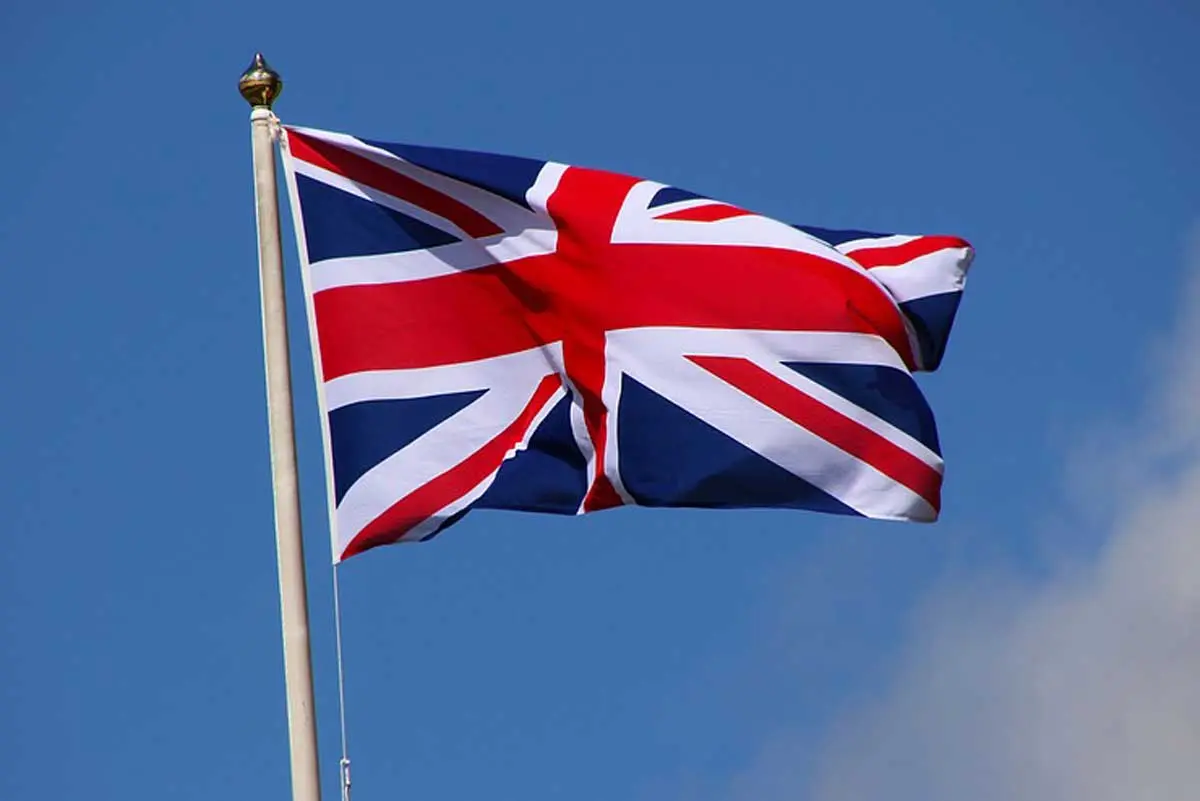
‘Short-sighted’ low-carbon specifications excluding UK-made steel: panel
UK domestically-produced steel is being excluded from public and private infrastructure procurement due to “short-sighted” low-emission specifications, at a time when the industry is transitioning, Kallanish heard from a panel at this week’s Make UK conference in London.
Gareth Stace, director general, UK Steel, highlighted the Welsh government as an example of policymakers excluding British Steel-made construction steel for being produced via the blast furnace route, despite the firm’s intention to move to electric arc furnace steelmaking.
“Many short-sighted projects say ‘we need so-called green steel’, [but] there’s no agreed global definition of green steel, so they see green steel as steel from the electric arc furnace route,” he said.
Therefore, buying EAF-produced steel from abroad allows buyers to tick boxes for purchasing low-carbon steel. Whereas buying domestically means “ensuring that that company has the money to invest to actually transition,” he added.
Alasdair McDiarmid, assistant general secretary, Community Union, highlighted other UK infrastructure projects such as Net Zero Teesside and Lower Thames Crossing where foreign steel has been used on the basis of “environmental carbon requirements”.
“There are two almost conflicting arguments, the drive to go green and there’s what we want to do which is support UK industry and UK jobs,” he said.
Meanwhile, Peter Quinn, director of sustainability and environment, Tata Steel UK, highlighted the lack of “nuance” in specifications that define low-CO2 steel.
“There’s a battleground out there; there’s a lot of people with lots of vested interests representing steel companies and governments across the whole world who’ve all got their view about [how] low CO2 should be defined,” he said.
He also highlighted contracts that now cannot be fulfilled by domestic steelmakers due to stricter customer requirements. “We can’t supply to a dodgy specification that someone else has written in a boardroom somewhere on the other side of the world,” he observed.
Quinn noted the plan to decarbonise the UK’s electricity grid by 2035. “We’ll be making steel from scrap, which has arisen in the UK, melting with electricity which is net zero … it takes a little bit of time to get there.”
He saw it as “ridiculous” for customers to not buy from Tata Steel now even though it is “demonstrably” on a journey to decarbonise.
Meanwhile, changes to frameworks could also help domestic producers supply more steel into upcoming infrastructure projects. Carles Rovira, chief executive at 7 Steel, said: “When you see the energy transition, SMRs, offshore, the infrastructure the UK needs to build, if we have the right conditions that can supply us with some growth for steel, because that’s going to be future construction, or building overall the UK infrastructure, and that is coming in the next 10-15 years. If we have the right framework now, we will be able to supply more of those growth opportunities.”


Thysenkrupp mulls Material Services division spin-off
Germany’s thyssenkrupp group has confirmed to Kallanish that its strategy is to spin off its divisions, “once they are fit for the capital market.”
The group notes that tk Materials Services in on the right track for such a move and is optimistic that the company will prevail on the capital market. It did not give a timeline for its intention.
The Materials Services division is one of Europe’s largest steel distribution and trading companies, with major activities in North America, which it intends to expand. In the fiscal year through September 2025, it achieved an order intake of €11.4 billion ($13.3 billion).
This comes following media reports that the steelmaker could sell off, list, or divest the division this year. The group is considering changing the business’s legal form to keep control in case of a majority sale, Reuters is reported as suggesting.
A spin-off of tk Materials would come in the wake of the group’s ongoing efforts of separating from its steelmaking unit tk Steel. It is currently in negotiations with Jindal. Thyssenkrupp’s strategy for some time now has been the relative independence for all its divisions, and has achieved this so far for its elevators and defence activities.

Steelmakers, plant builders disagree over IAA content requirements
The Industrial Accelerator Act (IAA) presented by the European Commission on Wednesday has been received with mixed sentiment by steelmakers and significant steel users.
Outokumpu has welcomed the proposal to increase demand for clean products. “The Industrial Accelerator Act signals a decisive shift toward an industrial strategy that integrates climate policy with industrial competitiveness,” it says in a statement.
However, the stainless steelmaker is calling for a clear “Made-in-EU” requirement to also include steel, and to introduce an EU low-carbon steel label.
Meanwhile, Germany’s steel federation WV Stahl, criticises the 25% low-emission steel quota for public procurement for not requiring domestic European-made steel.
“The IAA does create demand for low-emission steel, but does not facilitate structural demand for domestic steel production in the EU,” the federation notes.
For others, the IAA’s local content requirements, which impact concrete and aluminium, though not steel, are too high.
The association of mechanical engineering and machinery builders, VDMA, says the local content element is overweighed in the draft, and will not help the market’s structural weakness or the image loss of technological leadership.
“A ‘Buy European’ approach is justified only if security issues are concerned,” Kallanish learns from VDMA’s statement.
The association does welcome that the mandatory quota of green steel in public projects remains limited in the policy.
VDMA points at the contradiction that compulsory green steel usage means a burden for suppliers of technology, which itself is indispensable to achieving Europe’s climate targets.

Eurofer, Hydrogen Europe seek tighter IAA steel requirements
The European steel and hydrogen industries, represented by trade bodies Eurofer and Hydrogen Europe, have called on Brussels to tighten the steel public procurement rules proposed in the Industrial Accelerator Act (IAA) regulation.
Wednesday saw the long-awaited publication of the IAA legislative proposal. The European Commission (EC) proposes low-carbon requirements for public procurement and public support schemes in certain sectors, including steel, but steel is excluded from the “Made in EU” requirement.
“This measure will give investors confidence and predictability, boosting innovation and making clean steel a core part of the EU’s industrial future,” the EC states, noting the draft regulation will now be negotiated by the European Parliament and European Council before adoption.
Eurofer argues that more is needed to support green steel made in Europe, as the proposed quota does not require the low-carbon steel to be produced in the region.
“25% of public procurement represents less than 5% of the total steel market, and public support schemes vary widely across member states,” it says in a note seen by Kallanish. “Without stronger and clearer demand signals, these measures may not provide the long-term certainty needed for major industrial investments. To make lead markets work, the EU must ensure it supports low-carbon steel made in Europe, not made in third-countries.”
The association is calling for a clear definition of “Made in Europe” for steel, based on steel melted and poured in the European Union and European Economic Area. It also seeks the application of both low-carbon and European-origin criteria in the IAA; a robust labelling framework to support lead markets; and affordable electricity prices to further enable steel decarbonisation.
According to Responsible Steel, the sliding scale concept, also known as Steel Decarbonisation Scale, offers a technology-neutral approach, evaluating steel production based on greenhouse gas emission intensity and the share of scrap used.
Hydrogen Europe meanwhile says the proposal is “a step forward but lacks ambition”. Whilst it agrees that steel quotas in public procurement for buildings, vehicles and infrastructure are key to providing demand certainty, it says the 25% target will need to be raised “to create a true lead market”.
“A clear label on low-carbon steel – based on a sliding scale approach – should underpin such ambition on lead markets,” the trade body continues. “A sliding approach would help create demand for both primary and secondary steel, accounting for its carbon footprint and level of scrap recycling. But this has been delayed to later implementation under the Ecodesign framework, which gives industry and investors the wrong signal.”
Hydrogen Europe says that without a strong clean steel definition with product-based labelling and certification system, steel producers would be incentivised to maximise scrap use, which is limited by high-quality scrap availability. “For a deep transformation of the steel industry, continued investment in hydrogen-based primary steelmaking is essential,” it concludes.

European Commission mandates low-emission steel, drops ‘made-in-EU’
The European Commission has confirmed its Industrial Accelerator Act (IAA) legislative proposal includes a stipulation that 25% of steel volume procured for public projects launched from 2029 must be low-emission. However, given the forthcoming new steel trade regime, a “made in EU” requirement has not been included, and neither has the voluntary label for low-emission steel.
For public procurement and other projects that require some form of public intervention, the volume of steel, and any product the performance of which depends mainly on steel, will need to comprise minimum 25% low-emission material. This will be effective for projects launched and schemes updated or established from 1 January 2029.
However, contrary to aluminium and cement, the proposed made in EU mandate for public procurement is not included for steel. “In light of the recently proposed trade measure addressing the negative trade-related effects of global overcapacity on the Union steel market, introducing a European preference for steel is not considered necessary,” the Commission says in a document seen by Kallanish.
The legislation proposal also does not follow the preferred policy option to adopt a voluntary steel label in support of low-carbon steel investment decisions.
Instead, the forthcoming delegated act on steel products under the Ecodesign for Sustainable Products Regulation (ESPR) will provide the necessary elements to implement the lead market provisions for steel. This is “taking into account the differing decarbonisation characteristics of primary and secondary steel producers and rewarding circularity,” the Commission notes.
“In designing labelling and information requirements based on performance thresholds for different products, such thresholds should take account of the recycled content of the industrial product, the threshold decreasing with the increase of recycled content in the products, where relevant,” it adds.
The IAA aims to increase the manufacturing sector’s share of EU GDP to 20% by 2035, compared with 14.3% in 2024.
It also proposes to amend conditions for major investments in strategic sectors exceeding €100 million ($116m) where a single third country controls more than 40% of global manufacturing capacity. These will include the need for technology transfer, 50% of staff being EU based, foreign participation being limited to 49%, and 1% of turnover being invested in EU research & development.
It aims to streamline and digitalise permitting procedures for industrial projects, including tacit approval at intermediate stages of the permit-granting process for energy-intensive decarbonisation projects. The creation of “Industrial Acceleration Areas” will facilitate essential energy infrastructure investments, the Commission says.
The proposed regulation must now be negotiated by the European Parliament and Council before its adoption and entry into force.
Outokumpu was one of the first steelmakers to react to the proposed legislation, welcoming the measure but urging the Commission to introduce an EU low-carbon steel label and expand the made in EU requirement to also include steel (see separate story).

EU Industrial Accelerator Act drops EU-origin steel rule, narrows emissions sliding scale to primary steel
The European Commission’s long-awaited Industrial Accelerators Act (IAA) confirmed a shift in the EU’s approach to steel public procurement rules, prioritizing low-carbon production criteria over strict “Made in EU” origin requirements. The IAA did not provide any precise labelling for low-carbon steel as widely expected, Fastmarkets learned on Wednesday March 4.
The IAA, published on Wednesday, introduced demand-side measures designed to strengthen strategic industrial value chains while accelerating decarbonization across energy-intensive sectors such as steel, cement and aluminium.
Softer “Made in EU” rules for steel confirmed
The final text generally confirms an earlier leaked draft seen by Fastmarkets that suggested public procurement would require only low-carbon steel, removing the strict EU-origin requirement.
Public procurement procedures would require that at least 25% of the steel used in buildings, infrastructure and transport projects be low carbon. A parallel 25% threshold would apply to aluminium.
But the wording differed for the two materials. For steel, the text specifies that “at least 25% of the total volume of steel used shall be low carbon.” For aluminium, it states that “at least 25% of the total volume of aluminium used shall be low carbon and of Union origin.” This confirms a rules-of-origin requirement for aluminium that is not present for steel.
This means the IAA effectively removes a potential double requirement that would have obliged public projects to use steel that was both low carbon and produced within the EU.
The Commission explained that strict origin requirements for steel procurement were not considered necessary in the final proposal, partly because other policy tools are already addressing trade distortions in the steel market. These include existing and proposed steel safeguard measures as well as the EU Carbon Border Adjustment Mechanism (CBAM), Fastmarkets understands.
The new trade regime set to replace existing safeguard measures for steel imports as of July 1 suggests nearly a 50% quota reduction for steel imports, Fastmarkets reported.
Companies from non-EU countries covered by the EU’s international procurement commitments, such as the World Trade Organization (WTO) Government Procurement Agreement or bilateral trade agreements, may participate in EU procurement markets under existing rules. At the same time, the Commission retains the possibility to restrict access where necessary to protect the EU’s economic security or supply-chain resilience, Fastmarkets understands.
No clear low-carbon steel labelling
The IAA did not provide any clear labelling for low-carbon or green steel, despite expectations in earlier drafts.
Low-carbon steel will instead be defined through emissions accounting frameworks aligned with existing EU climate policies, including the EU Emissions Trading System and the CBAM.
The reference to a sliding scale for emissions performance has also been narrowed in the final text. Earlier drafts seen by Fastmarkets suggested that the mechanism would apply across all hot-rolled steel products, including both flat and long steel. The published proposal limits its scope to “product categories that typically require primary steel production [blast furnace-basic oxygen furnace route, BF-BOF], as necessary.”
This wording indicates that the system is designed to account for differences in scrap availability between production routes. Steel grades that rely more heavily on primary BF-BOF steelmaking — where scrap share in the raw materials mix is technically limited — may therefore receive adjusted emissions thresholds compared with electric-arc furnace (EAF) steelmaking.
In Europe, around 80% of carbon steel long products are produced via the EAF route, while more than 90% of flat products are produced using the BF-BOF route, industry sources estimate.
This suggests that the adjustment mechanism will apply mainly to flat steel products, where primary steelmaking remains dominant and scrap usage is more constrained.
Potential impact
Industry participants said the regulation could still stimulate demand for low-carbon steel through public infrastructure projects, although they expressed disappointment over the lack of clear labelling for low-carbon steel.
A lack of unified definitions has been considered one of the barriers to green-steel uptake, making the label an important step toward market clarity, sources said.
Steelmakers across Europe are investing billions of euros in decarbonization technologies, including EAFs and hydrogen-based direct-reduced iron (DRI) modules, but have repeatedly warned that demand signals for green steel remain insufficient. Several projects have been revised or scrapped, Fastmarkets reported.
Public procurement is therefore viewed as one of the most effective tools available to stimulate green-steel uptake.
“If authorities do not push for green steel use through public procurement, then green steel will remain a niche market,” one European mill source said.Fastmarkets has two different assessments for low carbon steel premiums, based on production route and emissions thresholds
Fastmarkets’ methodology defines European green flat steel as “steel produced with Scope 1, 2 or 3 emissions at a maximum of 0.8 tonnes of CO2 per tonne of steel.” For this assessment, scrap-based production and steel made using hydrogen-based DRI are considered.
Fastmarkets’ weekly assessment of the green steel domestic, flat-rolled, differential to HRC index, exw Northern Europe was unchanged at €100-150 ($118-177) per tonne on Thursday February 26.
Fastmarkets defines reduced carbon flat steel in Europe as steel produced with scope 1,2,3 emissions of 1.4-1.80 tonnes of CO2 per tonne of steel. This assessment captures blast-furnace produced steel with reduced CO2 emissions.
Fastmarkets’ assessment of the flat steel reduced carbon emissions differential, exw Northern Europe was €0-50 per tonne on February 26, also stable week on week.


European rebar producers withdraw from market amid higher energy costs
Rebar producers from Europe withdrew offers from the market due to the rise in energy costs, particularly gas, which has direct effect on electricity prices, Fastmarkets heard on Wednesday March 4.
According to market sources, gas prices in Europe surged by 30-50% week on week following the escalation of the conflict in the Middle East, which has had wide-ranging impact on the international market.
Amid fluctuating energy prices, long steel producers either completely withdrew offers — while trying to estimate new market conditions and evaluate new offers — or provided some with very short validity.
“Honestly, I’m a bit stunned. Since [Monday] everyone’s been crazy, everyone has suspended sales. They [mills] gave me prices [on Monday] morning and after five minutes they called me to tell me it was no longer valid. I have no idea what’s going on, they’re not giving us prices or availability,” an Italian rebar buyer told Fastmarkets on Tuesday.
“The atmosphere strongly resembles what we experienced in 2022, at the outbreak of the war in Ukraine, when prices escalated dramatically. At that time, mills were revising prices several times a day — one price at 8am, another at 10am, and yet another in the afternoon. The market was in total confusion and within two months prices doubled,” a second Italian buyer said.
As of Wednesday afternoon, several mills in Italy indicated offers at €620 ($720) per tonne ex-works with very limited validity. Few customers said they could potentially accept such prices.
Nevertheless, there was no information about fresh deals because market leader Pittini has not yet announced its offers.
“The problem is that currently no one [producers and retailers] wants to commit themselves because whoever makes the first move risks losing the month. On the other hand, no one bought in February, so within a couple of days we will have to make do with the price,” a third Italian buyer said.
Meanwhile, demand in Italy has been limited so far in 2026, with rains and snow hampering work of construction sites and delivery in winter months. Sources, however, hoped for improvement in the spring.
Before the escalation of the conflict in the Middle East, domestic rebar prices in Italy were falling, with a large number of participants reporting tradeable levels in the north of the country ranging €550-570 per tonne ex-works, and slightly higher levels of €570-600 ex-works heard in the South.
Considering such adverse conditions, Fastmarkets weekly price assessment for steel reinforcing bar (rebar) domestic, exw Italy widened to €550-620 per tonne ex-works on Wednesday, compared with €560-590 per tonne on February 25.
Mills in Spain and Northern Europe also largely withdrew offers from the market.
Several sources reported offers for small tonnages of rebar with short lead times emerging in the German market at €640-650 per tonne delivered, which is €10 per tonne higher week on week. It was not immediately clear whether customers were accepting the new, higher levels.
As a result, Fastmarkets’ weekly price assessment for steel reinforcing bar (rebar) domestic, delivered Northern Europe widened upward to €610-640 per tonne on Wednesday, from €610-630 per tonne on February 25.
Fastmarkets’ weekly price assessment for steel reinforcing bar (rebar) domestic, delivered Spain was stable on Wednesday at €665-680 per tonne.

German construction sees first uptick in five years
German construction companies reported a year-on-year revenue increase of 2.5% in 2025, after five years of successive decline, according to association Hauptverband der Deutschen Bauindustrie.
“This ends the long period of recession,” says Tim-Oliver Müller, managing director of Bauindustrie. “But it is not enough to balance the losses of the past years,” he notes. The federation, however, expresses optimism that the trend will continue, and that 2026 will bring another increase by 2.5%. “The order books have refilled somewhat,” Müller says.
Order intake at companies went up by 6.8% last year, with a year-end rise of as much as 10.2%, helped by railway projects, pipeline construction and building of data processing centres. “But it will take time until these projects go down in revenue, and it will benefit only few companies initially,” Müller notes. This is why the sentiment in the industry remains modest, according to a recent survey.
This sentiment is shared by a manager at a distributor of structural steel, pointing at the overall still ailing economy.
“Construction of buildings remains subdued; it would not occur to any Audi or VW to build new warehouses or production halls now,” they tell Kallanish. “The one thing with some perspective is gas power plants, which are subsidised by the government.”
Bauindustrie notes that it is mainly railway and computing centres that could lift commercial construction by 4% this year. Residential and public construction are expected to recover by a lesser degree of 2%.
Residential construction, mainly a customer sector for rebar, dipped by another 1.5% in terms of revenue. Order intake did go up, by 10%, but from a low level, with companies remaining concerned over a lack of orders.
The race for orders in construction translates to bending operations, many of which offer services at little above the intake price of rebar to secure employment.
UK manufacturing needs temporary energy subsidies: Kyle
Energy costs for manufacturers in the UK will need to be subsidised until structural change takes place, Peter Kyle, secretary of state for business and trade, said at the Make UK National Manufacturing Conference in London on Tuesday, attended by Kallanish.
“We inherited the highest energy costs in Europe, four times that the wholesale price of the United States,” he told delegates. “Until we change the structural nature of our energy markets, which I don’t think anybody in this room thinks we can do in 18 months of government, then we only solve the challenge by subsidising.”
He highlighted the British Industry Supercharger policy and the British Industrial Competitiveness Scheme as two fundamental initiatives to support highly energy-intensive industries.
“I am deeply frustrated that I can’t move faster,” he added, noting the requirements for legalisation and consultations.
“We are looking at ways where we can use subsidies wisely until we can get to the point we can fundamentally lower the energy costs,” he noted.
He also pushed back against suggestions that increasing North Sea production could sustain the entirety of domestic energy demand, following a large rise in energy prices after the escalation of conflict in the Middle East in recent days.
“We would always be dependent on parts of the world which are fundamentally unstable, so therefore, doubling down on the renewables … is essential,” Kyle asserted. This is especially given instability in certain regions “is creeping into our energy prices, for which the British government has no agency.”
He said other political parties seeking to return to North Sea production and overturn environmental energy targets “will exacerbate the exposure we have at times like this”.
Therefore, the UK Government is “doubling down as quickly as possible so the transition is about national resilience … [and] sovereignty.”
Kyle added the government wants to increase resilience in the manufacturing sector, which supports the country’s economic and national security.