


NW European sections mills lift prices, distributors hesitate
Northwestern European distributors are struggling to hand down the price increases that have been gradually implemented by mills since the beginning of the year.
“Compared with orders I placed in December, the mills by now ask for €60/tonne ($70) more,” a manager at a German distribution group tells Kallanish. But on the selling side, “we could exert only a €35 increase,” he admonishes.
The increases came in two tranches, in January and February, while €50-60 has been witnessed in Scandinavia.
In Germany, buyers are now looking at prices reaching €750/t for S235 category 1 sections, delivered. In Scandinavia, with over-proportionally higher transport costs from mainland mills, delivered prices can reach €770 in Denmark, and €780 in Sweden, according to a Danish buyer.
At the lower end, a German observer reports intake prices are still €720 or less. Although mills are fairly aligned at the new price level, they might concede January’s prices still, if stockists do not buy because they cannot sell, as demand among user industries remains dull.
The overall lack of demand is noted by a mill manager as the weakest part of the chain against rising costs, mainly for scrap. He quotes prices in a wide range of €700-800, with some deals occurring above €800 for S355 material for destinations that are “challenging in logistical terms.”
The lead times for rolling and delivery are customary, at three weeks, but the manager suggests that there are still capacity slots left in next week’s rolling plan for additional payments.


European longs mills stop sales following Iran conflict
ArcelorMittal and several other European long steel producers are understood to have suspended sales of rebar, sections and wire rod amid a sharp surge in energy costs, market sources tell Kallanish.
Gas prices have climbed by more than 50% following the Iran-US-Israel conflict escalation, while electricity prices are also expected to continue to rise in line with higher gas values. Steelmakers and scrap suppliers also anticipate sudden increases in logistics costs.
“For now, the market is not panicking, but production costs are rising abruptly. Unless selling prices move up, some mills may have to consider production stoppages,” one source says.
The scale of potential price increases remains unclear as the situation continues to evolve rapidly. Several market participants expect significant hikes. “Energy costs are spiking and no one knows when this will stabilise. The level of uncertainty and volatility is extreme,” another source comments, noting that the daily fluctuations make it difficult to assess the full impact.
Some producers are reported to be cancelling or reviewing orders agreed last week, as market conditions have now radically changed. A third source suggests that in the coming days, steelmakers should give clearer indications on the extent of price increases, but stresses that energy prices need to stabilise before mills can return to the market with quotations.
One participant adds that ArcelorMittal has also suspended its longs quotations for the UK market amid the uncertainty.

Dutch Parliament calls for urgent dialogue on CBAM cost impact
The Dutch Parliament has adopted a motion calling on the government to urgently engage with the steel and aluminium sectors regarding unexpectedly high costs arising from the implementation of the EU’s Carbon Border Adjustment Mechanism (CBAM).
According to statements published by Koninklijke Staalfederatie and FME, delays in the CBAM system and a shortage of recognised emissions verifiers are forcing many companies to rely on EU default emission values. These standard values are often significantly higher than the actual emissions of imported materials, resulting in higher-than-expected costs for companies processing steel and aluminium in their supply chains.
Industry representatives warn that this situation risks creating unnecessary price increases and undermining the level playing field that CBAM is intended to ensure.
The motion adopted by the Dutch Parliament urges the government to consult with industry in the short term and to explore possible temporary national measures within four months, while also working toward structural solutions at EU level.
Industry leaders stressed the urgency of the issue, noting that many manufacturing companies must determine product pricing for the following year during the summer months and therefore require clarity on CBAM-related costs as soon as possible.
FME and Koninklijke Staalfederatie indicated their willingness to work with the Ministry and their members to identify both short-term solutions and longer-term improvements at EU level, including better access to verified emissions data for CBAM reporting.

European HRC prices jump on import disruption fears
Transaction prices for domestic hot-rolled coil (HRC) increased in Europe on 4 March due expected import supply disruptions caused by the conflict in the Middle East. European coil producers are expected to withdraw offers soon and return seeking higher prices.
Deals for HRC in Northwest Europe have been settled at EUR690-710/t ex-works, with a majority of the indications reported at EUR700-710/t ex-works. The deals were settled for smaller lots of material of a few hundred tonnes per lot.
The achieved prices are EUR20-30/t higher than deals settled a week earlier.
Some buyers have said that the major European coil producers have started to withdraw offers from the market. But this information has not been confirmed by steelmakers.
European rebar mills have unanimously withdrawn offers from the market.
Flat steel market participants believe that the coil steelmakers would do the same or attempt another price rise as the latest deals have almost reached their target prices of EUR720-730/t delivered.
“Buyers did not want to accept higher prices [of around EUR700/t ex-works]. But now the situation fully changed. The offered volumes are limited, and buyers would now accept higher prices, because they understand that after some time the supply will be even more scarce with no import and high prices from stocks,” a distributor said.
Some larger traders have stopped offering imported coil available from European stocks, preparing to increase prices.
The expected delays of import steel shipments to Europe due to rerouting from the Suez Canal to the Cape of Good Hope, and rising freight and energy costs helped steelmakers achieve higher HRC prices. Market sources estimated that steel deliveries to Europe from Asia and the Middle East might take an additional two to four weeks compared with original expectations.
Opinions in the market are divided as some believe that import delays of a couple of weeks would not have a material impact and the price rise was mainly a panic response of some buyers. Others, however, point out that the timing of the potential delays is critical as the EU’s new quota system is expected to come into force from July this year.
Under the new quota system, a 47% reduction in volume and a doubling of duties to 50% have been proposed. Lack of details on the country-specific quotas or any caps in the global quotas has made European importers extremely cautious on steel imports arriving in the third quarter. The delivery delays greatly increase the likelihood of exceeding the new tighter quotas.
Multiple sources compared the current market situation to 2022, when domestic coil prices in Europe skyrocketed after Russia attacked Ukraine. Later in 2022, however, prices tumbled as the war had a greater negative impact on demand than on supply.


European long steel round-up: mills withdraw offers
Producers in the Northwest European rebar market pulled offers in the week beginning 2 March, amid the escalating conflict in the Middle East.
Steelmaking and distribution sources confirmed that rebar producers were withholding offers since the start of the week, awaiting clarity on potential cost drivers, and gauging demand prospects for near-term price increases.
“European mills are totally out of the market for now,” said a domestic steelmaker, “it makes more sense to wait and see before trying for higher prices, which we need, but we first have to assess what buyers will actually be able to accept.”
McCloskey’s sources were unwilling to speculate on the price point at which mills might return to the market; buyers have visibility of rising natural gas prices and upward pressure on electricity costs, which they expect sellers to attempt to pass on to consumers.
European steelmakers were said to be capitalising on the Middle Eastern conflict by pressuring for a review of the EU’s electricity market design, which sets the market price of wholesale electricity in reference to the most expensive energy input utilised – which for the EU means natural gas prices often inflate industrial electricity costs.
Somewhat surprisingly, sentiments were mixed as to whether the EU would see enough inflation in electricity prices to force buyers to meet producers mid-way on cost coverage, with some in the market anticipating a minimal impact due to recent US commitments to both insure and escort natural gas transit through the Strait of Hormuz.
Import offers – where valid – were reported at stable prices, though traders remain generally unwilling to engage with international trading of rebar due to poor profit margins against domestic production. Turkey, the dominant rebar exporter to Europe, is increasingly dealing directly between mill and EU consumers, presenting further limits on traders’ speculative opportunities.
This week McCloskey reported increased rebar demand in Europe for Turkish origin material at a price point of $545/t FOB, coinciding with the withdrawal of domestic steelmaker offers. Said material could reach Northwest Europe at prices competitive enough to incentivise distributor orders, especially given the potential for material to arrive in advance of the EU’s revision of its steel safeguard system, which is expected to be implemented for July.
However, both buy- and sell-side sources tell McCloskey that domestic rebar demand remains subdued, and doubt whether price increases will be accepted in the market at all, regardless of the subsequent sustainability of any uptrend.
|
Weekly European long steel markers |
|||
| EUR/t | Term | 04-Mar-26 | Change |
| Northwest Europe DEL rebar | DEL | 620.00 | 0.00 |
| Northwest Europe CFR rebar | CFR | 510.00 | 0.00 |

Last-minute IAA change limits scope of ‘sliding scale’
The European Commission’s proposal for an Industrial Accelerator Act (IAA) has undergone last-minute amendments to text concerning the EU’s first green steel standard, as revealed upon official publication on 4 March, further supporting a non-harmonized implementation of the EU’s ‘voluntary low-carbon steel label’.
McCloskey has closely followed the drafting process for the IAA, as it represents one of the core pillars of the European Commission’s attempts to remedy European steelmaking competitiveness under its Steel and Metals Action Plan (SMAP), via demand-side measures to stimulate low-carbon lead markets.
In last year’s SMAP, the Commission committed to introducing the EU’s first ‘low-carbon voluntary label,’ initially covering steel products, as a means to standardise the definition of ‘green steel’ and give low-carbon consumers greater certainty on the quality of relevant emissions reductions. This label would then be referenced in public procurement and financial support schemes purchasing steels, under mandates to prioritise low-carbon, or domestic origin steels and stimulate green demand.
Negotiations to finalise provisions of the IAA have been fraught with disagreements as to the form and scope of the Commission’s proposed competitiveness remedies, primarily relating to the embedding of domestic “Made in EU”, and low-carbon content requirements into EU public procurement and financial support schemes. The specific formulation of the low-carbon label has also seen significant disagreement.
“Made in EU” content requirements are particularly contentious, supported by some member states, such as France and Italy (as described in a joint declaration of French and Italian industrial ministries on 3 March), but opposed by others like Germany and Scandinavia, who prefer a “Made with EU” approach that would extend requisite European origin status to the EU’s like-minded trading partners.
As of official publication of the IAA, on 4 March, the steel sector is referenced only in terms of mandates to include a minimum share of 25% for “low-carbon” steel products in public procurement and support schemes, without its own Union-origin requirements. The European Commission state that domestic content criteria is not necessary for the steel sector due to the long-term revision of the EU’s steel safeguard quotas, expected for July. The ‘low-carbon label’ is gone entirely.
Voluntary low carbon label and ‘sliding scale’
Independent of authorities, the European steelmaking lobby has itself been arguing about the form and scope of the EU’s first low-carbon steel label, as of yet unable to reach a compromise as to the means of defining green steel; namely whether or not to include a ‘sliding scale’ mechanism as a decarbonisation incentive for integrated blast-furnace producers.
Sliding scale mechanisms generally operate on a classification model (e.g A-E, with A as the least-polluting) facilitating a ‘greener’ classification the lower a steel product’s constituent share of steel scrap. This is intended not only to recognise that global supplies of quality steel scrap are insufficient to support the the entire transition of the world’s steelmaking to scrap-based electrified production, requiring alternative inputs like green direct-reduced iron (DRI); but also to allow primary producers to participate in low-carbon markets to finance the high investment costs of decarbonising their processes.
In principle, sliding scales make a lot of sense and can even be argued as necessary for a realistic low-carbon transition in the steelmaking sector, however, the proposed implementation of such a mechanism could present too high a burden for the EU’s existing secondary steelmakers.
DRI-EAF steelmaking is widely considered the most realistic path to green steelmaking worldwide, but if anything, the EU is behind the curve on DRI-EAF development, particularly in the MENA region, as illustrated in McCloskey’s Global Green Steel Profile.
A clear definition for low-carbon steel is thus viewed by many as necessary to lay secure foundations for the EU’s low-carbon transition, and some fear current efforts could fall short, as argued by Andrew Forth, Head of Policy and Advocacy at Climate Group:
“The EU’s Industrial Accelerator Act sets out a framework for classifying steel by emissions intensity, and we welcome the recognition that a labelling scheme is needed. But the detail matters enormously. A voluntary classification system will not provide the certainty that producers and buyers need to make the investment decisions that actually cut emissions at scale. We need a mandatory, harmonised EU definition of low-carbon steel – established without delay – so that public procurement and private investment reward cleaner production. Without it, Europe risks confusion, stalled investment and losing ground to competitors.”
‘Sliding scale’ – Secondary Steelmaker Resistance
Initial formulations of the low-carbon label under the IAA would have extended the sliding scale universally across all steel products, which combined with the possibility of international producers receiving certification and thus access to EU public procurement, was too big a threat for EAF steelmakers to accept. International DRI-EAF steels would benefit both from their competitive emissions profile, and lower scrap content, potentially obtaining a cleaner classification than fully recycled domestic products via the sliding scale. The EU’s secondary steelmakers predominantly service the construction sector, which is also already subject to sustainability requirements via the Construction Products Regulation (CPR).
These steelmakers were thus unwilling to accept the sliding scale in any capacity, though particularly in the absence of strict “Made in EU” content requirements, which could compound in threats to their existing construction sector market share both from domestic integrated producers, and international DRI-EAF exporters.
Germany, a supporter of the sliding scale due to its relative share of integrated primary steelmaking, is heavily resistant to the stricter definition of “Made in EU” – whereas countries like France and Italy have argued for the inclusion of domestic content requirements.
In their aforementioned joint declaration, France and Italy express support for lead market generating procurement mandates to support the steel sector, but explicitly oppose any implementation of the sliding scale (referred to in terms of the EU’s leading sliding scale certification, the Low Emissions Steel Standard (LESS), a project initially started of the German Steel Association, WV Stahl).
“We support incentives for European green steel through sectoral quotas, while opposing a use of the LESS label that is harmful to European industry, and we call for “Made in EU” requirements for steel products used in construction through public procurement and public support schemes.”
Low-carbon label – current status
It seems this direct resistance to the sliding scale, and wider frictions surrounding “Made in EU” requirements, may have had an impact on the IAA’s final iteration.
McCloskey has tracked the ‘low carbon steel label’ as it has gradually transformed though leaked IAA drafts, from a universal classification across steel product groups informed by the sliding scale, to legislative non-existence. The label previously existed under Chapter VII of earlier versions of the IAA, but was completely cut late last week, with standardisation efforts now to be pursued under the steel-related delegated acts of the ESPR later this year.
Leaked IAA drafts seen by McCloskey on Monday 2 March, just days before official presentation, still contained references to a universal application of the sliding scale across steel products for future ESPR implementation, but have since been amended a final time in the wake of Member State and downstream sector resistance.
The explanatory recitals of the latest draft stated: “[product labelling requirements] should be based on classes of performance that acknowledge the different decarbonisation effort of the technologies routes, also rewarding circularity, adjusting emission intensity thresholds based on percentage of scrap metal used in production, as necessary.”
Whereas the officially published text now appears to constrain the scope of future efforts (emphasis added): “[…] adjusting emission intensity thresholds based on percentage of scrap metal used in production for those product categories that typically require primary steel production, as necessary.”
This would suggest that Commission intentions are now non supportive of a sliding scale-based label implemented universally across the steel sector, instead to be constrained to products produced via primary steelmaking.
Indeed, sources close to both the IAA drafting process, and consultations on the low-carbon label suggest that a compromise was potentially visible before the label was cut from the IAA, which would limit the scope of the sliding scale only to those steel product segments that require a decarbonisation incentive – such as flat steel products – leaving EAF-produced long steel products, destined for the construction sector, under the existing remit of the CPR.

Middle East tensions delay EU steel imports
Import steel shipments to Europe face longer journey times due to re-routing while steel producers also face higher energy costs, amid widespread disruptions triggered by the conflict in the Middle East, according to market sources.
While the full scope of the impact remains uncertain, the EU steel market is closely monitoring developments, avoiding significant purchases.
Longer lead times
European buyers expect import deliveries, which previously went through the Suez Canal, will now have to be rerouted to the Cape of Good Hope, resulting in higher freight costs and longer lead times. In fact, the first ships have already used the alternative route.
Market sources estimated that steel deliveries to Europe from Asia and the Middle East might take an additional two to four weeks compared with original expectations.
“We already face problems with booking orders and making offers for import. There are a lot of uncertainties regarding both prices and delivery times,” a Northwest European trader said.
The delivery delays are critical for European buyers due to the expected tightening of import quotas on steel from July 2026. Under the new quota system, a 47% reduction in volume and a doubling of duties to 50% have been proposed. Lack of details on the country-specific quotas or any caps in the global quotas has made European importers extremely cautious on steel imports arriving in the third quarter. The delivery delays greatly increase the likelihood of exceeding the new tighter quotas.
Import steel prices in Europe are expected to rise due to higher freight costs. This, combined with rising energy costs, is likely to push European prices up as well, sources said.
“I think that freight costs in the EU will increase, and so will delivered prices. On the other hand, the exchange rate is going down, and together with sea freight costs, import prices may increase,” a trader said.
Some sources also said that the lack of slab imports from Iran could push heavy plate prices up. The majority of market participants, however, argued that the volumes in question were not significant enough to cause production issues. Alternative sources of slab are either Brazil, which had no volumes available on the spot market last week, or mills from Asia.
Exporters of steel coil from Saudi Arabia have been more active in the European market recently due to lower CO2 content in the material. Those deliveries are also expected to be affected by geopolitical tensions in the Middle East.
“With no shipments going into the Gulf, all the Asian material will go somewhere else. Exports will also be affected, especially from Saudi Arabia and the UAE,” a German distributor said.
A few market participants said that steel had already been going via the Cape of Good Hope due to earlier Houthi attacks in the Red Sea, and that the impact of rerouting may not be severe.
“The impact on logistics may not be too big, but on energy — and, as a result, on steelmaking — it could be stronger and generate price changes due to recalibration of production costs,” an Italian trader said.
Rising energy costs
The rise in energy costs is expected to have a direct impact on steel production costs in Europe. However some suggested that if the conflict is quickly resolved, the effects could be limited.
The uncertain geopolitical situation is likely to negatively influence steel demand in the EU, sources said.
“At this stage, the Iran situation is mainly an energy price shock rather than a physical steel supply disruption for Europe. Higher oil and gas prices lift production costs and import parity, so the immediate effect supports flat steel prices,” a European distributor said. “Overall, it likely raises the price floor but also limits upside — supportive for margins in the near term, but not for total steel demand.”
European steel prices began recovering at the end of 2025, and the uptrend continued in 2026 due to reduced overseas supply caused by the Carbon Border Adjustment Mechanism (CBAM) and anticipated lower quotas. Demand, in the meantime, has not recovered significantly since 2025.
McCloskey’s weekly price assessment for domestic hot-rolled coil (HRC) in Northwest Europe was EUR680/t ex-works on 27 February, up EUR60/t since the start of the year.
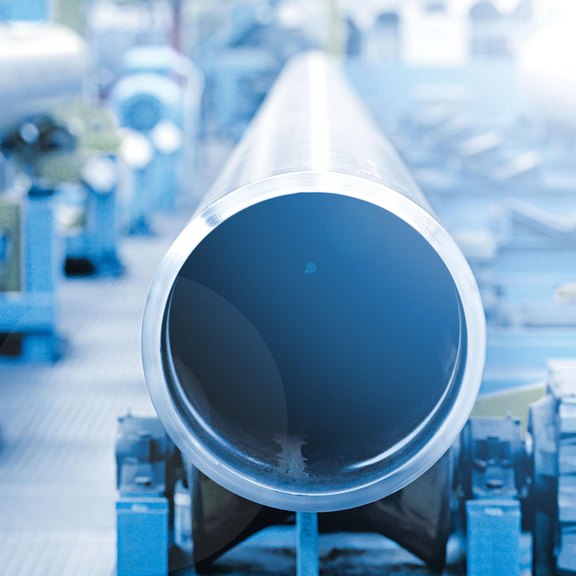
Mannesmann supplies pipes for Germany’s hydrogen network
German gas pipeline grid operator ONTRAS Gastransport has awarded major contracts to two line pipe member companies of the Salzgitter group, Kallanish learns.
Mannesmann Grossrohr (MGR) will be supplying the line pipes for 70.6 km (ca 18,000 tonnes) and Mannesmann Line Pipe (MLP) for an additional 38.2 km (6,000t).
These are line pipes destined for the new FGL 702 project, an H2 pipeline running from Wefensleben to Salzgitter and extending from Angersdorf near Leipzig on to Preusslitz.
For the company’s decarbonisation programme known as SALCOS – Salzgitter Low CO2 Steelmaking, the connection to the hydrogen core network is of tremendous significance, says Andreas Betzler, general manager of the two Salzgitter companies. “The Salzgitter Group is not only a potentially major customer requiring hydrogen – providing its steel products means it also enables hydrogen’s production and supply to customers,” he says.
MGR will be delivering line pipes in a diameter of 813mm. These line pipes will be coated with a three-layer polyethylene topcoat to minimise friction losses as the gas passes through and epoxy Flowcoat for the interior. At a length of 18 metres, the line pipes will weigh around 4.5 tonnes.
Starting February 2027, they will be delivered by truck to pipe storage sites only 37 km away from the rolling mill.
The diameter of the MLP line pipes, also 18m long, measures 610mm and will also be coated.

Global steel sector weighs impact of Iran conflict
The global steel sector is seeking to understand the short- and long-term impacts of the current conflict in the Middle East which escalated over the weekend, Kallanish observes.
A notable area of concern is the Strait of Hormuz now being largely impassable, resulting in energy price volatility and potentially higher steelmaking costs.
“The Strait of Hormuz is the single most important chokepoint in global energy trade, and it now sits in an active warzone. Even without a formal blockade, the commercial consequences are already unfolding: insurers are cancelling cover, shipping premiums are spiking, and vessels are re-routing or pausing transits. The knock-on effects extend well beyond energy,” ING says in a note.
“The Iran war lands on a global trading system that had already been under stress from Trump’s tariff offensive and the lingering fragmentation of supply chains since Covid and the war in Ukraine,” it adds.
Jefferies analysts believe the closure of the Strait of Hormuz will directly impact the iron ore market, with Iran accounting for around 3% of global iron ore production and 1.5% of seaborne iron ore supply.
“The war will have an indirect impact on other commodities as a result of … rising and steepening cost curves due to higher energy prices and supply chain risks,” they note.
Traders say there is very little up to date information about the operational status of steel mills and ports in Iran due to lack of internet connection. They expect electricity supply in the country to likely be disrupted.
“Steel users mainly in Southeast Asia and ASEAN are waiting for Iranian steels,” says one trader. “The conflict will lead to decreased rates of loading and discharging, and cargo flows by ships.”
Iran’s exports of finished and semi-finished steel reached to 10.32 million tonnes during the first ten months of the current Iranian calendar year. Iron ore concentrate and pellet shipments amounted to 20.7mt.
Data by Navigate Commodities show Türkiye, Armenia and Pakistan as top destinations, accounting for 331,705t, 252,632t and 223,401t respectively.
United Arab Emirates and Saudi Arabia market participants meanwhile note that if seaborne raw materials and billet imports are diverted to arrive via Omani ports and then by road, this would increase steelmaking and conversion costs in the region.
As expected, oil and gas prices opened higher on Monday. Commodities analysts at ING saw ICE Brent open higher by as much as 13% initially, trading above $82/barrel.
“Perhaps more surprising is that the market has given back some of these gains, trading just 6% higher at the time of writing,” it adds.
“For gas markets, the real impact will be on European and Asian LNG prices. Around 20% of global LNG supply is at risk, leaving plenty of upside for European gas prices,” it adds, noting EU gas storage is below 30% full.
Veysel Yayan, Turkish Steel Producers Association (TCUD) general secretary, notes that besides affecting Gulf countries, the energy disruption would also directly challenge the United States’ strategic priority of keeping energy prices stable.
Yayan also highlights that competing steel producers across the globe would all be exposed to energy price fluctuations.
“Freight related to the Red Sea has increased a lot, and today a ship owner couldn’t give us an offer. For insurance we added a war clause, causing prices to increase,” one Chinese trader says.
“The relatively small container volumes that transit the Strait of Hormuz should mean the disruption will mostly impact shippers and markets in the region only, though the cutting off of Jebel Ali will also impact ocean volumes that typically continue on from the UAE by air,” notes global freight marketplace Freightos.

EU extends Coal and Steel Research Fund to accelerate steel decarbonization
The European Council has announced that it has reached a general approach on reforming the Research Fund for Coal and Steel (RFCS), approving a package of two Council decisions designed to accelerate and simplify research and innovation investment in the coal and steel sectors.
Program extended to 2034 with €800 million funding
Under the Council’s position, the duration of the program will be extended to 2034 instead of 2030 as initially proposed by the European Commission. Annual financial allocations will be distributed evenly, enabling investments of up to €120 million per year.
Overall, the reform is expected to mobilize approximately €800 million in research and innovation funding over the extended period.
Stronger focus on decarbonization and competitiveness
The revised framework clarifies the fund’s objectives, placing greater emphasis on enhancing competitiveness, supporting decarbonization of the European steel industry and ensuring a just transition in coal-mining regions.
Co-funding rates will be aligned with the Horizon Europe framework. Industrial participants will be eligible for up to 70 percent EU funding, while SMEs, start-ups and academic institutions may receive up to 100 percent support.
The reform is also intended to simplify access to EU funding and increase the fund’s attractiveness while facilitating closer integration with other EU instruments such as the Innovation Fund and Horizon Europe.
Entry into force expected in 2027
Final adoption of the revised legal framework requires the consent of the European Parliament for one decision and consultation for the other.
Following completion of the procedural steps and publication in the EU Official Journal, the reformed Coal and Steel Research Fund is expected to enter into force in January 2027.
Author: SteelOrbis Editorial Team
