


What is European industrial associations’ take on Industrial Accelerator Act?
Following the European Commission’s official introduction of the Industrial Accelerator Act (IAA), several European industry organizations have commented on the legislation, expressing general support for its objectives while highlighting a number of shortcomings that could limit its effectiveness.
The Act aims to strengthen Europe’s industrial base and accelerate the transition toward low-carbon manufacturing, but stakeholders across different sectors argue that additional policy measures and clearer definitions will be needed to ensure the framework delivers meaningful results.
Steel industry calls for stronger “Made in Europe” rules
The European Steel Association (EUROFER) welcomed the publication of the Industrial Accelerator Act, describing it as an important step toward reinforcing European manufacturing and supporting the shift to low-carbon industrial production. However, the association warned that the current proposal may not sufficiently support green steel production within Europe. Under the legislation, at least 25 percent of steel used in public procurement and public support schemes must meet low-carbon criteria, but the regulation does not require that this steel be produced within the EU.
EUROFER cautioned that this limitation could significantly weaken the policy’s impact. Public procurement accounts for roughly 25 percent of total steel demand in Europe, meaning the proposed requirement would influence less than five percent of the overall steel market. Differences in public support schemes across EU member states also create uncertainty regarding the actual scale of future demand.
To strengthen the legislation, the association called for a clear definition of “Made in Europe” based on steel that is melted and poured within the EU and the European Economic Area. It also advocated combining both low-carbon and European origin criteria, introducing a robust labelling framework for low-carbon steel products, and ensuring access to affordable electricity to support industrial decarbonization.
Outokumpu supports European preference and clean steel demand
Finland-based stainless steel producer Outokumpu has also welcomed the proposal, stating that the legislation represents a significant step toward strengthening European industry while accelerating decarbonisation.
According to the company, the Act could increase demand for clean industrial products, improve economic security and support the transition of energy-intensive sectors toward lower-carbon production. Outokumpu particularly supports the proposed European preference in public procurement and the “Made-in-EU” requirement, arguing that these measures would ensure public spending supports low-carbon materials produced in Europe rather than indirectly subsidizing emissions embedded in imported products.
At the same time, the company urged policymakers to strengthen several elements of the proposal. Outokumpu called for the introduction of an EU low-carbon steel label that would allow manufacturers to demonstrate their greenhouse-gas performance and help buyers identify cleaner materials. The company also recommended establishing specific low-carbon criteria for stainless steel, noting that production processes and supply-chain emissions differ from those of other steel products. In addition, Outokumpu suggested extending the “Made-in-EU” requirement to explicitly include steel components in order to prevent high-emission steel parts produced outside Europe from being assembled into final products within the EU.
Automotive suppliers stress implementation risks
The European Association of Automotive Suppliers (CLEPA) stated that the legislation provides an important foundation for safeguarding European manufacturing capacity. According to the association, the inclusion of local content and critical component thresholds directly addresses growing concerns among suppliers facing competition from non-EU producers. Nevertheless, CLEPA warned that the effectiveness of the framework will depend heavily on its implementation. The association emphasized that exemptions granted to international partners must be carefully assessed to prevent circumvention through third-country imports.
While maintaining open and interconnected supply chains remains important, CLEPA argued that the regulation must include objective criteria and strong enforcement mechanisms to ensure that the policy genuinely protects European industrial capacity. The association also stressed that limiting incentives primarily to public procurement could significantly reduce the regulation’s overall impact on industrial transformation.
Environmental groups question strength of decarbonization measures
Environmental organizations have responded more cautiously to the Industrial Accelerator Act. While welcoming the European Commission’s intention to accelerate the clean industrial transition, several groups argue that the proposal does not yet include sufficiently strong safeguards to drive a rapid shift away from fossil-fuel-based production.
According to the European Environmental Bureau, the proposed 25 percent quota for low-carbon steel in public procurement may not generate substantial change. Approximately 45 percent of EU steel production already comes from electric arc furnace routes with lower emissions, meaning the requirement could simply reflect existing production patterns rather than accelerate the decarbonization of primary steelmaking.
Another major concern is the absence of a clear definition of “green steel.” The Commission has postponed the introduction of a voluntary steel label, leaving uncertainty over which products will qualify for support under the framework.
The Bureau also criticized the definition of “energy-intensive decarbonization projects” included in the proposal. The wording refers to projects that reduce emissions “to the extent technically feasible”, which they argue is too vague and could allow fossil-fuel-based technologies with only incremental efficiency improvements to receive public funding. Additional concerns have been raised about the proposed Industrial Acceleration Areas, where projects could automatically be classified as strategic and subject to simplified environmental assessments carried out at regional rather than project level.
The Bureau also noted that procurement rules could be waived if low-carbon products are considered more than 25 percent more expensive than conventional alternatives. According to critics, such exemptions could significantly weaken the practical impact of green public procurement measures.

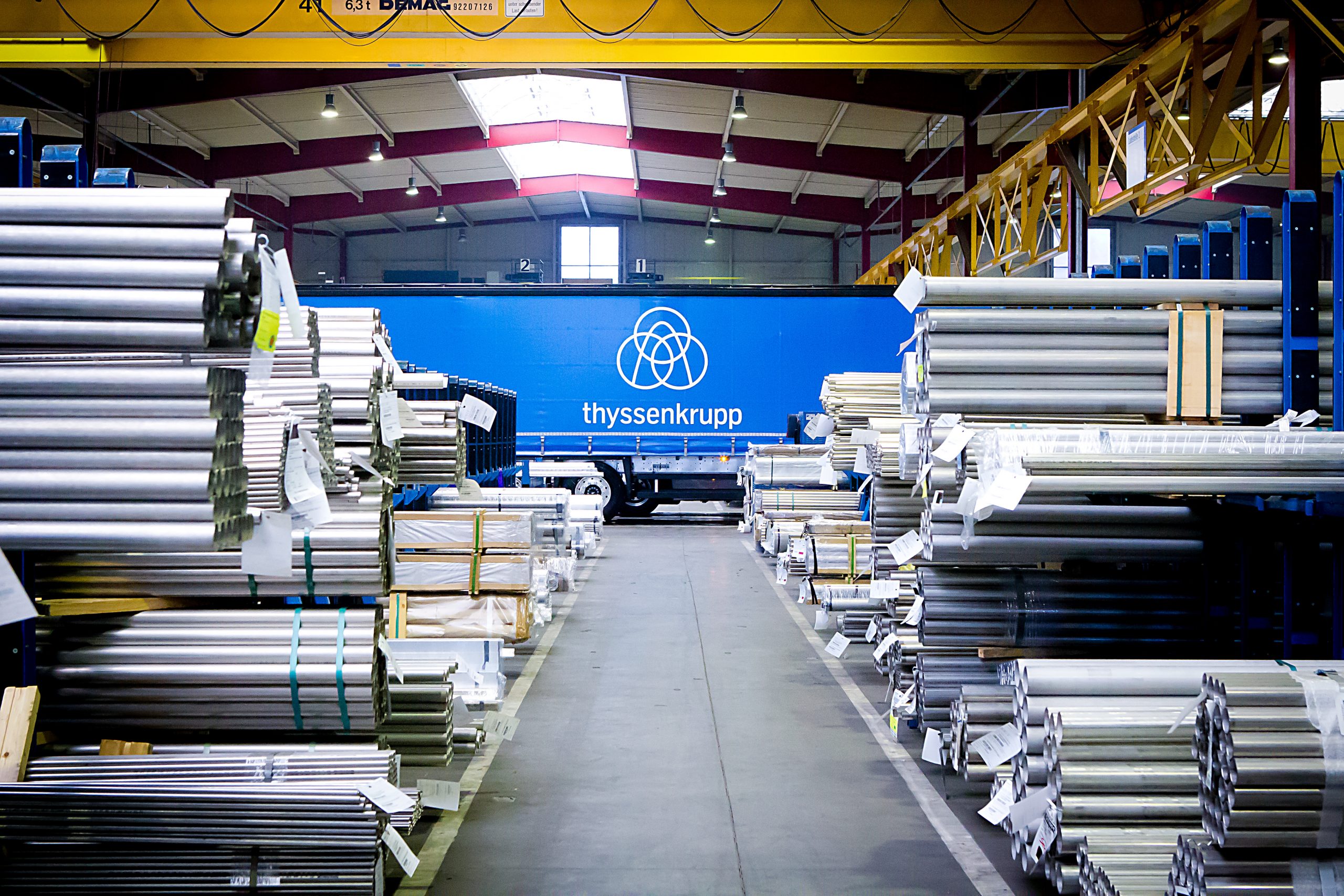
Flacks Group ready to bid for Thyssenkrupp Steel Europe
US-based investment firm Flacks Group has announced that it has it is prepared to bid for German steelmaker Thyssenkrupp’s steel subsidiary Thyssenkrupp Steel Europe if ongoing negotiations to sell the business fail.
Michael Flacks, CEO of Flacks Group, said, “Our main interest is now in Italy, but we are interested in major steel companies, and if the talks regarding an acquisition of Thyssenkrupp’s steel business fail, we are ready to bid for it.”
Thyssenkrupp has been in talks with Jindal Steel International since last autumn regarding a potential sale of its steel division, but negotiations have not yet produced a formal bid.
Possible consolidation in European steel
If a deal were to materialize, it would represent another significant step in the ongoing restructuring of the European steel industry, which continues to face pressure from high energy costs, global overcapacity and weak demand, SteelOrbis understands.
The outcome of the talks with Jindal Steel International will likely determine whether Thyssenkrupp proceeds with that transaction or opens the process to alternative bidders such as Flacks Group.

Local Bulgarian longs prices start to rebound amid market uncertainties after gradual drop
Last month, domestic prices in Bulgaria had been gradually declining, bringing the market to more balanced price levels, after the country had entered the new year with high prices after the switch of the currency to the euro and amid relatively high stocks. As a result, the generally seasonally slow demand and the easing of currency-related speculation led to a gradual fall of €10-25/mt gradual.
However, with the outbreak of war in the Middle East and related concerns and somewhat pessimistic expectations in the European market, some Bulgarian suppliers have started to raise their offers. In particular, according to sources, Promet has increased its rebar prices this week by €15-20/mt to €620-630/mt CPT. Many local suppliers, including traders, have followed suit, while the trend may gain strength in the near future. Some traders have added €5-10/mt to €615/mt CPT over the past week, sources told SteelOrbis. “[It is] not clear yet if buyers will largely accept [higher prices] but let’s say the market is a bit livelier today,” a trading source said.
In the import rebar segment, according to local market players, some purchases have already been concluded for the second quarter quota, but some quota is still reported to be available for the first quarter. Ex-Turkey rebar is on offer at $545-555/mt FOB for March-April shipments, up $5/mt over the past week, or at around $565-580/mt CFR Bulgaria, with estimated freight of $20-25/mt. Egyptian mills have increased their rebar prices for April-May shipments by $5-10/mt over the past week to $550-555/mt FOB, which is around $575-585/mt CFR with the increased freight rate of $25-27/mt. Rebar offers from Italy are as usual on the high side – at €635-640/mt CPT, while it is reported that these levels are not attracting any demand.

Tight import supply, healthy order books help European HRC steel prices firm
The escalation of the conflict between Iran and the US almost immediately resulted in higher energy costs and increased freight and insurance rates, and led to partial re-routing of marine traffic from the Suez Canal to the Cape of Good Hope, which extended cargo delivery times by at least two weeks.
This had an additional negative effect on imports, which were already hampered by the introduction of the Carbon Border Adjustment Mechanism (CBAM) earlier this year.
Sources in Northern Europe said tradeable levels for local hot-rolled coil had moved to €700 ($812.35) per tonne ex-works and above, with mainly May-delivery material now available.
Earlier this week Fastmarkets heard about several cargoes changing hands within the range of €700-710 per tonne ex-works.
A few sources, however, still considered €685 per tonne ex-works to be tradeable.
Fastmarkets’ daily steel hot-rolled coil index, domestic, exw Northern Europe was assessed at €700.00 per tonne on March 6, down slightly by €0.63 per tonne from €700.63 per tonne on March 5.
The index was up by €13.93 per tonne week on week and by €43.75 per tonne month on month.
Fastmarkets’ daily steel hot-rolled coil index, domestic, exw Italy was €680.83 per tonne on March 6, up by €0.83 per tonne from €680.00 per tonne on March 5.
The index was also up by €10.20 per tonne week on week and by €32.91 per tonne month on month.
Suppliers said April-delivery cargoes were unavailable and that May volumes were being gradually offered, with €700 per tonne indicated as the desired level. Estimates of workable prices remained around €680 per tonne ex-works.
Central European domestic steel hot-rolled coil prices also moved upward amid mounting concerns linked to the conflict in the Middle East, Fastmarkets heard.
“With the situation in Iran it is difficult to predict what will happen and whether this will lead to tensions in the market,” a source said.
Fastmarkets’ weekly price assessment for steel hot-rolled coil domestic, exw Central Europe was €670-700 per tonne on Wednesday, rising from €665-690 per tonne in the previous assessment period.
The increase was supported by higher offers heard at €685-700 per tonne ex-works, while transactions were heard at €670-690 per tonne ex-works.


Andritz sets focus on electrical steel technology
The Metals division of Andritz is working on a new furnace concept for manufacturing electrical steel, Kallanish hears from the Austria-based plantbuilder.
The focus is on a fully modular design that ensures quick installation, the company explains. The electrical steel produced in these furnaces offers improved efficiency and can be directly integrated into processing lines already supplied by Andritz, it notes.
Following the market introduction of the Sundwig MonoBlock, a 20-roll mill for the production of cold-rolled strip, Andritz now has the complete portfolio of multi-roll mills for production of electrical steel in foil thickness.
The company says it aims to establish itself as a complete solutions provider for the production of non-grain-oriented electrical steel.
To this purpose, in December, Andritz acquired a 51% stake in China-based Baoding Sanzheng Electrical Equipment, a supplier of solutions for the induction heating field located in Hebei Province, the country’s largest steel-producing province.
The integration of Sanzheng gives Andritz a complete portfolio of induction heating technologies, complementing the capability to deliver full-line solutions for electrical steel processing, galvanizing, annealing, and forging.
Another acquisition in the Metals division last year was Salico Group, headquartered in Italy and Spain, which specialises in advanced finishing equipment for metal flat strip processing.
In 2025, the Metals division of Andritz recorded order intake of €1.48 billion ($1.71 billion), down 13% versus 2024. Customer demand is increasingly shifted toward smaller-scale projects, modernisations and non-automotive applications, such as defence, it says.
The larger Andritz group, including Hydropower, Pulp & Paper, and Energy & Environment, achieved an order intake of €8.9 billion, marking an increase of 7.6% from the previous year.

UK steel remains uncompetitive without policy changes: panel
The UK steel sector will remain uncompetitive without better government policy to protect it ahead of changes to safeguard quotas in other regions, panellists said at the recent Make UK conference in London, attended by Kallanish.
Peter Quinn, director of sustainability and environment, Tata Steel UK, told attendees the UK needs to be prepared for the “cliff edge” coming on 1 July when the EU’s new quota and tariff regime comes in. “We want to at least preserve what we’ve got now,” he noted.
Gareth Stace, director general, UK Steel, also warned of damage to the industry, “unless this government, because it’s now or never, does something really important and significant to change the fortunes of our sector”. Without action, it “will be a very, very different sector in the next few years”.
He also noted that concerns over energy and carbon costs, as well as procurement still need tackling, and if the government does not address those, “we are still dead in the water”. However, the new EU tariff-rate quota regime “blows everything else out of the water”.
If the UK government fails to respond and “give us a really good, robust and strong UK steel quota and safeguards from 1 July and address the uncompetitive business landscape, then we will not be the sector that even you know at the moment,” he warned.
Carles Rovira, chief executive at 7 Steel, argued “there is no reason UK steel production cannot be competitive”, noting the country will have the latest technology, using electric arc furnaces, skills and scrap.
“What we’re asking [from] government is to give us the same means other steel producers have to compete,” he asserted. He highlighted scrap barriers for 48 countries, making the material cheaper domestically. Other countries which have subsidies for energy should not be seen as “competitive”, he argued.
Meanwhile, Alasdair McDiarmid, assistant general secretary, Community Union, said: “We need to stop lurching from crisis to crisis. We’re in a hole [and] it seems like we’ve been in a hole for a very long time; we need to fix this once and for all.”
He expressed frustration to still be calling for the same support as when the Steel Council was first formed in 2015 after the SSI steelworks collapsed. “We defined what the industry needed at that time; there were five key priorities, action on energy prices, procurement, trade defence, reform of business rates and support for decarbonisation investment, and we’re now in 2026, 11 years on and these are still the priorities,” he lamented.
“We know what the problems are, we know what the solutions are, it’s very, very frustrating,” he added.
Meanwhile, Quinn described the ETS schemes in the UK and EU as “blunt instruments” that have not been effective in creating conditions to decarbonise “a very capital intensive business”.
“It was punitive, it was a cost for not decarbonising, but it didn’t help you to decarbonise, it just punished you for not doing it and the two things are different,” added Quinn.
Stace expressed concerns over the UK’s CBAM policy. “Unfortunately, within Treasury, CBAM is developing … but it’s going to achieve exactly the opposite of what it should,” he warned.
He highlighted UK Steel calculations show Chinese steel will pay less in CBAM costs than steel produced in the UK. “It should have been the other way round and it’s astonishing that we’ve got less than a year to go before it comes into effect on the 1st of January next year and yet Treasury is working through a policy that’s going to damage us even further,” he concluded.

Low-emission mandate-driven demand should support EU decarbonisation investment
Mandating low-emission steel use in the EU’s construction and automotive sectors would allow steel to gain a green premium that will be partially passed on to the price of final products. This predictability of future demand for low-emission material could absorb part of transition investment costs and push further decarbonisation investment decisions, the European Commission notes.
Earlier this week, the Commission published its Industrial Accelerator Act (IAA) legislative proposal, including a stipulation that 25% of steel volume procured for public projects launched from 2029 must be low-emission.
In its IAA impact assessment, the Commission points out there are at least 29 announced steel decarbonisation projects, with a combined potential capacity of additional 41 million tonnes/year of low-emission steel by 2030, that have not yet reached the final investment stage.
The proposed lead market measures could unlock up to €15.5 billion ($18 billion) in investments covering approximately 15% of the sector’s €100 billion total investment need by 2050, it adds in the document monitored by Kallanish.
“The measure will create a more stable and predictable domestic market for European producers, allowing them to secure long-term contracts for low-carbon materials in public works and supported sectors. This internal market stimulus is expected to offset any small decline in export volumes, reinforcing industrial utilisation and accelerating investment recovery,” the document notes.
“In addition, by slightly increasing domestic output and reducing exposure to highly concentrated foreign supply chains in the supported segments, the measure provides a modest economic-security gain, lowering vulnerability to sudden price shifts, coercive practices or export restrictions from dominant suppliers,” it adds.
In terms of how the measure impacts downstream sector competitiveness, “given the significant share of vehicle registrations supported by public support schemes, it is reasonable to expect that introducing low-carbon steel and aluminium requirements as a condition for accessing such support would strongly incentivise vehicle manufacturers to adopt low-carbon materials across a significant part (if not the entirety) of their product portfolio, particularly for models intended for the EU market,” the document notes.
“At the same time, there is a risk of losing competitiveness on third countries markets, especially if no similar low-carbon policies apply,” it adds. “Consequently, the absence of similar requirements in other world regions may put – in the short term – EU vehicle manufacturers in a condition of relative cost disadvantage and possible relocation of EU industry.”
“Moreover, the risk of capacity constraints in the low-carbon steel and aluminium supply-chain should not be neglected: the moderate low-carbon ambition tabled under this measure is therefore based on the existing pipeline of projects, to prevent that risk,” it says.
As low-carbon production scales up, premiums are projected to decline, reducing the competitiveness gap. In the medium term, the expansion of EU low-carbon capacity and declining green premiums are expected to strengthen the overall competitiveness of the European industrial base, enabling it to compete globally on both cost and sustainability performance.
Nevertheless, “the limited willingness to pay for the green premium depends on a range of policy measures to bolster the business case for decarbonisation investments, optimising net benefits,” the Commission notes. “Importantly, the lion’s share of demand generated by lead markets measures will continue to originate from private sector uptake and procurement.”

Corinth buys Liberty Pipes Hartlepool
Corinth Pipeworks, which is owned by Cenergy Holdings, has bought Liberty Pipes Hartlepool, Kallanish learns from the companies.
Liberty launched an accelerated sales process for the pipe facility in February, selling the business to Corinth for £10 million ($13.4m).
The Asset Sale Agreement (ASA) was signed on 4 March between Corinth Pipeworks UK, a wholly owned subsidiary of Corinth Pipeworks (CPW), and the joint administrators of Begbies Traynor, appointed by the Business and Property Courts of England and Wales in London.
Corinth says the strategic acquisition marks an important milestone in the long-term growth plan of the pipework’s business by increasing its capacity and strengthening its position as a key supplier to the global energy sector.
The facility produces submerged arc welded (SAW) line pipe and has a capacity of 250,000 tonnes/year, providing pipe for the carbon capture sector, hydrogen infrastructure, LNG and oil and gas projects across the UK, EU, Americas, the Middle East and Asia.
Alexis Alexiou, chief executive of Cenergy Holdings, says: “With new LSAW pipe production capabilities – which are valued for their mechanical strength, high quality and suitability for critical high pressure uses – we’re expanding our potential. By merging our global expertise with a top tier mill and skilled workforce we can provide tailored solutions to clients worldwide.”
Corinth also says the facility is a significant asset for the UK and aligned with government priorities in infrastructure renewal and decarbonisation, through the use of hydrogen and carbon capture & storage. Trends in reshoring and national supply chain resilience further enhance its growth potential.
Ilias Bekiros, general manager of Corinth Pipeworks, adds: “Hartlepool LSAW facility’s strategic acquisition intends to double CPW’s LSAW capacity, enabling the company to undertake major projects worldwide. The move further strengthens CPW’s position as a leading manufacturer of pipes for demanding deep offshore applications, supported by an exceptional track record in the industry.”

Judge orders US customs to initiate tariff refund process
A federal judge ordered the US government to begin the process of issuing billions of dollars in refunds to importers after the Supreme Court deemed the implementation of country-specific duties was illegal, according to court filings.
The order marks a victory in the first step for importers as they navigate an unprecedented refund process.
Judge Richard Eaton of the US Court of International Trade directed US Customs and Border Protection to finalize import entries without the tariffs issued under the International Emergency Economic Powers Act, which US President Donald Trump invoked to implement the global tariffs. Supreme Court justices in their decision said Trump exceeded presidential authority and determined president cannot rely on emergency powers to impose the tariffs.
Eaton also ordered US customs to review any entries that have previously been finalized to remove the tariffs, resulting in refunds.
“Customs knows how to do this,” Eaton said during a court hearing on March 4. “And the processes are in place to perform the liquidation of the entries and to issue the refunds.”
The order comes one week after a federal appeals court on March 2 denied a request from the US Department of Justice to delay the start of the refund process. The court’s decision allowed the Court of International Trade to begin determining the mechanics of refunds.
Importers have filed over 2,000 cases at the CIT. The number of entries filed that subject to the IEEPA tariffs between February 2025 to February 2026 was over 71 million, US Customs said in a court filing.
The US collected $142 billion in duties under the IEEPA tariffs in 2025, according to an analysis of Customs and Border Patrol data by the Yale University Budget Lab.
Importers of pig iron and iron ore stand to benefit from refunds, although other metals and energy commodities were exempt from the varying country-specific rates. Importers of certain agricultural products paid IEEPA tariffs until November 2025, when Trump exempted many of them after reaching trade agreements with over a dozen countries.
Eaton set another hearing for March 6, 2026, requesting updates from Customs on refund plans. It is possible the Trump administration could challenge or appeal the court’s order.


EUROMETAL meets with Türkiye Exporters’ Assembly (TIM) in Brussels
EUROMETAL President Alexander Julius and Director General Ricardo Silva were received yesterday in Brussels by the Türkiye Exporters’ Assembly (TIM) at its newly established Brussels office.
TIM is the umbrella organisation representing more than 150,000 exporting companies across all industries in Türkiye, including the steel and metals sectors. The opening of its Brussels office aims to strengthen dialogue with European institutions as well as with sectoral and industry associations.
During the meeting, TIM Director General Mehmet Tan introduced the organisation’s activities and priorities, and explored potential avenues for future cooperation with EUROMETAL. Mr. Mehmet Emin Kavlak, Deputy Brussels Representative of TIM, also participated in the discussions.
The exchange provided an opportunity to discuss the strong and longstanding trade relationship between the European Union and Türkiye, where Türkiye remains an important partner for both imports and exports.
Participants also discussed the evolving policy landscape affecting the steel industry, including decarbonisation pathways. Türkiye’s steel sector was highlighted for its relatively high share of electric arc furnace (EAF) production, which plays an important role in reducing the sector’s carbon footprint.
The meeting also touched on broader trade and policy issues, including the EU–Türkiye Customs Union framework, ongoing discussions related to EU–Türkiye trade relations (FTA negociations), and the importance of addressing global steel overcapacity while ensuring that trade measures remain consistent with WTO rules.
Both organisations agreed on the value of maintaining an open dialogue between European and Turkish stakeholders to support a competitive, transparent and sustainable steel value chain.