


European green steel premiums unchanged amid slow trading; policy impact remains distant
Buying interest for steel produced with a reduced carbon footprint remained limited across Europe during the assessment week.
Seller sources have reported “very few inquiries” for green steel in recent weeks, but attributed this partly to the winter holiday break in Europe.
Still, sellers expressed cautious optimism, expecting green steel demand to pick up in 2026, supported by regulations.
Several sources noted that green steel had come increasingly into focus following recent decisions related to the EU’s carbon border adjustment mechanism (CBAM) and the proposed automotive package regulation
Market participants added that while the rollout of CBAM and the gradual phase-out of free carbon allowances in Europe are expected to support demand for green steel, any meaningful impact is unlikely in the near term.
Under Fastmarkets’ methodology, European green flat steel is defined as material produced with Scope 1, 2 and 3 greenhouse gas (GHG) emissions capped at a maximum of 0.8 tonnes of carbon dioxide per tonne of steel produced.
Offers for steel meeting these specifications were reported at a minimum of €200 ($232) per tonne across Europe.
But several supplier sources agreed that for reasonable tonnages, lower premiums could be achieved around €150-170 per tonne.
One supplier source said that premiums below €150 per tonne were unworkable for emissions thresholds below 800 kg of CO2 per tonne.
But buyers gave lower estimations in the range of €70-150 per tonne during the assessment week.
A buyer source said that green steel premiums in the three-digit range were attainable only in project-driven transactions, noting that higher premiums are typically limited to public procurement and are otherwise unaffordable.
At the same time, an automotive end-user told Fastmarkets that it was securing green steel through offtake agreements with future direct-reduced iron/electric-arc furnace (DRI-EAF)-based producers, arguing that scrap-based green steel currently available on the market could not be considered “fully green.”
Such comments highlight that the absence of commonly accepted standards and definitions for green steel remains one of the key obstacles to its broader adoption across supply chains.
Fastmarkets’ weekly assessment of the green steel domestic, flat-rolled, differential to the hot-rolled coil index, ex-works Northern Europe was stable at €100-170 per tonne on Thursday.
Meanwhile, Fastmarkets’ assessment of the flat steel reduced carbon emissions differential, ex-works Northern Europe was €40-50 per tonne on Thursday, also stable week on week.
For steel produced in blast furnaces with reduced carbon emissions of 1.4-1.8 tonnes of CO2 per tonne of steel, offers for premiums were reported at €60-70 per tonne during the assessment week.
Buyers’ estimates of tradable prices were around €40-50 per tonne, with no new trades reported.
Author: Julia Bolotova


EU public procurement proposal for low-CO2 metal by end of month: EC official
Moutarlier hinted at the much-awaited update on procurement rules on Thursday January 15 during a panel discussion at the Future Minerals Forum in Riyadh, Saudi Arabia.
Talking about the willingness to pay for a green premium metal and how regulation could help incentivize the uptake of lower-carbon-emission metals that often come with a higher price tag, the official said the EC is looking at this now.
“We will be coming later on this month with our Industrial Accelerator Act, trying to tie green products with public procurement or subsidy plans so that there are incentives that as regulator we can bring to bridge the gap,” Moutarlier said.
“We need to be selective and we will probably start at least with green steel in our proposal later this month. This is not something that we will be able to impose all throughout the different projects and for all the different material,” Moutarlier added.
The panel also discussed other incentives that could help uptake, such as a proposed floor for critical minerals to help boost the market.
Trading for green metal premiums remains slow in Europe amid economic weakness, which remains a hurdle to committing to a premium if there is no obligation.
Fastmarkets’ weekly assessment of flat steel reduced carbon emissions differential, exw Northern Europe was €40-50 ($46-58) per tonne on Thursday, stable week on week.
Fastmarkets’ monthly assessment of aluminium low-carbon differential P1020A, Europe was $0-30 per tonne on January 2, up from $0-20 per tonne on December 5. In comparison, the European low-carbon premium lags behind Asia, with Fastmarkets’ aluminium low-carbon differential P1020A, Japan, South Korea assessed at $40-85 per tonne on January 2, stable month on month.
With carbon costs increasingly in focus, plans such as the Carbon Border Adjustment Mechanism may be an incentive to buy lower-carbon-emission material, even if there is no intention of greening the supply chain, according to panelists.
“It’s not even always a willingness to pay for green, but sometimes it’s a pure cost calculation that you’re avoiding CO2 cost,” Christian Hoffmann, partner Metals & Mining Practice at McKinsey, said on the panel. “And that avoidance of CO2 cost makes it a business case,” Hoffmann said.
Author: Laura Varriale
Worthington Steel’s Kloeckner takeover two years in the making
“We had been looking at this deal for two years and Kloeckner was always number one on the list [of potential acquisition targets],” Worthington Steel president and CEO Geoff Gilmore said on Friday.
News of Worthington Steel’s takeover attempt of the German metals processor and distributor broke in early December 2025, ringing out a year of intense mergers and acquisitions (M&A) in the overall steel industry.
On the evening of Thursday January 15, news emerged that Worthington Steel was successful in its takeover attempt, entering a business combination agreement with Kloeckner & Co to create the second-largest steel service center company in North America, with more than $9.5 billion of combined revenue.
The combination of Worthington Steel and Kloeckner & Co has created a distribution giant in North America, taking the spot previously occupied by the merger of value-added processor and distributor Ryerson Holding and metals service center Olympic Steel, which created a $6.5 billion service center behemoth.
Gilmore said he had expressed his congratulations to the CEOs of Ryerson and Olympic when their mega merger was announced and said he was happy to let them have the spot of the second-largest North American steel service center for just two months.
“They cannot claim to be the second largest any more; now we are the second-largest [steel service center] company [in North America] and they are a distant third,” Gilmore said.
Despite being a German company, about 75% of Kloeckner & Co’s shipments are in North America, making it an attractive acquisition target, Gilmore said.
Kloeckner & Co, with approximately 110 locations across North America and Europe and product capabilities including carbon flat-roll steel (sheet and plate), electrical steel, aluminium, stainless steel and long products, was an attractive M&A target as it is a “highly complementary business” with “adjacent markets” to Worthington Steel’s operations, Gilmore told Fastmarkets.
Kloeckner & Co has “more end-market diversification” than Worthington Steel, Gilmore said, noting that the “significant synergies” of the “much bigger combined company” will make for seamless integration of the two companies.
Together, the combined company will have about 12,000 employees, Gilmore said.
The synergies could amount to approximately $150 million in anticipated annual cost, operational and commercial process synergies primarily in North America and about 95-99% of those synergies are in Kloeckner’s North America operations, Gilmore said.
Synergies are expected to be fully realized by the end of Worthington Steel’s fiscal year 2028 and the transaction is expected to triple Worthington Steel’s scale in terms of sales, representing approximately $9.5 billion of combined revenue while maintaining margins above 7%.
A subsidiary known as Worthington Steel GmbH has been established for the acquisition, which will launch a voluntary public offer to acquire all outstanding shares of Kloeckner & Co.
Kloeckner shareholders who choose to participate in the offer will receive €11 ($12.76) in cash for each share tendered into the offer.
The offer price implies an enterprise value of $2.4 billion.
Kloeckner’s US assets have drawn the attention of other North American market participants as well, as the German company sold eight distribution sites of its US subsidiary, Kloeckner Metals Corporation (KMC) in 2025.
Georgia-based KMC sold seven US-based service centers to Canadian processor and distributor Russel Metals for approximately $119 million in late September 2025 and sold an eighth US distribution site to Service Steel Warehouse.
USMCA review: “Imperative to get a strong intercontinental agreement”
It is unsurprising that M&A activity heated up last year, according to Gilmore, as it is only the “bigger businesses with stronger balance sheets” that can make the investments in technology and talent required to fortify a company against market shocks.
2025 was a year of dizzying M&A activity in both the steel supply and distribution side, driven by heightened trade uncertainty and beset by US President Donald Trump’s “America First” trade policy, which deployed steep metal tariffs and upended traditional supply chains.
The review of the US-Mexico-Canada Agreement (USMCA), scheduled for July 1, 2026, is of crucial importance to the future stability of a business like the one Gilmore is heading.
“It is imperative to get a strong intercontinental agreement in place,” Gilmore said, underlining Worthington Steel’s expansion of its Tempel Steel facility in Apodaca, Mexico, to capture a larger chunk of the growing North American laminated electrical steel market.
“There is not enough electrical steel capacity [in the US] and Worthington Steel would feel positive about investing more in Mexico,” Gilmore said, adding that for further investments to occur across borders, a definite answer to what a revamped USMCA would look like is required.
The uncertainty caused by the future of the USMCA is concerning for any steel sector CEO and has slowed down onshoring and nearshoring of steel supply chains, Gilmore said.
“Every end market has been subdued last year and interest rates would have gone down more if not for the [inflationary pressure] created by the trade tariffs,” Gilmore added.
Author: Rijuta Dey
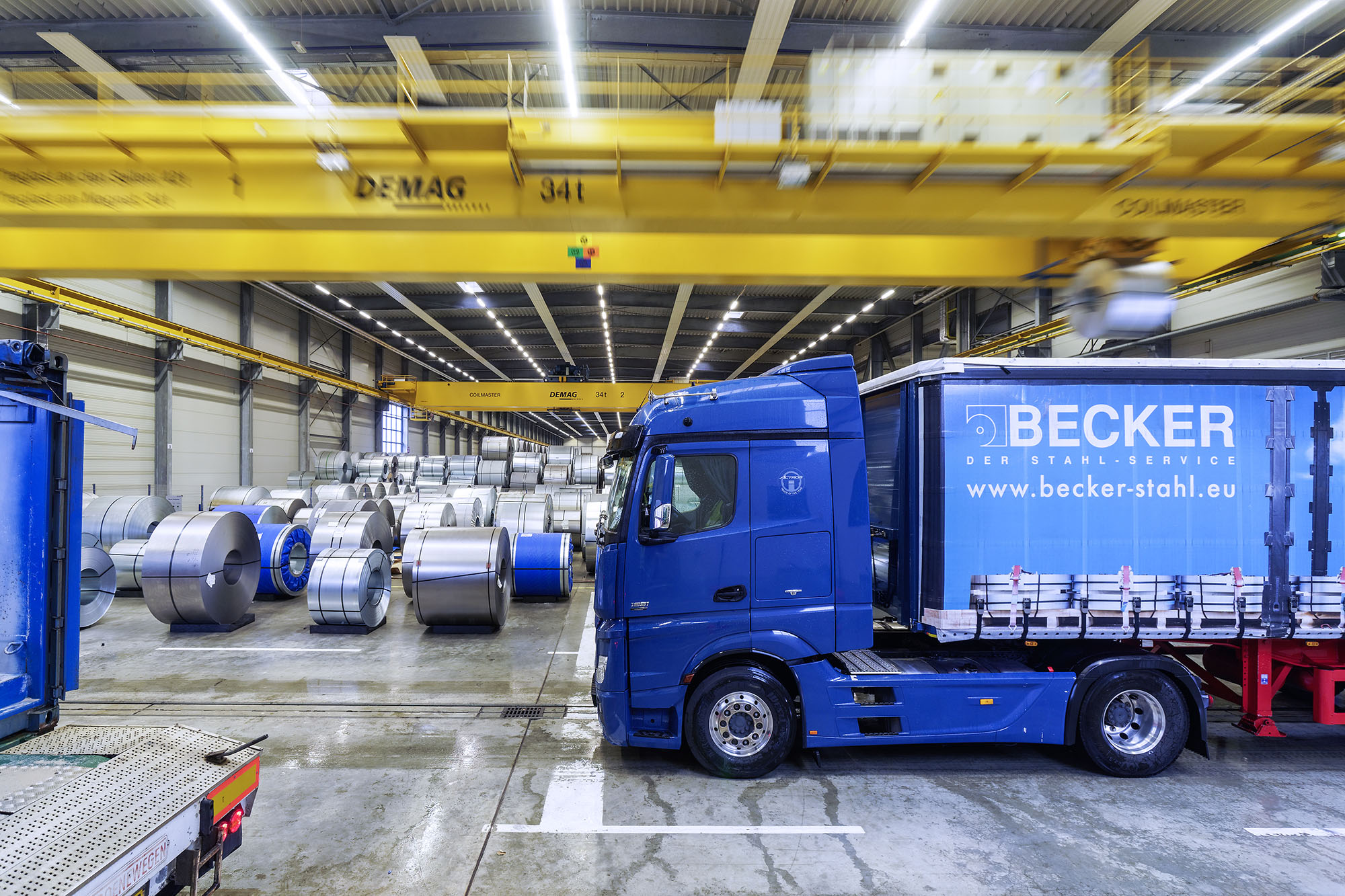
Klöckner & Co intends to divest Becker Group
Klöckner & Co announces its intention to sell Becker Group, one of the largest multi metal platforms in the flat steel sector in Europe.
The Management Board of Klöckner & Co reached this decision after a comprehensive analysis and assessment of possible strategic options for Becker Group.
With this move, Klöckner & Co aims to enable the Becker Group’s participation in industry consolidation in Europe under new ownership, while placing a sharper focus on higher value-added products and services.

Sweden builds dam gate using fossil-free steel
Vattenfall will engineer a dam gate for the Stornorrfors hydroelectric power plant outside Umeå in north-eastern Sweden, which will be made from steel developed as part of the HYBRIT joint venture, Kallanish learns.
The object will weigh 120 tonnes, be 21 metres high and 10m wide. It is used to regulate the water flow at hydroelectric power plants. The goal is for it to be installed in 2028 and become operational in 2029.
“The construction itself is, of course, extensive, but the logistics and installation will also require a lot of planning. With components this large, for example, special transport will probably be required,” says Stefan Tyrbo, Vattenfall’s project manager for the project.
Dam gates have a service life of over 70 years, making their replacement a fairly rare occurrence.
Author: Christian Koehl Germany


Tata Nederland opens packaging steel production line
Tata Steel Nederland has commissioned a new production line for packaging steel, the company informs Kallanish.
The line builds on Tata’s proprietary TCCT technology (Trivalent Chromium Coating Technology) for packaging steel that is more sustainable and already complies with future legislation, the Dutch steelmaker says.
Tata Nederland notes it is the exclusive developer of this technology, and holds the patent. It also licenses TCCT technology to other steel producers. On the new line, TCCT is combined with another proprietary technology of Tata Nederland, Protact (polymer-coated packaging steel), a coating which uses no lacquers, and has a chromium VI-free substrate which is compliant with forthcoming European REACH legislation.
Combined with Protact, TSN meets the strictest food safety standards and simplifies the customer’s production process, because no extra lacquer layer is needed, the company explains. This means lower costs, fewer chemicals, and a shorter supply chain, it notes.
In the Netherlands, more than 95% of packaging steel is recycled into new steel.

European stainless industry navigates new world order: SSN
A systemic change in the world order has created new challenges for European stainless steel companies and forced them to rethink the way they do business. The focus now is on defending profitability rather than sales or production growth, says Andrzej Michalski-Stepkowski, chairman of Poland’s Stowarzyszenie Stal Nierdzewna (Stainless Steel Association – SSN).
Europe has gone from producing 17% of the world’s crude steel stainless steel in 2014 to less than 10% in 2025, with Asia leading stainless output growth. However, Poland is one of the EU’s largest stainless consumers, representing 10% of the market with apparent demand of 490,000 tonnes in 2025.
While globalisation saw the movement of low-cost produciton to the East, innovation has since also moved in that direction, and Asia is now selling specialised products to the West, Michalski-Stepkowski noted at Thursday’s Stainless Steel Forum in Chorzow. The EU has meanwhile lost competitiveness amid high energy and labour costs, as well as heavy regulation.
Global overcapacity of various commodities has resulted in geopolitical unrest, the dissolution of alliances, break-up of supply chains, trade wars, and the resulting threat to EU industry.
AI is meanwhile revolutionising the way business is done. The US is investing heavily into data centres, which will require significant energy supply, some of it from nuclear plants, which presents a strong opportunity for stainless suppliers.
In response to these challenges, EU policymakers have become more pragmatic concerning once heavily punitive climate regulation. “Today, no EU politician in Brussels wants to admit that they once supported the Green Deal,” Michalski-Stepkowski asserted at the event attended by Kallanish. The policy was “ill-conceived”, he added.
EU policymakers acknowledged there was something wrong in 2024 and commissioned Mario Draghi to produce his now widely-lauded report, on the basis of which various EU policy initiatives have been established. These include the Clean Industrial Deal and Steel and Metals Action Plan.
“There was a period when I thought we [European industry] would become a museum and China would take over,” Michalski-Stepkowski noted. “Today, I am more optimistic because … I see things are happening.” Business will continue but in a different way, with strategies adapted to maximise margins using the resources at Europe’s disposal. The use of AI and cost optimisation will feature. Growth will return, but not based on capacities or sales, but on profit, he concluded.
Swedish output declines, SSAB to replace key bridge
November’s y-o-y drop was deeper than the year-to-date figure. From January through November, a total of 3,640,000t of crude steel was produced in Sweden, 1.4% less than in the corresponding 2024 period.
The production statistics compiled by Jernkontoret are based on data from eleven crude steel plants in Sweden.
Meanwhile, the federation has also disclosed plans by SSAB to replace the old Mjälga Bridge over the Dalälven River in Borlänge.
The existing bridge, which is central to the transport of steel within SSAB’s industrial area, has reached the end of its technical life. It will be replaced by two new bridges – a railway bridge and a road bridge with a pedestrian and cycle path. The project will start in 2027 and last for two-three years.
SMA urges Congress to safeguard Section 232 tariffs
The Steel Manufacturers Association (SMA) is urging Congress to safeguard Section 232 tariffs, Kallanish learns from a SMA press release.
In testimony at the State of Steel hearing, SMA chairman Barry Schneider notes that the US steel industry is in a strong position, supported by pro-manufacturing policies and past tax reforms. He did warn that challenges like Chinese oversupply, high interest rates and slow permitting still threatens progress.
Schneider calls on the White House to maintain strict enforcement of Section 232 to prevent unfairly traded imports.
“The 232 tariffs on steel have been a tremendous asset to the American steel industry and bolstered national security since they were first introduced in 2018,” states the SMA chairman.
The panel urges strengthening the United States-Mexico-Canada Agreement (USMCA) by adding tougher rules, including “melt and pour” standard for steel, stronger labour value requirements and aligned border measures in Canada and Mexico. These steps aim to reduce dependence on non-market steel from countries including China and to increase North American steel demand.
“A strengthened USMCA could be instrumental in boosting steel demand across the region, advancing both the American steel industry and the administration’s broader trade policy goals,” adds Schneider.
Federal infrastructure spending, including the Infrastructure Investment and Jobs Act, is crucial for boosting demand for American steel. Passing the Leveling the Playing Field 2.0 Act would strengthen the tools needed to fight unfair trade practices, according to the testimony.

European rebar producers push for higher prices, but buyers resistant
Rebar producers in some key European markets attempted to push up their offers in the week to Wednesday January 14, after fully returning from the winter holiday, but buyers were in no mood to accept higher prices, sources told Fastmarkets.
Suppliers were also aiming to pass on increases in scrap and energy costs – aiming to benefit from the generally upbeat sentiment since the introduction of the Carbon Border Adjustment Mechanism (CBAM) at the start of January.
The CBAM is widely expected to reduce steel imports to the EU, sources said
But buyers were in no hurry to accept price rises, mainly because of seasonally slow demand from the construction sector, where previous purchases at lower prices meant producer stocks were already sufficient.
“Currently, demand from cut-and-bend producers is low because not all construction sites have returned to work,” one Italian producer told Fastmarkets.
All cut-and-bend producers have warehouses, so they prefer see whether the prices will actually increase or not,” the producer added.
And an Italian trader said: “Demand is not so good these days – maybe customers are still in waiting mode. The first January weeks are cold, so building activity [only resumes] very slowly.”
Deals were done at around €550-580 ($640.52-675.46) per tonne per tonne ex-works in the week to Wednesday, sources said, while offers started at €590 per tonne ex-works or higher, with mills expected to push them to well above €600 in the coming weeks.
Fastmarkets’ weekly price assessment for steel reinforcing bar (rebar) domestic, exw Italy widened down to €550-600 per tonne on January 14, from €560-600 per tonne a week earlier.
In Spain some of the producers made attempts to raise their offers to €665 per tonne delivered from €650 per tonne delivered, but new offers were left without a reaction from customers.
As a result, Fastmarkets’ corresponding price assessment for steel reinforcing bar (rebar) domestic, delivered Spain remained stable in week on week comparison at €645-650 per tonne on January 14.
In Northern Europe mills’ offers moved to €610-635 per tonne delivered from €600-615 per tonne delivered before holidays. However, even some producers noted that their increases failed to gain traction.
Consequently, Fastmarkets’ price assessment for steel reinforcing bar (rebar) domestic, delivered Northern Europe also remained stable in the week to January 14, at €600-615 per tonne.