

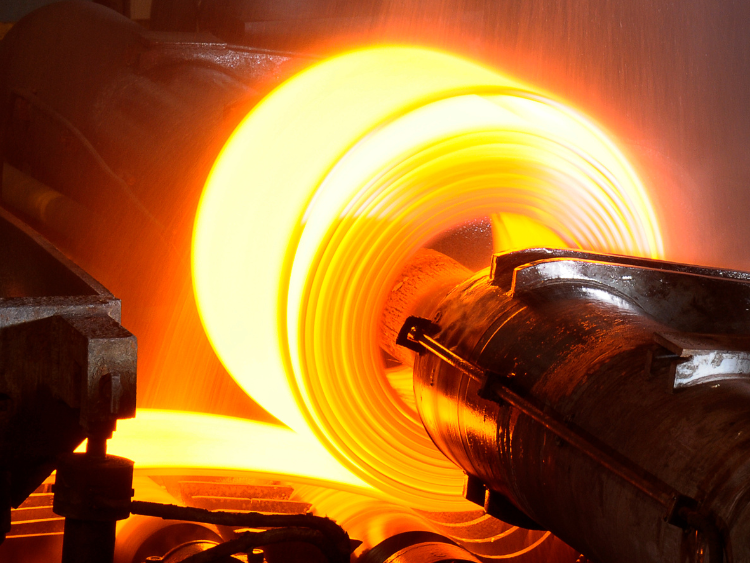
European domestic steel HRC prices stable, demand subdued
European domestic prices for steel hot-rolled coil were largely unchanged on Monday January 12 with trading being quiet. Market sources from both Northern and Southern Europe reported subdued demand, but offered different reasons.
Suppliers from Northern Europe offered HRC for delivery in March-April at €650-670 ($758-782) per tonne ex-works. Some special volumes from February delivery were said to be available at lower prices, but tonnages were limited.
Meanwhile, workable prices were said to be €630-635 per tonne ex-works with no bookings heard during the day.
A trading source said that service centers building stocks higher than normal at the end of 2025, expecting price rises to be caused by the EU’s Carbon Border Adjustment Mechanism (CBAM), was the reason for quiet demand after the winter holidays.
Fastmarkets’ daily steel hot-rolled coil index, domestic, exw Northern Europe, was €635.63 ($739.19) per tonne on January 12, up by just €0.63 per tonne from €635.00 per tonne on January 9.
The index was up by €5.63 per tonne week on week and by €13.96 per tonne month on month.
The Italian market was also said to be quiet, with no major deals heard during the day.
A local market source suggested low consumption and a struggling economy, as well as Europe’s low competitiveness in export markets, as reasons for the low demand.
The latest buyers’ estimates of tradable prices were heard at €620-630 per tonne ex-works, while offers of February- and March-delivery HRC were heard around €630-650 per tonne ex-works, depending on supplier.
Fastmarkets’ daily steel hot-rolled coil index, domestic, exw Italy, was calculated at €627.50 per tonne on Monday, down by €2.50 per tonne day on day.
The index was up by €4.38 per tonne week on week and by €16.25 per tonne month on month.
The import HRC market in Europe was at a stalemate with buyers facing a lack of clarity over the new import mechanism following the introduction of CBAM on January 1.
“I do not think anyone knows how much we are going to pay, and what are actual versus default values,” one buyer said.
Indian HRC was available within the range of €490-510 per tonne CFR, while Turkish material was offered at €510 per tonne CFR.

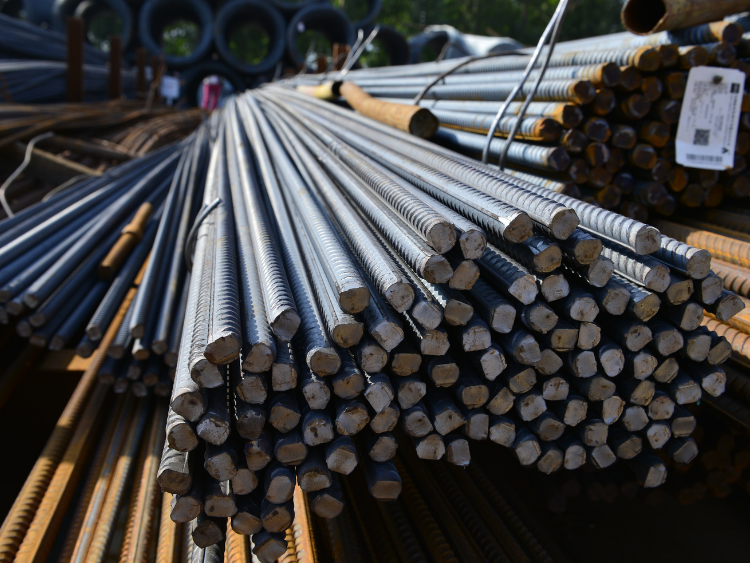
Polish domestic steel prices stable, market returning from holiday break
Domestic prices in Poland for steel rebar and wire rod remained flat in the week to Friday January 9 due to low levels of activity with market participants still coming back to the market following the year-end holidays, Fastmarkets heard.
According to trade sources, the market had not fully restarted after the break, with more movement expected in the next few days.
For drawing quality wire rod, estimates of workable prices were heard at 2,600-2,650 zloty ($721-735) per tonne CPT during the assessment period.
Meanwhile, the latest offers were heard around 2,650 zloty per tonne CPT before Christmas.
Fastmarkets’ weekly price assessment for steel wire rod (drawing quality), domestic, delivered Poland, was 2,600-2,650 zloty per tonne on Friday, unchanged since late November.
Rebar prices were also unchanged in the week to Friday, with the market still thin after the holidays and due to low demand during the winter months, according to trade sources.
One market source reported selling 100 tonnes of rebar at 2,430 zloty per tonne CPT during the assessment period, while also reporting offers heard around 2,420 zloty per tonne CPT.
But due to low liquidity in the market following the holidays, and with most market participants remaining on the sidelines during the assessment week, Fastmarkets’ assessment was unchanged.
Fastmarkets’ weekly price assessment for steel reinforcing bar (rebar), domestic, cpt Poland, was 2,400-2,450 zloty per tonne on Friday, unchanged for a month.

EU steel imports hit early 2026 bottleneck with some Q1 TRQs exhausted within days
Quarterly tariff-rate quota (TRQ) allocations on a variety of steel product imports into the EU over January-March 2026 have already been exhausted by some suppliers, less than just two weeks into the new reporting period, Fastmarkets learned on Monday January 12.
Flat steel
India has entirely exhausted its allocation for hot-rolled coil for the first quarter of 2026, just nine days after it was renewed. HRC quotas for Turkey and Taiwan were nearly full by January 9, according to European Commission customs data.
Market sources noted, however, that there were plenty of “old tonnages” that buyers did not have an opportunity to clear through customs in October-December 2025 due to high demand, so these volumes had to be transferred for clearance in January.
“We could not customs-clear all [of the HRC that] we booked from Turkey duty-free for the fourth quarter of 2025,” a buyer in southern Europe said.
Quotas allocated to traditional suppliers – Egypt, Vietnam and Japan – were intact (see table) because these three countries have also been subject to an anti-dumping (AD) duty in the EU. Definitive duties against these three suppliers were imposed at the end of September.
For downstream flat steel, a market traditionally more reliant on imports ,the situation was more dramatic.
In cold-rolled coil (CRC), Turkey had nearly fully exhausted its allocation by January 9, while Taiwan’s quota was fully used. And Vietnam had used nearly 80% of its allocation for January-March.
For hot-dipped galvanized coil (HDG), quota utilization was also high (see table).
Tight quotas and the rollout of the EU’s Carbon Border Adjustment Mechanism (CBAM) on January 1 have made imports of new steel “extremely difficult” or even “ close to impossible,” trade sources said.
The sources indicated that, on seeking customs-clearance of new imports in January 2026, customs agents requested down-payments to account for CBAM costs.
CBAM implementation was expected to increase import prices on flat steel by perhaps €35-600 ($41-702) per tonne, depending on the country of origin, assuming default emission values are used to calculate the CBAM charge.
“Imports [have] become unmanageable. There is no shortage of coil in the market so far, but domestic mills are definitely a more reliable option,” a buyer in Germany said.
Turmoil with new imports supported a bullish trend in the domestic market, despite stable end-user demand, Fastmarkets understands.
Fastmarkets’ daily steel hot-rolled coil index, domestic, exw Northern Europe, was €635.00 per tonne on Friday, up by €0.75 per tonne from €634.25 per tonne on January 8.
The index was up by €7.50 per tonne week on week and by €12.19 per tonne month on month.
Suppliers in Northern Europe offered HRC scheduled for shipment in February-March at €630-650 per tonne ex-works, while tonnages scheduled for delivery in March-April were available at €650-670 per tonne ex-works, with some mills even giving price idea for the second quarter at €700 per tonne ex-works, market sources said.
Long steel
In the long steel sector, quota uptake was markedly lagging behind that of flat steel products, with CBAM being named as a key obstacle.
Significant quota utilization was seen only in Turkish rebar and wire rod, where 60.5% and 68.4% of the quotas were taken up respectively.
This was followed by Algeria, with 29.4% of rebar quota and 39.9% of wire rod quota taken up.
“In my opinion, quota [take-up] is weak because normally Algerian, Egyptian and Turkish origins are taken up on the first day of the quarter,” one trader said. “What we are seeing now is that there are plenty of tonnages left for all countries and products, because many people are staying away from imports due to CBAM because they do not understand the cost calculations.
“ Domestic flat steel prices in Europe have increased significantly over the past several months,” he added, “while the long steel sector was slow to react, so demand shifted to local suppliers.”
Fastmarkets’ price assessment for steel reinforcing bar (rebar), domestic, delivered Northern Europe, has averaged €607.50 to date in January, versus the average of €603.50 per tonne in December 2025.
The corresponding weekly price assessment for steel wire rod (mesh quality), domestic, delivered Northern Europe, has been €595 per tonne to date in January, versus an average of €591 per tonne in December 2025.


Humanoid robots in steel industry: Atlas unveiled at CES 2026
At CES 2026, Hyundai and Boston Dynamics revealed a development that could profoundly reshape the future of steel logistics and distribution.
The fully electric Atlas humanoid robot — equipped with advanced AI from Google DeepMind and deployed within Hyundai’s broader industrial strategy — has transitioned from research prototype to enterprise-ready solution. For the steel sector, particularly in distribution and service centers, this marks a shift that is no longer hypothetical. It is tangible, strategic, and imminent.
For years, the idea of humanoid robots operating in environments as harsh and complex as steel warehouses or processing lines felt like science fiction. Early-generation machines were noisy, fragile, and dependent on hydraulic systems ill-suited for real industrial applications. That era is now over. The new Atlas, built on an electric platform, boasts the physical resilience, agility, and intelligence required to perform heavy, repetitive, and dangerous tasks—without the need to redesign the workspace. It can climb stairs, maneuver around obstacles, handle up to 50 kilograms, and work autonomously for extended periods thanks to self-swapping battery systems. It is sealed against dust and moisture with an IP67 rating, meaning it can survive and operate in the gritty, unpredictable conditions of steel service centers.
What makes this innovation especially relevant to the steel distribution sector is its adaptability. Traditional automation systems have long struggled in warehouse environments where every order is different, and where handling steel — be it bar, coil, plate, or fittings — requires precision, strength, and flexibility. Atlas addresses this variability head-on. It can assemble complex, mixed-load pallets, handle heavy slitting line tooling, transport quality control samples, or even support press brake operations and welding preparation. These are tasks that have traditionally demanded human judgment, endurance, and constant supervision. Atlas now offers an intelligent, robotic alternative that learns and adapts in real time, integrated directly into warehouse management and production systems.
What Hyundai is doing is particularly instructive. By coupling the development of humanoid robotics with the construction of their new ultra-low carbon steel mill in Louisiana — a facility designed to produce 2.7 million metric tons of flat steel for their North American auto plants — they are building a vertically integrated, future-proof supply chain. Automation is not an add-on; it is core infrastructure. The robots are not an experiment; they are the connective tissue ensuring uptime, efficiency, and worker safety across a multi-billion euro industrial ecosystem. And they are doing so with a clear timeline: internal deployment begins in 2028, with the goal of producing 30.000 Atlas units annually.
For Europe’s steel service centers, this is more than a technical development — it is a strategic warning. As Hyundai and others bring humanoid robotics into their mainstream logistics and manufacturing operations, the global competitive landscape will shift. Those who invest in preparing their facilities, workflows, and digital infrastructure for human-robot collaboration will gain significant advantages—not just in efficiency, but in worker retention, safety, and scalability.
The question is no longer whether robots like Atlas can function in the steel environment. They can. The real question is whether Europe’s steel distributors are ready to integrate them —before the technology becomes standard, and the window to lead begins to close.
Source: Steel Industry News

EU Commission pushes ahead with clause to temporarily suspend goods from CBAM in ‘serious and unforeseen circumstances’
Article 27a was in the amendment to the EU’s Regulation 2023/956 which was published by the EC on December 17 but is yet to be adopted by the co-legislators (Parliament and Council). After significant pushback from the fertilizer industry over the detrimental impacts of CBAM, combined with preexisting tariffs, the EC began to vocalize the use of Article 27a for the first time.
Wednesday’s announcement was also accompanied by “guidance on the CBAM mechanism,” marking the first time the EC has ever publicly discussed Article 27a and its implications.
Article 27a states that when the inclusion of a good in CBAM “causes severe harm to the Union internal market due to serious and unforeseen circumstances related to the impact on the prices of goods” it is empowered to “remove this good from Annex 1 until those serious and unforeseeable circumstances have passed.”
“This introduces more uncertainty around CBAM’s implementation, and some traders may adjust prices (or not fully price CBAM in) to account for the possibility of Article 27a being triggered for their product,” Fastmarkets’ senior economist Ben Crick said.
The CBAM regulation does not currently allow for the suspension or removal of goods from the scope of application of CBAM. Therefore, the EC has “included, as part of the proposal adopted last December 17, a new Article 27a would allow the Commission to remove goods temporarily.”
Crucially, Article 27a can apply retrospectively. Once it has been adopted by the co-legislators, affected goods can be removed from the scope of CBAM with retroactive effect.
This means, in a worst-case scenario, the EC has the power to remove any CBAM good from CBAM’s scope, retroactive to any date from January 1, 2026, the “serious and unforeseen circumstances” were deemed to have begun.
Providing there has been no objection from the European Parliament or Council, the EC can invoke Article 27a for up to five years and it can also be “tacitly extended for further periods of an identical duration,” the article read.
From 2027 onward — when CBAM certificates can be purchased — CBAM declarants will be reimbursed of the price they paid for the certificates when Article 27a did not apply, this was outlined in a Q&A published by the EC on Thursday January 8.
However, this does not negate the broader financial risk involved for many market participants if Article 27a is applied retrospectively.
Northwest European rebar market debates hike attempt success
Rebar mills in northwestern Europe are expected to lift their offers somewhat this month, but not by much, and their acceptance by the market will be mixed.
So far, new offers have not come in. Most German states saw extended holidays and some, as well as Austria, observed the Epiphany holiday on 6 January. Players therefore expect new offers to arrive next week at the earliest, with a €20/tonne ($23) hike seen at the most. “Benders with good orders in construction will pay, but others won’t bother filling their inventories,” an Austrian cut-and-bender manager believes.
“The market remains dull and crazy,” an eastern German manager tells Kallanish, referring to the willingness of many benders to snatch jobs from construction groups at what he calls dumping prices. His company is “well-engaged for the next half year, and it remains to be seen what’s after that”.
The introduction of the Carbon Border Adjustment Mechanism (CBAM) and other political circumstances means many players expect rising prices, but demand in the broader market does not really support that, observers say.
In December, mills could not lift their prices by as much as in previous years once they had filled their order books. “We expected some surge, but it did not happen,” the buyer of a German distributor group confirms. He sees the current base price at around €340/tonne ($396), now inching towards €350, partly because scrap prices went up some €10.
A buyer of an Austrian group tells of a deal done still at €330/t in December, “but I would not expect that [low price] now anymore”. Mills’ modest target could be €350/t, which plus the standard size extra of €265 would give €615/t delivered. However, “they might get €10 more for some weeks, and then might have to take €10 back,” says one player, describing the shakiness of the market.
Author: Christian Koehl


European domestic steel plate prices rise after year-end holidays
CBAM officially launched on January 1, and the products named above, among others, will become more expensive with the cost of the necessary certificates being added to the actual price of the material.
Moreover, there was still a lot of uncertainty over how import activity will be affected by the mechanism, which has pushed market participants to delay buying activity.
Fastmarkets’ weekly price assessment for steel domestic plate, 8-40mm, exw Northern Europe, was €700 ($816) per tonne on January 8, compared with €650-730 per tonne on January 2.
The assessment was in line with a deal heard agreed by a German supplier during the assessment week.
In Italy, fresh business was heard within the range of €670-690 per tonne ex-works, and offers heard as high as €700 per tonne ex-works on January 8. Before Christmas, workable prices were hovering in the range of €660-680 per tonne ex-works.
Fastmarkets’ weekly price assessment for steel domestic plate, 8-40mm, exw Southern Europe, was €670-690 per tonne on January 8, up from €650-680 per tonne on January 2.
“Customers will need more material from European suppliers,” an Italian producer told Fastmarkets, speaking in support of the upward trend.
Import
Import markets for both slab and plate were extremely quiet in the reporting week, with buyers returning gradually after holidays and trying to gauge the situation.
“Europeans are beginning to make inquiries [for slabs] but they will not pay more than $485 per tonne CFR,” one trader said, adding that Asian suppliers were still asking a minimum of $500 per tonne CFR for their material.
“We will see where [the price] settles next week when someone buys,” he added.
“I have not started any offers yet. [I am] looking for the demand first,” a source trading Asian slab to Europe said.
A third source reported offers of Asian material varying within the range of $500-520 per tonne CFR.
Fastmarkets’ weekly price assessment for steel slab, import, cif Italy, was $485-520 per tonne on January 8, versus €500-520 per tonne on January 2.
Market sources said that buyers would be looking for discounts to offset the cost of CBAM certificates.
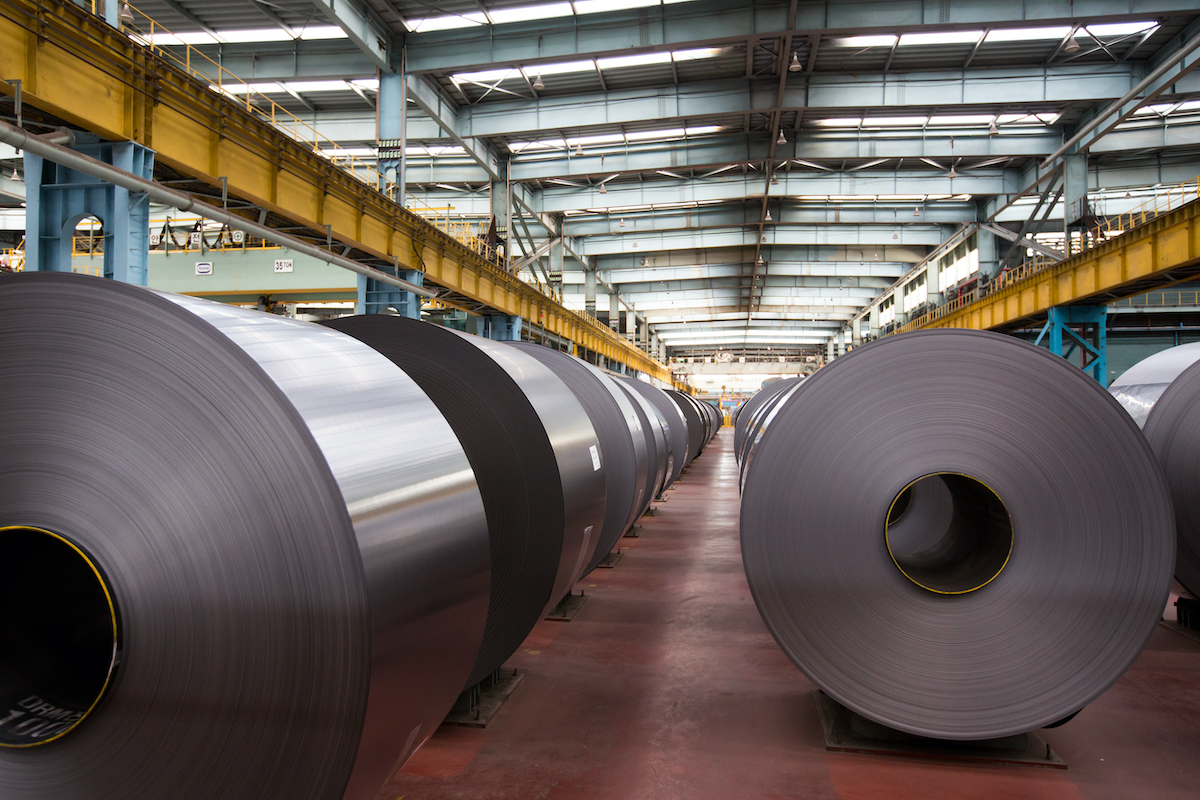
European HRC markets restart slowly; mills push prices up as CBAM creates structural strain on imports
Starting January 1, CBAM became legally and financing binding, pushing imports costs up by roughly €35-600 ($41-700) per tonne, depending on the origin, Fastmarkets reported.
Sources indicated that, upon customs clearance of new imports in January 2026, customs agents request down payments to account for CBAM costs.
“Imports [have] become unmanageable. There is no shortage of coil in the market so far, but domestic mills are definitely a more reliable option,” a buyer in Germany said.
“The [European] mills’ bullishness is driven entirely by regulations impact on imports supply. Real demand remains low,” a second source said.
In Germany, one supplier reportedly still had February delivery HRC offers at €630 per tonne ex-works. Price ideas for March delivery were heard at a minimum of €650 per tonne ex-works, and at €700 per tonne ex-works for April.
Offers from other German suppliers were ranging between €650-670 per tonne ex-works for February-March delivery coil.
In the Benelux area, integrated mill increased offers for March delivery HRC to €650 per tonne ex-works, compared with around €630 per tonne ex-works for January and February.
Buyers in Germany and Benelux area estimated achievable prices at €630-635 per tonne ex-works on Thursday.
However, most sources said, they were expecting spot prices to rise “in a short period of time,” supported by CBAM and new trade regime rollout, both limiting imports.
“The target of €700 [per tonne ex-works] is still wishful thinking, but €650 [per tonne ex-works] can be achieved quite fast, all things considered,” a second buyer in Germany said.
As a result, Fastmarkets’ daily steel hot-rolled coil index domestic, exw Northern Europe was €634.25 per tonne on Thursday, up by €3.25 per tonne from €631.00 per tonne on Wednesday January 7.
The index was up by €6.75 per tonne week on week and by €12.00 per tonne month on month.
Fastmarkets’ corresponding daily steel hot-rolled coil index domestic, exw Italy was calculated at €630.00 per tonne on Thursday, up by €6.00 per tonne from Wednesday.
The index was up by €6.88 per tonne week on week and by €18.75 per tonne month on month.
The Italian market was very quiet, with only sporadic trading reported, sector sources said.
Offers of February and March delivery HRC were heard around €630-650 per tonne ex-works, depending on supplier.
A deal was reported at €630 per tonne ex-works for a small tonnage of March delivery HRC.
Buyers estimated tradable prices at €620-640 per tonne ex-works on Thursday.
Several sources, however, argued, that prices below €630 per tonne ex-works “were no longer possible, considering situation with imports.”
Very few new import offers were reported on Thursday.
Sources said there was a clear two-tier import market, with offers on a CFR basis excluding CBAM costs and CBAM-accounted offers on a DDP basis.
So far, to manage unpredictable CBAM costs, European buyers were prioritizing import bookings on DDP basis — to at least partially accounted for CBAM costs of imported goods, Fastmarkets understands.
For HRC, an offer at €620 per tonne DDP was reported for Turkey-origin HRC.
As of Wednesday January 7, customs data were not updated yet on the European Commission website, but indicative tonnages of Turkish HRC awaiting custom clearance were 291,411 tonnes, while total allocation for January-March 2026 for the nation was 393,978 tonnes. Estimated CBAM costs for Turkish HRC were around €105 per tonne, provided default emissions values were used, Fastmarkets reported.
For India, for example, the situation was even more dramatic, with indicative tonnages of Indian HRC awaiting custom clearance amounting to 289,320 tonnes, exceeding the country’s 222,829-tonne allocation for the first quarter of 2026. Estimated CBAM costs for Indian HRC were around €264 per tonne, provided default emissions values were used.
“Unless actual emissions values are enabled soon, the lion’s share of imports will become unworkable,” a buyer in Italy said.
“Hundreds of installations are unlikely to be verified on time, despite acting in good faith,” EUROMETAL, the European Federation of Steel, Tube and Metal Distribution & Trade said in December. “This creates a structural mismatch between legal obligations and operational reality… As a result, companies will be forced to rely on CBAM default values, not due to non-compliance but because verification is unavailable.”
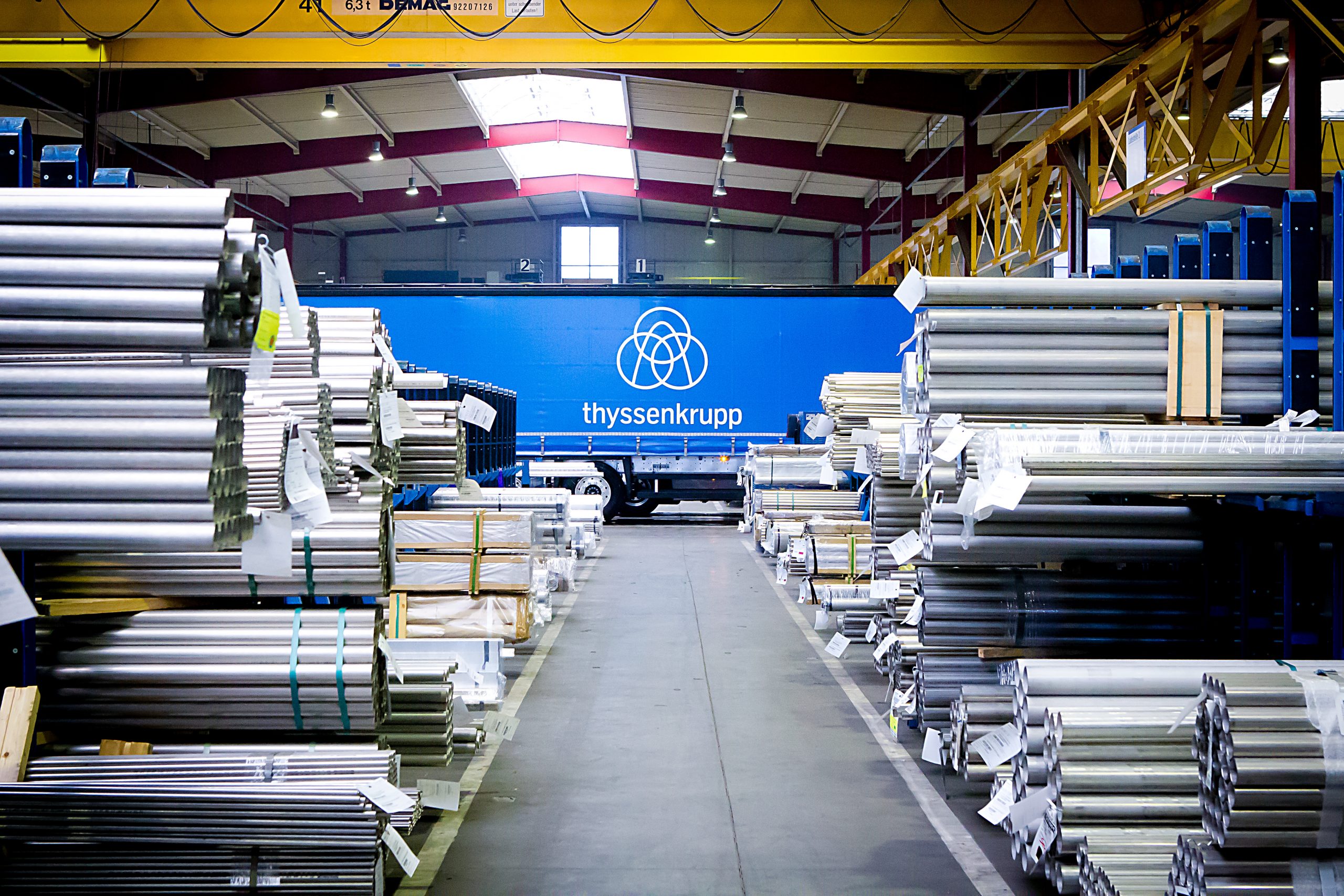
Thyssenkrupp continues talks on the sale of its steel unit TKSE to Jindal Steel
Germany-based Thyssenkrupp is reportedly considering transferring its steel division TKSE (Thyssenkrupp Steel Europe), known for its complex structure and high cost base in Germany, to India-based Jindal Steel International.
According to sources, the parties are working on a deal based on a phased sale model.
It is reported that Jindal Steel began its due diligence process in October after submitting an indicative offer for TKSE, one of Europe’s leading steel producers. The potential sale is seen as a critical step in Thyssenkrupp’s strategy to transition toward a leaner and more focused corporate structure.
Sources indicate that Jindal Steel would initially acquire a majority stake of around 60% in TKSE. The remaining 40% could be transferred either in two separate tranches of 20% each or in a single transaction, depending on progress achieved in the restructuring process.
One source noted that Thyssenkrupp is receptive to a phased sale plan due to pension liabilities of approximately €2.5 billion, which had previously complicated sale processes, adding that this approach could provide the company with greater flexibility.
While the due diligence process is ongoing and final terms have not yet been determined, Thyssenkrupp shares rose by as much as 4.9% following the sale reports, becoming the day’s top gainer in Frankfurt’s mid-cap index. One investor commented, “After years of an inconclusive process, the likelihood of a sale now appears to be taking concrete shape.”
Jindal Steel delegation to visit Germany in January
The potential sale of TKSE is viewed as the strongest development yet that could bring Thyssenkrupp’s long-running search for a buyer to an end. A key part of Germany’s industrial heritage, TKSE has been facing a challenging period, particularly due to intensifying competition from Asian rivals and high operating costs.
Jindal Steel International, the global steel arm of the Naveen Jindal Group, entered the European market in 2024 through the acquisition of Czech producer Vitkovice Steel. The acquisition of TKSE would represent the company’s largest move in the region to date.
In a statement, Thyssenkrupp said that all aspects, including valuation, liabilities and future investment requirements, would be addressed during the discussions, adding: “As the talks are still at an early stage, we are unable to comment in detail at this time.” Jindal Steel International did not issue a comment.
Following a postponed visit originally scheduled for December, the Jindal delegation is expected to travel to Germany in January to carry out technical inspections at TKSE’s Duisburg facilities. Another source noted that the phased sale model would mean Thyssenkrupp remains actively involved in the restructuring process.
Source: Reuters

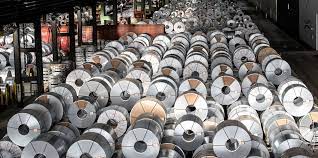
Salzgitter strengthens green steel production with Iberdrola’s new solar power plant
Salzgitter AG, one of Germany’s leading steel producers, is taking a major energy step as part of its transition toward low-emission steel production.
The company will strengthen its green steel production by sourcing renewable electricity from a new 65 MWp solar power plant completed by Iberdrola Germany in the Saxony-Anhalt region.
The 15-year power purchase agreement (PPA) signed between Salzgitter AG and Iberdrola guarantees a total of 900 GWh of renewable electricity to be supplied directly to steel production processes. This energy will play a critical role within SALCOS (Salzgitter Low CO₂ Steelmaking), Salzgitter’s carbon-neutral steel transition program.
Annual output of 60 GWh – 23,000 tons of CO₂ reduction
Covering an area of approximately 45 hectares and comprising more than 92,000 solar panels, the facility is expected to generate around 60 GWh of electricity annually — equivalent to the annual consumption of more than 20,000 households.
The clean energy supplied from the plant is expected to prevent more than 23,000 tons of CO₂ emissions each year, directly supporting Salzgitter’s objective of reducing the carbon footprint of its steel production.
Local partnerships strengthened the project
Regional companies including Solarpro, P&Q and EMT were involved in the construction of the solar power plant. These local partnerships contributed both to the regional economy and to the project’s operational strength.
With this agreement, Salzgitter AG is accelerating its transition toward a renewable energy-based production model in the steel industry. The company emphasizes that this clean energy supply, which will be integrated with hydrogen-based production processes in the future, is of critical importance for Europe’s green steel supply security.