


Italian coil prices tick up, uncertainty seen downstream
Italian coil prices are ticking up week on-week. Downstream, however, sheet and tube demand is still weak, with prices lagging behind.
Coil order intake also remains slow, with buyers yet to return to the market. Several buyers tell Kallanish they have sourced hot rolled, cold rolled and hot dip galvanized coil from imports. Import buying eased from mid-September when Asian mills raised their offers.
With stocks still sufficient, buyers are only taking small volumes from European mills to cover inventory gaps.
Kallanish assesses HRC Italy at €730/tonne ($822/t) ex-works. In September, service centres and re-rollers sourced material from various Asian producers and Turkey at €560-580/t cfr. In the second half of the month, Asian mills lifted prices, and some import deals are now heard at €675-700/t cfr.
Although imports have become more expensive, buyers continue to purchase to diversify supply and avoid relying solely on European mills.
A smaller service centre says it only buys imports on a ddp basis when available, and otherwise covers its limited needs from European producers. Very few traders now offer ddp, however, with most quoting cfr.
HDG import contracts are heard at €750-760/t cfr, excluding CBAM costs. Adding this would bring these prices close to current European levels, where HDG deals are at €840-860/t base delivered. A large service centre says it has to buy imported HDG because European supply is limited and it needs to restock.
The new price level for black hot-rolled coil in Italy and across Europe is €730-740/tonne, base delivered with offers at €750-790/t base. Demand is weak, but producers are uncompromising on prices for small and large customers alike. “Protected as they are, producers know that demand in Europe will recover and prices will keep rising,” a source comments.
Service centres are still making money at current sheet prices as they bought cheap Asian coil in the first half of the year. However, “downstream activity is very slow and sheets increases are lagging behind,” a service centre says.
“With increasing import prices we play it by ear. We bought a lot in August and September and we have stock to cover us at least until almost the end of the first quarter,” another service centre comments.
Demand for black hot-rolled sheet remains tepid. Payment delays are heard throughout the value chain. Prices are stable at €810-820/t delivered. “At €820/t you often lose orders,” an agent warns.


NW European coil buyers unfazed by possible shortages
Buyers remain broadly unalarmed by the potential output reductions at western European coil mills amid recent temporary stoppages.
Currently, it appears that alleged disruptions have been overcome according to official statements (see Kallanish 6 October 2026).
“They [the mills] seem to tell different things to different sides,” one German market observer believes. He notes that they do not want to let on about disruptions publicly, but to their buyers “they rather blow up small issues, to pretend that volumes could become scarce”.
Among buyers, though, “no one is really worried,” a Swiss-based trader notes. A manager of a Dutch processor concurs.
“There is still a lot of stock at service centres, and, we have enough contract volume with European mills, so no worries from my side,” he tells Kallanish. And, like many, he adds “I am more concerned about the low demand.”
A recent temporary blast furnace disruption at ArcelorMittal Eisenhüttenstadt, made public by the group, “would maybe affect automotive customers, but not us,” a buyer at an Austrian processor says. “The overall availability from the western mills is given,” he states.
The spot price of hot rolled coil is hovering around €740/tonne ex-works ($833/t), and views among buyers diverge as to whether mills will concede deals for €10/t less, or if they could bag €10/t more.
“Mills would like to go above the €750/t,” the Austrian sources says. Another buyer notes that mills do succeed in this when it comes quarterly contracts, where the level is €760/t for the first quarter 2027, he says.

Q4 2026 EU steel quotas exhausted across key steel product categories
Several of the EU’s steel safeguard quotas were exhausted on Oct. 6, following the opening of the fourth-quarter allocation period, amid continuing strong demand for imported steel despite the stricter trade measures introduced earlier this year.
Imports falling under category 1A, including hot-rolled coils (HRC), saw strong utilization following the start of the fourth quarter of 2026, with quotas for ‘Other Countries’ exhausted. Australia is depleted, and Indonesia’s quotas are nearly exhausted as well, with 1% remaining at 336.30 metric tons, while Turkey’s, also exhausted, has an indicative volume of 3,213.40 mt awaiting allocation, on top of the initial 160,573 mt quota.
Platts assessed imported HRC in Northern Europe at €595/metric ton CIF Antwerp and in Southern Europe at €590/mt CIF South Europe.
Quotas typically exhausted quickly under the previous trade measures. However, the revised measures introduced July 1, 2026, by the European Commission had far harsher stipulations, such as tighter quotas, a shared pool for Free Trade Agreements (FTA) countries, an additional first-come, first-served allocation, and 50% out-of-quota safeguard duties on any out-of-quota material.
For cold-rolled coils (CRC), the quota for ‘Other countries’ was fully allocated at 24,934 mt. Other origins had stronger availability, with the next most popular origin — South Korea — still holding 89.38% of its balance unallocated.
Attitudes towards CRC imports have remained largely cautious following the EC’s decision on anti-dumping duties on CRC on Aug. 6. Anti-dumping trade measures were applied to Japan, India, Vietnam, Taiwan and Turkey at varying rates, prompting some market participants to purchase domestically where possible.
As for hot-dipped galvanized steel (HDG) 4A, quotas for “Other countries” at 33,339 mt, Japan’s at 2,874 mt, Taiwan’s at 33,783 mt and Turkey’s at 68,925 mt were exhausted, while South Africa was close to reaching its limit at 3,150 mt with 1% remaining. HDG 4B quotas for China at 45,749 mt and Turkey at 26,020 mt were also fully used.
Plate quotas for “Other countries” at 18,830 mt, Turkey at 7,008 mt and India at 52,710 mt were depleted, as was Turkey’s rebar quota at 59,919 mt. For medium sections, quotas for “Other countries” at 7,174 mt, FTA partners at 5,150 mt, Turkey at 59,850 mt, and North Macedonia at 10,959 mt have also reached their limits.
UK steel safeguard refresh
The UK’s steel import quotas have also seen similar utilization levels following the quarterly refresh, although the safeguard measures, revised earlier this year, were significantly smaller than those in the EU. For category 1A, including HRC, India’s country-specific quota’s remaining balance sat at just 505 mt Oct. 6, out of a fourth-quarter balance of 8,364 mt, while the residual quota of 12,440 mt was completely exhausted over the same period. The EU’s country-specific quota remained largely untapped, with just 1,655 mt of material cleared.
For category 4 imports — including hot-dipped galvanized material — strong availability remains across all country-specific quotas, with India showing the largest allocated utilization rate at 58.7%.
Author: Panos Achilleos, Charles Thompson


European HRC suppliers push for higher prices; Southern buyers follow, resistance persists in the North
European hot-rolled coil suppliers continued to push for higher prices this week, with limited availability supporting prices in Southern Europe, while buyers in the North remained resistant to increases amid weaker demand and sufficient inventories.
A seller source confirmed that €740 ($829.27) per tonne ex-works was the key tradeable level in Northern Europe but added that transactions take place up to €760 per tonne ex-works.
A buyer source reported an indication of a tradeable level at €740 per tonne ex-works, adding that mills in the region target higher prices but slow demand is limiting the acceptance.
Fastmarkets’ daily steel hot-rolled coil index, domestic, exw Northern Europe, was calculated at €745 per tonne on Tuesday October 6, up by €3.12 per tonne from €741.88 per tonne on Monday October 5.
The index was down by €1.25 per tonne week on week and down by €3.75 per tonne month on month.
The Italian market was called “concerning” by one of the buyers, citing limited availability of the material in the market. Acciaierie d’Italia (ADI) is in the process of shutting down its blast furnace while Metinvest’s Ferriera Valsider has a significant backlog with only minor potential availability for December. This makes Arvedi the sole stable supplier in the Italian market.
A buyer source reported tradeable levels varying within the range of €740-745 per tonne ex-works on October 6.
Fastmarkets’ daily steel hot-rolled coil index, domestic, exw Italy, was calculated at €745 per tonne on Tuesday October 6, stable day on day.
The index was up by €2.5 per tonne week on week and by €22.29 per tonne month on month.
On the import side, Taiwanese material was heard available at around €765 per tonne DDP, while Japanese-origin offers came at around €760 per tonne DDP. Turkish hot-rolled coil (HRC) was reported offered at €560-580 per tonne CFR.

Bulgaria’s Stomana expands rebar output with Danieli order
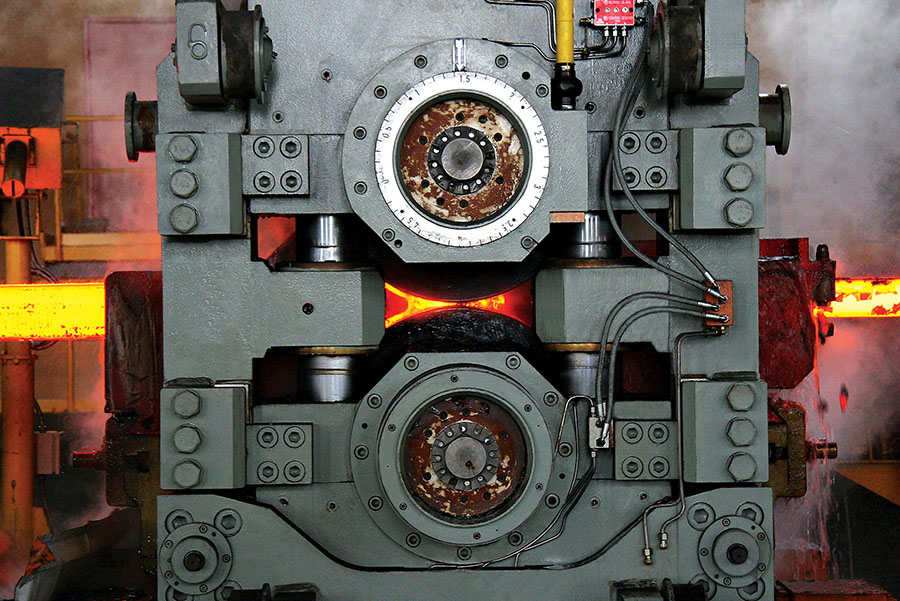
Bulgaria’s Stomana Industry, part of the Sidenor group, has awarded Danieli a contract to supply new rolling mill equipment for its site in Pernik, Kallanish notes.
According to the supplier, the project includes installation of new upstream equipment to feed a Danieli K-Spool line relocated from the Sovel micro mill in Greece, which will be commissioned during winter, as well as the replacement of the existing abrasive disk saw.
“With the integration of the former Sovel spooling line and the installation of the new saw, Stomana will expand its capability to serve growing demand for compact rebar coils and higher-quality SBQ products,” it adds.
The new rolling equipment will feed the relocated Danieli K-Spool line, enabling the production of compact rebars in coil weighing up to 3.6t and covering diameters from 8 to 20 mm.
Danieli’s scope of supply includes two preboxes, pinch rolls, a crop/chopping shear, an eight-pass finishing block complete with ring manipulator, and six water boxes with associated valve benches, lubrication and hydraulic systems.
The project is designed for thermomechanical rolling combined with Danieli Soft Quenching (SQ) technology — a patented, multistage controlled-cooling process that enhances metallurgical homogeneity, mechanical-property consistency, dimensional stability and production repeatability.
The new abrasive disk saw will replace the existing unit and will be used for cutting SBQ rounds from 20 to 130 mm diameter and lengths from 5 to 12.1 metres. Featuring an improved bar-locking system, a more powerful drive, extended disk life, faster disk changing time and easier access for maintenance, the new installation will support higher-quality and increased SBQ production.

Trasteel starts running Magona under lease
Steel trading and industrial group Trasteel has assumed control of Italian service centre Magona in Piombino, Tuscany, formerly owned by Liberty Steel, the company says.
The plant is now operated by Trasteel Magona, a new company established for the transaction, under a lease of Liberty Magona’s business unit. The lease started on 1 October and will remain in place run until no later than 31 December 2027. Afterward, Trasteel will assume full ownership of the business. Completion of the acquisition remains contingent on Liberty Magona’s restructuring. Liberty Magona has filed a restructuring plan with the Court of Florence that is awaiting approved.
The European Commission granted antitrust clearance on 29 September.
“With the start of the lease, Trasteel Magona will ensure the continuity of the plant’s operations, safeguarding approximately 500 jobs. Production will restart gradually, in line with a phased plan, with the objective of bringing the plant back to full operation and reaching a production capacity of over 500,000 tonnes/year by the end of 2027. Trasteel Magona will leverage the Group’s global sourcing, logistics and commercial platform to support continuity, reliability and quality of supply for the plant’s customers. The Piombino plant complements Trasteel’s Industrial Division, which comprises 13 companies in six countries and processes over 800,000t of steel products/year, including pipes, plates, coils and rebar,” Trasteel says in a note.
Workers have welcomed the development; a union source tells Kallanish. The new management promises a fresh start and a practical relaunch strategy, “different from Liberty’s void promises that brought us to almost bankruptcy. The problem now is integrating the market again, but we know the large company’s potential. In this last quarter we see a gradual restart of the production activity thanks to the incoming hot rolled coils with volumes that we believe will also gradually increase.”
Magona is returning to a market that has changed, the source adds. Coil prices are rising, European supply of hot dip galvanised and cold rolled coil is tight, and customers are increasingly expected to shift from imports back to European suppliers.

Italian distributors endure tough September amid weak demand
September was a difficult month for Italian distributors and service centres with low activity and margins coming under pressure. Welded tubes saw the most activity, while long product sales generally struggled.
One large distributor tells Kallanish that business held up despite the subdued market, thanks to its ability to meet customer needs and offer a level of service that mills cannot match.
“We are well stocked and can provide different measures and different products in one shipment,” he says.
Overall, the market has not properly restarted after the August break.
“Customers negotiate hard and manage to have good prices in this market,” another distributor says. An agent confirms that demand for tubes is better than for other long and flat products. However, he admits that even on tubes, sellers have to compromise on prices to secure sales.
For long products, multiple sources say they are starting to feel the end of post-Covid EU-funded infrastructure projects.
“On sections we’ve seen a clear slowdown in volumes since July,” a purchasing group says. An agent confirms this, although some work on beams still comes in every day.
Merchant bar mills keep pushing for increases, with offers at €390/tonne ($443/t) base. Prices remain at €350-360/t base delivered, excluding size extras.
Sections asking prices are between €850-860/t for the first category, but Spanish material is priced at least at €30-40/t less, making increased asking prices difficult to achieve.
Tube buyers are resisting the new price lists implemented by large tubemakers, causing confusion. Several buyers say they struggle in understanding the new price lists and have been buying from smaller re-rollers, with prices mostly stable compared to the beginning of September. Some say the level of discount remains stable compared to August at 40-43 points.
One source notes that in the current market the issue is not the price but volumes. He confirms that there is slightly better appetite for welded tubes but laments a general low apparent demand which mirrors the weak real demand.
The market is not seen improving in the near-term with the first quarter also likely to be weak amid elections in various countries. If volumes do not recover in the new year, mills will be forced to reduce capacity.
Additionally, all sources talk about lengthening payments.

Assofermet: Tariffs and CBAM redraw metals markets – “Geopolitics is now a cost factor for companies”
Tariffs, geopolitical tensions, new trade barriers, high energy costs and the reshaping of supply chains are redefining the environment in which Italian steel and metals companies operate. These were the key issues addressed at the autumn conference of Assofermet, held on Friday, October 2, at the headquarters of Confcommercio in Rome, under the title “Markets at risk, and potential for companies.”
Opening the event, following a video message from Confcommercio president Carlo Sangalli, Assofermet president Cinzia Vezzosi noted that the title chosen by the association several months ago had proved, in light of recent international developments, “almost uncomfortably topical”. Alongside ongoing conflicts and geopolitical instability, companies are now facing new trade restrictions, tighter measures affecting steel imports and the transition of CBAM into its most economically significant phase. However, Vezzosi’s message was not solely one of concern. She highlighted the ability to react quickly as one of the main strengths of Italian SMEs: the capacity to anticipate change, address difficulties and adapt their strategies “in months rather than years”.
Tariffs and geopolitics redraw the global trade map
The first roundtable, moderated by Sissi Bellomo, commodity and energy markets editor at Il Sole 24 Ore, brought together Natalino Loffredo, ministerial adviser for International Trade Policy at Italy’s Ministry of Foreign Affairs and International Cooperation (MAECI); Antonio Villafranca, vice president for research at ISPI; and Alessandro Panaro, head of the Maritime & Energy Department at SRM – Studi e Ricerche per il Mezzogiorno.
One of the main themes to emerge was the increasing use of economic tools as instruments of political pressure. According to Villafranca, the deterioration of the international order has been under way for at least 15 years, while trade, tariffs, raw materials and infrastructure are increasingly becoming part of a broader power dynamic. “Everything is becoming a weapon, including the economy,” he said, pointing in particular to the role of so-called chokepoints, strategic passages through which goods, energy and hydrocarbons flow.
Tensions surrounding the Strait of Hormuz have shown how the concentration of trade flows through a limited number of strategic routes can affect global supply chains. According to Villafranca, alternative routes and infrastructure can reduce some of these vulnerabilities, but inevitably at a higher cost.
This point was echoed by Alessandro Panaro, who said companies now have to factor a new item into their costs: the cost of geopolitics. “Logistics is like water: costs may rise, but it will always find a way through,” he said. Longer routes, surcharges and port congestion have pushed transportation costs higher, while supply chain reliability has deteriorated. Panaro cited a 112 percent increase in freight rates and vessel schedule reliability of around 50 percent. Despite this, the Mediterranean has continued to show considerable resilience: in 2025, Italian ports handled around 510 million mt, 30 million mt more than in the previous year.
According to Panaro, the response lies primarily in greater logistics efficiency, digitalization and sustainability, which are becoming increasingly important competitive factors. He took a different view of the EU ETS as applied to shipping, arguing that it risks becoming a competitive disadvantage if confined to the European market alone.
On the trade front, Natalino Loffredo described the United States as a “difficult-to-replace” partner for Europe, despite the sharp tightening of US tariff policy. Italy and Germany have supported an approach aimed at avoiding further trade escalation, while Section 232 remains a key issue for the metals sector, covering steel, aluminum and copper as well as a broad range of semi-finished and downstream products.
At the same time, relations with China remain another major issue. Loffredo stressed the need to keep dialogue with Beijing open while also promoting greater diversification of sourcing. However, such a process comes at a cost and, in his view, should therefore be supported by appropriate incentives for companies.
China’s presence, moreover, extends well beyond trade flows. Panaro noted that Beijing has invested around $20 billion in Mediterranean ports since 2013, including through long-term infrastructure concessions. At the same time, SRM has recorded a 13 percent increase in intra-Mediterranean routes, further evidence that supply chains are already undergoing a gradual reconfiguration.
CBAM, energy and margins put European competitiveness to the test
The second roundtable, entitled “Energy for companies amid the complexity of global challenges,” featured Marco Gay, CEO of ZEST SpA and president of the Turin Industrial Union; Andrea Di Sotto, partner at SO.DE.MI Srl and AluGlobalBro Srl; and Riccardo Gabrielli, sales & area manager of the heavy plate division at Gabrielli SpA.
Andrea Di Sotto highlighted the difficulties facing the aluminum semis sector as it reshapes its sourcing strategies amid reduced Russian supply, antidumping measures, logistics constraints and new European regulatory requirements. From an importer’s perspective, he described CBAM as “a hidden tariff,” stressing the uncertainty surrounding its initial implementation. “This is year zero for CBAM: we are importing material without yet knowing with certainty what the final cost will be,” he said. This uncertainty is complicating purchasing strategies and margin management at a time when companies are already being forced to rethink established supply chains and absorb higher costs throughout the value chain.
Focusing more directly on the steel sector, Riccardo Gabrielli stressed that CBAM is not merely an administrative compliance issue, but one with direct financial and commercial implications. Uncertainty over the actual carbon cost makes it difficult to value material that has already been purchased: for several thousand metric tons of imported steel, different cost assumptions can result in discrepancies running into hundreds of thousands of euros.
Gabrielli also pointed to the growing spread of carbon pricing systems outside the European Union, citing China, the United Kingdom and South Korea among others. In Italy, the growing complexity of imports is compounded by the decline in domestic steel production capacity. The downsizing of the former Ilva has increased the country’s dependence on foreign supply just as sourcing from international markets is becoming more expensive and less predictable.
The central issue, therefore, remains competitiveness. Marco Gay stressed that the energy cost gap has been a structural problem for Italian industry for several years, while high logistics costs, interest rates and increasingly squeezed margins are adding further pressure. In Gay’s view, the EU ETS cannot be seen simply as an economic issue, but as a factor that directly affects European industry’s ability to compete and continue investing.
Against this backdrop, innovation and artificial intelligence can offer new levers for efficiency. Gay argued that the key issue will not be whether AI replaces jobs, but rather whether companies and workers are able to integrate it effectively into their processes. Gabrielli agreed on the need to focus on internal optimization, particularly at a time when many of the main cost drivers are increasingly beyond companies’ direct control.
The debate ultimately returned to its starting point: in a market environment in which geopolitics, trade, logistics and energy are increasingly intertwined, resilience and the ability to adapt quickly remain essential, but they are not enough if the competitiveness of Europe’s industrial system is undermined.
Closing the event, Cinzia Vezzosi declared, “I firmly believe that, as we move forward through this complex process, companies have a real responsibility, with the hope and conviction that the decisions we make today can concretely help build the future.”

EU steel import quotas rapidly exhausted in opening days of Q4 period
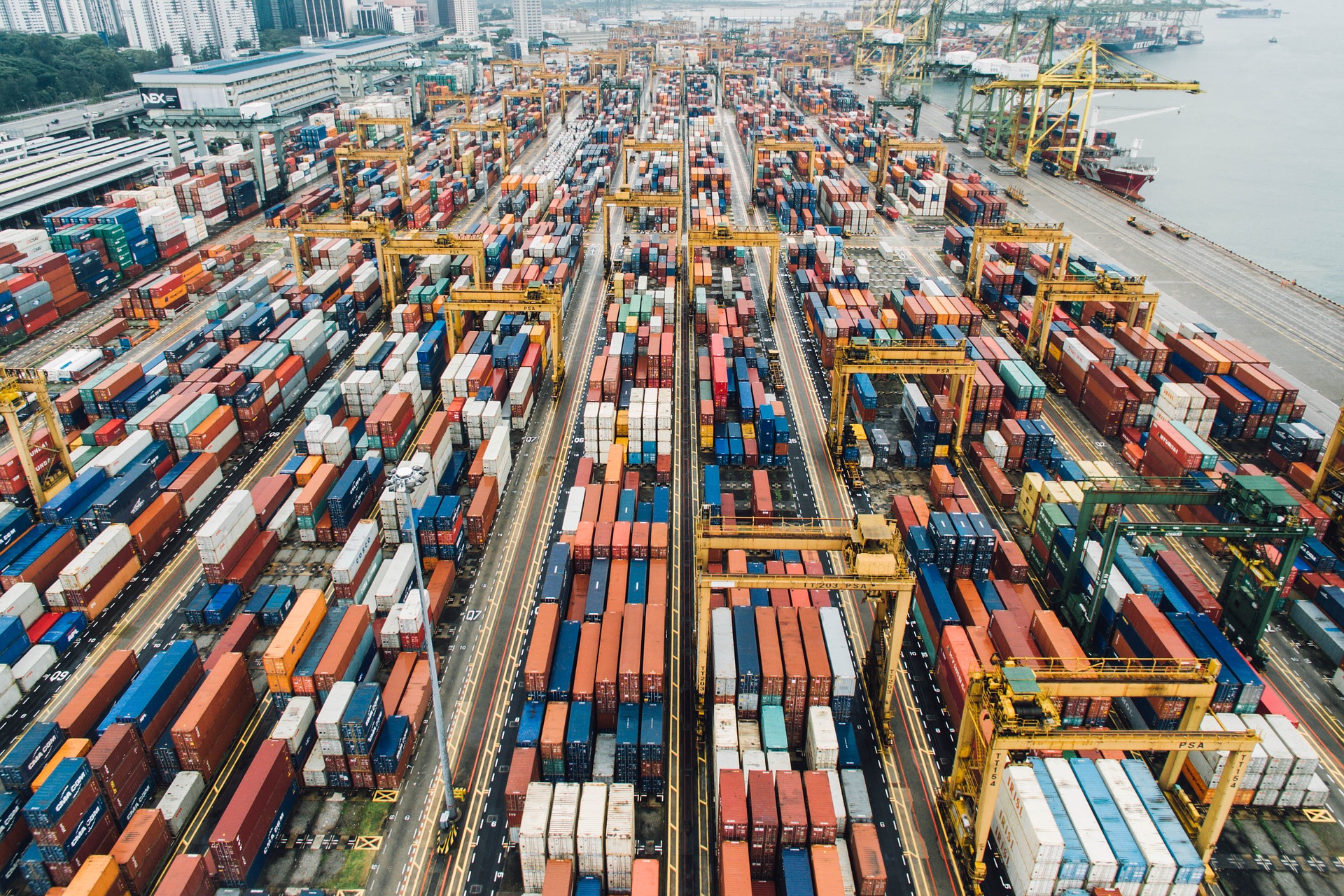
In the first 5 days of the new EU quota period from October 1 to December 31, some of the import quotas for certain steel products allocated for Turkey, China, India, Australia, Taiwan, Macedonia and “other countries” have been exceeded, while over 70 percent of quotas for some steel products have been used up, according to the European Commission’s data.
Regarding the exceeded quotas, Turkey has exceeded its quotas of 160,573 mt for HRC, 63,925 mt for metallic coated sheets (4A), 26,019 mt for metallic coated sheets (4B) and 11,568 mt for organic coated sheets, 7,007 mt for quarto plates, with 378,822 mt, 96,084 mt, 26,577 mt 16,073 mt and 15,474 mt of the given products respectively waiting for customs clearance. In addition, the country has also exceeded its quotas of 59,919 mt for rebars, 61,147 mt for wire rods, 28,163 mt for gas pipes, 59,849 mt for hollow sections and 22,453 mt for other welded pipes, with 78,088 mt, 70,698 mt, 45,891 mt, 112,046 mt and 25,420 mt of the given products respectively waiting at the EU ports.
The quotas of 11,837 mt for electrical sheet (3B), 45,749 mt for metallic coated sheets (4B), 13,158 mt for other seamless pipes and 14,298 mt for non-alloy wire allocated for China has been exceeded with 41,793 mt, 111,256 mt, 23,947 mt and 28,888 mt of the given products respectively waiting for customs clearance.
Looking at the quotas allocated for India, the country has exceeded its quotas of 52,709 mt for quarto plates, 23,139 mt for stainless bars and light sections, 10,036 mt for gas pipes and 3,832 mt for seamless stainless tubes, with 64,454 mt, 39,641 mt, 13,166 mt and 4,859 mt of the given products respectively waiting at the EU ports.
Australia and Taiwan have exceeded their quotas of 11,830 mt for HRC and 5,322 mt for organic coated sheets, respectively, while Macedonia has exceed its quota of 10,958 mt for hollow sections.
Meanwhile, the quotas of 5,564 mt for HRC, 24,933 mt for CRC, 33,338 mt for metallic coated sheets (4A), 6,446 mt for tin mill products, 18,829 mt for quarto plates and 7,174 mt for hollow sections allocated for “other countries” have been exceeded. In addition, the quota of 5,149 mt for hollow sections allocated for “FTA-Others” has also been exceeded.
The quotas with utilization rates above 70 percent can be seen in the table below.
| Product | Country | Quota volume (mt) | Usage (%) |
| Organic coated sheets | India | 54,334 | 75.50 |
| South Korea | 41,828 | 86.76 | |
| Merchant bars and light sections | China | 39,484 | 85.15 |
| Rebars | Algeria | 15,940 | 71.86 |
| Angles and sections | Turkey | 13,455 | 73.31 |
| Hollow sections | China | 3,680 | 80.82 |
| Ukraine | 6,640 | 94.32 | |
| Other welded pipes | China | 3,220 | 99.75 |
| India | 6,158 | 80.85 |
Northern European HRC prices edge down; Italian prices firm on tight supply
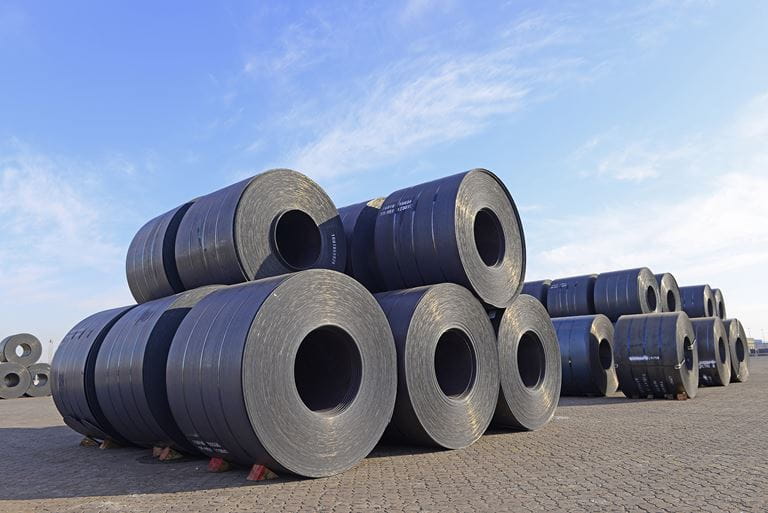
Domestic hot-rolled coil prices in Northern Europe edged lower on Monday October 5, while Italian prices continued to firm amid exceptionally tight domestic supply and uncertainty over import availability, sources told Fastmarkets.
In Northern Europe, one buyer reported workable levels at €740 ($833) per tonne ex-works.
No other fresh points were recorded during the day. On Friday October 2, one supplier indicated workable levels at €730-740 per tonne ex-works. Due to the limited fresh input, this information, along with Thursday’s data, was carried over into Monday’s calculation in line with Fastmarkets’ index methodology.
This included a buyer indication of workable levels at €750 per tonne ex-works, as well as information from a second buyer reporting workable levels at €740-750 per tonne ex-works alongside an offer at €760 per tonne ex-works.
Regional demand remained sluggish, with buyers reporting sufficient stock coverage.
Thus, Fastmarkets’ daily steel hot-rolled coil index, domestic, exw Northern Europe, was calculated at €741.88 per tonne on Monday October 5, down by €1.45 per tonne from €743.33 per tonne on Friday October 2.
The index was up by €3.12 per tonne week on week and down by €6.87 per tonne month on month.
Meanwhile, in Italy, two buyers told Fastmarkets that workable levels were reported at €740-750 per tonne ex-works. One of the buyers indicated that bookings of around 200-500 tonnes were concluded in that range.
Domestic supply options in Italy were reported to be exceptionally constrained, with Acciaierie d’Italia (AdI) remaining absent from the market, and Ferriera Valsider also on the sidelines with only minor potential availability for December.
Market participants also pointed to mounting uncertainty over imports following the opening of the fourth-quarter tariff-rate quota on October 1. The Turkish quota was already heavily oversubscribed, with around 380,000 tonnes reported against a quota of approximately 160,000 tonnes, according to one of the buyers.
As a result, some Italian buyers were adopting a wait-and-see stance until the end of the week to assess the full customs clearance picture across various import origins before committing to fresh domestic volumes. Those needing immediate material were largely dependent on the country’s sole active domestic producer, which firmly held its ground at €740-750 per tonne ex-works.
“If you need to buy, you pay and shut up,” one distributor source said.
The buyer told Fastmarkets that the dominant domestic producer was comfortable with its November order book following recent operational disruptions on a rolling line.
Fastmarkets’ daily steel hot-rolled coil index, domestic, exw Italy, was calculated at €745 per tonne on Monday October 5, up by €2.50 per tonne from €742.50 per tonne on Friday October 2.
The index was up by €3.75 per tonne week on week and up by €22.29 per tonne month on month.