

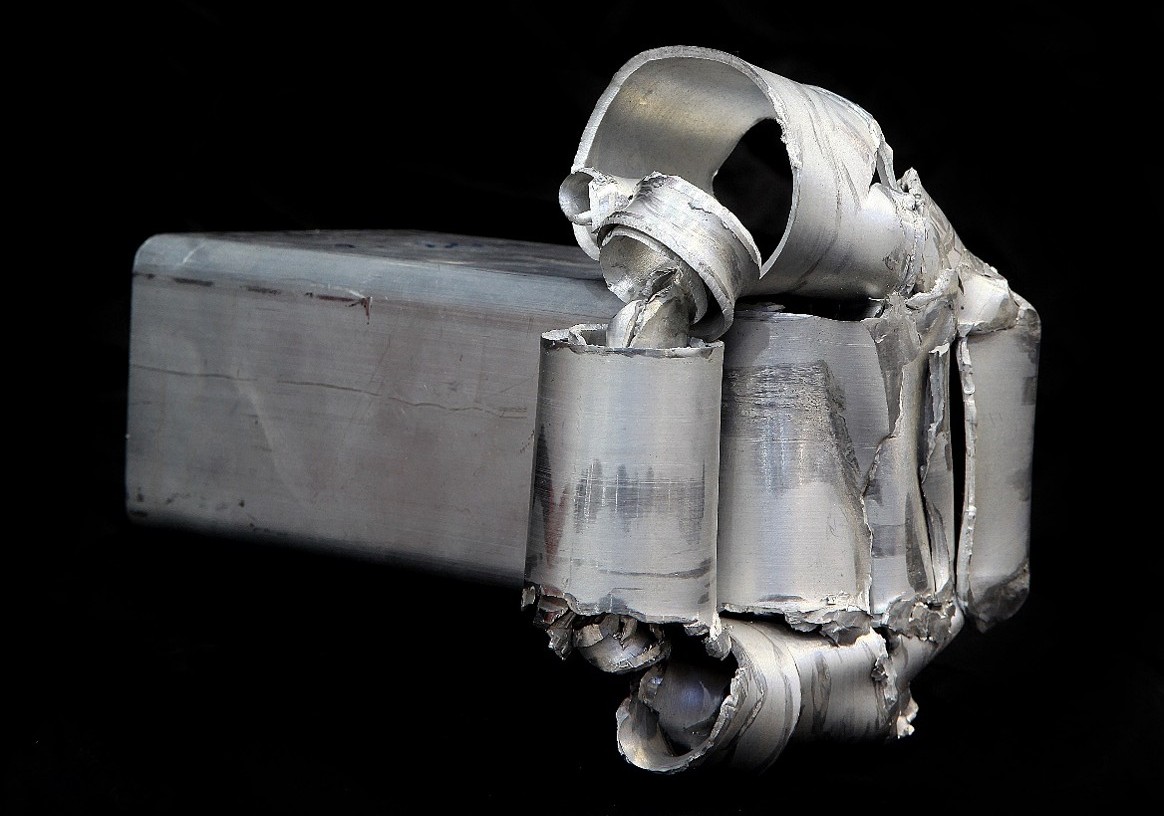
Norwegian Steel Association to hold course on steel and aluminium structures under extreme loads
The Norwegian Steel Association will offer an English-language course on “Behaviour of Steel and Aluminium Structures subjected to Extreme Loads” on 17 November 2026. Participants can attend at Thon Hotel Slottsparken in Oslo or join remotely via Microsoft Teams.
Developed by Magnus Langseth, Professor Emeritus at the Norwegian University of Science and Technology (NTNU), the continuing education course is offered in collaboration with the Norwegian Steel Association and DYMAT, the European research association focused on the dynamic behaviour of materials and its applications.
The course addresses structural response to extreme, short-duration loads associated with events such as industrial accidents, explosions, impacts and climate-related incidents. These loading conditions create particular challenges for engineers designing robust structures and protecting critical infrastructure.
Using basic examples, the course aims to explain how steel and aluminium structures respond to impact and blast loads. The knowledge is intended to support structural design, simplified calculations during early design stages and the assessment of numerical simulation results.
The course is aimed at professionals working in defence, protection, civil, mechanical, materials, naval, ocean and transportation engineering, as well as related disciplines dealing with impact, blast and high-rate loading. According to the organisers, participants with a mechanical or structural engineering background will benefit most from the specialised content.
Langseth’s research has focused on the impact behaviour and crashworthiness of steel and aluminium structures, alongside lightweight ballistic protection and structural response to blast loading. He previously directed the SIMLab and SFI CASA research centres at NTNU.
The course fee includes a digital technical compendium, the PLastic CApacity (PLCA) computer programme and copies of the presentations.
Registration closes on 12 November 2026 at 16:00.
Further details, the programme and registration are available on the Norwegian Steel Association’s course page.

7 Steel signs expanded rail transport deal
7 Steel has signed a new deal to increase the use of rail transport in its UK supply chain, Kallanish learns from the Wales-based steelmaker.
The steelmaker has signed an 11-year agreement with operator GB Railfreight to transport scrap steel into Cardiff and distribute finished products, including rebar and coiled steel, across the UK.
Vorn O’Hennessy, head of supply chain management, says: “Having a long-term logistics partner that understands our operation and can support the movement of both raw materials and finished products is important as we continue to plan for the future, and we look forward to continuing our partnership with GB Railfreight to deliver a reliable, efficient service for our customers across the UK.”
Purpose-built wagons and expanded rail operations will support a more efficient, resilient, and sustainable supply chain from October onwards, it adds.

German water levels remain critical in autumn
Germany’s waterways continue to suffer with low water volumes and levels. The bottlenecks for industrial transports on rivers, especially the Rhine, have not recovered by much, or only temporarily.
In fact, after record lows were seen in August for the Rhine, those values have been undercut at some locations along the river in September, according to the national water authority Bundesamt für Gewässerkunde. “An alleviation is not in sight in the first half of October,” it warns.
Rain has been forecast to fall in the coming days, “but too little and, too short to take sustainable effect on the levels of the national waterways.”
The raw materials supply and steel deliveries to and from the country’s largest steelmaker, thyssenkrupp Steel, on the junction of Rhine and Ruhr, remains problematic, the company tells Kallanish.
“Operation of our own barge fleet remains suspended. We keep chartering vessels from third parties with a lesser draught, which are able to go at low levels. On the basis of the measures we have taken, we can keep supplying customers. Our in-house low-water task force is continuously evaluating the impacts on deliveries and production,” the company says.
Other mills have transferred cargoes to freight trains. In order to maintain supply chains for coal and ore, private operator Captrain has provided additional transport capacities. Captrain was represented at the recent MBI Stahltag conference with a speaker on the overall potential of train operators for steel mills.
Since August, Captrain has been running three to four extra journeys per week between the port of Wilhelmshaven and the Ruhr, thus adding 4,000 tonnes of coal. It furthermore added four-to-five journeys for coke transport between Germany and France, with a total of 2,000t/week, the firm says in a statement.
Other local operators, too, have lifted their capacities for steel mills, according to information service Verkehrs-Rundschau. Rhein-Cargo, for example, is running additional trains for iron ore transports from Rotterdam to Hüttenwerke Krupp-Mannesmann (HKM) in Duisburg on the Ruhr.
Most scrap transport that needed to find alternatives will have been transferred to “trucks, trucks, trucks,” Sebastian Will of recyclers organisation BVSE told MBI Stahltag delegates.
The situation on the waterways has given the truck transport prices another push, in addition to the earlier increases during the year. Rates could inch towards €100/tonne ($111/t) for border-crossing steel routes like Italy-Ruhr, some market players say. According to a manager of a distribution company, the prices by August were still around €80/t. “I have not heard €100/t yet, but I would not be surprised,” he says.
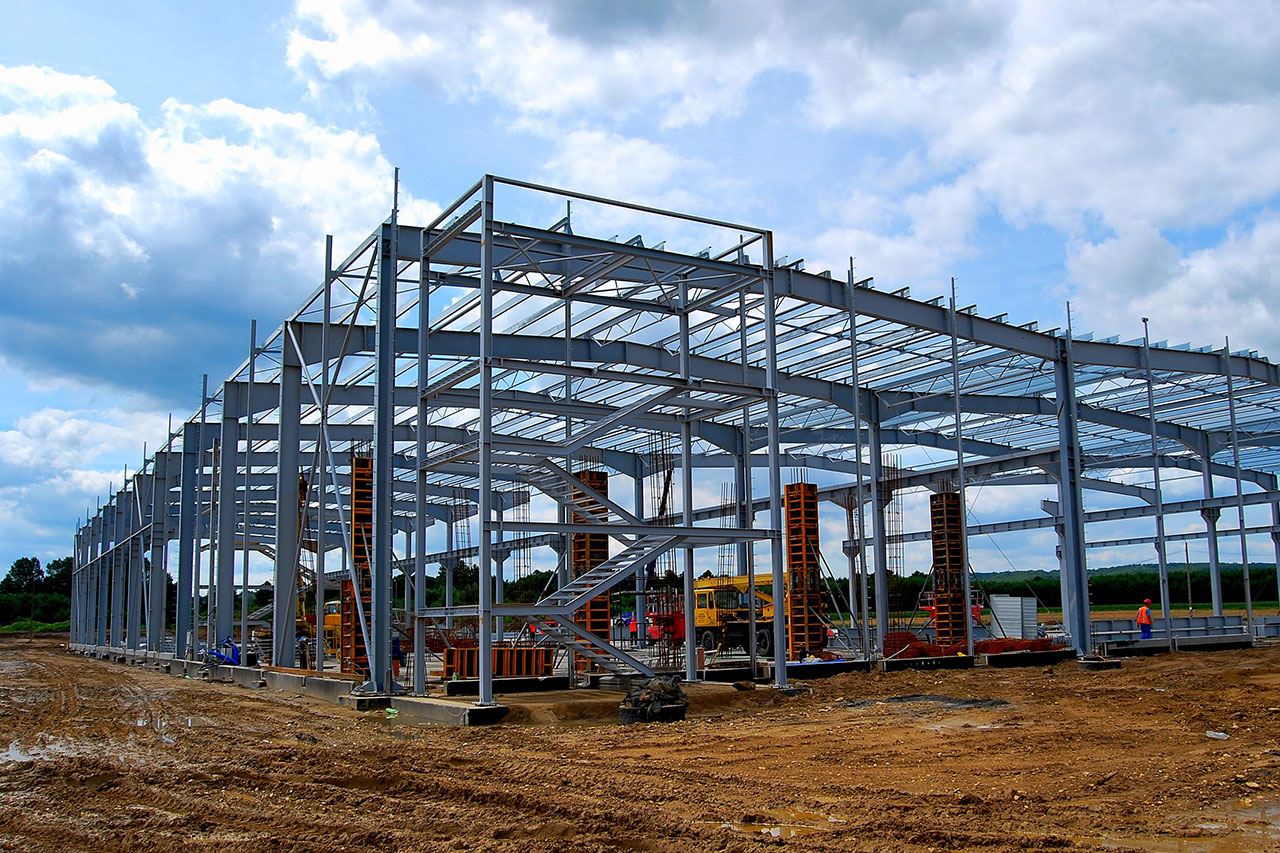
EU construction growth to strengthen in 2027
EU construction output is expected to grow 1.5% on-year in 2026 and accelerate to 2.9% in 2027, following 1.3% growth in 2025, according to the European Steel Association (Eurofer) outlook.
Construction, which accounts for 37% of EU apparent steel consumption, continues to provide the strongest support for steel demand. The sector contracted 1.6% in 2024, despite support from NextGenerationEU-related schemes and monetary easing, before returning to modest growth in 2025.
Output growth slowed to 0.4% year-on-year in the first quarter of 2026 from 3.1% in Q4 2025, most probably reflecting the usual seasonal slowdown in construction activity during the first quarter, Eurofer says.
Growth should accelerate later in 2026 despite higher interest rates, before picking up more speed in 2027, thanks to a recovery in housing demand and a pick-up in infrastructure spending, the association adds.
Overall, EU steel-using sector output, measured by the Steel Weighted Industrial Production (SWIP) index, is forecast to grow 1.5% in 2026, following a marginal 0.1% decline in 2025 and a 4.1% contraction in 2024. Growth is expected to accelerate to 2.5% in 2027, supported by construction, mechanical engineering and a recovery in automotive output, Kallanish notes.
| Sector | 2021 | 2022 | 2023 | 2024 | 2025 | 2026f | 2027f |
| Construction | 6.2 | 3.3 | 1.9 | -3.3 | 1.2 | 1.8 | 2.9 |
| Mechanical engineering | 12 | 4.7 | 1.6 | -5 | -0.7 | 1.9 | 1.8 |
| Automotive | 6.1 | 5.4 | 8.8 | -9.6 | -4.1 | -0.9 | 3.5 |
| Domestic appliances | 12.6 | -4.6 | -4.5 | -4.9 | 0.8 | 0.3 | 0.8 |
| Other transport | 3.8 | 7.3 | 10.3 | 5.7 | 2.4 | 7 | 2.3 |
| Tubes | 10.3 | -1.3 | -1.4 | -2.4 | 0.1 | 1.3 | 1.2 |
| Metalware | 12 | 1.2 | -3.9 | -3.3 | -0.3 | 2.1 | 2.1 |
| Others | 12.1 | 3.9 | 2.8 | -1.6 | 2.5 | 1.6 | 1.6 |
| SWIP | 8.2 | 2.8 | 2.3 | -4.1 | -0.1 | 1.5 | 2.5 |
Source: Eurofer outlook September 2026, f = forecast
Author: Elina Virchenko

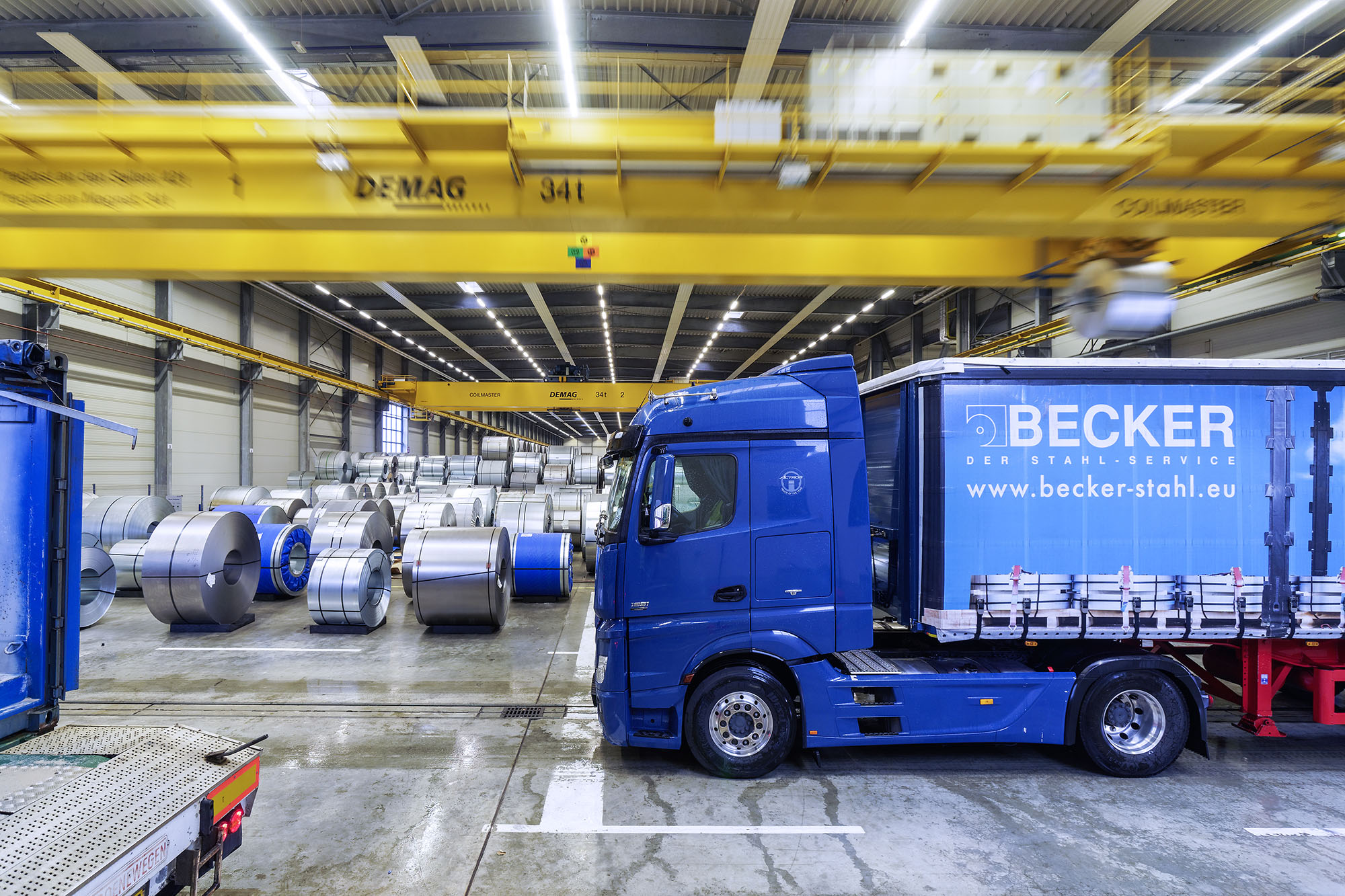
Klöckner agrees to sell Becker Group to Accura and BCB consortium
Klöckner & Co has signed an agreement to sell Becker Group to a consortium comprising Accura Investment Partners GmbH and Becker Consult + Beteiligungs-GmbH (BCB), the company announced on 8 October 2026.
The transaction is subject to customary regulatory approvals and is expected to close before the end of 2026. The parties have agreed to keep the purchase price confidential.
Becker Group is an independent service centre of steel, stainless steel and aluminium in Europe, serving customers including the automotive and metal processing sectors. Klöckner & Co first announced its intention to divest the business in January 2026, following a review of strategic options. The company said the sale supports its focus on higher value-added products and services.
Guido Kerkhoff, CEO of Klöckner & Co SE, said: “With the sale of Becker Group, we have reached another milestone. The consortium of Accura and BCB is deeply rooted in the industry and brings the expertise needed to develop Becker Group on a sustainable basis. The realignment concept initiated by us and Becker Group will be further developed by Accura and BCB, determining the future direction of Becker Group. Through the sale, Klöckner & Co will place an even greater focus on higher value-added business and consistently drive its own profitable growth in this segment.”
Ulrich Becker, Senior Managing Partner of Becker Consult + Beteiligungs-GmbH, said: “Becker Group has a strong market position and a team that truly knows the business. With our own extensive background in the steel and metal industry, we look forward to building on this foundation together with the management team and the entire workforce to drive long-term growth.”
Under the planned ownership change, Becker Group will continue to be led by its existing management team, headed by CEO Torsten Gieseke. The consortium intends to further develop the realignment programme jointly initiated by Klöckner & Co and Becker Group.
The programme will focus on improving sales, procurement and business processes, alongside inventory management and liquidity. According to the announcement, the buyers aim to stabilise the business and support its long-term development in Europe.
No immediate headcount reductions or site closures are planned at closing. However, the consortium intends to review Becker Group’s strategic positioning and the contribution of individual business units as the programme progresses. Any subsequent decisions will take account of market and cost developments and be coordinated with the relevant employee representative bodies.
Accura is an independent investment company focused on traditional industries in the European mid-market. BCB is a consultancy and investment firm specialising in industrial mid-market businesses, led by Ulrich Becker, a former member of Klöckner & Co’s Management Board.

Northern European HRC rises slightly on higher mill offers; Italian prices decline despite tight supply
Local steel hot-rolled coil (HRC) prices in Northern Europe edged up slightly as mills tried to achieve higher levels, while prices in Italy declined on the latest deals despite limited supply in the market, sources told Fastmarkets on Wednesday October 7.
In Northern Europe, sources said demand was still subdued, so price increases were not accepted as quickly as mills expected.
A buyer source reported an indication of workable prices in the Benelux area at €730 ($821) per tonne ex-works, saying this level was still possible to achieve. The same source said offers from mills in the area were at €740-750 per tonne ex-works.
A second buyer reported an offer at €760 per tonne ex-works. No other price points were received during the day.
Due to one source accounting for more than 50% of the input on Wednesday, prices collected in the previous day were copied over to the latest index calculation, in line with Fastmarkets methodology.
On Tuesday, a seller source reported deals within the range of €740-760 per tonne ex-works, and a buyer reported an indication of tradable level at €740 per tonne ex-works.
Thus, Fastmarkets’ daily steel hot-rolled coil index domestic, exw Northern Europe was calculated at €746.88 per tonne on Wednesday, up by €1.88 per tonne from €745 per tonne on Tuesday.
The index was stable week on week but up by €4.38 per tonne month on month.
In Italy, a producer in the market said that the latest prices confirmed in transactions were within €750-760 per tonne delivered for November-December delivery, which nets back to around €730-745 per tonne ex-works after deducting delivery costs of €15-20 per tonne.
The same source said that they were not seeing higher levels achieved in the market yet, “even if the offers are definitely higher.” The producer added that it was offering minor December allocation at €750 per tonne ex-works, with bids €10-20 per tonne below this level.
However, this fell outside the Fastmarkets methodology delivery window of up to six weeks, so the December prices were not considered in Wednesday’s index calculation.
Despite the statement from the producer about limited increases achieved in the market, a buyer indicated workable HRC prices in Italy within the range of €740-750 per tonne ex-works, in line with previous transactions heard in the market on Monday October 5.
As a result, Fastmarkets’ daily steel hot-rolled coil index domestic, exw Italy was calculated at €741.25 per tonne on October 7, down by €3.75 per tonne from €745 per tonne on October 6.
The index was down by €2.50 per tonne week on week but up by €13.75 per tonne month on month.


EUROFER: EU steel pipe and tube output to grow by 1.3 percent in 2026
EU steel pipe and tube production is expected to increase by 1.3 percent in 2026, following marginal growth of 0.1% in 2025, according to the European Steel Association’s (EUROFER) third-quarter Economic and Steel Market Outlook 2026-2027, which points to a gradual recovery amid persistent uncertainty across European manufacturing.
The projected expansion follows three consecutive years of contraction, with EU tube output falling by 1.3% in 2022, 1.4 percent in 2023 and 2.4 percent in 2024, before stabilizing in 2025. EUROFER forecasts a further increase of 1.2% in 2027, indicating that the sector’s recovery will remain modest.
Tube production growth is expected to lag behind the overall recovery in EU steel-using industries, whose steel-weighted output is forecast to increase by 1.5 percent in 2026 and 2.5 percent in 2027, following a decline of 0.1 percent in 2025.
Author: SteelOrbis Editorial Team


ArcelorMittal Eisenhüttenstadt restarts BF, long-term future remains uncertain
Germany-based steelmaker ArcelorMittal Eisenhüttenstadt has restarted its blast furnace 5A following a recent operational disruption, restoring operations at the facility after production was interrupted at the end of September, according to media reports.
The disruption was reported in September after an operational irregularity was detected at the blast furnace, leading ArcelorMittal to partially halt production at the plant, as SteelOrbis previously reported. At the time, the company said its technical teams were working to stabilize operations and expected regular production to resume shortly.
However, questions remain over how long the blast furnace can continue operating. No definitive timeline for its continued operation or shutdown was provided.
Future production route remains unclear
Uncertainty over the blast furnace comes after ArcelorMittal decided in June 2025 not to proceed with its previously planned direct reduced iron and electric arc furnace-based decarbonization projects at its Bremen and Eisenhüttenstadt plants.
As a result, blast furnace 5A continues to play a central role in maintaining production at Eisenhüttenstadt, while the longer-term production route for the site remains unresolved. The Eisenhüttenstadt facility has an annual crude steel production capacity of approximately 2.5 million mt.
Author: SteelOrbis Editorial Team

France’s steel exports rise as imports ease in Jan-Aug 2026; metal output edges up in August
France’s basic steel product and ferroalloy exports increased by 2.3 percent year on year to €6.44 billion in January-August 2026, while imports declined by one percent to €5.92 billion, according to the French Ministry of Economy, Finance and Industry. These figures resulted in a trade surplus of €520 million for the period.
Trade in other steel product categories showed mixed trends. Steel pipe and tube exports fell by 5.6 percent to €796.36 million, while imports edged up by 0.3 percent to €1.33 billion. Exports of cold rolled steel bars rose by 6.1 percent to €307.88 million, whereas imports slipped by 0.9 percent to €335.02 million.
Cold rolled steel strip exports decreased by 5.3 percent to €407.16 million, with imports falling by 3.4 percent to €422.93 million. Cold drawn wire exports increased by 3.2 percent to €197.76 million, while imports declined by 4.8 percent to €301.79 million. Exports of metal structures and parts fell by one percent to €594.21 million, while imports dropped by 9.5 percent to €1.53 billion. All trade changes are compared with January-August 2025.
Meanwhile, France’s production of basic metals and fabricated metal products, excluding machinery and equipment, edged up by 0.1 percent month on month in August, following a 1.4 percent decline in July, according to the National Institute of Statistics and Economic Studies (INSEE).
Overall manufacturing output rose by 0.3 percent in August after falling by 0.8 percent in July. However, manufacturing output in June-August was down by 1.2 percent year on year and by 1.9 percent compared with the previous three-month period.
Among steel-consuming sectors, production of motor vehicles, trailers and semi-trailers declined by 3.4 percent month on month in August, reversing a 1.3 percent increase in July. Construction output rose by 0.7 percent after remaining stable in July, although output for June-August was down by 2.0 percent compared with the preceding three months.
Author: SteelOrbis Editorial Team
Swiss Steel’s cutbacks in Germany still undefined
The scale of the layoffs and capacity reduction that’ll take place at Swiss Steel is not yet known, despite announced intentions of further cutbacks.
The company underwent a wave of reductions and redundancies in late 2024 (see Kallanish passim), when the number of staff was brought down to under 7,000. According to ceo Frank Koch, the group has halved the number of employees over the years from 13,000 to 6,500 now.
This comes as Koch told Sonntagszeitung in an interview that further cutbacks are expected at the group’s German subsidiary, Deutsche Edelstahlwerke. That measure will minimise the group’s dependency on the automotive industry, he was quoted as saying.
With its upcoming measures, the loss-making group plans to return to operating profit by 2028, Koch said.
In a statement, Swiss Steel tells Kallanish that in the future the group “will have an altogether smaller and more focused set-up”.
The statement did not provide further details on the cutbacks. “As soon as the current considerations lead to tangible steps, we will communicate the process that will come,” the company says.