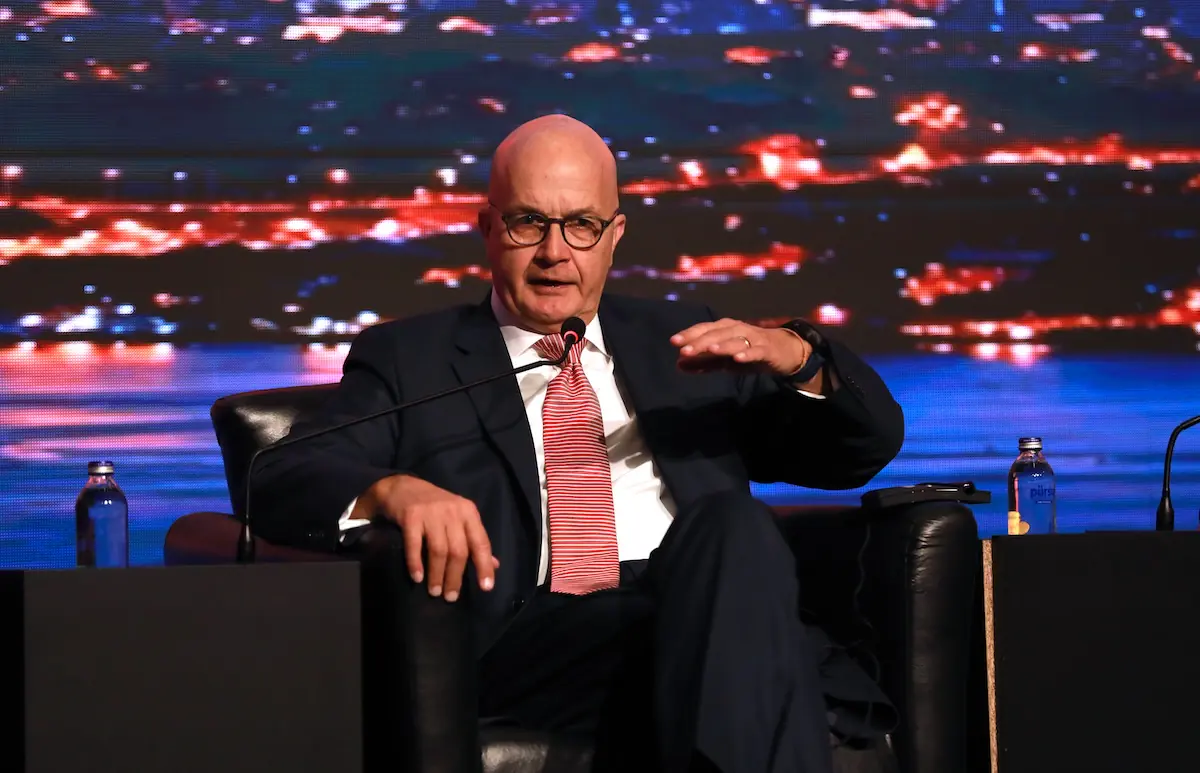
Speaking at Steel Networking Summit 2026, Wordsteel Director General Henrik Adam stated that capacity growth in the global steel industry is outpacing demand growth. Adam noted that the global capacity utilization rate stands at approximately 75% to 76%.
Speaking at Steel Networking Summit 2026 in İstanbul, Henrik Adam assessed the global steel industry’s production, consumption and trade outlook, noting that global steel production capacity continues to increase. Adam emphasized the widening gap between capacity and demand, stating that approximately one-quarter of existing capacity remains unused.
Adam stated that around 140 million tons of new capacity is expected to come online over the next two years, while demand is not expected to increase at the same pace. He noted that production and consumption trends vary across regions, with India recording strong growth while production is declining in some other regions.
Regional dynamics in steel exports are changing
Adam stated that global steel exports have remained at approximately 450 million tons annually for more than a decade. He emphasized that while overall export volumes have remained relatively stable, the positions of individual regions in global trade have changed.
Adam noted that China, which was a net importer around 20 years ago, has since become a net exporter, while Europe’s position as a former net exporter has weakened. He emphasized that assessments of global trade should consider not only total export volumes but also changes in regional trade balances.
Adam also highlighted significant differences in per capita steel consumption across countries, stating that the global average stands at approximately 200 kilograms. He noted that consumption remains high in economies with steel-intensive industries, such as South Korea, while India, the world’s most populous country, remains well below the global average. Adam emphasized that this indicates significant growth potential in India.
Indirect steel trade is becoming increasingly important
Adam emphasized that steel trade should not be assessed solely through direct exports of steel products, highlighting the importance of indirect trade through steel-containing products such as cars, trucks and household appliances.
He explained that steel produced in one country can be incorporated into other products and subsequently exported to international markets. Adam stated that the amount of steel contained in these products is approaching the volume of direct steel exports. When direct and indirect trade are considered together, approximately 900 million tons of steel are traded across borders annually.
Adam noted that accounting for indirect trade also affects assessments of actual per capita steel consumption. He explained that differences between the country where steel is produced or processed and the country where the final product is consumed create a gap between apparent consumption and actual steel use.
Adam also stated that geopolitical developments are reshaping global trade and investment decisions, with production increasingly focused on serving local markets. He added that new policies and regulations aimed at restricting international trade are affecting operating conditions across the steel industry.