


Governments must boost transition to green steel
Governments across the world need to help accelerate a sustainable transition for the iron and steel sector, the International Energy Agency (IEA) said on Thursday.
The Paris-based agency recommended in its new Iron and Steel Technology Roadmap report the creation of a market for near-zero emissions steel, Kallanish reports.
“Green steel should be promoted by governments not only through regulations, but through public procurement requirements,” said IEA’s energy analyst Araceli Pales.
Steel is vital to modern economies and it’s global demand is expected to grow by more than a third by 2050, from current 1.9 billion tonnes to 2.5 billion tonnes.
The iron and steel sector accounts for 8% of the final energy demand and 7% of the energy sector CO2 emissions worldwide. Around 25-30% of industrial CO2 emissions come from steelmaking, with coal supplying 74% of the sector’s energy input.
To enable countries to reach their climate targets, governments and decision makers “should have 2030 firmly in mind as the critical window to accelerate the transition,” the IEA said.
“A plan must be put in place to deal with existing assets that acknowledges the decline in the CO2 intensity of production required just one investment cycle away,” the report said.
Policy portfolios will be diverse but governments need to support the demonstration of near-zero emission steelmaking technologies; accelerate material efficiency; and increase international cooperation and ensure a level global playing field.


ArcelorMittal to permanently close Krakow furnace and steel plant in Poland

ArcelorMittal Poland said Oct. 8 it will permanently close the blast furnace and steel plant in Krakow this month due to reduced demand caused by the COVID-19 pandemic.
“The COVID-19 pandemic has had unprecedented consequences for the European steel industry. Although demand in recent weeks has revived somewhat – mostly driven by inventory corrections – it is still considerably below pre-Covid levels,” Sanjay Samaddar, CEO of ArcelorMittal Poland said in a statement.
“This means we have to take some very difficult decisions, which will regrettably mean the closure of the blast furnace and steel shop in Krakow,” he added.
ArcelorMittal said high energy costs, rising carbon prices and a lack of emergency trade measures coupled with the European Commission’s recent decision to further increase the quota of tariff-free steel imports from outside the EU at a time of falling demand had also influenced the company’s decision.
“Taking all these factors into consideration, we have taken a decision to concentrate the production of hot metal in our two blast furnaces in Dabrowa Gornicza, to improve our cost competitiveness,” Samaddar said.
The company said the shutdown of the Krakow blast furnace and steel shop will begin this month and will last a few weeks. In 2018, the Krakow plant produced about one third of the company’s 5.2 million mt of crude steel in Poland.
Krakow’s furnace and steel shop were temporarily idled in November last year due to the market downturn. Since then, the majority of the affected employees have been either redeployed to other ArcelorMittal Poland plants or put into temporary unemployment. Samaddar said the company would work with trade unions to reach a compromise for affected workers.
The company’s coke plant in Krakow will continue to operate as well as two rolling mills, the hot dip galvanizing line and the new organic coating line. The company has invested about Eur 110 million in Krakow’s downstream operations over the last five years.
Slabs for the Krakow rolling mills will now be sourced from the Dabrowa Gornicza steel shop, where the company will invest Eur 40 million in debottlenecking projects.
— Adam Easton


Polish plate mill up for sale again after buyer misses payment deadline

Polish heavy plate mill Huta Czestochowa has been ordered by a local court to be put up for sale again via an auction or a tender after the previous takeover deal with investment company Sunningwell Steel Polska fell through over the payment for the mill, Dominik Bogacz, press officer at the local court in Czestochowa, said Oct 8.
“Sunningwell did not pay the money because the deed was not ready. There is no proper inventory of assets, which makes the transaction illegal. Hence, Sunningwell and the trustee have applied to the court to extend the term of the offer,” said Marek Frydrych, president of the board at Sunningwell.
According to Bogacz, the court rejected Sunningwell’s request to push back the payment of the price agreed at Zloty 220 ($58) million. At the same time, the court ordered the mill’s current bankruptcy trustee to call for a new tender or auction within 14 days.
The court also asked the trustee to address the issue of the Huta Czestochowa lease, which was granted to Sunningwell over a year ago and expired on Sept 19.
Bogacz added that Sunningwell would not be considered as a potential buyer in the future sale process as it was found unable to meet its financial obligations previously. Sunningwell’s president noted he was still interested in buying Huta Czestochowa.
According to local press, another company with interest in buying the Polish mill in the past was Corween Investment, part of the Liberty Group. The company was reported to have submitted an offer and made a pledge to pay Zloty 2 million ($530,000) over the initial asking price set at Zloty 220 million to beat Sunningwell’s bid. However, the offer came after the deadline and was not accepted.
— Wojtek Laskowski

EUROMETAL SSC Working Group discussed steel market short & medium-term prospects, automation and truck loading’s

The EUROMETAL Regional Meeting of the SSC of the Austria + BENELUX + Germany region took place online on October 8, 2020. The event initially scheduled for April 2020 was postponed for health reasons and was eventually converted into a webinar.
The event was moderated by Thomas Niederhofer Managing Director at Knauf Interfer Stahl Service Center GmbH and member of EUROMETAL Presidency.
After compliance rules and presentation of the latest EUROMETAL SSC Market Monitoring for Flat Steel Products, Mr Andreas Schneider from Stahlmarkt Consult presented short and medium-term prospects of the German steel market.
Securing the loading of flat products was presented by Ludwig Felser, Manager at ArcelorMittal Distribution Solutions with particular attention to sheets or coils fall from the truck and drivers or loaders injured.
The event was concluded by Mr Axel Sturm and Mr Tom Giebeler from Heinrich Georg GmbH about digitization and automation in the Service Centers from machine builder to process optimizer.
All presentations made at this meeting are available to EUROMETAL members in the login area Knowledge Center on eurometal.net.
The working group meeting was attended by 31 participants.
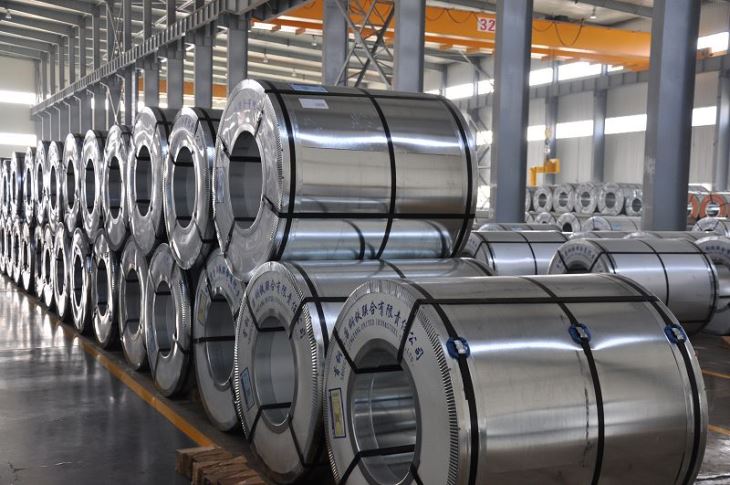
EU applies definitive stainless HRC anti-dumping duties
The European Commission has concluded its investigation into anti-dumping duties on stainless hot rolled coil imports from China, Indonesia and Taiwan. According to a note seen by Kallanish, authorities have confirmed with definitive measures the existing provisional measures announced in April.
The investigation started back in August 2019 on the back of complaints made by local steelmakers. During the investigation the EU confirmed the need for duties to be applied; it nevertheless decided that retroactive collection of duties for volumes imported before the provisional measures will not be needed.
Indonesian importers will face a duty of 17.3%, while Chinese suppliers will be hit by duties of between 9.2% and 19%, depending on the mill’s provenance. Taiwanese material will face a duty of 4.1-7.5%. Compared to the provisional measures, authorities somewhat lowered the duties on some Chinese and Taiwanese suppliers.

Northwest Europe fourth-quarter coil nears sell out
Northwest European mills still have coil availability for delivery in new contracts by year-end, though buyers remain reserved about predicting further price hikes.
According to a German service centre manager, “…hot-dip galvanized is the hardest to get, followed by cold rolled, and then hot rolled comes in third.” HRC is very close to the mark of €500/tonne ($588) ex-works, with some mills offering higher and others lower. “The question is will it be paid, and I don’t think this is the case for the majority, only for those who need material very badly,” the manager says.
Mills are reaching out for even higher prices for early 2021, with €530 the highest proposal heard so far. But “…I’m not all that convinced the $500 will be reached across the board,” the manager tells Kallanish, citing signs of slackening demand in Asia.
Another buyer concurs, saying “…the resistance among stockholders is growing,” as buyers do not quite share mills’ conviction of further surges. Yet another manager notes that it is unclear how demand will develop between now and year-end, not least because of rising Covid-19 measures in various countries.
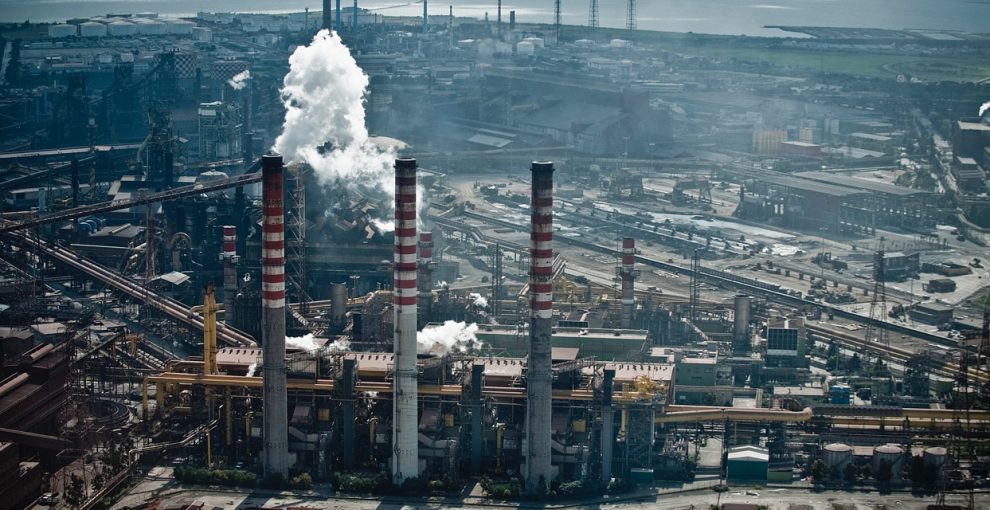
Italy likely to take majority stake in ArcelorMittal Italia : sources
Invitalia, Italy’s agency for investment promotion and enterprise development, will likely take a majority stake in troubled steelmaker ArcelorMittal Italia, with Arvedi — the country’s second-largest flat steel producer — possibly taking a minority stake at some stage, sources said.
Ongoing talks between government representatives, unions and ArcelorMittal could end with the latter being left with no stake in the Italian business, whose assets would be injected into a new company, the sources also said.
ArcelorMittal declined to comment, as did Arvedi, while Invitalia was not available to comment.
“Everything will be clear in few weeks. AM is the one that is deciding the future,” a union source said.
ArcelorMittal agreed to buy the business — Europe’s biggest single-site steel company and then known as Ilva — in 2018 under a lease-and-purchase agreement for Eur1.8 billion ($2.1 billion) and to invest another Eur2.4 billion to clean up and modernize the plant, which has been dogged by environmental issues.
But a change in the law removed ArcelorMittal’s legal protection in implementing the environmental clean-up plan and last November it said it wanted to withdraw from the deal in November 2020, at a cost to it of Eur500 million. Final closing of the lease and purchase agreement is scheduled for May 2022.
“If it [ArcelorMittal] will leave who can replace them and enter with the government?” the union source said. “If the former Ilva, as very much wanted by the Italian government, converts some of its blast furnaces into greener electric arc furnaces, sustained by EU funds, that could then see Arvedi enter as a minority shareholder in the new company but…this is not sure [to happen].”
“Arvedi albeit being a large producer, is not as big as ArcelorMittal and Taranto is a very complex site”, the source said, echoing others.
Arvedi, whose annual crude steel output around 5 million mt through its two EAFs, has in the past bid for Ilva in a joint venture with Indian steel producer JSW.
In the meantime, ArcelorMittal Italia has slightly increased production of late, casting around 7,500 mt/day, up from 7,300 mt/day but still at a very low rate from just two out of its four blast furnaces, as it re-started some lines.
According to union sources, some lines the company halted in July — such as zinc-coating line number 2 and then number 1 — restarted this week, together with hot-rolling mill number 2. Plate rolling mill number 2 was expected to restart on Oct. 12.
— Annalisa Villa
ArcelorMittal Poland closes Krakow hot-end for good
ArcelorMittal Poland (AMP) will close its Krakow hot-end for good after demand failed to recover to satisfactory levels, the firm says. It also cites insufficient EU market protection from imports, high energy costs and the burden on EU mills of carbon emissions costs as being behind the move.
The shutdown of the Krakow plant’s remaining operational blast furnace will begin in October and last a few weeks.
The BF was initially idled in November 2019 on account of reduced demand and a large volume of imports into the EU (see Kallanish passim). In March AMP postponed indefinitely the restart of the Krakow hot-end on account of the coronavirus spread in Europe.
Europe’s steel industry has “…suffered greatly” as a result of the pandemic, with almost all end-use sectors limiting activity, AMP says. Moreover, macroeconomic data shows the likelihood of a quick rebound is very small, it adds.
“The Covid-19 pandemic has huge consequences for Europe’s steel industry,” says AMP chief executive and chairman Sanjay Samaddar. “Although we are seeing a slight increase in demand in the last few weeks, mainly on account of restocking, this demand for steel is still significantly lower than before the pandemic.”
Besides Covid-19, AMP says the closure is due to the lack of effective measures to protect the EU from imports and the European Commission’s decision to increase safeguard quotas at a time when demand fell drastically. On top of already high energy costs, moreover, Poland will introduce additional capacity market fees from January 2021. Finally, there is no Carbon Border Adjustment yet in place to equalise carbon costs with non-EU suppliers, thereby eroding EU steelmakers’ competitiveness.
The result of these factors is carbon leakage, meaning the shifting of steelmaking to countries outside the EU that are not part of the Emissions Trading System, AMP observes.
AMP will continue producing liquid steel at the two operational blast furnaces at its flagship Dabrowa Gornicza steelworks.
Krakow’s coking plant, hot and cold rolling mills, galvanizing line and organic coating line will continue to operate. Slab feedstock will be sourced mainly from Dabrowa Gornicza. AMP plans to invest PLN 180 million ($47.2m) into its flagship plant to increase capacity and enable production of grades used for grain-oriented steel.
AMP’s Krakow steelworks seems to have drawn the short straw, after ArcelorMittal announced the restart of blast furnace operation at its Fos-sur-Mer, Gijón, Tubarão, Bremen and Vanderbijlpark works in recent weeks.
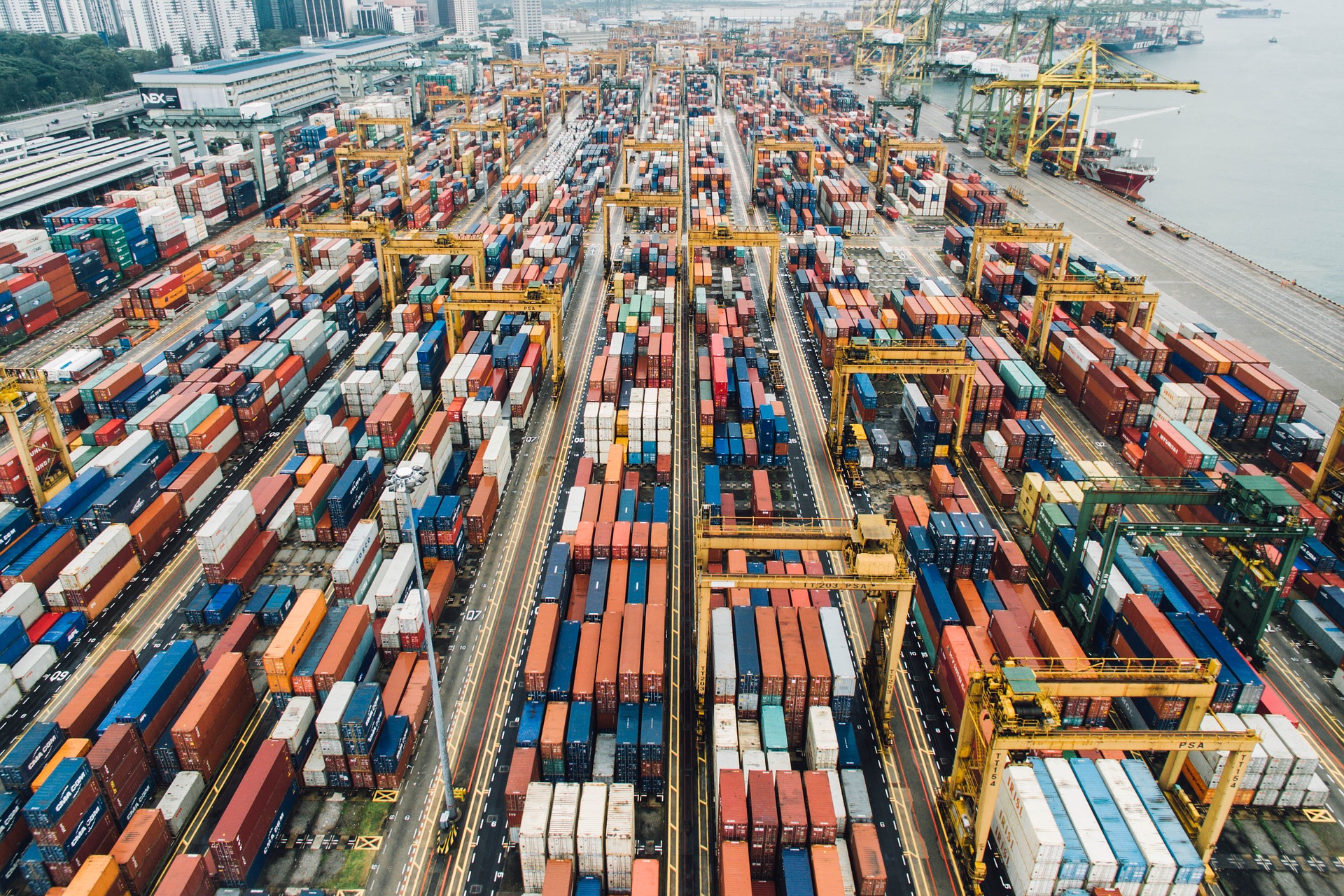
UK’s post-Brexit steel quota not seen having big impact on Turkish pipe exports
The UK will have its own steel import safeguard measures from Jan. 1, 2021, similar to those already put in place by the European Commission. Turkish pipe producers don’t expect these measures to have a further major negative effect on exports to the UK, as these have already fallen notably in the first eight months of this year, amid EU quotas.
Turkish mills’ pipe exports to the UK fell to 76,000 mt in first eight months of 2020, sharply lower than 130,000 mt exported in the same period the previous year, according to the latest Turkish Statistical Institute (TUIK) data observed by S&P Global Platts.
“UK will probably adopt similar quotas to EU as of the beginning of 2021, so it will not have further restricting effect on export volumes. We are currently only facing difficulties on gas pipe exports to the EU, while other quotas are generally normal,” an executive of a major Turkish pipe producer executive told Platts Oct. 6, adding that he is not expecting the EU to continue quota measures as of July 2021, as they can face difficulties at the WTO.
The WTO agreed to the establishment of a dispute panel on Aug. 28 to review a complaint filed by Turkey regarding the EU’s safeguard measures on imports of certain steel products, as Platts has reported.
Platts learned from Veysel Yayan, general secretary of the Turkish Steel Producers’ Association, on Oct. 5 that the WTO panel is currently being assembled and a final decision by the panel could be announced in the coming months.
Turkish mills, meanwhile managed to maintain their overall steel pipe export volumes year on year in January-August, despite trade barriers in some of Turkey’s main pipe export markets, including the EU.
Turkish producers exported 1.12 million mt of steel pipe under HS codes 7305 and 7306 to global markets in the eight-month period, slightly higher than 1.08 million mt exported in the same period the previous year.
Despite pressure from EU import quotas and the virus outbreak, this region continued to be Turkey’s main pipe export destination in January-August.
Romania became Turkey’s largest pipe export destination in January-August, taking 177,000 mt, up 10% year on year.
Turkey’s pipe exports to Iraq reached 128,000 mt in the eight-month period, up 11% on year, while exports to Israel totaled 91,600 mt.
Exports to Belgium rose 36% on year to 71,500 mt in the first eight months of 2020, despite EU quotas, while Canada became one of Turkey’s main pipe export markets in January-August at 45,000 mt.
Turkish mills’ pipe exports to the US fell to around 15,000 mt in January-August, sharply lower than the 65,200 mt exported in the same period the previous year, amid the COVID-19 pandemic.
Turkish pipe mills shipped 92,000 mt to the US in 2019, about a third of the 279,000 mt exported in 2018 after the establishment of US Section 232 tariffs.
Turkish pipe producers reflected the rises seen in HRC costs to their list prices in the previous weeks, as reported. As domestic HRC producers in Turkey have been offering HRC relatively flat at $530-$540/mt ex-works in recent days, Turkish pipe mills’ domestic and export pricing also remained stable.
A pipe producer told Platts on Oct. 6 that Turkish mills’ BPE grade welded pipe prices are currently at $560-$580/mt.
— Cenk Can
German engineering industry doubt grows over recovery
Hope for a rapid economic recovery has given way to slightly increased scepticism among many German mechanical and plant engineering companies. This is the key message of the eighth survey by their industry association, VDMA, on the economic effects of the Covid-19 pandemic.
Only 18% of companies surveyed expect a return in 2021 to the sales levels of 2019, compared to over 30% in the previous survey in mid-June, Kallanish hears from VDMA. “Many companies are expecting a longer way out of the crisis and are adjusting their corporate strategy accordingly,” notes VDMA chief economist Ralph Wiechers.
Although the proportion of companies with serious order losses and cancellations has successively fallen from 45% to 28% since May, “…the continuing slump in orders continues to cause problems for many companies,” he says.
Almost two thirds of managers surveyed see a second Covid-19 wave as the greatest downside risk for the economic recovery. The great uncertainty is also having a negative impact on the willingness of companies to invest in their own facilities, and many will confine investments in 2021 to domestic plants, VDMA notes.
In August, its members posted a -14% year-on-year drop in real orders. This is the smallest decline on a monthly basis since the beginning of the coronavirus crisis. In June-August order intake fell by -22% compared with the previous year.