


Federacciai confirms mildly positive outlook for Italian steel
Alessandro Banzato, head of Italian steelmakers association Federacciai, has confirmed a mildly positive outlook for the Italian steel sector, after the strong declines registered during March and April.
During a press conference in Milan attended by Kallanish, the executive forecasted that 2020 steel production should fall by -17% on-year. This drop is considered positive, given that output in March and April each dropped -40% y-o-y. “The market is clearly improving and we remain mildly positive also for the first months of 2021,” Banzato said.
Looking at the situation in more detail, Banzato underlined the better performance of long products, whose output dropped -16.2% in January-August. This contrasts with the persistent difficulties faced by flat products, mainly due to the steep output reduction at ArcelorMittal Italia’s mill in Taranto. Their output fell -20.8% y-o-y in January-August.
Some uncertainties continue in the Italian market due to the ongoing negotiations between ArcelorMittal and Italian authorities over the future of the former Ilva. A new agreement is expected to be reached by the end of November, but Banzato underlined once again the fact that Italian manufacturing industries need a large steel complex like Ilva as a supplier. The Taranto plant significantly reduced its output during the last year, raising concerns among many market observers.
“If needed [in case of an exit by ArcelorMittal], I would of course welcome the intervention of the government to take over control of the company for a limited period of time, to prepare for a new future,” Banzato noted. “At the moment, nevertheless, negotiations between ArcelorMittal and Italian authorities are ongoing and we can only wait and see what the decisions will be.”

BIR: economic activity may not rebound till 2023
Most economies are unlikely to return to pre-Covid-19 levels before at least 2022, was the conclusion of this week’s Bureau of International Recycling (BIR)’s Convention Week Keynote Session.
According to Stefan Schilbe, Chief Economist at HSBC Germany, most countries will probably fail to return to pre-pandemic levels of activity until 2022. The forecast from Philippe Chalmin, Professor of Economic History at Paris-Dauphine University, was even starker: “It’s not before 2022 – or even 2023 – that we will be back hopefully at the levels we were last year,” he warned.
Chalmin described the events of recent months as “…the most severe economic crisis since the 1930s”. All major countries had been returning negative growth figures – with the notable exception of China.
The commodity “…stars of 2020” had proved to be gold and iron ore. The former climbed above $2,000 per ounce in August but has since dropped to nearer $1,900. The latter broke through $130/tonne as a result of rising Chinese steel production before heading back towards $120/t.
Iron ore prices are expected to dip below $100/t, resulting in a “…slight downward movement in ferrous scrap values,” Chalmin said at the event attended by Kallanish. For the metals markets, in general, including the leading non-ferrous metals, he pointed to surpluses and a belief that China’s recovery had already been factored into values. “I don’t see much scope for a rise in prices,” the professor confirmed.
Chalmin also anticipates a decline in oil prices from around $40/barrel to nearer $30.
Schilbe reported that some economies had been brought “…almost to a standstill” by Covid-related restrictions earlier this year but that a subsequent recovery had been driven by “…economic stabilisation” within China. Investment in this country is continuing to pick up and further fiscal stimuli are anticipated. Monetary policy could be expected to remain “…ultra-loose” in the USA, while a stronger euro could dampen an export recovery in Europe, he added.
Schilbe identified downside risks: a prolonged pandemic; protectionism dragging down world trade growth; high levels of indebtedness as a result of, for example, job support schemes; and bankruptcies and unemployment.
BIR Director General Arnaud Brunet opened the Keynote Session by describing 2020 as “…an exceptionally turbulent if not brutal year”. He warned the next 6-12 months were likely to be “…very uncertain”. Both the IMF and OECD were “…pessimistic about the short-term and medium-term future”, he noted.

AMNS India expands domestic retail network

AM/NS India is relaunching and expanding Hypermart, its national retail network that serves India’s Micro, Small and Medium Enterprise (MSME) segment. The firm expects to have 50 outlets by year-end and raise Hypermart’s share in revenue to 30% from the current 20%.
Hypermart sells to customers in areas such as fabrication, engineering goods and auto components, and gives them direct access to products they are unable to source directly from steel mills, AMNS India says.
“MSMEs are the growth engines of the Indian economy and we are confident that if quality steel is more widely and readily available, then its multiplier effects will drive consumption and growth for the nation,” Alain Legrix, Vice President and Director-Marketing, AM/NS India, says in a note sent to Kallanish.
As MSMEs continue to grow, easy availability of raw materials such as steel will strengthen demand and sustain growth as the Indian economy revives from the pandemic, the steelmaker observes.
AMNS India said in late July it was ramping up capacity utilisation as Covid-19-related lockdowns in India were lifting. The firm was hit by pandemic measures, especially in April, with crude steel output falling -29% on-quarter in the second quarter to 1.2 million tonnes.

Sheet processor 247TailorSteel starts up German plant

247TailorSteel, a sheet processor headquartered in the Netherlands, has started operating a new site in Germany, Kallanish hears from the company.
The plant is located in Hilden near Düsseldorf and has so far been equipped with three laser cutting machines, two bending machines and one deburring machine. Initially, the site will have a staff of 35, which the company plans to increase to 130 in the medium term. Staff were trained at the company’s Dutch headquarters in Varsseveld.
At its three production sites, including one in Oyten near Bremen, 247TailorSteel processes on average 130 tonnes of sheet and 2,000 metres of tubes per day, it says.
ArcelorMittal supplies first 30,000t of carbon neutral steel
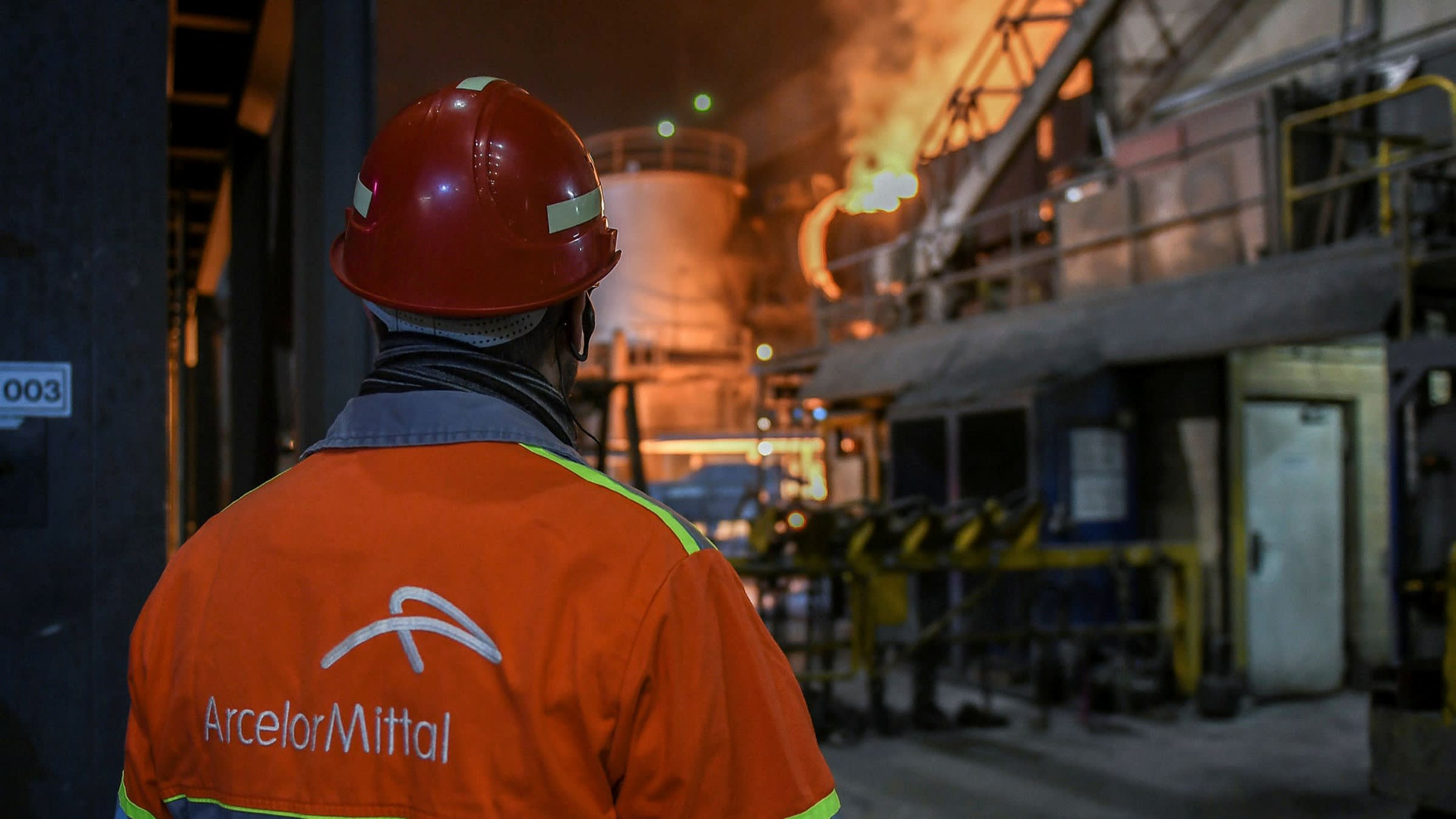
ArcelorMittal says it expects to be able to supply the very first 30,000 tonnes of carbon neutral steel products to customers this year. The output of carbon neutral volumes will then increase to reach 600,000t in 2022.
The company is progressing in its target to become carbon neutral by 2050, cutting European-based emissions by -30% by 2030. To achieve this goal, it is continuing to invest in a number of projects, including the use of hydrogen in blast furnaces, as well as DRI-EAF facilities. In addition, further smart carbon activities are being implemented.
As a concrete result of the investments implemented by the company, ArcelorMittal was able to confirm that the first green steel volumes will be available this year. The calculation is made using a system that quantifies the CO2 emissions savings made thanks to the decarbonisation projects, verifying emissions compared with a 2018 baseline.
“We are pleased to be able to offer our first green tonnes this year and look forward to being able to provide customers with larger volumes of this steel as our decarbonisation projects are ramped up and rolled out across Europe,” ArcelorMittal Europe chief executive Aditya Mittal says in a note seen by Kallanish.
“We are also in the process of applying for funding for various projects from the ETS Innovation Fund which we hope will be successful, giving us the vital access to finance that we need for these important projects,” he adds.

German steel production seen dropping 15% in 2020
German crude steel production is likely to be around -15% lower in 2020 than in the previous year, according to the current economic status report by Essen-based RWI institute.
The forecast is made on the assumption that the economic recovery that came after mid-year will continue. It may therefore be overshadowed by the latest restrictions in Germany related to Covid-19, Kallanish notes. Output is forecast to reach 33.5 million tonnes, at a capacity utilisation of less than 69%.
Looking ahead, author Roland Döhrn states that this year’s decline is unlikely to be fully made up in 2021. Even without another Covid-19 wave, a long-term decline in demand will continue, he argues. “Demand for steel in the automotive industry, which has been declining since the end of 2018, will in all likelihood pick up only moderately,” he writes.
“The transformation to e-mobility will possibly mean a disruption because it means a change of the supply structure in the automotive industry,” he writes. Batteries will become a cost factor, while the role of traditional German production chains will lose significance.
He expects crude steel production to reach 37.5mt in 2021, up 11% on-year. This means that around 75% of capacity would be utilised, a figure still well below the over 80% reached in the years before 2019.
German steel industry cap utilization predicted at 75% 2021: report

German steel production is unlikely to reach pre-pandemic levels in 2021, with capacity utilization estimated at 75% next year, according to an analysis by German economic research institute RWI.
In the report published Oct. 12, Germany’s crude steel production in 2020 is predicted to be 15% lower than 2019 and will not be made up next year as demand from the automotive industry is expected to increase only moderately.
“We expect crude steel production of 37.5 million mt (+ 11%) for 2021. This means that around 75% of the capacity would be utilized,” the report said.
The decrease in steel production is, however, only partly to blame on economic downturn due to the pandemic. Figures show that steel use has already started to dwindle in the autumn of 2018. Automotive production rates have been falling since then as the car industry has been unable to return production to where it was before the emissions testing scandal.
Investment in the construction industry, which supported steel demand in 2020 is set to decrease next year too.
The German steel industry is also set to be a net steel exporter this year due to shrinking domestic demand and safeguard measures for finished steel imports.
The report highlighted that the drop in production during the first wave of the pandemic was more severe than during the financial crisis of 2008-09 and that it will take the industry longer to recover from the pandemic than the financial crisis, making job cuts of up to 4% inevitable next year.
The German steel industry is also at risk of structural overcapacity as the drive toward electric vehicle production is likely to shift car production outside of Germany and shake up the well-established automotive supply chain as EV producers are likely to source steel from producers closer to the production site.
— Laura Varriale


Italian unions express concern over AST sale
Italian unions have expressed concern at the lack of information regarding thyssenkrupp’s divestment of its Italian asset, Acciai Speciali Terni (AST). This comes in the wake of the company’s announcement in a Reuters interview that JP Morgan has been appointed as an advisor for the sale.
ThyssenKrupp’s Italian unit is going through a difficult patch due to the collapse in demand related to the coronavirus pandemic, and has been extending layoffs and limiting output. In September AST produce 8,500 tonnes of black coil, 18,000t of hot rolled strip and 45,000t of cold rolled products. Slab casters no.3 and no.7 were idled last month and affected workers were temporarily laid off using the government’s Covid-19 layoff scheme (see Kallanish passim).
Thyssenkrupp is seeking a sale for its Italian subsidiary, in which Italian steelmaker Arvedi and re-roller Marcegaglia have shown interest. Also interested are several other foreign groups, the unions say.

German tube stockist opens site in Finland
German tube distributor Hoberg & Driesch Röhrenhandel is establishing a subsidiary in Finland, under the name H & D Finland, Kallanish learns from the parent group.
The Finnish unit will start trading on the Finish market this month with its own warehouse facilities in Vantaa, managed by minority partner Riku Hihnala. It will closely cooperate with the parent company’s central warehouse in Germany, and will offer its whole range of products, Hoberg & Driesch says.
Meanwhile in Germany, the group finalised this summer the centralisation of its warehouse capacities at its headquarters in the Rath district of Düsseldorf. The move means the closure of sites it formerly operated in the Heerdt and Reisholz districts, and in Voerde. The “Hydraulics” product line will remain at the site in Kornwestheim near Stuttgart in southwestern Germany.
The newly built central warehouse comprises approximately 45,000m2 of storage space for a capacity of around 45,000 tonnes of pipe. This includes two fully automated high-bay systems with 8,000 storage units and approximately 10,000m2 of open space storage capacity for welded pipe and tube. The warehouse can supply up to 1,300 picks per day and is operated in a three-shift system, the company notes.

EUROMETAL registers first service centre rebound in August

European steel distributors association EUROMETAL registered in August a clear sign of improvement for flat steel service centres. They posted monthly figures more or less in line with the ones registered in August 2019, after many months of steep contraction.
According to the latest data seen by Kallanish, flat steel service centres saw their shipments decrease only -1.5% year-on-year August. During the first eight months of the year the reduction remained, though, at -18.7% y-o-y.
Shipments by multi-products steel distributors, in contrast, were down -13.2% y-o-y during January-August, with a steep fall of -12.7% being recorded in August alone.
According to sources, September was the first month in which the steel market across Europe operated at pre-pandemic levels; future figures by EUROMETAL are expected to confirm this trend.