


OECD: Global steel capacity reaches record high
Steel excess capacity increased to 640 million metric tonnes in 2025, exceeding total Organization for Economic Cooperation and Development steel production by more than 200 million mt, and is projected to continue rising through 2028, the OECD’s Steel Committee said March 24.
According to the organization, global steelmaking capacity has increased for four consecutive years, reaching a new high of 2.45 billion mt in 2025, with the OECD area contracting while non-OECD economies recorded growth during this period.
India and Southeast Asia have been significant drivers of the Asian capacity expansion, supported by relatively strong demand growth and, in the case of Southeast Asia, inward foreign direct investment.
China’s share of global excess capacity rose during 2025, surpassing 50% in the latter part of the year, resulting in higher exports to international markets, the OECD said. China’s annual exports have nearly doubled over the last three years, with its 131 million mt export volume last year surpassing the combined exports from the rest of Asia for the first time in recent history.
“This excess capacity is putting enormous pressure on international markets by displacing production in the committee’s member countries, driving prices and industry profitability down,” Sheryl Groeneweg, chair of the OECD Steel Committee, said in a statement.
Circumvention concerns
Steel Committee members reviewed their trade policy actions, noting that exporters continue to develop new and increasingly sophisticated methods of evading steel tariffs, highlighting the need to strengthen trade enforcement.
In 2025, a total of 75 antidumping and countervailing duty investigations were initiated, and the stock of steel AD/CVD measures rose. Despite these efforts to safeguard steel industries, the effectiveness of OECD members’ trade actions is being hampered.
Based on a new dataset covering over 260 product-level and country-level cases, new work discussed by the committee reveals significant transhipment activity between China and some Southeast Asian countries of steel subject to trade measures taken by OECD countries.
The latest data show that, in 2024, the median Chinese firm received 15 times more subsidies relative to its asset size than the median firm elsewhere, up from 10 times more in previous years, the OECD said. Moreover, China’s steel subsidy rate has nearly doubled since 2019, a trend that will sustain excess capacity in the years ahead absent fundamental structural reforms, the OECD said.
Platts, part of S&P Global Energy, assessed SS400 HRC of 3 mm thickness at $477/mt FOB China on March 24, unchanged day over day. The same grade was assessed at $520/mt CFR Southeast Asia, unchanged over the same period.
Author: Annalisa Villa


Romanian longs spot prices increase amid rising costs, firm import offers, low stocks
Romania’s long steel market has moved upward this week, with prices increasing mainly on the traders’ side, while the sole domestic producer has kept its price levels stable.
However, expectations for a potential price increase from the producer and ongoing rumors of higher targeted levels have continued to support overall market sentiment. Rising production costs, particularly higher energy prices, along with the continued upward trend in EU prices and firmer import offers, have further reinforced the upward direction. Despite ongoing liquidity constraints and cautious purchasing behavior, demand has remained acceptable, allowing traders to test higher levels. In the rebar segment, stock levels are still considered sufficient, which has somewhat limited the pace of increases compared to other long products, though some purchases from Italy and Bulgaria have also been heard during the week. However, in the wire rod segment, price rises have been more pronounced, mainly due to significantly lower stock availability, with sources noting that this tighter supply has even led to some purchases from Greece.
According to market reports over the past week, rebar sales from Italy and Bulgaria have been concluded at around €600/mt FCA and €630/mt CPT, respectively. Meanwhile, Bulgarian offers have moved upward following renewed interest, increasing to €630-640/mt CPT compared to the previous week. In the wire rod segment, some purchases have also been heard from Greece, at around €620/mt FCA. On the other hand, no purchases have been heard from non-EU suppliers. An Egyptian mill has significantly increased its offers amid rising freight costs, with April shipment rebar quoted at €555-560/mt CFR and wire rod at €565-570/mt CFR, compared to €530/mt CFR and €540/mt CFR previously. Turkish suppliers have also raised their rebar offers to €535-550/mt CFR, from €500-520/mt CFR earlier, based on an exchange rate of €1 = $1.15 and estimated freight costs of €25-30/mt, up from €15-20/mt in previous weeks.
In the local market, Romanian spot rebar prices are now reported at €600-615/mt ex-warehouse, compared to €590-600/mt ex-warehouse in the previous week. The domestic producer’s latest indications remain at €590-595/mt ex-works, while higher price ideas of €600-605/mt ex-works are still being tested in the market, though not confirmed by the time of publication. In the wire rod segment, offers have increased more sharply, to €620-630/mt ex-warehouse, rising significantly from €585-590/mt ex-warehouse in the previous week, mainly due to limited stock availability.


ArcelorMittal and Lio-Metal expand Magnelis partnership to replace conventional galvanized steel
ArcelorMittal has strengthened its partnership with Romanian metal products company Lio-Metal, as the latter moves to replace conventional galvanized steel with ArcelorMittal’s Magnelis® coated steel across its product portfolio.
The shift marks a strategic move toward more durable and sustainable steel solutions in construction and infrastructure applications.
Transition toward Magnelis-coated steel
Lio-Metal aims to phase out conventional galvanized steel in the coming years, adopting Magnelis® on a large scale. The company stated that the transition represents more than a simple material change, describing it as a “paradigm shift” in its production approach.
According to Lio-Metal, the new material will provide: double the durability, significantly lower maintenance costs, and longer service life for end-use applications.
ArcelorMittal highlighted that Magnelis® is a zinc-aluminum-magnesium coated steel offering enhanced corrosion protection compared to traditional galvanized products.
The company described the product range as a “game changer in metallic coatings”, citing its strong resistance in aggressive environments, and self-healing properties at cut edges. Field performance data indicate that certain Magnelis® grades can achieve a design life of 15 to more than 50 years, depending on application conditions. The adoption of Magnelis® is expected to enhance performance across these applications, particularly in environments exposed to corrosion.
Partnership supports decarbonization goals
Lio-Metal stated that its 2026 strategy focuses on improving efficiency, productivity and energy performance, contributing to broader decarbonization efforts. The collaboration with ArcelorMittal is seen as a key element in achieving these goals, combining product innovation with sustainable material solutions.

Thyssenkrupp Steel invests €2.4 million in iron ore of future
Germany-based steelmaker Thyssenkrupp Steel has announced an investment of €2.4 million to expand its laboratory infrastructure at its Duisburg-Schwelgern site, aiming to support the evaluation of iron ores for future low-carbon steel production.
The project forms part of Thyssenkrupp Steel’s ongoing efforts to transition toward low-emission steel production, with a focus on improving raw material quality control and process optimization.
The new facility is part of the company’s broader transition toward climate-neutral steelmaking, focusing on raw material testing for hydrogen-based direct reduction (DR) processes. The facility will assess key properties such as reduction behavior, resistance to breakdown, and the tendency to stick or agglomerate during processing.
Supporting hydrogen-based steelmaking
Thyssenkrupp Steel stated that the new laboratory will simulate realistic hydrogen-based operating conditions, allowing for more accurate evaluation of future feedstocks. Testing conditions will reflect increasing hydrogen content over time, aligning with the company’s planned transition toward hydrogen-based steel production.
Two test furnaces will also allow steam injection experiments, helping to better understand reduction rates and process performance.
The company highlighted that its future production route will combine direct reduction and electric smelting, enabling greater flexibility in raw material use. This approach will allow the use of both DR-grade pellets and conventional blast furnace pellets, increasing sourcing options while maintaining process efficiency.

EUROFER warns of growing steel glut, calls for urgent EU measures
The European Steel Association (EUROFER) has warned that the latest OECD data confirm a worsening global steel crisis, while urging the EU to swiftly adopt its new steel trade measure to protect the market.
According to the OECD, global steel excess capacity reached around 640 million mt in 2025 and is expected to continue increasing, highlighting growing pressure on global markets, as SteelOrbis previously reported. The OECD data show that total global steelmaking capacity has climbed to a record 2.4 billion mt, reflecting continued expansion despite weak demand conditions. Excess capacity remains significantly higher than output in OECD countries, exceeding their total steel production by more than 200 million mt.
“Existential threat” to European steel
EUROFER described the situation as critical for the European steel sector. Axel Eggert, director general of EUROFER, said, “The OECD findings are clear: global steel overcapacity is not only massive, it is growing. This is an existential threat to European steelmaking, investment and jobs.”
Against this backdrop, EUROFER stressed that the EU’s new steel trade measure currently under negotiation is urgently needed to prevent further market destabilization.
The proposed system would introduce a tariff-rate quota (TRQ) mechanism aimed at:
- controlling import volumes,
- limiting trade diversion,
- and protecting the EU market from the impact of global overcapacity.
EUROFER cautioned that any dilution of the proposed measure would reduce its effectiveness in addressing import pressure. The association emphasized that the new framework must remain robust and enforceable to ensure meaningful protection for the industry.
With the current EU steel safeguard measures set to expire in June 2026, EUROFER warned that timing is critical.
Mr. Eggert stated, “The EU negotiators must not dilute the new trade measure currently on the table. It must remain robust, enforceable and in place before the existing safeguard expires in June. Any gap would leave the EU steel market exposed at a critical moment for Europe.”

EU-MERCOSUR Agreement to provisionally apply from 1 May 2026
The European Commission has formally notified Mercosur countries of the European Union’s decision to proceed with the provisional application of the EU-Mercosur interim Trade Agreement (iTA).
The notification was made through a note verbale addressed to Paraguay, the legal custodian of Mercosur treaties, completing the final procedural requirement in line with the Council Decision of 9 January 2026.
As a result, the agreement is set to apply provisionally from 1 May 2026 between the European Union and those Mercosur countries that have completed their ratification procedures and notified the EU before the end of March. Argentina, Brazil and Uruguay have already completed this process, while Paraguay has recently ratified the agreement and is expected to notify shortly.
Immediate trade effects and safeguards
The provisional application of the agreement will enable the removal of tariffs on selected products from the outset, providing greater predictability for trade and investment flows between the two regions.
According to the European Commission, the agreement includes safeguards to protect sensitive sectors of the EU economy, while allowing businesses, consumers and farmers to benefit from improved market access.
Commenting on the development, Maroš Šefčovič stated:
“Provisional application ensures the removal of tariffs on certain products as of day one, creating predictable rules for trade and investment. EU businesses, consumers and farmers can thus start reaping the benefits of the deal immediately, while sensitive sectors of the EU economy are fully protected by robust safeguards.”
Strengthening cooperation and supply chains
Beyond tariff reductions, the agreement is expected to enhance cooperation between the EU and Mercosur countries on key global issues, including labour standards and climate change.
It also aims to support the development of more resilient and reliable supply chains, particularly in relation to the flow of critical raw materials, which are increasingly important for European industry.
Maroš Šefčovič also emphasised the broader strategic importance of the agreement:
“Provisional application will also ensure stronger EU-Mercosur collaboration on pressing global issues such as labour rights and climate change. It will create more resilient and reliable supply chains, crucial in particular for the predictable flow of critical raw materials.”
With provisional application expected to begin on 1 May 2026, exporters will be able to access detailed information on the use of the agreement through the Access2Markets platform, where guidance will be made available.
The provisional phase will allow the agreement to start delivering practical benefits while the remaining democratic ratification procedures continue at EU and Member State level.
Highlighting the significance of the step, Maroš Šefčovič concluded:
“This is an important step in demonstrating our credibility as a major trading partner. The priority now is turning this EU-Mercosur agreement into concrete outcomes, giving EU exporters the platform they need to seize new opportunities for trade, growth and jobs.”

Assofermet: Europe’s steel sector faces extreme instability from war disruptions
Europe’s steel market is facing “extreme instability” as the Middle East war sends energy prices soaring and disrupts supply chains, Cinzia Vezzosi, president of Italian steel trade association Assofermet, said March 24.
“Energy costs have obviously become a problem for everyone,” Vezzosi said.
For steelmakers, the impact goes beyond energy. “It’s not just energy costs, but also the outlook of not having the same level of production we used to have,” Vezzosi said, warning that supply security and price stability are now at risk.
Across Europe, energy-intensive industries, including steel, are already scaling back activity as costs surge and logistics tighten.
The conversation highlights mounting strain on imports. “If you add shipping costs on top of CBAM, it becomes extremely difficult to source from abroad,” Vezzosi said, pointing to the EU’s Carbon Border Adjustment Mechanism as an additional burden on already elevated costs.
CBAM-ETS concerns
According to Antonio Gozzi, chairman of Federacciai, the Italian steelmakers association, the European Commission should rethink its carbon pricing regime, warning that current rules risk accelerating plant closures and distorting competition during an energy crisis.
Gozzi said the bloc’s Emissions Trading System is penalizing even its cleanest producers. Electric-arc furnace operators, who rely on electricity priced via the marginal gas system, are effectively paying a carbon cost embedded in power prices. “We are among the most virtuous in Europe, yet we pay more than others for electricity because of ETS,” he said.
Italy produces around 80% of its annual steel via EAF, Electric Arc furnace route production, which mainly melts scrap and emits much less, compared to the other two routes BF and DRI. EAF emits around 0.3-0.7 tons of CO2 per metric ton of steel.
Gozzi’s first demand is temporary relief: exempt thermoelectric generators from CO2 allowance costs during the crisis, to prevent carbon costs of Eur20-30/MWh from feeding through into power prices.
The second is structural: preserve free allocation of ETS permits to keep blast furnaces operating. Without them, he warned, primary steelmaking could become uneconomic.
A coalition of member states, including Italy and several central and eastern European countries, has reopened debate on free allowances—once seen as untouchable. For now, uncertainty prevails, as industry awaits signals from Brussels on whether relief is forthcoming.
According to S&P Global Energy CERA, Italy is the most exposed European market to lost Qatari LNG. Italy imported 6.7 billion cubic meters of Qatari LNG in 2025, which comprised a third of its LNG imports, compared with the EU average of 7%. The 6.36 Bcm/year Edison SpA–QatarEnergy contract equates to 11% of Italy’s annual gas demand and 36% of total underground storage capacity.
Reconstruction potential
Despite the immediate pressures, Gozzi said potential demand from post-conflict reconstruction could transform the outlook for European steel.
“It is a moment of great uncertainty,” he said. “It could have very positive outcomes if the conflicts were to find some kind of resolution. You can imagine what the steel consumption driven by the reconstruction of Ukraine would mean, the reconstruction in the Gulf countries, the investments they already had were very large and now the reconstruction of Syria, the reconstruction of Gaza. There is the prospect of very significant steel consumption.”
“There could be benefits for Italy, resulting from the end of wars and from peace, but when will this happen? That’s the point,” he said.
Platts, part of S&P Global Energy, assessed on March 23 HRC EXW Italy at Eur690/mt unchanged over the day.
Italy is the second largest steel producer in Europe after Germany, in 2025 it produced 20.7 million mt of crude steel up by 3.4% on the year.
Author: Annalisa Villa

Portugal’s Mota-Engil evaluates Bamin acquisition
Portugal-based Mota-Engil has confirmed its interest in a potential partnership with Kazakhstan’s Eurasian Resources Group (ERG) to develop its Brazilian iron ore subsidiary, Bahia Mineração (Bamin), Kallanish reports.
The project includes the Pedra de Ferro mine, targeting an output of 26 million tonnes/year, the West-East Integration Railway (FIOL) and Porto Sul in Bahia state.
During an investor event, the engineering and construction group’s executive chief, Manuel Mota, said the company is evaluating opportunities for acquisitions, joint ventures, or other business transactions based on its strategic priorities.
“One of our objectives is to establish a strategic partnership to co-finance the next phase of growth, strengthening our financial capacity and long-term alignment within the mining sector,” explained Mota. “We are currently studying and evaluating the Bamin project, which fits in with the group’s strategy.”
The Portuguese construction company held a meeting at the Planalto Palace on 26 January, attended by the Brazilian President, Luiz Inácio Lula da Silva, the minister of transport, Renan Filho, and the Bahia state governor, Jerônimo Rodrigues, at which it presented a proposal for the development of the project.
The negotiations advanced, with Mota-Engil, currently evaluating the financial, legal and operational conditions before the deal’s completion, which could take place in the second quarter.


Tata Netherlands, VW progress in zinc-coated steel research
A consortium consisting of Tata Steel Nederland, Volkswagen Group and several academic research institutes has announced significant progress in the development of a new zinc coated, ultra-strong steels specifically designed for automotive crash structures.
The project – Warm Press Formed Zinc Coated Third Generation Advanced High Strength Steels with High Crash and Corrosion Resistance and Minimized Microcracking (WarP-AHSS) – aims to improve passenger safety and support more sustainable steel production.
Ultra-strong steels used in automotive crash structures are usually hot-formed at very high temperatures. At those temperatures, the zinc coating on the steel can melt, resulting in cracking. For that reason, manufacturers often use aluminium silicon coated steels. Those can withstand high temperatures but offer lower corrosion resistance, Kallanish understands.
“By developing this new high quality steel grades, we address these limitations,” says Radhakanta Rana, metallurgist at Tata Steel Nederland and project leader of WarP-AHSS. “By combining ultra-high strength with exceptional in-service formability, these new steels can absorb significantly more crash energy.”
For automotive manufacturers, a zinc coating, processed at lower temperatures, eliminates the need for additional processes such as sand blasting and provides improved corrosion resistance, Tata notes. In addition to better safety performance, the steel facilitates simpler manufacturing processes, and lower part-making costs, says Christina Sunderkötter, project manager Sustainability Solutions from Volkswagen group.
WarP-AHSS is funded by the European Research Executive Agency (REA) on behalf of the European Commission. The project runs from 2023 until 2027.
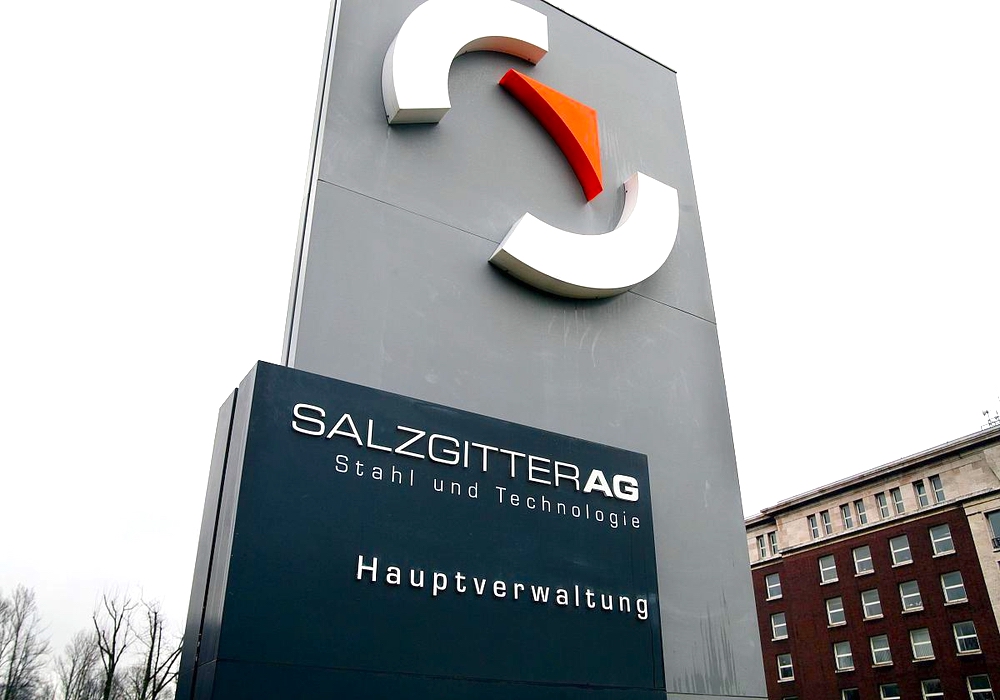
Salzgitter expects to own HKM by June
Salzgitter expects to become the exclusive owner of Duisburg-based mill Hüttenwerke Krupp Mannesmann (HKM) by June, Salzgitter’s ceo Gunnar Groebler has said during its annual results conference, attended by Kallanish.
Earlier this year, thyssenkrupp Steel and Salzgitter announced an agreement that also involves HKM’s third co-owner, Vallourec.
Groebler notes that talks are proceeding positively, and that while some approvals from antitrust authorities will still have to come, he had no reason to expect the process to take beyond May.
HKM produces slab but has no rolling facility. Groebler expects the mill will become an important supplier of slab to the European market to fill the gap of expiring supplies from Russia. He points out that HKM slabs will also be used for steels for the defence sector, where Salzgitter is stepping up activities.
Regarding the plan of a technical transition of HKM, Groebler says this is projected to be realised in a matter of three years. “This is an ambitious timetable,” he says, adding that it is based on a three-year plan for public subsidies. Talks between HKM and technical suppliers are currently ongoing, he says.
Meanwhile, HKM will launch an intermediate reline of one of its blast furnaces in May that will last throughout the summer.