


German crude steel output up 9.9 percent in Jan-Feb 2026
In February this year, Germany’s crude steel output went up by 4.8 percent year on year to 2.83 million mt, according to the information provided by the German Steel Federation Wirtschaftsvereinigung Stahl (WV Stahl). In the first two months of this year, crude steel production in Germany rose by 9.9 percent year on year to 5.92 million mt.
In the given month, Germany’s pig iron output amounted to 1.81 million mt, up by 6.1 percent, while in the January-February period it increased by 12.5 percent to 3.85 million mt, both on year-on-year basis.
In February, the country’s hot rolled steel output grew by 8.3 percent to 2.56 million mt, while rising by 5.7 percent to 5.3 million mt in the first two months this year, both compared to the same periods of the previous year.

Germany’s Salzgitter reports lower net loss and revenues for 2025
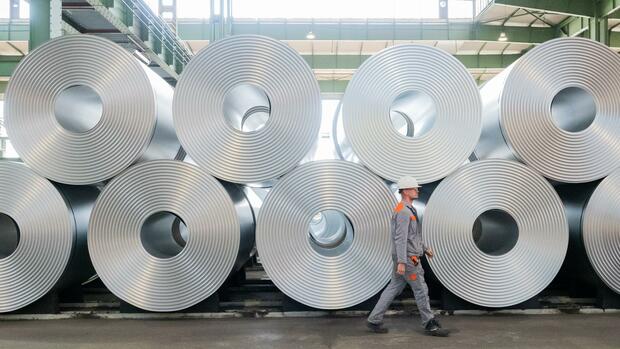
Germany-based steelmaker Salzgitter Group has announced its financial and operational results for the fourth quarter and the full year of 2025.
In the given quarter, the company posted a net loss of €23.3 million, compared to a net loss of €150.2 million in the previous year, while the company’s sales revenues amounted to €2.12 billion, down by 7.4 percent year on year. In addition, Salzgitter’s EBITDA for the fourth quarter rose to €152.3 million, compared to €124.6 million in the same quarter of 2024.
In the given year, the company posted a net loss of €69.8 million, compared to a net loss of €347.9 million in the previous year, while the company’s sales revenues amounted to €8.98 billion, down by 10.3 percent year on year. In addition, Salzgitter’s EBITDA for 2025 amounted to €376.3 million, compared to €445.2 million in 2024.
In the fourth quarter, the company’s crude steel production totaled 1.48 million mt, dropping by 3.7 percent from 1.53 million mt recorded in the same quarter of the previous year, while in 2025 its crude steel production fell by eight percent year on year to 5.88 million mt.
According to Salzgitter’s statement, Germany’s economic situation remains tense, also at the outset of 2026. The government’s planned investment and infrastructure programs have not yet resulted in a marked economic recovery. Instead, it anticipates positive stimulus for the domestic steel industry from the EU’s trade defense measures. All in all, Salzgitter expects only moderate improvement in the economic environment.
As for 2026, the company expects its sales revenues to be about €9.5 billion.

European flat steel prices broadly firm, imports limited
European domestic flat steel prices were largely stable in the week to Wednesday March 25 amid limited demand, despite recent price rises, Fastmarkets understands.
According to trade sources, the market was currently taking a wait-and-see approach with buyers cautious about accepting higher offers from domestic producers, while the availability of imported materials was still limited.
The introduction of the EU’s Carbon Border Adjustment Mechanism (CBAM) at the start of this year has curtailed import volumes into the bloc. This has, in turn, lent support to domestic prices across European markets.
Meanwhile, the escalation of the conflict in the Middle East has increased production costs for European mills by spiking prices for energy and raw materials, while also affecting freight costs and logistics.
In Northern Europe, estimates of tradable prices were heard within the range of €700-720 ($812-836) per tonne ex-works, but no fresh trading was reported during the day.
Fastmarkets’ daily steel hot-rolled coil index, domestic, exw Northern Europe, was calculated at €715.00 per tonne on March 25, down by €1.00 per tonne from €716.00 per tonne on March 24.
The index was up by €4.88 per tonne week on week and by €29.17 per tonne month on month.
Meanwhile, the Italian market also remained quiet, with offers heard at €700.00 per tonne ex-works during the day.
“Demand in Italy is very weak because buyers hold enough stock,” a source in Italy told Fastmarkets, adding that mills were comfortably booked and expected that offer levels would continue to rise.
Estimates of workable prices in Italy were also heard within the range €690-700 per tonne ex-works.
Fastmarkets’ steel hot-rolled coil index, domestic, exw Italy, was calculated at €697.14 per tonne on Wednesday, down by €0.36 per tonne from €697.50 per tonne on March 24.
The index was down by €1.19 per tonne week on week but up by €31.31 per tonne month on month.

India, US, Germany output buck global trend again
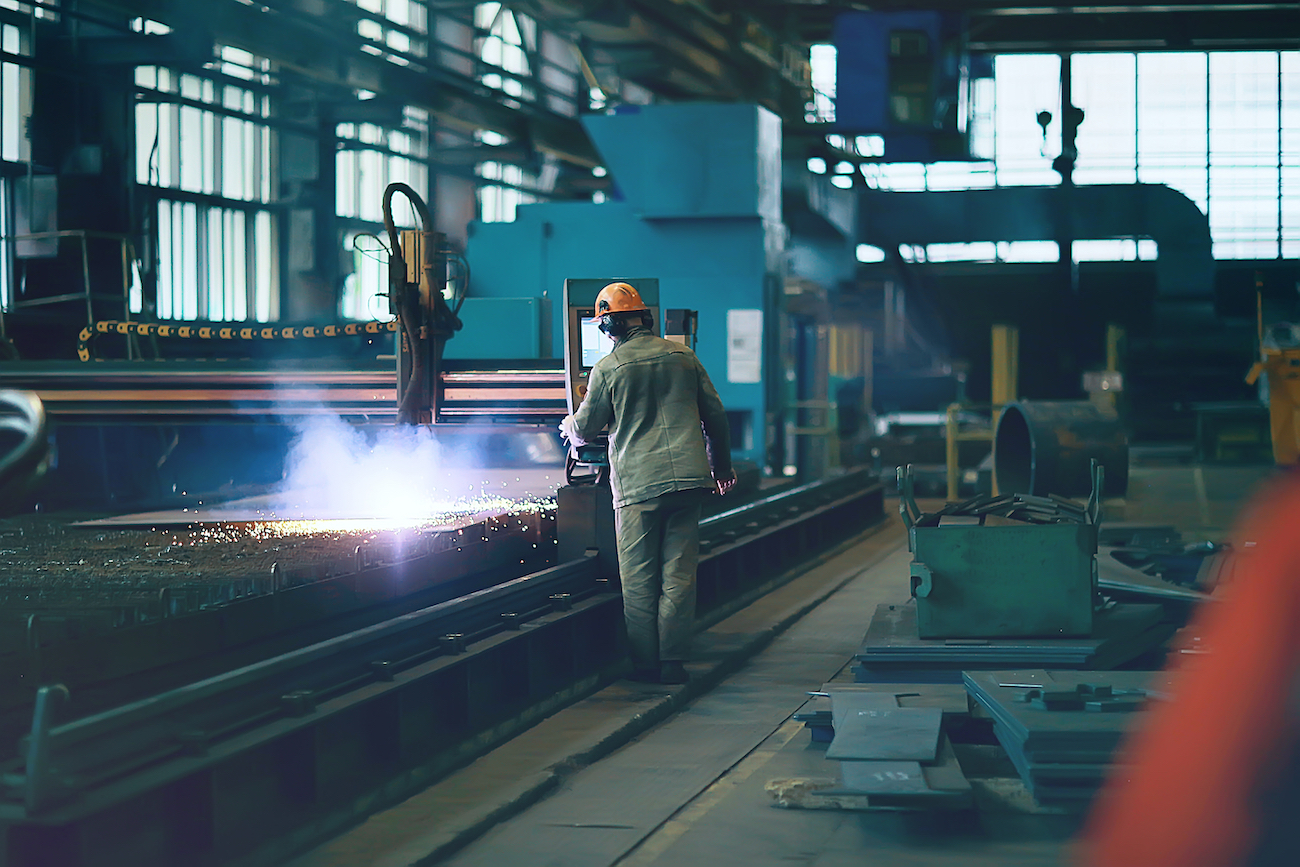
Global crude steel production fell for a sixth consecutive month in February, by 2.2% on-year to 141.8 million tonnes, despite another notable jump in German production, while US and India output continued to buck the trend, Kallanish notes from worldsteel data.
As was the case in January, the figure is nevertheless based on estimated Chinese output, given at 76.09mt in February, which would be down 3.6% on-year. Indian output rose 7.7% to 13.6mt; however, it fell from the all-time January high.
Japanese output was flat at 6.4mt and South Korean production rose 0.2% to 4.82mt.
EU production fell 3.6% to 9.83mt in February, despite German production rising 4.8% to 2.83mt and Italian output hiking 2.7% to 1.87mt. Spanish production slumped 23% to 807,000t.
Turkish output rose 3.4% to 3.03mt.
US crude steel production surged 5.8% on-year in February to 6.5mt, but Brazilian output fell 5.7% to 2.5mt.
Russian production was estimated down 10.2% to 5.03mt and Ukrainian output was confirmed down 9.9% to 515,000t.
January-February global crude steel production thus fell 1.5% on-year to 298.2mt, with India, the US, South Korea, Turkey and Germany bucking the trend.


UK Steel Strategy confirms EAF shift, workforce reduction
The recently published UK Steel Strategy acknowledges that the shift to electric arc furnaces will result in a reduction of the workforce compared to blast furnace operation, Kallanish observes.
It notes that the UK’s remaining blast furnaces are reaching the end of their operational lifespan, and “it will be increasingly uneconomical for steel producers to sustain these ageing assets”.
As this infrastructure is replaced, steelmaking will move to decarbonised forms of production such as EAFs, aligning with both the “clear economic realities” and the UK’s Net Zero goals.
“Steel production is evolving, and the size and structure of the workforce will need to adapt,” it notes.
The workforce needed to support EAF production does look different to that of traditional blast furnaces, and likely smaller. Transition plans should therefore account for the impact of potential job losses, while maximising opportunities for new jobs in a future facing sector, it adds.
Carbon emission intensive methods like unabated blast furnaces face increasing carbon costs at home and abroad. The Strategy says retrofitting Capture, Utilisation and Storage (CCUS) to an aging blast furnace would be technically difficult, have operational efficiency limitations and would entail significant capital and operating costs, while it is not yet commercially proven.
However, it adds that blast furnace production will continue for the immediate future, and it is vital to security of supply that a managed transition is undertaken to maintain steelmaking and protect economic resilience.
No timeframe for this shift was published as part of the Steel Strategy. British Steel received planning permission approval for EAFs in Scunthorpe and Teesside in spring 2024. However, this was before the government’s intervention in early 2025.
The government continues to seek out private sector investment, both in existing steel sites and to deliver new steelmaking capacity and capability. It says it continues to work with British Steel’s owners to find a pragmatic, realistic solution for the future of the steelmaker. It has repeatedly expressed its preference to find a private sector partner for the transition.
As part of the EAF shift, it highlights scrap becoming a more valuable commodity, which will reduce reliance on iron ore and end the use of coal entirely.
However, producing certain grades of steel will require supplementing scrap with primary iron. The UK Primary Steelmaking Review recommends that in the short term, this can be met through imports of pig iron or DRI products from established market routes.
The economic case for domestically produced DRI will rely on energy pricing, the future development of the global DRI market, the chemistry of scrap supplies and progress in process or product innovation. Increased UK steel production would further improve the business case for investment in onshore DRI production.
Italy assesses ADI bids as deadline closes
The special commissioners of Acciaierie d’Italia (ADI) are currently evaluating the two competing industrial plans for future of the steelworks formerly known as Ilva.
Italy’s minister of Enterprises and Made in Italy, Adolfo Urso, confirmed to local media that the bids were submitted by the deadline last Friday, Kallanish notes.
According to sources close to the matter, the proposal from India’s Jindal Group involves a transition from the current blast furnace route to green, electric-based steelmaking. The strategy, however, will focus on boosting Taranto’s re-rolling capacity rather than primary steelmaking.
Over the next four years to 2030, the Taranto plant would operate with two blast furnaces while one electric arc furnace (EAF) is constructed. From 2030 onwards, the blast furnaces would be shut down and dismantled, with production shifting to EAF steelmaking, significantly reducing Taranto CO2 emissions.
This would meet the decarbonisation objectives of the sale tender by phasing out the blast furnace route.
The government aims to reach production levels of around 6 million tonnes in the coming years. Jindal plans to achieve this through the integration and boost of Taranto’s re-rolling capacity, supplying imported slabs from its future Oman operations.
The group is expected to invest around €1.5 billion ($1.74 billion). Taranto would become a strategic hub within Jindal’s global steel and re-rolling network.
In contrast, the plan presented by US investment firm Flacks Group aims to increase production capacity at the Taranto steelworks investing over €5 billion.
Sources previously shared with Kallanish that Jindal’s plan could result in the permanent loss of capacity, with employment also impacted (see Kallanish 17 March).
Last year, Jindal Steel Duqm, part of the Jindal Group, rescheduled the launch of operations at the first phase of its hydrogen-ready green steel complex in Oman’s Special Economic Zone at Duqm (SEZAD) to 2028. The plant will include two direct reduced iron modules of 2.5m t/y each. The first unit is expected to be operational by December 2028, with the second to follow in 2030.
Jindal Group did not comment before press deadline.

Murat Eryılmaz: Turkish steel sector faces weak demand and high costs
On Tuesday, March 24, at the Istanbul Marriott Hotel Asia, during the second session of the EUROMETAL Steel Day & YİSAD Flat Steel Conference organized in collaboration with SteelOrbis, SteelOrbis general manager Murat Eryılmaz delivered a presentation titled “Turkish Steel Industry Overview” and shared key insights regarding global and local markets.
Mr. Eryılmaz noted that global steel production exceeded 1.9 billion mt in 2021, though there has been a limited decline over the past two years. Referring to China’s production policies, he stated that, despite production cut targets announced at the beginning of last year, production increased during the year but ended with a total of 960 million mt, reflecting a decline of approximately 45 million mt by the year-end. He added that he believed this decline was more a result of weak domestic demand than a planned measure, adding that China began 2026 with more aggressive production cuts, resulting in a production volume of 75.3 million mt in January, a 14 percent year-on-year decline. He emphasized that the production decline in China also affected global production, with a 6.5 percent year-on-year decline observed worldwide in January.
Signs of weakening production and capacity utilization in Turkey
In his assessment of Turkey, Mr. Eryılmaz noted that liquid steel production had reached its peak in 2021, experienced a significant decline during the 2022-23 period, and then entered a growth trend again in 2024 and 2025 with the addition of new capacity, surpassing 38 million mt. However, noting a weak start to 2026, he said that production in January stood at 3.39 million mt; while this represented a 5.8 percent increase year on year, it marked a decline compared to previous months. The primary reasons cited for this decline included export difficulties resulting from the implementation of CBAM and weak domestic demand.
Mr. Eryılmaz noted that the upward trend in electric arc furnace and blast furnace production observed in the second half of 2025 gave way to a decline at the start of the current year, adding that a downward trend in production had emerged due to the decline in exports and the weak performance of the domestic market. Looking at capacity utilization rates, he noted that flat products saw a level above 80 percent in January, but a decline to around 75 percent is expected in February due to weak exports. He added that the situation is even weaker for long products, with the capacity utilization rate falling below 60 percent.
Cost pressures are rising, while demand remains weak
Noting that costs have begun to rise again following the low levels seen in mid-2025 on the raw materials side, the SteelOrbis general manager stated that changes in iron ore and coal prices have increased blast furnace costs, while, on the scrap side, freight costs in particular have been the determining factor. He noted that hot rolled coil production costs declined for both electric arc furnaces and blast furnaces during the January-February period but rose again in March due to increases in energy and freight costs. He reported that hot rolled coil production costs for blast furnaces rose from $564/mt in February to $587-588/mt in March, while costs for electric arc furnaces rose from $588/mt to $604/mt.
The EU remains the largest supplier of scrap imports to Turkey, with the US in second place. As rising energy and fuel costs impact freight rates, making imports more difficult, it is critically important that no new restrictions are imposed, particularly on the EU side. Eryılmaz noted that slab imports have gained prominence during periods of high liquid steel production costs, adding that the primary suppliers in recent times have been Russia, Malaysia, and Algeria.
Significant increases in flat steel production capacity have been introduced over the past two years; while production reached 16.7 million mt in 2024 and 16.5 million mt in 2025, it was noted that, while a slowdown may be observed in the first months of 2026, production levels for the year as a whole could reach a higher level compared to pre-2024 levels.
Murat Eryılmaz, noting that hot rolled coil is the most important export item and that galvanized sheet ranks second, stated that the main reason for the decline in exports in the first two months of the year was CBAM. He also noted that the primary product in imports is hot rolled coil, and that antidumping measures and changes in the inward processing regime in Turkey have limited imports. Nevertheless, Eryılmaz noted that imports continue to exceed exports in Turkey’s trade balance, emphasizing that last year 6.5 million mt of exports were made against 8.94 million mt of imports, and that this balance has remained unchanged for the past seven to eight years.
Looking at the data, it appears that monthly flat steel consumption has followed a fluctuating trend; while it has occasionally exceeded the 2 million mt level, a slight slowdown has been observed over the past three months.
Addressing the risks for the coming period, Eryılmaz noted that rising protectionist trends on a global scale are one of the most significant pressures on the sector, adding that the process initiated by the US is being continued by other countries as well. He stated that the effects of CBAM, import pressure, and rising energy and freight costs will continue to be decisive factors for the sector, adding that price increases are not demand-driven but largely cost-driven.
Tata Steel Nederland develops energy-efficient high-strength steel for auto sector
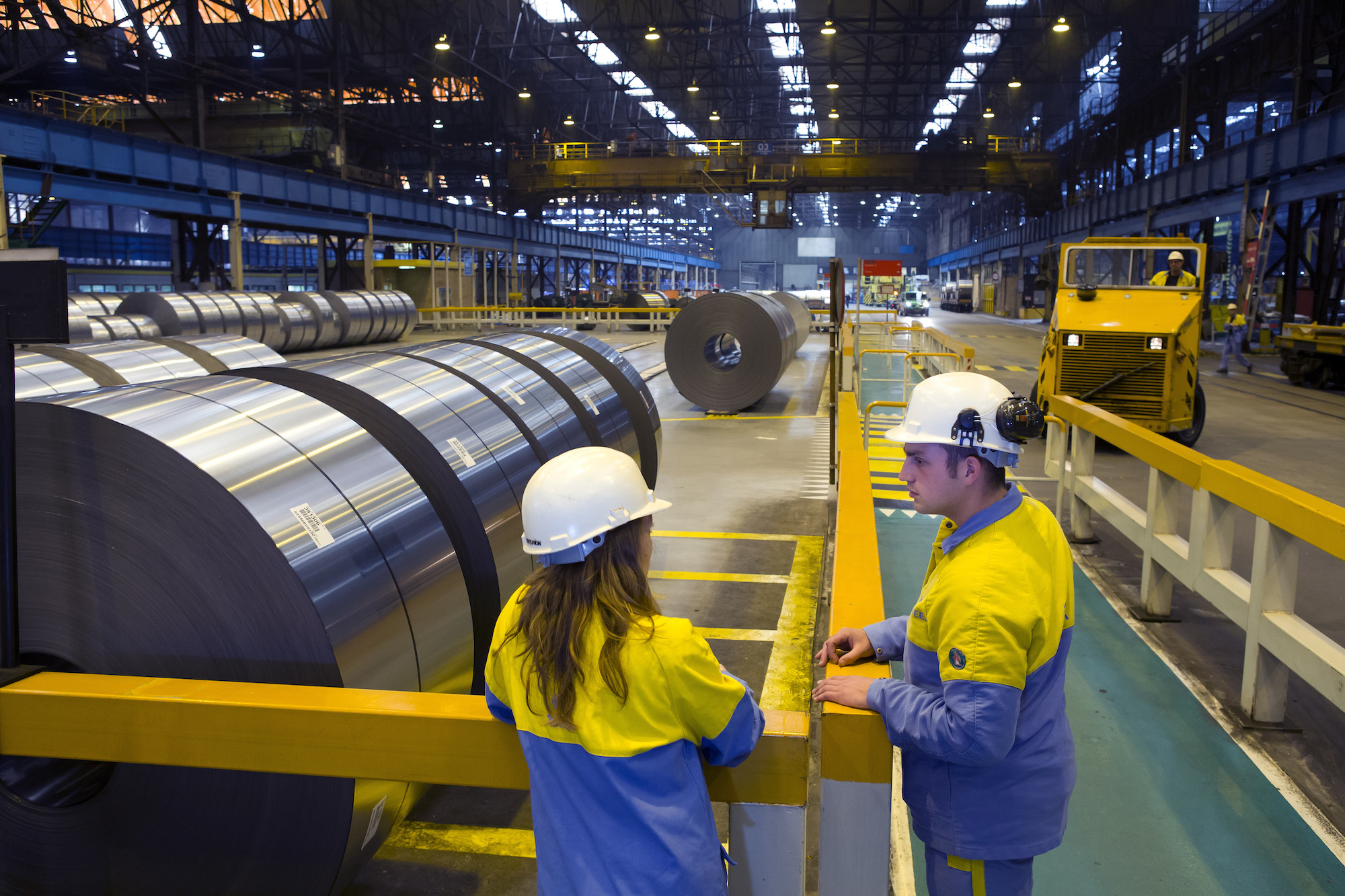
Tata Steel Nederland, the Dutch subsidiary of Indian steelmaker Tata Steel, has announced that it is leading a European consortium in cooperation with Volkswagen Group aimed at developing a new generation of automotive steel that improves energy efficiency in production while enhancing passenger safety.
The initiative is part of a European-funded research project involving multiple industrial and research partners.
The project is focused on developing ultra-high-strength steel for automotive applications that can be formed at lower temperatures compared to conventional grades. This approach is expected to reduce energy consumption during manufacturing, simplify production processes, and lower overall production costs.
The new steel grades are being designed for use in passive safety components, which are critical for absorbing impact during collisions. According to the project partners, the material will combine high strength, improved formability and enhanced energy absorption, supporting higher levels of passenger safety in future vehicles
Current ultra-high-strength steels often require high forming temperatures, which can lead to challenges such as coating damage or reduced corrosion-resistance
The new material aims to overcome these limitations by enabling the use of zinc coatings, improved corrosion-resistance and more efficient processing.

Tolga Yalgı: Competition is no longer between companies, but between countries’ industrial policies
Speaking at the EUROMETAL Steel Day & 11th YISAD Flat Steel Conference held at Istanbul Marriott Hotel Asia on Tuesday, March 24, in cooperation with SteelOrbis, Tolga Yalgı, CEO of Turkish steel producer Tatmetal, addressed developments in the global market and Tatmetal’s investments.
Stating that the balances established after the Second World War have shifted, giving rise to a new geopolitical and economic order, Mr. Yalgı noted that, in this new system, a model has emerged in which the market is guided by governments instead of free market dynamics, and strategic sectors are protected. Emphasizing that this transformation has fundamentally changed the rules of competition, he added that competition is no longer between companies, but between countries’ industrial policies.
He noted that the US is pursuing a strong reindustrialization policy aimed at bringing production back within its borders, with the support of trade policies to reduce dependency in critical sectors. Pointing out that China’s approximate 30 percent share in global production significantly affects market balances, Mr. Yalgı noted that China’s high capacity creates structural pressure not only through price competition but also through global oversupply. Meanwhile, the European Union is reshaping its industrial policy through mechanisms such as carbon regulations, the emissions trading system, and the Carbon Border Adjustment Mechanism. According to Yalgı, this approach indicates that production is being redefined not only by costs but also by environmental criteria.
European market remains critical for Turkey
While the European market continues to play a decisive role in Turkey’s steel exports, factors such as geographical proximity, logistical advantages and the Customs Union Agreement provide significant competitive advantages. Mr. Yalgı stated that Turkey stands out with its fast delivery capabilities and electric arc furnace-based production, adding that existing trade relations offer a strong foundation for the Turkish steel industry. However, he warned that the EU’s protectionist measures pose the greatest risks, particularly planned quota reductions and higher tariff applications set to take effect as of June 30, 2026, which could directly impact Turkey’s exports.
Energy and geopolitical risks come to the forefront
Highlighting that rising geopolitical risks in the Middle East are creating upward pressure on energy costs and supply chains, Yalgı noted that increases in energy prices and potential logistical disruptions could affect production continuity, making energy supply security a strategic issue for the sector.
Tatmetal’s position
Concluding his remarks, Yalgı outlined Tatmetal’s position and investments, stating that the company, with an annual production capacity of 1.5 million mt, exports to 80 countries across six continents. He added that renewable energy investments are among the company’s strategic priorities, noting that solar power plants with a total installed capacity of 110,000 MWp are expected to generate 176,000 MWh of electricity in 2026, while wind power plants with a total installed capacity of 66 MWm are expected to produce 220,000 MWh annually.
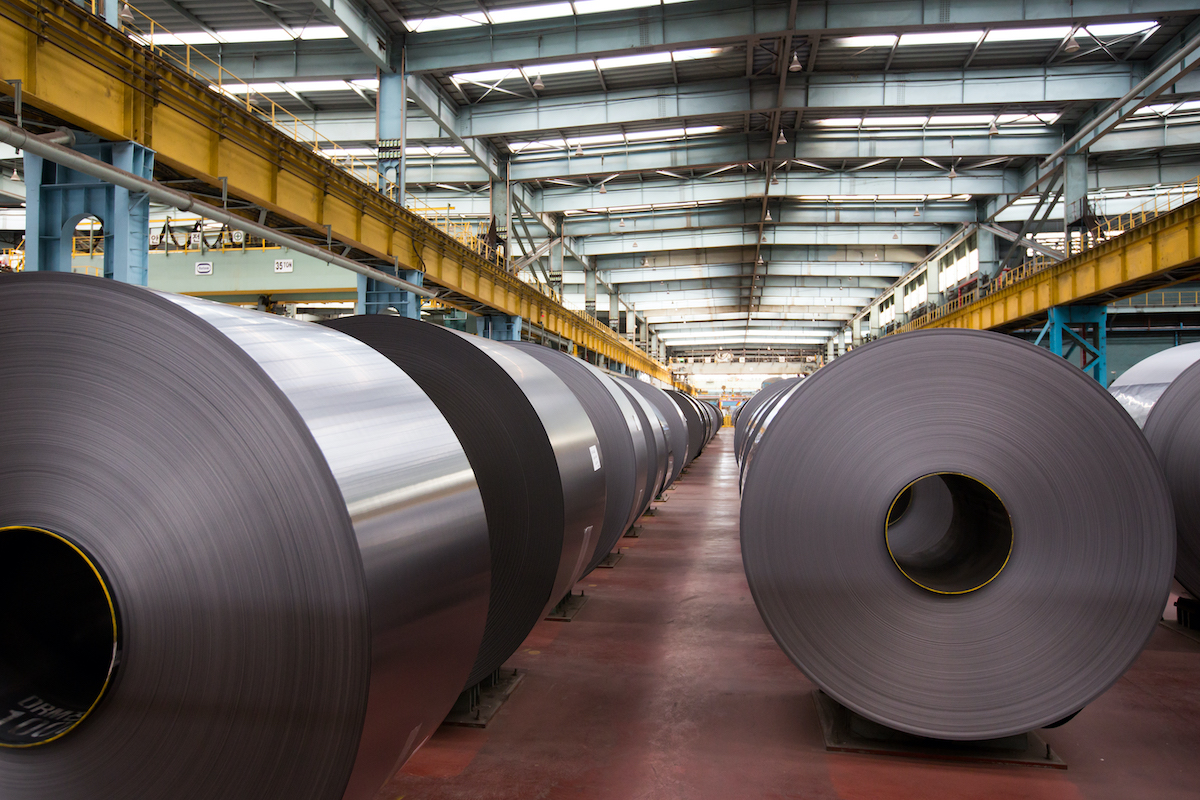
European HRC prices steady as tight imports underpin near-term sentiment
European hot-rolled coil prices held steady on Tuesday March 24, with tight domestic and import supply supporting upbeat sentiment near term, sources told Fastmarkets.
European suppliers were largely sold out of coil for May delivery, with some also sold out of second-quarter volumes overall.
In Germany, one local supplier had no spot availability of HRC, sources said.
Other mills were heard offering coil for May-June delivery at €730 ($845) per tonne base delivered.
One leading European supplier was heard to have achieved €720-730 per tonne ex-works for limited HRC tonnages — more or less in line with target offers for May delivery — but was not in a rush to revise offers just yet, sources said.
A target offer from a Benelux supplier for June volumes was reported at €725 per tonne ex-works.
“Most likely the market won’t see any major changes before Easter [celebrated on April 5], but toward Tube and Wire Trade fair [held on April 13-17 in Dusseldorf, Germany] European mills might reconsider offers upward again – it’s a sellers’ market now,” a German buyer said.
Buyers’ estimates of achievable prices in Germany, the Benelux area and the Nordics were heard at €700-720 per tonne ex-works on Tuesday.
Buyers were pivoting to European steel lately as import risks mounted, driven by CBAM cost uncertainty, volatile freight, longer lead times amid Iran-US-Israel tensions, and looming safeguards.
As a result, Fastmarkets’ daily steel hot-rolled coil index, domestic, exw Northern Europe was calculated at €716.00 per tonne on Tuesday, down slightly by €1.50 per tonne from €717.50 per tonne on Monday March 23.
The index was up by €5.87 per tonne week on week and by €34.12 per tonne month on month.
In the secondary market, meanwhile, steel-service centers (SSCs) were pushing HR sheet prices toward €800 per tonne CPT for 4mm S235 material, with deals already reported at that level. Sporadic sales around €760-770 per tonne CPT and lower, however, continued to weigh on price stability.
According to SSCs, prices needed to climb to €820-830 per tonne CPT to reflect higher HRC costs, but firm resistance from end users remained, leaving the downstream market lagging the HRC uptrend.
In Southern Europe, meanwhile, the market situation was similar.
Fastmarkets’ steel hot-rolled coil index, domestic, exw Italy was calculated at €697.50 per tonne on March 24, up slightly from €695.63 per tonne on March 23.
The index stable week on week and up by €31.25 per tonne month on month.
Local suppliers were heard offering HRC around €700-710 per tonne ex-works, with May lead times still said available.
Estimates of tradable prices varied between €690 per tonne and €700 per tonne ex-works on Tuesday, but buying was limited.
“Everyone is cautious with new bookings, purchasing only what’s necessary. HRC increases don’t catch up with derivatives prices yet,” a buyer in Italy said.
Import prices, meanwhile, have increased over the past couple of weeks, driven by logistical complexities and soaring freight rates because of the conflict in the Middle East.
New import offers were limited, with buyer considering North African and Turkish suppliers as relatively “reliable” origins, while cargoes from Asia were mostly offered on FOB basis since suppliers were trying to avoid exposure to volatile transport costs.
An Algerian mill was heard to have sold cargoes to Europe recently at around $715 per tonne FOB and was said to be nearly sold out of second-quarter cargoes.
Offers from Turkish mills were heard around €640-655 per tonne CFR, including the anti-dumping duty.