

Revista Infoacero Octubre 2018
En el siguiente enlace pueden acceder a la edición de Octubre de nuestra revista Infoacero: INFOACERO OCTUBRE 2018
A continuación destacamos algunos de sus contenidos:
Opinión – D. Juan Ramón Fernández Franco– miembro de Junta Directiva de la Unión de Almacenistas de Hierros de España.
Evolución del Índice de Precios de Productos Siderúrgicos – UAHE.
Asesoría Legal – “Ponga un Compliance en su empresa.”- D. Javier Edo Soler, Asesor Legal UAHE.
Resumen XIV Fórum de Productos Siderúrgicos- celebrado el 19 de Octubre en Castelldefels (Barcelona)
Acuerdos con Proveedores de Servicios- condiciones especiales para empresas asociadas a la UAHE– Solred, Cepsa, Euromaster, Impuestalia, SteelShop…
Próximos Eventos: Programa Foro ProAcero, en Construtec- 13 al 18 de noviembre en IFEMA (Madrid)- ASCEM

ArcelorMittal sees demand threats, eyes Ilva output increase
Italy’s budget battle with the EU, a potential no-deal Brexit, and trade tensions stifling economic growth are the main threats to steel demand growth in Europe. So says Gonzalo Delgado, ArcelorMittal Flat Steel Europe chief marketing officer MENA & Turkey.
Despite slowing growth forecast for 2019, EU steel use is still at an encouraging level compared to recent years, Delgado said at this week’s Kallanish Euro-Turkey Flat Steel Seminar in Istanbul. The EU’s purchasing managers’ index (PMI), meanwhile, which correlates strongly with steel demand, weakened in recent months but is still above the long-term average.
Major steel using sectors are all in the expansion stage of the business cycle, but with lower growth expectations than last year, the official continued. Only the automotive sector is going through an exceptional situation, resulting in slow growth, with carmakers investing into cleaner engines to meet new EU regulations. But this should return to normal from the first quarter of 2019. “Steel demand is returning to a slower but more sustainable growth pattern,” Delgado observed.
EU steel imports, meanwhile, are stable at around 1.2 million-1.5 million tonnes/month. However, the origins are changing. Reduced intake from China was initially replaced by increased imports from India in 2017 and now Turkey in 2018. The latter has a 17% share in EU flat steel imports versus 13% in 2017 and 7% in 2016.
The EU’s safeguard measures are just a temporary measure designed to prevent a potential surplus of material entering the bloc, Delgado commented. They are not aimed specifically at Turkey or any other country, and have so far not limited EU imports, he added.
ArcelorMittal is due to take control of Ilva from 1 November. “Why Ilva? It’s really a big fish,” Delgado explained. The mill will represent over 25% of ArcelorMittal Europe’s production. Italy is Europe’s second-largest steel consumer and yet ArcelorMittal has until now not had crude steelmaking facilities there. The mill has a range of modern production lines, including for hot rolled coil, plate, cold rolled coil, hot-dip galvanized coil, tinplate and pipe.
ArcelorMittal plans to initially run Ilva at a 6 million tonnes/year output rate, followed by 8.5m t/y in 2020 and 9.5m t/y in 2023.
Kallanish

Kloeckner expects higher 2018 sales on price gains
German steel and metal distributor Kloeckner expects to report higher sales for 2018 due to higher average price levels, the company said Wednesday.
Amid growing protectionism, steel prices generally have been on an upward trend since last year: Hot-rolled coil North Europe prices rose from a Q3 2017 average of $516.65/mt to $565.87/mt in Q3 2018.
This trend has been reflected in Kloeckner’s average revenue, which was $1,155/mt in Q3 2018, based on steel and metals shipments, compared with $1,017/mt in Q3 2017. In this period 81% of Kloeckner’s revenue came from steel products.
In its Q3 2018 earnings report, the company said real steel demand in Europe is expected to increase by 1-2% over the remainder of 2018. Shipbuilding is expected to be the most promising sector followed mechanical engineering and construction, the earnings report said.
The US outlook pointed to even stronger growth of 2-3%. The construction, mechanical engineering and energy industries are all expected to see positive developments. However the automotive and shipbuilding sectors are expected to remain stable.
The distributor’s European shipments have been down year on year across all quarters in 2018. Q3 saw a year-on-year decrease of 7.7% in tonnage shipped with 827,000 mt moving relative to 896,000 mt in 2017. Q1 and Q2 both experienced reduced volumes, but to a lesser extent, down only 2.7% and 2.9% respectively.
Despite the downturn in tonnage shipped, Kloeckner has seen a year-on-year increase in European sales figures across all elapsed quarters. Q3 2018 European sales amounted to Eur1.014 billion, an increase of 1.5% on the same period a year prior.
In the US, Q3 shipments increased by 7.7% year on year to 692,000 mt in 2018. In line with the trend thus far of increased shipments across all quarters in 2018.
Along with the increased shipments, US sales figures also gained year on year in Q3. US sales figures increased 30.7% on year to Eur740 million in Q3 2018.
Europe remained Kloeckner’s core market in Q3 with business in Germany and Austria accounting for 30% of sales, Switzerland for 15%, France and Belgium for 10%, the UK for 4% and the Netherlands for 3%. US business accounted for 37%.
Emmanuel Latham, S&P Global PLATTS
Eurofer promotes national quotas for EU safeguard measures
European steel association Eurofer said it has actively promoted a national quota system as part of the EU steel safeguard measures.
“We are promoting the idea to consider including a national quota with the EU Commission,” Karl Tachelet, director of international affairs at Eurofer, said in a seminar on the state of the EU steel market in Brussels on Wednesday.
Currently, the provisional EU measures come in form of a “global” quota, which is allocated on a first-come, first-serve basis — irrespective of the imported steel’s origin.
“We see the need for national quotas, at least for the big exporting countries” in an attempt to re-balance import flows and quantities closer towards their traditional volumes, Tachelet said.
Imports from Russia and Turkey into the EU increased by 57% and 56% year on year, respectively, after the US imposed tariffs and Turkey’s domestic steel market slumped, deflecting steel sales into European countries.
“We’re not the only ones who are asking for it,” Tachelet said, adding that many industry sources, including exporters, have supported this proposition.
National quotas would “work against uncertainty” and provide some predictability of imports into the EU market for domestic steel companies, which Eurofer sees as a solid justification to switch from a global to a national quota.
The provisional EU safeguards came into effect on July 19 and will remain in place for a maximum of 200 days. Following a consultation period that takes into consideration comments and economic development, definitive safeguard measures may be imposed in early 2019.
Pascal Dick, S&P Global PLATTS

Was ist los am Weltmarkt?
An vielen Stellen des Weltmarktes sind die Preise für Stahlerzeugnisse in den vergangenen Wochen ins Bröckeln geraten. Damit haben auch die im Hochsommer von hiesigen Herstellern noch selbstbewusst kommunizierten Pläne für weitere Preiserhöhungen einen kräftigen Dämpfer erhalten. Die Stimmung hat sich spürbar eingetrübt. Die vor kurzem vorgelegte neue Nachfrageprognose des Weltstahlverbandes Worldsteel hilft dabei, die aktuellen Entwicklungen zu verstehen. Es gilt, zwei Länder besonders im Auge zu halten. Zum neuen „hotspot“ des Weltstahlmarktes könnte sich die Türkei entwickeln. Die für China vorgelegten Zahlen sehen auf den ersten Blick positiv aus, speisen sich aber mehr aus der Vergangenheit als aus der Zukunft. Trotz aller Unsicherheiten sieht die Stahlwelt aus Sicht des Einkaufs derzeit besser aus als noch vor wenigen Wochen. Lesen Sie in diesem Beitrag, wie die aktuelle Weltmarktlage einzuschätzen ist.
Anders als noch vor einigen Wochen zeigen die Preise für Stahlerzeugnisse an vielen Stellen nach unten. So haben die Exportpreise osteuropäischer Anbieter für Warmbreitband seit Anfang August um ca. 50,- $/t nachgegeben. Auch bei Halbzeugen ist ein deutlicher Rückgang zu verzeichnen. Die chinesischen Warmband-Preise haben am Inlandsmarkt seit Ende August ca. 20,- $/t verloren, die Exportpreise ca. 25,- $/t. Für den EU-Markt besonders wichtig sind die Preisrücknahmen türkischer Exporteure, die sich bei Warmband seit Anfang September auf ca. 40,- $/t summieren. Bei Betonstahl ist die Abwärtsbewegung schon länger im Gange – gegenüber dem im März erreichten Höchststand sind die türkischen Exportnotierungen um ca. 80,- bis 90,- $/t gefallen.
Die vor kurzem vorgelegte neue Nachfrageprognose des Weltstahlverbandes Worldsteel hilft dabei, die aktuellen Entwicklungen zu verstehen. Vor allem der Vergleich mit der vorigen Prognose vom April ist aufschlussreich. Am wichtigsten sind die Entwicklungen in der Türkei und in China.
Ins Auge fällt dabei eine drastische Korrektur der Erwartungen für die Türkei. Diese steht nicht nur bei Rohstahlerzeugung, Importen und Exporten unter den Top 10 der Welt. Türkische Anbieter sind auch bei Warmbreitband, Walzdraht, Betonstahl und Trägern zum wichtigsten Drittlandanbieter in der EU aufgestiegen. Zudem ist die Türkei der weltgrößte Schrottimporteur und hat damit am Schrottmarkt eine zentrale Stellung inne. Nach den Worldsteel-Zahlen wird der Stahlverbrauch in der Türkei in diesem Jahr nicht, wie noch im April prognostiziert, um 5% steigen. Erwartet wird nun ein Rückgang um 2,3%. Für 2019 wurde die Erwartung von +5,0% auf +1,5% zurückgeschraubt. Diees drastische Umkehr zeigt Wirkung weit über den Inlandsmarkt hinaus.
Die türkische Stahlindustrie ist durch hohe Inflationsraten und drastisch gesenkte Wachstumsziele der Regierung gebeutelt. Die inländische Nachfrage nach Langprodukten ist eingebrochen, die Kapazitätsauslastung der Stahlwerke auf nur noch ca. 72% gesunken. Im September lag die Rohstahlerzeugung knapp 6% niedriger als im Vorjahr. Die Verdopplung der US-Importzölle im August hat die Negativdynamik spürbar verstärkt. Die zwischenzeitlich erholten türkischen Lieferungen in den wichtigen Absatzmarkt USA sind praktisch zum Erliegen gekommen. Mit Unterstützung durch die drastische Lira-Abwertung konnten dagegen die Exporte in die EU und nach Südost-Asien gesteigert werden.
Die Exporterfolge werden vor allem mit Preiszugeständnissen erreicht. Die sinkenden Preise sind seit September nicht nur am EU-Markt deutlich zu spüren. Auch Stahlhersteller in Russland und der Ukraine, für die die Türkei eine wichtige Exportdestination, aber auch ein Konkurrent auf zahlreichen Absatzmärkten ist, sind betroffen. Die Wirkung ist umso stärker, als auch die Nachfragerwartungen an den dortigen Märkten nicht erfüllt werden. So hat Worldsteel die Prognose bei den GUS-Staaten für 2018 von +2,3% auf 1,4% und für 2019 von 1,8% auf 0,9% gesenkt. Auch am südostasiatischen Markt trägt die erhöhte türkische Präsenz zu einem deutlich intensivierten Preiswettbewerb teil.
Die Worldsteel-Zahlen für China sehen auf den ersten Blick positiv aus. Zum wiederholten Male erweist sich die Prognose vom Frühjahr im Nachhinein als zu pessimistisch. Statt einer Stagnation (die nun für 2019 angesetzt wurde) wird nun für 2018 ein Wachstum von 6,0% erwartet. Damit wird besser als bisher verständlich, warum die Stahlpreise im Reich der Mitte trotz einer erheblich ausgeweiteten Produktion über weite Strecken des Jahres sehr robust blieben. Die Erläuterungen von Worldsteel zeigen aber, dass sich die guten Zahlen mehr aus der Vergangenheit als aus der Zukunft speisen.
Die Organisation begründet die Aufwärtsrevision zum einen methodisch. Die Schließung von Induktionsöfen im Vorjahr und die damit verbundene Verlagerung der Stahlnachfrage vom inoffiziellen in den offiziellen Teil der Statistik sei für 2/3 des Nachfragezuwachses verantwortlich, heißt es erläuternd. Der „echte“ Zuwachs der Nachfrage liege in diesem Jahr bei 2,1% und sei vor allem auf ein starkes erstes Halbjahr zurückzuführen. Die starke Weltwirtschaft und staatliche Impulse für den Bausektor hätten dabei eine Rolle gespielt. Zum Jahresende 2018 und in 2019 sei aber eine Abschwächung zu erwarten. Die Organisation räumt ein, die Prognose für China enthalte Risiken, die sowohl nach oben als auch nach unten wirken könnten.
Interessant ist auch der Hinweis, dass der Automobilmarkt in den entwickelten Volkswirtschaften, der in den vergangenen Jahren eine Stütze der Stahlnachfrage war, nun Schwäche zeige. Gründ dafür sei ein niedrigeres Nachfragewachstum, steigende Kraftstoffpreise und höhere Zinsen.
Fazit:
Auf den ersten Blick positive Zahlen des Weltstahlverbandes überdecken die Schwäche wichtiger Exportländer. Im Fokus steht dabei die Türkei, wo eine schnelle Änderung der Lage nicht zu erwarten ist. Dadurch dürfte der Preiswettbewerb am Weltmarkt in den kommenden Monaten intensiver werden als er es über weite Strecken des laufenden Jahres war. Aus EU-Sicht wird die anstehende endgültige Schutzmaßnahmenentscheidung der EU maßgeblich dafür sein, ob dieser Wettbewerb auch hierzulande ankommt. Auch in China sieht es (wieder mal) nach einer Abschwächung aus – ob sich die Erwartung dieses Mal bewahrheitet, muss aber erst einmal abgewartet werden. Trotz aller Unsicherheiten sieht die Stahlwelt aus Sicht des Einkaufs derzeit besser aus als noch vor wenigen Wochen.
Der Beitrag stammt vom Leverkusener Stahlmarkt-Berater Andreas Schneider, StahlmarktConsult. Foto: StahlmarktConsult
Der Gastkommentar spiegelt die Meinung des Autors wider, nicht notwendigerweise die der Redaktion von marketSTEEL.
Reliance buys remaining stake in Mexican toll processor
US steel service centre chain Reliance Steel and Aluminum has bought the outstanding 40% ownership interest in Mexican toll processor Acero Prime, Kallanish understands.
The financial terms of the transaction were not disclosed. Reliance already held a 60% interest in the company before acquiring the remaining shares from joint venture partner US Steel.
Acero Prime operates four toll processing facilities in Mexico.
“Acquiring the remaining ownership interest in Acero Prime supports our capital allocation strategy of investing in high return opportunities that enhance our long-term earnings potential,” says Reliance ceo Gregg Mollins. “Our toll processing businesses are strong performers that provide high levels of value-added processing, and we believe complete ownership will allow us to more fully support volume growth in important end markets such as automotive.”
Reliance received a 40% share in Acero Prime when it acquired PNA Group in August 2008, and bought an additional 20% in October 2014.
Kallanish
Turkish imports to EU need monitoring: Eurofer
The spike in imports from Turkey to the European Union is putting some pressure on the domestic market. This needs to be monitored therefore, according to Jeroen Vermeij, head of market analysis and economic studies at Eurofer.
Currently Turkey is the main non-EU supplier of steel products to the continent, with some 726,000 tonnes/month on average sold during the first nine months of the year. The Turkish position is supported by a number of factors, including the difficulties generated in the Turkish steel sector following the decision by the US to double import tariffs to 50%.
“Turkey is clearly undercutting the EU market at the moment,” Vermeij said during a conference with members of the press in Bruxelles. “We do not know if the current prices are to be considered dumping [… below domestic Turkish levels], but there is a need to monitor.”
Turkish mills are currently competitive in the coil market, selling into South Europe at some €505-515/t ($/t) cfr (see Kallanish 24 October).
Market chatter suggests that the US could soon find an agreement with Turkey to reduce tariffs back to 25%, but despite this the Turkish sector is expected to continue to suffer.
Vermeij believes the return to a 25% tariff will re-open some opportunities for Turkish mills to export to the US, particularly long products. This alone however would not solve the deep problems within the Turkish steel industry. “Turkey needs to rebalance its domestic market rather than thinking about its exports,” he says. “The domino effect of the US tariffs was strong [… with measures applied in the EU, Canada etc.] Turkish mills are under pressure to export but the pressure will remain even if the the 50% will go back to 25%.”
Kallanish
Gestamp grows profit in third quarter
Gestamp, the Spanish-headquartered supplier of components to the global automotive sector, has maintained its solid long-term growth trajectory, the company says This despite having a third quarter with more challenges than expected as a result of market conditions, Gestamp adds in its Q3 report monitored by Kallanish.
“Gestamp’s performance has been in line with our expectations for the first nine months. During this period, we have continued to invest in high-value projects that will result in profitable growth in the future, ” says the company`s ceo Francisco López Peña. “Manufacturers continue their focus on the new electric vehicles. These programmes should present commercial opportunities for which Gestamp is well positioned, given its experience in offering weight-loss solutions,” he adds.
Gestamp has extended its production facilities adding five new plants to its business up to the end of September 2018. The company has also announced the operational start of its first plant in Japan by the end of October.
Western European sales fell by -1.9% to €3.0 billion ($3.4 billion), while in Eastern Europe they increased by 20.4% to €841.4m in the January-September period. The sub-regional Latin-American trading bloc Mercosur sales rose to €426.0m or 8.6% more year-on-year. North America sales were up by 8.4% y-o-y to €1.16 billion, while Asia market sales were down by -7.3% y-o-y to €720.5m, Gestamp says.
During the first nine months of 2018 the company posted an operating profit of € 366.4m or 14.1% more than the same period of last year. Ebitda was up by 8.6% to €681.4m y-o-y on the same basis.
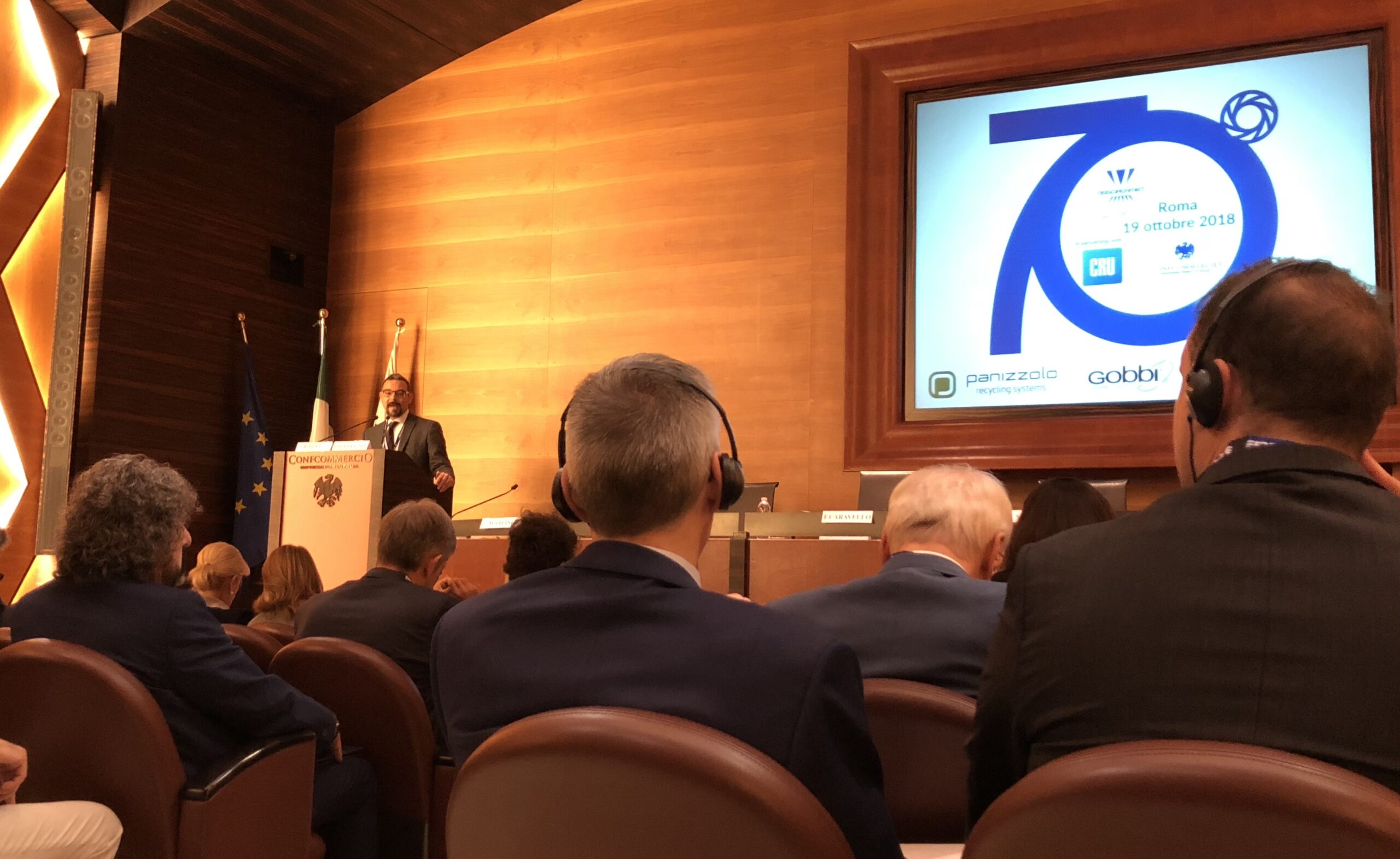
Assofermet against safeguards as extension expected
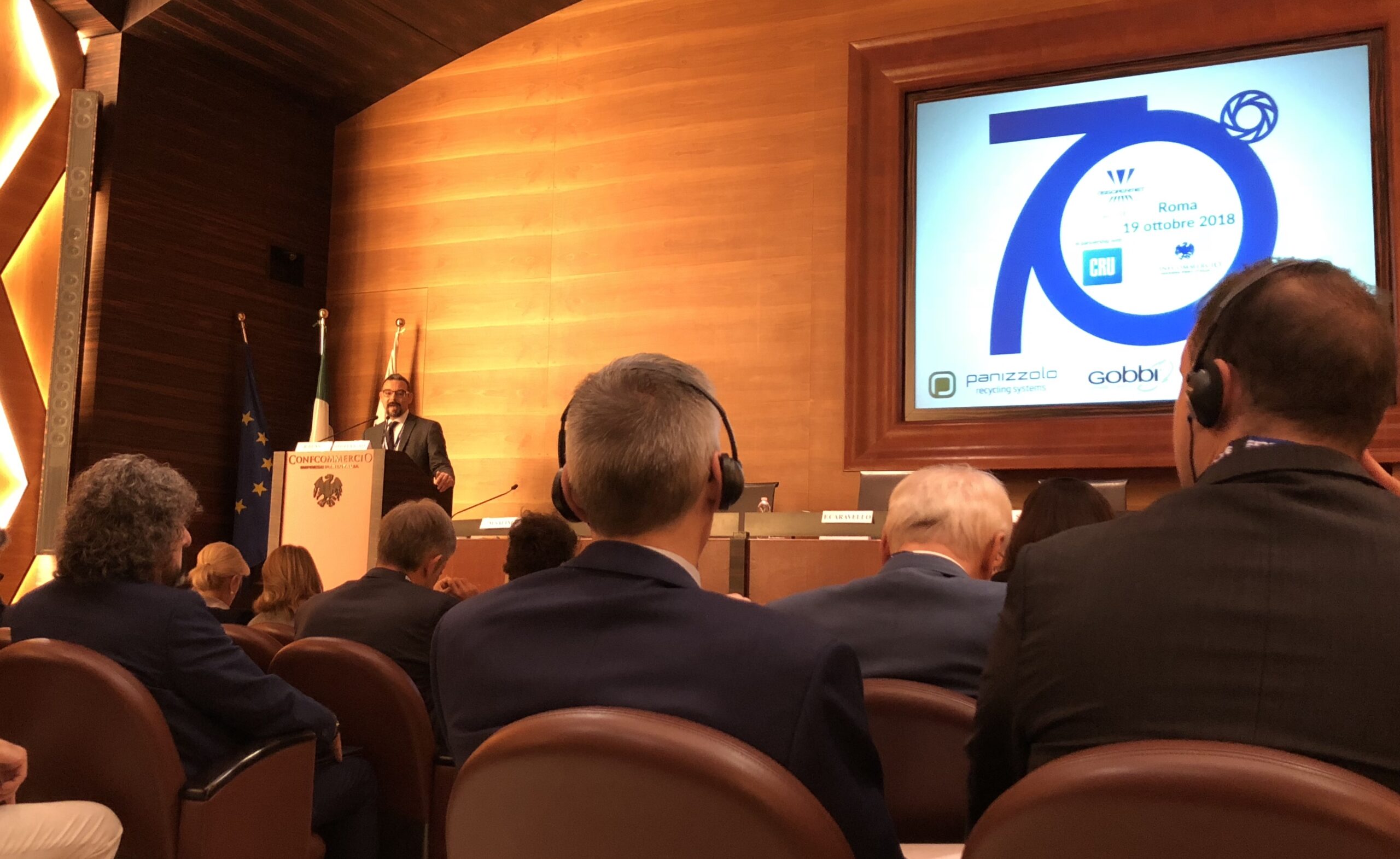
There are increasing expectations that the European Commission is likely to extend the existing safeguards on steel imports, at least until the US sanctions remain in place, market sources attending the Assofermet annual conference told S&P Global Platts on Friday.
“The discussion about to extend or not the safeguards is of course still ongoing and still open, but the direction seems that they will be extended for the next three years,” Massimiliano Salini, EU MP for industry, research and energy, said that during the Assofermet conference, echoing reports from market sources.
“Then we have to see the modality in which the safeguards will be put in place, but at the moment with the slowdown of the European economy that is showing problems to react and the fact that there is not a risk of steel supply shortage, this is likely to happen,” Salini said, adding that in the EU the safeguards are not generating an increase in prices as has happened in the US. “But the increase of the protectionism is not good for the market; the real aim is markets fully integrated,” he added.
The safeguards were put in place in July to avoid the re-direction of steel import flows as a result of the US Section 232 tariff on steel imports.
The decision whether to extend the safeguards will be taken by the end of the year, as confirmed by Leopoldo Rubinacci, EC director of trade and trade defense. He stressed the decision is still ongoing and that a dialogue from all the parties involved must take place.
“The quotas are still open so it is still possible to import avoiding the 25% cap, so there is no need to be worried,” Rubinacci said. “The quotas are starting to be fulfilled now. The EU is totally against the protectionism, it is for the free market. The safeguards exist to protect against artificial re-direction.”
Trade restrictions in general are not good for the market in the long term as they can push prices higher, Riccardo Benso President of Assofermet said.
“The duties put against the Chinese overcapacity made sense, today they are fully deployed creating a safe and profitable market for the mills, even without the safeguard,” Benso said. “We don’t need more of them as there will be the risk of higher prices for the end users.”
Tommaso Sandrini, president of Assofermet Acciai said steel end users should be part of the conversation in determining the best approach to take going forward.
“There are 20 million workers in the sectors that use steel…We need to put together all the voices of the steel consuming businesses to bring collectively a sound proposal to European institutions that is beneficial for the whole value chain, not only for the mills,” he said.
Annalisa Villa, PLATTS
Neuer Standort in der Bodenseeregion
Seit vielen Jahren schon verbindet die SÜLZLE Gruppe und die Carl Pfeiffer GmbH & Co. KG eine partnerschaftliche Zusammenarbeit. Der technische Fachgroßhändler für Handwerk und Industrie möchte sich künftig wieder verstärkt auf seine Kernkompetenzen fokussieren – und verkauft daher seinen Biegebetrieb in Stockach an die SÜLZLE Gruppe. Der Standort wird als weitere Niederlassung in das umfangreiche Filialnetzwerk von SÜLZLE Stahlpartner integriert. Das Familienunternehmen Pfeiffer investiert derzeit in ein hochmodernes, vollautomatisches Lagerlogistiksystem, um in den nächsten Jahren nachhaltig wachsen zu können, so die Geschäftsführer Carl Heinz Pfeiffer und Peter Buchbinder.