

Italian distributors welcome domestic steel sector reorganisation
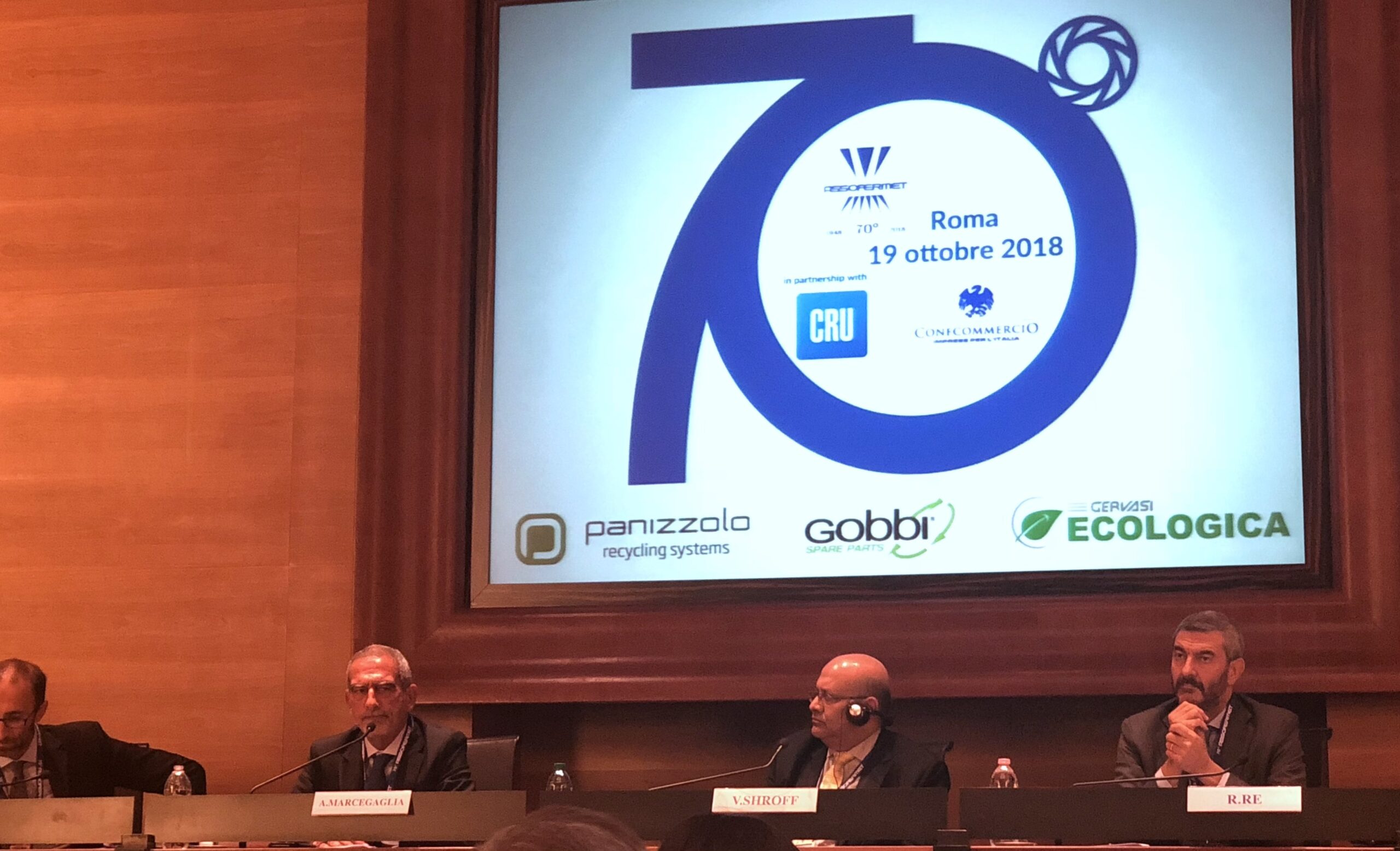
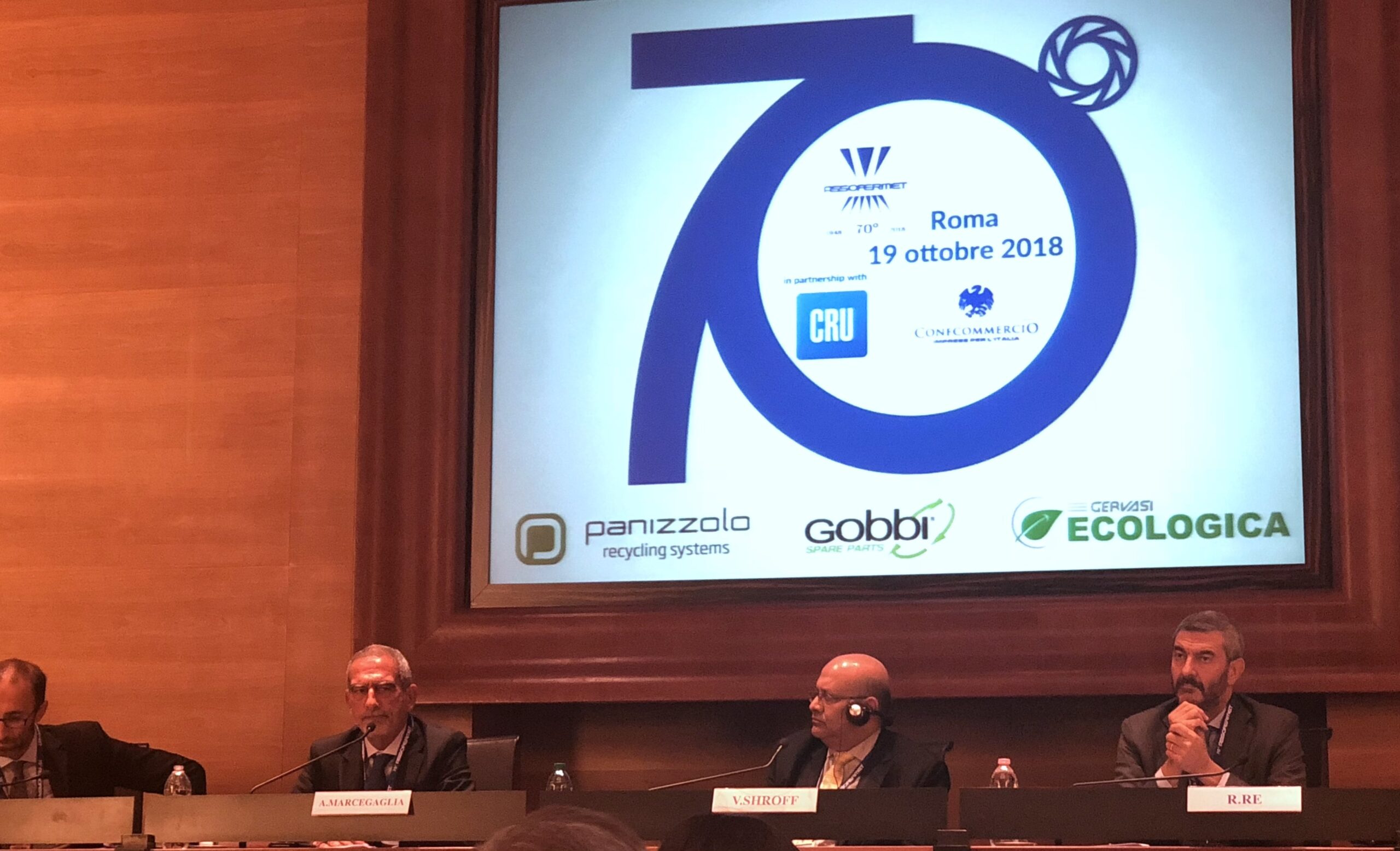
The recent conclusion of the reorganisation of the Italian steel production sector is set to bring positive effects to the local market. This follows a long period of uncertainty, according to sources at last week’s meeting of the Italian steel distributors’ association Assofermet attended by Kallanish.
Roberto Re, head of sales for western Europe of the Ukrainian group Metinvest, noted that the market has suffered from a lack of leadership during the last two years. This has been so because of the problems at Ilva and Aferpi, (formerly Lucchini).
Competition in the market has grown in recent months with the expansion of ArcelorMittal through the acquisition of Ilva and the entrance into the market of JSW and, imminently, Liberty House. Nevertheless, this reorganisation is set to bring more stability and further market discipline.
Representatives from distributors, service centres and traders in Italy also officially welcomed the arrival of India’s JSW into the local market following the acquisition of the former Lucchini operation in Piombino.
Vinay Shroff, executive vice president of the JSW group, explained that for the Indian company Piombino represented an opportunity to establish a foothold in Europe. He noted that while capacity expansion in India is ongoing, JSW is reducing its volumes available for the export market, therefore a direct presence in Europe can be strategic. The company is evaluating the possibility of expanding its presence in Italy with the relaunch of crude steel production in Piombino as well as the set-up of rolling lines for flat products.
Kallanish

Europe looks at three-year steel trade safeguard measures

The existing new European safeguard system for the import of steel products is expected to be confirmed for a period of three years. The provisional measures currently in place expire in February 2019, Kallanish learns from sources at the latest meeting of the Italian steel distributors’ association, Assofermet.
Euro MP Massimiliano Salini confirmed that the existing measures create some unwelcome effects on the European steel supply chain. He explained nevertheless that it remains the best solution to tackle the current global scenario of oversupply and increasing trade barriers.
“The European economy is not in a particularly strong position at the moment, therefore it is probably not in the position to tackle the global trade issues alone. The steel sector needs to be supported by the current safeguard measures,” he explains.
Distributors, service centres and buyers are starting to voice concerns over the existing system. In some sectors, such as wire rod, half of the existing tariffs-free quotas have already been used, creating some supply uncertainty for the next four months.
Leopoldo Rubinacci, of the Directorate General for Trade in the European Commission, explains that the negotiations are ongoing and a final decision is expected before the end of the year. He nevertheless says that the existing quotas are not creating too many problems in the directorate’s view. The measures have been designed to protect the market from possible negative effects of the trade war going on globally, not to directly control or limit free trade and markets.
Tommaso Sandrini, head of Assofermet’s steel group, notes nevertheless that he believes that safeguard measures are not needed, as trade is continuing in a stable manner. He adds that the provisional measures are relatively moderate, but that further barriers could create new problems in the future.
Kallanish

TK declares force majeure on low Rhine River levels
German steelmaker, thyssenkrupp, told customers Friday it has declared force majeure due to low water levels on the Rhine River, according to a letter seen by S&P Global Platts.
There had been unconfirmed chatter in the market that such a decision was forthcoming, and then the company issued a letter to customers Friday morning confirming the move.
“We have been informed by our shipping company that push-tow shipping on the Rhine must be halted immediately due to the extremely low water level,” the letter stated. “This will severely disrupt the supply of raw materials to our production plants. This exceptional and unforeseeable situation is beyond our control and forces us to declareforce majeure with immediate effect for the supply of our products.
“The company will only be able to serve purchase orders on pro-rata [basis], taking production conditions into account.”
The letter said thyssenkrupp was “unable to provide reliable information on how long the force majeurewill last … our sales people will contact you immediately and keep you informed about the expected impact on the delivery dates agreed with you.”
A company spokesman confirmed the letter seen by Platts, as well as the force majeure.
Mills typically receive inputs such as iron ore, coking coal and slabs from the port of Rotterdam, which are then shipped to facilities on the Rhine. However, little rain has been seen in the region since May and water levels are expected to drop further over the weekend, according to the Waterways and Shipping Administration (WSV) website.
The water level at Duisburg-Ruhrort stood at 167cm early Friday morning and WSV forecast this to fall to 152cm by Tuesday morning. This is the lowest level since 2014.
The situation was leading to longer delivery lead times and higher transport costs, as some suppliers had to switch to trucks or rail freight.
“Barges that could take 2,000 mt can now only take 700 mt. Due to the water levels, more barges than normal are required to meet the demand,” a German service center source said. “There are limited alternatives, as rail is expensive with limited capacity, and in Germany, we have a well-documented shortage of drivers [for] road haulage.”
Low water levels on the Rhine have been supportive of ex-works Ruhr coils prices, which have held relatively stable this week despite prices in southern Europe continuing to move lower. The S&P Global Platts TSI hot-rolled coil index ex-works Ruhr was at Eur561/mt ($643.53/mt) Friday morning, down Eur6 since October 1.
Len Griffin, PLATTS

Digitalisation improves distributors’ processes, not necessarily pricing

Steel distributors need to digitalise their processes to enhance customer relationships, although digitalisation might not help pricing orientation. So said participants during a panel on enhancing the value chain at last week’s EUROMETAL convention in Hamburg.
Distributors have to invest time in building up digital services and platforms to see improvement in traffic with customers, said Tim Milde of Berlin-based software forge Xom Materials. He gave the example of one steel distributor where the process took two years to get ready. “You need a lot of preparation. But then you can sell on digital channels – you guys should get ready for this,” he said at the meeting attended by Kallanish.
His experience was confirmed by Norbert Thumfart of Austrian distributor Weyland, who advised to tie in the customers early on. “We started two years ago to ask our customers, and now we are prepared – customers come to us and asked to be linked into the processes,” he said. He noted that 75% of customers polled signalled openness to e-commerce, but also requested the supplying distributor to go ahead and come up with offers.
Robert Kay of Prague-based Ferona agreed that “…we need to show customers that we are proactive.” He was not so sure if price indexing should be handled this way. “We have been approached by mills for indexing when prices were low, but we said no,” he explained.
However, Daniel Guinabert of ArcelorMittal said that his unit decided to launch such a tool, and that 12 months later gross margin had increased by 30%. Kay still maintained that “…I prefer direct contact,” and software man Milde stated that Xom would stay clear of index pricing in the foreseeable future.

Provisional EC safeguard measures remain under observation
The provisional safeguard measures imposed earlier this year by the European Commission under the form of a quota system remain under observation. The measures are set to remain in place until February 2019, but the authorities can make them permanent at that stage.
After a slow start, the utilisation of the quotas allocated is now rapidly increasing. According to Kallanish calculations, over 20% of the quotas for hot-rolled coils have been used so far, for example, leaving some 3.3 million tonnes of quotas still available. More than 23% of the quotas dedicated to metal-coated coil have also been utilised.
For long products almost 35% of the quotas for rebar have been used so far, leaving less than 500,000t of tariff-free quota available. In the tube sector the percentage is even higher, with almost 40% of tubes for gas appliances and hollow sections quotas having been used already.
Senior market analyst Georges Kirps tells Kallanish that it is premature to speculate on the decision of the European Commission based on today’s import data.
He adds, nevertheless, that during the first eight months of 2018 imports of flat products included in the safeguard system increased by only 0.4% year-on-year. “Obviously the existing AD duties on a number of flat products have already the necessary effect on non-EU import flows and might even further reduce it towards the end of the year. So, one of the possible options for the EU Commission might eventually be to consider safeguards on flats as superfluous,” he says.
For long products the situation appears to be more complex, given that imports into Europe increased by some 38% y-o-y during the January-August period. Kirps notes nevertheless that the longs market is cyclical and that these imports could fall towards the end of the year.
The tube market also finds itself in a critical position. “Non-EU imports of tubular products included in the safeguard system have been rising by 15 % in the first eight months of 2018,” Kirps says. “The announcement of an AD investigation regarding imports of hollow sections and welded tubes originating from FYROM, Russia and Turkey will surely slow the flow of tube imports in the rest of 2018, as hollow sections and welded tubes constitute the bulk on non-EU imports of tubular products under provisional safeguard measures.”
EU flats’ 2019 demand growth could decelerate: Kirps
Growth in demand for flat products in 2019 could decelerate due to a slowdown registered in the automotive sector, senior industry analyst Georges Kirps tells Kallanish.
In 2018 so far, the performance of the flats sector has been positive, but the peak might have already been reached in the first part of the year. “The EU automotive industry is now rather in a decelerating mode with a slowing EU market and less brighter perspectives in export sales,” Kirps says. “Uncertainty in the automotive sector is on the high side as this market appears to have become a preferred retaliation playground for tit-for-tat protectionist battles.”
The executive also adds that Brexit could create some disruptions in the automotive supply chain going into 2019, leading to lower output in continental Europe. “I see a possibility of production disruptions and mainly severe turbulence in the logistics and transportation steel supply chains, which presently are already in a situation of stress,” Kirps says.
Whilst demand is not set to be as bright as in the recent past, Kirps also notes that the sector is set to continue changing rapidly in supply-side terms. “On paper, the remedies imposed by the EU Commission for the ArcelorMittal/Ilva merger would prevent a rise in the market share of the new entity, in crude steel as well as in finished and processed flat steel products,” Kirps comments. “Nevertheless, these same remedies may eventually have the consequence that new players may enter the EU flat steel market and start to compete with the establishment.”
Kirps is currently delaying any judgement regarding the ongoing Tata Steel Europe/thyssenkrupp merger, as the proposal is now with the European Commission. Many of the possible consequences of the merger will depend on the decision, and any possible remedies communicated, by the European authorities.
thyssenkrupp makes reordering “easy”
thyssenkrupp Materials Services continues to drive forward the digitization of materials trading: With “easy supply”, thyssenkrupp’s materials specialists have developed an innovative app that is unique in materials trading. It enables customers to easily and quickly purchase materials.
In just a few clicks to the material
The functionality is simple: By scanning a QR code, the app recognizes the material, the quantities can be specified individually within the application and submit. In this way the customer can initiate inquiries and orders mobile and with a few simple steps.
“Our customers wanted a mobile solution from us,” says Andreas Kellermann, branch manager of thyssenkrupp Schulte in Munich. “With easy supply, we have created another milestone for smart interaction with our customers, which makes their everyday work more comfortable. That way they can fully concentrate on their core business. “
For the development, Materials Services has relied on in-house expertise: The app was built by in-house developers and under the direction of the internal Digital Transformation Office. Subsequently, it was subjected to extensive tests at the Munich branch of thyssenkrupp Schulte, a Materials Services company. Munich is home to the Digital Garage, where a team of experts brings the company’s digital developments to market. The app has successfully passed this test phase and will now be rolled out to the other locations of the German materials dealer.
Cross-channel access
In the digital transformation, thyssenkrupp Materials Services is pursuing a holistic approach along the entire value chain. In addition, the business area’s omnichannel structure offers its customers comprehensive and individual access to its product range. Crucial for this is the provision of all channels. With the app Materials Services supplements its existing range of customer portals, EDI interfaces, online shops and personal contact.
The video for the easy supply app is available here:

Das Eurometal-Forum-Treffen in Hamburg
Das EUROMETAL Steel Net Forum & der internationale Stahlhandelstag trafen sich am 09. Oktober in Hamburg. Die Veranstaltung behandelte Aspekte der aktuellen Situation des globalen Stahlhandels und anderer Marktentwicklungen.
Prognosen gehen davon aus, dass sich das weltweite Wachstum des Stahlverbrauchs im Jahr 2019 verlangsamen wird. Der IWF hat den globalen Konjunkturausblick nach unten revidiert, für die EU wird das BIP-Wachstum von 2% im Jahr 2018 auf 1% im Jahr 2019 sinken. Damit wird sich wahrscheinlich auch das Wachstum des Stahlverbrauchs in der EU verlangsamen.
Der Rückgang des Stahlhandels hat laut EUROMETAL Steel Net Forum mehrere Gründe. Zum einen besteht eine wachsende Besorgnis über globale Handelskriege, zum anderen gibt es z.B. in der Automobilindustrie strukturelle Veränderungen. Die Trends zum Carsharing und zur Nutzung von Materialien mit geringerem Gewicht wirken sich auf den Verbrauch von Stahlflachstahl aus. Hingewiesen wurde auch auf spezielle Stahlhandelssituationen in China, der Türkei und Russland.
Diskutiert wurden in Hamburg die komplexen Mechanismen des Handelsrechts der WTO und der EU, die u.a. Antidumping-, Antisubventions- und Schutzuntersuchungen betreffen. Ebenso wies die Versammlung darauf hin, dass angesichts der turbulenten Stahlzeiten, der überschüssigen Weltstahlkapazität und der gestörten Stahlhandelsströme Vertrieb und Handel von Stahl, sowie Strategien und Taktiken permanent angepasst werden müssten. Neue und verbesserte Dienstleistungsangebote müssten geschaffen und erweiterte Funktionalitäten entwickelt werden, um Kunden bei der Steigerung der Wertschöpfung zu unterstützen.
Wichtig sei, die gesamte Lieferkette vom Produzenten bis zum Endverbraucher zu kennen, eine maßgeschneiderte Logistik zu betreiben und kurze Lieferzeiten einzuhalten. Ebenso gelte es, die neuen Möglichkeiten der Digitalisierung und des Internets der Dinge als effektive Werkzeuge zu nutzen, um Lagerhaltung, Verarbeitung und Logistik zu optimieren. Wichtige Punkte im Stahlgeschäft seien Digitalisierung, Logistikfähigkeit, Kundenbindung, Finanzierungsmöglichkeiten und Beschaffung.
Bei der Frage, welche Rolle unabhängige und mittelständische Stahlhändler künftig spielen, kam die Konferenz zu dem Schluss, dass es auf dem Stahlmarkt immer Raum für unabhängige und dynamische KMU-Akteure geben werde, die Markt-, Dienstleistungs- und Produktnischen für Kunden finden und sich an das sich ständig ändernde Stahlumfeld anpassen.
EUROMETAL-Mitglieder können Präsentationen unter www.eurometal.net im Login-Bereich KNOWLEDGE CENTER herunterladen.
Die EUROMETAL-Arbeitsgruppe für die Koordinierung mit den nationalen Verbänden trat ebenfalls in Hamburg zusammen, am 8.1.2018. Hauptthema der Arbeitsgruppe war das Projekt EUROMETAL 2020: Definition eines neuen Leitbildes für EUROMETAL.
Mit der Umsetzung dieses Leitbildes wird EUROMETAL in Zukunft zu einer einzigartigen Plattform für alle Stahlvertriebs-, Metall- und Rohrvertriebs-, SSC- und Handels-, Verbands- und Unternehmensverbände in den europäischen OECD-Ländern. Ziel ist es, den Verbänden und Mitgliedern, zusammen etwa 5 000 Unternehmen mit mehr als 100 000 Beschäftigten, eine Stimme zu geben.
Quelle: marketsteel.de

EUROMETAL distributors urge rethink of supply chain

Stockholders, service centres and traders find that the supply chain is suffering from both a lack of synchronicity in using modern media, and from the pressure for just-in-time delivery. At this week’s Eurometal International Steel Trade Day in Hamburg attended by Kallanish, representatives gave examples of the soft spots in the chain, and of possibly remedies.
Dirk Müller of Rheinkraft Logistics drew a theoretical “… balanced system” of factors such as costs, infrastructure or transport planning. This is affected by factors that lead to a progressive instability of the system. Some such factors are the increasing complexity of customers’ requirements and of processes, less time for transport and – of most concern just lately – a shortage of truck drivers.
The suggestion of shifting more material from truck to train was dismissed by delegates because “… at the moment, the reliability of trains and barges is not what the customers expect.”
Regarding the efficiency of sea ports, one manager said that a given Rotterdam terminal receives 200-300 trucks on peak days, with many drivers that speak neither Dutch, German or English. “We would have then to expand our working hours until 8 p.m., but then the receivers in Germany have their deadline at 2 p.m., so it’s not doable.”

While Rheinkraft came up with an app for logistics, Müller noted that there are a substantial number of apps now used by various players. Alexander Julius of Macrometal noted that the sender does not always communicates with the receiver at a port which has long queues and drivers arriving at the wrong terminals.
This all makes the “… unpopular” job of a truck driver even more complicated, with an obligation to deal with apps for port terminals and country-specific requirements like road tolls. “On the one hand, the truck driver is a dying species, but those who remain need to be astronauts,” one commentator said.

Turkey’s safeguard case ‘will not affect import volumes’

Trade safeguard measures applied by Turkey will have no effect on the country’s traditional import volumes, delegates to the EUROMETAL Steel Net Forum & International Steel Trade Day in Hamburg, Germany, heard on Tuesday October 9.
This was because the measures do not apply to imports of steel products acquired for processing and re-export, and also taking into account the sufficient volumes of the quotas being used.
In the second half of September, Turkey imposed provisional measures in the form of product-specific tariff rate quotas (TRQs) for imports of flat steel, long steel, iron and steel pipes, stainless steel products and railway equipment. Tariffs of 25% will only be imposed once imports exceed the specific quotas. The additional payments will be levied for a period of 200 days.
The quotas were set at 3.12 million tonnes of flat products, 558,534 tonnes of long products, 273,901 tonnes of iron and steel pipes, 139,934 tonnes of stainless steel products, and 27,044 tonnes of railway equipment.
Turkey imported 4,021,152 tonnes of flat steel in January-June 2018, up by 4.54% from 3,846,450 tonnes in the corresponding period in 2017, according to the Turkish Statistical Institute (TUIK).
The measures set in Turkey were similar to those imposed recently by the EU.
The European Commission (EC) imposed preliminary measures in a safeguard case on July 18, in the form of tariff rate quotas on 23 steel product categories, based on average import volumes over the past three years. Imports will face a 25% tariff if a quota is exceeded. These provisional measures will also remain in place for a maximum of 200 days.
“The quotas set refer only to volumes going to Turkey for final consumption,” Yuriy Rudyuk, partner at Brussels-based law firm Van Bael & Bellis, told the conference delegates. “The processing of imports – for example, bringing hot-rolled coil [HRC] for tube production into Turkey – and the export [of processed products] are not subject to these quotas.”
Fastmarkets’ weekly price assessment for Turkish HRC imports was $530-550 per tonne cfr on October 5, falling from $550-555 per tonne cfr. The assessment fell on lower offers from the CIS, driven downward by oversupply and buyers’ fears of further price reductions.
“The quotas are set at the normal level [of trade], so there will not be any big changes in the Turkish steel market. Plus, the quotas do not include material that is used in the production of exported goods,” a Turkish distributor said.
In addition, the current exchange rate was not helpful toward buyers’ demands for imported steel, sources said.
The Turkish lira has lost a significant amount of value since early August, when political tension between Turkey and the United States worsened. The lira was trading at TRY100 to $16.34 on October 10. It had been trading at TRY100 to $18.39 on August 10, and TRY100 to $21.77 on July 10, according to exchange rate website Oanda.com.
In the meantime, the new safeguard regulations have caused confusion among Turkish customs authorities. They have been trying to obtain bank guarantees for the 25% duty despite the fact that the volume of imported steel has not exceeded any quotas.
“There is a confusion on the customs side because they have not received the details of how the quota will be followed. Customs wanted to guarantee the deposit of [duty at] 25% with the intention to return this money when it became clear that [the material was] not subject to duty,” Tayfun Iseri, vice president of flat steel import, export and industry association Yisad Turkey, said.
The problems with customs were expected to be resolved in about two weeks’ time.
European importers of steel faced similar problems with customs in a number of the EU member states in August, after the EC set its preliminary measures. In this instance, however, market soures said that the problem was solved within a week.
Maria Tanatar, fastmarkets.com