


Global protectionism to increase; Canada, Egypt may start safeguard cases
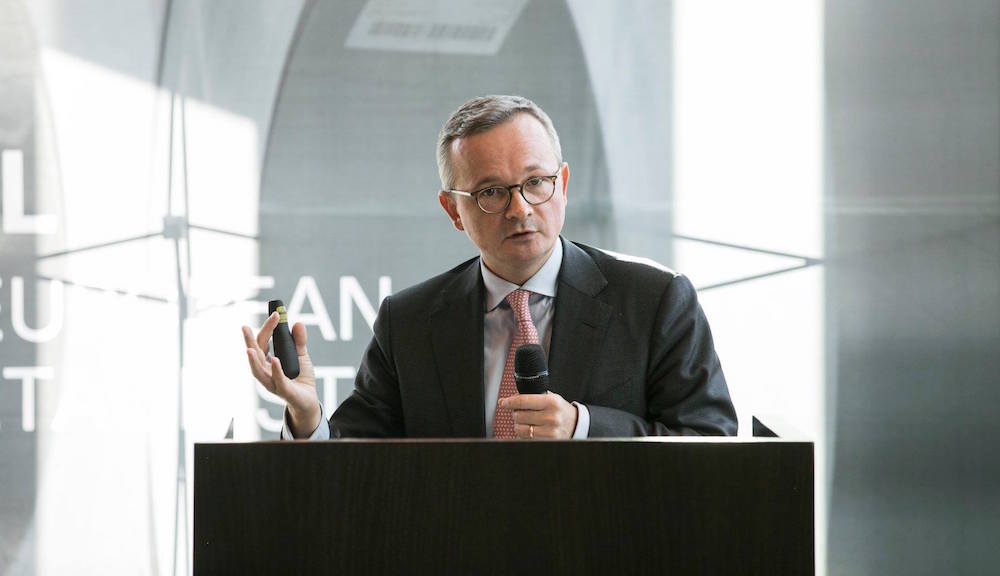
Protectionism in the global steel market will likely become stronger, with Canada and Egypt likely to start safeguard cases, participants at the EUROMETAL Steel Net Forum & International Steel Trade Day in Hamburg, Germany, heard on Tuesday October 9.
“We see many investigations taking place, one copying another, a domino effect on many levels, in many cases. We still would not exclude more escalation, as now the speed of protectionism measures is really too fast,” Yuriy Rudyuk, partner at Brussels-based law firm Van Bael & Bellis, told conference delegates. “The protectionist mood prevails.”
Both Canada and Egypt may start safeguard investigations, similar to those already started in the US, Europe and Turkey, participants said.
In August 2018, Canada’s Department of Finance held public consultations and invited all local companies in the steel sector to comment on a global safeguard action against steel imports. The Department of Finance is currently assessing the written submissions to establish whether the safeguard investigation is required or not.
The European Commission (EC) imposed preliminary measures in a safeguard case on July 18, in the form of tariff rate quotas on 23 steel product categories, based on average import volumes over the past three years. Imports will face a 25% tariff if a quota is exceeded. The case was started in an attempt to prevent steel shipments being redirected to the EU as a result of the Section 232 import tariffs imposed by the United States. These provisional measures will also remain in place for a maximum of 200 days.
Despite the start of the safeguard case the EC continues to open new anti-dumping cases. For example, it started an anti-dumping investigation into imported welded steel tubes, pipes and hollow profiles of square or rectangular cross-section, originating from Macedonia, Russia and Turkey in late September this year.
Although the EU safeguard measures exclude imports of steel products from developing countries, the measures might be applied if any of the developing countries excluded from the measures exceed 3% of total imports per product category or if total imports from those countries increases above 9% of total imports.
European steel association Eurofer asked the EC to install a monitoring mechanism that would allow it the EC to make countries subject to the safeguard measures if imports increase and cross the 3% import mark, sources said.
Participants were also concerned about the impact Brexit would have on the UK’s trade defence measures.
The UK will carry out its own trade defence policy, sources said, and will be able to initiate its own anti-dumping and trade defence investigations. UK authorities already assess the measures applied by the EU and whether to keep them in the UK after Brexit. Although, many participants also felt that a majority of the measures in place are likely to remain.

“We will be carrying out the measures currently in place until December 2020. The only change that there may be to that is if there are new investigations, [the UK] government will do their own investigation,” Simone Jordan, chairwoman of International Steel Trading Association (ISTA), said.
In the second half of September, Turkey imposed provisional measures in the form of product-specific tariff rate quotas (TRQs) for imports of flat steel, long steel, iron and steel pipes, stainless steel products and railway equipment. Tariffs of 25% will only be imposed once imports exceed the specific quotas, and the additional payments will be levied for a period of 200 days.
In the meantime, the Eurasian Economic Commission (EEC) has started a safeguard investigation into flat steel imports to members of the Eurasian Economic Union in August this year.
Maria Tanatar, fastmarkets.com
EU safeguard case may use country quotas, hit fewer products
Definitive measures in the European Union’s safeguard case on steel product imports may be imposed in the form of country-specific quotas for some products, according to Yuriy Rudyuk, partner with Brussels-based law firm Van Bael & Bellis.
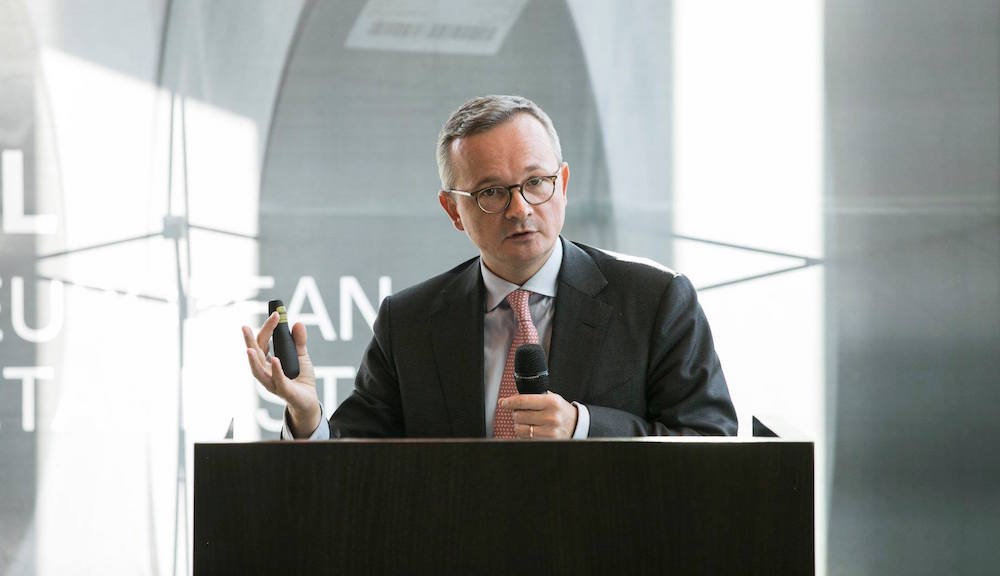
Further, the number of product categories affected could be reduced from the initial 23, while some categories might include fewer products when the European Commission (EC) announces its definitive decision in the case, Rudyuk told delegates to the EUROMETAL Steel Net Forum & International Steel Trade Day in Hamburg, Germany, on Tuesday October 9.
The EC imposed preliminary measures in the safeguard case on July 18, in the form of tariff rate quotas on 23 steel product categories, based on average import volumes over the past three years. Imports will face a 25% tariff if a quota is exceeded.
The provisional measures will remain in place for a maximum of 200 days.
Originally, the case was opened into 26 steel product categories in late March, in an attempt to prevent steel shipments being redirected to the EU as a result of the Section 232 import tariffs imposed by the United States. Two more products were added to the list in late June.
The development in the current case is similar to the safeguard investigation that was opened in 2002, according to Rudyuk.
“The case in 2002 is a good example of how the Commission is likely to behave in the present case,” he said.
In 2002, the EC opened a safeguard investigation in response to trade measures started by the US, and while it included 21 product categories when it was opened, that number went down to 15 categories when provisional measures were set. Ultimately, definitive measures were applied to only seven product categories.
“[A total of] 23 product categories are subject to provisional measures [in the current case, but] we expect that some product categories will be exempted at the definitive stage,” Rudyuk said.
“We see a number of product categories which are at present subject to provisional measures, but we see no legal or economic grounds to [continue to include them],” he added. “Some of the products are not even subject to a commodity trend.”
In 2002, the measures that were applied took the form of tariff quotas based on historical import levels, with an added 10%.
“At the definitive stage [in 2002], there were country-specific quotas applied, except for hot-rolled coil [HRC],” Rudyuk said. “I think we will see country-specific quotas for a number of product categories [in the current case].”
Countries that supply a 5% share or more of the total imports of a particular product are likely to be subject to a country-specific quota.
But for some product categories there will be a global quota. The EC is under pressure from importers of some products, so it needs to keep the market open and not to impose restrictions that would be too severe.
For example, suppliers from China, and from Russia, Ukraine, Brazil and Iran, which had historically supplied the majority of HRC to the EU, were hit by definitive anti-dumping duties last year.
“Individual country-specific allocations for these countries would not allow them to use the volumes [without sanctions] because of the application of the [pre-existing] anti-dumping duties,” Rudyuk said.
European mills managed to achieve some price rises in August because of the positive sentiment after the preliminary finding in the case was announced. But prices then fell in September due to slow demand and competitive offers from Turkey.
Fastmarkets’ weekly price assessment for domestic HRC in Northern Europe was €560-575 ($643-660) per tonne ex-works on October 3.
European steel importers have said that they need guarantees that the volumes that the EC allocates to suppliers will be used by exporters.
And Rudyuk added that “there is still a possibility that a licensing system will be introduced.”
In the 2002 safeguard case, a licensing system was introduced at the definitive action stage, and importers then required licenses from the EU authorities before being allowed to import steel.
Some buyers were now trying to refine the definitions of certain product categories, because within some categories there were products which went to different end-user sectors.
“We also know that, at the moment, there is a very active group of companies that is trying to obtain exemption for automotive flat steel products from the current product categories. That is another [area] where we could see narrowing of product category definitions,” Rudyuk said.
The EC intends to release definitive findings in the safeguard case in late November or early December this year. All interested parties will then have 10 days to comment, and then there will be an additional stage when suppliers can request consultations with the EU.
After the consultations, the EC will propose the imposition of the definitive measures to the EU member states, for a vote in January 2019. Definitive measures would come into force at the end of January or early in February next year.
Maria Tanatar, fastmarkets.com

Road transport shortage becomes more severe in Germany

Today’s shortage of truck drivers in Germany is likely to become even more of an issue over the next three years, according to participants at EUROMETAL’s International Steel Trade Day attended by Kallanish.
Currently there is an estimated shortage of 45,000 drivers in the country, according to Dirk Müller of Rheinkraft Logistics, with the figure forecast to reach 120,000 by 2020. The problem is worldwide, with shortages seen also in the USA and Brazil, for example. In Germany in particular, expiry of compulsory military service accounts for 25,000 people each year who used to pass their truck drivers’ licence in the services. These would then take up positions in the commercial market when having left the armed forces..
This decreases the growth both of individual and commercial traffic on the roads. It also creates some inertia in the maintenance of infrastructure, especially bridges, partly because the state is short of people assigned to such planning. The problem of maintenance extends to other forms of transport, such as to ports and rail terminals, Müller told the audience.
Today the average age of German truck drivers is 53, and the problems are not only those which are recognised, such as the bad image of the job, bad treatment of drivers and long, antisocial working hours. Ironically, newly-created digital tools intended to make delivery easier also create their own issues. For example, truckers have to cope with many country-specific regulations and with digital measures at related industries in the transport chain.
“We have our app; then all our customers started to make their own apps, like thyssenkrupp for loading,” he said. Now Müller’s company is busy backing up its app to make it compatible with the others. And, with 7 or 8 different sets of national regulations, the drivers have to adjust each time they cross borders. “Sometime it feels like they are sitting in an airplane hitting buttons just to meet with the regulations,” he said.
Christian Köhl, Kallanish Steel
NORSK STÅLDAG 2018
1. November – Grand Hotel, Oslo
08:00 Registratioin and coffee
08:55 Opening
ved konferanseleder
Tema: Økonomi & marked
09:00 Oljeopptur og vekst i industrien. Hvor lenge vil dette vare?
– utsikter for norsk økonomi
ved Kari Due-Andresen, sjefsøkonom i Handelsbanken
09:30 Stålmarkedet og prisutviklingen på stål
– stål- og metallprisene har steget markant siste året, vil dette fortsette?
– hvordan påvirkes metallprisene av nye tollbarrierer?
ved Arne Reinertsen, E.A. Smith
Tema: Faglig
09:50 Hvordan oppleves det å arbeide i stålbransjen?
– erfaringer fra en yngre medarbeider
ved Leif G. Hübert, Norsk Stål og YSN (Yngres Stål Nettverk)
10:00 Endringer i EN 1090-2
– de viktigste endringene
ved Kjetil Myhre, Norsk Stålforbund
10:25 Presentasjon av utstillerne
ved konferanseleder
10:30 Kaffepause
11:00 Endringer i EN 1090-2
– innføring av sveisekontrollklasser (WIC)
ved Liv Eltvik, Aas-Jakobsen
11.15 Norge rundt
– faglige aktiviteter og stålprosjekter siste år
ved Kjetil Myhre, Norsk Stålforbund
Tema: Miljø
11.45 HYBRIT, på vei mot fossilfri stålproduksjon
– et pilotprosjekt fra SSAB, LKAB & Vattenfall
ved Johan Larsson, SSAB
11:55 Ny info-side og handelsportal for brukte materialer
– ett oppfølgende tiltak av ombruksprosjektet
ved Lasse Kilvær, Norsk Stålforbund og repr. fra MetalSupply
Tema: Ny teknologi
12:10 3D scanning, fra prosjekteringsfase til As-built og FDV
– framtidens måleverktøy for nybygg og rehabilitering
ved Alexander Tombre, Pro Consult
12:30 Lunsj
13:30 Verdens første 3D-printede stålbru i Amsterdam
– erfaringer og utfordringer med 3D-print
– hvilke 3D-printede stålkonstruksjoner kan vi vente oss i framtiden?
ved Gijs van der Velden, MX3D
14:10 Robotisert produksjon ved hjelp av CNC-maskiner fra Voortman
– Stålfabrikkens nye automatiske bearbeidingslinje
ved Jon Olav Kvåle, Skanska Stålfabrikken
14:30 Robotisert produksjon ved hjelp av CNC-maskiner fra FICEP
– automatisert produksjon av stålkonstruksjoner
ved Mark Jones, FICEP
14:50 Kaffepause
Tema: Stål og arkitektur
15:20 Kistefos museum
– et spektakulær stålbygg over Randselva
ved David Zahle, BIG – Bjarke Ingels Group
16:00 Hvordan designe stål utenfor boksen?
– kreative ståldetaljer som “løfter bygget”
ved Børre Skodvin, Jensen & Skodvin Arkitektkontor
16:30 Stålarkitektur de siste 25 år
– og tiden framover
ved Reiulf Ramstad, Reiulf Ramstad Arkitekter
17:00 End
18:30 Aperitiff og mingling i Stålbaren
19:00 Banquet, with entertainment
– og utdeling av Stålprofilen, en hederspris

Sumitomo opens G-O sheet processor in Turkey
Japan’s Sumitomo Corp. officially opened its new grain-oriented silicon sheet processing mill in Gemlik, Bursa, western Turkey, on Wednesday, named Summit Steel Turkey, S&P Global Platts learned from a company source.
Sumitomo, which bought a stake in Turkish electrical sheet processor MKS Transformer Equipments Industry & Trade (MKS) in 2015, ended its partnership with the company in 2017.
The company is now targeting expanded sales of G-O silicon sheet with its new processing center in Bursa, which is one of the largest industrial bases of Turkey.
Toyota Tsusho, the trading arm of Toyota Motor Corp., opened a 25,000 mt/year silicon sheet processing venture in Bursa in 2015, named Techno Steel Processing Turkey.
Sumitomo’s new processing mill, Summit Steel Turkey, will target the domestic market as well as nearby regions like Europe, the Middle East and Asia. G-O sheet, is mainly used in transformer cores.
Cenk Can, PLATTS
Knauf Interfer sells molding business at Nuertingen site
German steel service center operator Knauf Interfer has sold the steel molding and roll-forming operations at its Nuertingen site to Meform Group, Interfer said Monday.
The company plans to focus on its aluminum and flat steel businesses, including processing.
“The sale is an important step as part of our strategy to concentrate Knauf Interfer more consequently on forward-looking markets driven by megatrends such as lightweight construction and mobility,” said Matthias Kessel-Knauf, board representative at Knauf Interfer.
The steel service center activities at the Nuertingen site will not be affected by the sale and Meform will operate the acquired equipment at the site.
Knauf Interfer is one of Germany’s largest mill-independent steel distributors and is currently restructuring its business.
The company sold its tube business to Hoberg & Driesch last year and closed its stockholding site for quarto plate, round bars and special steels in Dortmund in 2016, citing bad market conditions and an oversupply of steel distribution in the Ruhr region.
Laura Varriale, PLATTS
CEO confirms more TK Materials consolidation possible
German industrial group Thyssenkrupp is leaving the prospect of further consolidation at Thyssenkrupp Materials open, following the group’s split into Industrials and Materials, the company’s new permanent CEO Guido Kerkhoff said in an analysts’ call Monday.
Kerkhoff, who was confirmed as permanent CEO Sunday, also said he expects that the European Commission will likely open a full-scale investigation into the pending merger of Thyssenkrupp Materials and Tata Steel Europe by October 30.
Thyssenkrupp’s supervisory board unanimously approved the separation of the group into two companies on Sunday. The separation will see the industrial goods and the materials businesses managed as independent, listed companies in the next 12-18 months. The annual general meeting still has to approve the plans.
In terms of the future strategy of Materials, which will include the steel processing, trading, special steel production, stockholding and the 50% stake in the new steel JV with Tata, Kerkhoff said there would be further consolidation options.
“We want to use opportunities if they are around,” said Kerkhoff.
German steel distribution giant Kloeckner has previously said it would be interested in Materials’ steel stockholding and trading, while Italian producer Marcegaglia said it would be keen to acquire special steel maker AS Terni.
Thyssenkrupp’s board approved Kerkhoff as CEO for five years on Sunday. Thyssenkrupp did not give a deadline for filling Kerkhoff’s previous role as CFO.
For the position as supervisory board head, the board approved Bernhard Pellens, who has been a member of the supervisory board since 2005.
Commenting on the appointments of Kerkhoff, analyst firm Jefferies said Monday: “Although many investors had argued that TKA [Thyssenkrupp] needed an external candidate as CEO, Kerkhoff’s leadership in the current restructuring has put him back in investors’ good graces as the most practical choice to execute separation within 12-18 months.”
Laura Varriale, PLATTS
Raw Materials & Environment 2019 in Berlin
The German Environment Agency (UBA) is hosting the international conference Raw Materials & Environment 2019 on 19/20 February 2019 in Berlin.
The conference will look at environmental issues of mineral and metal supply in a broader sustainability context. It will bring together decision makers and experts in the thematic areas of mining, raw material supply, environmental assessment, climate change, sustainable supply chain management and sustainable resource management. About 150 participants from academia, business, up- and downstream industry, civil society and policy are expected.
The conference aims to foster awareness of environmental issues in the national, European and international debates on responsible sourcing and responsible mining. Linkages to related thematic areas will be addressed so that the interdependencies between environmental protection, human rights, security of supply, distributional justice, global responsibility and sustainable development can be elaborated.
The conference will feature a high-level-panel with Svenja Schulze (tbc), German Environment Minister and Maria Krautzberger (tbc), President German Environment Agency and international representatives from business, civil society and international organizations and a keynote address by R. Anthony Hodge, Senior Scholar at Queen’s University, Kingston, Canada and former President of the International Council on Mining and Metals (2008 – 2015).
There will be thematic plenary sessions and parallel break-out sessions on the topics
- Mining and the Environment,
- Responsibility in Global Supply Chains,
- Mining and Climate Change (mitigation and adaptation),
- Options for international and EU governance.
Please find further information (venue, preliminary agenda) here:
www.umweltbundesamt.de/rawmaterialsconference
Please contact us at uba-raw-materials-conference2019@ecologic-events.eu if you have any further questions.
German Federal Environment Agency (UBA)
Wörlitzer Platz 1
06844 Dessau-Roßlau, Germany

Austria’s Pisec buys into Belgian plate stockholder
The Pisec Group has acquired a majority stake in Zimmer Staal, a Belgium-based heavy plate stockholding company with annual sales of 120,000 tonnes, Kallanishlearns from the Austrian company.
Pisec, owned by Karl Pisec and headed by Patrick Teischl, is a trading group of miscellaneous steel and other products. Pisec’s steel range covers a variety of long as well as flat products.
Pisec has held a long-term business relationship with Zimmer, based in Lier, it says. The cooperation between Pisec’s sales manager Peter Marcel Klinke and Zimmer’s ceo Luc Cools has intensified over the years, finally resulting in a permanent cooperation between the two companies. According to Zimmer’s commercial director Pieter Adams, the partnership opens the perspective of providing the financial means to further expand both product range and customer base.
thyssenkrupp plans separation into two independent units
In an extraordinary meeting of the supervisory board on 30 September, the executives of thyssenkrupp AG will propose a separation of the group into two separately stock-market listed companies, Kallanish learns. That date is coincidentally the last day of the company’s fiscal year.
The split will be made between materials’ activities, which include steel production and steel distribution, and industrial-technological services. Both units are to keep the traditional name, then figuring as thyssenkrupp Materials AG and thyssenkrupp Industrials AG.
“Over the past weeks, there were many strategic options discussed for thyssenkrupp,” says interim ceo Guido Kerkhoff, alluding to proposals for reorganising the group. “However, the world is not black and white. There is not only a ‘keep on’ or a ‘dismantling’, but other alternatives which do justice to both the responsibility for the workforce and the sustainability of the company,” he continues. He adds that the solution now presented will create value for shareholders as well as improve the prospects for the development of business.
Shareholders will hold 100% in tk Materials AG, and a majority in tk Industrials AG, with the former keeping a stake in the latter. Industrials will encompass the elevators, automotive supply and plant-building businesses. Materials will include the steel/metals distribution activities, the 50% in the future joint venture with Tata Steel Europe, plus the marine technology business.
Both companies would be of a comparable size. The activities of the future tk Industrials achieved a revenue of €16 billion ($18.7 billion) with 90,000 employees in the past fiscal year, while the Materials business turned over €18 billion with some 40,000 employees. The latter’s figures do not include the joint venture with Tata, which will be accounted “… at equity”.
The separation process is projected to take 12 to 18 months. A separate listing would reduce the complexity of the thyssenkrupp share, the company notes. tk Industrials would be attractive for investors interested in stable cash flows and attractive growth prospects, while Materials would address investors that bank on cyclical business, the company says.