


Benelux service centre plans further expansion
Dutch-headquartered steel service centre Roba Metals is planning to expand its storage facilities for stainless steel, following other investments implemented in 2017.
The company with sites in the Netherlands and Belgium processes carbon as well as stainless steel strip. Roba’s Stainless Division plans to add a new warehouse for sheet in 2018, with an area of 5,000 square metres, Kallanish learns from managing director Florin Negulescu.
The unit normally carries stocks in excess of 10,000 tonnes, and in 2017 produced 42,500 tonnes of cut-to-length sheet with a staff of 30. Stainless activities are mainly located at the company’s headquarters in Ijsselstein, Netherlands, but also in Genk, Belgium, where the new warehouse will be built.
Roba spent €4.0 million ($4.7m) last year on a new warehouse for mother coil with an area of 4,000 m² at its (carbon) Steel Division in Genk where it employs 50 personnel. It also installed a new leveller for the CTL line which cost €800,000. In 2017, the unit produced 92,000 tonnes of slit strip and 35,000 tonnes of cut-to length sheet. Its normal stock level is above 30,000t.
Roba Metals was established in 1937 and was initially involved in recycling. This continues to form part of its activities, with the focus on non-ferrous metals. It has a recycling centre in Warwickshire, UK, and also has sales offices in Krefeld, Germany and Olawy in Poland.
Stemcor returns to profit in 2017
UK trader and distributor Stemcor Global Holdings has reported a year-on-year fall in sales volumes but increases in total revenue and Ebitda as the group returned to profit in 2017.
In a statement of its annual results to 31 December 2017 monitored by Kallanish, the company says that “… The results highlight continued positive operating results, a turnaround in market conditions and Stemcor returning to consolidated Group profit for the first time since a major restructuring was undertaken in 2015.” This was assisted by “… disposal of non-key assets to focus on key business activities.”
Group ceo Steve Graf is equally upbeat. “Our hard work and dedication following the restructuring of 2015 has delivered a strong set of numbers that reflect a focus on improved margin realisation and market conditions. In addition, a strategy to focus on our core trading activities resulted in the successful sale of a number of business units during the year, enabling the refinancing of the rest of the group,” he says.
Sales volumes of steel and raw materials fell by -15% y-o-y to 3.7 million tonnes, Stemcor confirms.
Total revenue for full year 2017 increased however by 8% to $2.11 billion versus $1.96 billion in 2016. Adjusted group profit before tax of $19 million was achieved, recovering soundly from a loss of $3.2m in 2016. Ebitda rose by a significant 45% y-o-y to $48m on the same comparison.
The group also welcomed the appoinment of its new non-executive chairman, Martyn Konig.
Construction sector liquidity worries Polish distributors
Polish distributors are prepared to meet rising domestic steel demand, but there are worries over delayed payments in the construction sector. This was the opinion voiced by the steel distributors’ panel at the European Economic Congress in Katowice.
Chief executive of Polish distributor giant Konsorcjum Stali Janusz Smolka said most distributors should be able to cope with the requirement for increased working capital resulting from higher steel prices. The near-future outlook for Polish and German economic growth is bright, he added, although Polish steel demand growth will slow on-year in 2018.
However, there are some concerns over the construction sector. “The number of construction firm bankruptcies is increasing,” Smolka said during Wednesday’s panel attended by Kallanish. Those construction firms whose projects are now concluding with losses did not foresee there would be a 60% increase in steel price since 2016. “I don’t know how construction firms will deal with investors and with indexing this, but I imagine there will be problems with this increase in prices… However, I reckon this will not change the fact that we will realise these construction projects anyway.”
Jerzy Bernhard, chief of Polish distributor Stalprofil, re-iterated Smolka’s warning, saying that steel structures fabricators who supply the construction industry will increasingly delay payment to steel suppliers. Many will go bankrupt or be forced into restructuring, he added.
Meanwhile, Robert Agh, chief executive of distributor Ferona Polska, pointed out that, contrary to earlier forecasts, there has been no consolidation in Poland’s distribution sector. Poland has around 20 competitive distributors, 16 of which are in some form of purchasing alliance. This results in a “… Polish heaven” when prices are strong and all these firms are making good margins, but a “… Polish hell” when prices drop as the competition between the suppliers is intense. Agh fears any reduction in demand could lead to the latter scenario.
In terms of the future for the distribution sector, Jakub Grobarczyk, board member at Polish service centre Serwistal, said most distributors have invested in processing. This is because their customers require a greater degree of specialisation. “We’re not just talking about regular cutting or bending rebar, no, this is complexity of supply, complexity of realising a given project with our customers,” he opined. “This is a direction from which we will no longer return.
Bernhard added that distributors must invest in increasing the efficiency of truck loading systems, as often lorries are forced to wait 24 hours at stockyards before loading product.
Another hurdle for Polish distributors is labour shortages. Smolka pointed out a shortfall in lorry drivers has raised distributors’ freight costs. Agh explained that Western firms moved their manufacturing bases to Poland and the Czech Republic many years ago when labour costs were cheap, but their economies have since grown rapidly and labour shortages are now frequent. The situation in the Czech Republic is still worse, he emphasised, because Poland at least has a reserve of 2.5 million expatriates it can repatriate when wages rise.
Kallanish
Polish distributors fear EU safeguard impact on competitiveness
EU safeguard duties are required to protect against steel diverted by Section 232 and maintain market stability, although there are concerns rising protectionism could limit buyers’ competitiveness. This was the opinion voiced by the steel distributors’ panel at the European Economic Congress in Katowice.
Although the effect of US tariffs on EU exports is limited, Turkey, which sits on the EU’s doorstep, may be levied with US tariffs and will need to find alternative markets for its huge long products output. This means it is likely the EU will implement trade measures, Jerzy Bernhard, chief of Polish distributor Stalprofil, said during Wednesday’s panel attended by Kallanish.
Jakub Grobarczyk, board member at Polish service centre Serwistal, however, warned that increasing protectionism may hurt some steel companies. While duties are justified for steelmakers, “… on the other hand they will lead to largely restricted accessibility,” which “… could impact the competitiveness of our products and the final products of our customers.” The approach to trade defence must therefore be “… rational.”
This view was immediately countered by Tomasz Plaskura, ArcelorMittal Europe – flat products business division east chief marketing officer. “We are convinced that we can compete with every importer in terms of cost, quality and customer service, as long as the competition is fair,” he observed.
“Safeguard measures are protectionist barriers implemented to prevent a sharp rise in imports, which means the import we see today will most probably remain on the same level,” Plaskura continued. EU steel imports have increased further in the first quarter of 2018, “…so it’s hard to speak about difficulties in access to material,” he added. Despite the EU’s trade defence measures so far, the region remains one of the most open to imports, the official added.
Kallanish
Assofermet urges institutions to speed up Ilva acquisition

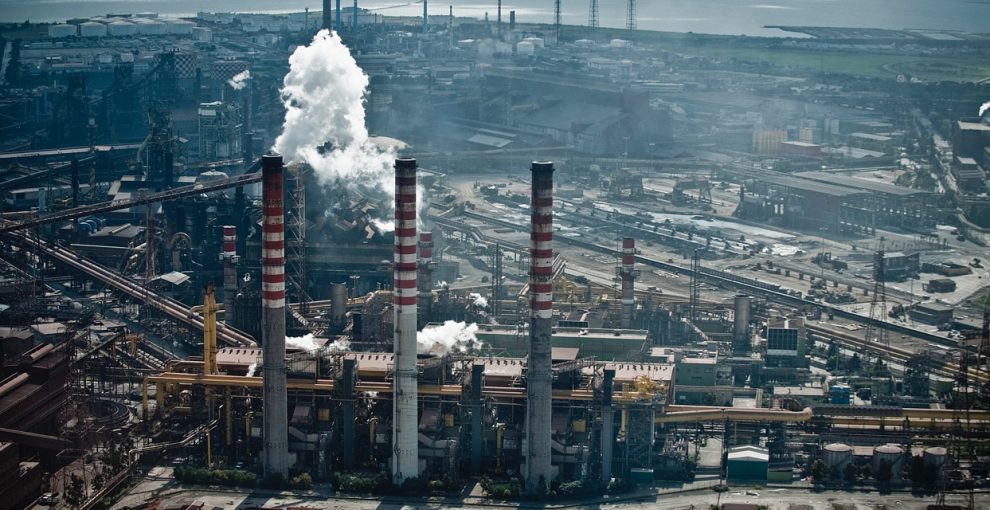
The acquisition and modernisation by ArcelorMittal of Italian steel maker Ilva’s Taranto site will strongly benefit the entire steel value chain in the country according to the Italian steel association Assofermet. In particular, it will benefit the many steel end-user sectors in the Taranto region, the association adds. It is urging all the parties involved to speed up the process for the site’s re-launch.
The Ilva acquisition by ArcelorMittal represents today the best option for a smooth production continuity of Taranto, Assofermet continues. The heavy disruption in Ilva’s production volumes has led to major supply difficulties for both domestic end-users of steel and re-rollers. Taranto’s heavy production cuts have resulted in booming imports and an unbalanced market in term of prices, demand and supply., the association says in a note sent to Kallanish.
Italy for instance could only count on Marcegaglia and Arvedi for the [… domestic] supply of flat products and tube. Despite the “… excellent work” done during the crisis years for Italian steel, they are not able to satisfy – by type and volume – the entire demand from the domestic market. Bringing Ilva’s output back to the volumes of the past will enable the country to respond to its domestic demand, and produce timely delivery with better price competitiveness, Assofermet says.
With its significant resources, ArcelorMittal is able to deploy the technical and managerial leadership necessary to bring back Taranto to its full performance of the past. In relaunching Taranto, ArcelorMittal’s objective is to make the plant its main production platform in the Mediterranean for ‘clean’ steel. However, only continuity of production in Taranto will allow environmental rehabilitation to be achieved, the association contends. Should activities terminate and the site close, the risk of degradation and complete abandonment of the area is very high, Assofermet warns.
Kallanish
EU duties seen altering trade, CRC/coated replaces HRC
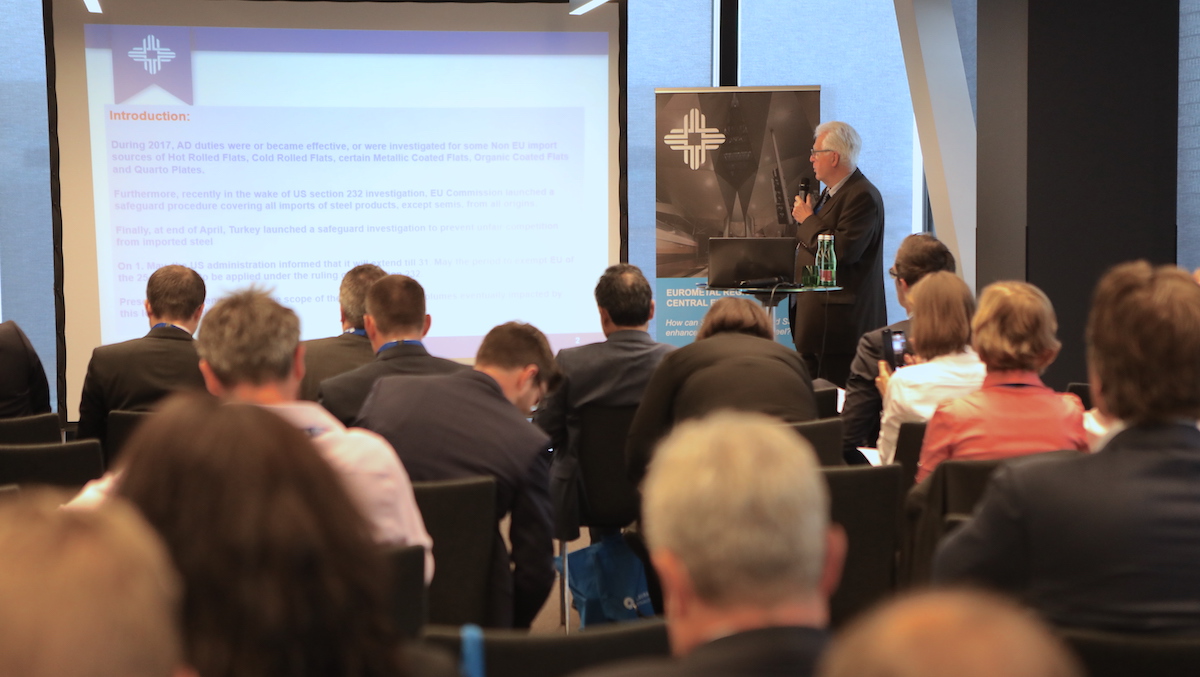
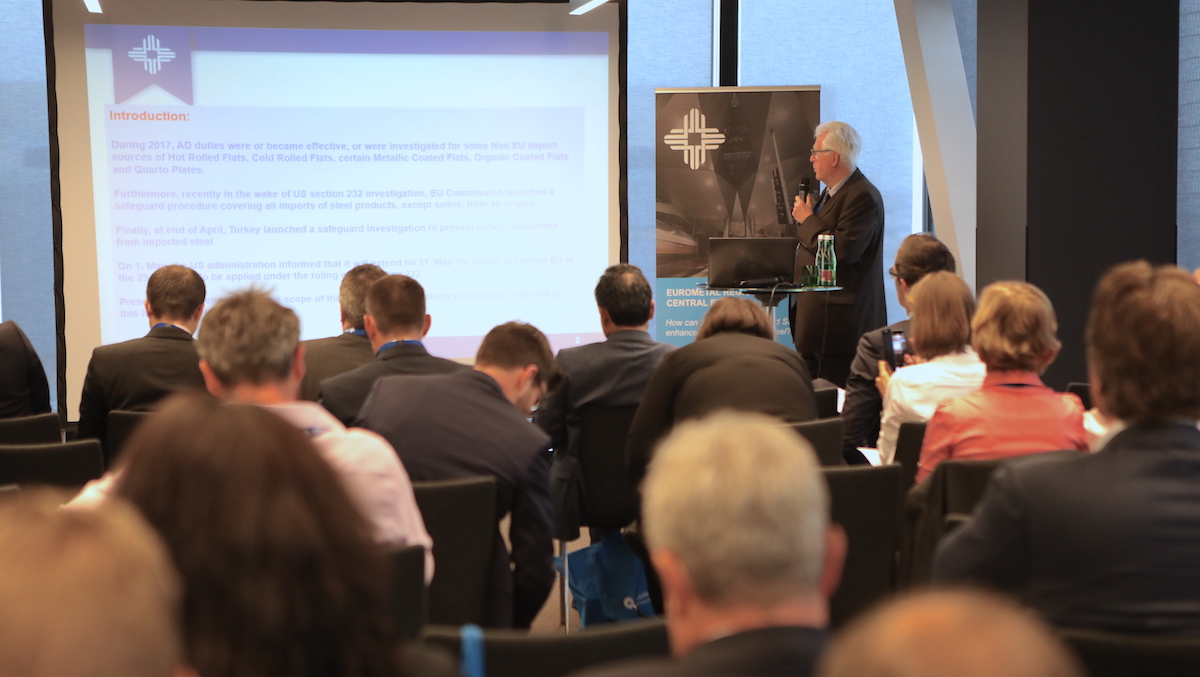
The potential imposition by the EU of import tariffs following its steel safeguard investigation could simply see transformed steel-consuming products enter Europe instead of duty-levied steel. So said EUROMETAL director general Georges Kirps at the distributor association’s Central Europe regional meeting this week.
There is also the question of whether Switzerland and Norway will be levied with any resultant measures, as they supply a significant tonnage to the EU, Kirps said.
In any case, trade defence measures should be clearly thought through as they have a big impact on supply chains, he added. The EU safeguard investigation omits semis but covers all other steel products, the imports of which into the EU amounted to 29.4 million tonnes in 2017, level on 2016. The main impact of the probe will be on flat products, which in 2017 had a 69% share in imports of the products covered by the investigation.
Last year EU imports from non-EU sources of hot rolled flats except for quarto plate fell -18% on-year to 6.97mt, while quarto plate imports declined -11% to 2.46mt. This was, however, offset by a 24% rise in cold rolled flats imports to 2.46mt and 26% rise in metallic coated flats imports to 4.96mt.
Hot rolled coil imports in 2017 from Russia declined by -65% to 722,000t, from Ukraine by -38% to 666,000t and from Brazil by -44% to 371,000t. These countries were hit by anti-dumping duties. They were, however, partially offset by a rise from Turkey, India, Egypt, Taiwan, South Korea, and Serbia.
Cold rolled coil imports from AD duty-levied countries, Russia, Iran and China, also dropped in 2017, and were partially offset by an increase from India, Vietnam, South Korea, Ukraine, and Brazil.
In the first quarter of 2018 HR flats imports nevertheless rose 15% on-year to 2.08mt, driven by Russia supplying 420,000t versus 23,000t in Q1 2017, despite being levied with AD duties. Imports from Turkey also rose 56% to 731,000t and from Serbia by 144% to 205,000t.
The Russian rebound is because “…Severstal has a low anti-dumping duty and has service centres in Poland and the Baltic countries,” to which it has increased supply, Kirps suggested at the Vienna meeting attended by Kallanish.
The EU import data doesn’t tell the full story, moreover. A large portion of product imported into Italy and Spain is done so by either import-dependent re-rollers or mill-tied processors. This product is not traded on the open market. In addition, only a minority of product imported into Belgium actually remains there, while the rest is trans-shipped to neighbouring countries, Kirps concluded.
Kallanish

Positive outlook for east/central European steel: Executives
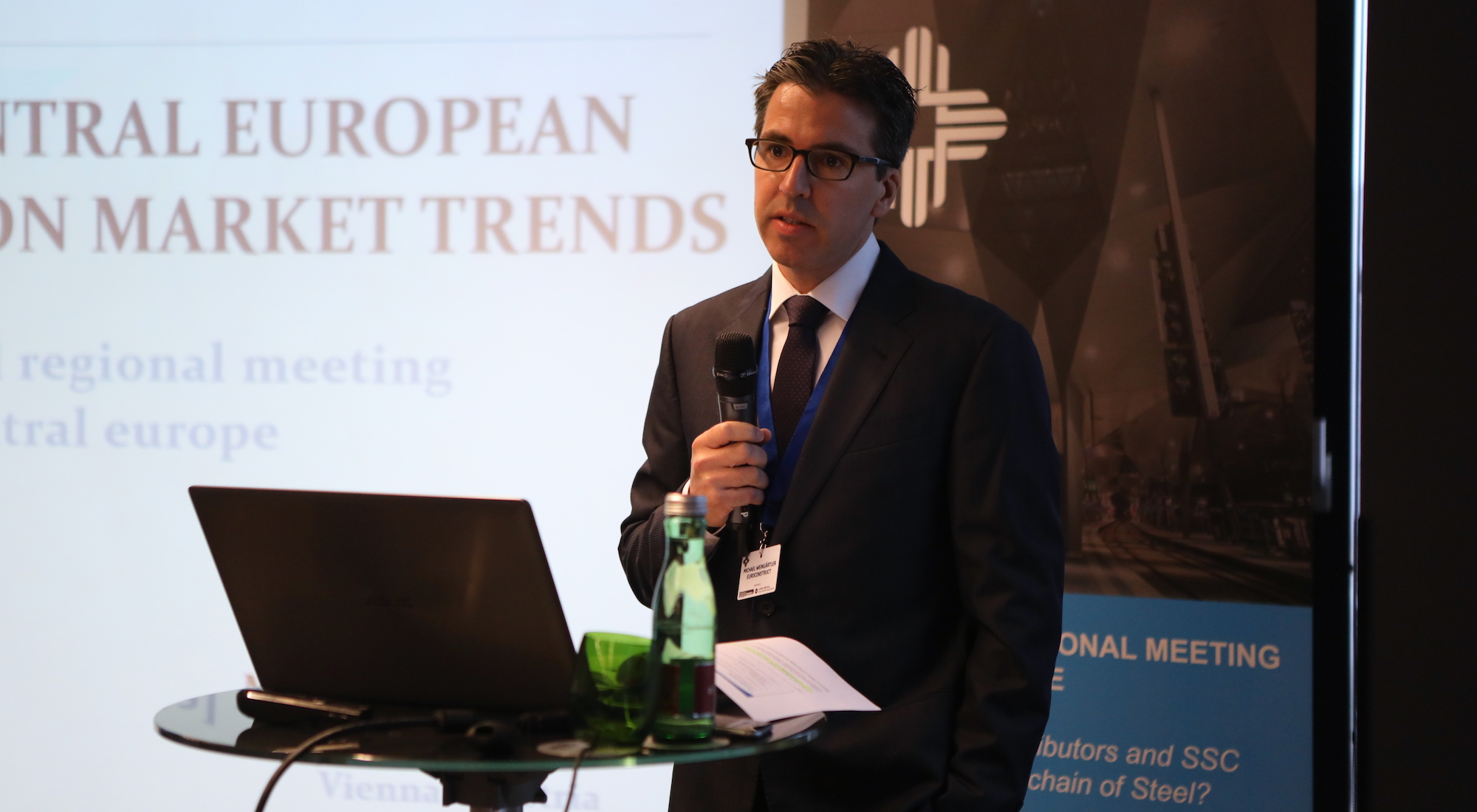
The steel industry in central and eastern Europe is set to see continued support from positive economic growth in 2018, executives at the EUROMETAL regional conference in Vienna said Tuesday.
In 2017 economic growth in the central and east European region was positive. Regional growth is to remain strong this year, but a modest slowdown is expected going forward.
Analysts expect the region’s economy to expand by 3.6% in 2018, led by higher GDP forecasts in Romania (4.2%), Poland (3.8%), Hungary (3.5%), Czech Republic (3.2%) and Croatia (2.8%).
“In 2018 [the steel industry] will still be ok, but we are cautious that this might not be sustainable. We hope there won’t be a drop, but there might be a slowdown. We are prepared to use the brakes,” said Jan Moravec, corporate audit manager at Ferona.
The outlook for steel demand in 2018 is also good, with some positive demand indicators seen in large steel-consuming sectors, such as construction and automotive, speakers said. However, there are risks around reduced EU funding in the longer term, partly affected by Brexit.
Car production is expected to grow by over 20% in the next five years, while construction is seen growing by over 23% in the next three years, noted Gabriel Holub, sales manager at US Steel Kosice.
“The construction industry is currently in a rather comfortable position, with a favourable outook for 2018,” said Michael Weingartler, Construction Market and Housing Policy Expert at Eurocontruct. “Solid economic growth in the EU supports positive outlook for construction and output should increase
4% in east and central Europe in 2018, with Poland, Hungary and Czech Republic leading the growth.”
Erica Sesay, PLATTS

Steel flats imports would be most impacted by EU safeguard

Flat products imports will take the main hit from the EU’s safeguard investigation into steel imports launched in reaction to the declaration of US tariffs on steel (25%) and aluminum (10%), including against the EU, according to Georges Kirps, the head of EUROMETAL.
Speaking at a regional meeting in Vienna on Tuesday, Kirps noted that import volumes of flat products into the EU market last year were 20.3 million and accounted for 69% of the total volumes under the safeguard investigation. By comparison, longs and tubular products volumes were respectively 6.4 million mt and 2.7 million mt, or 22% and 9% of the total.
All product categories under investigation represent 18% of the EU steel supply chain.
According to Gabriel Holub, a representative of Slovakian flats steel producer US Steel Kosice, owned by the US Steel group, said Section 232 represented the main downside risk for the European market as it will likely lead to similar measures taken by other countries. But at the same time the EU safeguard measures, if adopted, should help to protect the EU market against massive inflow of material from other regions blocked by the US, he added.
A member of the trading community at the meeting called the current safeguard procedure in the EU a “very difficult situation” for independent service centers, traders and distributors, who are depending on imported material beside the material they buy from the EU mills.
“There has to be a healthy mixture between both otherwise we lose our competitive edge,” he said. “We need to have the opportunity to buy right and left and not just from two big mills in Europe controlling 70% of the market.
Wojtek Laskowski, PLATTS

Independent SSC future seen bright, protectionism a threat
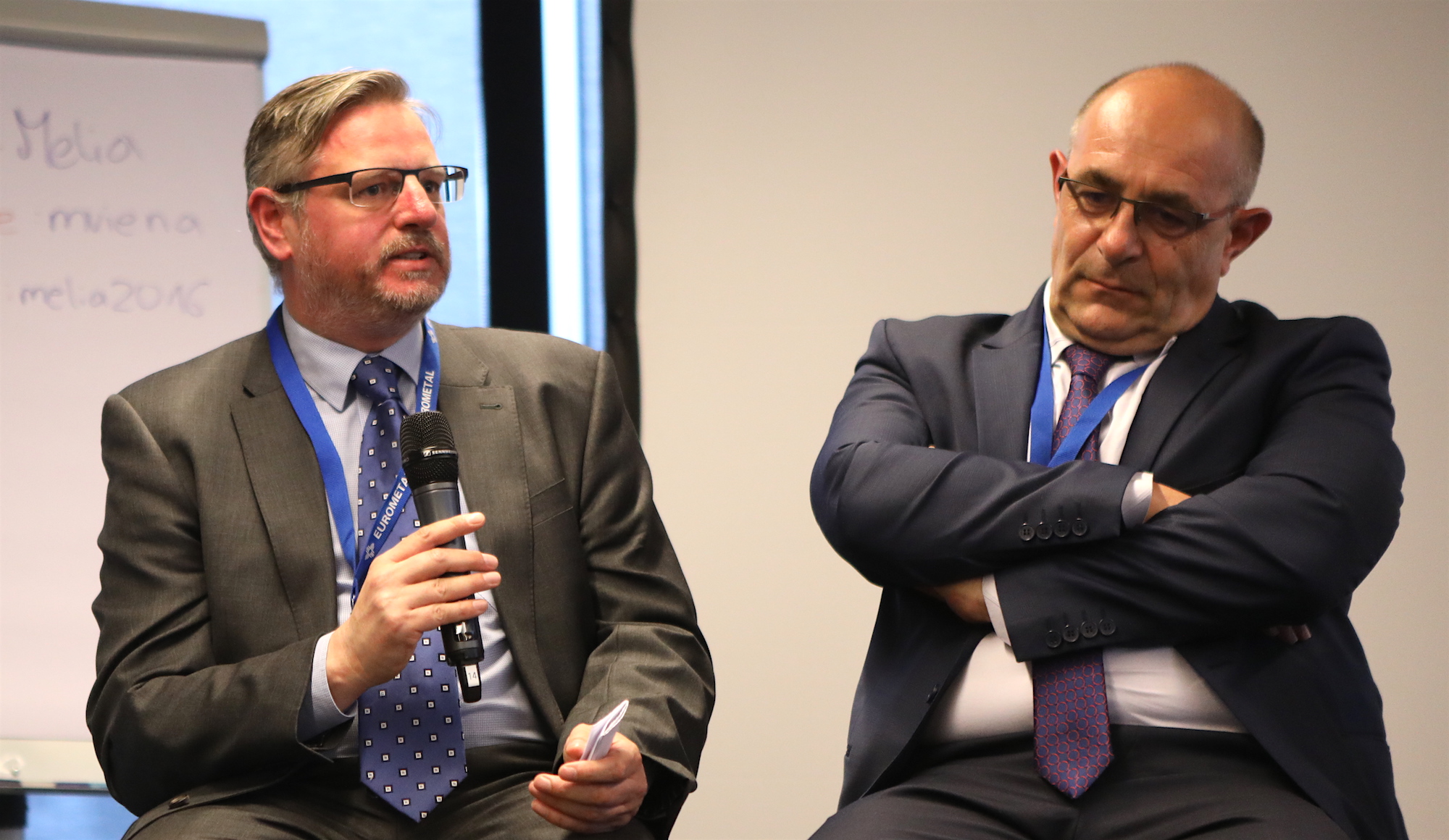
Independent service centres have a bright future as they are able to tailor services to the needs of individual customers better than mills and can offer more competitive pricing. This was the opinion among the majority of participants at the Central Europe Regional Meeting of Distributors’ association EUROMETAL.
During the panel discussion, Czech service centre Mi-King SSC general manager Garry Furey said besides being able to service smaller customers, distributors can also offer non-EU material. “We provide something to non-EU mills because we give them the ability to sell in Europe and not let down their customers in Europe,” he said at Tuesday’s meeting in Vienna attended by Kallanish. Moreover, distributors are able to operate in the local language of the countries they are based in.
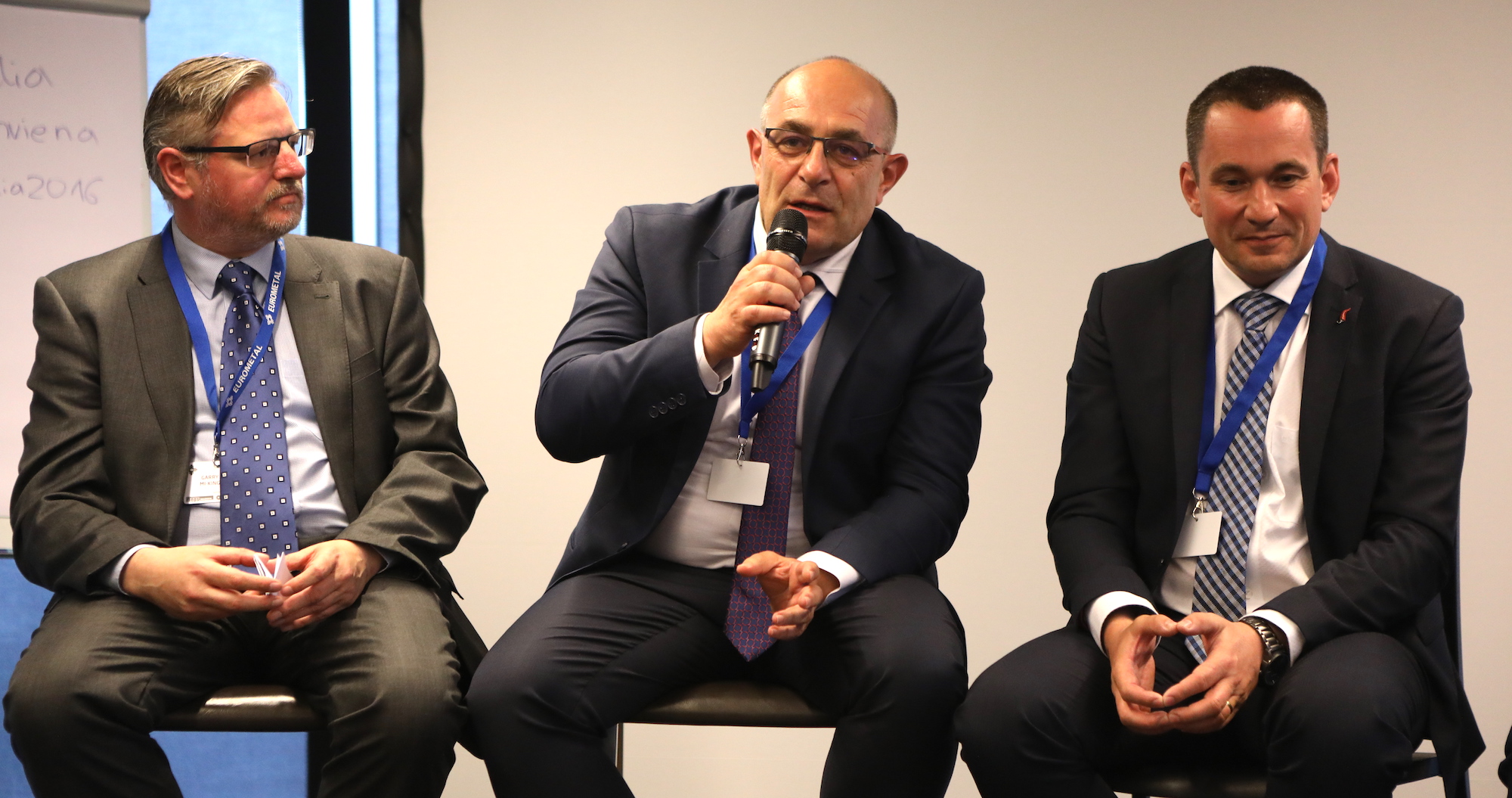
As a tube producer, Branimir Minchev of Bulgaria-based Steelimpex agreed that service centres and distributors better cater for small-tonnage orders and specific requirements. Steelimpex conducts back-to-back business as it does not want to store purchased hot and cold rolled coil for a longer period so that it is not damaged, he said. The firm therefore prefers to sell small tonnages to stockholders for processing.
Jan Moravec, executive director – corporate audit at Czech distributor giant Ferona, said mill-tied distributors can be inefficient. “These (mill-tied) distribution networks are basically forced to follow certain strategies and they are not flexible enough,” he opined. These distributors are not able to purchase from a wide selection of sources and may therefore not offer the optimal product, he added.
“I also think the future is independent centres,” Minchev responded. These firms are “…much more flexible, they can buy from everywhere, they can deliver different material and they are able to… find the best price.” Moreover, local service centres can reduce risk for foreign companies selling into individual countries, he added.
An opposing view was, however, offered by Roland Fazekas, president of Hungarian stockholder Carboferr. “I don’t think independent service centres have that bright a future,” he warned. “We can see it in the anti-dumping procedures: it was a fight between integrated mills and independent players on a large scale… and we could see that now it’s really in the favour of integrated.”
Mills have moved more into stockholding in recent years due to the zero interest rate environment that makes it easier to keep stock and serve smaller customers, Fazekas said. This will only change when interest rates rise and mills are forced to return to traditional means of financing, he added.
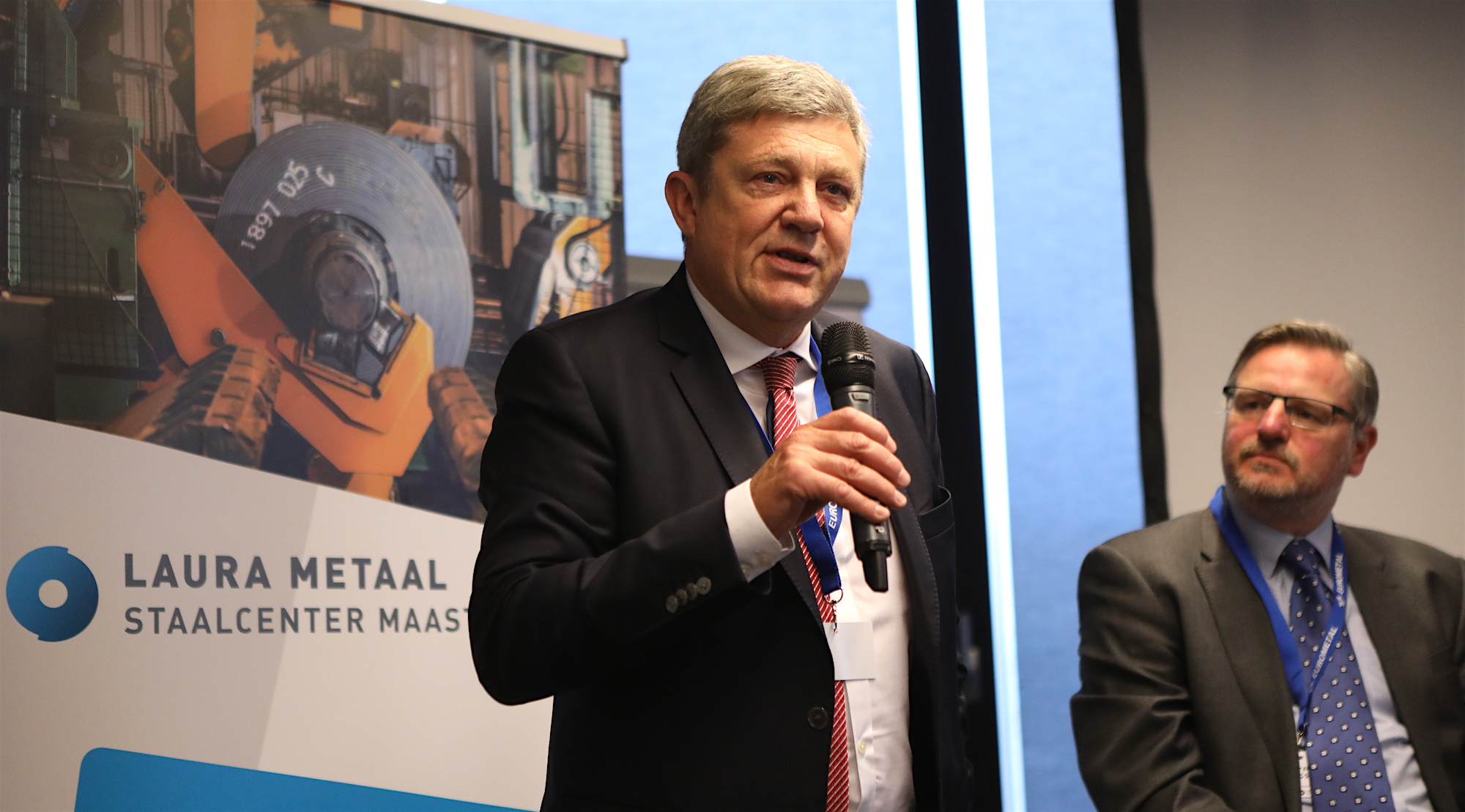
Ralf Reintjes, managing director of German trader Primex Steel and ISTA executive committee member, said “…independent service centres are the backbone of the industry.” However, they are in danger due not only to the anti-dumping measures but also to the EU’s safeguard probe launched in response to Section 232, which is a “…general attack on imports.”
“There should be a certain structure on the import side, we should not have a Wild West market,” Reintjes continued. “All the independent traders, service centres, distributors are depending on imported material besides the material they buy from EU mills. There has to be a healthy mixture between both, otherwise we lose our competitive edge.” Distributors need a body independent of Eurofer to represent them in EU trade cases, he suggested.

Central European distributors fear market correction

There is likely to soon be a reduction in steel consumption and prices in Central and Eastern Europe as the market is overheated after an “…extremely good” 2017. So said Jan Moravec, executive director – corporate audit at Czech distributor giant Ferona, during Tuesday’s Central Europe Regional Meeting of Distributors’ association EUROMETAL.
“2018 will still be ok, but we are extremely nervous – if we do not perform, we are nervous, and if we perform too much we are nervous as well because it’s not sustainable,” Moravec said during the panel discussion at the meeting in Vienna attended by Kallanish.
“We really think we are on the top, I mean the V4 countries… We hope there will be no drop, but there will be a certain slowdown and definitely a certain reduction, but of course no one knows when,” he continued. US tariffs have clouded the situation further.

Roland Fazekas, president of Hungarian stockholder Carboferr, added: “We could see very nice figures for the construction market… for Hungary and Poland, but we already see the price correction in the rebar market, for example, and in terms of demand the past two months was really a challenge for our business. In some segments, in flats, quarto, for example, the market is quite stable, but in longs we already see that a storm is coming.”
If the EU is not given an exemption from US tariffs, moreover, Italian suppliers will return to supplying the European market, Fazekas added.
Moravec said potential risks for the Czech market include reduced consumption; price volatility; the performance of Germany, on which Czech steel suppliers rely; and Chinese and Russian exports. Moreover, customers’ payment discipline could cause problems. Opportunities include digitalisation and investment into other products such as plastic or composite materials, in order to offer customers a complete package.
In a presentation earlier in the day, Moravec observed the success of populist governments in the V4 region should not have a negative impact on the recent good economic growth.
US steel tariffs should have little direct impact on European steel sellers as no EU countries are among the US’ major suppliers. The tariffs are therefore “…not critical or vital for the European industry in general,” Moravec opined. “On the other hand, there is the risk of pressure towards prices because all the countries, if they are not able to export to the USA, they will be trying to find new markets.”
Kallanish