


EU mergers causing European Commission ‘sleepless nights’

The timing of two major mergers in the European flat steel market was “not helpful” to the European Commission’s attempts to defend the industry, a policy officer for steel at the EC said Wednesday.
Speaking at the EUROMETAL International Steel Trade Day in Ghent, Aleksandra Kozlowska said the combination of ArcelorMittal’s takeover of Ilva and ThyssenKrupp’s joint venture with Tata Steel will “cause us a couple of sleepless nights.”
A number of participants at the event expressed nervousness that domestic consolidation combined with broadening anti-dumping duties will make it harder for independent distributors to compete with mill-tied stockholders and service centers.
Kozlowska said the EC had sent out questionnaires to affected parties in the wake of the Ilva takeover announcement and a deadline for the first phase of the EC’s investigation will be October 26. After this the EC will either clear the sale or make a statement of any objections, which the actors involved in the process would have to address.
A similar process will occur for the ThyssenKrupp and Tata Steel joint venture, which is expected to attract debate on the prominence of the potential combined downstream operation.
A service center buyer said he is concerned not only that a more consolidated industry will reduce competition on prices, but also stifle research and development. “Now I can go to both Tata and ThyssenKrupp and talk about developing a certain grade, now there will just be one and I will have to pay whatever they say.”
Peter Brennan, S&P Global

Digitalisation: Will distributors be the winners or losers?
At the recent Stahlhandelstag organised by German steel distributors’ association BDS in Darmstadt and attended by Kallanish, the evolution of workable online platforms for steel purchasing was a central topic. In his presentation Heinz Jürgen Büchner of IKB Bank asked the question, ‘… who will stay on top as this development unfolds, and how?’
According to a study by the Cologne Institute of Economic Research (IW) cited by Büchner, one quarter of steel buyers are now using online platforms, “… and in five years it will be half,” he added. This development will be accompanied by a shift to more direct sales from the mills, which is why “… distributors need to apply digitalisation to secure a piece of the action,“ he said
Big companies, like Klöckner, with global sourcing potential, are in a good position to drive digitalisation, Büchner said. “There will always be the small and regional players, as mills have no interest in [… selling] standard products’ lots which are too small,” he added. However, it is the wide range of the middle rank of steel distributors which will be the group most at risk from digitalisation, “… unless you have some unique selling point, you are a supplier for (large infrastructure projects like) Stuttgart 21 central station, or you are the extended workbench of Daimler,” he continued.
In this scenario, the future fate of distributors could resemble that of travel agencies in earlier times. The more standardised the products, the more they will be traded online, “… while products that need a lot of consultation will remain the job of ‘brick-and mortar’ stockists.”
Grande successo per l’ASSOFERMET DAY del 5 ottobre 2017
Oltre 150 partecipanti ai lavori del mattino e circa 215 nel pomeriggio sono intervenuti all’ASSOFERMET DAY di ieri, nella splendida cornice del Grand Hotel Villa Torretta, alle porte di Milano.
Il Focus sulle materie prime, metalli, acciao e rottame ferroso, seguito dalle due Tavole Rotonde moderate da Oscar Giannino, hanno lasciato spazio a temi, considerazioni e commenti di grande importanza per il futuro dell’industria dell’acciaio e dell’economia globale.
Nel pomeriggio, gli Operatori del Recupero di Rottami Ferrosi e Non Ferrosi provenienti da tutta Europa si sono incontrati alla prima European Recycling Conference (ERC) realizzata in collaborazione con EuRIC, la Federazione Europea del Recupero a cui ASSOFERMET aderisce. Ottime le opportunità di nuovi contatti commerciali che hanno trovato la giusta sede per svilupparsi durante tutto l’arco della giornata, anche grazie al preventivo servizio di “matchmaking” realizzato appositamente per l’occasione.
A quest’ultimo incontro sono seguiti cocktail e cena di gala, entrambi con un’alta affluenza.
Si riportano qui di seguito alcuni articoli di stampa sull’evento.
Milano, 6 ottobre 2017
ASSOFERMET
Via Gaspare Gozzi, 1
20129 Milano
Tel.: 02/76008824-07
Fax: 02/781027
www.assofermet.it
Commission welcomes agreement on new anti-dumping methodology
European Commission – Press release IP/17/3668
Strasbourg, 3 October 2017
Today, the negotiators of the European Parliament and the Council reached an agreement on the proposal adopted by the Commission in November 2016 to change the EU’s anti-dumping and anti-subsidy legislation.
These changes will enable Europe’s trade defence instruments to deal with current realities – notably overcapacities – in the international trading environment, while fully respecting the EU’s international obligations in the legal framework of the World Trade Organisation (WTO).
Following the meeting in Strasbourg, President Jean-Claude Juncker said: “Europe stands for open and fair trade, but as I have said time and again, we are not naïve free traders. That’s why we have to make sure that, while upholding the multilateral, rules-based trade system, our legislation allows us to ensure that our companies operate on a level playing field. This is not about any country in particular, simply about making sure that we have the means to take action against unfair competition and the dumping of products in the EU market that leads to the destruction of jobs. Our words have to be followed by decisive actions and this is the kind of action our companies and citizens expect from us. I commend the European Parliament and our governments for having lived up to these expectations.”
Commissioner for Trade Cecilia Malmström said: “We believe that the changes agreed today to the legislation strengthen EU’s trade defence instruments and will ensure that our European industry will be well equipped to deal with the unfair competition they face from dumped and subsidised imports now and in the future. Having a new methodology in place for calculating dumping on imports from countries which have significant distortions in their economies is essential to address the realities of today’s international trading environment. The Commission has repeatedly stressed the importance of free, but fair, trade and the agreement today endorses that view. These negotiations have been tough at times and addressed some thorny issues but the speed with which this legislation was agreed is a testimony to our commitment that the EU must have effective tools to tackle unfair international trade.
With today’s successful outcome, the EU will have an anti-dumping methodology in place which will deal head-on, with the market distortions which may exist in exporting economies.”
The new legislation introduces a new methodology for calculating dumping margins for imports from third countries in case of significant market distortions, or a pervasive State’s influence on the economy. The rules are formulated in a country-neutral way and in full compliance with the EU’s WTO obligations.
The agreement also includes changes which strengthen the EU anti-subsidy legislation so that, in future cases, any new subsidies revealed in the course of an investigation can be investigated and
included in the final duties imposed.
The new rules will only apply to cases initiated after the legislation enters into force. The legislation also ensures a transition period during which all anti-dumping measures currently in place as well as ongoing investigations will remain subject to the existing legislation.
In determining distortions, several criteria will be considered, such as state policies and influence, the widespread presence of state-owned enterprises, discrimination in favour of domestic companies and the lack of independence of the financial sector. The Commission may draft reports for countries or sectors where it will identify distortions and the evidence collected in these reports will be available for future investigations. When filing complaints, the industry will be able to rely on such reports by the Commission to make their case concerning countries where distortions exist.
The legislation is expected to enter into force before the end of the year.
More information
EU Trade Defence
Press contacts:
Daniel ROSARIO (+ 32 2 295 61 85) daniel.rosario@ec.europa.eu
Kinga MALINOWSKA (+32 2 2 295 13 83) Kinga.MALINOWSKA@ec.europa.eu
Drive for digitalisation at SSCs just starting
The drive for digitalization at distributors is only starting and will be further stipulated by customer demands as well as intensified by big stockholders and mill-tied distribution, according to speakers and attendees at the “Stahlhandelstag,” organized by German stockholders association BDS.
“There will be more direct mill distribution because of digitalization,” said Heinz Juergen Buechner from Deustche Industriebank, adding mills would rather eye large buyers and not smaller buyers across regions. “SSCs will have to expand their digital activities to counter that,” he said.
Large distributors, such as Kloeckner, were likely to reshape the market, he said; online platforms, such as Alibaba or Amazon, were further intensifying competition, but likely mainly for small purchases.
Kloeckner CEO Gisbert Ruehl said “small buyers who buy a sheet here and there will possibly be satisfied with Amazon or Alibaba.” “But I don’t want to rule out that Kloeckner won’t be selling on Amazon or Alibaba,” said Ruehl.
The aim of Kloeckner is to provide an independent sales platform, where distributors can sell products either as “shop in shop” or in a marketplace where a price comparison between offers is possible. Kloeckner will nevertheless receive a margin on sales. “The margin for us will be smaller in comparison to Amazon, maybe 2%, 3%, 4%, it’s difficult to predict,” said Ruehl.
The large-scale distributor continues to research in spot market pricing and was working together with a Silicon Valley startup look at the topic of predictive sales and semantic matches. “Predictive sales means less net working capital,” he said.
Kloeckner is however not the only one providing a sales platform, and Ruehl thought there would possibly be a consolidation of platforms in the future. “There will be one platform that will assert itself, but there might be a consolidation and possibly one or two in the future. But there’s also only one Facebook or Amazon,” he said.
Iris Karsten from Karsten Stahlhandel expectd to save around €60,000 per year through digitalization at the company, highlighting mid-sized stockists had to embrace the development as well.
The oversaturatation of stockholders in the Rhine-Ruhr area was making it harder for smaller companies. “There are 76 other stockists in a 50-km radius from us,” she said. At the same time challenges — such as lack of skilled workers, government support and shortages in trucks — had increased, which already saw some stockists close down, she said. “I do expect an increase in insolvencies.”
Laura Varriale, PLATTS
Dutch service centre Laura Metaal completes equipment upgrade
Laura Metaal, a steel service centre located in Maastricht in the Netherlands has finalised the modernisation of equipment announced at the beginning of 2017.
With an investment of €5 million ($6m), the company has completed an overhaul of decoiling, levelling and straightening devices, commercial director Pieter Haumann tells Kallanish. The decoiler was newly installed in 2009. During the overhaul, three parts were upgraded which will now enable the machine to handle material of 1,250 Newton per mm², “… which is a strength we could not do before,” he says.
Laura Metaal handles coils in widths of up to 2 metres, and cuts, pickles and oils for third party customers. “We are not a steel sheet supplier,” Haumann emphasises. “We decoil steel to sheet for anyone who needs it,” he says. “Our customers are rolling mills and distributors, big and small.”
The service centre’s annual capacity of 400, 000 tonnes was not changed by the upgrade, which was intended to strengthen the machinery’s processing capability. The company is owned 49% by Tata Steel “… so at 51% we are an independent, and so we have to keep our trousers up,” says Haumann, picturesquely describing his company’s motivation. In terms of the general market he believes that high-strength steels are becoming more important.
Kallanish
EC considers scrapping MIP, replacing with fixed duty
The European Commission is considering fixed duties per ton rather than ad valorem duties capped by the minimum import price on material from Brazil, Iran, Russia and Ukraine, according to a document obtained by S&P Global Platts.
The move follows input from Member States, which voted against the original proposal and suggested the duties should be replaced by a fixed duty/mt.
In the document, the Commission said: “Company-specific fixed duties per ton take better into consideration the needs of users in the specific situation of the present case than ad valorem duties, because they ensure that even where world market prices increase significantly after the investigation period, they would not burden them disproportionately.”
The Commission said fixed duties per ton give “immediate protection to the Union industry against injurious dumping at a set level of duties, while excluding that importers and users may be forced to pay higher duties in the future.”
it also said fixed duties ensure “better stability and predictability for users and consumers, because it remain fixed over time.”
“This document is a very much different proposal from the MIP idea. In this way the European mills will have sort of guarantee margins of €50-60/mt,” a source commented.
The fixed amount of duty per tonne is based on a level equal to the margin of dumping or injury established during the investigation for every cooperating exporting producer of the product concerned, whichever was found to be lower.
The rate of the duty, expressed in a fixed amount EUR/MT, applicable to each exporting producer is showed in the table below.
Annalisa Villa, PLATTS
|
|||||
| COMPANY | DEFINITIVE DUTY RATE €/mt | ||||
| BRAZIL | AM BRASIL | 54.5 | |||
| APERAM INOX AMERICA DO SUL | 54.5 | ||||
| COMPANHIA SIDERURGICA NACIONAL | 53.4 | ||||
| USIMINAS | 63.0 | ||||
| GERDAU ACOMINAS | 55.8 | ||||
| IRAN | MOBARAKEH STEEL COMPANY | 58.0 | |||
| RUSSIA | NOVOLIPETSK STEEL | 53.3 | |||
| MAGNITOGORSK IRON & STEEL | 96.5 | ||||
| SEVERSTAL | 17.6 | ||||
| UKRAINE | METINVEST | 60.5 | |||
The Commission adopts the list of critical raw materials for the EU
On 13 September 2017, as part of a renewed EU Industrial Policy Strategy, the Commission has adopted a new list of critical raw materials for the EU. The list identifies raw materials with a high importance to the EU economy and a high risk associated with their supply.
The new list includes nine new materials as compared to 2014 list: baryte, bismuth, hafnium, helium, natural rubber, phosphorus, scandium, tantalum, vanadium, bringing the number up to 27 raw materials which are now considered critical by the European Commission. Three of these are entirely new to the list: bismuth, helium, phosphorus, as they were assessed for the first time. The other 17 critical raw materials are: antimony, beryllium, borate, cobalt, coking coal, fluorspar, gallium, germanium, indium, magnesium, natural graphite, niobium, phosphate rock, silicon metal, tungsten, platinum group metals, heavy rare earths, light rare earths. For the first time, individual assessment results are available for the latter three grouped metals.
Based on a refined methodology, the list provides a factual tool for trade, innovation and industrial policy measures to strengthen the competitiveness of European industry in line with the renewed industrial strategy for Europe. It should help incentivise the European production of critical raw materials through enhancing recycling and mining activities. The Commission is taking account of the list through a wide range of actions in the areas of trade, international relations, research and innovation, knowledge base and circular economy. For instance, critical raw materials are a priority area in the EU Circular Economy Action Plan in order to foster their efficient use and recycling. The list is also aimed at raising awareness of potential raw material supply risks and related opportunities among EU Member States, companies and investors.
The 2017 list of Critical Raw Materials for the EU builds on the results of the ‘Study on the review of the list of Critical Raw Materials’. The final report of the study along with the critical and non-critical factsheets developed for all the materials in scope of the assessment are now available in the EU bookshop.
More information
- Renewed EU Industrial Policy Strategy
- Communication on the 2017 list of Critical Raw Materials for the EU
- Study on the review of the list of Critical Raw Materials
- Methodology for establishing the EU list of Critical Raw Materials
Raw Materials Week 2017: 6-10 November – Register now!
The second edition of the Raw Materials Week will gather a wide range of stakeholders to debate and discuss raw materials policy and initiatives.
It will take place in Brussels from 6th to 10th November 2017.
The Raw Materials Week is centred around a series of events organised by the European Commission addressing the latest news regarding raw materials in the EU:
7 November:
- EU advanced mining countries conference – Sustainable and responsible sourcing and mining – (registrations will open soon)
- Critical raw materials event – register for the event
- New EIP Operational Groups Get Together
8 November:
- ‘5th annual high level conference of the European Innovation Partnership (EIP) on raw materials’ (see programme) – register for the event
9 November:
- Horizon 2020: Societal Challenge 5 Information Day & and Brokerage Event
- Reconciling biodiversity protection and extractive activities (see programme) – register for the event
- The EU Raw Materials Knowledge Base in support of EU raw materials policy (see programme) – register for the event
If you would like to add your event to the programme, please contact GROW-EIP-RAW-MATERIALS@ec.europa.eu
Public consultation on the evaluation of the Batteries Directive
The Batteries Directive 2006/66/EC lays down rules on placing batteries and accumulators on the market and their treatment in the EU.
The Directive’s overarching objective is to maximise the separate collection of waste batteries and accumulators and to minimise the disposal of spent batteries as mixed municipal waste in order to achieve a high level of recycling for all waste batteries and accumulators.
The consultation aims to capture views, experience and ideas of relevant stakeholders on achieving the Directive’s objectives, and invites them to provide relevant information for assessing the Directive’s performance and suitability.
The deadline for responding to the consultation is 28 November 2017.
More information
Extractive Waste Directive: Assessment of Member States’ performance regarding the Directive’s implementation
The European Commission (DG Environment) has published a study report in July assessing Member States’ performance regarding the implementation of the Extractive Waste Directive (2006/21/EC).
The report contains main findings and potential solutions regarding Inspectors (expertise and number); inventories of closed and abandoned sites; cases of non-compliance; Guidance for reporting events; external emergency plans at Category A facilities; guidelines for operators and competent authorities on the content of waste management plans; clarification of the interlinkages between permitting regimes; use of Best Available Techniques (BAT); enhancing implementation of the Directive with regard to financial guarantees among other issues.
More information
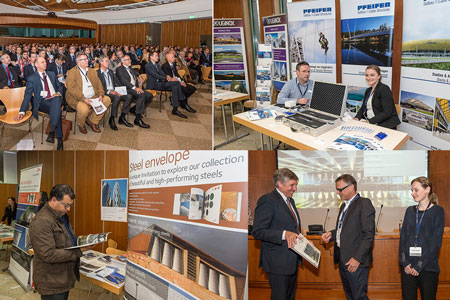
Journée Construction Acier 2017 à Luxembourg
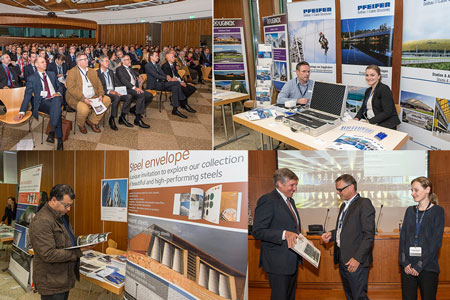
Stolbaudag 2017
- Des exposés variés: L’occasion de mettre à jour ses connaissances
- ExpoAcier: A la découverte de produits innovants
- Le Concours Construction Acier : Une source d’inspiration unique
- Rencontre des acteurs importants du secteur de l’acier
- Les dernières publications sur la construction en acier
La Journée Construction Acier 2017 s’adresse aux maîtres d’ouvrage, les architectes, les bureaux d’études, les constructeurs métalliques, les entrepreneurs, les pouvoirs publics, la distribution, le négoce, l’enseignement,…
Inscrivez-vous ici
Lieu et localisation
Mardi 7 novembre 2017
Chambre de Commerce, Luxembourg-Kirchberg
7 r. Alcide de Gasperi
L-2981 Luxembourg-Kirchberg
Revista Infoacero Septiembre 2017
En el enlace siguiente pueden acceder a la edición de septiembre de nuestra revista Infoacero: Infoacero Septiembre 2017
A continuación algunos de sus contenidos:
- Opinión – D. Rafael González Navarro- Presidente Zona VII UAHE, Miembro Junta Directiva.
- Evolución del Índice de Precios de Productos Siderúrgicos – UAHE.
- Información Asociativa– XIII Fórum de la Distribución Siderúrgica-Barcelona, 26 Octubre.
- Próximos Eventos: “Kallanish Europe Steel Markets- Madrid, 14 y 15 Noviembre” y “X Edición de MetalMadrid- Madrid, 15 y 16 Noviembre”
- Colaboración ASCEM: “Jornada Técnica sobre el Marcado CE en la construcción de estructuras metálicas”
- Previsiones Eurofer: Evolución de los principales sectores consumidores. Consumo Real y Consumo Aparente de Acero en Europa.