

European steel distribution ‘highly fragmented’: EUROMETAL
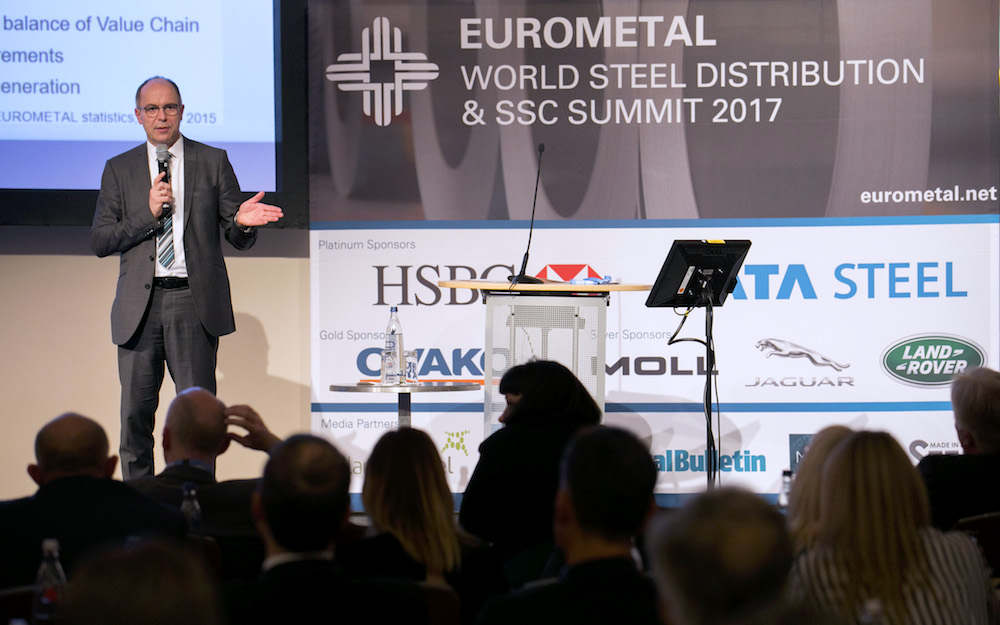
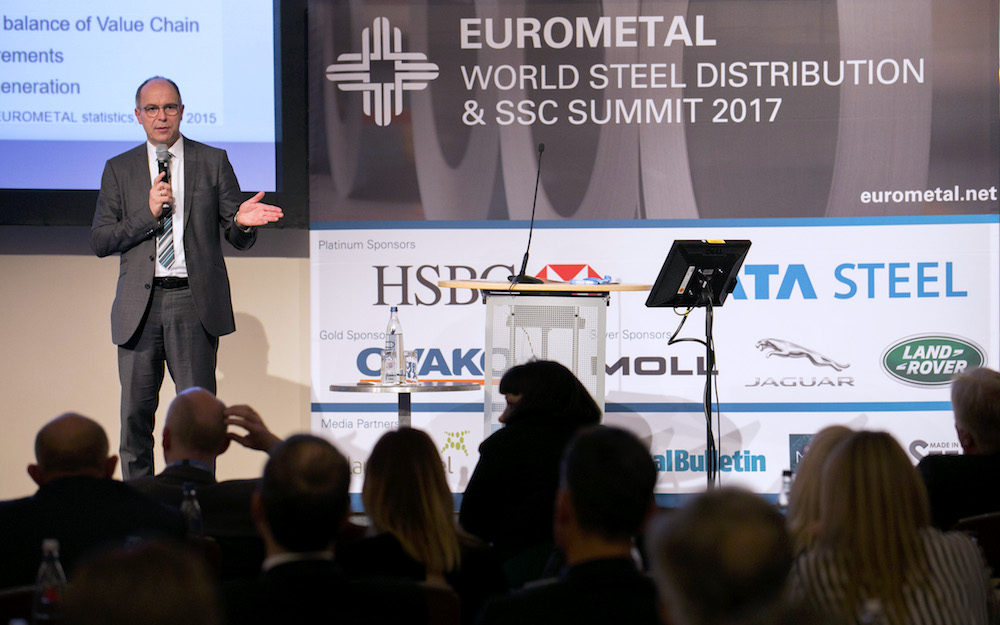
European steel distribution is seeing a trend towards changes in customers’ automotive requirements, while facing overcapacity and a complex structure owing to the co-existence of independent SSCs and mill-tied distribution, said Jens Lauber, President of EUROMETAL and CEO of Tata Steel Distribution, at the EUROMETAL World Steel Summit conference in Duesseldorf Thursday.
Asked in a panel discussion how European distribution compares with other regions, where mills do not establish distribution entities (and where there is a clear split between producer, distributor and customer), Lauber said Europe’s distribution landscape is indeed more complex and complicated, but “the customer side is finally on a good side they can decide on what service they want”.
Of the 80 million mt/year of steel distributed throughout Europe, around 30 million mt is distributed via SSCs, of which a third are mill-tied he said. “An SSC makes sense on its own and it makes more sense that they are independent,” said Josu Calvo, CEO of Gonvarri Services at the discussion, adding there should also be “fair play” within distribution. Pierre de Silly, General Manager of the Edgen Murray Sumitomo Corp., pointed out that the distribution units of mills do function independently.
However, there are other factors that make Europe’s distribution network more complex, according to Lauber. The continent’s distribution is fragmented into regional markets: many regions in Europe have a specific balance in their value chain and each model has to meet end-customers’ requirements, he said.
Calvo highlighted that, although an SSC may have international locations, providing access to new customers, businesses must always act locally. “Being global, you will always compete locally,” he said, suggesting that markets within Europe are not only diversified from a geographical point of view, but must also differentiate within customers’ sectors while a trend towards value-based pricing can also be seen.
Laura Varriale, S&P Global PLATTS
European construction sector improved, but uncertainty looms
The European construction market has seen a reversal of fortunes lately, but overcapacity among the steel producers that serve the sector and political and economic uncertainty will continue to drag on fundamentals for some time, according to speakers at an industry event in Germany.
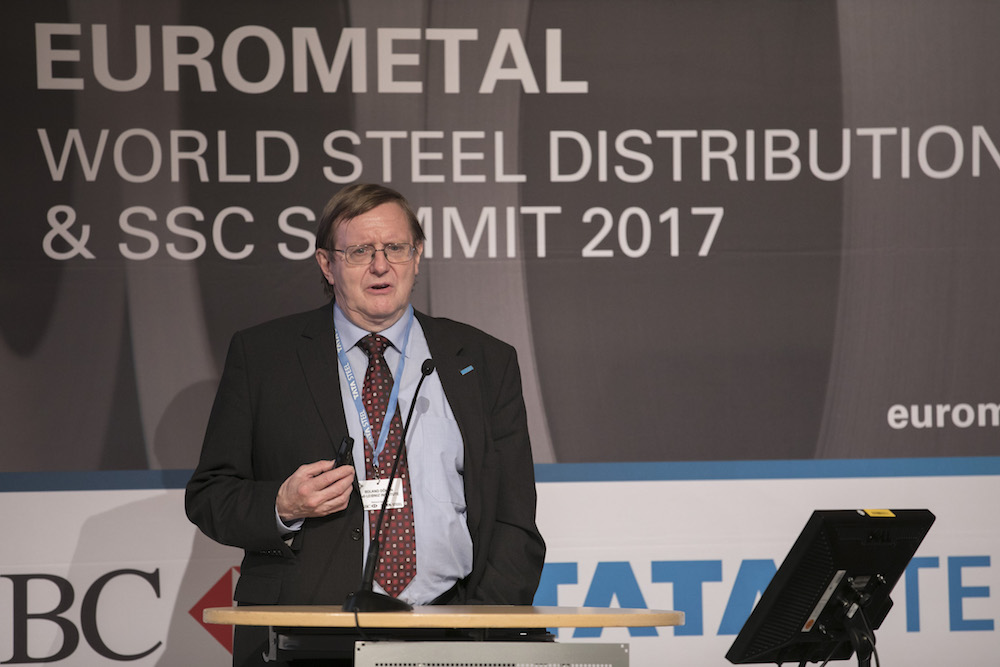
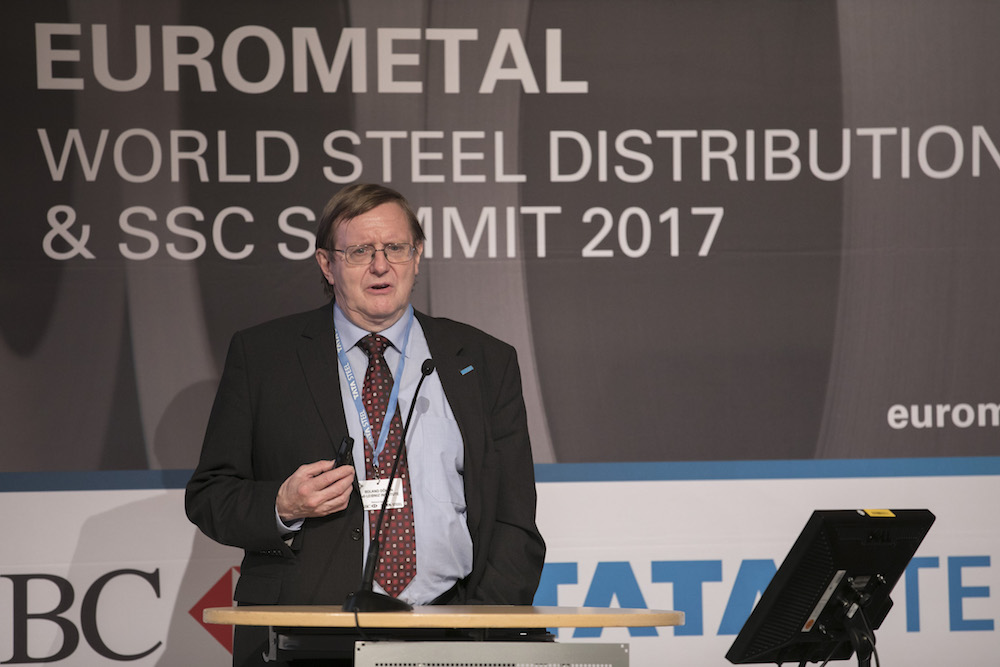
In a presentation Thursday at the EUROMETAL World Steel Distribution & SSC Summit in Dusseldorf, Gareth Beese – strategic development director for construction at British Steel – said construction has seen a progressive recovery in Europe and sentiment within the industry is positive.
Germany, in particular, has benefited from the upturn, according to Roland Dohrn, a professor of economic research at the RWI-Leibniz Institute.
“If you drive around in Germany, you will see a lot of cranes there,” Dohrn said, adding that he worries, though, whether data regarding the upturn is perhaps “a bit too good to be true.”
Margins remain thin for the companies that produce construction products like beams and rebar, and it’s a fragmented market with limited collaboration among participants, Beese said.
“There’s significant overcapacity still,” he said. “Producers have had to get used to operating plants at less than 100%.”
Dohrn said Europe’s economy performed well in the first quarter of 2017, which could underpin an upswing going forward. However, GDP growth for the region is predicted to be only around 1.9% in 2017 and 1.7% in 2018. Traditionally, a minimum of 2% growth has been necessary to stimulate significant additional steel demand and production, and Dohrn said the rule of thumb now has probably risen to even 3-3.5% GDP growth.
Beese said Brexit and its impact also continue to cloud the longer-term picture, not only for steel but from an economic standpoint, as well. “I think there’s a prolonged period of uncertainty for all of us,” he said.
One certainty he hopes for, though, is that Europe and the UK will remain post-Brexit trade partners. “We want and expect continued access to European markets and, quid pro quo, the UK market will remain open to European producers,” Beese said.
Christopher Davis, S&P Global Platts
Mergers present opportunities for smaller players

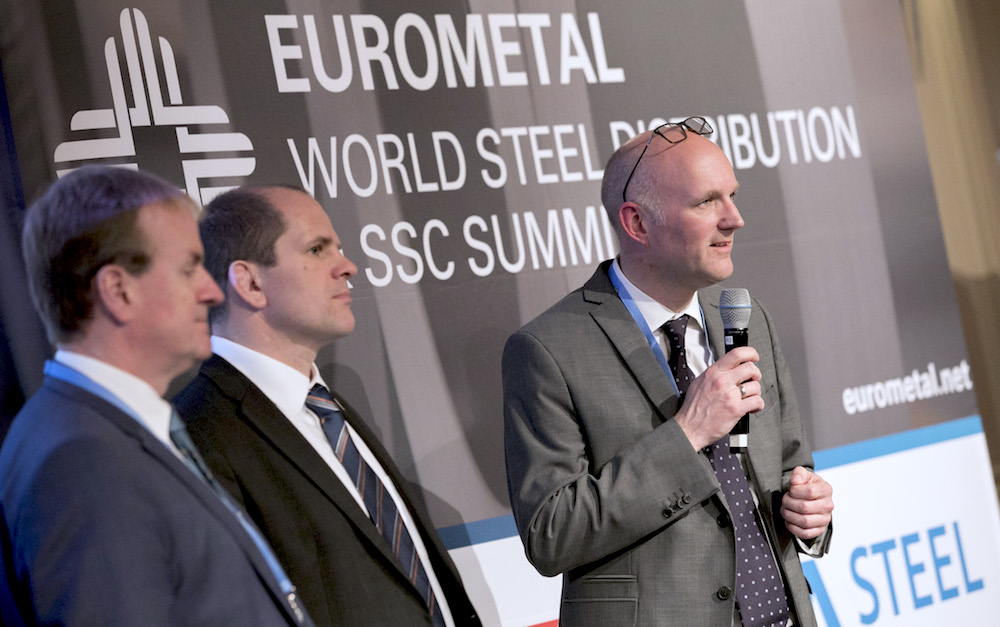
Representatives of some of the smaller European mills have welcomed potential mega mergers in the continent’s steel industry, suggesting there will be benefits to the sector and opportunities for their companies.
ArcelorMittal, Marcegaglia and Arvedi are involved in the final stages of the bidding process to acquire the Ilva works in Taranto, while ThyssenKrupp and Tata Steel are discussing a potential merger in moves most see as crucial to consolidating the European industry.
Speaking at the EUROMETAL World Steel Summit conference in Dusseldorf, Sebastian Bross of Salzgitter said mills like his, with around 5% market share in the strip sector, had already received increased interest as a result of the rumors surrounding competitors. “We would like to have a less fragmented market but if there are some big players there’s always a role for some smaller ones… We recognized that as soon as these rumors began going on about a joint venture between ThyssenKrupp and Tata Steel we saw customers coming to us… It’s no threat it’s actually more a chance for us,” he said.
Henrik Adam of Tata Steel Europe agreed overcapacity and a lack of consolidation was one of the structural issues facing the sector, but declined to say how many producers there should be in the flat steel market, saying: “more than one and less than ten.”
Another source from a smaller European mill agreed with Bross noting their company would benefit from the reduced number of players in the market as competition for business would decrease, while a desire of customers to create as diverse a supply chain as possible should push demand in their direction.
Peter Brennan, S&P Global Platts
EU wants to be a poster child for the WTO: Salzgitter
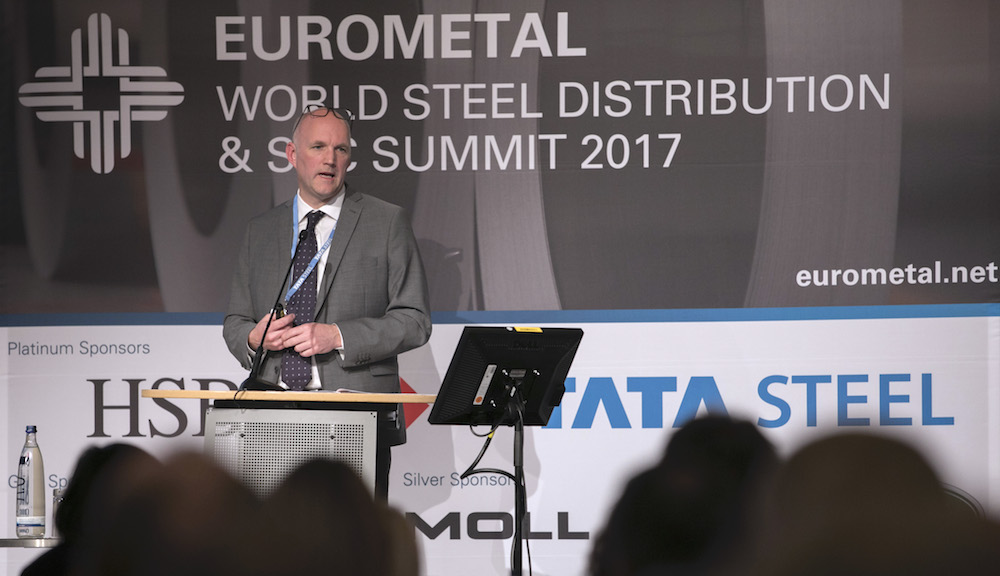
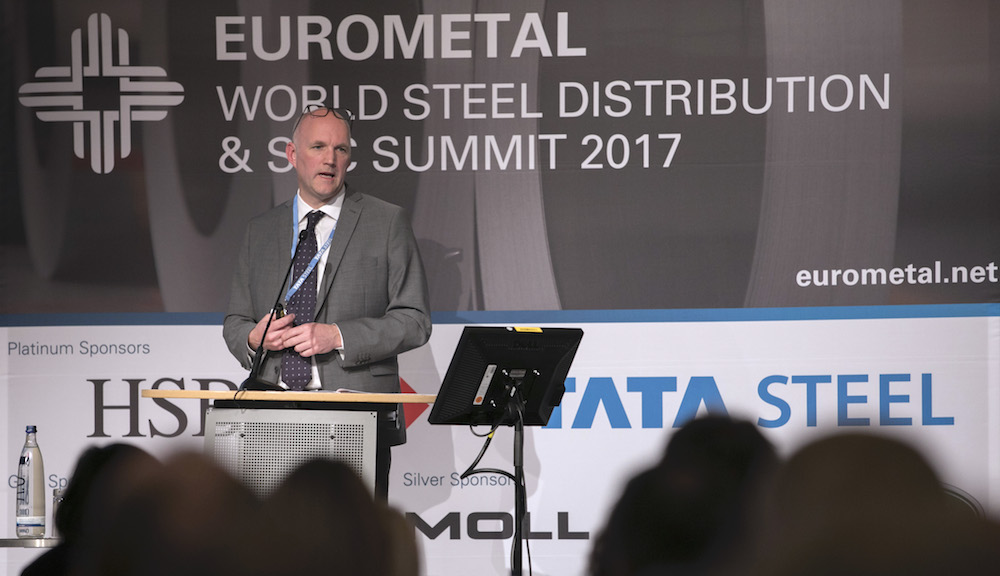
The European Union is too slow and too cautious in tackling dumping, according to Sebastian Bross of Salzgitter Flachstahl, who told the EUROMETAL World Steel Summit conference in Dusseldorf he did not understand the decision not to impose preliminary HRC duties.
Bross said the difference between the EU and the US was stark in its approach to trade barriers, pointing to the European Commission’s logic in making its conclusion to its preliminary investigation into imports of HRC from Russia, Brazil, Iran, Ukraine and Serbia.
“240 of the 250 pages showed there was dumping, but in the end there was no duty. I don’t really understand that… Compared to the US it’s slow, very limited, and from our perspective far too cautious. It feels that the EU wants to be a poster child for the WTO. We accept every rule and we’re pretty fair, but it means it takes a very long time [to impose duties] and you see how quickly this flow of material changes,” he said.
The launching of a section 232 investigation in the US has made European mills nervous as the US is a major export destination for the continent. Bross pointed out the potential distortions to global trade if the US stops importing and the implications for the European market, “Where does the material go, where does it find its new home? If you look at the slow progress in the EU you can assume it will end up here,” he said.
Salzgitter is benefiting from the good performance in the automotive sector which accounts for two thirds of its annual 3.3 million mt of strip production. But Bross said pressures remain as construction and tube demand is still weak and growth in European steel demand is benefiting importers rather than the domestic producers.
Peter Brennan, S&P Global Platts
European buyers require established imports: Macrometal
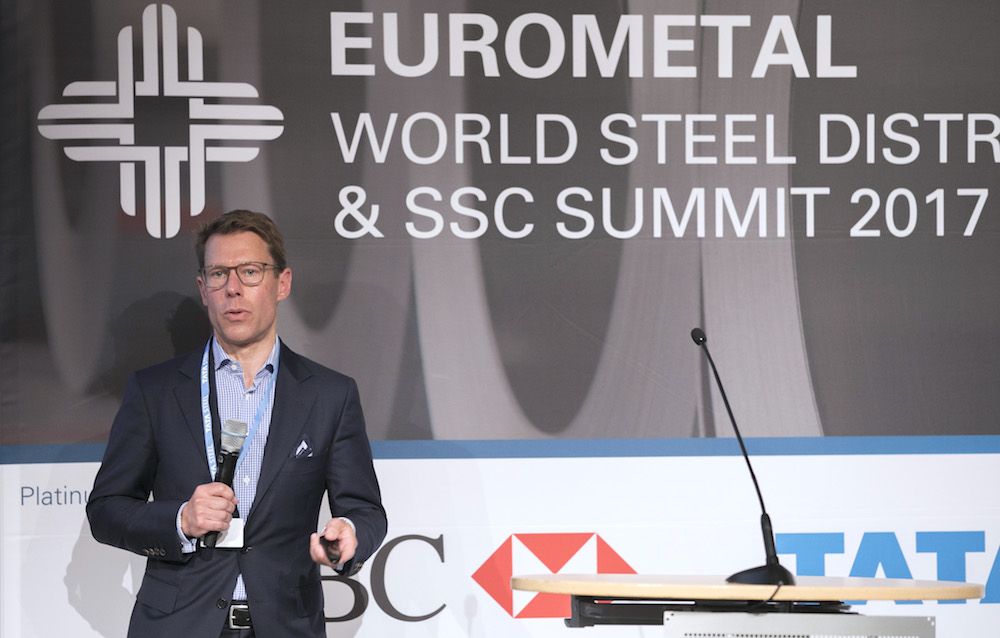
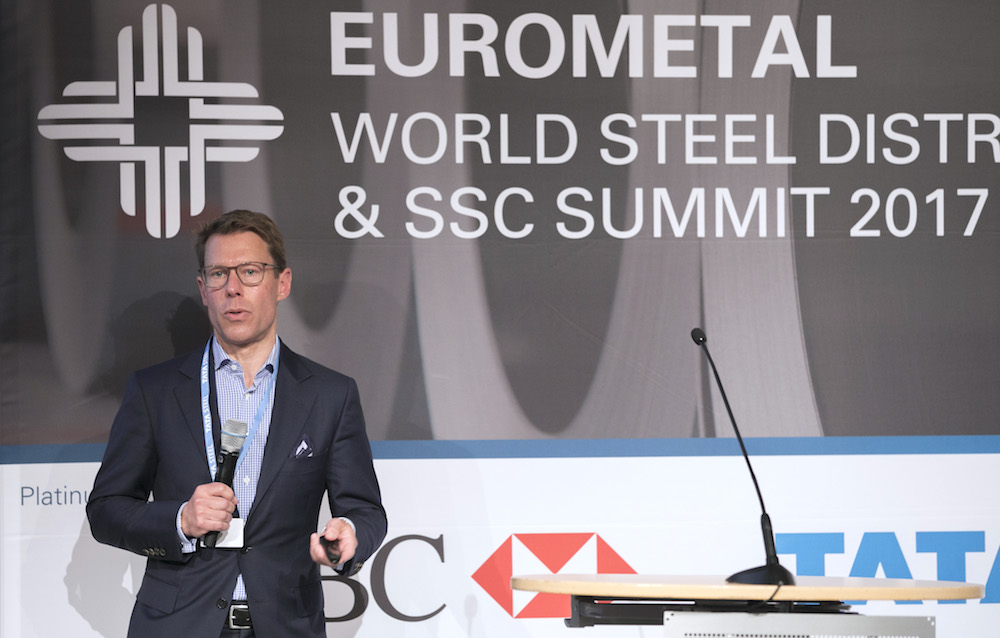
European import buyers purchased a lot of strip material from established suppliers China and Russia in the fourth quarter of 2016, despite ongoing anti-dumping duties and imposed duties, Alexander Julius, CEO of Macrometal, said at the EUROMETAL World Steel Summit conference in Dusseldorf Thursday.
“Despite accusations and ongoing accusations, imports have increased dramatically for metallic coated flats,” he said. As domestic suppliers were eyeing increases in the second half of the year, buyers turned to Russia and China to cover their requirements in the event of further increases, he said.
In fact, buyers bought more material than required, resulting in currently high stocks throughout Europe, he said.
While trade measures help create a level playing field, “excessive” action cause an uncertain environment for steel-using industries, according to Julius: in its current investigation into HRC imports from Brazil, Iran, Russia Serbia and Ukraine, the European Commission refused to impose provisional duties that would harm end-users.
“Established sources such as Russia cannot easily be substituted. They have become an integral part of EU manufacturers’ business model and competitiveness,” he said, suggesting import sources are essential as domestic mills are not prioritizing commodity grades.
“How can European manufacturers make a proper business planning with uncertain availability?” he asked, drawing up a worst case scenario in which manufacturing would have to partly move out of the EU.
Julius also questioned whether hot-dip galvanized tonnages from investigated countries could be supplied by domestic mills at competitive “transparent” price levels, pointing to the current move by mills towards effective pricing by removing extra price lists and giving a “custom-made” price. “It is very difficult for end-users to know where these effective prices are coming from,” he said.
He also alluded to defense measures elsewhere, such as the US, hurting European exporters. “We don’t only have a problem with imports, but also with exports.”
Laura Varriale, S&P Global Platts
EC may have cut countries from ADD investigation: sources
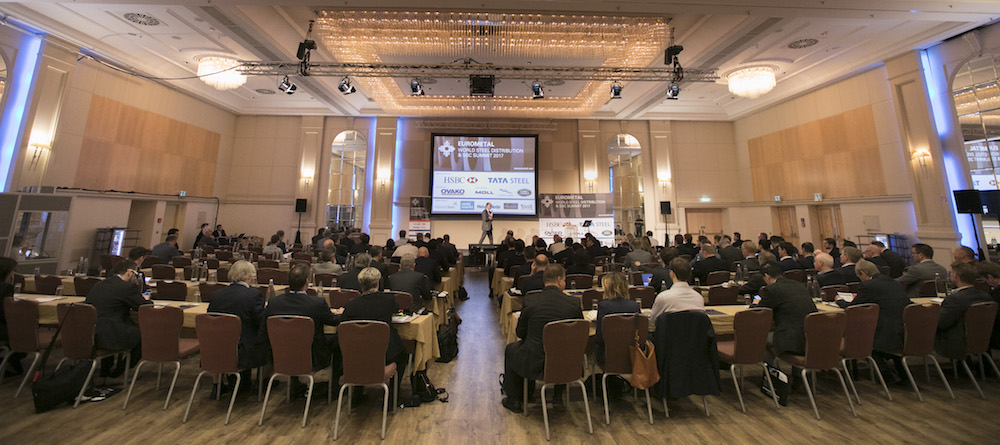
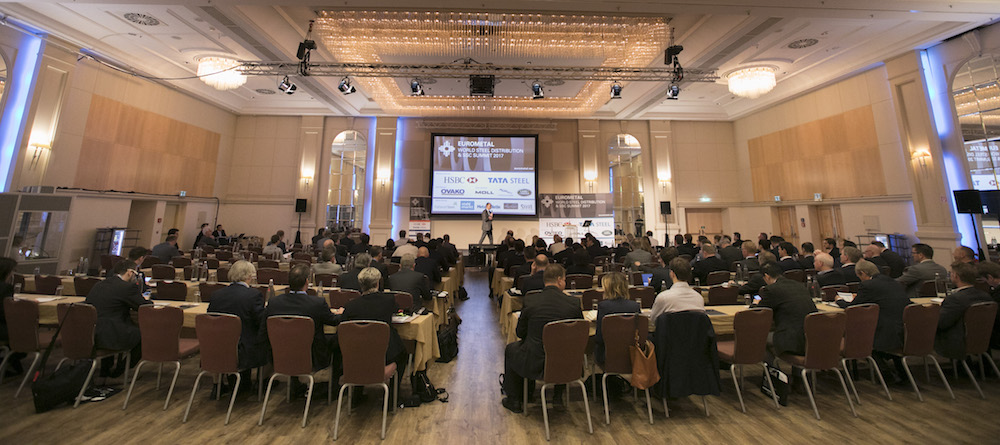
Serbia and Iran may have been removed from the European Commission’s investigation into hot rolled coil imports, according to sources attending the EUROMETAL Summit in Dusseldorf.
“The investigation is still ongoing. No decisions have been taken at this stage, so no comment from us at this point in time,” Kinga Malinowska, Press Officer for Trade at the European Commission, told S&P Global Platts via email Thursday.
Charles de Lusignan, Communications Manager at European steel producers’ association Eurofer, said the organization heard that Serbia could have been excluded, but had nothing to suggest this was the case for Iran.
When the European Commission said earlier this year it would not impose preliminary duties on imports from Brazil, Iran, Serbia, Russia and Ukraine, it said Serbia should not be cumulatively assessed with the other four countries: it was barely over the minimum market share threshold, at 1.04%, and average selling prices were considerably above the other countries in the investigation period, the commission said.
“It follows that protective measures are unnecessary with regard to the imports of HRF originating in Serbia,” the commission document, seen by Platts, said. At the time the commission also refused to comment on whether this meant Serbia had been excluded.
One legal source said Thursday it was evident from that document Serbia would be removed from the case. He also said the deadline for announcing definitive dumping duties could have been brought forward from October to August, though this could not be confirmed.
Serbia being removed from the case may have raised some eyebrows, as Chinese-owned mill HeSteel is said to be the most competitive player in the European market of late: recent offers have been heard at €470/mt delivered into south Germany and €485/mt delivered Ruhr, both of which are way below the €530-€540/mt ex-Ruhr level being quoted by western European mills.
Nevertheless, sources noted Serbia is a small player with limited volume impact, and many were surprised it was even named in the dumping investigation.
Most point to the reappearance of significant volumes of Russian HRC in the Antwerp import market as a more significant result of the European Commission’s decision not to impose preliminary anti-dumping duties. When announcing it would not impose duties, the EC said duties could have harmed end-users, as reported.
Peter Brennan, Annalisa Villa and Colin Richardson, S&P Global Platts
Ovako promotes machinable steels to distribution sector
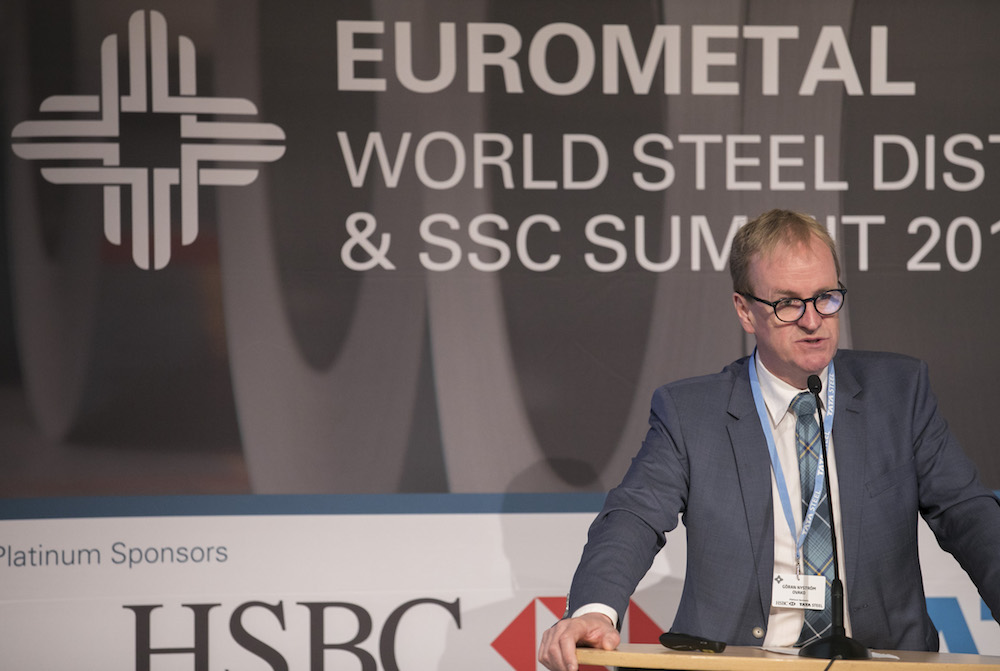
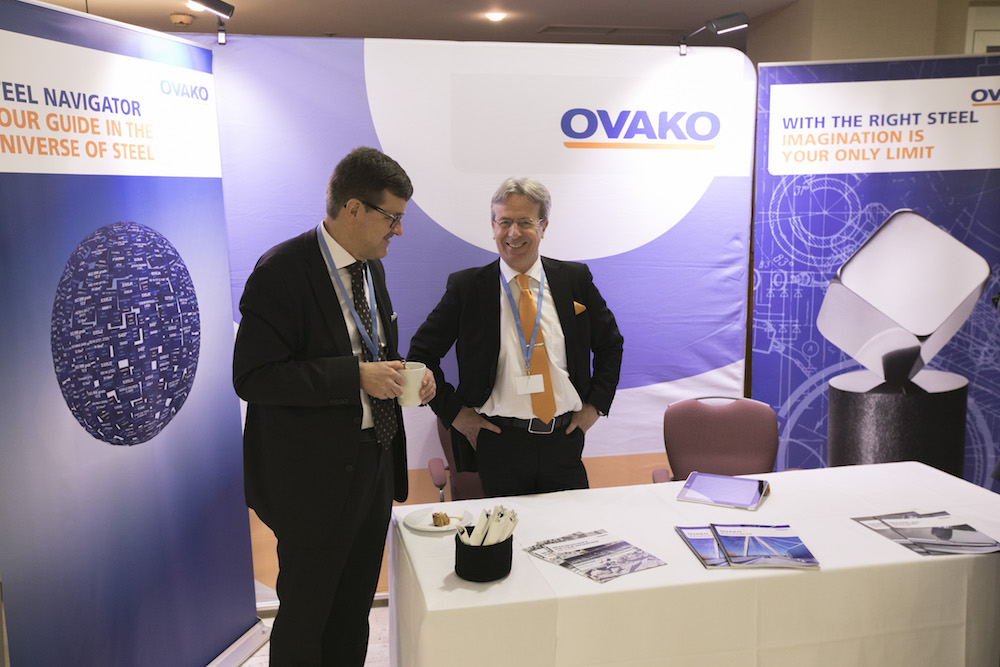
Ovako is promoting its steel treatment technology for improved machinability as an example of an opportunity for distributors to participate in the value-added chain from an early stage.
The philosophy of the Swedish engineering steels producer was delivered by vice executive president and head of group marketing, Göran Nyström, at the recent EUROMETAL World Steel Summit in Düsseldorf, attended by Kallanish. Ovako continues to sell 85% of its production to end-users, “… but we would like to change that,” Nyström told the audience of mainly distributor and service centre managers.
Ovako faces the difficulty of having to service a wide range of customers with very different requirements for the special steels produced by the company. Such a delivery challenge for a mill “… brings opportunities for you distributors [… to act] as a buffer,” he said.
Nyström highlighted the role of Ovako’s M-Steel (M for ‘machinable’) as an example of [… potential] closer cooperation with distributors. The basis for the M-Steel concept is that non-metallic inclusions in steel are modified and controlled with calcium treatment. These inclusions are modified in a way to maximise machinability and to improve transverse fatigue strength. In this way, a protective layer is formed on the cutting tool during machining that very significantly reduces the wear on the tool and increases tool life.
The M-Steel concept allows 30% faster throughput for machined components, and can extend cutting tool life by 50%. “Tool suppliers are not keen to promote us, it takes half of their market,” Nyström quipped, and closed with the remark that “… we need distribution services to bring this innovation outside the Nordic region.”
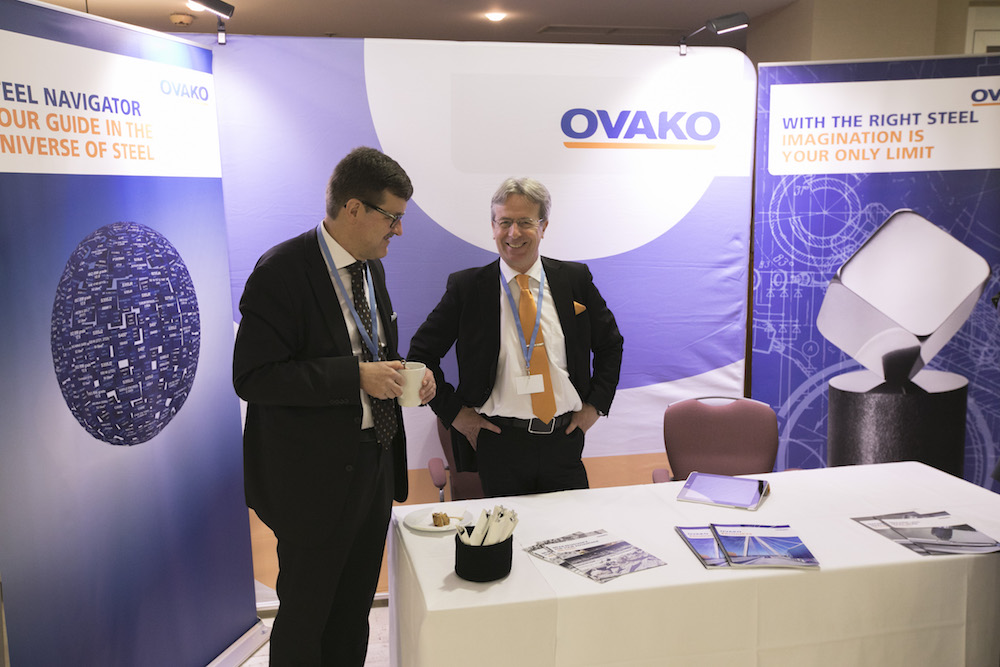

Die globale Entwicklung des Stahlhandels

Die Tagung, die der europäische Verband für die Distribution von Stahl, Rohr und Metall, EUROMETAL, vom 10. bis 12.5. veranstaltet, soll alle Beteiligten an einen Tisch bringen: Stahlkunden und -händler, Stahl-Service-Center, Stahlerzeuger und -weiterverarbeiter sowie Logistiker, Finanziers, Risikomanagement und Softwarelieferanten.
Beleuchtet werden in der dreitägigen Konferenz die Herausforderungen, Risiken und Chancen der globalen Stahldistribution wie Überkapazitäten und -angebote, steigende Handelsbeschränkungen etc. Namhafte Referenten sind in Düsseldorf zu Gast, um ihre kompetenten Einschätzungen abzugeben. Zahlreiche Vorträge sind am zweiten Konferenztag geplant: Neben den Handelsbeschränkungen und deren Auswirkungen auf den Stahlhandel referieren die Teilnehmer über die verschiedensten Geschäftsmodelle, mit denen sich der Stahlhandel in aller Welt beschäftigt. Außerdem stehen Sicherheits- und Gesundheitsaspekte ebenso auf der Agenda wie Preisfindung für Dienstleistungen und die Digitalisierung in den Unternehmen.
Mit der Besichtigung einer der Marktführer für kaltgewalzte und galvanisch veredelte Stahlbänder, der Tata Steel Hille & Müller in Düsseldorf, endet die Veranstaltung am dritten Konferenztag.
https://eurometal.net/summit2017/

Euro zone manufacturing PMI hits six-year high
Manufacturing continued to strengthen in April with the flash Markit Purchasing Managers’ Index for the euro zone reaching 56.8, as output, new orders and employment all rose at the quickest rate in six years.
Steel demand has been slow and steady of late with service centers not active in the booming automotive sector noting the tendency of end-users to hold off from purchasing. However, it would appear that the wider manufacturing sector is going from strength to strength which should indicate demand for steel will improve.
At 56.8 the index was up on the 56.2 recorded in March despite input prices remaining elevated. Markit noted growth in all of the monitored countries except Greece (48.2). Germany recorded the strongest growth with its PMI of 58.2 well in excess of the 50 mark of stability. Austria (58.1), Netherlands (57.8), Italy (56.2), France (55.1), Ireland (55.0) and Spain (54.5) also achieved good results.
“Companies are benefitting from the historically weak euro, improved growth in key export markets, rising domestic demand and ongoing central bank stimulus including record-low interest rates,” according to Chris Williamson, economist at IHS Markit.
Brexit also appears not to have had a huge impact in the UK where the manufacturing PMI of 57.3 was a three-year high. The stronger global market conditions, combined with a significantly devalued sterling, continued to benefit exports, while manufacturers have seemingly been able to pass on increased input costs to their customers.
Peter Brennan, PLATTS

Stahlo expands slitting capacity to 300,000 mt/y in Gera

German independent steel service center Stahlo is expanding its Gera-based facility and will double its slitting capacity to 300,000 mt/y, the company said in a note on its website.
Stahlo, which is part of the Friedhelm Loh Group, will invest €45 million in a new 22,000 square meter production hall and has bought additional land neighboring its existing Gera site which opened in 2004.
With an additional slitter, the site will be able to slit up to 60 strips in one step with a tear strength of 1,900 Newton per square millimeter. Stahlo will also process aluminum with an additional contour cutting line in future. The planned opening is scheduled for early 2019.
The expansion also involves creation of a direct railway connection. “We are almost exclusively shipping our outgoing goods via truck, but in future we want to handle up to 80% of incoming goods via rail,” said managing director Guido Spenrath.
The Gera site caters primarily for the automotive industry and auto suppliers such as VW in Zwickau as well as the white goods industry. Stahlo’s portfolio ranges from slitted coils, cut-to-size sheets, standard sheets, blanks and contoured blanks.
Laura Varriale, PLATTS