


ArcelorMittal Cln bilancio positivo della Jv
Viganò: «la joint venture con Itla Bonaiti sarà invece operativa dal primo luglio»

RHO (MI) – «La distribuzione da centro servizio coils ha vissuto un primo quadrimestre caratterizzato da volumi di vendita sostanzialmente stabili rispetto al 2016, consuntivando una buona marginalità unitaria, soprattutto grazie al prezzo di ingresso favorevole dei coils da processare, acquistati durante il quarto trimestre 2016».
Così lCesare Viganò, Managing Director della joint venture ArcelorMittal Cln Distribuzione Italia, commenta a Made in Steel l’inizio dell’anno.
«La buona performance in termini di marginalità è però purtroppo terminata nelle ultime settimane, con una marcata contrazione dovuta all’effetto combinato di prezzi di entrata maggiori ed ai prezzi di vendita da SSC più bassi».
L’ingegner Viganò traccia poi un quadro della JV siglata nel 2015 con ArcelorMittal «che in questi primi mesi del 2017 ha consuntivato i medesimi trend della distribuzione, anche se con una minore attitudine speculativa in fase di acquisto coils – afferma -. Stiamo tuttora cercando il miglior equilibrio possibile tra volumi e prezzi di vendita, per difendere i valori necessari di marginalità, a copertura dei costi complessivi di funzionamento. In termini generali, a circa due anni dalla partenza della JV, siamo soddisfatti del cammino fatto, seguendo finora le tappe previste dal business plan iniziale, che ha ancora circa dodici mesi per il suo completamento nelle varie aree di attività».
L’ing. Viganò riserva poi uno spazio per commentare l’acquisizione del ramo d’azienda di Vertek /Condove della ex Lucchini: «Stiamo procedendo secondo i tempi e le modalità previste dall’accordo – dichiara -, che vedrà come prima fase l’ufficializzazione di un bando della Procedura, teso alla vendita degli assets produttivi, che ricordo non essere stati acquistati dal Gruppo CLN. Infine, stiamo completando l’iter che ci porterà alla creazione della JV Itla Bonaiti, leader nel settore della rilaminazione degli acciai ad alto carbonio/legati, dopo avere esaurito le fasi di due diligence e la stesura degli accordi di governance. Ad oggi, prevediamo per il primo luglio l’inizio della attività della JV».
Stefano Martinelli, siderweb.com

Ilva sale hits new obstacle: reports
The long drawn-out process for the sale of troubled Italian integrated steelmaker Ilva has hit a new problem according to reports from mainstream Italian media sources.
Kallanish understands that executives from the European Commission sent a letter in early April to warn the participants in the bidding process that the authorities will look carefully at possible antitrust issues. This letter has raised some concerns as one of the two bids on the table is led by the largest European and global steelmaker, ArcelorMittal, as reported.
In response to the letter from the Commission, the administrators are reported to have asked the two consortia currently involved in the bidding process to allow further delay in making the decision. The delay could mean shifting the deadline to the first quarter of 2018, but this possibility has not yet been confirmed.
According to local newspapers, a new delay can only be possible if the bidders accept this formally and agree to maintain their bids in the months leading up to the decision.
As reported, the market was widely expecting the administrators to announce the winner of the bidding process for Ilva by the end of June this year.
Section 232 hearing brings global issues to Washington
A who’s who of the global steel industry spoke Wednesday in Washington, DC, regarding the US’ launch of an investigation into the security needs of the domestic steel industry, Kallanish reports.
The so-called section 232 investigation hearing featured comment from a variety of US steel mill executives – including executives from US Steel, Nucor, ArcelorMittal USA, Steel Dynamics Inc and AK Steel – as well as trade groups and representatives from the governments of China, Russia and the Ukraine.
Two main views emerged from the domestic groups represented at the hearing. Domestic primary steel producers espoused the need for strong protectionist measures to ensure stable steel supply and national security, while domestic steel traders and end-users said distorting US involvement in the global market will limit topline growth and possibly spark retaliatory measures from other countries.
“As one of the most open markets in the world, the United States is often the target of dumping by steel producers from countries around the world. In many cases, these foreign producers are also subsidised by their governments,” says American Iron and Steel Institute (AISI) ceo Thomas Gibson. AISI represents the bulk of domestic primary producers.
“To date, the US steel industry has relied on our trade laws to seek to address the impact of unfairly traded steel imports in our market,” he adds. “While the anti-dumping and countervailing duty laws have provided some relief, because the resulting orders are necessarily country and product specific, they leave openings for steel products not subject to orders to continue to surge into our market.”
Gibson’s testimony was countered by international trade counsel Gary Horlick of the American Institute for International Steel, which represents US importers.
“Finally, it is impossible to ignore the certainty that other countries will retaliate against US exports,” says Horlick in his testimony. “Let’s start with the obvious – the United States is the largest exporter of military equipment in the world, selling over $20 billion annually in recent years. But we have competitors for almost all our products – Russia is second, for example. This affects not only the jobs that are dependent on exports, but the entire economics of our defense base. The economics of great airplanes like the F-35 or the F-22 do not work unless they are sold to some of the same countries whose steel this proceeding might limit from entering the US.”
Horlick also noted that the US is relatively poor in iron ore, and domestic production cannot be indefinitely sustained without resorting to iron ore imports. Pro-actively shutting off steel imports could ultimately hurt national security if retaliatory iron ore export restrictions are eventually imposed by targeted countries.

NASS Steel Industry Safety and Health Awareness Day – 21st June 2017
Wednesday 21st June 2017
EEF Technology Hub
3, Nexus Point, Gavin Way, Birmingham B6 7AF
The National Association of Steel Service Centres (NASS) in conjunction with the Health and Safety Executive (HSE), Wolverhampton City Council and EEF, The Manufacturers Association are hosting our annual Safety and Health Awareness Day (SHAD) aimed at tackling common health and safety issues in the Steel Service Centre and Stockholding Industry.
WG Training Ltd. will be talking to delegates about managing safely with particular focus on communication and impact. NASS will be looking at changes in the revised HSG 246, written in conjunction with the HSE and Wolverhampton City Council which will be the main point of reference for HSE Inspectors investigating Steel Service Centres facilities going forward.
The HSE will also give an overview of The HSE Inspection Campaign for 2017 and the HSE agenda for metals manufacturers for 2017, with a brief look at FFI and sentencing.
EEF and SHE Ltd. will be looking at identifying and negating hazards during lifting operations including Safety Codes of Practice for various types of cranes and mobile equipment, the use of chain and rope and sling identification, safe working loads and use of crane controls.
The HSL will be looking at falls from vehicles with consideration for negating trip hazards and root cause behaviour. Understanding the science behind slips and trips makes it easier to identify the true cause of a fall and prevent future incidents and this session will be highlighting successful interventions that offer a great starting point for organisations looking to reduce falls.
All sessions will involve practical demonstrations or case studies in a group scenario to give delegates an opportunity to share and learn.
The fee for this event is £50 for NASS Members and £65 for non NASS Members

Invitation to NASS Safety and Health Awareness Day 2017 – PDF
For further information and to book your place, please contact:
Joy Graham joy.graham@nass.org.uk
or follow the link NASS Safety and Health Awareness Day 2017

The Supreme Spanish Court of Justice obligates the Ministry to recognize the French Quality Mark NF for ribbed bars.

After more than 4 years of administrative procedures and legal disputes with the Technical General Secretariat of the Ministry of Public Works to recognize the French Quality Mark NF ( international and of maximum prestige ) for ribbed bars, the Supreme Court has concluded the subject.
The continued refusal of the Technical General Secretariat (in clear breach of the EU Court of Justice Sentence in 2012 and of European Regulations 764/2008 and 765/2008) generated a long process that ended in two Sentences of the Superior Court of Justice of Madrid ( Spain ) in 2014.
The Ministry appealed to the Supreme Court of Spain, which led two other Sentences in 2017, condemning the Administration and the possibility of any subsequent appeal.
Both Sentences obligate the Technical General Secretariat of the Ministry of Public Works to recognize the French Quality Mark NF for ribbed bars , used for the reinforcement of concrete.
The economic advantages of the NF Mark Recognition for ribbed bars are recognized in the Spanish Structural Concrete Standard (EHE-08): Reduction of safety coefficients in the structural calculation and Reduction of quality control tests, which represents a significant saving in cost and time
Rafael Bueno
Technical Manager
ASIDAC (Importers and Distributers Association of Steel for Construction)
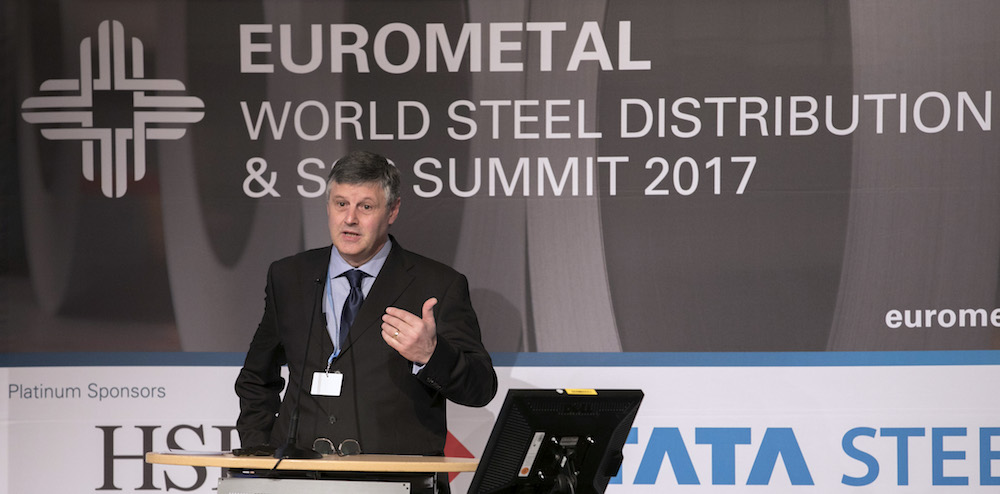
EUROMETAL: Die Zukunft in Sachen Stahl
Das EUROMETAL Summit vom 10. bis 12. Mai in Düsseldorf vermittelte den Teilnehmern einen aktuellen und substanziellen Einblick in aktuelle Trends der Stahlbranche. Dr. Edwin Basson, Generaldirektor der World Steel Association, zeichnete aus Sicht der Fachgesellschaft die wichtigsten Herausforderungen nach.
Noch mehr Kreislaufwirtschaft
Dieses Konzept wird nach Einschätzung von Basson weitere Verbreitung finden. Es lässt sich kurz mit „4R“ umschreiben: Reduce, Reuse, Remanufacturing, Recycle. Dahinter verbirgt sich ein Konzept der Nachhaltigkeit; es geht darum, den Rohstoff Stahl effizienter einzusetzen. So werden Produkte nicht mehr nur neu entwickelt, sondern weiter optimiert und neue Anwendungsmöglichkeiten geschaffen (reduce). Oder die Produkte werden in völlig anderer Funktion verwendet (reuse) beziehungsweise durch Veränderungen oder Veredelungen zu neuen Produkten verarbeitet (remanufacturing). Das Recycling von Stahl ist ein bereits lange bestehendes Konzept, das letztlich zu einer geringeren Nachfrage von neuem Stahl führt und recycelfähigen Stahl noch wertvoller macht. Neue Anwendungen innerhalb dieser Kreislaufwirtschaft zu entwickeln sei eine große Chance für Unternehmen, hieß es. Sie machen auf der anderen Seite auch die latenten Überkapazitäten sichtbar.
Der Wert der Digitalisierung
Die Schlagworte in der Schwerindustrie heißen hier: Automatisierung, Konnektivität, integrierte Lösungen, globale Wertschöpfungsketten. Auch wenn das zu einer Intensivierung des weltweiten Wettbewerbs führt, so überwiegen doch eindeutig die Chancen, die für jene, die quer denken, vor allem in neuen Geschäftsmodellen liegen.
Darüber hinaus wirkt sich die Globalisierung als dritter Megatrend auf die Stahlbranche aus: Langfristig – das wurde auf der Eurometal Tagung deutlich – werden nur Unternehmen überleben, die ihre Wettbewerbsposition global behaupten können.
Quelle: marketSTEEL
EUROMETAL MILAN: Italy’s service centre shipments up in Q1 2017 but lag EU average
Shipment volumes from Italian steel service centres (SSCs) increased by 0.60% year-on-year in the first quarter of 2017, European steel trade federation EUROMETAL said at its regional meeting in Milan, Italy, on Thursday May 18.
This compared with an EU average growth of 2.50% over the same period. However, shipments in Austria, Germany, The Netherlands and Belgium rose by 8.30% year-on-year in January-March.
Italian SSC shipments of hot rolled flat products fell by 3.40% year-on-year in the first quarter of 2017, compared with average growth of 0.70% year-on-year for the 28 EU member states.
Shipments from Austria, Germany, The Netherlands and Belgium of hot rolled flat products increased by 8.50% year-on-year in January-March.
Italian SSCs showed a year-on-year increase in shipments of both cold rolled flat steel products (3.20%) and galvanized and coated flat steel products (4.0%) in the quarter.
However, this lagged behind the EU average year-on-year increases of 3.50% and 4.0%, respectively.
Shipments from Austria, Germany, The Netherlands and Belgium of cold rolled flat steel products (up by 7.50% year-on-year) and galvanized and coated flat steel products (up by 8.40% year-on-year) were also strong in January-March.
Viral Shah viral.shah@metalbulletin.com
EUROMETAL MILAN: EU trade cases lead to 51% fall in related steel imports
Trade cases opened by the European Commission (EC) have led to a fall in steel imports from the exporting countries under investigation, European steel trade federation Eurometal said at its regional meeting in Milan, Italy, on Thursday May 18.
Steel imports related to EU trade cases totalled 1.514 million tonnes in the first quarter of 2017, according to Eurometal. If extrapolated to a full year, this would equate to 51.33% drop from a total of 12.442 million tonnes in 2015.
Imports of hot rolled coil (HRC) from China into the EU fell by 30.65% year-on-year to 1.03 million tonnes in 2016, from 1.49 million tonnes in 2015, after an anti-dumping investigation was initiated in February 2016 and provisional duties were imposed in October 2016.
Chinese HRC imports fell further ahead of the imposition of higher definitive duties on April 6, 2017. Imports fell sharply to 4,900 tonnes in the first quarter of 2017, compared with 336,000 tonnes in the corresponding period of 2016.
The EC decided not to impose preliminary duties on imports of HRC from Brazil, Iran, Russia, Serbia and Ukraine, it said on April 10.
Imports of HRC from Brazil increased by 14% year-on-year to 657,900 tonnes in 2016, and by 19% year-on-year to 2.03 million tonnes from Russia in 2016, Eurometal said.
However, imports have fallen sharply since the EU implemented a ruling on January 6 that all imports of HRC from Russia and Brazil must be registered on arrival in the region, Eurometal added.
The EC’s decision not to impose provisional duties reduced HRC prices by €40-50 ($45-56) per tonne, according to Antonio Gozzi, president of Italian steel federation Federacciai.
Gozzi was speaking at the Made in Steel 2017 conference, which is taking place alongside Eurometal’s regional meeting in Milan.
Metal Bulletin’s price assessment for EU domestic HRC ex-works Southern Europe was €500-515 ($557-573) per tonne on May 17, down from a one-year peak of €530-550 ($590-612) per tonne on March 1.
“The EU already has the tools – that is, provisional duties. Nobody is calling for [further] protective measures, but Europe should hurry up,” Gozzi said.
“Northern European deindustrialised countries, for example, are not affected by this issue, which is reducing steelmakers’ profitability. Currently, we see a $150 per tonne price gap between the USA and Europe,” he added.
Increased demand in the EU’s steel markets in 2016 was soaked up by a growing volume of imports to the region, steel association Eurofer said in its annual report on May 17.
The EU steel market expanded by 3.20% in 2016, but imports increased by 9% over the same period, which prevented domestic steelmakers from taking advantage of the sector’s growth, the trade group said.
Viral Shah viral.shah@metalbulletin.com
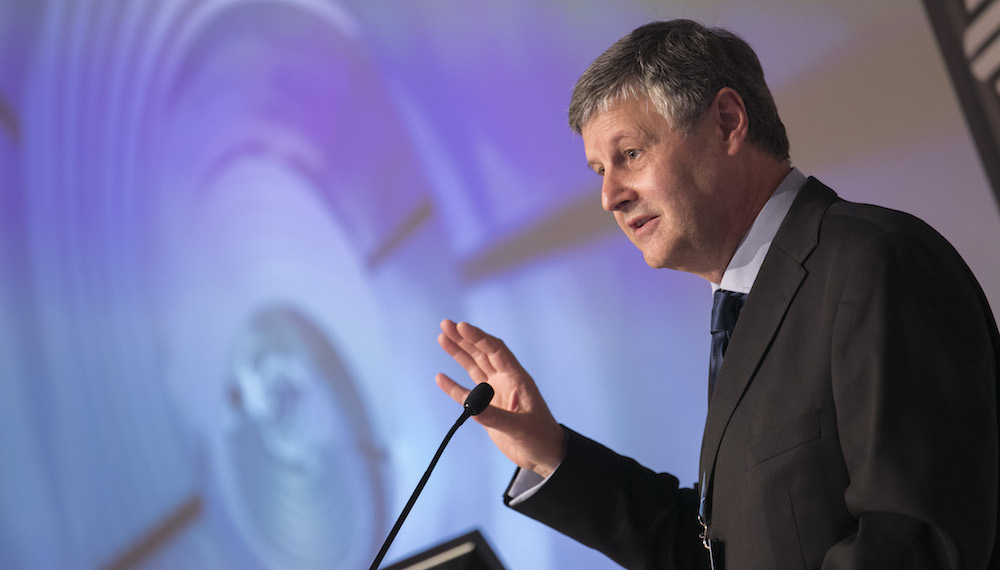
Global industry at ‘inflection point’: Basson
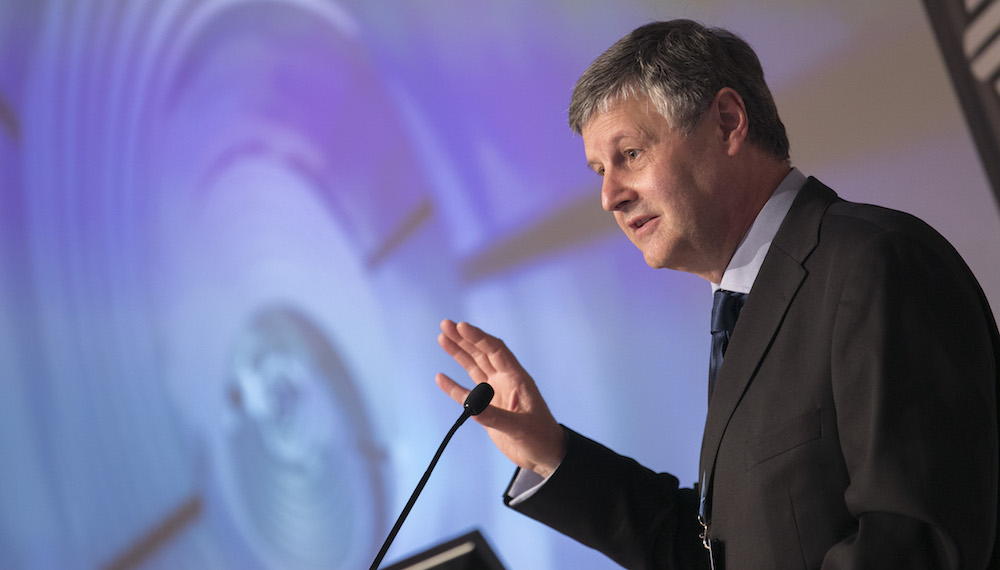
The global steel industry has reached “an important inflection point” that requires steelmakers to consider new strategies to survive, according to World Steel Association Director General Edwin Basson.
Speaking Thursday during the EUROMETAL World Steel Distribution & SSC Summit in Dusseldorf, Basson said current global installed steel capacity — at some 2.39 billion mt — is already enough to meet supply requirements through 2035.
Finished steel demand is likely to be around 1.535 billion mt in 2017, up only 1.3% from the previous year, and nearly 1.549 billion mt in 2018, an increase of 0.9% year on year, according to worldsteel. Strong steel demand growth in developing countries will offset stabilizing demand in developed economies, but it means mostly flat overall global demand for likely the next two decades or more, Basson said.
Combine those factors with declining trends in steel use — due in part to increased production of high-strength, lightweight steels and a sharper focus on reuse and recycling — and the outcome is clear. “We believe that steel demand, in terms of volume, has reached an important inflection point,” he said. “It will continue to grow, but the growth … is going to be much slower than it has been in the past two decades.”
Basson said a ton of steel remains in use for an average of 47 years in Europe, 44 in the US and less than 40 in China. The global average is around 45 years. With technological improvements resulting in less steel being required in many applications and yielding longer lifespans for the material, those averages are likely to increase, he said.
“If it’s only five years that we’re extending the life of steel, it means that we’re pushing that demand forward five years,” Basson said. “As steelmakers and users of steel, we should begin to plan around this [knock-on effect].”
In addition, as emerging economies have developed their own domestic steel industries and global overcapacity has pushed tons into the export market, trade case filings in the US and Europe, in particular, have increased in volume in recent years. Basson cautioned that such a strategy is unlikely to be sustainable.
“Protectionism can help us in the short term … but it cannot in the long term provide stability in an industry that is driven by global forces,” he said.
Christopher Davis, S&P Global Platts
€500/mt likely to be the cut off point for HRC fall: sources
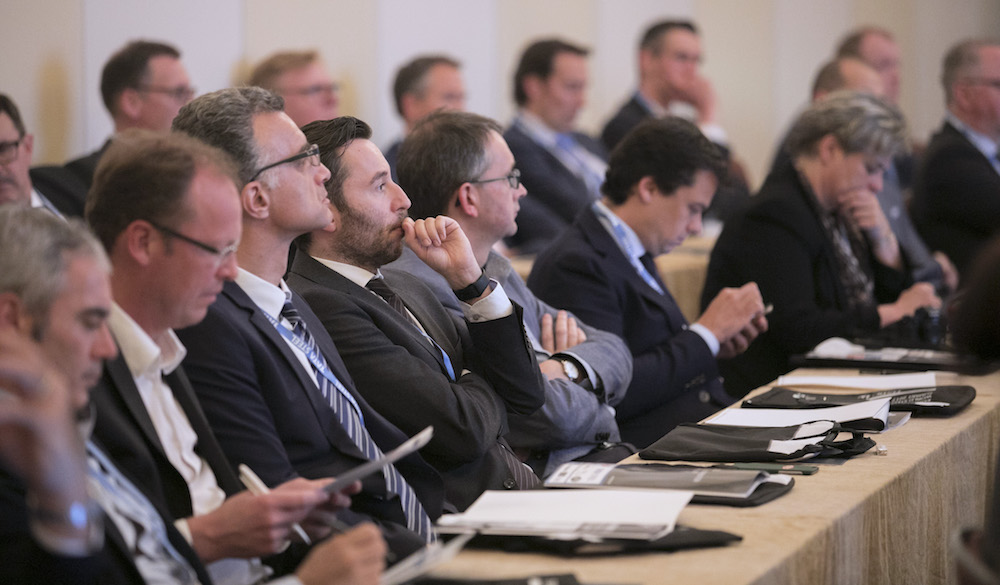
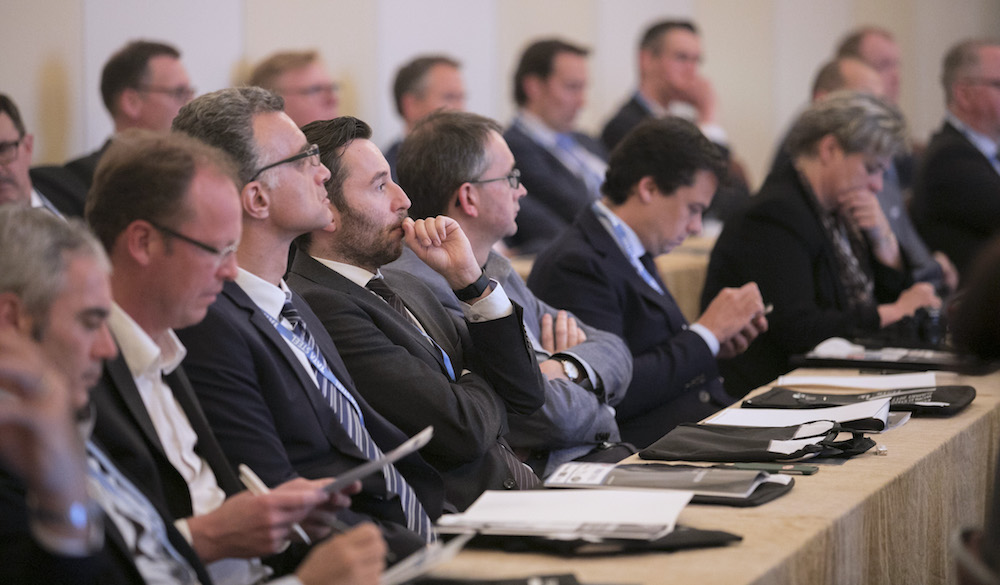
The European coil market has been slipping downwards, but delegates at the EUROMETAL World Steel Summit conference in Dusseldorf did not expect a prolonged fall, with many suggesting €500/mt ex-workks will be the cut off point for hot rolled coil.
While pressures are building in central and eastern Europe, traders noted the withdrawal of Russia from the import market and the potential for the declining coil prices to invigorate the EC’s investigation into HRC imports.
“I don’t see the market dropping considerable so it won’t go below €500/mt, maybe €510 but not much lower,” a mill source said. He said he was still “easily” able to achieve sales at around €530-540/mt in Germany, but accepted the market is on a downward track.
A trading source said he expects the major Europeans to return below €500/mt, but agreed that pressure from imports was slowing. He said the biggest cause for the European HRC market to fall was the availability of Russian HRC once the preliminary duties were not imposed. But he noted “the window for buying from Russia is now closing” as Russian mills have now largely withdrawn from the market.
He said many had bought in big quantities from Russia at €480-490/mt CIF Antwerp, but the lead times meant the trade flow was no longer viable.
In January, the EC enforced registration of Brazilian and Russian HRC but, as preliminary duties were not imposed, material could again be bought without threat of duties. As a result, there was a window of opportunity for people to buy.
But while preliminary measures were not imposed, buyers said they were concerned final duties could still be imposed and made retroactive. “The EC can announce registration again at any point,” a buy-side source said. The retroactive period can be applied for three months before the October 6 final decision which means many are nervous that HRC arriving in July will be susceptible to measures.
In his presentation, Alexander Julius of the German trading group Macrometal said: “It was the first case where the European Commission really considered the case of the end users, and the first case where they faced a major objection from end users.” But he said the EC had made €500/mt the effective cut off point, so if the market falls back below that level he said it was more likely that final duties would be imposed.
Peter Brennan, S&P Global Platts