


Central Europe only EU area with output growth

Central Europe was the only EU region with a positive growth rate for steel output in 2015. Steel production in the region showed a 4% increase on 2014, compared with 2% decline in western Europe, a 3% decline in southern Europe and 6% decline in the Black Sea and Balkan countries, trade group EUROMETAL said ahead of its regional meeting on central Europe scheduled for April 19 in Prague.
Central Europe also showed positive performance in steel consumption. Apparent consumption increased in all countries in the region with Poland’s steel consumption for last year estimated at 12.6 million, 2% up on 2014 and 24% up on 2009, Platts learnt.
Owing to its positive fundamentals central EU markets have been strongly penetrated by western European distributors, which have been challenging local independent players such as Ferona, Konsorcjum Stali, Bowim and Raven, according EUROMETAL’s research.
The downstream steel sector in Europe continues to integrate as central European steel markets are gradually becoming part of multilateral industrial and commercial networks, EUROMETAL noted.
Also, despite Klöckner and Tata Steel Distribution pulling out of central Europe, many players based in the western part of the EU, including Salzgitter Handel, ThyssenKrupp Materials, BE Group, ArcelorMittal Distribution and Jacquet Metals have retained their foothold in the central European markets.
Wojtek Laskowski, PLATTS
Concourez pour les Trophées Eiffel 2016
Après le succès des premiers Trophées Eiffel d’architecture acier organisés en 2015, ConstruirAcier lance la deuxième édition de ce concours qui s’impose déjà comme le grand rendez-vous de l’architecture métallique. Les trophées Eiffel d’architecture acier visent à distinguer des œuvres architecturales variées et significatives, réalisées tout ou partie grâce au matériau acier. Concepteurs, architectes, ingénieurs et entreprises de construction métallique… vous avez jusqu’au 29 avril 2016 pour déposer votre dossier de candidature sur le site des Trophées Eiffel
Qui peut participer ?
· Projet implanté sur le territoire français
· Réalisation livrée entre le 1er janvier 2014 et le 31 décembre 2015 et n’ayant pas été déjà candidat à l’édition 2015
· Ouvrage construit tout ou partie avec de l’acier dans toutes ses formes d’utilisation : structure, enveloppe ou second-œuvre.
Comment participer ?
· 6 catégories : FRANCHIR / HABITER / TRAVAILLER / APPRENDRE / DIVERTIR / VOYAGER
· Dépôt du dossier à l’initiative d’un des acteurs du projet : architecte, BE, entreprise, maître d’ouvrage…
· Fiche d’inscription à télécharger sur ici
Quand participer ?
· 29 avril 2015 minuit : date limite de dépôt des dossiers
· septembre 2016 : examen des projets par le jury
· début octobre 2016 : remise des prix à Paris lors de la soirée Steel.in
Le jury est composé d’architectes, ingénieurs, journalistes spécialisés en architecture et industriels de la filière Acier, reconnus pour la qualité de leurs travaux dans le monde de l’architecture, de la construction acier et de la métallerie.
Les œuvres sont jugées sur leurs qualités architecturales et constructives alliées à la mise en valeur du matériau acier.
Pour découvrir les projets lauréats 2015 et vous inscrire pour l’édition 2016, rendez-vous sur le site dédié des Trophées Eiffel
Spring has sprung in the steel markets: analysis
Raw material and finished steel prices continued to firm last week, with improving sentiment in the iron ore market feeding confidence into steel markets and vice versa. The trap of low demand preventing prices increasing for a sustained period of time appears to have been shut for now as rhetoric over production cuts finally appears to be realized.
The benchmark Platts IODEX assessment had iron ore ticking up closer to the $50/dry metric ton mark last week although the pace of increase had slowed. Steel mill margins benefitted as the spread between the iron ore price and the domestic Chinese HRC level rose by $5/mt week-on-week, while the Platts China long steel spread suggests rebar producers’ margins were $181/mt as of February 29. This was up markedly from the low point of $147/mt as of December 7.
The strengthening domestic Chinese market has allowed steel producers to focus their attention on selling locally rather than exporting. This decline in supply meant the Platts East Asian CFR HRC assessment rose $10.50/mt week-on-week to $298-303/mt.
Last year much of the world’s pricing for hot rolled coil fell in line with an FOB China price plus freight. This increase in export prices has helped mills in other regions to push prices as was seen in the $12.50/mt increase in the FOB Black Sea market and even a €5/mt rise in the domestic north European Platts assessment.
Europe has been increasingly exposed to imports, with China, Russia, Iran, Brazil, South Korea and more recently India increasing their presence in the trade statistics. The firming of the Chinese offers following the Lunar New Year holiday reinforced the confidence of domestic steelmakers to push for higher levels. Similarly, in the US the trade measures brought in to limit the competition from external sources continued to support mills as the ex-works Indiana cold rolled coil assessment gained $10/short ton.
On the other hand, the outlook looks much weaker in the Brazilian market where the macroeconomic picture is weighing on demand for steel. The construction sector is particularly weak and prices of products such as rebar are falling amid the competition for orders. On the flats side, the financial difficulties at Usiminas saw it withdraw offers to Europe following the carnival period, instantly removing one of the previously most competitive players for cold rolled coil and EZ. This built upon the trade actions in the US which cut off one of the most significant markets for the Brazilian producers.
The international scrap market has bounced even higher than iron ore as a glut of buying in India spooked the Turkish mills into accepting higher prices for cargoes. This sentiment carried on as the return of spring and construction activity boosted domestic demand at a time when exporting is increasingly difficult.
This market analysis report was taken from the March 2 edition of Platts World Steel Review.
Peter Brennan, PLATTS
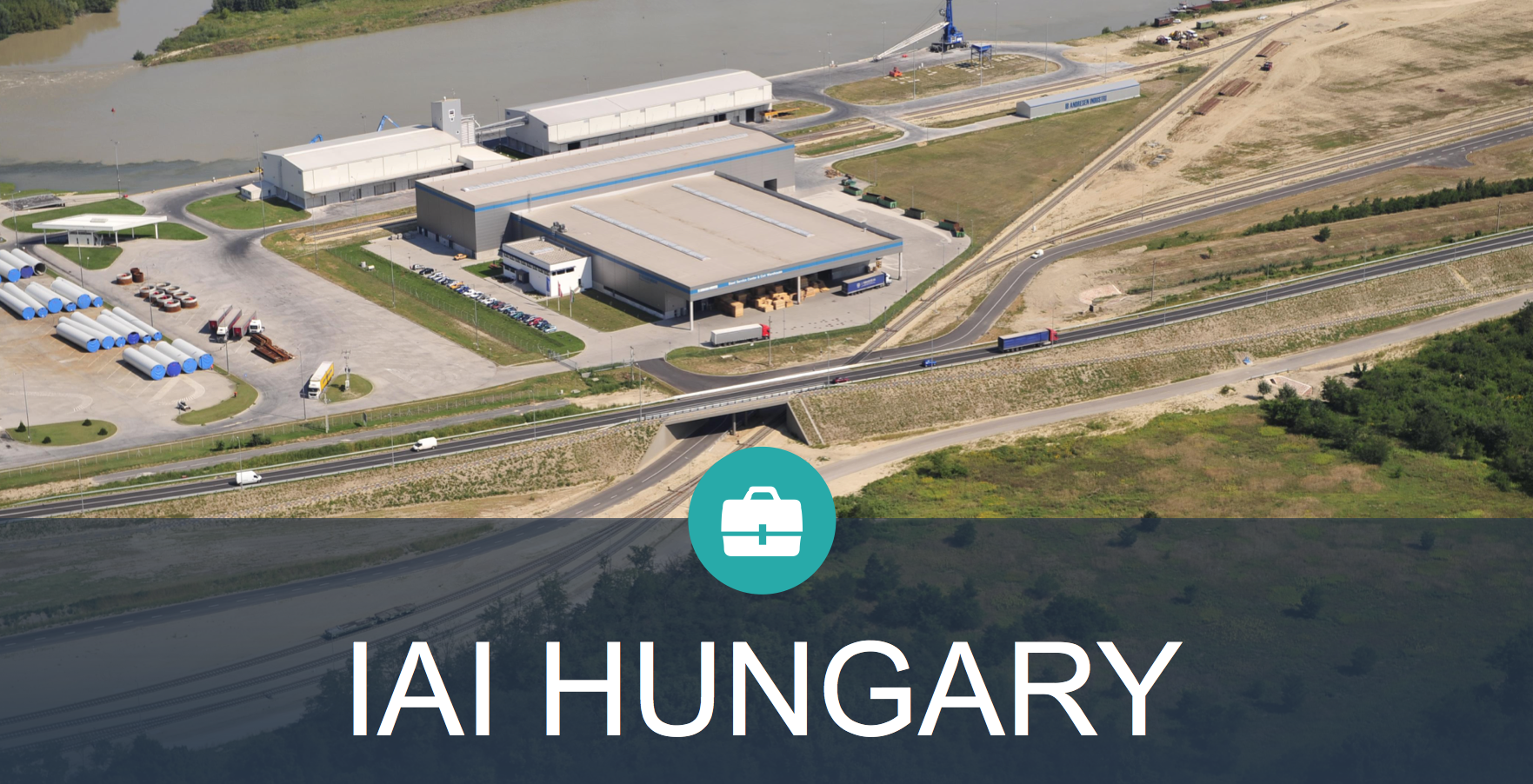
TK buys Hungarian service center to target automotive sector
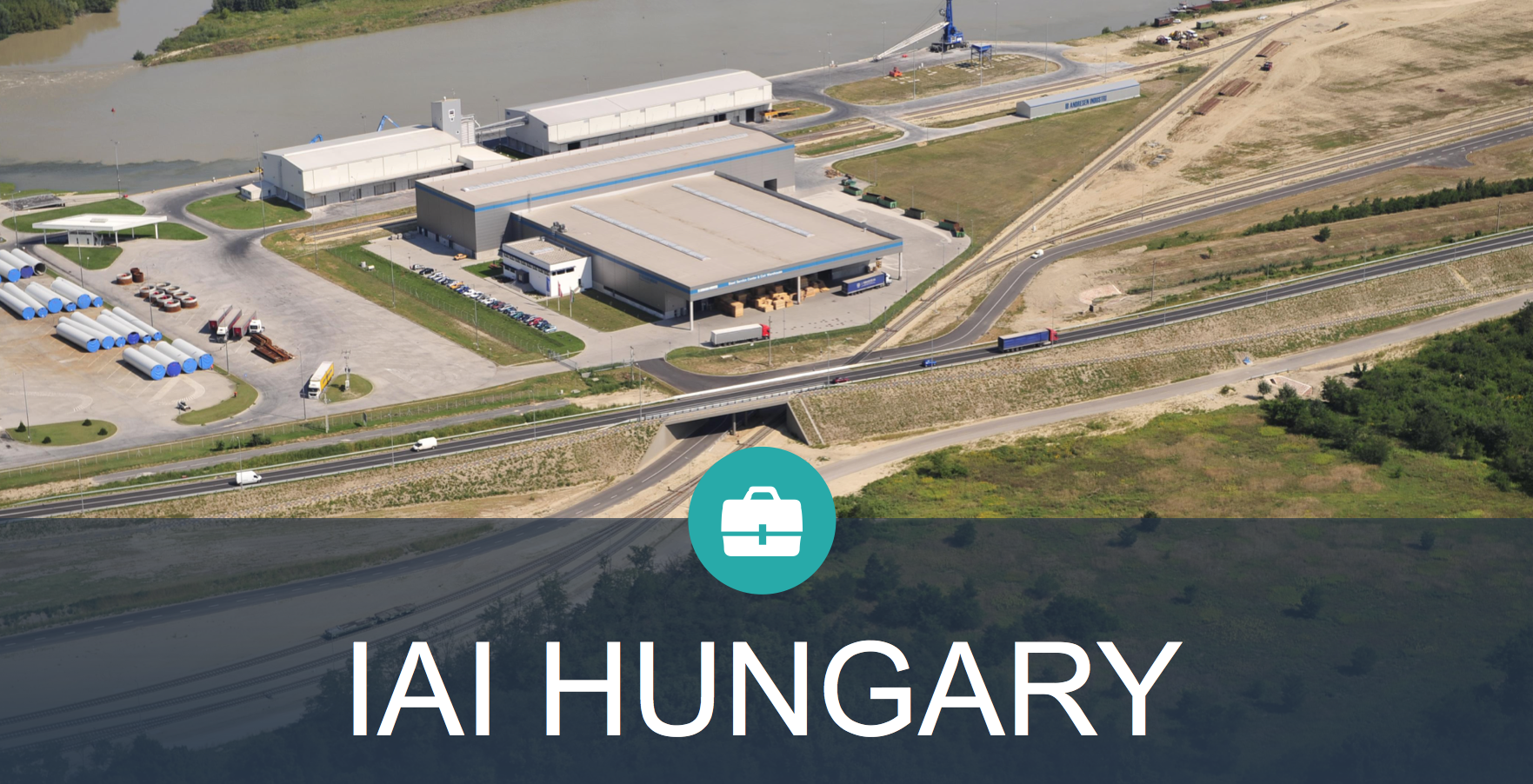
Germany’s ThyssenKrupp Materials Services has acquired Hungarian steel service center IAI Holding A/S from Danish service center group Ib Andresen Industri, ThyssenKrupp (TK) said in a press release Tuesday.
The deal, concluded on February 29, is aimed at strengthening TK’s activities in Eastern Europe.
The service center will now work closely with the German steelmaker on future steel supplies.
“We are confident that the Hungarian automotive supply sector offers major growth potential and that our good distribution network will enable us to expand our activities,” said Marcus Wöhl, ceo of TK Materials Processing Europe.
The newly-bought plant, renamed ThyssenKrupp Materials Processing Hungary, is located in the city of Györ close to the border with Slovakia and Austria and in the proximity of numerous automotive plants in central Europe including Audi, Suzuki, Opel, Fiat, Skoda and the planned Jaguar Land Rover plant in Slovakia.
The service center, employing 50 people, specialises in steel coil, cut-to-length and slitting services. In addition to steel it processes aluminium and stainless steel for automotive use.
The plant has two coil slitting lines. It cuts material 0.3-5mm thick and maximum 1,850mm wide with a maximum coil weight of 32 metric tons. Its cut-to-length line can process coils of 0.5-5mm.
The production capacity is 300,000 mt/year and the plant’s warehouse can store up to 2,100 coils.
Wojtek Laskowski, PLATTS
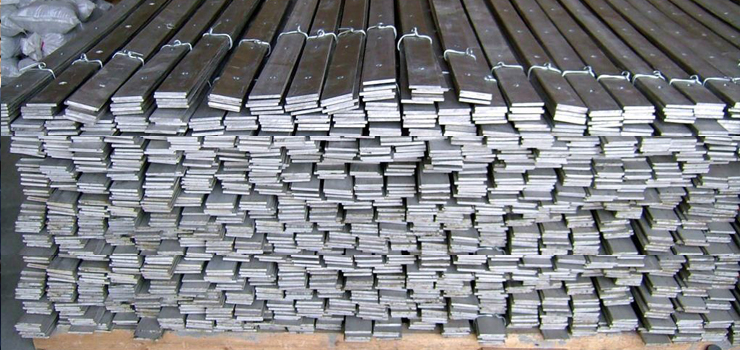
Italian flat distributors share positive 2016 outlook

Italian distributors of flat products expect demand in 2016 to grow further, following the good performance for the sector in terms of volumes in 2015, according to a note by Tommaso Sandrini, head of Assofermet Acciai, the association for finished steel distributors.
In the note the association said that last year’s positive results were driven by the strong growth in demand from the automotive sector (+20%) as well as a recovery in the construction sector.
This year the positive trend is expected to continue, particularly in the second half, surpassing demand levels seen last year. Overall the current order book of Italian flat product distributors is already much healthier than in the past, the association added, which should therefore help service centers to plan ahead and ensure that prices do not fall further.
“All distributors in 2015 benefitted from the increase in consumption in all main end-using sectors, helped at the same time by the sharp loss of market share in the distribution sector by Ilva,” the note said.
Prospects for the Italian supply chain of flat products – with the uncertainty at Ilva continuing and the limitation on imports from countries such as China and Russia – could very well benefit the distribution sector, as buyers will seek the added value of those services provided by both stockholders and distributors, Assofermet noted.
Emanuele Norsa, PLATTS
GONVARRI SSC have joined the ranks of EUROMETAL
We are pleased to announce that GONVARRI SSC have joined the ranks of EUROMETAL and will participate in EUROMETAL SSC Work Group and SSC Market Monitoring.
Furthermore, EUROMETAL members William King from UK and EXTERSTAHL from Austria have started in 2016 to participate in EUROMETAL SSC Market Monitoring.
Georges Kirps
Director General EUROMETAL
Italian flat steel market to see ‘radical’ changes
Italy’s flat steel market could see “…radical changes in the next few months” due to the implementation of new anti-dumping duties and the uncertainties surrounding Ilva, Italian steel trade association Assofermet tells Kallanish.
The association claims that the duties imposed on Chinese-origin cold rolled products, and the ongoing investigations on imports of hot rolled coils will play a decisive role in changing the Italian supply chain.
The current practices of sourcing from extra-EU countries “…are about to change, as the new measure will remove one of the most significant and stable sources of the last years,” the document states. HRC accounted for approximately 65% of the steel imported into Italy in 2015, according to Assofermet.
“For a long time the competitive pressure determined by overcapacity, combined with the abundance of supply alternatives, including imports, has allowed distributors to benefit from a large bargaining power,” the association says. “The current and future environment is likely to see a greater regionalization of the supply chain, with domestic and European sources gaining market share over imports.”
According to the report, the Italian flat product market registered a positive performance in 2015 as “…distributors benefited from increases in consumption in almost all application areas, whilst Ilva recorded significant losses in terms of market share.”
The outlook for the retail sector remains potentially favourable, but “…it will be necessary to search for new suppliers who can provide the volumes we received from China and Russia,” Assofermet concludes.
Kallanish

Revista Infoacero Febrero 2016
Pueden acceder a nuestra Revista Infoacero correspondiente al mes de Febrero.
Les indicamos algunos de los contenidos de la misma:
- Opinión – D. Rafael González Navarro- Miembro de la Junta Directiva de la UAHE.
- Evolución del índice de Precios Medios de Productos Siderúrgicos.
- Siderurgia: Perspectivas de los sectores consumidores de Acero. Evolución del Consumo Real y Aparente en Europa- Informe de Mercado de Eurofer Enero 2016
- Próximos Eventos.
- Colaboración ASCEM: “El Acero en la Construcción de edificios con grandes luces”- D. Ricardo Neira- Junta Directiva de ASCEM.

Nota di Mercato del 29 febbraio 2016 avente per oggetto i Laminati Piani al Carbonio

Si trasmette una Nota di Mercato del 29 febbraio 2016, avente per oggetto i Laminati Piani al Carbonio.
Cordiali saluti,
ASSOFERMET ACCIAI
IL PRESIDENTE
Tommaso Sandrini
Health & Safety in Steel Distribution
Enhancing best practice in Health & Safety
Best Practice in Health and Safety – By Peter Corfield (Director General of NASS)