


EU softens ‘Buy European’ requirement: German sources
A new version of the European Union’s Industrial Accelerator Act (IAA) draft has German steel players agitated, because it suggests that green steel could be sourced outside the EU.
Reports by Handelsblatt and Spiegel say that they have received a draft that no longer includes steel in the annex of materials or services that must be sourced in the European Union for public tenders. The draft does include the requirement of “green/low-emission steel”, but not the obligation to buy it locally.
In a social media post, seen by Kallanish, thyssenkrupp Steel, head of European affairs Julian Schorpp expressed concern, asking “is the EU about to undermine its own Clean Industrial Deal?”.
The latest leak contradicts the core logic of the Clean Industrial Deal itself to accelerate decarbonisation in Europe by strengthening demand for clean products manufactured in the EU, Schorpp writes.
He points at the investments on the way by EU mills in the interest of a technical transition. “Lead markets that stimulate consumption without strengthening European production would weaken investment incentives, delay projects, and increase the risk that new low-carbon capacity is built outside the EU”.
The apparent new draft would agree with a requirement worded by German chancellor Friedrich Merz last week, which left Germany’s steel industry unamused.
Merz suggested that a rule like “Made in Europe” should be adjusted to “Made with Europe”, to allow international trade partners to supply green steel, too.
In a separate interview with Spiegel, Marie Jaroni, ceo of thyssenkrupp Steel, notes that such an adjustment would potentially invite 70 countries with which the EU holds trade partnerships.
Along the same lines, Schorpp also points at an effect an IAA draft without steel would have on importing. “CBAM, meanwhile, will incentivise foreign producers to channel their cleanest steel to the EU market,” he says.

Non-prime coil gaining favour in Europe
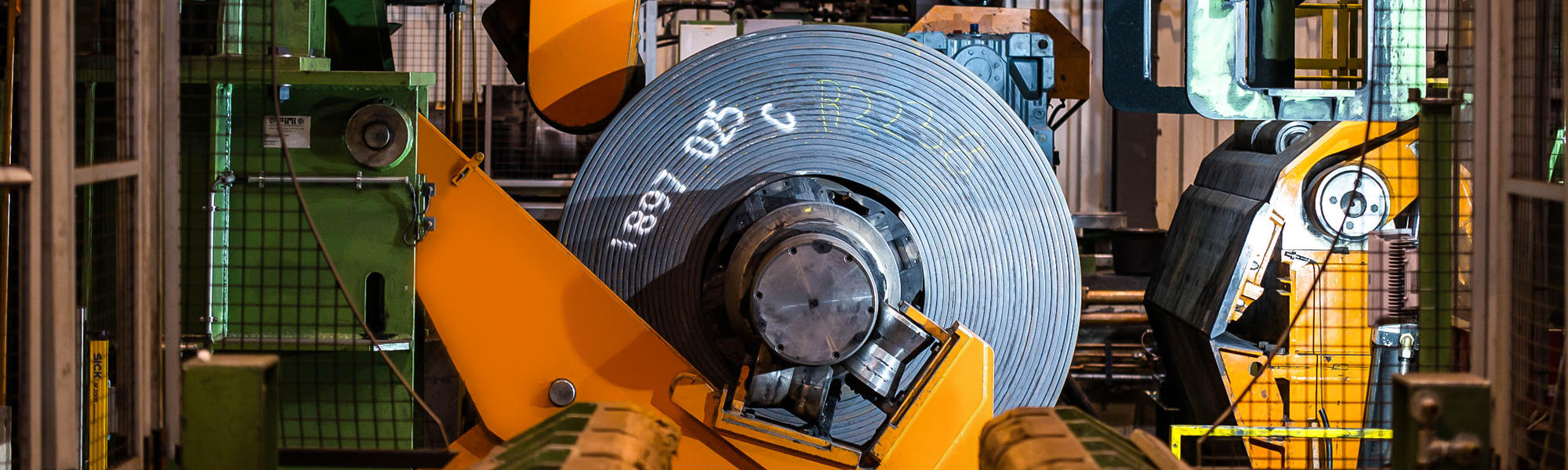
Non-prime coil is gaining traction in Europe, with recent announcements highlighting the growth of declassified strip products.
Swedish green steel venture Stegra agreed a multi-year deal with thyssenkrupp Materials Services for the supply of future coil volumes for the pan-European distribution group of non-prime material in January.
In times of an inert market and low price, as seen through most of 2025, non-prime material appears to be growing in attractiveness to buyers to minimise risk as high-standard customers remain reserved.
“The demand is too low, and I see more people asking for non-prime material,” one Benelux trader tells Kallanish. “Many try to get even cheaper than the low prices we have for prime material now,” he adds.
Regular prices are slowly but continuously recovering since then, and longer lead-times indicate more orders for prime coil. But then, the hurdles for imports imposed by the Carbon Border Adjustment Mechanism (CBAM) could mean an advantage for non-prime imported coil.
Another trader notes that the actual role of a trader as an intermediate is stronger when trading declassified material. If dealing with prime material, customers can gather an idea of a price/tonne on numerous channels, so the pricing in that segment is very transparent, he says. “This is not quite so in the non-prime segment, where good prices and offers depend very much on the trader’s network.”
To some extent, such preferences for non-prime are observed in the traditional fields of domestic prime material. According to a service centre manager, “it really depends on the purpose, [such as] if it’s a visible part or not. Customers are relatively flexible.” He notes that customers normally do not proactively “ask for 2A material, but they do accept it if offered.”
One typical mill strategy in times of low sales is the nominal declassification of 1A material to 2A, as a means of justification to offer at a discount. If the current recovery of prices becomes substantiated by a recovery of demand, such offers will likely disappear.

US Supreme Court strikes down Trump’s Liberation Day tariffs
According to the majority opinion, written by Chief Justice John Roberts, “IEEPA does not authorize the President to impose tariffs.”


European Committee for Wire Drawing urges EU action over galvanized wire imports
The European Committee for Wire Drawing (CET) is calling for the European Commission for help to curb surging galvanised wire imports, Kallanish learns.
The association warns that low-priced Chinese and Turkish suppliers have captured around 25% of the EU market since 2023, equivalent to roughly €200 million ($235.3m) in imports. This has left European producers with falling sales and idle production lines, creating what CET describes as an unsustainable situation.
CET says the import surge is severely damaging an industry that produces about 900,000 tonnes annually across at least 12 EU member states, generates roughly €750m in yearly sales and directly employs more than 4,000 people. It is seeking urgent measures to restore fair competition and safeguard a sector supplying essential materials to Europe’s construction, manufacturing and agricultural industries.
It represents manufacturers of steel wire and steel wire products across Europe, with members including associations and producers in Germany, Spain, France, Italy, Poland, Portugal, Sweden, the UK and Türkiye, covering the majority of European wire drawers.
Under EU trade defence procedures, the Commission may open an anti-dumping investigation if sufficient evidence shows imports are unfairly priced and cause material injury to EU producers. Such investigations typically last up to 14 months.

Fagor Arrasate joins EUROMETAL as Associate Member
EUROMETAL is pleased to welcome Fagor Arrasate as a new Associate Member.
Headquartered in the Basque Country, Fagor Arrasate is a global leader in the design and manufacture of customised solutions for steel, aluminium and stainless steel forming. Its portfolio includes advanced presses and stamping systems, cutting and processing lines for metal coils, and complete systems for the production of complex metal components. The company also specialises in composite forming, hot and cold forging systems, and hot stamping technologies.
With more than 60 years of industrial expertise, Fagor Arrasate operates six production plants, five technical assistance service centres and a dedicated R&D&I centre, supported by a global sales network. The company employs approximately 660 professionals across its facilities in Spain, China, Mexico, Germany and the United States. In recent years, its average annual turnover has exceeded €200 million, with exports representing around 85% of production.
Fagor Arrasate serves leading global manufacturers in the automotive sector, including the Volkswagen Group, General Motors, Ford and Stellantis, as well as major Tier-1 suppliers such as Gestamp and CIE. Its client base also includes prominent steel producers and processors such as Tata Steel, ArcelorMittal, Acerinox, Gonvarri and Bamesa, alongside major household appliance manufacturers including Bosch-Siemens, Whirlpool, Mabe, General Electric and Haier.
As a founding member of MONDRAGON Corporation, one of Europe’s largest industrial groups with approximately 70,000 employees, Fagor Arrasate combines technological leadership with strong industrial roots.
EUROMETAL looks forward to working closely with Fagor Arrasate in strengthening the European steel value chain and supporting innovation in metal forming and processing technologies.
Learn more: fagorarrasate.com

European heavy plate round-up: EU plate prices stable, demand from projects healthy
The European heavy plate market traded sideways in the week to 20 February, with project-based ordering underpinning longer-term support for the market, and interesting dynamics on input slab purchasing.
In North Europe, heavy plate price indications clustered around EUR750/t ex-works for s235 grade, and at around EUR800/t delivered for s355 grade. Offers for s235 grade were generally heard in closer proximity to the settlement price, while offers for s355 ex-Germany and Austria ranged between EUR830-880/t delivered. Offers from Central Europe were said to be targeting the same EUR800/t delivered price, generally considered the tradable level for s355 grade into Germany at present.
Import offers were heard to Antwerp at EUR780/t DDP ex-India for s355 grade, and to the Italian market at EUR630-640/t CFR ex-India for s275 grade.
The Italian market appears similarly stable to North Europe, as reported by both buy- and sell-side sources. Deals for spot volumes were heard in a range of EUR710-730/t ex-works, and project-based deals at around EUR750/t ex-works. Project buyers are requesting extended lead times into the final quarter of 2027, supporting producers but doing little to fill immediate orderbooks.
That said, near-term demand wasn’t viewed as too much of an issue, with activity described as “ongoing – but not fantastic,” by an Italian trader.
Indications for input slab costs for Italian re-rollers were reported stable at around $510/t CFR from India; Chinese material is currently unavailable due to the ongoing Lunar New Year holiday, but exporters are expected to return to the market with prices of around $550/t CFR Italy.
Late in the week, McCloskey reported that a single European buyer present across Europe had ordered over 300,000t of slab ex-Brazil –the majority of slab available in the Brazilian spot market – leaving almost no volumes to other buyers, including re-rollers that do not have their own semi-finished steel production.
Market participants speculated as to the motivations of the buyer, highlighting the comparatively low-risk associated with Brazilian slab imports under the Carbon Border Adjustment Mechanism (CBAM), due to their competitive default values relative to other exporting origins.
As an example, a single ton of slab imported under default values from Indonesia, would threaten a CBAM cost at a 1,700% premium to Brazilian costs of around EUR30/t, or a 400% premium to Chinese, or Russian origin.
| Weekly European heavy plate, slab and green steel | |||||
| Unit | Term | 20-Feb-26 | Change | ||
| Weekly heavy plate | |||||
| Northwest Europe ex-works heavy plate | EUR/t | EX-WORKS | 750.00 | 0.00 | |
| Germany delivered heavy plate (Northwest Europe) | EUR/t | DEL | 800.00 | 0.00 | |
| Italy ex-works heavy plate | EUR/t | EX-WORKS | 720.00 | 0.00 | |
| Weekly steel slab | |||||
| Italy CFR slab | $/t | CFR | 530.00 | 0.00 | |
| Weekly green steel | |||||
| Green heavy plate premium (scopes 1-3 CO2 under 1t) | EUR/t | 25.00 | 0.00 | ||


Blastr bids to buy Speciality Steels UK
Norwegian-UK green steel producer Blastr is among bidders to acquire Speciality Steels UK (SSUK), formerly owned by Liberty Steel, according to reports in the UK media.
In August last year, the High Court placed SS UK Limited into compulsory liquidation.
Reports also suggest Blastr is considering relocating its holding company to the UK from Norway.
SSUK has plants in Rotherham and Stocksbridge. The Rotherham site is equipped with two electric-arc furnaces (EAFs) with a total annual capacity of 1.1 mt of liquid steel, according to the website of the past owner Liberty Steel UK.
Blastr currently does not have any production capacity and in 2023 the company announced a greenfield project to produce up to 2.5 mt of carbon-reduced flat steel in Inkoo, Finland. Among other installations, the steelmaker planned to build a pelletizing plant in the UK to produce around 6 mt/yr of DR-grade pellets.
To learn more about decarbonisation projects in Europe and globally – check Global Green Steel Profile.
Blastr will produce ultra-low CO2 steel, with emissions up to 90% lower than conventional steel for scopes 1 to 3, the company states on its website. The company also provides an estimate of the CO2 intensity of conventional steel at 2.6 t of CO2 per tonne of steel, meaning the green steel of the new plant could have a CO2 footprint as low as 0.26 tCO2/ts
Arabian Gulf Steel Industries (AGSI), headquartered in the UAE, and 7 Steel UK, low-carbon steel producers were also identified as bidders for SSUK. 7 Steel UK acquired 100% of Celsa Steel UK and Celsa Nordic from Spanish company Celsa Group in 2024.
Blastr’s spokesperson declined to comment on the matter.

ArcelorMittal pushes EU coil offers up EUR50/t
ArcelorMittal has increased domestic coil offers by EUR50/t compared to previous offers, market sources told McCloskey on 17 February.
The new target prices for May shipment were reported at EUR750/t delivered for hot-rolled coil, at EUR880/t delivered for cold-rolled coil and at EUR870/t delivered for hot-dipped galvanized coil. The steelmaker had previously increased offers by EUR50/t in January and by EUR30-40/t in December.
Several market sources reported the new offers have already been sent to buyers, while some market participants said they were yet to receive official offers, but that sales representatives of the steelmaker confirmed the intent to increase offers to the aforementioned levels.
Sources were somewhat bemused by the higher offer levels given the previous target prices were reportedly not achieved in deals they said.
McCloskey assessed domestic prices for HRC in Northwest Europe at EUR655/t ex-works on 13 February, based on a few deals and offers heard at EUR640-670/t ex-works.
At the beginning of the week, some sources reported transactions for domestic HRC around EUR690-700/t delivered, but the information was not widely confirmed in the market, and some integrated mills were reported giving offers at around EUR645/t ex-works.
The upbeat sentiment of January has turned gloomier in February due to lack of real demand recovery. In addition, concerns have grown the domestic price rise and growing protectionism in steel imports will open the door for the import of steel containing goods into the EU.
And while the European authorities are planning to address this issue, some market participants believe that any remedies would not be introduced in a timely manner.
While these concerns are acknowledged by both buyers and sellers in Europe, the majority of sources remain bullish in the price outlook, although questioning the pace of the current price hike.
The introduction of the Carbon Border Adjustment Mechanism (CBAM) in 2026 and the anticipated reduction of import steel quotas by 47% has already made European buyers more cautious regarding importing steel. As a result, domestic mills are expected to grow market share, replacing overseas material and somewhat offsetting the effects of the lack of real demand improvements.

Relaxation to CBAM suspension clause likely: Commission
A representative for the European Commission suggested that a proposed suspension clause for the EU’s Carbon Border Adjustment Mechanism (CBAM) is unlikely to be implemented in its current form, as stated in an industry webinar 18 February, alluding to backlash that the provision undermines operational certainties.
The webinar was hosted by the Sustainable Procurement Pledge, on the topic of CBAM readiness and preparatory best practices, featuring speakers from the European Commission and CBAM software platform and consultancy, CBAMBOO.
Article 27a was presented as an inserted amendment to the CBAM regulation as part of the Commission’s CBAM extension proposal in December, and would authorize the Commission to remove goods from the scope of the regulation, potentially with retroactive effect, “[w]here the Commission, taking into account the relevant evidence, considers that the inclusion of a good […] causes severe harm to the Union internal market due to serious and unforeseen circumstances related to the impact on the prices of goods.”
Martin Becker, the Deputy Head of Unit of the Directorate-General for Taxation and Customs Union (DG TAXUD) responsible for CBAM, stated that Article 27a was “very unlikely” to be implemented in its proposed form by EU co-legislators, clarifying that the intention of the measure was to protect against “truly extraordinary” circumstances such as “war or a pandemic,” rather than the more general inflationary effect of the regulation on the EU market.
Becker’s comments were in response to speaker Gabriel Rozenberg, CEO of CBAMBOO, questioning the logic of embedding a retroactive suspension clause into a framework that has already been plagued by myriad uncertainties and delays.
While the steel manufacturing sector has not been as visible as other sectors in calling for a suspension of CBAM for steel goods, instead preferring to pressure for a broadened and more immediate extension to downstream steel-consuming imports, visible weaknesses in the framework could threaten to undermine companies’ willingness to invest in CBAM preparedness.
Pauline Miquel, Policy and Research Lead at CBAMBOO, spoke with McCloskey to clarify further:
“It’s great to hear the Commission clarify the intentions behind Article 27a and put to rest a lot of the speculation we have witnessed in the markets as a result of the uncertainties. Clarification on the legislative process was sorely needed.
“Fertilizer importers in particular have been extremely hesitant to engage in any kind of international transactions, and in some cases the noise has resulted in importers assuming that this clause is already in effect, when in reality we are still just at the proposal stage. This also touches on decarbonization investments, as producers globally are obviously unwilling to commit at scale if policy change will later invalidate their efforts.”
Ahead of last week’s European Industrial Summit in Antwerp, industry organizations including the Business for CBAM Coalition “represent[ing] industrial champions investing in clean hydrogen, ammonia, steel, and fertilizers both within and outside the European Union” singed a joint letter calling on the European Commission to remove Article 27a on similar grounds of operational and investment certainty.
ArcelorMittal recently confirmed intentions to proceed with their decarbonization investments at their Dunkirk plant (though at a reduced scale of development of only a single EAF, and no direct-reduced iron facilities), directly attributing the investment decision to CBAM’s improvement to the outlook for domestic industrial competitiveness.
Separately, Becker also addressed the delay to the drafting and official publication of relevant implementing acts, admitting that the drafting process had been more complex than anticipated, describing the context of uncertainty as “very bad” for European importers. The latest of the implementing acts on CBAM’s technical application (concerning the default values) was published in the EU’s Official Journal on the very last day of 2025, giving importers the minimum possible notice on official calculation metrics for their CBAM costs.
The regulatory delays were primarily caused by issues with the creation of the Commission’s default emissions values dataset – especially as relates to the iron and steel sector – which were consolidated from global public databases using a model designed by the Joint Research Centre.
The default values – both as embedded into official EU legislation and published in an excel file on the Commission’s CBAM webpages – contain errors, such as for steel imports from North Macedonia and Taiwan, China which Becker said would be fixed as soon as possible, though the legislative design of the regulation presents difficulties in how best to correct the values. Becker also stated that no substantive changes would be made to the default values at said time, as a result of engagement with industry stakeholders.

German environment minister demands domestic steel in cars
German environment minister Carsten Schneider has called on carmakers to source their input materials from domestic producers.
“We should expect more patriotism from the automotive groups for their home location,” he told daily newspaper Frankfurter Rundschau. With domestic, Schneider is referring in particular to Germany, but also to the larger European Union, Kallanish understands. “In Europe, we should prefer purchasing from European suppliers,” he is quoted as saying.
He added that Germany needs a functional steel industry of its own, to be independent and strong. He dismissed proposals to relocate the upstream phases of steel production to offshore places like Saudi Arabia and have only processing and refinement done in Germany.
“I favour lead markets for steel made from green hydrogen,” he said and expressed regret that carmakers are still reserved in that respect. He proposed that plug-in hybrid cars could offset their higher emissions if low-emission steel is used in their assembly. He noted this is the German position in Brussels, and “I am aware that not everybody in the industry likes that”.
German car production fell by 9% on-year in January to some 306,000 passenger cars, partly due to there being one fewer working day than last year. However, registrations of fully and partially electric cars rose by almost 23% to just over 64,000 units, according to carmakers federation VDA.