


German union discusses ‘best-owner’ practice for thyssenkrupp steel
German union IG Metall and the works council of thyssenkrupp Steel have together launched a so-called “fair and best-owner” agreement process for the sale of the company, Kallanish hears.
Germany’s largest steelmaker is the subject of takeover talks between parent thyssenkrupp AG and India’s Jindal group.
According to IG Metall, a fair and best-owner agreement is a way of providing safety for the steelmaker’s sites, employees, and their co-determination role on the supervisory board. This has been a traditional procedure for all of thyssenkrupp AG’s divestments in recent years, IG Metall notes.
“Our employees need reliability for the future,” says tk Steel’s shop chairman Tekin Nasikkol. “Our future owner must respect existing wage agreements and other agreements. With that I mean primarily the pledge to maintain jobs and sites until September 2030.”
The buyer candidate Jindal has been informed about the procedure, IG Metall says.
Christian Koehl Germany


EU SSC shipments rise slightly in nine months
European steel service centres (SSCs) experienced a moderate rebound in shipments during the first nine months of 2025, according to the latest SSC market monitoring report by EUROMETAL.
Across the EU27, shipments of strip mill flat products increased by 0.5% year-on-year from January through September, Kallanish learns from the European steel distributors association. A notable growth occurred in September alone, which was up 11.1% y-o-y, signalling improving industrial activity, EUROMETAL says.
At the same time, EU27 SSC inventories fell by 6.2% compared with the 2024 nine-month period, reflecting cautious stock management despite strengthening demand.
EUROMETAL mentions a stronger performance in the region comprising Germany, Austria, the Netherlands, and Belgium, where shipments rose 1.4% year-on-year in January-September and 10.8% in September alone. Stocks in this core industrial region were down 10.9% over the nine months, indicating sustained de-stocking across northern continental Europe, the association notes.
Rising shipments combined with disciplined stock levels indicate that European service centres are cautiously adapting to recovering demand, it concludes.
Christian Koehl Germany

Damstahl commissions third high-bay warehouse
Damstahl, a Germany-based distributor of stainless steel products, has commissioned the third new high-bay warehouse it has built since 2023 to replace old facilities, Kallanish notes.
At its headquarters in Langenfeld near Düsseldorf, it inaugurated the site’s second high-bay warehouse this month, after completion in early October. The first one started operation already in July 2024.
In June, Damstahl opened a high-bay warehouse at its Danish site in Skanderborg, which has a storage capacity of 10,000 tonnes – about one third of the site’s sales in Denmark. It consists of 3,800 cassettes, at a length of 100 metres and height of 12m. Companies involved in the construction were engineering company Gråkjær, high bay supplier Fehr, and project coordinator n Langebæk A/S.
The warehouses in Langenfeld have a height of 20m with 3,800 cassettes, and a capacity of 13,300t. The units replaced older warehouses that could not keep up with today’s requirements and ambitions, and facilitate faster delivery times, the company says. The new facilities provide 50% more capacity for the storage of long products, while the Danish site handles mainly sheet products.
Michael Lund, chief executive of Damstahl group, notes the facilities were designed with sustainability as a significant factor, with solar modules accounting for 30% of the warehouses’ energy consumption. The building of three new warehouse systems in a short period was the biggest investment in the company’s 65-year history, he adds.
The inauguration of the second Langenfeld high-bay warehouse coincided with the celebration of Damstahl’s 65th anniversary this month. Founded in 1960, the company is part of the Neumo Ehrenberg Gruppe, which is also active in aseptic and sterile fluid handling, and precision tools production. Damstahl has 300 employees and annual revenue of some €560 million ($648m).
Christian Koehl Germany

Austria ramps up crude steel production in October
Austria increased crude steel production in October compared to the previous month, according to worldsteel data.
Output amounted to 704,581 tonnes, up 11.2% on-month and 45.7% higher year-on-year, Kallanish notes.
In the first ten months of the year, the country produced 6.22 million tonnes of steel, compared to 6mt in the same period last year.
Austria remained at 22nd in the ranking of top global steel producers in October, data show.
Overall EU output in October was down 3.5% on-year at 10.79mt. January-October production was 105.7mt compared to 109.4mt in the same period last year.
Austrian steelmaker voestalpine is currently pursuing production cutbacks in Austria and Germany, which include layoffs, since it does not expect the economic situation to improve in the coming months (see Kallanish passim).
In the group’s first fiscal half-year – April through September 2025 – revenue declined by 5.6% year-on-year to €7.6 billion ($8.8 billion). Consolidated earnings before taxes increased by 12% to €278 million, while profit after tax rose by 8.6% to €199m.
The Austrian steelmaker previously expressed optimism over economic stimulus in the form of the infrastructure spending programme announced by the German government.
The steelmaker will supply steel to Chinese electric vehicle producer BYD for its new car factory in Hungary. The company was chosen by BYD because of its geographical proximity to the Hungary plant, and the high quality and excellent reputation of Austrian steel, the Chinese company noted.
Svetoslav Abrossimov Bulgaria
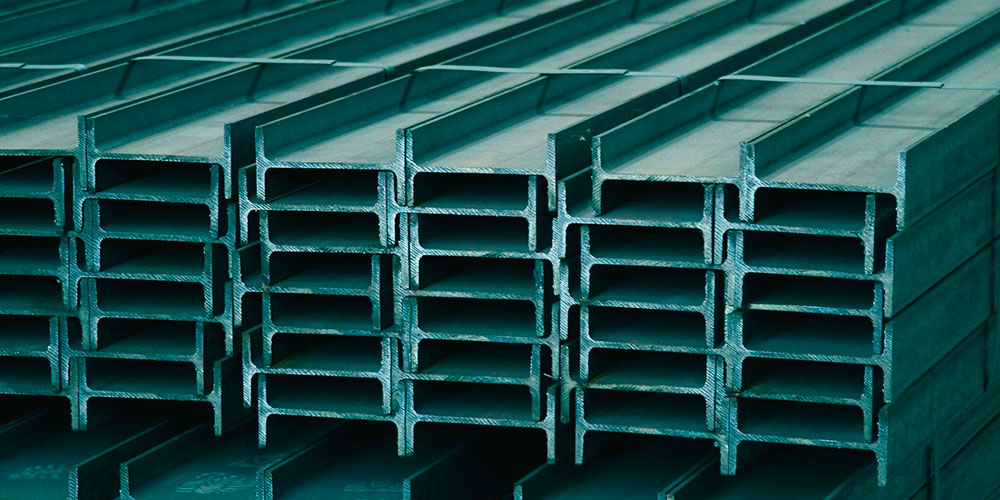
Revista InfoAcero Noviembre 2025
Les enviamos la edición de Noviembre de nuestra revista InfoAcero
Destacamos a continuación algunos de sus contenidos:
- Opinión – D. Alberto Fernández – Junta Directiva UAHE
- Índice UAHE: Evolución precios de aprovisionamiento Septiembre 2024 – Septiembre 2025.
- Metal –Actividad productiva y Comercio exterior en el sector metal – Informe de coyuntura Confemetal
- Siderurgia: Previsiones a corto plazo de la demanda global de acero – Worldsteel Association
- Eventos: EUROMETAL Steel Net Forum Iberia 2026, 27 y 28 abril , Santander
- ASCEM: Resumen XXVI Asamblea General, Madrid, 4 noviembre
- Colaboración RRHH – D. Agustín Barroso – Director RRHH HIEMESA


French Parliament backs ArcelorMittal nationalisation in fiery midnight vote
The French Parliament has adopted the proposal to nationalise ArcelorMittal at an estimated cost of €3 billion ($3.46 billion), following a highly heated debate in the National Assembly on Thursday monitored by Kallanish.
A National Assembly source present during the debate confirms that all three articles of the draft law were approved, following the debate that lasted until midnight – with 127 votes in favour and 41 against.
The bill – opposed by the government – must now proceed to the Senate for confirmation, where it could be blocked by the conservative majority.
Kallanish reported in Friday’s newsletter that the first article of the bill had been adopted before press time (see Kallanish passim).
The debate was prompted by a bill from the left-wing La France Insoumise (LFI) party calling for the nationalisation of ArcelorMittal. The push for nationalisation has come in recent months from unions and several political parties. In May, French President Emmanuel Macron confirmed the government will not pursue nationalisation. This came in response to several strikes initiated by unions, to protest the announcement earlier this year of 600 job cuts by the steelmaker in France.
“Our bill to nationalise ArcelorMittal France has been adopted! Despite obstruction from the National Rally, we succeeded in getting this essential bill passed, a key step for ecological transition, our industrial sovereignty, and the protection of 80,000 jobs,” LFI wrote in a celebratory social media post, calling the midnight vote a “historic victory”. The estimated cost of €3 billion is nothing compared with the cost of losing expertise and independence, the party pointed out.
ArcelorMittal has acknowledged the vote. A company spokesperson stresses that nationalising ArcelorMittal would “in no way resolve the challenges facing the steel industry in France and Europe”.
Action is needed on the structural factors undermining competitiveness, the firm notes. Europe must defend its steel market from the flood of low-priced imports, swiftly enforcing the trade defence measures announced in October, and implementing an effective CBAM, it adds.
“Changing ArcelorMittal’s shareholder structure would do nothing to address these structural issues – quite the opposite. Breaking up French assets and separating them from the rest of the group would only severely worsen their situation,” the firm comments.
“Today, our sites in France remain resilient because they are part of the ArcelorMittal group: our major sites in Dunkirk and Fos-sur-Mer deliver less than 30% of their production to France, due to the deindustrialisation that has affected our country. Without European customers and without other ArcelorMittal companies to which we supply steel, our sites would be in a far more precarious position,” it adds.
“Being part of a strong and profitable global group also enables our French sites to continue benefiting from investments,” it notes.
The solution lies at the European level. “Nationalisation would be a false solution, and we will continue to explain this throughout the next stages of the legislative process for this proposed law,” the company concludes.

EU HRC market stable; more DDP CBAM-accounted offers emerge
Demand for imported steel hot-rolled coil remained flat in the week to Wednesday November 26, with the market’s appetite for coil still subdued amid prolonged regulatory uncertainty, sources told Fastmarkets.
The market is still awaiting more clarity on the potential costs associated with the EU Carbon Border Adjustment Mechanism (CBAM) and how that might impact imports, sources said.
According to a distributor, there is “no demand” in the market now and more change can be expected from next year when CBAM and other trade regulations are set to come into force.
Meanwhile, a trader source said that market participants are “not looking to take risks” at the moment, adding that they will “wait to see” what changes in the market.
Fastmarkets’ weekly price assessment for steel hot-rolled coil import, cfr main port Southern Europe was €475-520 ($551-603) per tonne on Wednesday, unchanged week on week.
HRC offers from Asia for January shipment were reported around €475-500 per tonne CFR, without CBAM costs.
Another offer was reported around €475-520 per tonne CFR, without CBAM costs.
Fastmarkets’ weekly price assessment for steel hot-rolled coil import, cfr main port Northern Europe was €480-520 per tonne on Wednesday, also unchanged week on week.
An offer from Indonesia was reported around €490-495 per tonne CFR, without CBAM costs.
Buyers estimated achievable prices at €480-520 per tonne CFR, without CBAM costs.
Considering the market’s need for clarity on CBAM-related costs on imports, Fastmarkets launched a DDP import steel price assessment for flat steel products on Wednesday.
The introduction of new DDP assessments for imported flat steel in Europe is intended to offer clearer insight for market participants as they navigate the changing trade landscape shaped by CBAM.
By factoring in the influence of CBAM-related costs, these assessments aim to mirror how the spot market is likely to function from 2026 onward, reflecting underlying supply-and-demand dynamics. As a result, CBAM certificate costs may not always be fully priced in or passed through in spot DDP transactions.
Accordingly, the published prices do not incorporate any explicit, calculated CBAM certificate cost. Such costs can vary significantly across data submissions due to differences in brand and origin, the timing of customs clearance and applicable CBAM cost at that moment and the share of carbon costs already covered in the country of origin.
Fastmarkets’ weekly price assessment for steel hot-rolled coil import, ddp Southern Europe was €580-620 per tonne on Wednesday.
A deal from Turkey was reported at €620 per tonne DDP.
A range of offers from Asia — notably from South Korea, Vietnam and Indonesia — was reported around €580-610 per tonne DDP.
Fastmarkets’ weekly price assessment for steel hot-rolled coil import, ddp Northern Europe was €595-620 per tonne on Wednesday.
An offer from Turkey was reported at €620 per tonne DDP.
An offer from South Korea was also reported at €620 per tonne DDP.
An offer was reported at €595 per tonne DDP for Indonesian material.
Buyers, however, pointed out that they were avoiding bookings from Indonesia and India due to high default emissions values for those countries revealed in leaked CBAM drafts.
“We have some Indonesian offers with CBAM partially included risks at sellers’ side; but with CBAM costs at over €500 per tonne estimated for Indonesia under default CO2 values, there is a risk of such deals to be revoked due to force majeure,” a buyer in Italy said.

Steel heavy plate prices edge higher supported by persistent expectations of CBAM costs
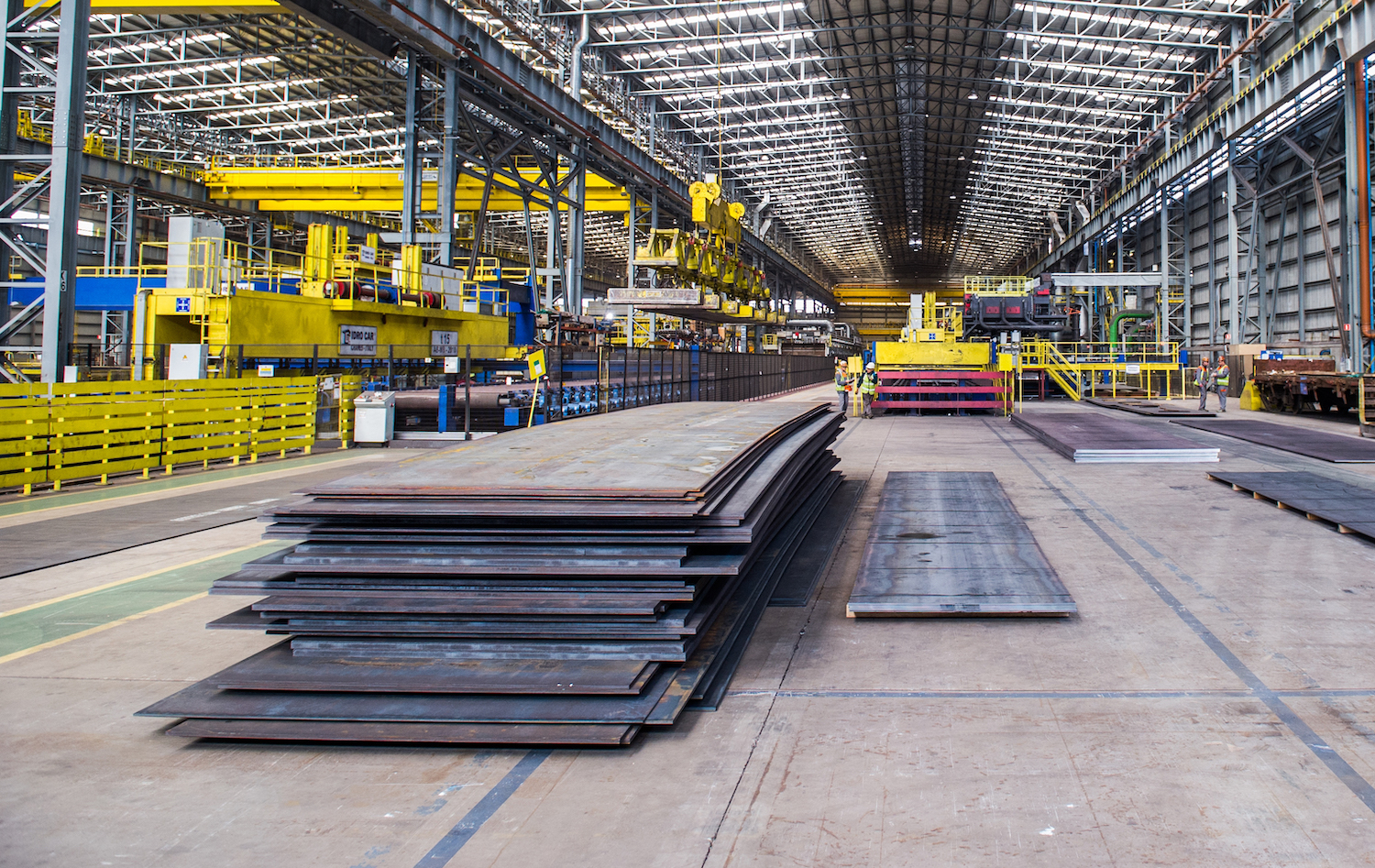
Steel heavy plate prices in Italy edged higher in the week to Thursday November 27, supported by widespread expectations of added Carbon Border Adjustment Mechanism (CBAM) costs, while prices in Northern Europe remained steady, sources told Fastmarkets.
Italy
Fastmarkets’ weekly price assessment for steel domestic plate, 8-40mm, exw Southern Europe was €650-660 ($753- 764) per tonne on Thursday, up by €10 per tonne from €640-650 per tonne on November 20.
Commodity-grade steel plate was on offer in Italy at €650 per tonne ex-works, sources said, with limited volumes sold at that level for January delivery – although the deals were for smaller volumes, below Fastmarkets’ minimum tonnage specification.
Market participants were bullish and one source said the Italian rerollers were likely to target even higher prices in the coming weeks.
Northern Europe
Northern European heavy plate prices, meanwhile, remained flat in the week to Thursday, amid slow trading, sources said.
Fastmarkets’ weekly price assessment for steel domestic plate, 8-40mm, exw Northern Europe was €670-700 per tonne on Thursday, stable week on week.
But deals for regional imports were reported at €710-720 per tonne CPT.
Imports
Steel plate imports from East Asia were on offer in Italy and Germany at around €680 per tonne DDP for S235 and S275 material.

Leaked European Parliament draft on safeguards backs 50% steel over-quota duty, adds Russia/Belarus ban, quota carryover
A leaked draft report from the European Parliament’s Committee on International Trade shows lawmakers preparing to back the European Commission’s plan for a 50% over-quota duty on steel imports, while allowing quarterly carry-over of quota volumes, Fastmarkets learned on Thursday November 27.
The draft text from November 24, which has not yet been adopted and remains subject to amendment, confirms that tariff-free steel import quotas would continue to be based on 2013 reference volumes, so about 50% below currently available allocation, with any out-of-quota shipments facing the sharply higher 50% duty, in line with the first draft, published on October 7.
Details on country-specific allocations – one of the most critical updates the market has been waiting for – have not yet been revealed.
Quota carryover proposed in draft
In contrast to existing safeguard rules, the leaked draft proposes allowing unused quarterly quotas to be carried over into the next quarter, a change industry participants said could ease volatility in certain product categories.
In the latest review of existing steel safeguards in March 2025, the carry-over of unused quarterly tariff-rate quotas (TRQs) into the next period for categories under significant import pressure was revealed, Fastmarkets reported.
In the new leaked draft, one of the suggested amendments read: “To ensure continuity and to avoid supply disruptions, carry-over of unused quarterly tariff quota volumes to the following quarter should be permitted. This would provide the necessary operational flexibility while maintaining the overall effectiveness of the measure.”
Stricter origin documentation, “melt and pour” requirement
The document reconfirms the Commission’s “melt and pour” origin verification requirement for all covered imports.
Notably, under the draft, the EU will require proof of the steel’s “melt and pour” origin – meaning the country where the steel was actually melted in a furnace and then cast into its first solid form. In particular, “solid form” refers to the steel’s initial shape after cooling, such as a slab, billet, ingot or any other early-stage block of steel.
In simple terms, it is the place where the steel first becomes a “solid piece”, before any later rolling, coating, cutting or other processing. The rule is intended to stop steel made in certain countries from being relabeled after minor processing elsewhere.
The draft also expands verification requirements by listing multiple forms of acceptable evidence, including mill certificates, invoices, delivery notes and long-term supplier declarations. The draft also calls on the Commission to develop guidelines to limit administrative burden, particularly for small and medium-sized enterprises.
Besides this, in one of the most significant additions, the Parliament text introduces a provision that would automatically prohibit all products made from steel melted and poured in Russia or Belarus, making such shipments ineligible for quota access and subject to immediate rejection at EU borders.
Exemptions
The draft also proposes that imports originating in Ukraine be fully exempt from both quotas and duties for as long as the country faces an “exceptional and immediate security situation,” i.e. Russia’s invasion of the region, extending the EU’s existing autonomous trade preferences.
Also, as in the Commission’s initial proposal, the draft confirms that Norway, Iceland and Liechtenstein would remain outside the quota and duty mechanism.
Scope reviews accelerated
While the Commission had suggested reviewing product coverage every two years, lawmakers propose annual scope reviews and annual public implementation reports detailing quota usage and volumes subject to the 50% duty. They also call for biennial evaluations of global overcapacity trends and impacts on EU steelmakers and downstream users.
The leaked text repeatedly stresses that the future instrument must remain fully WTO-consistent and be designed to address “trade distortions caused by global excess capacity,” with the long-term objective of restoring conditions for more open trade.
Next steps
Market participants stressed that the document is a draft parliamentary position and may change considerably before coming to a final vote. It must still pass through committee adoption, plenary approval and subsequent negotiations with the EU Council before entering into force.
However, several sources said the core elements of the proposal – including reduced TRQs and a 50% out-of-quota duty – are likely to remain intact.
If ultimately approved, the new system would replace the EU’s existing steel safeguard measures upon their expiry at the end of June 2026.
The exact date of the new trade regime coming into force still remains subject to debate.
European Steel Association Eurofer was lobbying for early introduction of the new regime.
In addition, earlier this year, several EU member states pushed for early termination of the current safeguard measures, urging that the new framework be introduced as early as the beginning of 2026.
Market sources, however, believe the deadline of January 1 is not realistic, since the draft needs to go through a “complex negotiations process” before entering into force.
“Procedures in the trilogue take quite some time,” a source in the EU steel market said.
Several market sources suggested that April 1 was a “feasible” deadline for adoption of the new trade regime, while the Commission declined to comment on the timeline.
In terms of market effects, sources expected the new trade regime to be even more disruptive than the impending Carbon Border Adjustment Mechanism (CBAM).
“The imports will be reduced by 50%. If the new regime comes into force as of April 1, this means the window to buy new imports without risks of facing a new 50% out-of-quota duty expires in January 2026, if not sooner. This consistent lack of clarity on CBAM and safeguards results in rumors driving the market – complete chaos,” a buyer source in Italy said.

Rebar prices keep climbing in Italy amid reported limited availability
Rebar prices in Italy continue to move on upward trajectory amid reported limited availability of the material from local suppliers on Thursday November 27.
“The current environment is characterized by a significant shortage of inventory at steel mills, a factor that inevitably impacts the ability to easily withdraw large quantities of material. This limited availability is supporting the maintenance of price levels. We believe this situation is prompting some operators to take advantage of the situation to exert upward pressure on price levels” one buyer source said.
Another buyer source said that upward price movements were mainly due to the fact that mills were trying to improve their earnings before the end of the year, while demand is moderate.
“The demand is so so, November is not an unforgettable selling month. Winter is arriving, and customers don’t want to fill their stocks. Maybe the price increase and the limited availability are due to Pittini’s incident, but I’m informed that the problem is now fished, and they have restarted production,” the source said.
Pittini Group’s flagship Ferriere Nord long steel plant at Osoppo in northeastern Italy was damaged by a fire in late October, which led to the shutdown of the facility’s electric-arc furnace (EAF).
A source at the mill confirmed that the equipment is fixed. “If everything works, we should be able to restart this week,” they told Fastmarkets on Wednesday November 26.
The most recent offers of 8-40 mm bars from local suppliers came at €595-600(689-695) per tonne ex- works.
Nevertheless, bookings were heard in the wide range of €550-585 per tonne ex-works, depending on the region. Low end prices traditionally refer to the north of the country, while upper end levels to the south.
Fastmarkets’ weekly price assessment for steel reinforcing bar (rebar) domestic, exw Italy was €550-585 per tonne on Wednesday, up from €540-570 per tonne on November 19 and from €540-560 per tonne on November 5.