


Aperam secures guaranteed loan to advance development
Aperam has concluded a new loan agreement supported by a guarantee of up to €120 million ($139m) from Flemish government entity Gigarant NV managed by ParticipatieMaatschappij Vlaanderen (PMV). The guarantee enabled a syndicated loan provided by ING, KBC, and Belfius, and will support continued investment in the development and sustainability of the Genk facility, Kallanish notes.
The announcement was made during a recent visit by Matthias Diependaele, Minister-President of Flanders, to Genk. With the backing of the government, Aperam will continue to invest in Genk’s innovation, supporting regional supply chains, and promoting sustainable employment.
“This partnership with Gigarant and PMV empowers Aperam Genk to pursue its investments in industrial innovation and the green energy transition,” says Aperam chief executive Frederico Ayres Lima. “It reinforces Aperam’s position in Flanders as one of the region’s largest employers, while advancing our global ambition to be the leading value creator in the circular economy of infinite world-changing materials.”
Between 2018 and 2024, the steelmaker invested over €350m at the Genk site to modernise production, accelerate digital transformation and its environmental transition. The company recently entered into a power purchase agreement (PPA) with LRM, a Belgian investment company, to source renewable electricity from the Kristal Solar Park in Limburg, complementing its existing solar plants at the Genk and Châtelet sites.
Aperam is investing in decarbonisation, aiming at a 20% reduction in scopes 1, 2, and 3 greenhouse gas emissions by 2030 compared with 2021 levels, on the path to net-zero emissions by 2050.
Natalia Capra France

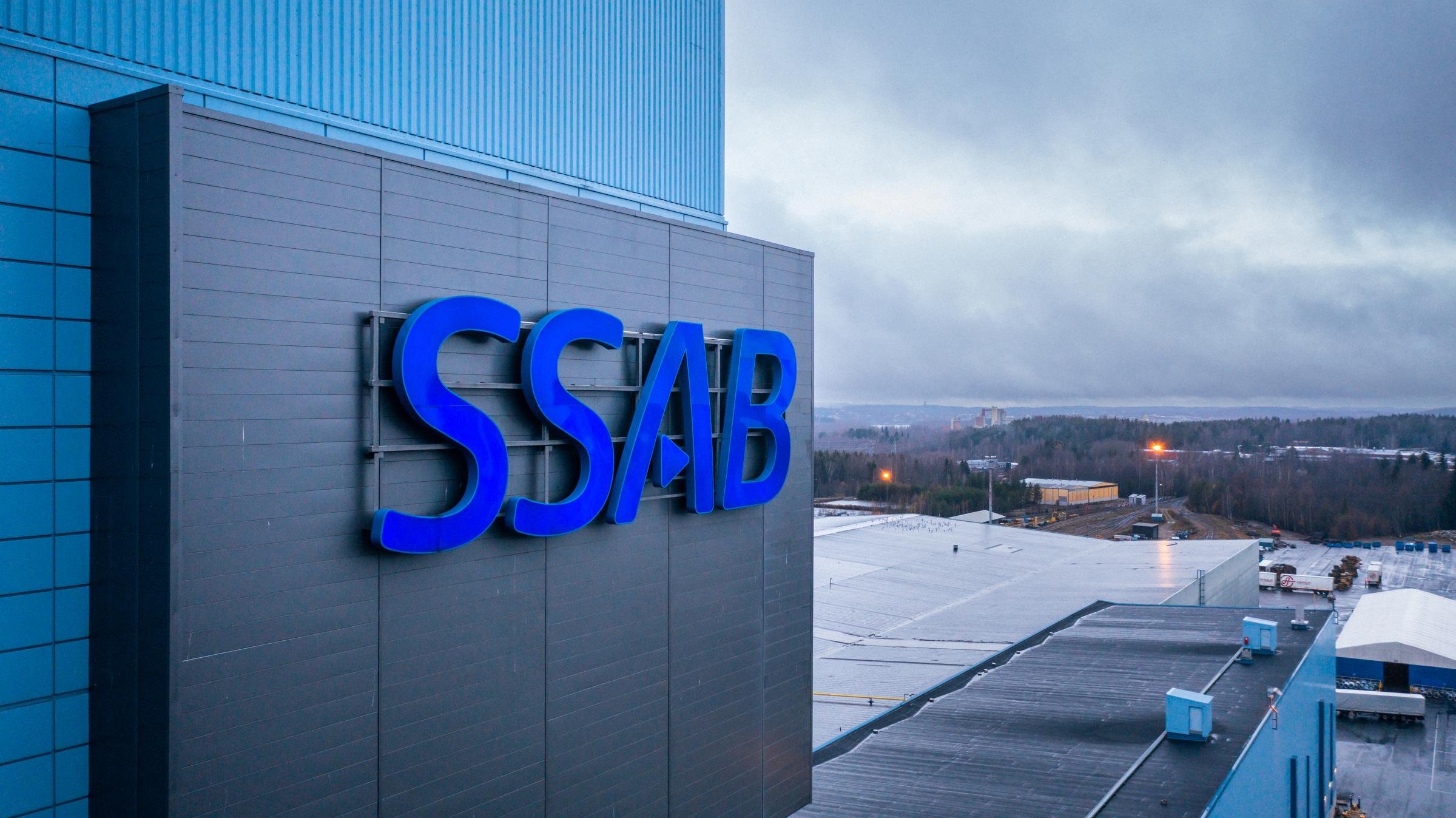
SSAB receives $33m Luleå slab finishing electrification funding
SSAB has been granted SEK 314 million ($33.3m) in funding by the Swedish Energy Agency through The Industrial Leap scheme for the electric arc furnace transformation of its Luleå plant, Kallanish notes.
SSAB is investing €4.5 billion ($5.2 billion) to transition from blast furnace-based steelmaking and reduce carbon dioxide emissions by approximately 90% at Luleå (see Kallanish passim).
The Industrial Leap funding applies to a project aimed at developing technical solutions for electrification and energy efficiency in the finishing processes for steel slab at Luleå – processes that are currently carried out using natural gas and propane.
“It is encouraging that the Swedish Energy Agency supports our transition. The Industrial Leap is an important tool for driving technological development and reducing the climate impact of industry,” says Carl Orrling, EVP, head of Technology and Transition Office, SSAB.
The project enables a future reduction in emissions equivalent to approximately 169,000 tonnes/year of CO2 equivalents, along with an energy saving of around 555 GWh. It includes detailed design of processes, grid connection, control systems and infrastructure, and will run from May 2025 to June 2026.
“In addition to the climate benefits, the investment in Luleå strengthens SSAB’s competitiveness through lower fixed costs, shorter lead times and increased production flexibility,” the steelmaker notes.
The new mill will have a capacity of 2.5 million t/y and will include EAFs, advanced secondary metallurgy, integrated hot rolling, and a cold rolling complex with galvanizing and annealing. Construction started in the summer, with commissioning pushed back by 12 months to end-2029 as reinforcements to the transmission grid could not be delivered as planned.
SSAB has previously been granted SEK 1.45 billion through the Just Transition Fund and the Swedish Agency for Economic and Regional Growth to replace the blast furnace with an EAF up to the continuous casting stage. The new project focuses on finishing steps such as hot rolling, cold rolling and galvanizing – parts of the process that have not previously received public funding.
At SSAB’s Oxelösund plant, meanwhile, the EAF commissioning is now expected in early 2027 after its connection to the power line was pushed back to end-2026.
SSAB’s operating result amounted to SEK 1.869 billion ($198m) in Q3, an increase of SEK 621m compared to last year, mainly driven by stronger development at SSAB Americas.
Adam Smith Austria

Critical chip shortage worsens, production stoppages expected: ACEA
The European Automobile Manufacturers’ Association (ACEA) is increasingly concerned by imminent disruption to European vehicle manufacturing due to halted supply of semiconductors that are essential for carmaking, the organisation says.
“While the political dispute that has led to the prohibition of Nexperia chip exports from China remains unresolved, the situation becomes more critical daily for global automotive manufacturing,” ACEA says. “The resulting shortage of supply of the type of simple chips used in the control units of vehicle electrical systems is hitting automakers around the world hard, including here in Europe. The industry is currently working through reserve stocks but supplies are rapidly dwindling.”
According to the association, from a survey of its members this week, some are already expecting imminent assembly line stoppages. “Many alternative suppliers exist but it will take many months to build up the additional capacity needed to meet the shortfall in supply. The automotive industry does not have that long before the worst effects of this shortage are felt,” it adds.
“We know that all parties to this dispute are working very hard to find a diplomatic solution. At the same time, our members are telling us that part supplies are already being stopped due to the shortage,” says ACEA director general Sigrid de Vries. “This means assembly line stoppages might only be days away. We urge all involved to redouble their efforts to find a diplomatic way out of this critical situation.”
In September, the Dutch government took control of Nexperia, a key global semiconductor manufacturer, over national security concerns, citing the potential transfer of sensitive technology to its Chinese parent company (see Kallanish passim). In retaliation, China has banned Nexperia from exporting products manufactured in China.
Earlier, German carmaker Volkswagen said that, so far, it continues production despite fresh semiconductor shortages and ongoing global supply problems (see Kallanish passim). However, short-term effects on VW production cannot be ruled out.
The Japan Automobile Manufacturers Association (JAMA) said that potential semiconductor supply disruptions could have a “serious impact” on global production at Japanese automakers.
Toyota and Honda are monitoring the situation and currently have no plans to suspend production at their factories.
Svetoslav Abrossimov Bulgaria

European HRC prices firm; buying muted
Hot-rolled coil prices were firm in Europe while buying was muted, sources told Fastmarkets on Friday October 31.
Mills have largely filled their order books for December delivery and have started offering volumes scheduled for delivery in January. But customers postponed business preferring to destock before the end of the year.
A sell-side source from Northern Europe said he expects trading to revive closer to December, when buyers are ready to book volumes with January delivery.
Deals for January-delivery material have not been numerous in Northern Europe so far, according to market participants. Nevertheless, sporadic deals and the achieved prices — of €610-620 ($707-719) per tonne EXW — demonstrated upward trend compared with December-delivery prices — €580-590 per tonne EXW.
Still, the levels achieved so far for January-delivery coils were far from mill’s bullish targets of €620-650 per tonne EXW.
No specific deals were reported to Fastmarkets on Friday.
The reasons for the positive price trend was said to be purely of import regulatory policy change nature and not driven by market fundamentals.
Fastmarkets’ daily steel hot-rolled coil index domestic, exw Northern Europe was €603.75 per tonne on Friday, stable day on day.
The index was up by €2.87 per tonne week on week and by €26.25 per tonne month on month.
Fastmarkets’ corresponding daily steel hot-rolled coil index domestic, exw Italy was calculated at €597.50 per tonne on Friday, up by €4.17 per tonne from €593.33 per tonne on Thursday October 30.
The Italian index was up by €7.50 per tonne week on week and by €47.5 per tonne month on month.
A local buyer said that December-delivery volumes were no longer available, while January-delivery offers have not been numerous.
Offers came at €600-610 per tonne EXW versus estimates of workable prices at €590 per tonne EXW. No fresh deals were heard on Friday.

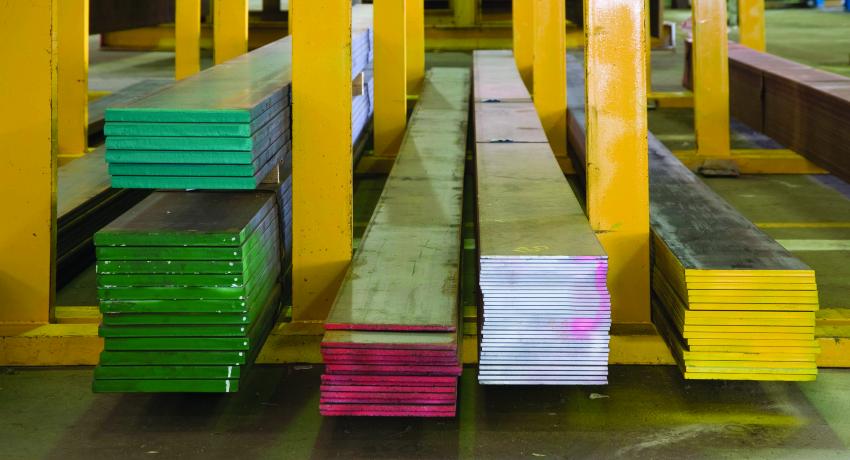
European longs prices continue to follow different trends
Different trends continue to be observed in the European longs market this week, with no major changes in the overall sentiment. However, an accident occurred at Pittini Group’s Ferriere Nord industrial site in Osoppo (Northeastern Italy) in the evening of October 29, and this event, according to some sources, may have consequences on the markets, in particular the Italian one, in the coming weeks.
Local rebar prices in Italy seem to have responded well to the increases proposed last week by some producers, stabilizing upwards at €260-270/mt ex-works base (€525-535/mt ex-works including regular extras). “We have to recover the margin losses of September,” a source at an Italian steel mill said. “New prices are holding firm, we could try a further increase.”
According to another market player, this further increase could in fact materialize, given the temporary production stoppage that affected the Pittini Group plant in Osoppo following a fire at an electrical transformer. “It is too early to assess the extent of the damage,” he said. However, another source observed this will be a variable to follow and to consider for the possible influence it will have on the finished steel volumes generated in the market.
In the wire rod segment, on the other hand, decreases in November prices are expected compared to October prices, both in Italy and in the central and eastern European markets. “The market in central and eastern Europe is not responding as it should,” a market player commented.
To this regard, average decreases by about €10/mt on current wire rod prices are expected. In particular, wire rod prices in Italy could decrease to €565-580/mt delivered in November for drawing quality and €545-560/mt delivered for mesh quality. In central and eastern Europe, on the other hand, November wire rod prices could remain mostly unchanged compared to October for mesh quality at €550-560/mt delivered, but suffer a drop by about €15/mt on the upper end of the range for drawing quality to €560-575/mt delivered. In Germany, a drop by €10/mt is expected on the prices of drawing quality wire rod to €575-590/mt delivered and by €5/mt on the lower end of the range for mesh grade, to €550-565/mt delivered.
Finally, in the import segment, rebar prices from Turkey have decreased slightly on the upper end of the range compared to last week, thus settling at slightly over €495/mt CFR also due to the little change in the euro-dollar exchange rate which stands at 1.155 today, October 31. Turkish wire rod prices to Europe, on the other hand, have remained unchanged at €505/mt CFR, despite the $5/mt downwards adjustment recorded week on week.

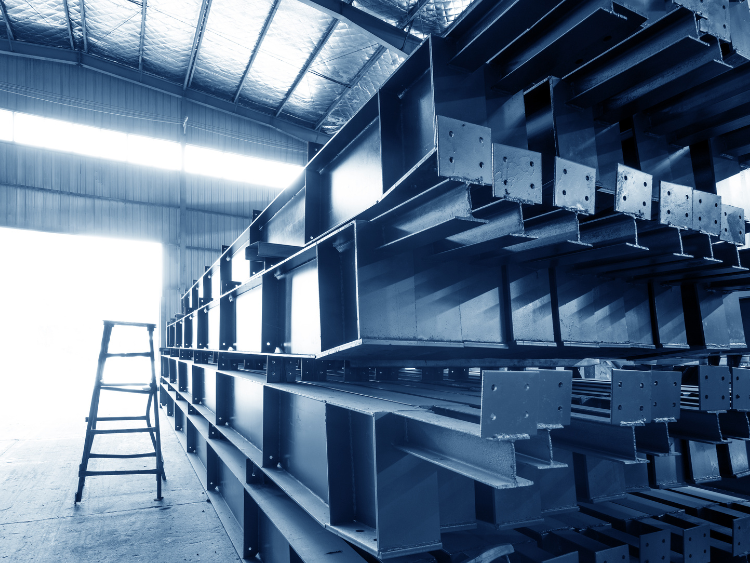
European long steel market struggles to gain traction amid limited demand
European domestic rebar and wire rod prices remained largely unchanged in the week to Wednesday October 29, with limited demand restricting mills’ attempts to increase prices.
Producers in Italy were said to be withdrawing offers from the market in attempt to get higher prices by the end of the year.
“The situation here in Italy is rather complex. As of October 27, almost all producers have suspended sales. The goal appears to be to bring the base price for bars up to €300 per tonne ex-works (equivalent to €565-570 per tonne ex-works for an effective price),” one buyer said.
“This move is driven by balance sheet requirements: producers need to quickly bring quotes back to the levels seen at the end of 2024 to avoid reporting losses greater than expected. The 2024 financial statements already showed that all producers closed the year at a loss, and 2025 does not look promising,” the buyer added.
In Italy like in many European countries the effective price consists of base price, which is fluctuating and extras, which change rarely and are publicly available. Average extras for 8-40 mm diameter, 12 meter long steel bars assessed by Fastmarkets vary within the range of €265-270 per tonne.
The buyer reported booking a cargo of rebar at €280 per tonne ex-works base, which is equivalent to €545-550 per tonne ex-works effective, before mills quit the market.
One of the major producers in the country confirmed that mills are trying to raise prices but sees the level of €300 per tonne ex-works base as a far away possibility.
The producer assessed workable effective prices within the range of €530-550 per tonne ex-works.
Consequently, Fastmarkets’ weekly price assessment for steel reinforcing bar (rebar) domestic, exw Italy narrowed upward to €530-550 per tonne on October 29, from €520-550 per tonne on October 22.
Fastmarkets’ corresponding price assessment for steel reinforcing bar (rebar) domestic, delivered Spain rose slightly to €640-645 per tonne on October 29, versus €635-640 per tonne on October 22.
Northern European mills also found it hard to increase prices.
A steelmaker from Germany reported intentions to increase base price to €360 per tonne delivered (€625-630 per tonne delivered effective for 8-32 mm diameter, 12 meter long bars), but this was not widely accepted by customers, and thus €350 per tonne base (€620-625 per tonne effective) remained workable.
In France, Switzerland and Austria, Italian rebar was heard available at €595-600 per tonne delivered.
Fastmarkets’ weekly price assessment for steel reinforcing bar (rebar) domestic, delivered Northern Europe widened to €595-625 per tonne on October 29, from €600-620 per tonne on October 22.
Wire rod in Northern Europe remained stable within the range of €570-590 per tonne delivered, which was also reflected in Fastmarkets’ weekly price assessment for steel wire rod (mesh quality) domestic, delivered Northern Europe, unchanged week on week.
Meanwhile, Fastmarkets price assessment for steel wire rod (mesh quality) domestic, delivered Southern Europe was €560-570 per tonne on October 29, widening down from €570 per tonne delivered on October 22.

EU green steel trading subdued, premiums stable; sector prepares for CBAM rollout
The European green steel market remained quiet during the week to Thursday October 30. Buyers negotiated purchases for next year and volumes remain steady, Fastmarkets heard.
Green flats
Trading remained muted in the European green steel market, with stakeholders said to be focusing on broader challenges, including Carbon Border Adjustment Mechanism (CBAM) and new trade measures.
Several big buyers who spoke to Fastmarkes confirmed that they were negotiating flat green steel bookings with European mills for 2026, with the intention to keep purchased tonnages in line with 2025 volumes.
“We won’t increase [green steel tonnages], the market is unlikely to grow much next year,” a steel service center told Fastmarkets.
Another buyer told Fastmarkets they were looking to book 10,000-15,000 tonnes of green steel in 2026, in line with 2025 volumes.
Under Fastmarkets’ methodology, European green flat steel is defined as material produced with Scope 1, 2 and 3 greenhouse gas (GHG) emissions capped at a maximum of 0.8 tonnes of CO₂ per tonne of steel produced.
Sources agreed that prices varied widely because transactions are largely project-based.
“Nobody buys [green steel] back-to-back; it’s project business only,” a buyer in Northern Europe said.
European mills were offering green steel premiums starting around €200 per tonne, with some aiming for €210–300 per tonne, although achievable transaction levels were lower in practice.
Buyer sources indicated that achievable premiums for green flat steel generally ranged between €100 and €150 per tonne, with larger-volume transactions typically concluded at €120–150 per tonne. Mill representatives, however, pointed to a slightly higher range of €150–180 per tonne.
Fastmarkets’ weekly assessment of the green steel domestic, flat-rolled, differential to the HRC index, ex-works Northern Europe was stable at €100-170 per tonne on Thursday, unchanged since September 11.
Green longs
In the long steel segment, it remains harder for producers to push through premiums among customers, owing to the initially more environmentally friendly nature of production.
Fastmarkets’ methodology defines European green long steel as steel produced with Scope 1, 2 or 3 emissions at a maximum of 0.5 tonne of CO2 per tonne of steel.
Green longs premium offers heard in the week to Thursday varied within the range of €15-50 per tonne, according to several sellers.
Demand remained subdued, but supplier sources expect that after CBAM implementation, demand for green steel in Europe will increase.
The same sources noted that demand for green longs was mainly coming from private projects.
But other sources argued that public construction projects, especially in Nordic states, were procuring green steel.
“There are requirements regarding carbon emissions per square meter in some countries, and these regulations push construction companies to procure green steel,” a trading source said.
Requirements for carbon emissions per square meter vary by jurisdiction and building type, but often set maximum limits on a building’s life-cycle or operational emissions. For example, in Denmark, new buildings larger than 1,000 square meters must comply with a life-cycle climate-impact threshold of 12 kg CO2-equivalent per square meter per year since 2023.
Meanwhile, in France, the regulation RE2020 demands new residential and tertiary buildings to meet life-cycle carbon limits (embodied and operational). For single-family housing, for instance, the embodied-carbon benchmark is 640 kg CO per square meter for 2022, reduced to 415 kg CO2 per square meter by 2031.
Vlada Novokreshchenova in Dnipro contributed to this report

EU HRC prices flat; sentiment firm on CBAM, trade measures impact
The European hot-rolled coil market was quiet on Thursday October 30, with only sporadic activity reported lately. Prices held steady but still below the target offers, sources told Fastmarkets.
Fastmarkets’ daily steel hot-rolled coil index domestic, exw Northern Europe was €603.75 ($702.24) per tonne on Thursday, stable day on day.
The index was up by €3.75 per tonne week on week and by €26.25 per tonne month on month.
Italian HRC was offered in Germany at €640-650 per tonne delivered for January delivery. Coil with December lead times was largely sold out, with some “leftover volumes” offered at €620 per tonne delivered.
Integrated mills in Germany and the Benelux area were aiming for €620-650 per tonne ex-works for January delivery coil.
The new levels have not been gradually accepted in deals yet, but customers admit that eventually this will become the reality, considering the significant cuts expected in import volumes as a result of the introduction of the EU’s Carbon Border Adjustment Mechanism (CBAM), as well as a new system that will replace the current safeguards.
Although deals were sporadic at €610–620 per tonne ex-works, overall market sentiment remained upbeat.
“Trading is not booming exactly, but we have more inquiries and sell some minor volumes,” a mill source in Northern Europe said.
“Buyers hold back, but we are not in a hurry — we closed 2025 volumes already and can wait. In the first quarter of 2026, [HRC] prices will be higher — but mainly due to CBAM and safeguards impact, demand won’t improve,” a mill source in Germany said.
Buyers’ idea of an achievable price for January was reported at €600-620 per tonne ex-works.
Some buyer sources estimated the market lower — at €580-590 per tonne ex-works, but the majority of sources agreed that prices below €600 per tonne ex-works were “in the past.”
Fastmarkets’ corresponding daily steel hot-rolled coil index domestic, exw Italy was calculated at €593.33 per tonne on Thursday, down by €0.05 per tonne from €593.38 per tonne on Wednesday October 29.
The Italian index was up by €3.33 per tonne week on week and by €43.33 per tonne month on month.
Italian suppliers said they were achieving €590-600 per tonne ex-works in deals for December delivery of HRC.
One integrated mill in the nation was looking to achieve around €630 per tonne delivered (about €610-615 per tonne ex-works) for January delivery HRC.
An European mill offered January delivery HRC at €680 per tonne delivered to local steel-service centers.
Buyers put their price idea at €580-600 per tonne ex-works, with little rush to restock.
In the secondary market, a 4 mm HR sheet was trading around €660-680 per tonne CPT —compared with around €630-650 per tonne CPT at the beginning of October.
The imported coil market in Italy remained quiet in anticipation of the new safeguards’ announcement and persistent uncertainty over the CBAM. No fresh offers were reported on Thursday.
Fastmarkets’ weekly assessment for steel hot-rolled coil import, cfr main port Southern Europe was set at €470-520 per tonne on Wednesday, narrowing from €465-520 per tonne seven days ago.
The price didn’t include CBAM costs.
The lower end of the range reflected offers from Indonesia, while the upper end reflected offers from Turkey and Saudi Arabia.
Metinvest to acquire ArcelorMittal Tubular Products Iasi
Metinvest plans to acquire full control over ArcelorMittal Tubular Products Iasi S.A. (AMTP Iasi) in Romania, according to a European Commission notification dated 29 October.
Under the proposed deal, Metinvest, a vertically integrated mining and steel group controlled by Ukrainian businessman Rinat Akhmetov and Smart Steel Limited (Cyprus), will purchase all shares of AMTP Iasi, a Romanian producer of small welded carbon steel tubes currently controlled by ArcelorMittal S.A. (Luxembourg).
Neither Metinvest nor ArcelorMittal responded to request for comment on Wednesday.
ArcelorMittal Tubular Products Iasi, part of the ArcelorMittal Sustainable Solutions segment, decommissioned its pipe mill #2 (R220) in July 2024, according to ArcelorMittal’s 2024 annual report.
Metinvest is looking to expand its production capabilities in the EU, which include Promet Steel in Bulgaria, and Trametal and Ferriera Valsider in Italy. The Ukrainian firm recently confirmed to Kallanish its interest in acquiring troubled Romanian steelmaker Liberty Galati. It is also building a low-emission flat steel joint venture plant with Danieli in Piombino, Italy.
Elina Virchenko UAE

Italian rebar makers lift prices
Italian rebar producers are targeting a €40/tonne ($46/t) increase for November contracts, citing unsustainable current price levels and the need to restore margins.
The move follows a successful mid-October price increase which pushed transactions to the level of €250/t base ex-works. Transaction prices are largely unchanged this week compared to last week. Market participants report no significant supply shortages, though one mill has limited availability across certain dimensions, Kallanish hears.
Buying levels are reported this week at €250-260/t base ex-works, depending on order volumes. For November, producers are pushing for €290-300/t base ex-works, depending on supplier. Including size extras of €260-270/t, effective transaction prices currently stand at €520-530/t ex-works.
In parallel, producers are also seeking to lift mesh base prices to €390-400/t for November. Mesh prices remain stable week-on-week at around €360/t base ex-works, excluding an additional €300/t in size extras.
Natalia Capra France