


EU HRC prices remain unchanged; market view shifts to 2026
European hot-rolled coil prices remained stable on Oct. 28 as market participants shifted their view to 2026 with the introduction of CBAM and enhanced safeguard measures.
After the market recently converged at the Blechexpo trade fair Oct. 21-24, one mill noted the atmosphere was surprisingly positive, despite sellers raising offer levels for material recently.
However, the mill raised concerns over the threat of cheap finished goods entering the market in 2026, which could limit the effectiveness of the European Commission’s safeguard proposals and CBAM, since they are not currently covered in the regulation.
Tradable values for domestic HRC in Northern Europe were reported at Eur620-630/mt ex-works Ruhr for January 2026 deliveries, with second-hand deals said to be concluded at those levels.
In Southern Europe, offers for domestic HRC were reported at Eur600-610/mt ex-works Italy.
Platts assessed domestic HRC in Northern Europe at Eur595/mt ex-works Ruhr, and in Southern Europe at Eur585/mt ex-works Italy, both stable day over day.
The outlook on imports seemed unclear as participants shared different views on the availability of material.
“Nothing makes sense, it’s actually a mix of feelings in the market,” an Italian-based trader said. “Some people still think they can buy imports for safe arrival by year-end, especially from India.”
A North Europe-based trader noted that many traders were beginning to offer material on a DDP basis to Antwerp for 2026 as end-users look to reduce their involvement with CBAM. He added that he was unsure how deals on a CIF basis would currently be negotiated for next year.
Import offers in Southern Europe were reported between Eur600-700/mt DDP Italy, inclusive of potential CBAM costs, for Taiwanese and Turkish material.
Platts assessed imported HRC in Northern Europe at Eur490/mt CIF Antwerp, and in Southern Europe at Eur485/mt CIF South Europe, both unchanged day over day.


New car registrations in EU up 0.9 percent in Jan-Sept 2025
In September this year, new passenger car registrations in the EU rose by 10.0 percent year on year to 888,672 units, according to the European association of car manufacturers ACEA.
In the given month, Spain (+16.4%), Germany (+12.8%), Italy (+4.2%) and France (+1.0%) reported positive results.
In the first nine months of this year, new car registrations in the EU advanced by 0.9 percent year on year to 8.06 million units. France (-6.3%), Italy (-2.9%) and Germany (-0.3%) showed a negative performance. On the other hand, Spain (+14.8%) posted an increase.


European buyers weigh new HRC offers; deals limited
Target offers for January delivery coil were reported at €620-650 ($723-758) per tonne ex-works from integrated producers in Northern Europe.
A re-roller was offering limited volumes for January at €600 per tonne ex-works.
While the high end of offers was deemed unrealistic by buyer sources, at least for the beginning of 2026, most of them agreed that €610-620 per tonne ex-works could be acceptable for January delivery.
But new deals for the first quarter delivery of HRC were scarce so far, with both buyers and sellers still being cautious.
“We are trying to increase prices downstream and it is not a fast process,” a steel service center in Germany said.
“So far, nobody needs HRC for December — there is plenty of imports in the market and we actually bought slightly more than we need for the fourth quarter in expectations of price rises,” a stockholder in Germany said. “I think we will see more activity [for first quarter tonnages bookings] towards the end of November,” they added.
Besides, some suppliers were holding back on January volumes sales, estimating the markets.
“Nobody wants to sell too cheap and too soon. There is no doubt [HRC] prices will increase in the first quarter of 2026, the question is how much,” a seller source said.
Overall, sources agreed that it was not possible to buy HRC cheaper than €600 per tonne ex-works from first-tier suppliers in Europe.
Fastmarkets’ daily steel hot-rolled coil index domestic, exw Northern Europe was €602.50 per tonne on Tuesday, up slightly from €602.00 per tonne on Monday October 27.
The index was up by €7.50 per tonne week on week and by €24.79 per tonne month on month.
Fastmarkets’ corresponding daily steel hot-rolled coil index domestic, exw Italy was calculated at €591.25 per tonne on Tuesday, stable day on day.
The Italian index was up by €5.83 per tonne week on week and by €40.62 per tonne month on month.
In Italy, offers from a local supplier were reported at €630 per tonne delivered (equivalent to €610-615 per tonne ex-works) for January delivery coil.
According to sources in Italy, producers were only willing to grant discounts on remaining December volumes, noting that further price reductions would not be feasible for January.
Buyers in Italy estimated the workable domestic HRC price in Italy around €580-600 per tonne ex-works on Tuesday.
Offers from Turkey came in at €530 per tonne CFR to Italy, including the anti-dumping duty.
One source also reported an offer from Saudi Arabia at €520 per tonne CFR.
Overall, overseas HRC offers were scarce since both the Carbon Border Adjustment Mechanism and the new trade regime proposed by the Commission earlier in October were significantly limiting buying appetite for new imports.

Thyssenkrupp sees limited impact from Duisburg fire
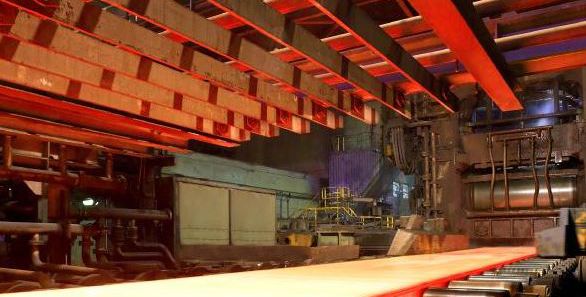
A fire at German steelmaker Thyssenkrupp’s Duisburg plant is expected to have a limited impact on shipments, a company spokesperson told McCloskey on 28 October.
The fire broke out late afternoon on 24 October at Thyssenkrupp Steel Duisburg in the hot strip mill in the Bruckhausen plant area and was put out early in the morning of 25 October.
Since the equipment impacted by the accident was still in the ramp-up phase, Thyssenkrupp’s customers will see limited impact on their shipments.
Although no official cause of fire or exact extent of the damage was determined, “it can be stated that the two central plant components, the new continuous casting line No 4 and the rolling mill of the new hot strip mill No 4, have not been damaged or have only sustained minor damage. The furnace area of the hot strip mill and the hall structure appear to have been the most affected,” the spokesman said.
Northwest European hot-rolled coil prices jumped by EUR20/t over the week to 24 October, with deals settled at EUR600-620/t ex-works. The anticipated reduction in supply from overseas due to a combination of new stricter quotas on imports, and effects of the carbon border adjustment mechanism (CBAM) coming into force in 2026 fueled the price rise. Although real demand is unlikely to rise, the market share of EU mills is expected to increase. And any reduction or delays of steel delivered from domestic mills supports the upbeat sentiment in the market.
On 22 October, Thyssenkrupp permanen
In September, Indian steelmaker Jindal Steel submitted a non-binding offer for Thyssenkrupp’s Steel Europe division.
SSAB to supply Vattenfall with green steel for dam gate
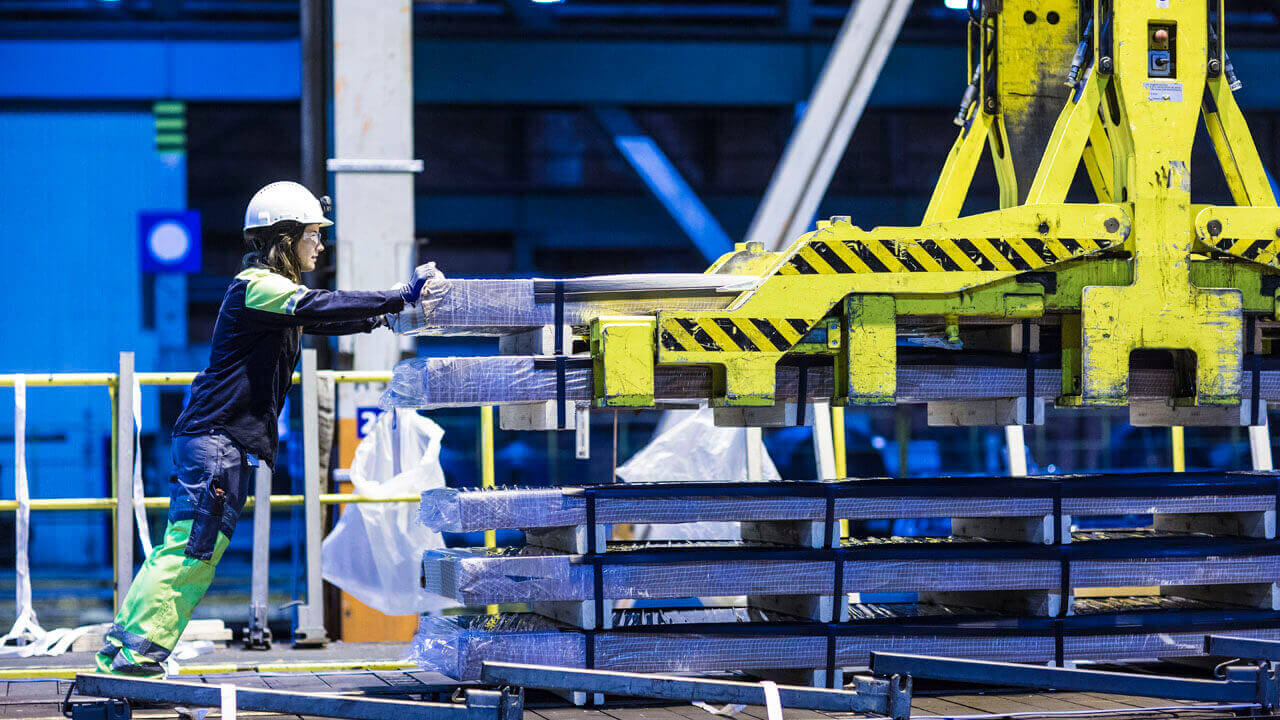
Swedish steelmaker SSAB has signed an agreement with state-owned energy company Vattenfall to supply green steel for a new dam gate, to be the largest and first of its kind globally produced from ironmaking with near-zero fossil carbon emissions.
SSAB said the agreement covers a pilot delivery of 120 tonnes of HYBRIT-produced steel for the new dam gate, produced via electric-arc furnace (EAF) with “fossil-free sponge iron”.
HYBRIT is a joint project between SSAB, Vattenfall, and ironmaker LKAB, seeking to create a fossil-free production chain from raw materials to finished steel, beginning with hydrogen-based direct-reduced iron (H2-DRI) through to green energy-powered EAF steelmaking.
“This is an important step in our shared commitment to reducing carbon emissions. With forward-thinking partners like Vattenfall, we continue to lead the transformation of the steel industry. Our successful collaboration through HYBRIT now demonstrates what we can achieve to reduce the climate footprint across the entire value chain,” said Thomas Hörnfeldt, Vice President of Sustainability at SSAB.
The steelmaker describes its fossil-free steel as a “proof-of-concept for the emission-free materials of the future, demonstrating that it is possible to manufacture large, complex components with a radically reduced climate footprint.”
As European authorities signal that sustainability criteria could be incorporated into public procurement directives or mandates via legislative proposals scheduled for this year, a demonstration of the applicability of low-carbon steel to larger-scale infrastructural developments could advantage SSAB’s HYBRIT steel in this emerging market.
HYBRIT-based renovations and developments are expected to become fully operational, and scale, between 2028-2029, as detailed in McCloskey’s European Green Steel Profile.
Benjamin Steven Journalist, Steel


EU imposes Chinese screws, track shoes AD duties
The European Commission has imposed definitive anti-dumping duties on two Chinese-origin steel derivative products, screws without heads and steel track shoes (STS), confirming provisional measures introduced earlier in the year, Kallanish notes.
From 23 October, a definitive anti-dumping duty was applied to imports of screws and bolts, whether or not with their nuts and washers, without heads, falling under CN codes 7318 15 42 and 7318 15 48 and originating in China. The decision followed an investigation initiated after a complaint by European fastener producers represented by the European Industrial Fasteners Institute (EIFI). The European Commission also confirmed the definitive collection of provisional duties and extended the measure to all registered imports of the product concerned.
The final duty levels vary by company: Zhejiang Junyue Standard Part Co. is subject to 54.7%, the Brother Group (Jiaxing High-enter Fasteners Co., Zhejiang Morgan Brother Technology Co., Jiaxing Brother Standard Part Co.) to 57.1%, and the Chinafar Group (Jiaxing Chinafar Standard Parts Co., Jiangsu Zhe Fasteners Co.) to 72.3%. Other cooperating companies are charged 59.8%, while all other exporters face the general duty rate of 72.3%, calculated on a cif Union border price basis before customs duty.
From 20 October, the Commission imposed a 62.5% definitive anti-dumping duty on imports of steel track shoes from China, following a complaint by Duferco Travi e Profilati. The regulation applies to certain steel shoes, with or without rubber pads, whether or not assembled in a track chain, classified under CN codes ex 8431 39 00, ex 8431 49 20 and ex 8431 49 80.
Larger cast STS used in heavy-duty machinery such as cranes and excavators were excluded after the Commission accepted Liebherr’s technical argument that such products are not produced in the EU. The measures also cover track groups and full track groups, but the 62.5% rate applies only to the track shoe component, which must represent at least 31% of the total product value declared at customs.
Distributors’ association EUROMETAL says it welcomes the measures. It has recently intensified its calls for the European Commission to broaden the revised safeguard measures to include steel derivatives and downstream products. The association warned that the exclusion of derivatives risks creating a “dangerous imbalance – protecting upstream production while exposing downstream sectors to unfair competition”.
Elina Virchenko UAE


European heavy plate round-up: prices rise amid CBAM uncertainty and trade shifts
European heavy plate prices strengthened in the week to 24 October in line with bullish sentiment in the flat steel market driven by changes in trade restrictions and the forthcoming introduction of the carbon border adjustment mechanism (CBAM).
Italian re-rollers have consolidated around the target price for plate of EUR650/t ex-works. Sources said that some deals have already been settled at EUR640-650/t ex-works.
Italian suppliers have not closed the December order books yet and they are expected to target further increases for January.
Although prices for imported slab have not changed the costs will rise due to implementation of CBAM from the start of 2026.
Several sources suggested that due to lack of clear guidance that would allow calculation of exact CBAM duties, some re-rollers in Italy have started to offer plate prices plus CBAM duties, instead of invoicing for effective prices.
An Italian mill representative, however, said that buyers were not keen to book material with a variable price that could significantly change and that the higher offers were targeted to cover both semi-finished, CBAM and production costs. The same source said that the price of EUR650/t will barely cover all the costs the re-rollers will face from next year.
Prices for imported slab from Asia have been heard at $510-520/t CFR Italy.
The availability of cheaper slab is likely to drop, after the EU introduced another package of sanctions against Russia. The measures now include Evraz PLC, a UK-headquartered company with core steel manufacturing and mining assets in Russia.
Evraz has been supplying slab to the EU, particularly to Czech Republic at competitive prices – around $50/t below those from Asian exporters.
In the Northwest European market, domestic heavy plate prices have been heard around EUR690/t ex-works.
| Unit | Term | 24-Oct-25 | Change | ||
|---|---|---|---|---|---|
| Weekly heavy plate | |||||
| Northwest Europe ex-works heavy plate | EUR/t | EX-WORKS | 690.00 | 15.00 | |
| Germany delivered heavy plate (Northwest Europe) | EUR/t | DEL | 700.00 | 0.00 | |
| Italy ex-works HRC | EUR/t | EX-WORKS | 580.00 | 25.00 | |
| Weekly steel slab | |||||
| Italy CFR slab | $/t | CFR | 515.00 | 0.00 | |
| Weekly green steel | |||||
| Green heavy plate premium (scopes 1-3 CO2 1t) | EUR/t | 25.00 | 0.00 | ||
Maria Tanatar Associate Director, Steel and Green Steel
Benjamin Steven Journalist, Steel

Morocco and the Netherlands cooperate to supply green hydrogen to Europe
Morocco and the Netherlands plan to deliver renewable hydrogen produced in Morocco to steel and heavy industry facilities in the Netherlands through the “Green Hydrogen Bridge” project. This initiative is expected to play a key role in enabling the steel sector’s transition to low-carbon production, contributing to Europe’s 2050 carbon neutrality targets.
Tomas Olejniczak, Project Lead for Climate and Energy in the Netherlands, stated, “By 2050, we will need between 300 and 500 petajoules of renewable hydrogen. Hydrogen will replace coal in the steel and chemical sectors and help reduce industrial carbon emissions.”
Morocco, with its abundant solar and wind resources, can provide low-cost renewable energy, making it a reliable supplier for the Dutch steel industry. Its geographic proximity and short maritime routes reduce transport costs, positioning Morocco as a natural green hydrogen hub for Northwest Europe. Morocco’s largest investment, the Jorf Hydrogen Platform, backed by a €30 million grant from Germany’s KfW PtX Fund, will start producing 100,000 tons of green ammonia annually in 2026, supplying hydrogen for steel production.
Rotterdam Port is preparing the necessary infrastructure for importing hydrogen and its derivatives. The port facilities will be integrated with the Hydrogen Network Netherlands and the Delta-Rhine Corridor to ensure continuous supply to industrial clusters in the Netherlands and Germany. In the short term, ammonia and methanol shipping will be used, while pipeline connections are planned for longer-term cost reduction. Joint R&D and certification processes will ensure the hydrogen supply is traceable and sustainable.
The Netherlands’ projected hydrogen demand by 2050 offers new investment opportunities for Moroccan producers. The partnership will help reduce carbon emissions in Europe’s steel sector and allow Morocco to scale up its green hydrogen capacity globally.

Steel, automotive must remain competitive: European Council
Particular attention needs to be paid to the automotive and steel industries, among others, so that they remain resilient and competitive in a global market and a challenging geopolitical environment, the European Council concluded during its 23 October meeting in Brussels.
“In this regard, it welcomes the recent [European] Commission proposal to protect the European steel sector from unfair impacts of global overcapacity,” the Council statement notes.
The Commission proposed earlier this month a new trade measure to replace existing safeguards, which aims to reduce quota volume by 47% and raise the out-of-duty quota to 50%, but does not encompass steel derivatives (see Kallanish passim). The legislation must be approved by the European Council and Parliament before it is enacted into law.
“It welcomes the Commission’s intention to take forward the review foreseen under the Regulation on CO2 emissions performance standards for cars and vans, and calls for the swift presentation of this proposal, taking into account technological neutrality and European content,” the Council adds.
The Council has also called for an urgent stepping up of efforts to secure the supply of affordable and clean energy and build an Energy Union before 2030, including by leveraging the new Energy Union Task Force. “This will require ambitious electrification using all net-zero and low-carbon solutions, and investment in grids, storage and interconnections at national and EU level,” it notes.
“In light of the negative impact of high energy prices on the global competitiveness of European industries, on the Union’s strategic autonomy and on European households, the European Council calls on the Commission to accelerate work aimed at lowering energy prices and supporting sustainable energy production in the Union,” it adds.
Adam Smith Austria

Fos-sur-Mer redirects orders, plans temporary production restart
ArcelorMittal is redirecting certain orders to other plants in France to minimise customer impact. It has sourced slab externally to meet year-end delivery commitments following a fire in October that resulted in a complete production stoppage at the Fos-sur-Mer site, Kallanish learns.
According to a company note, the blast furnace and steelmaking plant are currently shut down, while the sintering line is extending its scheduled downtime.
The coking plant is operating using its own gas, and the conveyor train, finishing lines, and logistics are handling and shipping existing stock.
The site teams are now focused on dismantling and rebuilding the damaged sections. “Based on analyses and supply lead times, the steel plant is scheduled to restart in early December in a temporary operating mode. The timeline for returning to full, normal operations is being finalised,” it notes.
According to market sources, Fos-sur-Mer will resume full production towards January, although this has not been confirmed by the company.
During this period, managers will allocate personnel according to the condition of the installations and the needs of the restoration work. For facilities that remain shut down, employees will spend 50% of their time on activities such as maintenance, instruction updates, improvements, and training, and 50% on downtime.
Natalia Capra France