


Germany’s steel and metal industry sounds the alarm! Production decline, political action needed
The steel and metal processing industry, a backbone of German manufacturing, experienced a challenging start to 2025. Production fell 3.4% year-on-year in the first six months. A temporary 2.4% recovery from May to June was insufficient to offset the decline. Furthermore, the weak order growth seen earlier in the year turned negative again by June.
The German Steel and Metal Processing Association (WSM) described the contraction as a “braking effect” and warned that the current situation could lead to structural erosion in the industry. The association is calling for bold political steps: “It’s time for driving force instead of stagnation – we need a hot autumn filled with courageous political decisions.”
High energy costs and weak infrastructure are bottlenecks
According to WSM, the production decline stems from long-standing structural problems in Germany that require urgent solutions:
- High energy prices and taxes
- Heavy bureaucracy and slow permitting processes
- Insufficient investment incentives
- Weak infrastructure
These factors seriously hamper the daily operations and future projects of about 5,000 medium-sized companies affiliated with the association. WSM CEO Christian Vietmeyer noted, “We must change these conditions that block the courage needed for innovation, investment, and transformation. Coalition partners need to act together and make overdue decisions.”
Additionally, new U.S. tariffs add further pressure on the sector, posing another obstacle to growth.
Removal of the Gasspeicherumlage is a first step, but not enough
WSM welcomed the removal of the natural gas storage surcharge (Gasspeicherumlage) as a positive development but stressed it alone is not sufficient. Holger Ade, Head of Industry and Energy Policy at WSM, stated: “High grid usage fees must also be lowered. Moreover, a special and affordable industrial electricity tariff should be introduced for all manufacturing companies. Without this, small and medium-sized enterprises cannot switch to energy-dependent transformation technologies.”
No more delays
Christian Vietmeyer emphasized that the industry is ready to invest in sustainable production but needs clear pathways: “There is an urgent need for digitalized and accelerated permit processes. Companies want to invest but require incentives, reliable legal frameworks, and stable conditions.”
WSM’s message is clear: Germany’s industrial production base is under threat. Medium-sized companies now expect swift and effective political actions to maintain competitiveness. The association urges political leaders: “Let’s act together without wasting time on debates. The shared goal must be growth. The time for delays is over.”


European HRC prices down slightly on sluggish demand
European hot-rolled coil steel prices fell slightly on Wednesday August 13, with prices still below target offers, sources told Fastmarkets.
Mills were trying to raise their October offer prices, sources said, looking to achieve prices of around €590-610 per tonne ex-works.
But market participants estimated the workable level for HRC at about €560-570 per tonne ex-works on Wednesday.
Factors still having an impact on liquidity include the current summer holiday slowdown and European mills awaiting new regulatory changes, due to be implemented in early 2026, sources said.
“Integrated mills are trying to push [for higher] offers for the third quarter of the year, but I haven’t seen any willingness to buy at those [higher] prices,” a distributor source told Fastmarkets.
“Mills are looking to see what will happen with imports when the EU Carbon Border Adjustment Mechanism] (CBAM) comes into effect in January, especially in terms of imports from China,” the source addedd.
Fastmarkets’ calculation of the daily steel HRC index, domestic, exw Northern Europe was €569.33 per tonne on August 13, down by €1.68 per tonne from €571.01 per tonne on August 12.
The Northern European index was up by €1.83 per tonne week on week and by €23.08 per tonne month on month.
And prices for overseas coil edged up slightly over the past week.
Fastmarkets’ weekly price assessment for steel hot-rolled coil, import, cfr main port Northern Europe, was €465-510 per tonne on Wednesday, narrowing up from €460-510 per tonne the previous week.
In Italy, meanwhile, trading activity was close to non-existent amid the ongoing holiday season.
It remains to be seen whether target offers of €540-550 per tonne ex-works from local suppliers at the end of July – ahead of summer closures – will be sealed in deals and so far this month, buyer estimates of achievable prices varied between €520 per tonne and €540 per tonne ex-works.
Some sources, however, suggested, that local suppliers might even revise their offers higher, given the price recovery in Northern Europe and the increase in imported HRC prices.
“In Italy, the holiday season is in full swing and hardly any [HRC] is being traded. We will see where the price [for HRC] stands in September,” a buyer source said.
Fastmarkets’ daily steel hot-rolled coil index, domestic, exw Italy was €536.67 per tonne on Wednesday, down by €3.33 per tonne compared with €540.00 per tonne on Tuesday.
The Italian index was, however, up by €1.67 per tonne week on week and up by €10.84 per tonne month on month.
Prices for overseas coil were also up in the week to Wednesday.
Fastmarkets’ weekly price assessment for steel hot-rolled coil, import, cfr main port Southern Europe, was €460-520 per tonne on Wednesday, narrowing up from €450-520 per tonne a week earlier.
The lower end of the range reflected bids and the latest transactions for Indonesian material, with new offers from Indonesia heard at around €470-475 per tonne CFR Italy.
The upper end of the range reflected the lowest offers from Turkey and India, meanwhile.
Overseas suppliers were able to offer end-September and early October shipment, sources told Fastmarkets.
Julia Bolotova, Davide Montagner


Global steel HRC prices hit highs
A bump in Chinese steel prices, underpinned by government production cuts, has fuelled a rally in global hot-rolled coil (HRC) prices.
This has coincided with a few other supporting factors, such as strong raw materials prices, trade measures and also regional dynamics in the EU, including reduced import supply, although demand remains fundamentally weak in many countries.
The Argus global HRC marker — a composite weighted-average index of key Argus regional HRC prices — has been on an upward trajectory so far this month, rising by $12.33/t from 1 August to $544.75/t on 12 August. According to the index, HRC prices hit bottom on 9 July, reaching $523.13/t.
The rise is primarily the result of Chinese HRC prices bottoming out, with the Argus daily fob Tianjin index reaching the bottom in this cycle at $439/t on 25 June and holding at this level until 2 July, owing to low summer steel consumption in the domestic market and weak seaborne demand.
The market lifted at the start of July because of government incentives to eliminate outdated capacities, and then again in mid-July on production cuts ahead of China’s military parade in September. In the second half of July, a large dam project in Tibet, expected to boost steel demand, propped prices further up.
Firming iron ore and coking coal prices lent support too, amid talks of restrictions to production of coal mines in China. Before the latest rebound in coking coal prices, the Argus fob Australia hard coking coal index reached bottom on 8 July, since when it has increased by $20.10/t to $153.65/t on 12 August. During the same time period, the Argus ICX® 62pc has increased by $8.50/t.
The Chinese steel price increase and the raw materials bump have played a factor in rising global offers, but in Europe reduced import supply, because of a number of trade measures, has incentivised bolder mill increases. Expectations that January supply will be even shorter, owing to the Carbon Border Adjustment Mechanism (CBAM) entering into effect, has strengthened sentiment. The Argus HRC European marker, which is an average of the ex-works northwest EU and ex-works Italy indexes, is up by €28.25/t from 15 July.
In contrast, during the summer months the Argus HRC ex-works US index has bucked the global uptrend, despite spring tariffs propping up the market previously, with the index dropping by $32.75/st between 15 July and 12 August, to yesterday settle at $857/st — its lowest since February. Strong buyer inventories, little need to restock and moderate mill lead times have weighed on prices.
Global steel HRC marker $/t

By Lora Stoyanova

Source: argusmedia.com

Coiled rebar prices climb in Austria
Last week’s announcement of new rebar size extras by some mills has been followed by increased effective rebar offers, Austrian sources reaffirm.
The size extras were amended for the first time since 2015, with some mills simultaneously raising base prices, at least for straight rebar.
Size extras for the standard thickness of 12mm were lifted by €15/tonne to €280/t ($325), with base prices lifted by the same degree. Offers are still scarce amid the summer lull, but buyer sources tell of delivered prices of €640-650/t, which suggest a base price of €360-370/t.
The picture is more opaque for coiled rebar, given each country has a specific offer system. For Austrian customers, domestic and German mills traditionally quote an effective price not differentiating between base price and size extra. “It has been habitual for as long as I’m in the business, certainly more than 20 years,” one buyer tells Kallanish.
He notes that coil offers from Italian mills – which are still going by the older size extra lists – went up by €10-20/t last week. Another buyers tells of German offers – including the newer size extras – that are €30-40/t higher than before.
The new size extra for coiled rebar of 12mm thickness is the same as for straight bar, €280. For thicker gauges, the size extra for coil can be €15 higher than for straight bar. According to the buyer, the effective offers to Austria do not differentiate much by thickness either. Therefore, the base price portion cannot really be traced back.
Regarding newer offers for straight bar from Italy, one buyer tells of increases by €10-20 since last week. For customers in southern Austria of mills near Lake Garda, a relatively short distance, this would mean base prices of around €350. Offers to other locations could easily be €15+ more, he says.
Christian Koehl Germany


German fabricators’ production stays low
Germany’s steel and metal working industries cannot be happy with their performance in the first half-year, says their federation WSM.
Production at the circa 5,000 mostly small and medium-sized fabricators in H1 was 3.4% lower than in the corresponding 2024 period, Kallanish hears from WSM. Towards the end of the first quarter, the year-on-year drop appeared to become narrower, with March down only 0.4% y-o-y. That did not turn into a trend, despite some positive signals like a 2.4% month-on-month growth from May to June.
Order intake also does not look promising.
WSM managing director Christian Vietmeyer has used the release of the figures as an occasion to once more call on policymakers to take measures. The standstill is being caused by well-known brakes on economic activity in Germany, he says, citing painful energy prices and taxes, snail-slow approval procedures, bureaucratic hurdles, lack of incentives for investment, and outdated infrastructure.
“The time of hesitation must be over,” he says with an eye on the new government, which has now been in office for 100 days – normally a cornerstone to take stock of a new government’s performance. “Small and medium-sized industries now need a ‘hot autumn’ with fast political decisions that reinforce competitiveness,” Vietmeyer asserts.
Christian Koehl Germany

Czech semis imports surge in first half
The Czech Republic saw semi-finished steel imports surge in the first half of 2025, with long steel intake falling. Imports of the largest product group – flats – inched up, Kallanish notes from GTT data.
Semis intake surged 79% on-year in H1 to 663,358t. This coincided with the resumption of some steel production on a tolling basis at the beleaguered Liberty Ostrava mill, with semis feedstock supplied by two separate companies. The plant’s blast furnace has been idled since 2023.
Ostrava was recently acquired by a consortium comprising SPV NH Ostrava and SPV NH Koksovna, companies owned by former Czech interior minister Martin Pecina. However, it is unclear whether the new investor plans to restart the blast furnace.
Plate re-roller Vitkovice Steel has meanwhile been acquired by Jindal Steel, which is eyeing installing a new electric arc furnace at the plant, which would see it produce its own slab for the first time since 2015. The Czech firm nevertheless signed a memorandum of understanding with Oman-based Jindal subsidiary Vulcan Green Steel for the future supply of 1 million tonnes/year of slab.
Czech Republic was among the countries to lobby the European Commission to continue allowing an EU quota for Russian-origin slab imports, on which it depends for flat steelmaking.
Despite the problems at Ostrava, however, Czech iron ore imports grew 2% in H1 to 1.49mt.
Czech imports of longs meanwhile inched down 1% to 858,636t. Intake of flats rose 4% to 2.1mt.
On Czech exports, shipments of longs and flats rose 6% and 9% respectively to 1.06mt and 498,221t, while semis exports surged 22% to 126,311t – despite the growth in their imports.
Adam Smith Austria
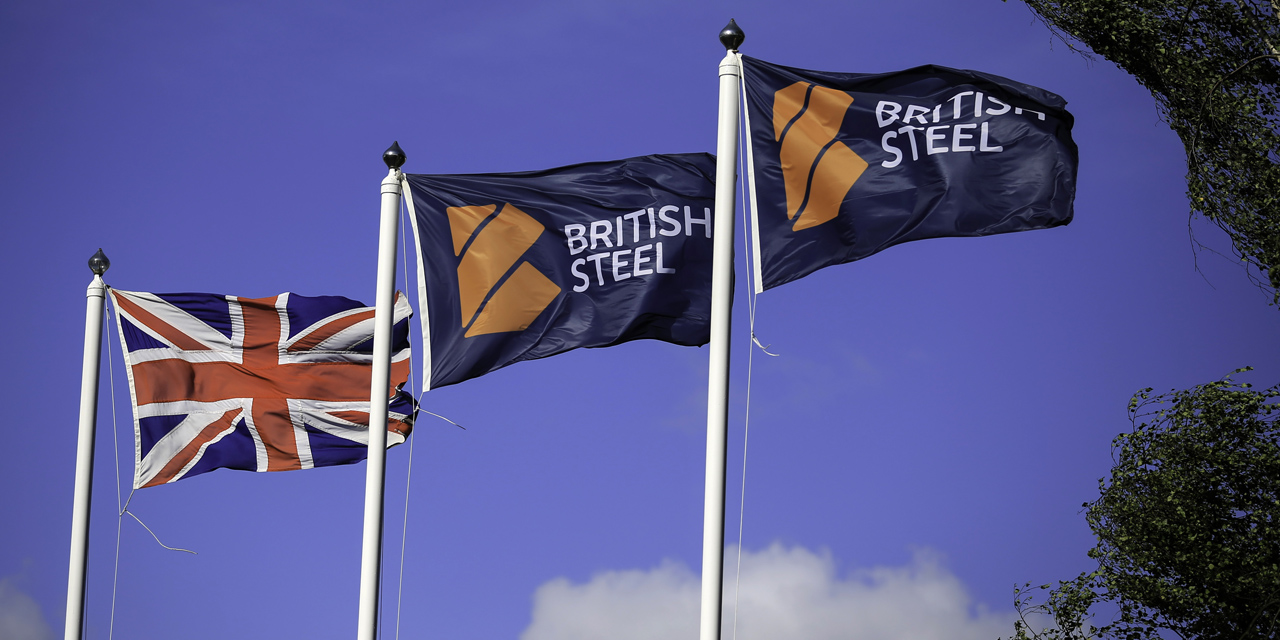
British Steel negotiations at standstill as UK rejects Jingye’s multi-million demands
According to a news report by the BBC, the UK government’s talks with China-based Jingye Group, the owner of the UK-based steelmaker British Steel, have reached a critical impasse over the Scunthorpe steelworks.
Ministers accuse Jingye of demanding “hundreds of millions” in taxpayer money to transfer ownership – a sum they say is far above the company’s real value. The deadlock has stalled efforts to secure a new buyer and raised fresh concerns about thousands of jobs and the country’s last blast furnaces.
According to a news report by the BBC, the UK government’s talks with China-based Jingye Group, the owner of the UK-based steelmaker British Steel, have reached a critical impasse over the Scunthorpe steelworks. Ministers accuse Jingye of demanding “hundreds of millions” in taxpayer money to transfer ownership – a sum they say is far above the company’s real value. The deadlock has stalled efforts to secure a new buyer and raised fresh concerns about thousands of jobs and the country’s last blast furnaces.
In April, the UK government took control of steelmaker British Steel to prevent the closure of two blast furnaces at its Scunthorpe plant, as SteelOrbis previously reported. Full nationalization was initially considered, but ministers hoped Jingye Group would transfer ownership for a nominal fee. British Steel is officially still owned by Jingye Group, as the government stopped short of a complete takeover. Full nationalization remains a last resort, with ministers wary of discouraging foreign investment.
At the end of March, British Steel started the consultation process for the closure of two blast furnaces at the Scunthorpe plant, following Jingye’s rejection of a £500 million support package offered by the UK government.


Spain’s steel production declined in June
According to data compiled by SteelRadar from the Spanish Steel Producers Association (UNESID), the country’s crude steel output fell by 6.8% month-on-month in June 2025 to 1.06 million mt. On a yearly basis, production remained unchanged.
In the January–June period, Spain’s total steel production rose by 6.8% compared to 6.19 million mt in the same period of 2024, reaching 6.61 million mt.
In June, the Spanish steel industry also experienced a decline in scrap recycling. During the month, 844,000 mt of scrap was used as raw material in the production of new steel products, marking a 9.2% drop from the previous month and a 1.4% decrease year-on-year.
In the first half of the year, the sector’s total scrap recycling amounted to 5.27 million mt.

European steel HRC market still in summer lull; prices dip below mill targets
The European steel hot-rolled coil market remained quiet on Tuesday August 12 while the holiday season continued, with only limited tonnages heard traded at prices that were still below target offers, industry sources told Fastmarkets.
Ambitious new offer prices for October delivery coil were yet to be sealed in deals, with integrated mills hoping to achieve €590-610 ($685-709) per tonne ex-works for October delivery coil.
Transactions in the Benelux area were reported at €560-580 per tonne ex-works and even at €550 per tonne ex-works for bigger tonnages, according to market sources.
Overall, liquidity remained weak due to seasonal factors, they said.
“There is very little movement in the market. Everybody is waiting for September [and the] end of the vacation period, and for more clarity on CBAM [the EU’s Carbon Border Adjustment Mechanism] and trade measures,” a mill source told Fastmarkets.
“There are hardly any volumes traded,” a buyer source said. “Some 500 tonnes here, 1,000 tonnes there. We will see the real market picture when the holiday season is over.”
As a consequence, Fastmarkets’ calculation of the daily steel HRC index, domestic, exw Northern Europe was €571.01 per tonne on August 12, down by €2.32 per tonne from €573.33 per tonne on August 11.
The Northern European index was up by €10.83 per tonne week on week and by €24.76 per tonne month on month.
Meanwhile, the daily steel hot-rolled coil index, domestic, exw Italy was €540.00 per tonne on Tuesday, down by €2.50 per tonne compared with €542.50 per tonne on Monday.
The Italian index was, however, up by €5.00 per tonne week on week and up by €14.17 per tonne month on month.
But trading was almost non-existent in the Italian market due to vacations.
In late July, before commencing summer maintenance work, local suppliers suggested target offer prices for September at €540-550 per tonne ex-works. Buyers were estimating the market at €530-540 per tonne ex-works, however, and no fresh trades have been reported so far.
“End users, stockists and fabricators are not booking, and mills are on vacation or closed for maintenance. It’s the Italian holiday peak time,” a trading source said.
Prices for imported coil, meanwhile, edged upward.
In the week commencing August 11, HRC from Indonesia was on offer at €475 per tonne CFR to Italy, up from €460-470 per tonne CFR in the previous week.
Market sources reported a large cargo from Indonesia sold to Italy around €460-464 per tonne CFR in the week to August 8.
Offers from Turkey were heard at €520-540 per tonne CFR including anti-dumping duty, up from the previous offer price of €500-520 per tonne CFR reported in the week to August 8.
HRC from India, meanwhile, was on offer to Italy at €520-525 per tonne CFR.
And from Algeria, offers were reported around €520 per tonne CFR to Italy, while one source reported a transaction at €510 per tonne CFR to Italy in early August.


EU sources doubt feasibility of coil price hikes
European service centres and traders report early signs of improved demand following recent price increases by European producers. Demand for coil derivatives has also shown improvement since July, as customers expect further price hikes and are looking to secure tubes and sheets at current values.
According to a northern European service centre, the signs of a potential price recovery are driven more by protectionist measures than by a real improvement in consumption, which remains weak and uncertain.
Sources who spoke to Kallanish indicate the European Commission is expected to release its recommendation for a safeguard replacement measure by the end of September, with implementation planned for January.
Market participants in northern Europe and Italy agree that, given the current and future protectionist measures, further coil price increases are likely in the fourth quarter. However, in September, EU producers will face the challenge of needing to sell into a market where many large buyers are holding back, having already secured import volumes from Asia and the Middle East in June and July at competitive prices. Asian producers are now said to have started shipping very large volumes of coil to Spain, Italy and northern European ports.
European steelmakers raised prices last and this month but the market remains subdued due to the summer lull. Many mills are facing significant cost overruns, inefficiencies and labour challenges. Additionally, the introduction of new green steel capacity in Europe will add another layer of complexity to the market.
Stegra, formerly known as H2 Green Steel, says it intends to begin commercial production in about one year from now. Hydnum Steel meanwhile aims to begin plant construction by the end of 2025. In May, Blastr Green Steel said it had secured the zoning plan in the Joddböle industrial area for its green steel plant project in Inkoom, Finland.
According to the source, these green steel projects may soon add 6-8 million tonnes to the market. This does not take into account the two new coil projects implemented by the Metivest-Danieli joint venture in Piombino, Italy, and Marcegaglia’s new French coil plant in Fos-sur-Mer. Start-up for both projects is scheduled for 2028-2029.
According to a Swiss source, the EU may postpone the implementation of CBAM by one year, a delay that would be offset by the introduction of a new safeguard measure but would give buyers the opportunity to keep purchasing from Asia to the detriment of European price increases. Downstream, service centres report rising demand ahead of the August holidays in several European countries, as customers anticipate price increases.
Sheet prices are expected to rise by €30-40/tonne ($35-46) in September, aligning with recent coil producers’ hikes. Hot rolled coil prices in Europe remain stable before the summer stoppages, ranging between €525-550/t base ex-works, with the lower end of the range seen in Italy.
Natalia Capra France