


Wuppermann expands calculation model for CO2 footprint
German steel processor group Wuppermann has widened its calculation model for CO2 emissions, WTopCarb, which it introduced in 2023 for hot-dipped galvanized strip, to cover its other products.
WTopCarb serves to calculate the carbon footprint of individual steel products and confirm it by means of a certificate. Its calculation methodology was verified by the Fraunhofer Institute for Environmental, Safety and Energy Technology (UMSICHT). It covers the emissions of the most important input materials, hot strip and zinc, the galvanizing process itself, as well as transport and packaging.
This model has now been expanded beyond Wuppermann’s mainstay of galvanized strip, to also cover tubes and profiles, Kallanish hears. The expansion of the calculation model was again reviewed and confirmed by the Fraunhofer Institute UMSICHT in 2025, Wuppermann notes.
Following the extension, the calculation methodology is now divided into the following product groups. With WProtect, a high-performance film is additionally applied to the hot-dip coated steel strip with strip widths from 600 mm; WTopCor has a high-performance corrosion protection made from a zinc-magnesium alloy with low CO2 emissions.
Tubes includes black and pickled tubes as well as tubes with zinc or zinc-magnesium coating with different cross-sections and diameter; Profiles are pickled, as well as profiles with zinc or zinc-magnesium coating with different cross-sections.
Christian Koehl Germany


British Steel supplies steel for cable factory in Scotland
UK-based steelmaker British Steel has announced that it has played a pivotal role in constructing one of Scotland’s most significant renewable energy infrastructure projects – a £350 million subsea cable factory at the Port of Nigg, operated by Sumitomo Electric U.K. Power Cables Ltd.
UK-based steelmaker British Steel has announced that it has played a pivotal role in constructing one of Scotland’s most significant renewable energy infrastructure projects – a £350 million subsea cable factory at the Port of Nigg, operated by Sumitomo Electric U.K. Power Cables Ltd.
The company has supplied over 2,000 mt of structural steel sections for the facility, which will produce high-voltage subsea power cables critical for offshore wind farms and grid connections.
Construction progress and scope
The project is well underway, with steelwork installation for the first of four planned buildings already in progress. The fabrication and erection of the steel structure are being carried out by the UK-based subcontractor BHC, which also handles metal decking, concrete topping, cladding, and intumescent fire protection coatings before delivery to the site.
Once completed, the factory, due to open in 2026, is expected to create around 330 jobs across the entire supply chain, significantly boosting the Scottish Highlands economy.


Green steel market steady amid summer break, but CBAM looms large for 2026
The summer holiday period was in full swing across Europe, so trading for green steel was close to zero.
“Green steel is still a niche market [in Europe] and during vacation period there is almost no trading going on,” one trading source in the Benelux region told Fastmarkets.
Fastmarkets’ methodology defines European green flat steel as steel produced with Scope 1, 2 & 3 emissions at a maximum of 0.8 tonne of CO2 per tonne of steel.
Buyers estimated tradable values for green flat products at €100-120 ($116.50-139.80) per tonne, while sellers indicated €170-200 per tonne. No fresh transactions were reported.
Fastmarkets’ assessment of the green steel domestic, flat-rolled, differential to HRC index, exw Northern Europe was €120-170 per tonne on Thursday, unchanged week on week.
Fastmarkets’ assessment of the flat steel reduced carbon emissions differential, exw Northern Europe was also unchanged at €40-60 per tonne on Thursday.
For steel produced in blast furnaces with reduced carbon emissions of 1.4-1.8 tonnes of CO2 per tonne of steel, offers for premiums were indicated at €60-70 per tonne during the assessment week. Buyers’ estimates of tradeable values were €40-50 per tonne.
Sources expect little change in the market until the end of August.
But several sources told Fastmarkets that overseas flat steel suppliers were exploring options of selling their products with reduced carbon emissions content to Europe.
“CBAM is just around the corner and suppliers from Asia are testing waters with green plate, slab, hot-rolled coil offers. However, a lack of clarity regarding CBAM, even just months ahead of the implementation, remains a stumbling block,” a German trader told Fastmarkets.
A public consultation on CBAM, launched by the European Commission in July, will be closed on August 26.
It is aimed at refining the framework and closing potential loopholes, with final legislative proposals amending CBAM expected in the fourth quarter of 2025.


European HRC market muted amid summer lull, religious holidays
In Northern Europe, only the Netherlands remained working on Friday, while all other countries celebrated Mary’s Assumption.
Market participants in the Netherlands reported that offers still varied within the range of €590-610 ($687.37-710.67) per tonne ex-works.
Their estimates of workable prices remained within the range of €550-580 per tonne ex-works, in line with recent deals heard in the market.
Fastmarkets’ calculation of the daily steel HRC index, domestic, exw Northern Europe was €569.17 per tonne on Thursday, down by €0.41 per tonne from €569.58 per tonne on August 14.
The Northern European index was down by €6.46 per tonne week on week, but up by €21.67 per tonne month on month.
The Italian market was also silent due to the traditional holidays and maintenance periods in August.
Fastmarkets’ daily steel HRC index, domestic, exw Italy was €537.50 per tonne on Friday, stable day on day.
The Italian index was down by €13.75 per tonne week on week, but up by €13.54 per tonne month on month.
Prices for domestic HRC in Central Europe showed signs of growth this week, despite sluggish demand during the holiday period, sources told Fastmarkets.
“At the moment, the market remains very calm, but we are seeing slight increases in prices,” a distributor source told Fastmarkets.
The source added that “little capacity” caused by the closure of some blast furnaces in the region contributed to the price increase.
This week, offers were heard hovering at €545-565 per tonne ex-works, compared with offers at €540-565 per tonne ex-works heard at the end of July.
Fastmarkets’ weekly price assessment for steel HRC, domestic, exw Central Europe was €545-565 per tonne on Wednesday, narrowing upward by €10 from €535-565 per tonne the previous week.
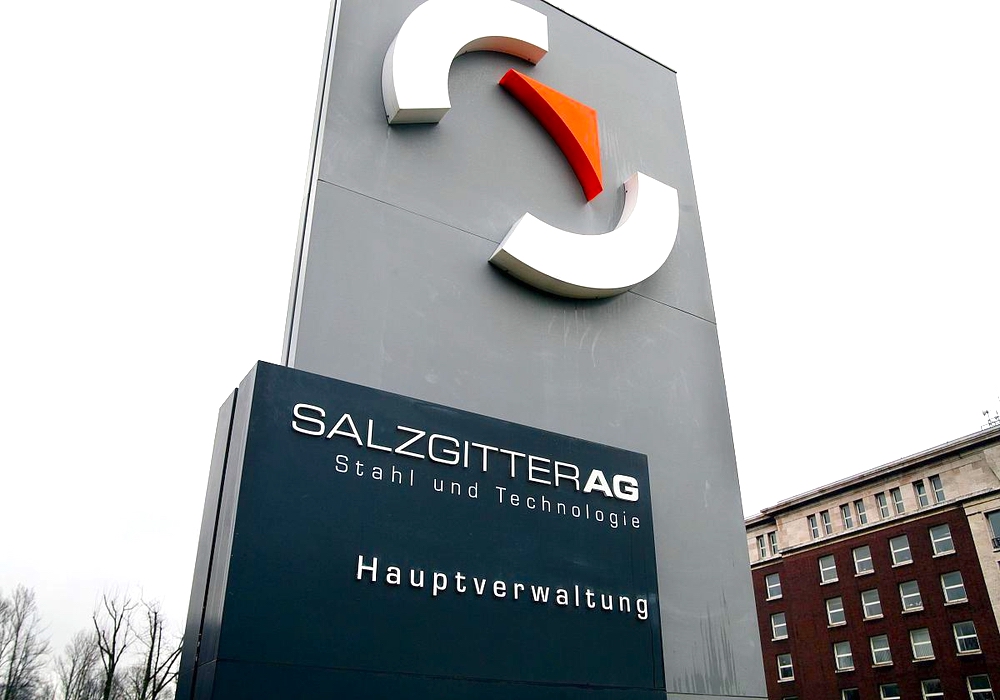
Salzgitter reports better H1 for longs than flats
Salzgitter kept struggling with low market demand in the first half of the year, and in most categories reported lower earnings than a year ago, with sections performing better than flat products, Kallanish notes.
Crude steel production at its Steel Production business unit, comprising the oxygen converter-route strip mill in Salzgitter and EAF-based sections mill in Peine, was 2.49 million tonnes, down from 2.69mt in the first half of 2024.
The unit’s shipments, which cover strip and sections, were virtually on par with the corresponding 2024 period at 2.8mt. Order intake fell slightly below the level of the previous year, from 2.58mt to 2.46mt. The company notes that order intake in the strip steel segment underperformed due to weaker demand, whereas the sections segment remained virtually stable.
Division revenue was lower than the previous year’s figure, totalling €1.7 billion ($1.99 billion) versus €1.81 billion, pressured by the considerable decline in the price of strip steel products. In the sections segment, sales were up year-on-year supported by somewhat higher shipments and prices, Salzgitter says, but does not provide separate figures for the product groups.
Salzgitter’s Steel Process business unit, which covers tubes and heavy plate, saw order intake drop slightly from €911m to €873m. With shipments and selling prices down, revenue fell by about a quarter y-o-y, also due to the spin-off of the stainless tubes subunit.
After a process lasting more than two years, plate unit lsenburger Grobblech GmbH, a producer of defence steels, received the first partial approval from the Bundeswehr (German Armed Forces) in June. Its Secure 500 steel grade in a thickness range of 6-16mm has been approved for use by the military, in vehicles and protective systems. “We are in the approval process for other steels,” the company notes.
Christian Koehl Germany

EU stainless trader proposes duty-free SME import quota
German stainless steel trader Gerber Steel is proposing that an annual tonnage of steel imports be exempt from EU safeguard tariffs if the importer is a small to medium-sized enterprise (SME).
Gerber finds that SMEs, in particular, suffer from high tariffs, although they cause limited carbon emissions, especially when CBAM is also accounted for. This double burden for SMEs “means an enormous bureaucratic effort, and also competitive disadvantages against bigger corporations,” says chief executive Thorsten Gerber. “According to Eursostat, 3% of large companies in the EU are responsible for 57% of all steel imports. Therefore, SMEs cannot be blamed for possible dumping and should be exempted from European trade defence measures,” he tells Kallanish.
As a solution, Gerber proposes that SMEs be granted a volume of 25,000 tonnes/year that are exempt from tariffs, as well as from CBAM reporting obligations and future regulations of a similar kind.
Gerber Steel criticises the current Tariff Rate Quota (TRQ) system, as it is based on a first-come-first-served principle, to the particular disadvantage of smaller players, as big players tend to exhaust the quotas with large-tonnage orders.
With the current safeguard quotas expiring in June 2026, the company furthermore warns against a hasty introduction of a new trade instrument before CBAM is functional. The lack of CBAM benchmarks and “default values” is an example of how immature regulations hurt especially small and medium-sized players, Gerber asserts.
Campaigning under the name “EU Steel Carbon Shield”, the company presented in June its concept to the European Parliament in Strasbourg.
Christian Koehl Germany

Rest in Peace Hasso Haibach
It is with deep sadness that we have learned of the passing of Hasso Haibach, CEO of Becker Stahl-Service GmbH, after a short and serious illness.
We had the privilege of collaborating and working with Mr. Haibach over the past two years. During this time, we came to know him not only as an outstanding business leader, but also as a person of remarkable integrity, empathy, and openness. His genuine interest in people, his ability to listen, and his respectful manner left a lasting impression on all who worked with him.
Mr. Haibach’s leadership was marked by fairness, sincerity, and a readiness for dialogue, even in challenging situations.
On behalf of EUROMETAL and its members, we extend our heartfelt condolences to his family, his loved ones, and his colleagues at Becker Stahl-Service. He will be remembered with deep respect and gratitude.
In silent remembrance, EUROMETAL.

Becker Stahl-Service appoints Bernd Guttek as new COO
EUROMETAL member Becker Stahl-Service has announced the appointment of Dr. Bernd Guttek as its new Chief Operating Officer (COO), effective 15 August 2025.
The newly created position is part of Becker’s strategy to strengthen its operational structures and set a clear course for the company’s future direction.
Dr. Guttek brings decades of international leadership experience in the manufacturing industry, particularly in operations and supply chain management. Prior to joining Becker, he held senior operational responsibilities at Adient, overseeing several European production facilities.
Salzgitter Trading unit turns profit amid group losses in H1 2025
In the first half of 2025, Salzgitter AG’s Trading business unit achieved a turnaround with a marginally positive result, thanks to cost adjustments and restructuring measures, the company states.
It is less happy with the results of its Steel Production and Steel Processing business units, which it says reflected the extremely challenging political and economic conditions, Kallanish notes.
In the first six months, Salzgitter group recorded external sales of €4.7 billion ($5.5 billion), down year-on-year from €5.2 billion. Earnings before taxes amounted to negative €83.8 million, compared to positive €11.5m in H1 2024.
On the basis of preliminary results published in July, the company had already adjusted its guidance downward. It now anticipates revenue of €9-9.5 billion for the full year, down from the previous forecast of €9.5-10 billion. In terms of pre-tax result, it envisages a range between a loss of €100m and breaking even. Previously, it forecast a range of €–100m and €+100m.
The Trading unit, which encompasses stockholding distribution as well as international trading, saw earnings turn from a loss to a profit. Ongoing cost savings combined with restructuring measures brought the pre-tax result to a positive €10.9m, after a loss of €0.8m in the first half of 2024.
One-off effects included the sale of subsidiaries in Austria and in pipes distribution. Compared with the year-earlier period, the unit’s shipments declined marginally from 1.74 million tonnes to 1.68mt. Sales of stockholding steel trade, in particular, dropped considerably below last year, the company notes, without giving tonnages.
Christian Koehl Germany

Tata Steel UK CEO Rajesh Nair appointed UK Steel chair
Tata Steel UK says its chief executive, Rajesh Nair, has been appointed the new chair of producer association UK Steel, Kallanish learns.
Nair has more than 36 years of experience across the Tata Steel Group and is a board member of Tata Steel UK. He joined the UK steelmaker as chief operating officer in 2021, before becoming ceo in 2023.
He will undertake his role as chair in addition to his existing responsibilities at the steelmaker.
Nair says: “It is an honour to be appointed chair of UK Steel at such a pivotal moment for the industry. This is a period of profound change – with significant challenges, but also real opportunities to strengthen the sector for the long term.”
“I look forward to working with UK Steel members and stakeholders to help secure that future – working closely with Government on its Steel Strategy and addressing structural issues like uncompetitive energy costs and the growing threat of high-emission imports,” he adds.
The steelmaker is currently undergoing a £1.25 billion ($1.67 billion) transformation at its site in Port Talbot, building an electric arc furnace (see Kallanish passim).
UK Steel director general Gareth Stace notes: “The appointment of Rajesh as chair of UK Steel is excellent news for both UK Steel and our industry as a whole. Rajesh will bring a wealth of experience across both the global and UK steel industry to this role. His appointment could not have come at a better time as our industry looks to modernise and grow as Government prepares to publish its Steel Strategy this autumn.”
Carrie Bone UK