

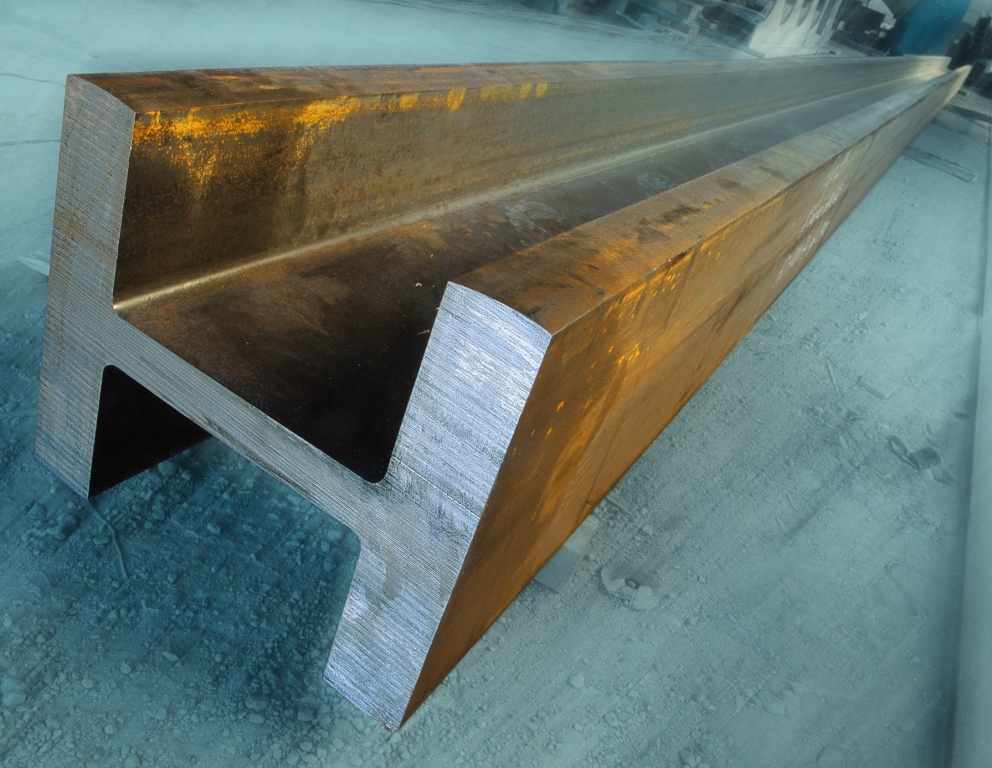
Italian merchant bar producers seek increases amid slowdown
Trading activity in the Italian long products market has slowed significantly due to the August lull. However, before the seasonal maintenance shutdowns begin, merchant bar producers are seeking increases of €30/tonne ($34) on July levels.
Over the past four weeks, market conditions have remained weak, with merchant bar and beam prices showing little movement. Scrap prices declined notably in July but have stabilised since last week.
Several market participants view the subdued demand for merchant bar as a structural issue. Multiple distributors reported stable beam sales volumes in July, while merchant bar sales remained subdued, highlighting the deep challenges the segment is facing, Kallanish notes.
Italian domestic merchant bar levels are at €670-680/t delivered inclusive of size extras. The price increase is set to take effect from 25 August, coinciding with the resumption of production at mills following the traditional summer shutdown. The first category of sections is also holding steady at €770-780/t delivered, with competitive Spanish-origin offers being tabled in July.
Natalia Capra France


ArcelorMittal increases northern Europe coil prices again: sources
ArcelorMittal has raised coil prices by a further €20/tonne ($23) across northern Europe. The increase applies to new contracts for remaining third-quarter delivery slots and for October shipments, according to market sources.
The new base price for hot rolled coil is now at €610/t delivered, up from €590/t at the end of July. This move follows growing import restrictions, including a safeguard replacement measure expected from the European Commission.
According to buyers who spoke to Kallanish, the increases will consolidate in the coming weeks as options to buy from Asia are now fading due to the future costs of the Carbon Border Adjustment Mechanism (CBAM), which takes effect in January 2026.
European steel association Eurofer recently expressed strong support for a French-led proposal outlining a “highly effective” new trade instrument aimed at tackling global overcapacity and safeguarding the European steel industry (see Kallanish 30 July).
The French non-paper urges the European Commission to quickly propose a new safeguard mechanism that should be in place by 1 January 2026, in advance of the safeguard measure expiration at end-June. This should reduce imports’ share back to 2012-2013 levels.
A major coil buyer, who sources spot market material priced on indices, believes Eurofer is likely to achieve “strong results” in European trade policy. As a result, the market could soon face reduced import quotas and anti-dumping duties of up to 50%. According to the buyer, these measures may be introduced earlier than expected.
Natalia Capra France

Silence extends in European HRC market as holiday season continues
Business activity remained muted in the European HRC market as the holiday season continued across the region, sources said.
A sell side source from Northern Europe reported the most recent bookings for material scheduled for delivery in October within the range of €560-570 ($648-659) per tonne ex-works versus offers at €590 per tonne ex-works.
There was also an unconfirmed report in the market about the market leader increasing asking prices to as high as €610 per tonne ex-works.
At the same time, some market sources on the buyers’ side expected prices to retreat somewhat in the coming several weeks amid the lack of activity.
Fastmarkets’ calculation of the daily steel hot-rolled coil index domestic, exw Northern Europe was €560 per tonne on Monday August 4, stable from Friday August 1.
The Italian market was also quiet, with the country approaching the traditional August holidays and maintenance period.
Similarly to colleagues in Northern Europe, Italian mills increased asking prices to €550-555 per tonne ex-works with some September delivery material still being available, but no business was heard done above €530 per tonne ex-works.
Fastmarkets’ daily steel hot-rolled coil index domestic, exw Italy was calculated at €527.50 per tonne on Monday, down negligibly by €0.83 per tonne from €528.33 per tonne on Friday.
The Italian market remains influenced by import offers, despite the fact that buyers have become more and more cautious over it, amid the approaching introduction of the Carbon Border Adjustment Mechanism (CBAM).
Indonesian material was heard available at €450-470 per tonne ex-works.
HRC coils from Turkey were offered at €510-520 per tonne CFR duty paid.
And Algerian coils, which are quota-free in the EU, were offered within the range of €520-525 per tonne CFR.


Kloeckner Metals Germany expands machining services
Kloeckner Metals Germany has started operating an end machining device at its site in Velten in the state of Brandenburg, Kallanish learns from the company.
The new machine, the MT-100-X, by engineering company Sema Technology will serve makers of drives and transmissions, mechanical engineering and tubes processors.
It is one of the largest devices of its kind for the machining of steels, stainless steels and aluminium, Kloeckner says. It works parts with diameters between 25 and 300mm, lengths between 119 and 1,750mm, and weights of up to 750kg.
Kloeckner says it is developing its Velten site as a competence centre for sophisticated value-added services for customers all over Germany. The end machining device comes in addition to its existing line of machinery with a focus on machining and cutting services.
Last year, Velten added a laser system, TruLaser Tube 5000, supplied by Trumpf.
Christian Koehl Germany

EU lowers AD duties on HRC from Egypt’s Ezz Steel and Japan’s Nippon Steel
The European Commission (EC) has announced the definitive results of antidumping (AD) duty investigation on the imports of HRC from Egypt, Japan and Vietnam. The definitive antidumping duty rates for Egypt-based Ezz Steel and Japan-based Nippon Steel have been decreased compared to the provisional rates. The investigation covered the period from April 1, 2023, and March 31, 2024.
The results of the investigation showed that imports of HRC from the given countries had been dumped and were causing damage to EU HRC producers.
Accordingly, the definitive antidumping duties have been determined at 11.7 percent for Ezz Steel Company and all other Egyptian companies, 30.4 percent for Japan-based Nippon Steel Corporation, 6.9 percent for Tokyo Steel and 30.1 percent for all other Japanese exporters, 12.1 percent for Formosa Ha Tinh Steel Corporation and all other Vietnamese companies.
The provisional antidumping duties imposed on April 7 were at 12.8 percent for Ezz Steel Company and all other Egyptian companies, 42.5 percent for Japan-based Nippon Steel Corporation and 6.9 percent for Tokyo Steel, 12.1 percent for Formosa Ha Tinh Steel Corporation and all other Vietnamese companies.
The products currently fall under Customs Tariff Statistics Position Numbers 7208 10 00, 7208 25 00, 7208 26 00, 7208 27 00, 7208 36 00, 7208 37 00, 7208 38 00, 7208 39 00, 7208 40 00, 7208 52 10, 7208 52 99, 7208 53 10, 7208 53 90, 7208 54 00, 7211 13 00, 7211 14 00, 7211 19 00, 7225 19 10 90, 7225 30 90, 7225 40 60 90, 7225 40 90, 7226 19 10 91, 7226 19 10 95, 7226 91 91, and 7226 91 99.


Romanian flats steel spot market remains quiet with stable offers amid slower business activity
The Romanian flats steel spot market has shown no signs of improvement over the past week, with offers remaining stable. This ongoing quietness and price stability are largely attributed to the beginning of the August vacation period, which has slowed both business operations and import activity. Although slight increases have been seen in import prices, mainly driven by ArcelorMittal’s upward adjustments in previous weeks, these changes have not yet impacted domestic Romanian flat steel prices. Spot offers remain steady, with some flexibility in pricing for large volume orders, as sluggish sales are expected to continue through the end of August.
As a result, workable domestic hot rolled sheet (HRS) prices in the spot market are currently quoted at €700-720/mt ex-warehouse, unchanged from last week. However, traders are reportedly offering discounts of €10-15/mt to serious buyers.
Similarly, cold rolled sheet (CRS) prices have also remained flat week on week, standing at around €825-835/mt ex-warehouse.
Meanwhile, in the import market, recent price hikes by ArcelorMittal have led to moderate increases from other suppliers. This week, Ukrainian offers for HRS and CRS rose by €5-10/mt, now reaching €590-605/mt CFR and €680-695/mt CFR, respectively, for August–September shipments. A similar upward trend is seen in Turkish HRC offers but is primarily influenced by rising Chinese prices. According to reports, Turkish FOB prices are now at $530-550/mt, and with freight costs estimated at €15-20/mt, delivered prices to Romania are calculated at approximately €480-500/mt CFR for September shipment, up from last week’s €465-480/mt CFR. However, Romanian buyers remain hesitant to purchase imported material from outside the EU, as shipments would only be cleared under the next EU import quota round starting on October 1. Many consider it too early to begin restocking under those conditions.

Bulgarian domestic longs prices soften amid summer season
Over the past month, Bulgarian domestic longs prices have decreased by BGN 10/mt (€5/mt) amid the sluggish demand during summer season. The general outlook on the demand side in Bulgaria is still negative and a few Bulgarian buyers are sending enquiries to Turkey in order to take advantage of €/$ parity.
In the import segment, Turkish rebar and wire rod export offers to Bulgaria for August-early September shipments are respectively available at $555-565/mt CFR, up by $5/mt, and $565-575/mt CFR, up by $10/mt over the past month, with the freight rate from Turkey to Bulgaria estimated at around $15-20/mt. Sources report ex-Romania rebar offers to Bulgaria is at around €605-615/mt CPT so far. Romanian rebar price level seems a bit high under the current market conditions.

TSR signs long-term scrap deal with voestalpine
TSR Group has concluded a long-term supply agreement with voestalpine, Kallanish learns from Germany’s largest steel scrap merchant.
The deal concerns the delivery of various grades of steel scrap from TSR’s subsidiaries, Johann Neumüller GmbH in Linz, Austria and ALFA Rohstoffhandel München GmbH in Munich, Germany. The proximity of these subsidiaries to voestalpine’s Linz and Donawitz sites will keep transport mileage down and ensure the logistics in place are both reliable and efficient, TSR notes.
The collaboration is to ensure that voestalpine has a reliable, long-term supply of recycled raw materials so that it has the foundations needed for its green transition strategy.
Initial plans are to supply these materials until 2034. The volumes are set to increase from 2027 onwards to help cover the growing demand that will result from voestalpine’s technological changes, TSR says,
“This change in technology will mean that we will need greater volumes of scrap and so having sufficient supplies of scrap will be key here. Thanks to our collaboration with the TSR Group, we now have an experienced partner at our side who understands our requirements,” says Hubert Zajicek, head of voestalpine’s Steel division.
Christian Koehl Germany

UK steel sector welcomes reinstated EU quotas
Industry players in the UK steel sector have welcomed the recently reinstated European country-specific quotas for countries including the UK, Kallanish learns.
The European Commission reinstated country-specific quotas for steel angles, shapes and sections (category 17) for the UK, Türkiye and South Korea from 1 August.
The UK can now export up to 27,000 tonnes of steel to the EU each quarter. The UK government says in a press release that the move “delivers on a UK-EU Summit commitment and reinforces the government’s Plan for Change to rebuild Britain’s industrial strength” and stimulate exports and employment.
“This is yet another positive step forward for the UK steel sector and a clear example of our Plan for Change in action — removing barriers, supporting jobs, and backing British industry. Restoring our steel quota helps give producers the certainty they need to compete, grow and maintain vital export relationships,” comments secretary of state for business and trade, Jonathan Reynolds.
“The restored quota will re-establish historic trade flows between the UK and the EU, easing the administrative and financial burdens that have affected steel exporters,” Reynolds adds. “It will provide much-needed certainty for UK steel operating in an increasingly volatile global market.”
British Steel welcomes the announcement, with Lisa Coulson, interim chief commercial officer, describing the removal of EU tariffs on British-made steel as a “significant boost” to the business.
“The EU is an important market to us, particularly for the products our highly skilled colleagues manufacture in Scunthorpe, Teesside and Skinningrove. We are delighted we will be able to provide the high-quality products our loyal and supportive EU customers require tariff-free and thank the UK government for delivering this agreement,” she says.
Gareth Stace, director-general of UK Steel says: “The restoration of the country-specific quota is excellent news for UK steel companies which have been plagued by problems shipping category 17 products into the European Union. The quota will restore historic trade flows and is good news for both UK steelmakers and their EU customers.”
Carrie Bone UK

ArcelorMittal expands commitment to low-carbon steel with LESS membership across Europe
Global steel giant ArcelorMittal has announced that its subsidiaries in Belgium, France, Luxembourg, and Spain have joined the Low Emission Steel Standard (LESS), reinforcing the company’s leadership in producing low-carbon steel in Europe. ArcelorMittal Germany became a founding member of LESS in 2024.
What is LESS?
The Low Emission Steel Standard (LESS) is a voluntary initiative aimed at creating a credible and unified framework for labeling low-emission steel in the EU, and is already adopted by around 45 percent of European steelmakers. Although demand for low-carbon steel is increasing, most of the steel in Europe is still produced with conventional methods.
ArcelorMittal scales up XCarb® low-carbon steel
ArcelorMittal is currently Europe’s leading supplier of low-carbon steel through its XCarb® brand. In 2024, the company delivered 400,000 mt of XCarb® steel and expects that number to increase in 2025.
Policy support: EU’s Industrial Decarbonization Accelerator Act
The European Commission’s Steel and Metals Action Plan that was published in March this year has introduced mechanisms to support green steel markets. The upcoming Industrial Decarbonization Accelerator Act aims to stimulate demand for locally produced low carbon metals in public procurement and create lead markets to increase the use of low carbon steel in industries such as automotive and construction.
Challenges ahead: Insufficient policy and challenging market conditions
Despite its commitment, ArcelorMittal faces delays in its decarbonization projects due to insufficient policies and challenging market conditions. Current investments are focused on expanding electric arc furnace (EAF) capacity in Gijón and Sestao in Spain to increase XCarb® steel production.