


European commercial vehicle registrations down 13.4 percent in H1 2025
In the first half of this year, new commercial vehicle registrations in the European Union (EU) decreased by 13.4 percent year on year to 902,617 units, according to the European Automobile Manufacturers’ Association (ACEA). The first half was challenging for the EU’s commercial vehicle market, marked by significant registration declines in key markets, due to an already challenging economic context.
New EU truck registrations recorded a decrease of 15.4 percent year on year to 155,367 units in the first half this year. On the other hand, bus sales fell by 4.4 percent year on year compared to the same half of 2024, totaling 18,123 units.
In the given period, all major EU markets saw declines in truck registrations, including Germany (-27.5%), France (‑18.8%), Spain (-13.6%), and Italy (-13.3%).

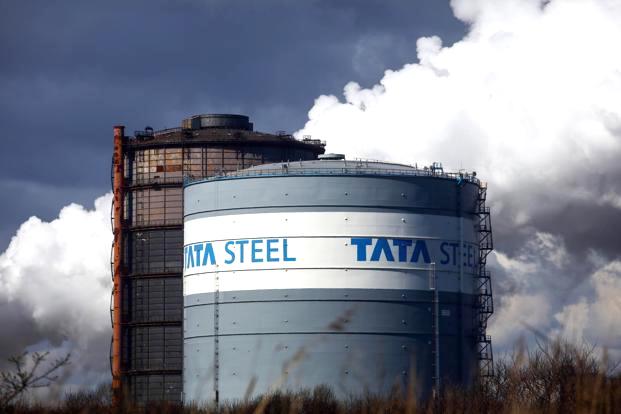
Tata Steel UK orders electrification package for Port Talbot from ABB
Tata Steel UK, a subsidiary of Indian steelmaker Tata Steel Limited, has awarded a key contract to Switzerland-based energy and automation technology provider ABB to supply electrification and advanced process technologies for its £1.25 billion transformation at the Port Talbot steelworks in Wales. This major upgrade centers on constructing a 320-ton capacity electric arc furnace (EAF), expected to be commissioned in 2028, and is backed by £500 million in UK government funding, as reported by SteelOrbis previously.
The collaboration forms a cornerstone of Tata Steel’s decarbonization roadmap, which targets a 90 percent reduction in CO₂ emissions from the Port Talbot site – equivalent to 1.5 percent of the UK’s total direct emissions. The company aims to reduce emissions by 30 percent by 2030 and become fossil-free by 2045.

European steel HRC prices largely flat in Europe amid seasonal trading slowdown
The European steel hot-rolled coil market remained at a standstill on Wednesday July 30 with trading seasonally quiet. Mills were rejecting lower birds, while buyers were not ready to accept higher offers yet, trade sources told Fastmarkets.
Fastmarkets’ calculation of the daily steel HRC index, domestic, exw Northern Europe, was €558.75 ($590.99) per tonne on Wednesday, up by €0.42 per tonne from €558.33 per tonne on Tuesday.
The Northern European index was up by €3.75 per tonne week on week and up by €1.08 per tonne month on month.
“The market is at a total standstill. Trading is frozen and nothing will change in the next three weeks because it’s vacation season,” a buyer in Germany said.
Offers of October-delivery coil were reported at €590 per tonne ex-works, or delivered from integrated suppliers in Germany and the Benelux area.
According to industry sources, mills were comfortably booked and therefore began raising their offer prices. No transactions at the new prices have been reported yet, however.
Buyers were still estimating the market at €550-560 per tonne ex-works. One buyer source assumed that €570 per tonne ex-works could be workable for small tonnages. There was almost no trading in the region, however.
“We have quite a gap between offers and bids. Of course, all mills want to increase prices, but we don’t have any support from the consumption side, and [inventories] are still quite full,” a steel-service center (SSC) in Germany said.
The same sources suggested that the effects on the coil market of the implementation of the EU’s Carbon Border Adjustment Mechanism (CBAM) will only start to be visible in the first quarter of 2026, “if not later.”
“We have a lot of import coil in ports and in the pipeline,” the SSC source said. “There will be no visible shortage of HRC this year.”
In Southern Europe, meanwhile, Fastmarkets’ daily steel hot-rolled coil index, domestic, exw Italy, was calculated at €527.50 per tonne on Wednesday, down by just €0.63 per tonne from €528.13 per tonne on Tuesday.
The index was up by €0.62 per tonne week on week, but down by €7.50 per tonne month on month.
Italian suppliers were hoping for €550 per tonne ex-works for September-October delivery coil, while buyers’ price ideas did not exceed €520-530 per tonne ex-works.
European suppliers increased their offers for October-delivery HRC to €580 per tonne delivered to Italy, but this has not been achieved in deals so far.
“The market [for HRC] in Italy will be on pause for the next three weeks. We will see a [new] price trend in September,” a buyer source told Fastmakets.
Imports
Import offers were broadly stable in the week to Wednesday, but some suppliers started to increase their offers amid cautious optimism in China.
Turkish HRC was offered to Italy at €490-510 per tonne CFR, including import duty.
HRC from India was offered to the nation at €500-520 per tonne CFR, trade sources said, compared with the latest deals at €490-495 per tonne CFR.
Buyers estimated achievable prices for imported coil at €450-500 per tonne CFR, depending on the origin.
One source reported a deal for Algerian HRC at €515 per tonne CFR earlier this week, but it was not confirmed at the time of publication.
Fastmarkets’ weekly price assessment for steel hot-rolled coil, import, cfr main port Southern Europe, was €450-500 per tonne on Wednesday, stable week on week.


EU reinstates sections TRQ for UK, Türkiye, Korea
The European Commission has reinstated country-specific quotas in category 17, i.e., angles, shapes and sections of iron or non-alloy steel, for the UK, Türkiye and South Korea, Kallanish reports.
The restored volume targets come alongside a residual quota for other suppliers, whilst removing the previously introduced 15% country-specific cap within this category, as it was found to unfairly restrict access for traditional suppliers and distort historical trade flows.
These changes will apply from 1 August.
To prevent market distortion within the residual quota, a new 40% per-country cap is introduced. No access to the residual quota will be allowed in the final quarter of the safeguard year for category 17.
As the adjustment comes mid-quarter, the remaining unused quota volume as of 1 August will be divided amongst the reinstated country-specific quotas for the UK, Türkiye and South Korea, as well as the residual quota for other countries.
The UK will receive 40.28% of the remaining volume. Türkiye is assigned 33.52%. South Korea is calculated at 7.81%. The remaining 18.39% will be allocated to other countries under the residual quota.
The adjustment affects CN codes 7216 31 10, 7216 31 90, 7216 32 11, 7216 32 19, 7216 32 91, 7216 32 99, 7216 33 10 and 7216 33 90.
Separatelly, the same regulation amendment removes the cap in category 4B covering metallic coated sheets as a product under no import pressure.
Additionally, the EU published corrections of technical inaccuracies related to footnotes.
| Country | 1.8-30.9.2025 | 1.10-31.12.2025 | 1.1-31.3.2026 | 1.4- 30.6.2026 |
| Ukraine | 31,663 | 31,663 | 30,974 | 31,318 |
| United Kingdom | *40.28% | 27,507 | 26,909 | 27,208 |
| Türkiye | *33.52 % | 22,892 | 22,395 | 22,643 |
| South Korea | *7.81 % | 5,335 | 5,219 | 5,277 |
| Other countries | *18.39 % | 12,555 | 12,282 | 12,419 |
| United Kingdom (to Northern Ireland) | 14,255 | 14,255 | 13,945 | 14,100 |
CN codes 7216 31 10, 7216 31 90, 7216 32 11, 7216 32 19, 7216 32 91, 7216 32 99, 7216 33 10, 7216 33 90
* Pro-rata allocation of the remaining duty-free volumes available under the globalised quota on 1.8.2025
Elina Virchenko Ukraine


Max Planck develops process to produce green nickel
Scientists at the Max Planck Institute for Sustainable Materials (MPI-SusMat) have developed a carbon-free, energy-saving method to extract nickel, Kallanish learns from the German-based research institute
As a critical material used in batteries and stainless steel demand for nickel is expected to double by 2040 due to the increasing electrification of the infrastructures and transport systems. Producing one tonne of nickel currently emits around 20t of CO2, raising concerns about shifting the environmental burden from transportation to metallurgy.
The approach developed by researchers uses a new method to extract nickel from ores in a single step, using hydrogen plasma instead of carbon-based processes. If the CO2 emissions generated during the mining of nickel ore and its transport are considered, the new process reduces CO2 emissions by 84%. In addition, the process is up to 18% more energy-efficient when renewable electricity and green hydrogen are used, as the repeated heating and cooling of the ore is avoided.
The process able enables the use of low-grade nickel ores, accounting for 60% of global nickel ore reserves, which have been overlooked due to the complexity of conventional extraction processes, the institute underlines.
The Max Planck team has published their results in the Nature journal.
Christian Koehl Germany
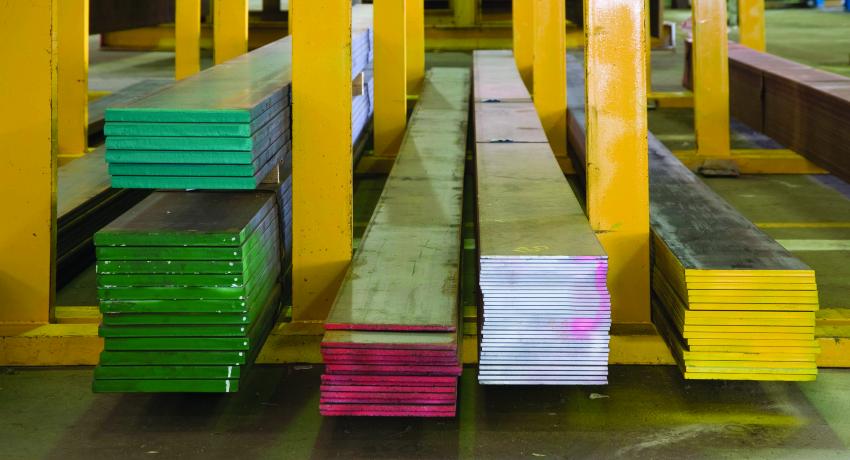
German Steel Distribution: June sales fall 6% year over year
German steel product sales fell 5.8% year over year in June to 782,667 mt, but were up 4.4% from May, data from the German steel stockholders’ association BDS showed July 29.
The majority, or 56.9%, of the sales were from the flat product category at 44,479 mt, down 11.2% year over year, but 1.7% higher month over month.
Long sales increased 5.8% year over year in June to 268,673 mt, and rose 10.5% month over month, the data showed.
The sales total for the first half of 2025 was 4.8 million mt, down 1.8% year over year, with flat sales down 4.8% at 2.9 million mt and long sales up 1.8% at 1.5 million mt.
Platts, part of S&P Global Commodity Insights, assessed domestic HRC in Northern Europe at Eur550/mt ($636.12/mt) ex-works Ruhr July 28, down 2% since the start of 2025.
Meanwhile, BDS data showed stocks of German steel products totaled 1.85 million mt in June, slipping 3% year over year and down 0.4% from May.
Flat products comprised 62.35% of total inventories in June at 1.16 million mt, which was 7.6% lower year over year and down 1.5% month over month.
Long products stocks totaled 659,874 mt, or 35.6% of the total inventory, rising 7.1% year over year and up 1.2% from May.


New Trump tariffs to take effect Aug. 1; here’s how they could take shape
Sweeping US tariffs affecting a great range of commodities for dozens of trading partners are expected to take effect Aug. 1. Nearly every country worldwide faces a range of “reciprocal,” or country-specific, tariffs that President Donald Trump issued April 2 as part of his “Liberation Day” trade announcement.
The administration set an initial three-month pause on implementing the tariffs, which ended July 9, when Trump pushed back the deadline to Aug. 1 to allow for further negotiations. Since July 9, Trump has delivered over two dozen trade letters to countries, threatening new tariffs to replace the original rates. He also announced frameworks for trade deals with several other countries, though there have been no official White House documents providing details.
Trump has also threatened new product-specific tariffs, all with the same possible Aug. 1 deadline.
With the clock ticking for when customs officials must know what rates to charge importers, the Trump administration has not provided any specifics that would codify new tariff rates included in the trade letters or set the stage for how proposed trade deals may look in practice.
The administration has met tariff deadlines with delays, modifications and enforcing new duties as promised. Here are a few scenarios for how US tariffs and trade deals could take shape when the Aug. 1 deadline arrives.
Scenario 1: No White House action
If Trump does not issue any executive orders ahead of Aug. 1, the initial per-country tariff rates announced in April take effect. In this scenario, there will be no executive orders codifying the updated rates Trump sent in trade letters. This means tariffs would revert to the initial proposed numbers in the absence of a new executive order.
These country-specific tariffs have a lengthy list of exemptions, including many metals like nickel and copper, but notably not including iron.
None of the trade deal “frameworks” Trump has announced with other countries would take effect — meaning negotiated tariff rates would revert to those proposed on April 2. Japan and the EU, which expect a 15% tariff from deals they struck, would instead face 24% and 20% tariffs, respectively.
This scenario looks unlikely, as Trump issued a 50% tariff for Brazil on July 30.
Trump also announced a 50% tariff on copper on July 30, butother product-specific tariffs, like critical minerals, would also be void without an official White House document.
Additionally, Trump’s 10% baseline tariff on all imported goods, which has remained in place since April 2 and excludes most energy products, would be replaced by the original executive order’s country-specific rates.
Scenario 2: Executive order issues new country-specific rates
The White House could issue a flurry of executive orders — or one singular executive order — that would make the updated country-specific rates included in Trump’s trade deal letters official. This would likely include specific rates for Canada and Mexico, which were not included in the original list of countries targeted, but received trade deal letters in July.
These executive orders could also announce new rates for countries that did not receive trade letters.
The orders could come in a similar form as the April 2 order, in which Trump issued the tariffs using the authority from the International Emergency Economic Powers Act, a 1977 law that provides a president with the authority to regulate economic transactions in response to a declared national emergency.
In this scenario, a new executive order would replace the previous order and make the updated tariff rates law. Tariff rates in a new executive order could apply to one, all, or a combination of US trading partners: The nearly 200 countries included in the first order, the over two dozen countries that received trade letters with new rates or the countries that negotiated frameworks.
Scenario 2a: Making trade deals official
Since extending the country-specific tariff deadline to Aug. 1, Trump announced frameworks for trade deals with the EU, Japan, the Philippines, Vietnam and Indonesia. These frameworks include new tariff rates as well as additional commitments for investment and purchases of US products.
No official text has been released and an order that may create new country-specific rates could potentially not include these deals — or it could.
Trump announced a US-UK trade deal on May 8. It took until June 16 for the White House to release an executive order providing the specifics of the agreement.
Trump had promised 90 deals in 90 days, but has only made one official agreement with the UK and delayed a timeline for negotiations to Aug. 12 with China.
Trump also could issue separate executive orders for each of these proposed deals ahead of the Aug. 1 deadline. This would replace any country-specific rates referenced in earlier orders.
If no trade deal-related executive orders are issued, Trump may include the negotiated country-specific tariff rates in a broad order announcing new tariff rates for all trading partners. But this would omit specific provisions from each agreement, such as commitments to invest in US manufacturing, raising questions over the likelihood of these investments.
Scenario 2b: A new baseline tariff
Trump earlier this week hinted at increasing baseline tariffs in the range of 15% to 20% on countries that have not reached a trade agreement. It is likely this would replace the universal 10% tariff countries currently face on exports to the US.
A new baseline rate could come in the form of an executive order and would provide countries that have not reached a trade agreement with additional time for negotiations.
Scenario 3: Another delay
Trump could punt the Aug. 1 deadline to implement the tariffs as hedid on July 9. This would block country-specific rates from taking effect and gives countries more time to reach a deal with the US.
White House officials have indicated that this is not likely.
“The August first deadline is the August first deadline — it stands strong, and will not be extended. A big day for America!!!” Trump wrote in all-caps in a July 30 Truth Social post.
Bonus tariffs: Product-specific tariffs
Trump has recently announced several product-specific tariffs that could also take effect on Aug. 1.
This includes increased rates on imports of copper, pharmaceuticals and semiconductor chips.
Similar to the negotiated trade deal frameworks, there has been no official information from the White House on these product-specific tariffs or what exemptions, if any, may be included.
Trump could issue a separate executive order ahead of Aug. 1 codifying these new tariff rates. If he doesn’t, it’s unclear when they may take effect.
In the wings: Court cases continue
A US federal court in May struck down Trump’s country-specific tariffs for exceeding presidential authority, but the administration appealed the ruling. The court issued a stay that allowed the tariffs to remain in effect while the appeal is under consideration.
Now, the US Court of Appeals for the Federal Circuit is set to meet on July 31 — one day ahead of the Aug. 1 deadline — to hear oral arguments over whether Trump can justify implementing the tariffs under the International Emergency Economic Powers Act.
The lawsuit challenges Trump’s use of the act to justify the tariffs, arguing only Congress has the authority to levy tariffs.
A ruling from the appeals court is unlikely on July 31 and the case is expected to eventually reachthe Supreme Court.

ArcelorMittal’s Q2 crude steel output down 2% YOY on lower European production
ArcelorMittal’s crude steel production in the second quarter declined 2% year over year to 14.4 million mt from 14.7 million mt due to lower output from its Brazilian and European operations, the Luxembourg-based steelmaker said July 31.
The company’s Q2 output from Europe fell 6.4% to 7.53 million mt while that from Brazil dipped to 3.54 million mt from 3.58 million mt.
The lower European production was “primarily due to the planned reline of Dunkirk BF4 [blast furnace No 4], which restarted mid-July 2025,” ArcelorMittal said. The Dunkirk BF has a capacity of 3 million mt/year.
ArcelorMittal’s North American operations produced 2.03 million mt of crude steel in Q2, up 11.6% from 1.82 million mt the previous year.
When summed up, crude steel production in H1 was at 29.2 million mt, slightly up 0.3% from 29.1 million mt in H1 2024.
“Sales for 1H 2025 decreased by 5.6% to $30.7 billion as compared with $32.5 billion for 1H 2024, primarily due to 7.5% lower average steel selling prices,” ArcelorMittal said.
“Due to ongoing tariff headwinds, economic activity remains subdued; no restocking has been observed as customers maintain a ‘wait and see’ approach.”
Due to the US tariffs, “flat product apparent steel consumption (ASC) is now forecast to decline slightly in 2025 within the range of -2.0% to 0% (as compared to growth of 1.0% to 3.0% forecast at the beginning of the year). Section 232 tariffs have also increased costs and negatively impacted the supply/demand balance in Canada and Mexico markets.”
Although the EU and the US reached an agreement July 27 for a single tariff of 15% on a vast majority of EU exports into the US, steel and aluminum duties remain at 50%.

Dillinger offers Defender plate from stock
Dillinger has made its comprehensive product range of highly specialised security and armour steels available from stock through its distribution subsidiary Ancofer, the German mill informs Kallanish.
Its Defender steels have been used in the defence and security industry for many years. They are approved for use by the German Armed Forces (Bundeswehr) standards in thicknesses of 6-150 mm, combining high toughness combined with exceptional hardness, Dillinger says.
Dillinger’s subsidiary, Ancofer Stahlhandel in Mülheim an der Ruhr, has taken Defender in stock as part of its list of products. “This will enable us to provide customers with tailor-made deliveries, even for short-term requirements, and strengthen our position in this growing market,” says Danny van der Hout, chief dales officer at Dillinger.
The steels are made at both the company’s production sites in Dillingen, Germany and Dunkirk, France. They are available in nine different grades in thicknesses ranging from 6 mm to 150mm and hardnesses from (Briness measures) 270 HB to 600 HB.
According to Dillinger, they are used for highest safety requirements: from civilian or military special protection vehicles on land and water to cash-in-transit vehicles and building protection. The new offer comes in reaction to the threat of “wars, crises and conflicts in our neighbourhood, to the security of Germany and Europe,” van der Hout says.
Christian Koehl Germany
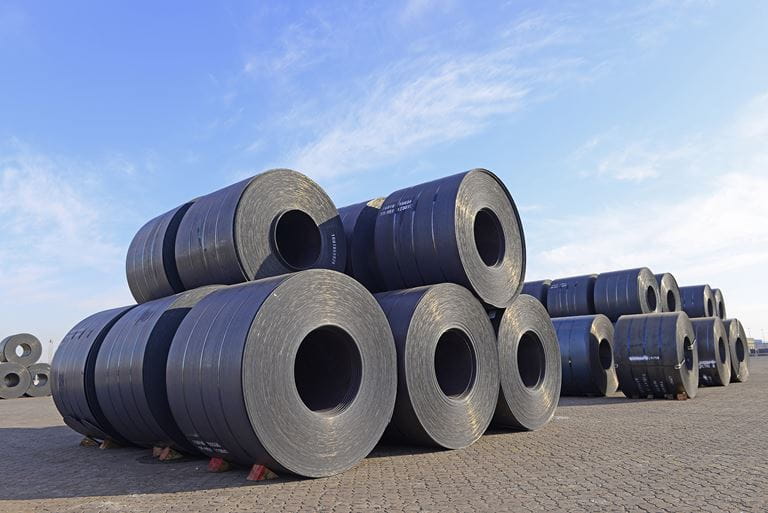
European HRC market slows for summer; prices steady despite higher offers
Trading was seasonally slow across Europe with market sources expecting to see little change in the coming weeks due to the vacation season.
In the week to July 25, major European mills pushed up their offer prices for October-delivery HRC to €590 per tonne ex-works or delivered, but buyers remained largely skeptical about the chances of those higher offers being sealed in deals, citing poor demand.
Supplier sources, meanwhile, reported an uptick in inquiries for HRC on Tuesday, with delivery timelines extending into the fourth quarter of 2025 and into the first quarter of 2026.
Despite the flat prices on Tuesday, supplier sources said they had “satisfactory” order books and were hoping to achieve even higher prices for fourth-quarter delivery HRC on restocking activity, a lack of imports and tighter domestic supplies.
According to one supplier source, the potential rebound in HRC prices will be driven by the implementation of the Carbon Border Adjustment Mechanism (CBAM), which is expected to increase the cost of imported coil, along with the implementation of new trade measures to replace the current safeguard measures. As a result, they said, many buyers will be looking to secure European HRC for late 2025 and early 2026.
This trend was echoed by several small- and medium-sized buyers in the region, who told Fastmarkets they had stopped ordering overseas coil because of concerns over the impact of the CBAM and existing safeguard measures.
“Mills are counting on the trade measures and lower coil availability to support the uptrend, but the reality is that the demand is still falling short of supply and consumption is not growing,” a stockholder in Germany told Fastmarkets.
Buyer ideas about the tradable level came in at about €550-560 per tonne ex-works.
But one buyer source said a bid at €550 per tonne ex-works had been rejected by a mill in the Benelux region.
“Buyers keep saying they will not pay anything above €550-560 ex-works, but there are no actual deals [being done] at such levels now,” a mill source said.
Fastmarkets’ calculation of the daily steel HRC index, domestic, exw Northern Europe, was €558.33 per tonne on Tuesday, down slightly by €0.67 per tonne from €559.00 per tonne on Monday.
The Northern European index was up by €3.33 per tonne week on week, but was down by €7.30 per tonne month on month.
In Southern Europe, meanwhile, Fastmarkets’ daily steel hot-rolled coil index, domestic, exw Italy, was calculated at €525.83 per tonne on Thursday, up by just €1.45 per tonne from €524.38 per tonne on Wednesday.
The index was up by €5.41 per tonne week on week, but down by €42.87 per tonne month on month.
Sources said, that following price-rise announcements in the week to July 25, there was an uptick in inquiries because buyers were trying to “collect orders” at the previous prices around €520-530 per tonne ex-works.
At the same time, there was a brief surge in activity in the Italian coil market, with some buyers rushing to secure volumes at previous price levels of €520–530 per tonne ex-works.
But those earlier prices are no longer available, a supplier source said “because they reflect market conditions from two weeks ago.”
New offers, came in at €540-550 per tonne ex-works, with some suppliers still having only limited availability of September delivery HRC.
For HRC tonnages of around 1,000 tonnes, one seller estimated the tradable price at €530 per tonne ex-works.
It still remains to be seen if higher offers will be traded in September, sources said.
Import offers have been broadly steady recently, but there were some signs of higher offers amid cautious optimism in China.
In the week to July 25, a small cargo of Turkish HRC was sold into Italy at €495 per tonne CFR, including import duty. And on July 29, new offers were reported at around €510 per tonne CFR, including the duty.
But sources said that Turkish suppliers were currently more focused on domestic sales.
An HRC cargo from India was heard sold into Italy at €490 per tonne CFR, sources said, and one market participant reported that HRC from Algeria had changed hands in Italy at €515 per tonne CFR to Italy.
No new offers were reported from Indonesia, however, despite it regularly being the most aggressive overseas supplier to Europe.
“A lot of HRC from Indonesia that was booked at €450-460 per tonne CFR is still in the pipeline,” a buyer in Italy told Fastmarkets.
