

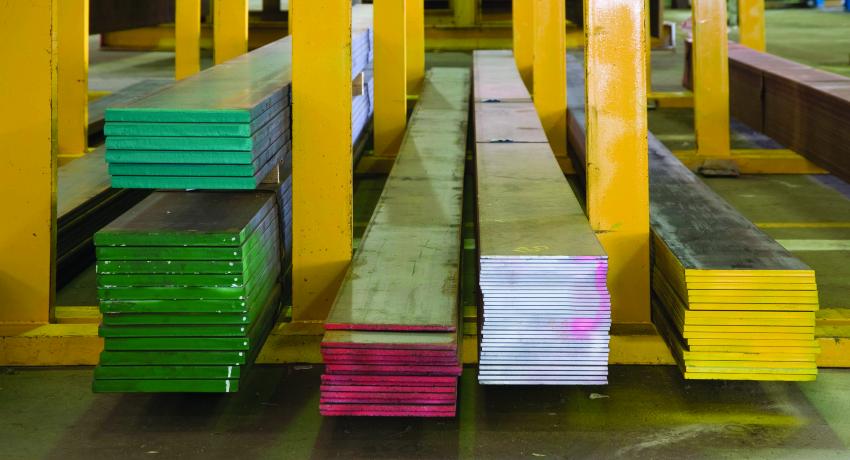
EU long steel producers and distributors struggle under high costs and shrinking demand
European long steel producers are under severe financial pressure that could compel them to potentially close or divest certain facilities if the ongoing market downturn and lack of state support continues, several regional mill sources tell Kallanish. Tight margins and high costs continue to blight business in both southern and northern Europe.
“We are implementing a 25% reduction in production across Europe, focusing on western, eastern, and southern regions where feasible,” a prominent European steelmaker source notes. “We often operate during nighttime hours when energy costs are lower; however, our total production expenses remain elevated relative to the present market prices for longs in Europe.”
Energy costs remain high, alongside persistently elevated scrap prices. “The current selling prices are unsustainable but difficult to increase,” the source continues. “Sales of wire rod and rebar are experiencing a downturn across Europe, with both products currently ranking as the poorest performers. In Germany, which was once a driving force in the European economy, sales are continuing to decline. In terms of prices and sales volumes, it is now among the worst-performing nations.”
The source observes that the European distribution sector is also under significant pressure and forecasts that certain companies may be forced to close next year.
A southern European mill source acknowledges current pricing levels are unsustainable, with producers implementing measures such as temporary layoffs, night shifts to reduce energy expenses, and production stoppages.
Halting production is regarded as a strategy to reduce expenses and minimise scrap purchases. One flats mill in Italy is suspending production this week, while another longs manufacturer is temporarily closing one of its facilities for the entire month of November.
“The entirety of Europe is confronting this crisis; no nation is immune from the decline in consumption,” the southern European mill source notes. Costs have increased to the point where the value chain’s exceptional 2022 earnings are now being used to offset the dire financial circumstances of 2023 and 2024.
The current indicators do not suggest a recovery, and multiple sources anticipate that 2025 will mirror this year, albeit with some adjustments. However, demand may rebound in the latter half of next year.
Another prominent longs producer with facilities in several Europe countries has expressed significant concerns regarding this crisis. The market may contract structurally in the long term.
Italian longs distributors and service centres are seen facing closure. Sources indicate that ArcelorMittal’s distribution branch in Bologna, Italy, is set to permanently close on 31 December. Customers have been notified of the decision and reassured about the status of pending deliveries. ArcelorMittal declined to comment (see Kallanish 7 November).
A large number of steel service centres across Europe are facing financial difficulties and could potentially cease operations for good, according to sources.
Natalia Capra France


ArcelorMittal third-quarter earnings drop, urges Europe trade measures
ArcelorMittal is calling for stronger trade measures to address increased imports into Europe, where steel prices remain below marginal cost. This comes as the group reported lower on-year consolidated shipments and earnings in the third quarter.
Q3 consolidated steel shipments fell 2% on-year to 13.4 million tonnes, while crude steel production was down 3% to 14.8mt. Sales dropped 9% to $15.2 billion. Net income attributable to equity holders of the parent fell 69% to $287 million, while, adjusted to exclude impairments and exceptional items, income fell 47% to $488m. Ebitda dropped 26% to $1.58 billion.
ArcelorMittal’s provided comparison to the previous quarter indicates Q3 operating profit was impacted by impairments of $36m related to the closure of the coke oven battery in Krakow. Moreover, it incurred exceptional items of $74m due to restructuring costs at the same site. Ebitda was hampered by weaker results in North America and Europe, partly offset by higher volumes and lower costs in the Brazil segment.
The firm reiterates that China’s excess production relative to demand is resulting in very low domestic steel spreads – with the majority of producers loss making – and aggressive exports. Global demand remains subdued, with no signs of restocking activity as customers maintain a wait and see approach, it adds.
“Economic sentiment remains subdued, but we have delivered a resilient financial performance, reinforcing the structural strength of the Group,” ArcelorMittal chief executive Aditya Mittal says in a report seen by Kallanish. “Apparent demand is expected to be stronger in the second half of this year compared with 2023, and inventory levels are low, indicating that re-stocking will occur when real demand recovers.”
“The increased level of imports into Europe is a concern and stronger trade measures are urgently required to address this. Similarly, the CBAM needs further strengthening to ensure it fulfills its aim of ensuring European steelmakers can remain competitive versus higher-emissions imports,” he concludes.
In the nine months through September, steel shipments fell 4% on-year to 40.7mt, while crude steel production fell 1% to 43.9mt. Sales dropped 11% to $47.7 billion. Net income fell 55% to $1.7 billion or 51% on an adjusted basis to $1.9 billion.
Adam Smith Poland

Italian rebar makers seek increases again
Italian rebar producers are implementing a €20/tonne ($21.5) hike. Demand however continues to be subdued, with trading characterised primarily by back-to-back purchases, Kallanish notes.
The previous attempt to lift quotes by €20, in October, failed to lift transaction prices.
Current asking prices have reached €300/t base ex-works; however, one mill is reportedly still providing quotes in the range of €270-280/t. Market participants indicate the €300/t threshold has not yet been reached this week. One buyer, however, who is unwilling to purchase at this level, suggests that producers are adamant about securing the price increase and are not open to lower bids.
Should steelmakers maintain this discipline, a €10/t rise in transaction prices is likely to occur. An important distributor says he will not purchase volumes at elevated prices in the current market and is considering sourcing imports from North Africa instead.
This week’s contract values remain relatively stable, ranging from €280-290/t base ex-works. With size extras priced at an average of €260/t, effective prices are currently positioned in the range of €530-550/t ex-works. Domestic mesh is valued at €380-390/t, not accounting for transport expenses, with an additional €300/t for size extras, according to sources.
Multiple sources indicate that Egyptian rebar vessels were available in Sicily, with product priced at €530/t ex-vessel for orders up to 1,000 tonnes. However, a trader says these offers have been rescinded as the material does not have the necessary authorisations to be sold in Europe.
Natalia Capra France
French longs sales deceleration continues
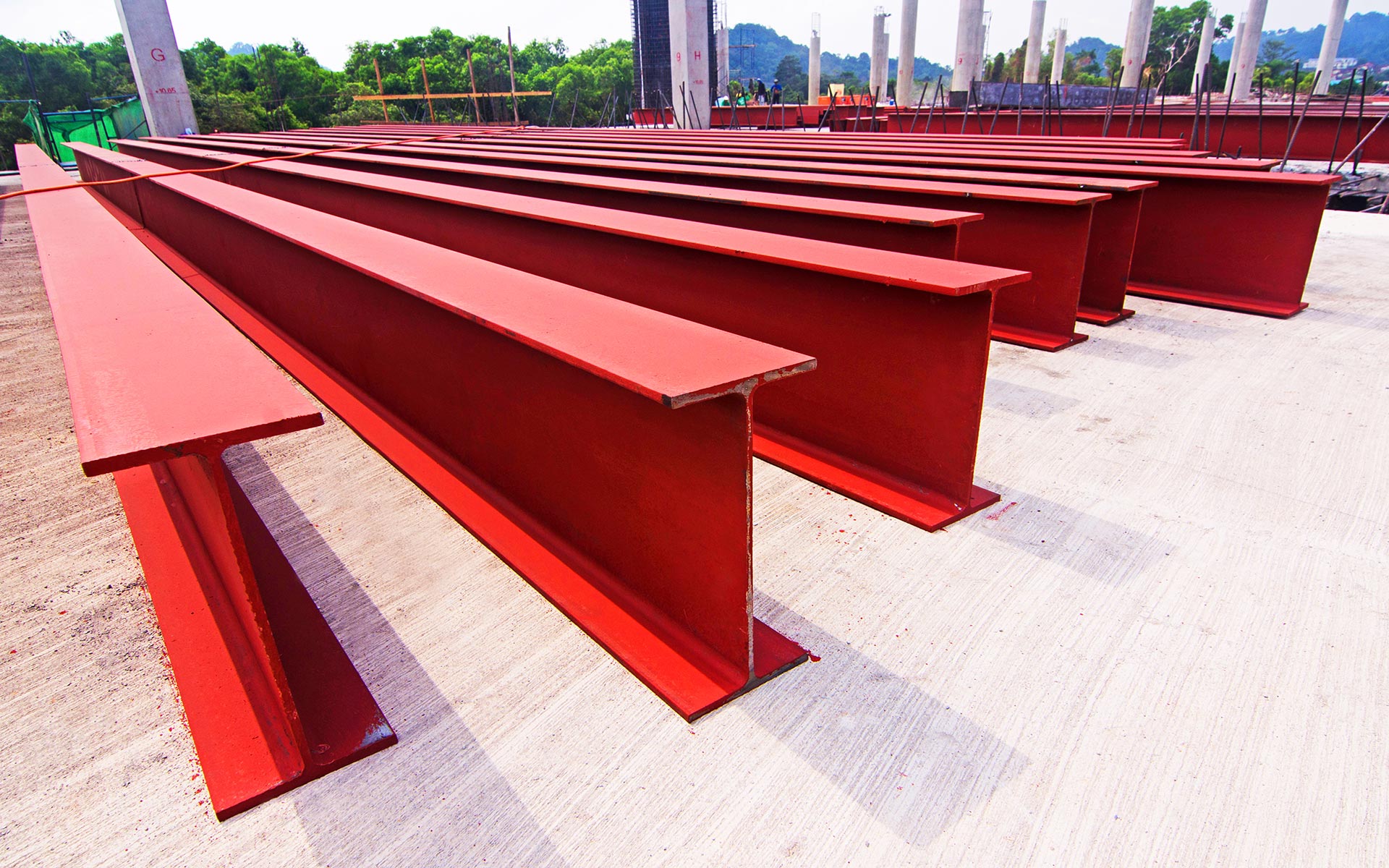
Demand for French long products remains weak and is projected to stay low in the upcoming months, with the outlook for a consumption recovery remaining bleak, amid slow orders and back-to-back purchasing by customers, Kallanish hears.
“September showed poor performance, while in October we experienced acceptable sales; however, the market has shown a notable decline in activity over the past two weeks,” states a local buyer.
The turnover for construction companies and distributors this year is projected to be considerably lower than that of 2023. Buyers are indicating a decrease in sales volumes, but their primary concern lies in the low profitability, diminishing turnover, and sluggish market conditions.
Rebar prices appear stable when compared to the end of October, following a moderate decline observed last month. Market participants are primarily focused on the lack of visibility and the prevailing uncertainty rather than price levels. Domestic rebar is pegged at €590-610/tonne ($634.5-656.1/t) delivered, based on volume and customer specifications.
A European mill indicates a troubling and persistent sluggish market characterised by low profitability. Customer financial difficulties are beginning to arise as the market is showing “a structural reduction in activity within Europe”, the source explains.
Spanish-origin rebar prices in France are not impacting domestic sales. By contrast, Italian steelmakers are active in southern France, offering prices that are lower than those in the domestic market.
“There are currently no indicators suggesting a recovery. It appears that we may have undervalued the magnitude of this crisis. In 2025, we can expect that the more resilient companies will endure, while we may witness an increase in bankruptcies,” a large buyer says.
He also notes the distribution sector in France is disproportionately large in relation to current consumption levels. “The French longs market is now stagnant, with prices remaining unchanged. Production halts this Christmas are likely to extend significantly,” he adds.
He expects that across all long products, the French market is to experience some resurgence in demand as buyers prepare to restock before year-end.
At present, domestic merchant bar prices slightly decreased on-month, hovering at €240-250/t delivered. Including €420/t size extras, effective delivered levels are now at €660-670/t. The first category of sections is around €760-770/t delivered or slightly more for larger orders, including extras, sources suggest.
Natalia Capra France

US Steel Kosice third-quarter shipments decline, anticipates further weakening
US Steel expects its Kosice (USSK) plant’s fourth-quarter performance to be weaker versus Q3 given weak underlying demand and pricing conditions, and the absence of positive CO2 allocations. A one-time favourable CO2 allocation adjustment offset the weak market environment in Q3, Kallanish notes.
USSK’s steel shipments fell 6% on-year in Q3 to 899,000 net tons, with averaged realised sales price also down 6% to $802/net ton. Raw steel production was down only 2% to 970,000nt, meaning 77% capacity utilisation versus 79% a year earlier.
Net sales dropped 12% on-year in Q3 to $721 million but Ebitda almost quadrupled to $39m. The latter was due to the adjustment related to the reserve for CO2 emissions and lower coal, PCI, and iron ore costs. Moreover, USSK enjoyed lower energy cost and favourable foreign exchange impact.
In Q4, USSK anticipates lower volumes and average selling prices versus Q3. It also foresees negative impact from volume inefficiencies, higher energy costs and repair costs related to unplanned downtime at the #1 Caster. There should be a favourable impact from inventory adjustments.
USSK’s blast furnace no.1 remains offline following a planned 30-day outage in August, reflecting weak demand. This means 1.6m nt/year of the plant’s 5m nt/y hot metal capacity is idle.
The firm’s shipments in the nine months through September inched down only 1% on-year to 2.85mnt, with raw steel output down 8% to 3.03mnt and capacity utilisation at 81% versus 88%. Net sales fell 11% to $2.43 billion, while Ebit fell 48% to $13m.
Adam Smith Poland
Subdued prices impact Tata Steel UK, Netherlands
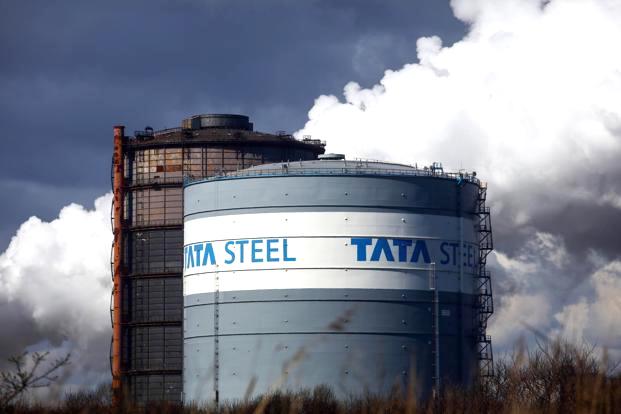
The performance of Tata Steel’s UK and Netherlands operations was impacted by weaker steel prices in the fiscal half-year through 30 September, Kallanish learns.
Tata Steel’s UK operations reported revenue of £600 million ($779m) during the second quarter of fiscal 2025, while Ebitda loss stood at £147m. Liquid steel production was 390,000t, while deliveries were at 630,000t.
On a half-year basis, revenue stood at £1,246m and Ebitda loss at £238m.
Tata Steel chief financial officer Koushik Chatterjee says: “Our performance in the UK and Netherlands was adversely impacted by the compression in steel spreads. Further, the UK was also weighed by the transitory nature of operations as the blast furnaces were safely decommissioned and steel stock was built up to operate downstream.”
Port Talbot ceased iron making on 30 September, and has since confirmed it has selected Tenova to supply the EAF for the site.
“We have completed public consultation on the planning application and anticipate commencing large scale site work around July 2025. During our transition to green steel, we will operate our downstream operations by sourcing substrate. This will help us sustain our significant market presence across steel end use segments in the UK,” Chatterjee added.
The group’s chief executive, T V Narendran, notes: “[Q2] also marked the closure of our blast furnaces in UK. We have signed the grant funding agreement with the UK government and are progressing on the proposed transition to green steel. We remain fully committed to supporting affected employees and have offered the best ever package of support in Tata Steel UK.”
The UK government confirmed in September Tata’s £500m in funding for the transformation.
Subdued steel prices also weighed on performance in the Netherlands. Revenue for the segment in Q2 was £1,300m and Ebitda was £22m. Liquid steel production was 1.66 million tonnes and deliveries at 1.5mt, which the company says increased on a year-on-year basis.
For H1, revenue was £2,644m and Ebitda was £65m.
Narendran adds: “We are undertaking pilot projects to avoid or convert captured carbon emissions.” Chatterjee meanwhile confirms: “We are engaged with the government on support for the decarbonisation of our operations.”
Carrie Bone UK

UAHE leads solidarity initiative for Spanish flood victims
The Unión de Almacenistas de Hierros de España (UAHE) has launched a solidarity campaign to support the victims of the devastating floods in the Valencian Community.
In response to the tragic events, UAHE has opened a dedicated bank account to raise funds, which will be entirely donated to the Spanish Red Cross.
UAHE is calling on all its members and the general European colleagues to participate in this initiative and make a donation.
IBAN: ES050030-1525-400000456271
Holder: Unión de Almacenistas de Hierros de España (UAHE)
Message: Emergency (followed by the EORI or VAT number)
Every donor will receive a certificate from Red Cross, so we ask you to contact EUROMETAL to get the document.
This solidarity action demonstrates the commitment of the steel sector to society and its willingness to help in times of crisis. UAHE hopes that this initiative will inspire other companies and organizations to join the cause.
UAHE thanks all contributors for their generosity and is confident that, through united efforts, they can alleviate the suffering of the victims and contribute to the reconstruction of the affected areas.


European HRC prices largely stable, expectations about market developments mixed
Fastmarkets calculated its daily steel hot-rolled coil index domestic, exw Northern Europe at €558.75 ($609) per tonne on Wednesday, up by €2.08 per tonne from €556.67 per tonne on Tuesday.
The index was up by €4.37 per tonne week on week and by €17.92 per tonne month on month.
Mills in Northern Europe were heard offering HRC for the first quarter of 2025 at €600-620 per tonne ex-works, and in some cases, offers were as high as €640 per tonne ex-works.
These price levels, however, were still not accepted in deals, Fastmarkets understands.
But expectations for price increases seem to have supported a slight pick-up in trading, industry sources told Fastmarkets.
Some deals for HRC were reported at €560-570 per tonne ex-works.
Buyer sources estimated the workable market level at €550-560 per tonne ex-works.
But expectations about how the HRC market will develop in the short and medium term remained mixed, Fastmarkets heard.
Mills in Northern Europe were hoping for a price rebound in the first quarter of 2025, supported mainly by the limited imports of HRC.
A recent string of trade defense measures, including a steel safeguard review and an anti-dumping investigation into HRC imports from Japan, Vietnam, India, and Egypt were likely to result in a stronger reliance on domestic supplies, and that should support a recovery in domestic flat steel prices in Europe, participants have told Fastmarkets.
But some industry sources remained skeptical, saying that any price rebound would be short-lived because demand from the main steel-consuming sectors remains low.
“Any [price] rebound in 2025 will result in a very quick fall after that because [the potential price increase] would be supplier-driven,” a trader told Fastmarkets.
In Southern Europe, Fastmarkets calculated its daily steel hot-rolled coil index domestic, exw Italy at €551.67 per tonne on Wednesday, unchanged from the previous day.
The Italian index was up by €0.24 per tonne week on week and by €16.67 per tonne month on month.
Offers for HRC in Italy for the first quarter of 2025 were heard at €620 per tonne delivered, which would net back to €610 per tonne ex-works.
But no deals have been reported at these levels.
“There is not a single transaction, even no negotiations at these levels,” a buyer source based in Italy told Fastmarkets.
December-delivery material was also available in the market at €580-590 per tonne delivered, which would equal €570-580 per tonne ex-works, industry sources told Fastmarkets.
But market activity remained subdued.
Fastmarkets’ sources estimated the workable market level at €540-560 per tonne ex-works.
The buyer source added that there were very few transactions recently due to a mismatch of price ideas among buyers and sellers, with producers offering too high levels, and buyers hoping for more significant discounts.
Trading with imported HRC also remained quiet.
“There is not a single viable option in terms of imports,” the buyer source said.
Local buyers were reluctant to accept HRC offers from the Asian mills due to the trade risks, while offers from Turkey, seen as the only “safe” origin recently, remained at comparatively high levels to be workable.
Turkish HRC was on offer to Italy at €580-600 per tonne CFR, including the anti-dumping duty, Fastmarkets understands.


Steel, auto interests make wishlist for president-elect Trump
American Iron and Steel Institute president and chief executive officer Kevin Dempsey said in the Wednesday November 6 statement that steel took center-stage during the election — and it should remain in the limelight throughout President Trump’s second term.
“Steel has been front and center during the presidential campaign and we are confident the concerns of our industry and its workers will receive priority attention by the incoming Trump administration,” he said.
Key priorities include trade enforcement and “preservation of the Section 232 steel tariffs that President Trump instituted in his first term.”
Also high on the agenda are tax reforms, a mandate for US-made steel in infrastructure projects, and “ensuring that government regulations do not adversely impact industrial competitiveness.”
“We are looking forward to working closely with the president-elect and his team to see these goals become a reality,” Dempsey said, adding that he was pleased that the majority of the Congressional Steel Caucus in the US House of Representatives was also re-elected.
AISI’s statement follows a strong showing of support from the US steel sector, which benefited heavily from the president-elect’s first term due to his protectionist measures.
In 2018, just over a year into President Trump’s first term and the year in which he enacted the blanket 25% tariffs on steel and aluminium, Fastmarkets’ hot-rolled coil index, fob mill US Midwest rose to a yearly average of $41.37 per hundredweight ($827.40 per short ton) from a yearly average of $31 per cwt in 2017.
One steel producer source said that most end-users were “pretty agnostic” to the winner of the 2024 election.
“The most important thing in the eyes of the steel market, and all markets for that matter, is that the election is over without weeks and months of legal wrangling,” the producer said. “Now we can get to work knowing what lies ahead.”
One steel buyer said that President Trump is likely to hit China hard with tariffs in his second-term, as promised. Other trading partners — and some domestic industries — will be collateral damage.
“Inflation and interest rates will be higher as the result of the tit-for-tat trade wars,” the buyer said. “Global trades will negatively be impacted. Automotive will likely suffer even more as affordable prices become a big factor. Ag and equipment manufacturers may also suffer as China shifts grain purchases to Ukraine, Brazil, and Argentina. Like him or hate him, he will deliver a roller coaster ride for the next four years with [Tesla chief executive] Elon [Musk] and [politician] Robert Kennedy Jr. in his cabinet.”
Musk’s name came up again in reference to black mass, the result of electric vehicle battery recycling.
A black mass source said that markets would likely remain static till January, when the president-elect takes office. After, they “expect less grants and funds” than they received from the former administration, but speculated that Musk might prod then-President Trump to aid the EV sector during his second, non-consecutive term.
Trade tariffs a ‘stick’ to achieve policy goals
Other steel market participants said that Trump would likely use tariffs as “a stick” to accomplish his policy goals.
“I think Trump uses tariffs as bargaining chips, that is his stick, to get what he wants from the foreign countries,” a southern steel distributor said.
“There are too many moving parts in the automotive trade between US and Mexico to say whether a Trump presidency will be good or bad for the auto industry overall,” the distributor added.
A trader said that Brazil, Mexico and maybe even Canada might be in Trump’s tariff crosshairs.
“I think there will a lot more duties and taxes,” the trader said. “I think Trump may impose duties on Mexico and Brazil, maybe even Canada.”
The trader stressed that the US-Mexico trade is “complex.”
“Nucor sells a lot of galvanized steel into the Mexican auto parts making plants, SDI’s Sinton mill as well sells to Northern Mexico — so what will happen if Trump’s tariffs and policies disrupt the flow?” the trader said.
“US also buys a lot of agricultural products from Mexico — this is Trump’s strategy; he will first impose tariffs and then get the country to do what he wants,” the trader told Fastmarkets.

EUROMETAL survey projects increased prices despite lower activity
European steel distributors association EUROMETAL’s October market sentiment survey shows the majority of respondents expect prices to increase slightly in the coming three months. Activity is expected to decline slightly, except for in the steel trading segment which projects a slight increase.
This comes amid European mills’ attempts since early October to raise coil prices, after values plummeted throughout September. The attempts have been largely unsuccessful so far.
Although stock levels are, on the whole, expected to remain unchanged, a large portion of flat steel service centres indicated they would increase in the coming months, whereas traders projected a decline.
In terms of end-use markets, survey respondents serving the automotive, construction, machinery and white goods sectors foresee slightly lower activity in the coming period, albeit alongside slightly higher prices. The energy, packaging and tubes segments meanwhile expect slightly increased activity with slightly higher prices.
Notably, by region, respondents in France, Portugal and the Visegrad expect slightly lower activity despite higher prices. Meanwhile, Western Europe – made up of Austria, Belgium, Germany, Luxembourg, Netherlands – is the only region expecting unchanged prices in the coming three months – to add to slightly lower activity.
“While current activity levels remain stable, future activity is expected to weaken. Distributors are maintaining a conservative approach to inventory, aligning stock levels with anticipated market softness,” EUROMETAL says in its release dated 1 November. However, there’s a notable shift in price expectations, with some respondents foreseeing stabilisation or slight increases, suggesting that price pressures might ease as the market recalibrates.”
EUROMETAL divides the survey replies into three sets – “customer sector”, meaning association member type; “customer region”; and “responder activity”, referring to the end-use sector served.
Adam Smith Poland