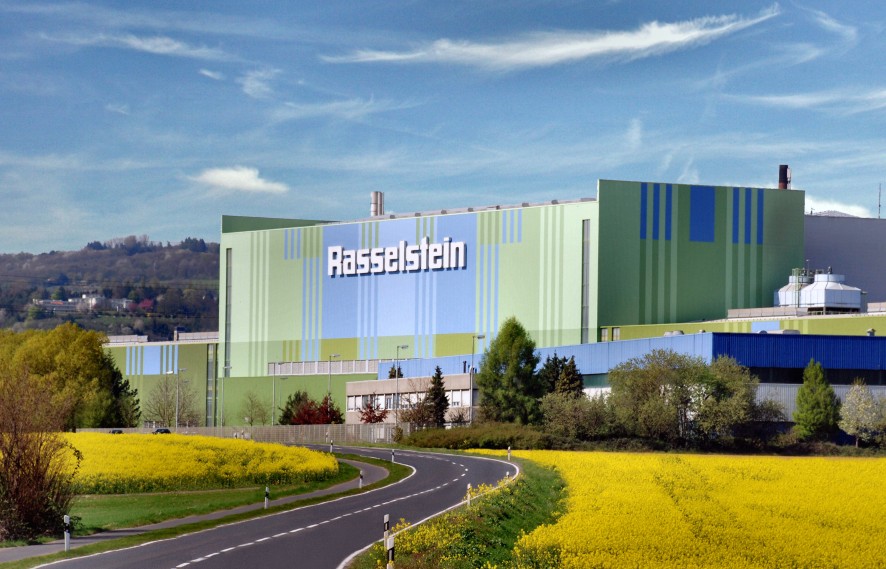
Marcegaglia Sheffield expansion answers UK stainless quota challenges
Marcegaglia Stainless Sheffield is expanding its product offering as debate continues over the impact of steel quotas on downstream industries, Kallanish notes.
President of Marcegaglia Stainless Sheffield, Liam Bates says in a published online commentary that the company’s track record across Europe and the US shows its ability to supply the sector. He argues that the impact of UK stainless steel long product quotas is not as severe as some predict, and that a practical solution exists. The UK market for stainless long products was previously estimated at 33,000 tonnes, but following the latest government review, two product codes not produced domestically were removed, reducing the effective market size to 30,000t.
The government also raised tariff-free quotas to 20,000t/year, meaning that for every tonne of domestic production, approximately two tonnes can still be imported without tariffs.
“Most stakeholders agree that standard products make up most of the demand and can be produced locally. The challenge is that a significant proportion of UK stainless steel distribution is owned, wholly or partly, by European bar mills or their parent groups. For many years, these businesses have supplied the UK market from their European production base and understandably want to protect this position. However, trade policy is now changing buying patterns across the UK, EU and US alike,” Bates says.
“As a result, sourcing strategies will need to [change] and the UK cannot be an exception,” Bates adds. He argues that even in a worst-case scenario, the average tariff impact across the market equates to around 17% if every tonne is imported, and that this implies no change in buying behaviour.
The most practical solution, he argues, is for importers to source a greater share of standard material from British producers while continuing to import specialist grades that are less readily available domestically. A relatively small shift in volume towards domestic standards would create capacity for specialty products to continue flowing freely, he concludes.
Marcegaglia Stainless is expanding capacity in Northern Europe and broadening its long products range in its Fagersta facility in Sweden while also investing in its Sheffield facility in the UK. The Sheffield melt shop will be idled between 3 July and 15 August for the installation of a new furnace to produce billets and slabs. A portion of billets produced in Sheffield will be sent to Sweden for re-rolling for the European market, while billets and slabs produced in the UK will remain in the country (see Kallanish passim).

Rhine’s record low water levels trouble regional industries
After many weeks of dry and hot weather, the level of the Rhine River has surpassed the previous record low seen in autumn 2018.
On Thursday, German transport minister Steffen Bilger scheduled an emergency meeting with port authorities, transport companies, and representatives of industries that depend on water transport.
The Rhine’s gauge at Kaub near the Loreley rock is now under 25 centimetres, and likely to fall further. The point serves as a reference because it has a particularly shallow navigational channel of 1.90 metres.
Germany’s biggest waterway for commercial shipping is now impacting industries that are already suffering from poor economic conditions. In the steel industry, mainly scrap transport is impaired, with three recycling associations have already worded their troubles in a political appeal.
Ships can currently take only one third of their normal loads, which has tripled the cost for transport on smaller vessels, Kallanish is told by the logistics expert of recycling association BVSE. He gives the example of an export-bound scrap load from Frankfurt to Rotterdam, which customarily costs around €10/tonne ($11.55/t), but is currently at more than €30/t.
For most players in the steel value chain, the shortcomings of sea freight transport cannot be fully compensated by rail or truck. Nevertheless, the regional organisation representing mills in Saarland have demanded that the Sunday ban for trucks be lifted temporarily, this has also been suggested by transport minister Bilger.
ArcelorMittal also depends on waterway transport on the Rhine and Ruhr in Duisburg, as well as in Bremen on the Weser, and in Eisenhüttenstadt on the Oder. According to a statement, it has adjusted production in the Duisburg works due to supply shortages. However, the group claims that the impacts are manageable, and that supplies to the mills and deliveries to customers are safe.
Author: Christian Koehl Germany


Summer slowdown keeps NW European coil prices constrained
The lull in purchasing activity among northwestern European coil buyers is continuing into August, and it is very unlikely that prices will pick up during the rest of the month.
Buyers in Germany and Benelux see the current level of prices for hot-rolled coil at roughly around €730/tonne ($842/t) delivered, and just above €700/t on an ex-works-basis for smaller volumes. “I have not heard that any bigger deals are being negotiated, not now or in the last two weeks,” one trader tells Kallanish.
According to a manager of a service centre, price offers range from €730-€760/t, but he says that even the lower end cannot be translated to resale prices that his customers would be prepared to buy. Consequently, buyers are refraining from larger restocking purchases.
“I am only on stand-by now, and so is everybody else, until the last coil has left the inventory,” he says.
The low values seen in June have been left behind, but the resurge has paused before reaching the previous peaks seen in April and May, a buyer of a construction company says.
He also sees no reason to expect an increase in the next weeks, “when people are on holiday”. He predicts that mills will try for another round of hikes, probably €25-30/t at the end of August. “But I wonder if the large customers will have the demand so that hikes can be asserted. I think the chances are weak,” he says.
Author: Christian Koehl Germany

Thyssenkrupp to float renamed materials division
Thysssenkrupp is proceeding with the separation of its materials distribution division tk accelis, formerly known as thyssenkrupp Materials Services.
On Friday, its parent will decide on a floatation of a 49% stake of tk accelis on the stock market and has scheduled an extraordinary shareholders meeting, Kallanish notes.
Thysssenkrupp plans to remain the majority owner of the floated company with a stake of 51%, tk board member Volkmar Dinstuhl says.
Dinstuhl highlights the gain in flexibility tk accelis will have when acting as a separate listed company, yet retains stability and reliability provided by a long-term stakeholder.
He also points out that the international materials trading industry is highly fragmented, with numerous national and international players. In opportunities for further consolidation, mergers and acquisitions, tk accelis can use its own shares as a currency. “The management and supervisory boards of tk AG see a considerable potential here,” he says.
The unit has a broad international set-up, with 380 sites in 30 countries, and revenues of €11.4 billion ($13.2 billion) in the last fiscal year.
Author: Christian Koehl Germany

Voestalpine’s logistics unaffected by Danube deficit
The dry weather in Europe, which has caused the Danube River to fall to critical water levels, is not impacting the materials logistics of voestalpine, its executives have said at a press conference on Wednesday.
Although voestalpine’s main mill in Linz is located on the river, its intake of material mostly takes place via land, ceo Herbert Eibensteiner has said.
“A relatively low percentage of our logistics runs via the Danube, so that we can compensate that with more rail transports,” he told Kallanish. The steelmaker operates its own railway cargo company, LogServe, which Eibensteiner said has paid off given the current situation.
According to cfo Gerald Mayer, voestalpine has an annual material intake of 17 million tonnes, of which about 10% comes in on the Danube.
“Several years ago, we decided that we want several alternatives for each material and each means of transport,” Eibensteiner said. “Of course, in the situation now, everyone wants to transfer to rail. But certainly, it would be good if we had some more rain in September.”
Eibensteiner added that the mill is not short of cooling water either, as is currently the case with a nuclear power plant in Hungary located on the Danube.

European coil and green steel round-up: European market continues holiday pause in bullish mood
The uptrend in the European steel coil market is expected to resume in late August-September due to supply restrictions, while prices held stable in the week to 7 August due to the seasonally slow market.
In Northwest Europe, the latest deals for domestic hot-rolled coil (HRC) were settled at EUR720-730/t ex-works, and market participants assessed these prices as workable. Mills have been offering material at higher levels – EUR740-760/t ex-works – and transactions are expected to be settled within this range in September, when buyers return to the market after the summer holidays.
Several sources said that mills have already indicated that prices for first quarter 2027 HRC production will be around EUR800/t ex-works and that buyers will most likely have to accept this new price level.
In Italy, the latest deals for HRC have been reported at EUR700-720/t ex-works.
The bullish sentiment has been driven by the impact of the new tariff-rate quotas (TRQs), imposed on 1 July, which cut total import volumes by 47% and had a greater effect on coil due to the distribution of volumes among countries. The new trade measures, combined with the effects of the Carbon Border Adjustment Mechanism (CBAM) and the upcoming decision in the anti-dumping case into cold-rolled coil (CRC) imports, pushed buyers towards European suppliers as they sought to substitute missing import tonnages.
“According to my estimations, there will be a shortage of steel coil, and buyers will have to pay higher prices if they need volumes. They will either have to accept higher domestic prices or pay duties on imports,” a mill source said.
Domestic coil availability
ArcelorMittal resumed operations at three of its blast furnaces (BFs) this year, but other domestic producers had to reduce supply due to logistics and technical issues.
Notably, German steelmaker Thyssenkrupp reduced steel output in the middle of July at its Duisburg plant after low water levels on the Rhine River disrupted raw material supplies. Other producers in the area were also affected by the situation, and while raw-material inventories are sufficient to sustain production, albeit at reduced rates, sources worry that, if the drought continues, capacity utilisation could decline further.
Tata Steel IJmuiden in the Netherlands was reportedly catching up with a backlog of orders after restarting its direct sheet plant (DSP), which had been idled since early April after the environmental agency found that hazardous chromium VI emissions at the site exceeded legal thresholds.
On 27 July, the Milan Court of Appeal ordered Acciaierie d’Italia (ADI) to shut down operations in the hot section of its Taranto steel plant within the next 90 days. While the steelmaker has been operating one furnace and has not been active in the spot market, the absence of its material would hit major buyers — re-rollers and pipe makers — which used ADI’s HRC as feedstock. The situation has been made even more critical by TRQs, which significantly reduced access to imports.
Market participants also expressed doubts that the idled mills in Central Europe would be able to restart their melt shops even if some of them find new owners, as they would face additional carbon-emission costs since they would no longer have free allocations after such a long period of inactivity.
Distribution chain
The majority of distributors have attempted to increase steel prices, and end users are likely to accept the new levels. However, some service centres, apparently chasing cash flow, continued to offer material at low prices, undermining the market recovery. Market sources expect that these more competitive offers will disappear from the market by the end of the month.
The significant rise in steel prices is likely to open the EU market to imports of cheap steel-containing goods, which could harm both steelmakers and downstream companies. These products are not restricted by trade measures or CBAM.
This risks harming not just steelmakers, but the European steel distribution chain as well.
Green steel market
Activity in the green steel segment has also died down during the holiday period. Demand from end consumers is likely to see a slow but steady recovery this year as more companies seek trial purchases of low-CO2 steel. End consumers are less exposed to higher steel costs because they can dilute them within the total cost of the final goods.
Some market participants expressed doubts that buyers would accept green-steel premiums if traditional steel prices continue to rise.
Market participants estimated achievable premiums for green HRC at EUR160-180/t for end users.
Distributors avoided purchasing green-steel products with significant premiums unless they were part of back-to-back trades.
When distributors had a customer in mind and did not have to store the material, they were prepared to accept green-steel premiums of around EUR80/t.
| Weekly European steel coil | |||||
| EUR/t | Term | 07-Aug-26 | Change | ||
| Weekly Northwest Europe steel coil | |||||
| Northwest Europe ex-works HRC | EX-WORKS | 725.00 | 0.00 | ||
| Northwest Europe ex-works CRC | EX-WORKS | 830.00 | 0.00 | ||
| Northwest Europe ex-works HDG | EX-WORKS | 830.00 | 5.00 | ||
| Northwest Europe CIF HRC | CIF | 585.00 | 0.00 | ||
| Northwest Europe DDP port HRC | DDP Port | 700.00 | 0.00 | ||
| Weekly South Europe steel coil | |||||
| Italy ex-works HRC | EX-WORKS | 705.00 | 5.00 | ||
| South Europe CIF HRC | CIF | 580.00 | 5.00 | ||
| South Europe DDP port HRC | DDP Port | 700.00 | 0.00 | ||
| South Europe CIF CRC | CIF | 680.00 | 0.00 | ||
| South Europe DDP port CRC | DDP Port | 765.00 | 0.00 | ||
| Show less… | |||||
| Source: McCloskey by OPIS. | © 2026 Dow Jones Energy Limited. | ||||
| Weekly green steel | |||
| EUR/t | Term | 07-Aug-26 | Change |
| Green Northwest Europe HRC premium (scopes 1-3 CO2 under 0.8t) | 100.00 | 0.00 | |
| Green Northwest Europe ex-works HRC (scopes 1-3) | EX-WORKS | 825.00 | 0.00 |
| Green HRC premium (scopes 1-2 CO2 under 0.5t) | 100.00 | 0.00 | |
| Green Northwest Europe ex-works HRC (scopes 1-2) | EX-WORKS | 825.00 | 0.00 |
| Green HRC reduced carbon price (scopes 1-3) | 64.99 | -1.66 | |
Author: Benjamin Steven and Maria Tanatar


European heavy plate round-up: European heavy plate gains limited by slab cost decline
European heavy plate prices were largely stable in the week to 7 August, with trading activity muted amid the summer holiday season.
In Northwest Europe, particularly Germany, market sources have started to report higher price indications for forward spot offers on commodity grades, as one of Germany’s few heavy plate mills with allocations for the spot market has full orderbooks from US project-based demand.
McCloskey’s North European sources have been reporting market price on a gradually tightening spread in recent weeks, with no indications received below EUR800/t ex-works in the latest trading period.
Other German heavy plate producers are similarly locked-up with long-term contract allocations – until end of year in some cases – further limiting spot supply.
In Italy, mills are mostly down for maintenance, and declining slab offers ex-Asia in the meantime are limiting source expectations on price recovery for the market’s re-rollers.
Deals were reported to McCloskey at EUR700-720/t ex-works Italy for smaller lots, with larger buyers able to negotiate down to between EUR690-700/t ex-works in latest deals.
Slab offers were heard between $540-560/t CIF Asia, with deals ex-China settling in the middle of said range, at $550/t. Cheaper slab is available ex-Indonesia at $540/t CIF, but as this material comes with potentially higher Carbon Border Adjustment Mechanism costs, the lower price is not necessarily as competitive as it appears.
As Italian heavy plate sales strategies are aligning to slab cost variability, sources hope that adjacent coil price increases will incentivise slab exporters in Asia to increase offer prices, though any bullishness could be offset by increased EU protectionism on finished steels, pushing third country producers back toward comparatively unburdened semi-finished export markets.
| Weekly European heavy plate, slab and green steel | |||||
| Unit | Term | 07-Aug-26 | Change | ||
| Weekly heavy plate | |||||
| Northwest Europe ex-works heavy plate | EUR/t | EX-WORKS | 820.00 | 0.00 | |
| Germany delivered heavy plate (Northwest Europe) | EUR/t | DEL | 810.00 | 0.00 | |
| Italy ex-works heavy plate | EUR/t | EX-WORKS | 700.00 | 5.00 | |
| Weekly steel slab | |||||
| Italy CFR slab | $/t | CFR | 550.00 | -5.00 | |
| Weekly green steel | |||||
| Green heavy plate premium (scopes 1-3 CO2 under 1t) | EUR/t | 25.00 | 0.00 | ||
Author: Benjamin Steven & Maria Tanatar
Thyssenkrupp’s distribution spin-off to propel it beyond traditional warehousing business
German steel and industrial technology group Thyssenkrupp AG said in an Aug. 7 statement it will spin off its materials distribution and supply chain services business, TK Accelis Group AG & Co. KGaA, creating a publicly listed supply, processing and logistics company. The new entity will expand its activities beyond materials distribution and warehousing, with a stated focus on digitalization and operational efficiency.
Thyssenkrupp will remain the majority shareholder with 51% in the newly established company, with the remaining 49% allocated to Thyssenkrupp shareholders.
The move is part of Thyssenkrupp’s ongoing strategy to restructure as a holding company with independently managed businesses. The company said the decision responds to evolving market and customer requirements.
“Today, industrial customers expect more than just reliable materials supply,” Siegfried Russwurm, chairman of the Supervisory Board of Thyssenkrupp, said. “They need partners that understand global procurement markets and contribute expertise in materials-related services – from precise manufacturing and processing to data-driven, AI-supported solutions, as Thyssenkrupp describes the areas that harbor the potential for TK Accelis.”
According to Thyssenkrupp, the company expects the new entity to see increased demand due to geopolitical uncertainty and new trade barriers, which are prompting a shift toward more regional supply chains. The company also cited aerospace, defense, data centers, industrial electrification, and infrastructure investment in Europe as potential growth sectors.
To ensure the new entity has access to the capital market, Thyssenkrupp plans to list TK Accelis on the Frankfurt Stock Exchange before the end of 2026.
TK Accelis employs 15,500 people and operates 400 locations across more than 30 countries. The company serves 250,000 customers and works with 11,000 suppliers. According to Thyssenkrupp, it is one of the leading manufacturer-independent materials distributors in Europe by sales and the third-largest supplier in the North American market.
Author: Katya Bouckley


So What About Finished Products?
The EU’s Carbon Border Adjustment Mechanism (CBAM) was invented as a corrective measure to mill products made overseas at environmental standards below European mills.
But it still leaves the doors of the EU market wide open for fabricated and finished products made from such high-emission steels. Players from different levels of the European steel industry are calling for those doors to be closed. But some big consumers downstream are urging to keep them open.
In mid-June, representatives from steel distributors and processors met with the German Chamber of Commerce and Industry to draw attention to the competitive distortions caused by imported steel-based finished products.
The debate was headed by EUROMETAL president Alexander Julius, who had strongly argued in favour of downstream products being encompassed by CBAM at Kallanish’s Europe Steel Markets conference in Vienna.
With him at the commerce chamber meeting were Michael Waasner of Gebr. Waasner, Domenico Marino of Knauf Interfer, Jan Hobertof Hettich Management Service, and well as representatives of the German economy ministry.
Among the issues discussed were clearer rules on origin and traceability, the examination of “melt and pour” approaches, and stronger consideration of downstream steel products in existing and future trade-policy instruments.
The complex of problems has been emphasised by Eurometal since last year. At its Steel Trade Day in Düsseldorf in December, Markus Fix of German service centre DM-Stahl elaborated how the supply chain downstream must also be supported to ensure EU indigenous manufacturing of steel-containing products. Especially since they can be crucial for defence and energy infrastructure.
A question of safety
“Let’s look at the big transformers we need for electrical grids,” Fix said. “When buying them from China, we also adopt the IT infrastructure behind that. How big is the risk at that moment that somebody shuts off our electricity with a push on the button? It’s not only defence. It’s about infrastructure, critical infrastructure, and the resilience of our whole economy.”
The many fabricators further down the chain are mainly small and medium enterprises (SMEs) which are fragmented, and easily overlooked. This puts them at a disadvantage against the mills, which traditionally have a strong lobby at EU level. But, as EUROMETAL has pointed out repeatedly, protection for mills makes little sense if their domestic customers remain under threat.
Domestic sheet formers, forges, makers of fasteners and springs and other components are increasingly pushed out of competition by pressure from Asia, their federation WSM keeps pointing out.
An expansion of EU measures could therefore motivate manufacturers of big machinery and plants to cooperate more with European fabricators, making the development of components a joint effort, and thereby strengthening domestic value chains.
Fabricators versus plant-manufacturers
However, it is precisely those makers of machinery and plants that have issued a veto against the ambitions of the distributors and fabricators.
Their common voice, Germany’s association for mechanical engineering, VDMA, has warned that an expansion of CBAM would impose extra financial burden on the crisis-ridden machinery builders. “Extending CBAM would drive up costs for industry and increase the pressure on companies that are already under severe strain,” says VDMA executive director Thilo Brodtmann.
The diverging argumentation opens a critical gap between two groups in the value chain that overlap to a large degree, and which traditionally share the same view on economic and trade issues. In the current case, VDMA’s interests appear closer to those of the automotive industry. Carmakers are major beneficiaries of parts made outside the European Union.
The crucial point of VDMA’s argumentation is the definition of products “not made within the European Union”. If certain parts and components are similar to imported parts, machinery builders ought to consider giving preference to a “buy European” approach.
EUROMETAL stages the “European convoy for industrial competitiveness” on 7 September in Brussels
Author: Christian Koehl