


Italian buyers expect longs decline amid slow restart
The post-summer renewal of Italian steel market activity is proceeding at a glacial pace. Some executives are returning from their August vacation this week; however, the lack of activity has resulted in a significant number of them taking additional days off and awaiting market guidance.
Distribution sources and agents who spoke to Kallanish anticipate an “inevitable” pricing decrease in September for the majority of long and flat products. The summer pause has had an limited impact on the domestic and import markets this month. A trader says the European steel market is currently subdued, resulting in virtually no activity in other countries such as France and Spain.
Despite expectations of a Turkish scrap rebound, the shadow of recent declines is hovering over the European market, where both scrap sellers and buyers expect imminent price reductions.
The Italian distribution sector is not purchasing, as confirmed by one large and one mid-sized local distributor. “We are buying only the essential to address any gaps in our inventory. We have sufficient inventory to satisfy the market’s diminished demand. Automotive components, metalworking, and agriculture are all stagnant,” the large distributor comments. The market appears to be restarting very feebly, he adds. Distributors and a mill source confirm that orders for September are limited.
Prices have remained steady compared to the end of July, as there has been no activity this month. Mills have suggested there will be additional reductions for scrap, and some are offering the mixed new arisings grade at a rate as low as €330/tonne ($368/t) delivered. If this level is achieved, it would represent an additional €20/t decrease from the beginning of August.
In September, buyers anticipate a decline in prices of all long products by approximately €20-30/t. The market is not expected to become dynamic, but a suitable recovery is anticipated to occur next week. The small-volume sales and significant degree of uncertainty currently reported are expected to result in a relatively prolonged wait-and-see attitude.
Natalia Capra France


Hybrit initiative presents final report
Sweden’s Hybrit initiative will present the results of six years of research into fossil-free direct reduced iron-making technology in a final report to the Swedish Energy Agency, Kallanish learns from SSAB, a partner in the project.
Hybrit is a collaboration between SSAB, mining company LKAB and energy company Vattenfall, which have received several patents based on the results. The project is now continuing in the next phase where the process is to be implemented on an industrial scale.
The pilot phase resulted in the development of a new hydrogen-based technology for efficient fossil-free iron and steel production with 0.0 tonnes of CO2 emissions per tonne of steel. It also developed a new fossil-free iron product – sponge iron – that has significantly better properties than iron reduced with fossil gases such as natural gas. It also produced an efficient process practice for melting fossil-free sponge iron into crude steel in an electric arc furnace.
The project is the first in the world to demonstrate that the fossil-free value chain – from iron ore to steel – works on a semi-industrial scale. So far, more than 5,000 tonnes of hydrogen-reduced iron have been produced at the pilot plant in Luleå. Customers such as Volvo, Epiroc, Peab and many more are already using the fossil-free steel in vehicles, heavy machinery, buildings and consumer products.
Christian Koehl Germany
Salzgitter Mannesmann Handel introduces tool for carbon footprint
Salzgitter Mannesmann Handel GmbH, the distribution subsidiary of Salzgitter AG, is introducing a new calculation tool for the product carbon footprint (PCF).
The group describes the tool as a calculation methodology in accordance with the Greenhouse Gas Protocol and ISO 14067, determining the CO2 footprint along the entire value chain. It enables Salzgitter Mannesmann and its units to provide complete transparency concerning the carbon footprint of the steel products they are offering. Following successful validation by TÜV SÜD, the calculation tool will be made available to the market with immediate effect, Kallanish hears.
“The new PCF software solution calculates the PCF of the steel product, from raw material extraction through to the customer’s factory gate – cradle-to-customer entry gate,” says Tanja Jacobs, business development head at Salzgitter Mannesmann Handel. “The entire range of greenhouse gases are included and converted into CO2 equivalents,” adds Salzgitter Mannesmann Handel managing director Alexander Soboll.
Christian Koehl Germany
European HRC prices remain stable as market participants return from holidays
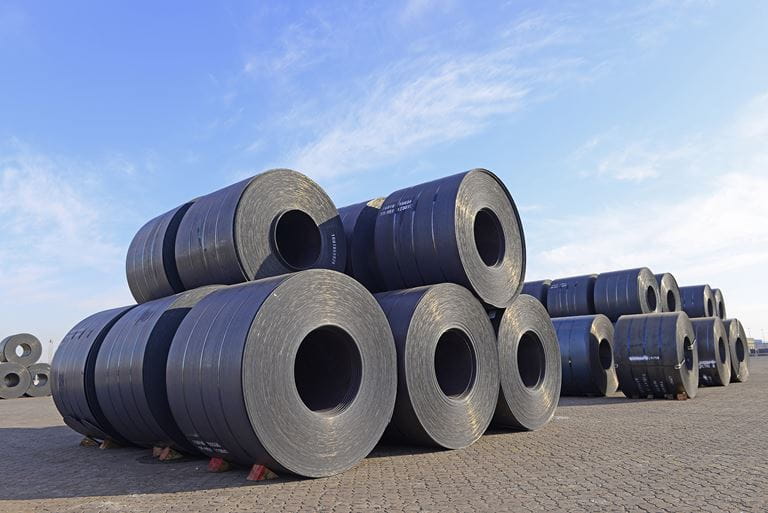
Domestic European prices for hot-rolled coil remained stable on Aug. 27, as market participants returned from summer holidays and expectations increased of a revival in activity and demand.
“Prices should pick up in the next month,” a mill source said. “[However,] it is still too early to say.”
“I see recovery in the first quarter of 2025,” a service center source said. “Toward December there might be a bullish phase [in the market].”
Market sources also noted a continued lack of interest from the market following the announcement of the European Commission of anti-dumping investigations for a variety of Asian countries.
“We all expected a reaction to the investigations against the Asian countries,” a service center source said.
Interest in imported HRC from China has been moderate, with some Chinese mills offering to finance the cost of safeguard duties to incentivize demand. Although it remains unclear whether consumers will take this onboard, sources said.
Sources emphasized the importance of production cuts by mills to help balance out market fundamentals. They also suggested government intervention, such as subsidizing certain industries, to alleviate market pressures.
“Without subsidies, the market will not move,” a service center source said.
Platts assessed Northwest European HRC at Eur595/mt ex-works Ruhr on Aug. 27, stable on the day.
Meanwhile, Platts assessed domestic HRC prices in Southern Europe at Eur595/mt ex-works Italy on Aug. 27, also stable on the day.


European HRC prices under pressure from oversupply, lack of demand – sources
Despite the summer holiday period coming to an end, there have been few signs yet of the traditional rebound in trading and prices, they added, with European mills keeping quiet and providing no firm offers to the market.
“Mills are being very cautious,” a buyer in Germany said. “They do need to increase prices to [improve their] margins, but it’s clear the market is too weak for a price recovery. It’s very much a case-by-case approach.”
Buyers have also stayed on the sidelines, although some sources said they were likely to resume purchasing when the prices went a bit lower.
Bookings were reported at €580-590 ($648-659) per tonne ex-works in Northern Europe, for October-delivery HRC, with estimates of the tradable value put at about €590-600 per tonne ex-works by sellers and buyers.
One supplier was still hoping to achieve €620 per tonne ex-works, Fastmarkets understands, but most buyers said that price was “unworkable.”
“Oversupply remains a key drag [on HRC prices],” a mill source in the region said. “Mills are fighting for orders, but some suppliers drop their prices too easily [if they receive] a decent bid.”
Fastmarkets calculated its daily steel hot-rolled coil index, domestic, exw Northern Europe, at €597.50 ($667.59) per tonne on August 27, down by €4.33 per tonne from the previous calculation of €601.83 on August 23.
Fastmarkets’ daily HRC indices were not published on Monday due to a public holiday in the UK.
The Northern Europe index was down by €14.58 per tonne week on week and by €31.17 per tonne month on month.
Sources said that recent restrictions on imports of flat steel – including a safeguarding review, and an anti-dumping (AD) investigation into HRC from Egypt, India, Japan and Vietnam – had provided only limited support for domestic markets.
“Recent import restrictions have only slowed the pace of [the fall in domestic HRC prices]. But it’s no game-changer for now,” a buyer in Italy said.
Market sources said that oversupply and subdued demand from the key end-user sectors remained the principal factors acting to drag down domestic HRC prices.
But the recent price drops in China have been a disturbing factor for global markets, “spreading weak sentiment,” market sources said.
“Chinese prices tumbled in August and FOB prices [for HRC] fell to a four-year low before regaining some ground this week,” a trader source in Europe said on Tuesday.
Sources in Italy, meanwhile, said that China-origin HRC prices were competitive for European buyers – even taking into account the EU’s anti-dumping measures.
“With the AD duty, China-origin coil is being offered to Italy at €540-550 per tonne CFR. Some suppliers have even [asked for] €520 per tonne CFR,” a second buyer in Italy said. “No deals have been sealed yet, but European buyers are starting to consider purchasing from China again.”
The EU imposed definitive anti-dumping and countervailing duties of 18.10-35.90% on HRC imports from China in April 2017. And in June 2023, it extended these duties for five more years.
Fastmarkets’ daily steel hot-rolled coil index, domestic, exw Italy, was calculated at €595.00 per tonne on Tuesday, down by €5.00 per tonne from the previous calculation of €600.00 per tonne on Friday.
The index was down by €12.50 per tonne week on week, and by €25.00 per tonne month on month.
The Italian market has just reopened after its traditional summer break, although a key local supplier had yet to announce its new offer prices for October-delivery HRC.
But buyer sources estimated that the current workable price was €590-600 per tonne ex-works.
Late-October shipment HRC from South Korea was on offer to Italy at €590 per tonne CFR, Fastmarkets understands, but sources said that buyer price ideas for overseas coil were unlikely to be higher than €540 per tonne CFR.
Published by: Julia Bolotova


Italian car output continues to slow
Italian passenger car production tumbled in May and in the first five months of the year, Kallanish notes from local carmakers association Associazione Nazionale Filiera Industria Automobilistica (Anfia) preliminary data.
Car output fell year-on-year by as much as 49.3% in May to 29,119 units, and by 29.7% on-year in January-May to 171,145 units.
By comparison, German five-month output declined by 6% to 1.7 million units, and by 18% to 307,500 cars in May. The UK recorded a fall in May of 11.9% to 69,952 cars and a moderate 3.2% decline to 353,843 units in January-May. Spain’s May car production however hiked by 5.7% to 208,575 cars and by 7.7% to 908,015 cars in January-May, Anfia points out.
“The automotive production sector is in the context of industrial production decreasing again in April 2024 compared to the previous year’s levels. In May, the industrial production index as a whole closed down at 3.3%, and in the first five months of the year compared to the same period in 2023,” Anfia says in a report.
Italy has 23 car production plants. Spain has 17 plants, France 31 and Germany 42.
Anfia is collaborating with the government and Stellantis to define a roadmap for the automotive industry’s relaunch. It aims at boosting Italy’s automotive production capacity beyond the level of 1 million vehicles/year through state support on decarbonisation, research and development, and new production plant investments (see Kallanish passim).
According to the latest data, in January-March 2024, exports of passenger cars and new industrial vehicles were worth €5.3 billion ($5.7 billion) while imports reached €10 billion. The US represents the largest export destination for Italian passenger cars with 17.4% market penetration, followed by Germany with 16.1% market share and France’s 12.3%.
According to a Fim-Cisl union document obtained by Kallanish, Stellantis’ production in Italy during the first half of this year saw a significant decline of 25.2%, resulting in the manufacturing of 305,510 vehicles. In the passenger cars segment, the carmaker’s output experienced a drop of 35.9% to 186,510 cars.
Except for Pomigliano and Atessa’s light commercial vehicle facilities, every Italian plant is seeing a decrease. Maserati automobile production has dropped by 70%, with only 1,850 vehicles manufactured in the first half. The unions estimate a total output of somewhat more than 500,000 vehicles from Stellantis’ Italian operation.
Natalia Capra France

Bekaert announces financial leadership transition
Belgian wire solution specialist Bekaert has announced a new chief financial officer effective 1 November, Kallanish discovers from a company press release.
Current CFO Taoufiq Boussaid is stepping down to pursue other opportunities, effective 31 October. Bekaert has named Seppo Parvi as the new CFO and a member of Bekaert’s group executive committee.
Boussaid joined Bekaert in July 2019 and was a member of the group’s executive committee. He helped improve profitability and cashflow generation and leaves the company with a stronger balance sheet and increased shareholder value, the company states.
Parvi joins Bekaert with an extensive international financial and operational background. Since 2014, he held positions as cfo, deputy to the ceo and Finland country manager at Stora Enso.
“Seppo Parvi is an experienced cfo with a strong executive and financial leadership career track record,” states Yves Kerstens, chief executive officer. “We look forward to him joining Bekaert and continuing the transformation that will support our future ambitions and the execution of our corporate strategy.”
John Isaacson, USA

German rebar mills eye Polish sales, lose workers
While rebar sales in Germany continue to deteriorate along with the nation’s construction industry, activity is faring relatively better in Poland, which has become the more attractive market for some German sellers.
Rebar mills in eastern Germany, in particular, largely Italian-owned, are seeing better business in Poland than in their home market. “You get better prices there. I spoke to the management of Feralpi Stahl; they said it is the first time they are selling eastward to Poland,” one buyer tells Kallanish. Feralpi group makes no secret of that development in its official statements. While revenue generated in Italy and Germany dropped in 2023, “the trade performance of the Polish market improved significantly,” the group writes in its latest annual report.
On the German market, base prices from domestic mills over the summer have trended stably at below €360/tonne ($403), which plus the fixed size extra of €265 comes to a delivered price of €625/t – or less. Although some sources have observed recent increases in offer prices, of up to €650/t delivered, this has not been widely substantiated in transactions.
However, while the stronger Polish construction economy is bringing some benefit to eastern German mills, it is, on the whole, having a detrimental impact on the rebar business in Germany. This is because it is encouraging Polish immigrant workers in Germany to return home.
“For Polish workers, the road to Germany is barely paying off, with wages minimally higher, so they would rather look for work at home,” one manager at a German rebar bender says. A manager at Atterer in southern Germany concurs, and describes the issue in a letter to customers. “We keep losing workers for financial and family reasons, although they value us as an employer. And it is difficult to attract new qualified workers,” Atterer writes, describing the dilemma.
The company points out that the Polish zloty has jumped by 10% against the euro since last year. For Polish workers in Germany, this means their wages have 10% less purchasing power when they travel home. This, plus the high costs of living and fuel, make working in Germany unattractive for them.

German distributors’ sales fall slightly in first half
Germany’s stockholding distributors sold a combined 5.016 million tonnes of steel products in the first half of the year, around 100,000t less than in H1 2023.
The first two quarters did not differ much, with 2.469mt sold in Q1 and 2.448mt in Q2, Kallanish learns from distributors’ association Bundesverband Deutscher Stahlhandel (BDS).
The average sales volume per month was 816,000t. Split by product group, long products on average accounted for 250,000 t/month and flat products for 495,000t. Miscellaneous other products, such as wire rod, accounted for 71,000t.
In a comparison of the last months of the respective periods, June 2024 was virtually equal to June 2023, with both registering around 830,000t of sales. BDS provides no interpretation of whether this could mean that stockholders’ activity has now more or less synchronised with last year. In March, the difference was still more pronounced – 817,000t this year versus 994,000t in March 2023.
In terms of inventory tonnage, the monthly average was 1.964mt in Q1 and 1.948mt in Q2. Inventories of long products in the second quarter were 637,000t, flat products totalled 1.267mt, and miscellaneous products 44,000t.
Until the end of 2022, the monthly average inventory was above 2.18mt, with all months normally above the 2mt mark. Since early 2023, only three months, July 2023, February 2024 and April 2024 eclipsed that mark, by some 1,000t.

Residential construction remains gloomy in Germany
With 17,600 apartments under construction and conversion in June, activity in Germany’s residential construction was 19% lower than in June 2023, according to industry association Hauptverband der Deutschen Bauindustrie.
This confirms a downward trend seen all through the first half year, with a year-on-year decline of 21%. The managing director of Bauindustrie, Oliver Müller, says there is no hope of a recovery in sight.
“The first half of the year was another major disappointment in terms of housing. We are heading for the weakest level of approvals since 2010,” he states.
For builders and benders, this means that the struggle for orders remains tough, and could become tougher. Benders are operating unprofitably because the competition is even worse for their customers, the construction companies.
“We often have five to ten benders competing for an order; but one level up, it is even more builders wooing to get a project,” Kallanish hears from a bender’s manager.
Hence, construction firms pass the pressure along to partners and try to compensate some of their concessions in award speculation by pushing down the price for rebar services.
“Many just need a deal to keep operating. We are between the devil and the deep blue sea,” the manager states.
Christian Koehl Germany