


European Commission discloses draft duties on China-made battery electric vehicle imports
The European Commission (EC) unveiled on Tuesday its draft decision on definitive countervailing duties on battery electric vehicle (BEV) imports from China, Kallanish reports.
Carmakers received the proposed additional tariffs they will be subject to, and now have 10 days to provide comments. Interested parties can also request hearings with the EC “as soon as possible.”
The decision follows an anti-subsidy investigation officially started on 4 October 2023. Temporary duties, on top of the existing 10% import tariff, entered into force on 5 July 2024. If approved in an upcoming vote by member states, definitive countervailing duties will be imposed on 5 November for a five-year period.
Based on “substantiated comments” received from carmakers on the provisional measures, the EC has slightly adjusted the proposed rates downwards. They range from 17% to 36.3%, instead of the original maximum rate of 38.1%.
However, US EV maker Tesla has received a much lower rate than peers. This “individual duty rate” of 9% was granted as an exporter from China. This means Tesla’s BEV models shipped from its Shanghai gigafactory will only be subject to a total of 19% import duties “at this stage.”
In comparison, BYD vehicles are subject to 27%. Other cooperating companies, which the EC has not publicly disclosed, will face total tariffs of 31.3%. “Non-cooperating” companies such as SAIC, the parent company of MG Motors, are facing the harshest combined rate of 46.3%.
China Chamber of Commerce to the EU (CCCEU) expressed its “strong dissatisfaction and firm opposition to the EC’s protectionist approach.” The group argues the development of the European EV industry, along with the EC’s own report, “shows that there is no sufficient evidence to demonstrate that China’s BEVs cause substantial material injury in the EU market.”
“The EC’s unfair use of trade tools to hinder free trade in electric vehicles, along with this protectionist approach, will ultimately weaken the resilience of the European electric vehicle industry, disrupt the level playing field, and undermine the EU’s own green transition,” it adds.
The move will also exacerbate trade tensions between China and the EU, but the EC doesn’t see it impacting the ongoing procedures in the World Trade Organisation (WTO). Beijing says the EU has not followed WTO trade rules and has initiated a dispute consultation.

European distributors lose volume in 2020s
Geopolitical tensions, trade disputes and steel trade measures have disrupted formerly well consolidated supply channels, at the cost of stockholding distributors and service centres (SSCs), European distributors’ federation EUROMETAL says in a recent research paper.
The EU steel distribution sector has experienced a marked contraction, with business volumes decreasing from 77 million tonnes in 2021 to 62mt in 2023. The downturn was particularly pronounced in the Multi-Product & Proximity Steel Stockholding Distribution segment, which saw a reduction from 47mt in 2021 to 37mt in 2023. Service centres’ supply volume in 2023 was 25mt.
EUROMETAL assesses the overall European steel supply potential – what it calls the typical steel distribution product portfolio market – at 116mt in 2023. This compares with 117mt in the 2020 pandemic year, 138mt in 2021 and 121mt in 2022. However, of this total, nearly half is served by mills, with 54mt supplied from mills directly to end users in 2023.
The decline in recent years is attributed to a combination of factors, like the economic downturn, supply chain disruptions affecting production and consumption patterns, geopolitical tensions and trade disputes, EUROMETAL notes. However, “steel distribution remains a vital component of the supply chain, as it offers essential services such as stockholding, processing, and value-added solutions to customers,” the association affirms to Kallanish.
Looking at the typical product groups, EUROMETAL notes that service centres continue to be a major player, accounting for 44% or 21.9mt of strip product supplies to the general industry, automotive, and construction sectors. The end-user quarto plate market saw 3.8mt supplied by stockholders and SSCs, with 4.1mt sold directly by mills to end-user segments.
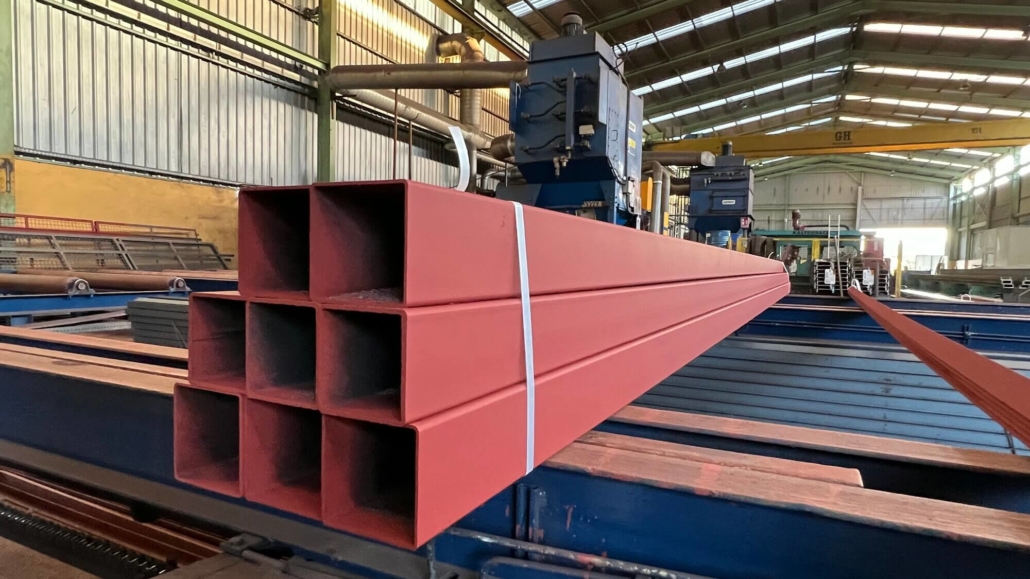
For long steel products, distributors maintain a dominant share of 75% (22.8mt) in supplying to end users, while direct mill sales to end users accounted for only 7.5mt. The market for tubular steel products, totalling 10.6mt in 2023, was equally supplied by EU steel distributors and direct mill sales, each accounting for 5.3mt.
Christian Koehl Germany

EU probes flat steel from Egypt, India, Japan, Vietnam
The European Commission announced Aug. 8 an anti-dumping investigation for certain non-ferrous products originating from countries such as Egypt, India, Japan and Vietnam. The announcement, published in the Official Journal of the European Union, said that European Steel federation Eurofer lodged a complaint alleging that the imports of certain hot-rolled flat products originating from these four nations were being dumped into the market and, therefore, causing economic damage to the bloc.
Turkey determines margins on imported HRC
Turkey has determined dumping margins on imports of hot-rolled coil (HRC) from China, India, Japan and Russia ranging between 11.65%-57.75%, according to the final declaration report of the Turkish Trade Ministry late Aug. 7 for the antidumping investigation that the country started on Oct. 31, 2023. According to the report, the preliminary dumping margins on imports of HRC from China was determined at 20.55%-57.75%, from India 11.65%-18.26%, from Japan 39.20% and from Russia 16.11%-23.58%, depending on producers.
UK suggests refining HRC import category
The UK Trade Remedies Authority has proposed that a category for hot-rolled flat products, known as Category 1, be split into two segments, Categories 1A and 1B. The quota for Category 1A, which would be accessible by parties looking to import the products for commercial applications will be retained at current levels, or just over 1 million metric tons/year. The quota for Category 1B, which would be accessible solely for downstream processing, however, will be set 89% higher than that of Category 1A, to around 1.9 million mt annually. This means the total Category 1 category for hot-rolled flat products will be increased to 2.9 million mt.
Kazakhstan mulls export tariffs on metal ores
Kazakhstan is considering introducing export duties on commodities, including metals, to cover its budget deficit, while stimulating more downstream processing to be done domestically, local media reports said. The country could introduce certain fixed duties on the export of sulfur, coal, ferroalloys, copper and iron ores and concentrates, among some other export items, according to the media reports. The Ministry of Finance was unavailable for comment on the matter.
India probes Vietnamese HRC imports
India initiated an antidumping investigation on imports of hot-rolled flat products from Vietnam, according to a gazette notification published Aug. 14. The application for the probe was filed by the Indian Steel Association (ISA) on behalf of domestic producers JSW Steel and ArcelorMittal Nippon Steel India, alleging imports from Vietnam caused material injury to the domestic industry as there were no significant differences in the product being imported and the ones produced by the domestic industry.
Vietnam investigates HRC from China, India
Vietnam’s Ministry of Industry and Trade has launched an anti-dumping investigation into steel hot-rolled coils from China and India, following a petition filed by local producers Hoa Phat Group and Formosa Ha Tinh Steel in March. In an official memo seen by S&P Global Commodity Insights, the ministry said that an anti-dumping duty for HRC imports has been preliminarily set at 22.27% from India and 27.83% from China. Currently, HRC imports into Vietnam from China and India do not attract a duty.
Thailand mulls 5-year extension on Chinese steel inflows
Thailand plans to extend antidumping duties on flat hot-rolled boron-added steel in both coil and not in coil imported from China for another five years, the Department of Foreign Trade said. The current duties, ranging from 14.28% to 19.47% on a CIF basis, are due to expire on Dec. 12, and had already been extended by a year from December 2023. The duties were first imposed in December 2012 for five years and extended for another five years in December 2018.
Thailand extends HRC tariff to address circumvention
Thailand has expanded an antidumping duty of 30.91% CIF on alloyed hot-rolled coil imported from China to address alleged circumvention by 17 Chinese steelmakers, data from the Department of Foreign Trade showed. The expansion results from a DFT investigation that began on Sept. 16, 2023, over concerns that HRC from 17 Chinese steel companies was circumventing existing antidumping duties by adding alloys, thus allowing them to be defined under different HS codes.
Malaysia eyes carbon tax regime in 2025: official
Malaysia is likely to announce a carbon tax in emission-intensive sectors in 2025 to push domestic decarbonization and address trade policies like the EU’s Carbon Border Adjustment Mechanism, Ching Thoo A/L Kim, secretary general of the Ministry of Natural Resources and Environmental Sustainability said during the Malaysia Carbon Market Forum in Kuala Lumpur. In 2023, Malaysia initiated a study about whether and how to implement carbon pricing instruments, such as carbon tax and emission trading scheme or ETS, in the country. The study is led by the country’s Ministry of Finance, with support from the World Bank under its Partnership for Market Implementation (PMI) initiative.
Malaysia reviews PC strand tariffs
Malaysia has started a review of antidumping duties imposed on stranded steel wires for prestressing concrete (PC strand) originating or exported from China, a note from Ministry of Investment, Trade and Industry showed, paving the way for a possible revision of the existing duties. Southern PC Steel Sdn Bhd based on the grounds that there was a substantial change in the dumping margin for the imports of the steel item from China, the ministry said Aug. 8. The current five-year tariffs of 2.09%, 9.47% and 21.72% took effect on Dec. 25, 2021, and are due to expire on Dec. 24, 2026.
Malaysia opens probe on coated steel
Malaysia has initiated an antidumping duty investigation into coated iron or non-alloy steel flat-rolled products from China, India, Japan and South Korea, the Ministry of Investment, Trade and Industry said, following a petition from the domestic industry. The Malaysian government received the petition from Perusahaan Sadur Timah Malaysia (Perstima), which is representing domestic coated steel producers, alleging that imports of the product “are being dumped in Malaysia causing material injury to the domestic industry …,” according to MITI.
Malaysia reviews current tariffs on Hoa Phat HRC
Malaysia has begun to review current antidumping duties on imports of coated/plated flat steel from Vietnam’s Hoa Phat Steel Sheet, the Ministry of Investment, Trade and Industry said. The review resulted from a request made by the Vietnamese steelmaker on the grounds “that there is a substantial change in the dumping margin for the imports of subject merchandise by Hoa Phat Steel Sheet…” the ministry said.
Clement Choo


EU carmakers hammer components suppliers after steel drops
Steel-based automotive components suppliers say they are suffering in ongoing contract negotiations with carmakers, which are exerting their bargaining power to push prices down. This is having an indirect impact on automotive steel pricing talks.
This is a relatively customary scenario, but, in some cases this year, the squeeze for small and medium-sized suppliers is worse than in other years, Kallanish hears from a manager of one European automotive components supplier.
In this year’s negotiations, carmakers have been asking for a price reduction of €80 ($88) per component in comparison with prices one year ago. “This is a pretty bad attitude; we are standing with our backs against the wall already,” the manager says.
Although the contracts cover a full calendar year, negotiations can drag on far after the year has begun, sometimes even until September, meaning prices agreed will be applied retroactively to deliveries already executed. It can therefore happen that by mid-year, talks might be held up. One big German car brand, especially, is staying tough in the talks, the manager says.
These downstream side negotiations scratch against the upstream talks for steel supply from steelmakers, some of which are renewed around mid-year. Meanwhile, mills have mostly given up on their position, now accepting discounts over the last period. For the automotive suppliers, the reduction on the steel supply side for galvanized coil products is heard to be at between €20/tonne and €40/t, according to the manager.
The big carmakers had aimed to secure signatures early on in negotiations for direct steel supplies, and accepted higher prices at an early stage, the manager says. Carmakers are now pressuring automotive component suppliers to compensate for the fact steel prices have softened in the summer, the manager believes.
Christian Koehl Germany

GMH Gruppe buys scrap company in Saarland
Germany’s GMH (Georgsmarienhütte) Gruppe is set to acquire ALBA Metall Saar GmbH, a scrap and metal trading company based in Bous, Saarland state. The acquisition is a further step in GMH Gruppe’s strategic expansion in the steel scrap market, it notes.
The acquisition agreement was signed at the end of July, and is now subject to the fulfilment of various closing conditions, which must be completed by 30 August, Kallanish understands. The Federal Cartel Office has already approved the transaction under antitrust law, GMH notes.
By broadening its geographical footprint into southwest Germany, GMH Gruppe says it will enhance its scrap recycling network and processing. The group’s headquarters and main mill is in Georgsmarienhütte, near Osnabrück in northern Germany, Lower Saxony. The group also owns a mill in Saarland, also located in Bous. Stahlwerk Bous is one of Germany’s lesser-known mills, as it produces only ingots for the group’s internal processes.
As part of the acquisition, ALBA Metall Saar GmbH will be renamed GMH Recycling Saar GmbH and will be integrated into GMH Gruppe’s organisational structure, with a full merger expected by 2025.
Christian Koehl Germany

FerroMac Europe joined as member of EUROMETAL
EUROMETAL is delighted to welcome FerroMac Europe as a new member company.
FerroMac Europe is a leading international steel trading company, acting as a vital bridge between steel producers worldwide and their customers.
Their expertise encompasses the entire supply chain, from production and shipping to documentation and financing.
Their team of qualified professionals, based in both Antwerp headquarters and overseas branch offices, ensures a smooth and efficient process for all involved.
Driven by a commitment to excellence, innovation, and exceeding customer expectations, FerroMac Europe has established itself as a key player in the global steel industry.
Website: ferromac.com
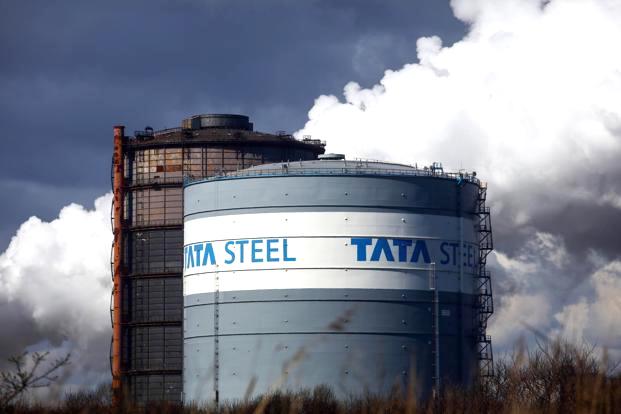
UK to provide £13.5 mln to support supply chain while Tata Steel transitions to green steelmaking at Port Talbot
The government said the funding was for “immediate release” to support those local businesses that rely on Port Talbot steelworks by helping them turn toward new markets and customers. Details of exactly how to access the funds will be announced soon, the government added.
The money is the first tranche from the Tata Steel/Port Talbot Transition Board fund – a dedicated fund of £100 million to be invested in skills and regeneration programs to support workers directly and indirectly affected by Tata Steel’s plans for Port Talbot. The funding will help them to find new jobs where relevant, provide access to skills training and enable them to gain new qualifications.
Tata Steel Europe’s decarbonization plan for the Port Talbot steelworks includes the construction of a new 3.2 million tpy electric-arc furnace, with the total amount of the investment reaching £1.25 billion, including financial support from the UK government.
The decarbonization plan also includes the gradual closure of the two remaining blast furnaces at the Port Talbot steelworks. BF5 was closed on July 4 and BF4 will be closed by the end of September.
Tata Steel Europe said that it would provide £20 million of the total transition fund, while £80 million will come from the UK government.
A spokesman for Tata Steel Europe told Fastmarkets the company has already started spending some of its £20 million contribution on an employee support scheme – to help workers get formal accreditation for their skills by gaining National Vocational Qualifications (NVQs) and that it will soon appoint an outplacement support agency.
More than 50 companies, including Fintech Wales, The Royal Mint, Cardiff Metropolitan University, RWE Energy, Ledwood Mechanical Engineering, and Pro Steel Engineering, have committed to supporting workers forced to leave their jobs in the steelworks. According to the UK government, support includes guaranteed interviews for anyone made redundant, training and coaching.
On August 1, TV Narendran, chief executive officer of India-headquartered parent company Tata Steel, confirmed the company’s intention to continue with its decarbonization plans for The Port Talbot steelworks.
“In the UK, we have safely ceased operations at one of the blast furnaces (BF5) at Port Talbot and are on track to close the remaining blast furnace by September 2024,” he said at the time.
And a Tata Steel Europe spokesman said that no hot metal will be produced at the site until the new EAF is up and running in 2028.
On August 15, the UK government’s Welsh Secretary, Jo Stevens, chaired the second meeting of the Tata Steel/Port Talbot Transition Board and said that, despite Tata Steel’s management being firm about its schedule for decommissioning, “negotiations with Tata Steel on the future of the site will continue.”
The UK Business & Trade Secretary, Jonathan Reynolds, said: “We’re working in partnership with trade unions and industry to secure a green steel transition that’s right for the economy, [for] our talented workforce and [for] local communities for generations to come.
“Our negotiations with Tata [Steel] remain ongoing.” he added.
And Tata Steel UK’s CEO Rajesh Nair, said: “The transition board [has a] very important role [to play] in supporting the transformation of our business to low-CO2 steelmaking and [in] encouraging regeneration and inward investment to the area, while [at the same time] helping to mitigate the impact those changes may have on our people, our supply chain and our communities.”
Pressure on UK HRC prices
The Port Talbot steelworks produces hot-rolled coil and, according to Tata Steel, the annual output of the new EAF will be equivalent to the combined output of the last two blast furnaces.
But the previous closures and the fact that no steel will be produced at the site from September “has led to an increase in imports consistently exhausting part of the quota for Category 1 steel [which includes hot rolled flat steel products] across four consecutive quarters,” according to the UK Trade Remedy Authority (TRA).
“This in turn has driven up the cost of these products for the UK market,” the TRA said.
To remedy this, the TRA, announced on August 9, that the import quota for flat steel products will be almost tripled due to the “changed circumstances” in the market, with particular reference to the blast furnace shutdowns at Port Talbot.
The current quota of 1 million tonnes per year for Category 1 steel, will be expanded to 2.9 million tpy, by dividing Category 1 into two subcategories – 1A and 1B – to reflect whether the interested parties want to import material for commercial applications (1A) or for downstream processing (1B).
The quota Category 1A – which covers the steel commonly used as a raw material for other types of steel – will be set at 1 million tpy.
The quota for Category 1B – steel that has been subject to further downstream processing – will be set at 1.9 million tpy.
The TRA said that if limits are breached, importers will need to pay a 25% tariff.


European green steel premiums narrow downward; end-user demand slow
During the assessment week, offers for green steel with Scope 1, 2 and upstream Scope 3 carbon emissions below 0.8 tonnes per tonne of steel were reported at €200-350 ($219-329) per tonne from European suppliers, stable week on week.
Buyer sources, however, pointed out that for bigger volumes European mills could accept lower prices.
As a result, buyers’ estimations of tradeable values for such material were heard at €100-150 per tonne. The lower end, however, was deemed unworkable by sellers so far.
A distributor source reported a booking of flat steel with carbon emission content of around 0.6-0.8 tonne per tonne of steel at €170-200 per tonne in end-July-early August.
Fastmarkets’ weekly assessment of the green steel domestic, flat-rolled, differential to HRC index, exw Northern Europe was €170-200 per tonne on Thursday, narrowing from €170-250 per tonne seven days ago.
The corresponding green steel base price, HRC, exw Northern Europe, daily inferred was €780.38 per tonne on August 15.
Demand, however, remained limited. Transactions for steel with reduced carbon content in most cases were done directly between steelmakers and end users. The automotive industry remained the major buyer of green steel in Europe, market sources said.
“The market [for green steel] is sleepy, there is a seasonal slowdown, and automotive is not performing well, so overall demand [ for green steel] remains on the low side,” a buyer in Germany said.
“Green steel market is not big, but we see more interest from automakers, and the construction industry is starting to catch up in some regions,” a seller source said.
But even key consumers were seen booking mainly test batches, and green steel uptake in general has been quite low across the steel supply chain so far, Fastmarkets understands.
Per the Greenhouse Gas (GHG) Protocol Corporate Standard, Scope 1 refers to direct emissions generated by an entity or its subsidiaries. Scope 2 refers to indirect emissions from energy used by an organization. Scope 3 refers to indirect emissions – from activities of the entity – that occur from sources beyond their control.
Liberty launches Częstochowa bankruptcy appeal
Poland’s Liberty Częstochowa, part of Liberty Steel, has launched an appeal against the start of bankruptcy proceedings, it tells Kallanish in an emailed statement.
The court in Częstochowa had chosen to initiate bankruptcy proceedings against the idled plate-maker following a lawsuit by a creditor launched in April, and the company went into receivership in June.
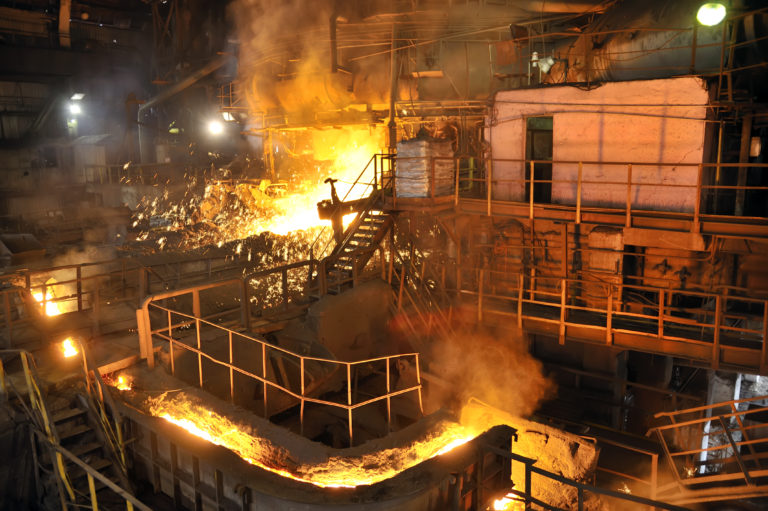
Liberty says it has a plan to restart the 700,000 tonne/year EAF and 1.2 million tonne/year plate mill. It believes it has shown that it has strong support from its largest creditor and a letter of intent for a €100m ($110m) loan from a credible financial institution.
The restart plan involves leasing the plant to its parent company, Liberty Steel Group. It notes that it has begun work on restarting the plant and it intends to reimburse July salaries if the operating lease for the plant is granted.
Liberty Częstochowa says the restart of the plant is the best way to “secure the preservation of jobs, the uninterrupted payment of employees’ salaries, ongoing production at the plant and the timely repayment of all creditors.”
Suitors looking to purchase the Polish mill include Ukraine’s Metinvest.
Liberty Steel has had trouble financing its other mills in central and eastern Europe. These include the Ostrava steelworks in the Czech Republic and Liberty Galati in Romania, which restarted a blast furnace in July.

Lower automotive prices, volumes hurt thyssenkrupp
Thyssenkruppp Steel Europe saw orders and sales drop in its third fiscal quarter through June, affected by a challenging environment that included high energy costs and growing import pressure in Europe.
Order intake amounted to €2.7 billion ($3 billion) and revenue to €2.8 billion. Each fell by around half a billion euros in comparison to the corresponding previous-year quarter. This was due both to significantly lower prices and decreased volumes, especially in the automotive sector. Adjusted Ebit in the segment was €100 million, which was almost half the prior-year level of €190m.
The distribution unit of thyssenkrupp group, thyssenkrupp Materials Services, fared slightly better, Kallanish heard during a conference call with chief financial officer Jens Schulte. Orders in this division amounted to €3.1 billion and revenue to €3.2 billion, following year-on-year declines respectively by €200m and €100m, due to lower prices, especially for finished steel.
The segment nevertheless increased adjusted Ebit to €58m versus €50m a year earlier. The international supply chain and direct-to-customer businesses, as well as the North American distribution units and service centres contributed most to this growth.
At both divisions, positive earnings effects came from the efficiency measures bundled in the APEX programme, such as the negotiation of new prices, the reduction of freight costs and other site consolidation activities.
Including its other divisions – Decarbon Technologies, Automotive Technology, Marine Systems – thyssenkrupp AG’s consolidated revenue amounted to €9 billion, down from €9.6 billion a year earlier. Order intake fell from €9.4 billion to €8.4 billion. Adjusted Ebit came to €149m versus €243m last year.
Christian Koehl Germany