


US steel associations applaud introduction of ‘Prove It’ Act
Two US domestic steel associations are supporting this week’s congressional introduction of the so-called “Prove It” Act, which would verify the carbon intensity of steel from various sources, Kallanish learns from association statements.
The American Iron and Steel Institute (AISI) and the Steel Manufacturers Association (SMA) applaud the formal introduction of the “Providing Reliable, Objective, Verifiable Emissions Intensity and Transparency Act” to the US House of Representatives on 9 July.
The Prove It Act authorises a comprehensive study by the Department of Energy to compare the greenhouse gas (GHG) emission intensities of certain goods, including steel, produced in the US to those produced internationally. The study is expected to provide detailed, specific and transparent data on emissions to assess the environmental standards of foreignly produced products.
AISI president and chairman Kevin Dempsey explains that passing the Prove It Act protects US domestic steel producers and their investments in emissions-reduction efforts.
“The Prove It Act would do as its name implies by creating an official source to verify the superior carbon efficiency of vital American industries, like steel, and give policymakers the data needed to make the case for action,” states Dempsey.
Dempsey notes that US steel producers are at a disadvantage when inexpensive foreign products with fewer GHG restrictions are permitted to be sold in the US.
“Trade-distorting policies in many countries continue to contribute to massive global overcapacity in steel, much of which is from countries that are producing steel that is much more carbon emissions-intensive than American steel, including China, India, Indonesia and other Southeast Asian nations,” Dempsey mentions.
SMA president Philip Bell applauds the effort by both major political parties to bring the legislation to the US House.
“SMA supports the bipartisan Prove It Act because we know that it will demonstrate conclusively that American steel has the lowest carbon emissions in the world. A US Department of Energy study determining the emissions intensity of domestically produced goods will show the world that American steelmakers have a significant carbon advantage over their counterparts in Europe, Asia, the Middle East and everywhere steel is made. We look forward to working with Congress to make sure we get the best bill possible,” states Bell.
Republican Representative John Curtis of Utah and Democratic Representative Scott Peters of California introduced the Prove It Act to the US House of Representatives. Earlier this year, Republican Senator Kevin Cramer of North Dakota and Democratic Senator Chris Coons of Deleware introduced the bill in the US Senate Environment and Public Works Committee (see Kallanish 16 May).
Kristen DiLandro USA

Owners could sell Duisburg mill Hüttenwerke-Krupp Mannesmann
Hüttenwerke-Krupp Mannesmann (HKM), the largest mill in the Duisburg steel complex that is partially owned by thyssenkrupp Steel, could be put up for sale, and the first signals have been heard from buyer candidates.
While thyssenkrupp Steel is HKM’s largest stakeholder with 50%, Salzgitter owns 30% and Vallourec 20%. The French pipemaking group’s possible withdrawal has been under discussion for months, after Vallourec closed its last German plant last year. Salzgitter stated in March its interest in taking over Vallourec’s stake.
In addition, tk Steel recently announced it plans a long-term steel capacity reduction at its own plants. Although HKM was not included in that announcement, it appears likely that a separation from HKM would support tk Steel’s restructuring calculations. It would also support the spin-off process of 50% in tk Steel to Czech group EP.
The three stakeholders are now in discussion about selling HKM, following an approach by another interested company. “We do confirm that we have been approached by a prospective buyer. The stakeholders are now in close coordination to test a sale,” tk Steel says in a statement sent to Kallanish upon request. It underlines that the dialogue will not anticipate a particular outcome, and that the companies will consider their responsibility for the workforce.
Christian Koehl Germany


Northwest European plate prices stay low
Observers of the northwest European plate market see little to no cause for an upturn in the summer months. If any price movement has occurred lately, it will have been downward.
In June, “the bottom was reached, so people thought. But no, it still softened a bit further,” a mill group’s manager tells Kallanish. He blames one Italian player, especially, for undercutting prices as they were. The manager admits he had not expected it, as mills were already standing with their backs against the wall. “They [the Italian player] must have some mixed calculation over their product range,” he believes.
According to him, Italian offers of S355 grade plate have undercut the mark of €700/tonne ($758) ex-works, while northwestern integrated mills have gone below the €800/t mark, but are trying to stay above €780/t.
One German buyer who buys strictly from integrated northwestern mills claims that prices remained at a stable low all through June. This could suggest that recent discounts came mostly from re-rollers in other countries.
An Austrian buyer confirms the picture, telling of offers again with lower prices in late June, mainly from Italy. Regarding offers from integrated mills, he does not exclude that some are available at under €770/t, depending on the tonnage.
He finds that plate is the product worst under pressure. “With other products like bar or sections, mills are at least starting to try to obtain better prices; for plate, I do not even see the idea of it,” he notes. He adds he has learned of a number of plate processors in Austria filing for state short working hours support, due to the lack of orders.
Christian Koehl Germany

European HRC prices edge higher amid continuing low demand
Market participants had expected European mills to push for higher prices for September-delivery material – mainly due to the lack of cheap imports since new EU safeguard measures entered into force in July 1.
Even August-delivery material was on offer at slightly higher prices, with some mills aiming for €650 per tonne ex-works.
In Northern Europe, offers were mostly reported at €640-650 (693-704) per tonne ex-works on Monday, sources told Fastmarkets.
But buyers were still reluctant to accept these levels, estimating the tradable level at closer to €620-630 per tonne ex-works.
Fastmarkets calculated its daily steel hot-rolled coil index domestic, exw Northern Europe at €633.75 on Monday, up by €2.75 per tonne from €631.00 per tonne on July 5.
The index was up by €5.00 per tonne week on week but remained unchanged month on month.
In Southern Europe, Fastmarkets calculated its daily steel hot-rolled coil index domestic, exw Italy at €626.25 per tonne on Monday, up by €2.15 per tonne from €624.10 per tonne on July 5.
The index was up by €6.25 per tonne week on week, but down by €4.58 per tonne month on month.
In Italy, sources said that HRC was on offer at €640-650 per tonne delivered, which nets back to €630-640 per tonne ex-works.
Some buyers also estimated the tradable price at this level, but most put the workable price at €620-630 per tonne ex-works.
“The market is very quiet,” a buyer source told Fastmarkets, adding that offers from Asia were very scarce.
Many suppliers from Asia exceeded their EU import quotas for the third quarter in the first few days of July.
“Thus, some buyers might decide to custom clear only this part of the already delivered material, for which it will not be necessary to pay duty,” a buyer source said, adding that any further supplies of HRC might remain in stock at customs.
A second buyer source told Fastmarkets that the workable market level for Turkish HRC was still at $580 per tonne FOB, which nets back to €615-620 per tonne CFR, including the anti-dumping duty.
Offers from India, Saudi Arabia and South Korea were reported at €600-610 per tonne CFR.
Published by: Darina Kahramanova

Construction firm Unger goes for green steel
Unger Steel Group has pledged to support a sustainable future by using CO2-reduced steel, and by implementing a circular economy in its operations, Kallanish hears.
The Austrian steel construction company announces it will soon publish an environmental product declaration (EPD) for the sections and plate it uses for its structural modules, approved by certification agencies. The group’s vision is “a future in which green steel is the rule, not the exception,” in the words of its chief executive, Matthias Unger. “We firmly believe that environmental responsibility and economic success can and must to together hand in hand.”
At its headquarters in Oberwart, the firm also recently carried out thermic insulation of office buildings and set up a photovoltaic plant with a kilowatt peak power of 1,450kwp.
Unger operates in 20 countries with 1,600 employees. It recently formed a United Arab Emirates-based joint venture with the USA’s second-largest construction company Bechtel, named Unger Steel Fabrication FZE.
Christian Koehl Germany

Thyssenkrupp Duisburg upgrade enters critical phase in autumn
Thyssenkrupp Steel will shut down in November the existing casting rolling mill at the Bruckhausen section of its works in Duisburg. It will be partially dismantled to make room for new plant components.
Construction of the major modernisation, involving an investment in the three-million digit euro range, was commenced at the end of last year (see Kallanish 12 December 2023). The existing casting rolling line was commissioned more than 25 years ago, and it is no longer capable of meeting future customer quality requirements. For this reason, it will be converted into a continuous casting line with a modern hot strip mill downstream. The conversion is being carried out by Primetals Technologies.
The preparatory excavation and foundation works for the major project have largely been completed, and the pre-assembly of various plant components has already begun. The new continuous casting line and the modernised hot strip mill will then go into operation and ramp-up from mid-May 2025, tk Steel says.
The company notes it is still focusing systematically on profitable premium products, like multiphase steels and lightweight steels, as well as grades with high surface quality. It will also reinforce the production of high-quality electrical steel grades, which are essential for the energy and mobility revolution.
Christian Koehl Germany
New UK government engages Tata, eyes preventing deindustrialisation
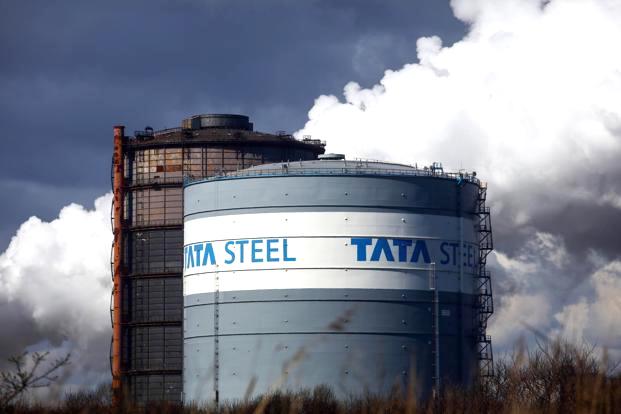
New UK business secretary Jonathan Reynolds has stressed there is a “better deal available” for the Port Talbot steelworks and UK deindustrialisation should be prevented, but he stopped short of guaranteeing jobs at the plant.
The situation at Port Talbot is a “major priority” for the new government, and both Reynolds and new Prime Minister Keir Starmer have already spoken to Tata Steel representatives, Reynolds said in an interview with the BBC on Sunday.
“It’s not about underwriting lossmaking businesses in a way, perhaps, we might have thought about industrial policy in the past,” he noted. “It is about being a partner for investment in the future.”
“There is more money available for the steel industry under our plans for government. But that’s about making sure we meet this transition with the private sector together and recognise … how we have to make sure that decarbonisation is not deindustrialisation … There is a better deal available for Port Talbot and the steel industry as a whole,” he added in the interview monitored by Kallanish.
“I do want things in exchange for money we will coinvest with the private sector around jobs and technology. I think that’s a reasonable way to make sure public money is being well spent,” he continued.
Pressed on whether he could guarantee jobs at Port Talbot, he concluded: “I’m going to make sure that job guarantees are part of the negotiations that we’re having.”
The Labour Party won last Thursday’s UK general election by a landslide and assumed power on Friday, ending 14 years of Conservative government. Steel industry trade unions are pinning considerable hope on the new government being able to retain some primary steelmaking at Port Talbot.
Tata Steel secured last year a commitment for £500 million ($640m) in funding from the previous government for its plan to transition to electric arc furnace steelmaking by 2027. The move also involves closing the existing blast furnaces in 2024. The agreement was however not signed before last week’s election.
Tata Steel closed blast furnace no.5 at Port Talbot at the end of last week, according to schedule. BF4 is due to close by end-September.
Adam Smith Poland

Polish rebar, wire rod prices stable; North African exporters aim Polish, Baltic countries markets
Trading activity is usually limited during the European summer, but local mills kept their offers for long steel products unchanged because of high production costs, Fastmarkets understands.
Rebar
Polish mills offered rebar in the range of 2,750-2,800 zloty ($692-705) per tonne CPT, the same price level recorded in the previous week.
Market participants estimated the tradeable market levels in the range of 2,730-2,750 zloty per tonne CPT.
According to buyers, lower prices at 2,710-2,720 zloty per tonne CPT can be achieved for volumes exceeding 1,000 tonnes. These levels, however, were not included in the final assessment because they did not comply with Fastmarkets’ methodology.
As a result, Fastmarkets’ weekly price assessment for steel reinforcing bar (rebar), domestic, cpt Poland was 2,730-2,750 zloty per tonne on Friday, unchanged from the previous week.
Some buyer sources reported improved demand for rebar in the first days of July compared to the beginning of June.
Wire rod
Market participants were not optimistic about the Polish low-carbon drawing quality wire rod market.
According to a distributor source, the summer holidays lull could already be felt in the market because trading remained limited.
“There is no restocking and the demand is even lower than in the previous month,” the source told Fastmarkets.
Despite the slow demand, Polish mills kept their offers for low-carbon drawing quality wire rod unchanged at 2,900-3,000 zloty per tonne CPT.
Sources estimated the workable market level at 2,800-2,900 zloty per tonne CPT, however.
Fastmarkets’ price assessment for steel wire rod (drawing quality), domestic, delivered Poland was 2,800-2,900 zloty per tonne on Friday, unchanged week on week.
Import offers of mesh-grade wire rod from Ukraine were heard at €600 ($648) per tonne DAP border.
Increased interest from North African Exporters
The long steel products market in Poland and the Baltic countries has attracted more interest from North African exporters, sources said.
Companies from Egypt and Algeria plan to increase their exports to the region and are taking steps to comply with local markets’ requirements, Fastmarkets understands.
For example, Egyptian steel producer Elmarakby obtained a Polish national certificate for rebar with diameters from 8mm to 32mm steel grade B500SP, the company said on Wednesday, This means that Elmarakby’s products comply with the Polish standard for rebar PN-H-93220:2018-02, thus increasing the company’s opportunities to export to Poland.
A European producer source said that Algerian Qatari Steel Company received similar certificates for rebar from Poland and some Baltic nations last year.
The producer source added that Algeria would probably try to raise its exports to Baltic countries, and their material could also reach neighboring Poland.
Imports from these countries, however, will be limited by the new safeguard measures imposed by the European Commission. According to the new adjustments, a 15% cap for wire rod is to be applied per country over the tariff rate quota volume initially available in each quarter.
Import quotas for wire rod from Algeria, Egypt, Malaysia, Indonesia and India are usually exhausted in the first week of each 3-month period, Fastmarkets reported.
For example, the total tonnage of Algerian wire rod awaiting allocation stood at 32,016 tonnes on July 4, much higher than the 18,413 tonnes it would be able to trade under the “other countries quota” for July-September, including the 15% cap per single country, according to EU customs data.
As of the same day, Egypt had 13,181 tonnes of wire rod awaiting allocation, while the total allowance for the period ending on September 30 was 18,413 tonnes.
If the quota is exceeded, buyers can custom clear only the tonnages that fit the quota and store the rest in the port, which entails substantial storage costs, sources said. Alternatively, buyers can pay a safeguard duty over the excess tonnages.
Published by: Julia Bolotova, Darina Kahramanova

European HRC market lacks clarity on price direction
HRC prices across Europe have been static for over a month amid subdued trading, with all attempts to increase prices by domestic mills largely unsuccessful.
“Since May, the market situation is unchanged. Demand is low, no re-stocking, aggressive sales downstream,” a buyer in Germany said. “European mills were looking for orders to fill order books for July/August, European mills.”
However, with new safeguard measures in place and a lack of cheap imports in the market, some sources suggested that a new attempt to increase prices for September-delivery coil might be successful.
“Some suppliers [in Europe] already opted for modest €20 per tonne increase for September-delivery coil. But in general, mills were keeping quiet. We expect more producers to come back to the market higher, prices in mid-July,” a buyer in the Benelux region said.
“We hope [the HRC] market might pick up late July, and higher prices can be accepted/or partially accepted due to the new safeguards. But this remains to be seen,” the buyer added.
Buyer sources estimated the tradable value for HRC at around €620-630 ($670-680) per tonne ex-works on Friday, in line with the latest booking for July/August-delivery HRC.
Offers for August-delivery HRC were heard at €635 per tonne ex-works from suppliers in the Benelux area.
For September delivery, sources were expecting to see offers of around €670-690 per tonne ex-works or delivered.
Negotiations with the automotive industry for contracts for the second half of 2024 were still under way, sources said, with no progress reported so far.
For the first half of 2024, contracts with original equipment manufacturers in the automotive industry have reportedly been signed at €750-800 per tonne for HRC.
Buyers have reportedly been seeking discounts of €100 per tonne for the second half of the year, while producers are aiming for a rollover, sources said.
Several sources suggested that parties would agree on a discount of €20-30 per tonne but noted that the gap between spot and contract markets would still be too wide.
Fastmarkets calculated its daily steel hot-rolled coil index domestic, exw Northern Europe at €631.00 per tonne on Friday, down by €0.13 per tonne from €631.13 per tonne the day before
The index was up by €1.12 per tonne week on week but down by €1.75 per tonne month on month.
In Southern Europe, Fastmarkets calculated its daily steel hot-rolled coil index domestic, exw Italy at €624.10 per tonne on Friday, up by €0.35 per tonne from €623.75 per tonne the day before.
But the index was down by €0.90 per tonne week on week and by €6.53 per tonne month on month.
Italian buyers estimated achievable prices for domestic HRC at €630-640 per tonne delivered (€620-630 per tonne ex-works).
Latest offers from a domestic mill for July/August-delivery coil were heard at €640-650 per tonne delivered, but sources noted that sales were done with discounts, “since all producers in Europe were struggling to fill order books,” a source told Fastmarkets.
For September-delivery HRC, buyers also expect prices to increase; however, slow demand from the end-user side was casting a shadow on a potential price rebound.
The market for imported coil was quiet, but sources expect to hear higher offers from some suppliers due to safeguards.
“We will see the effects of quotas on import prices of around €20 [per tonne], from certain countries,” a source in the European market said.
Published by: Julia Bolotova

Waelzholz acquires Italian service centre
Waelzholz Group has acquired Tempracciaio S.r.l., headquartered in Milan, Italy, Kallanish learns from the German cold-rolling company.
Tempracciaio is a cold-rolled strip service centre that was founded in 1959, and has a throughput of roughly 3,000 tonnes/year. It specialises in non-tempered and hardened and tempered steel strip, and primarily supplies customers from the automotive and industrial applications segments. It has excellent access to the Italian market and strengthens Waelzholz’s position in this important sales region, says Waelzholz chief executive Heino Buddenberg.
Waelzholz already operates a location in Italy, Waelzholz Italia S.r.l., also based in Milan. The service centre primarily supplies local customers with stainless precision steel strip. Combining Tempracciaio’s wide range of cold rolled steel strip products with the stainless steel portfolio of the existing Waelzholz site is an advantageous fusion of expertise in the Italian market, Waelzholz finds.
“Over the medium term, we plan to merge the two service centres at Tempracciaio’s current location and continue to expand our operations there,” Buddenberg says.
Waelzhoz also reports that Matthias Gierse has retired from his position on the company’s executive board after 13 years. His areas of responsibility, procurement and sales, have transferred to Henrik Caspar Junius. The board now consists of Junius, ceo Buddenberg, and finance chief Holger Bierstedt.
Christian Koehl Germany