


Safeguard to cost EU HRC buyers €50 more
One producer halted sales last week, and there are rumours circulating about ArcelorMittal’s prices for hot rolled coil being at €670/t base delivered and hot-dip galvanized coil at €780/t base delivered. Other HRC mills in northern Europe are considering price increases, in line with re-rollers and coil derivative producers. According to sources, European domestic prices are holding steady at an average of €620-630/t base ex-works or delivered.
EU third-quarter safeguard quotas for a number of Asian origins are expected to be filled quickly. A limited number of import contracts have been signed at an average price of €600-610/t ($642-653) cfr.
Contract price increases for coil, tube, and sheet are now expected following the renewal of safeguard quotas starting from 1 July. Buyers of HRC are currently calculating the duty that needs to be paid. Some Italian buyers have the option to cancel their customs clearing authorisations for a portion of their purchases. As a result, a number of re-rollers and service centres are contemplating the idea of leaving some of their purchases at ports in order to reduce import duty payments.
Based on feedback from buyers interviewed by Kallanish, the average duty to be paid will amount to approximately 8%, which is equivalent to €50/t. Choosing not to clear material through customs can be a difficult decision. Several sources are projected to experience a shortage in HRC supply for the upcoming quarter, which could reflect in multiple EU countries.
Re-rollers and sheet producers are striving to boost values despite sluggish consumption downstream. They have so far managed to recover approximately €30/t on tubes, equating to 2.5 points of discount. However, with the significant increase in HRC costs, this is insufficient to boost margins. Several Italian tube-makers are implementing production cuts. Some companies are planning to implement stoppages of three to four weeks, in addition to the production cuts scheduled for July.
Price increases for HRC have been expected since the European Commission proposed in late May to extend the EU safeguard measure on steel by a further two years. This was confirmed last week (see Kallanish passim). It has also introduced a 15% cap per origin over the “other country” HRC tariff-rate quota.
Natalia Capra France


European HRC prices inch up despite low demand
“Demand is very low,” a service center source said. “There is difficulty to sell material.”
“[Demand is] still very low,” said a distributor. “Without improvement expected.”
Heading into summer, trading activity has been muted in the European HRC market, with mills planning maintenance work.
Another point of contention has been the renewal of the EU steel safeguard measures, which have seen unfavorable reactions from stakeholders.
The EU steel safeguard measures will start on July 1, with a new restriction cap of 15% on six countries that used to ship their HRC under the residual tariff-rate quota. As HRC imports from Japan, Taiwan, Vietnam and Egypt will likely be reduced as a result, Europe-based buyers will have to substitute the material with either European coil or alternative non-EU suppliers without country-specific quotas.
“Instead of disincentivizing imports, it has just made them cost more,” another service center source said. “The duties are making the European system less competitive.”
On the supply-side, market sources believe that the quota will likely lift prices, but others remain convinced that with demand levels so weak, there will be virtually no change.
Market sources on the demand-side have also pointed out that while the quota cap for cold-rolled coil is acceptable, the respective cap for HRC is unattainable and will be filled rapidly.
Platts assessed Northwest European HRC at Eur635/mt on July 1, up Eur10 on the day, and domestic HRC prices in Southern Europe at Eur630/mt ex-works Italy, up Eur10 on the day.


European HRC prices remain largely stable in slow market
For the next few months, the European coil market is expected to remain stable for the summer holidays, with no significant improvement in demand. There is anticipation of bearish pressure on prices as mills plan maintenance works.
This, combined with weak market fundamentals in both demand and supply, will result in a muted market for the rest of the summer, despite potential price fluctuations caused by the new EU safeguard measures, market sources said.
“There are no firm bids,” a service center source said. “[There is also] no need for material from customers.”
“Market has been quiet since some weeks,” another service center source said.
Platts assessed Northwest European HRC at Eur629/mt on July 2, down Eur6 on the day. Meanwhile, Platts assessed domestic HRC prices in South Europe at Eur630/mt ex-works Italy, stable on the day.
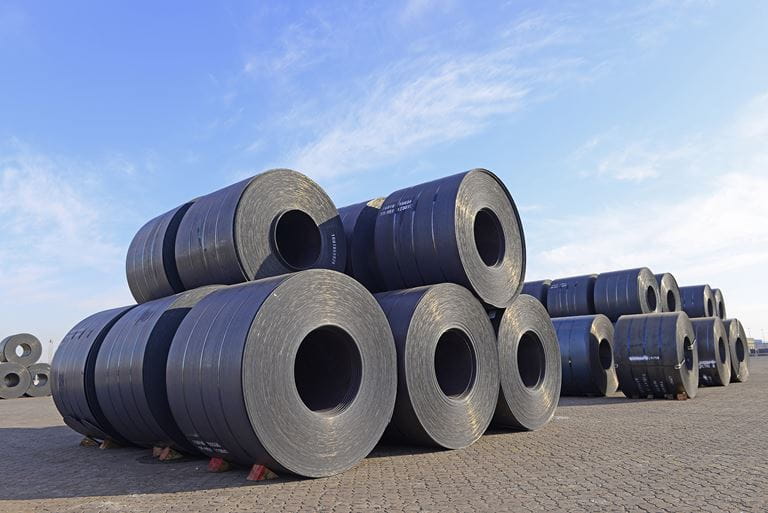
Steel HRC prices flat in Europe; trading slows further ahead of summer break
But market sources pointed out that such prices were not widely available on the spot market and were instead “special deals with long-standing customers.”
In general, trades were reported at €620-630 per tonne ex-works in Northern Europe for HRC with four-to-five weeks of lead time.
Restocking activity was limited, market sources said, because distributors and steel-service centers generally had “sufficient stocks considering the subdued end-user demand.”
Some suppliers have withdrawn from the market in late June-early July, having closed their order books for July/August, and were expected to come back with higher offer prices for September-delivery HRC, several sources told Fastmarkets.
“There is a traditional hope for a September price rebound, so we have heard some talk about a €20-30 per tonne price rise for September-delivery coil. But it’s not clear whether there will be sufficient demand to support even such a minor rise,” a buyer source in Germany said.
“I think now everyone will wait to see how many tonnes of imported HRC are going to be customs-cleared for the third quarter, and what the duty rate will be,” he added.
Fastmarkets calculated its daily steel HRC index, domestic, exw Northern Europe, at €628.75 ($675.62) per tonne on Tuesday, stable day-on-day.
The index was down by €1.25 per tonne week on week and by €5.21 per tonne month on month.
In Southern Europe, Fastmarkets calculated its corresponding daily steel HRC index, domestic, exw Italy, at €620.00 per tonne on Tuesday, also flat on-day.
The index was down by €5.00 per tonne week on week and by €10.00 per tonne month on month.
Italy’s market was also slowing down ahead of the summer break, market sources said.
In the second half of June, one local supplier was reported to have made “aggressive” sales for July/August-delivery HRC in order to fill its order book, then withdrew from the market in the week ended June 28.
The latest deals were heard done at €630 per tonne delivered, equivalent to €615-620 per tonne ex-works, while for September delivery new offers have yet to be issued.
Market sources expected local mills to push for price rises before closing for summer maintenance work.
“Maybe if [a local integrated mill] takes a longer [than usual] summer closure, it will have a chance to achieve a price rise for September-delivery coil,” a buyer in Italy said. “But in general it’s too early for September price trend forecasts – the market is too unpredictable.”
Import HRC offers to Europe were scarce, but most suppliers were reported to be hoping for rollover prices of HRC and lead times for late in the third quarter or early in the fourth.
“There are not many overseas suppliers in the market – everyone is checking the safeguarding situation,” a second buyer in Italy said.
Offers of Turkey-origin HRC for August shipment were heard at $580 per tonne FOB, which would mean about €615-620 per tonne CFR, including anti-dumping duty.

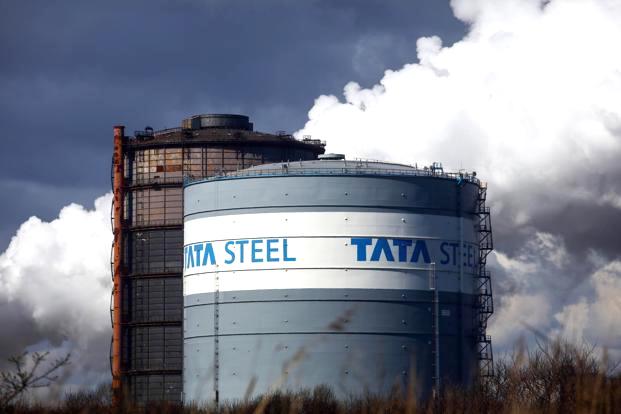
Tata Steel UK to operate BF4 until September, BF5 closing this week
The UK’s largest steelmaker Tata Steel UK confirmed to S&P Global Commodity Insights July 1 that its blast furnace no. 4 at its Port Talbot site in Wales will continue to be operative until the end of September along with other iron and steelmaking assets as previously planned after the Unite union agreed to pause its industrial action.
At the end of June, Tata had said it would have been forced to pause or stop its hot end operations, including both blast furnaces, at Port Talbot this week if the strike went ahead. The spokesperson confirmed BF5 would cease operation this week, as planned.
The Unite union called for a unilateral strike from July 8 in protest at Tata’s plan to close the site’s BFs while it converts to an electric arc furnace to be commissioned in 2027.
Unite confirmed to Commodity Insights on July 1 that its current industrial action had been paused.
“The decision follows confirmation from Tata, arising from high level talks throughout the weekend, that it is prepared to enter into negotiations about future investment for its operations and not just redundancies, in South Wales, including at Port Talbot,” Unite told Commodity Insights.
“This is a significant development in the battle to protect jobs and the long-term future of steel making in South Wales,” Unite general secretary Sharon Graham said.
“Investment from Labour secured by Unite will be key to the future of the site,” she added, referring to a pledge by the opposition Labour party, which is expected to win this week’s general election and form the next UK government.
Tata representatives previously said that the shutting down of the BFs would go ahead no matter which party won the July 4 UK election.
Tata Steel UK produced 2.99 million mt of liquid steel in the financial year ended March 31, down 1% year on year, while deliveries stood at 2.80 million mt, down 5.1%. The UK steel sector produces 5.6 million mt/year of crude steel, around 70% of the UK’s annual demand of around 7.6 million mt.
Platts, part of S&P Global Commodity Insights, assessed the weekly UK hot-rolled coil price at GBP595/mt DDP West Midlands on June 27, down 7% since the start of 2024.
Annalisa Villa
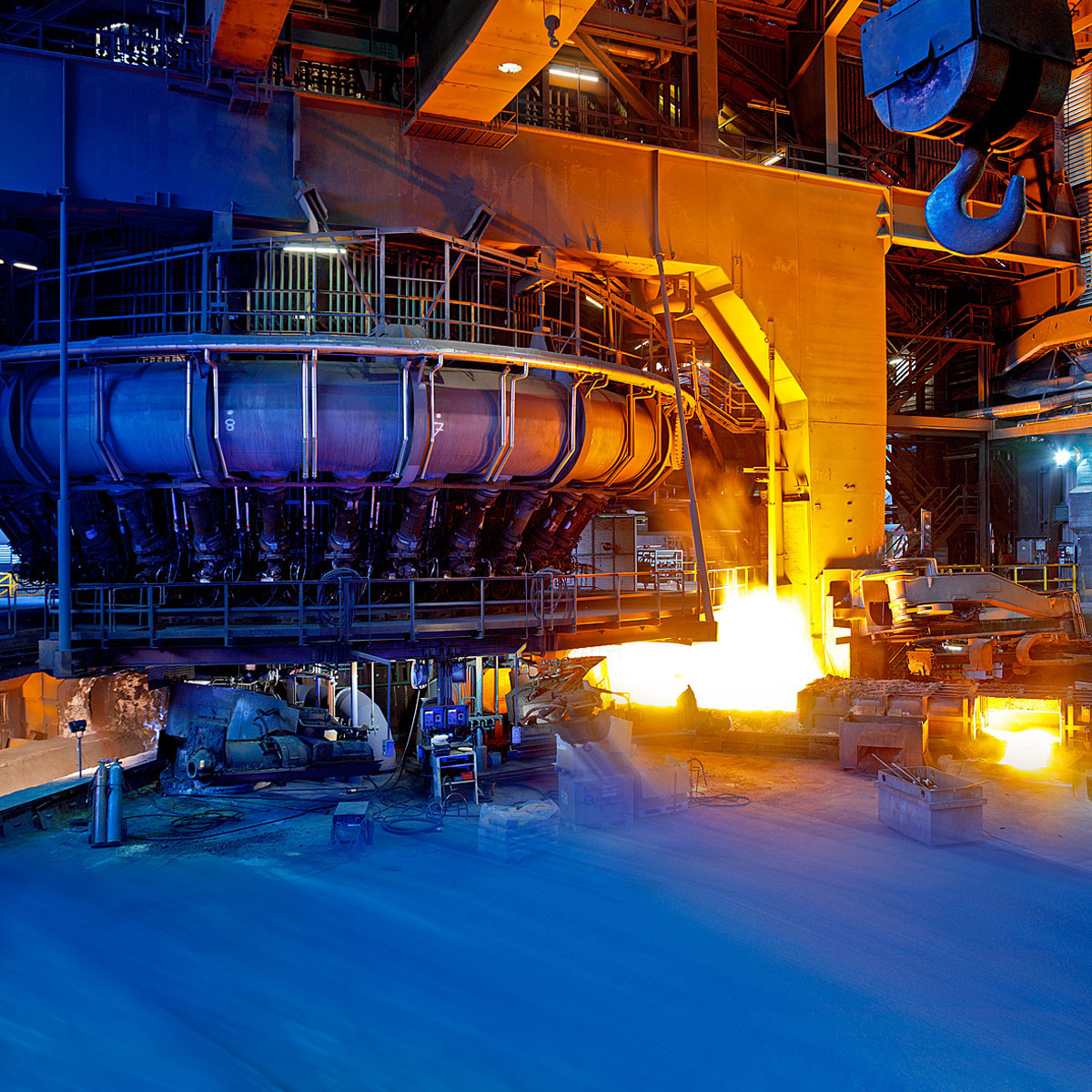
Austria’s steel production rebounds in May, down on-year
Austria’s steelmakers increased crude steel production in May compared with the previous month, according to worldsteel data.
Output amounted to 650,000 tonnes, up by 2.7% from May, but 3% less year-on-year, Kallanish notes. Austria remains in 21st place in the ranking of top ten global steel producers, worldsteel data show.
In January-May, the country produced 3.18 million tonnes of steel, up 1% on-year.
Overall EU output in May increased by 0.6% y-o-y to 11.6mt. In the first five months of the year, steel production was 0.1% less on-year versus January-May 2023 at almost 56.1mt.
Austria’s largest steelmaker, voestalpine, said earlier that market trends have not changed significantly following the start of its 2024/25 business year in April (see Kallanish passim).
In fiscal 2023/24 – ending March 2024 – voestalpine achieved satisfactory results, with overseas markets performing better than Europe. Looking at its customer segments, it expects good demand from railway infrastructure, aerospace, and warehouse technology to continue. The automotive industry and the energy sector, as its main segments, should largely continue their stable development to date, the group noted.
The group’s revenue in 2023/24 was its second-highest in history, at €16.7 billion ($18.2 billion), after achieving record revenue of €18.2 billion in the previous year. Key figures have now “returned to normal” in the latest reporting year, voestalpine noted. Ebitda reached €1.7 billion, down from €2.5 billion.
In 2023, Austria’s commerce chamber, Wirtschaftskammer Österreich (WKO), expressed concern over the crash in demand and orders for commodities in the country (see Kallanish passim). WKO saw orders declining by as much as 30%, with no relief in sight.
Svetoslav Abrossimov Bulgaria

Europe needs Chinese cooperation for decarbonisation
Europe’s role as leading region in the race for decarbonisation was questioned at “Green Steel World”, a trade fair plus conference set up by publishing house KCI last week in Essen.
In a discussion following a presentation on hydrogen, speaker Joachim von Schéele of Linde AG addressed the weakening role of Europe as an industrial region, despite its leadership in forward-thinking. “People in the world do appreciate our CBAM. However, we [Europe] have become small in industrial terms,” Kallanish heard him say at the conference. “Its relative economic power is half of what it was when I was a kid.”
Europe has become a somewhat “tiny” player in the world steel industry, but has still maintained a technological “thought leadership”, he noted. In the transition towards low-emission steelmaking, most reference and pilot facilities are operating in Europe.
Until 2040, Europe’s steel industry will reduce its CO2 emissions by 60%, and China by 40%, according to figures von Schéele provided. One helping factor in China will be the increased usage of scrap, which is expected to accrue massively in the country in the mid-term future. Overall, scrap availability will increase globally, to a stronger degree than steel production will, “which is essentially good news”, Schéele said.
He maintained that Europe needs to cooperate with China if the global steel industry wants to go ahead with decarbonisation. But he recommended a change of attitude because “China does often not appreciate the way European politicians speak”.
Regarding the shift towards hydrogen in Europe, he pointed to “tremendously” high costs for renewable energy in Italy, and high costs in Germany, while France, Spain and Scandinavia have a much better position. He noted that power suppliers often maintain elevated prices for renewables, to make the business profitable, calling the scenario an “econondrum”.
Christian Koehl Germany

EC approves Cogne’s acquisition of Mannesmann Stainless Tubes from Salzgitter
The European Commission has cleared Italian long stainless steel and nickel alloy producer Cogne Acciai Speciali’s acquisition of Mannesmann Stainless Tubes from German steelmaker Salzgitter, the Commission said June 28 in its daily news bulletin.
The Eur135 million ($144.5 million) deal was first announced in February, with Cogne saying at the time the acquisition would widen its footprint to encompass the market for seamless tubes and stainless steel nickel alloy pipes.
The EC said the deal had been approved under the EU Merger Regulation.
“The commission concluded that the notified transaction would not raise competition concerns, given the companies’ limited market positions resulting from the proposed transaction,” it said, adding that the transaction had been examined under the simplified merger review procedure.
MST produces seamless stainless steel and nickel-based tubes at its operating plants in Germany, France, Italy and the US.
Cogne manufactures long products in stainless steel and nickel-based alloys for the aerospace, automotive and energy industries, as well as supplying the medical technology, food, chemical and plant engineering, and mechanical engineering sectors.
Cogne previously provided Mannesmann with semi-finished product.
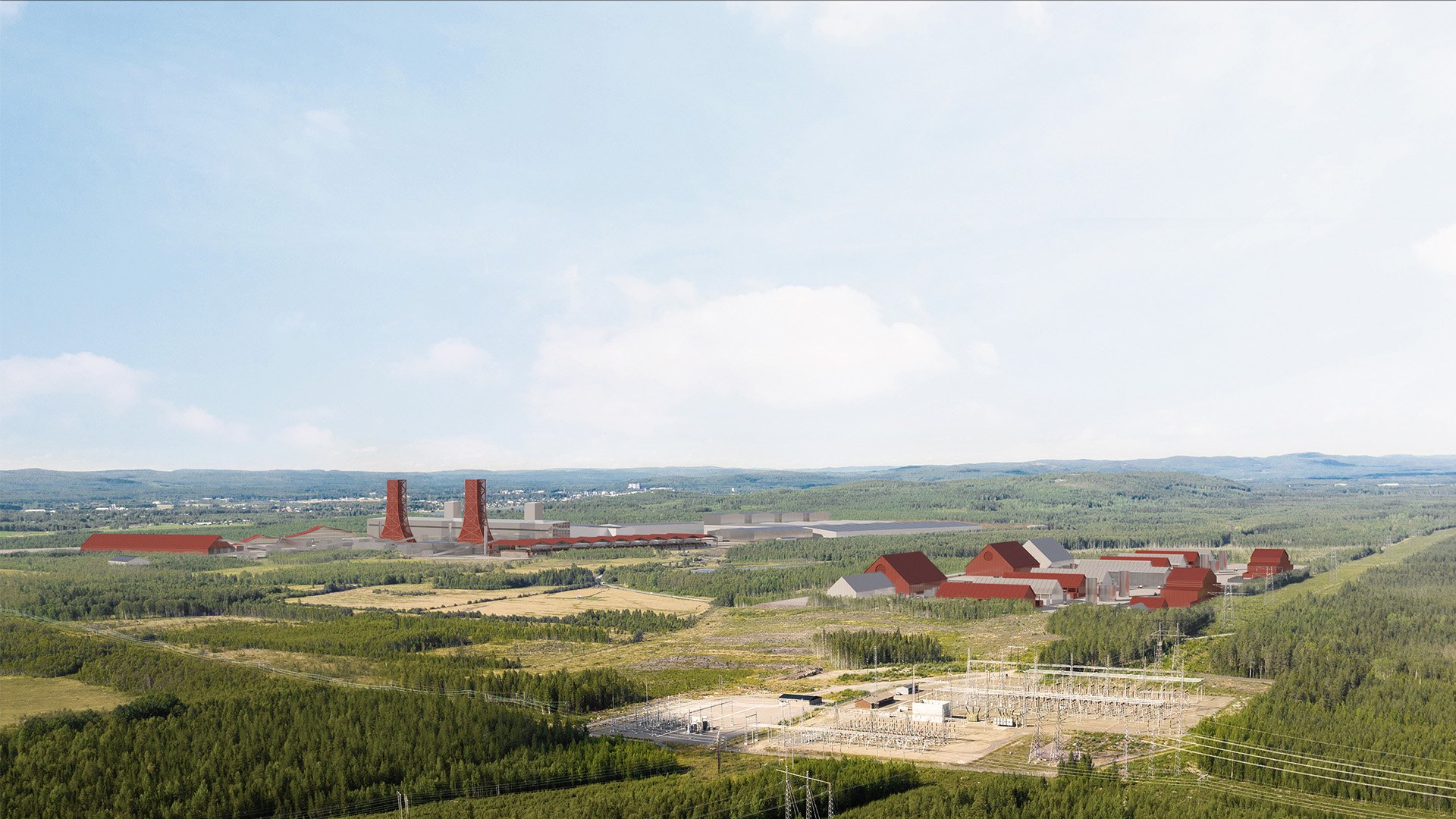
EU greenlights €265m for H2 Green Steel plant
The European Commission (EC) has approved €265 million ($284m) in state aid to Swedish start-up H2 Green Steel (H2GS) for the establishment of its low-emission steel plant, Kallanish reports.
Located in Boden, the plant will have a 690-megawatt electrolyser, a direct reduction plant operating with renewable hydrogen, two electric arc furnaces, a hot strip mill and cold rolling and finishing facilities. With the installations expected to begin operations in 2026, the plant is anticipated to produce 2.4 million tonnes/year of green steel.
The grant, which will be partially funded through the Recovery and Resilience Facility (RRF), brings the total state funding for the project to over €500m. It was previously awarded €250m from the EU’s Innovation Fund. The total investment for the project, however, is estimated to be around €6 billion.
Margrethe Vestager, the EC’s executive vice president in charge of competition policy, says the Swedish aid will support the establishment of Europe’s “first large-scale steel plant based entirely on hydrogen from renewable sources”.
“This plant will also host one of the largest electrolysers in the world,” Vestager adds. “Reducing the climate impact of steelmaking is important for the achievement of the EU’s target of climate neutrality by 2050. At the same time, we ensure competition is not distorted.”
Speaking at the World Hydrogen Summit in Rotterdam last month, Kajsa Ryttberg-Walgren, H2GS vice president for growth and hydrogen business, said the firm is pursuing four new large projects. Located in Quebec, Texas, Brazil and Portugal, the projects are “close to moving into the permitting phase,” she added.
Reethu Ravi UK

Italian distribution reports negative second quarter
According to multiple Italian distribution sources, demand downstream for both long and flat steel is still weak. For many companies, the second quarter brought about a significant decrease in volumes. This has occurred during a seasonally robust period when the sector typically experiences higher profit margins and increased sales volumes.
May saw a disappointing performance in terms of sales and margins, but it was nothing compared to the disastrous month of June that followed. One distributor reports a 30% decline in Q2 turnover. According to another large distributor, volumes have decreased by more than half compared to last year. For certain products like welded tube and merchant bar, sources report selling only a quarter of their typical tonnage, Kallanish notes.
Market participants do not anticipate a resurgence in demand during July. In this challenging market, it seems crucial to maintain a healthy stock level and offer a variety of options to meet the diverse needs of customers in terms of grades and dimensions.
Some mills are also adjusting to this new way of working and are strategically selling primarily from their existing inventory, including a varied product range in their sales. Some distributors say they are striving to maintain their stock at levels consistent with the start of 2024. A third source says his firm may experience losses when it sells its product at low prices, but it can make a profit when restocking at lower prices.
Availability of both longs and flats is limited, but demand is in line with the limited supply. Drawing-quality wire rod is said to remain in the range of €620-630/tonne ($664-675) delivered, while rebar and merchant bar are at €600-630/t ex-works and about €700/t delivered respectively.
Natalia Capra France