


European long steel prices remain largely stable even as mills push offers higher
The Northwest European prices for rebar and medium sections remained largely stable in the week ended July 3, even as mills were trying push offers higher.
“Mills, pretending to have good orderbooks, are pushing for price increases,” a distributor source said. “Merchant bar and beams will increase by 15 euros.”
Sources said that there was some uptick in trading activity, however construction delays were affecting it.
“Demand depends on a day-to-day basis,” the source said. “We have some demand, but construction delays due to the weather are not helping this. We hope to have some more demand soon.”
Platts assessed the price of Northwest European rebar at Eur615/mt ex-works, up Eur15/mt on the week.
A deal for 150mt was heard at Eur615/mt ex-works Benelux, and tradable values were heard at the same levels.
Meanwhile, Platts assessed the price of European medium sections stable on the week at Eur750/mt delivered Benelux.
A deal for 2,000mt was reported at Eur750/mt delivered Benelux, and workable levels were reported at Eur750-760/mt delivered Benelux.
Platts is part of S&P Global Commodity Insights.


European HRC prices largely steady in quiet market
In Europe, domestic prices for hot-rolled coil saw some minor downward movement July 3, as market sources prepare for a quiet summer ahead.
The current muted activity in the coils market is being caused by a combination of low demand and high levels of stock, with some participants testing the market at higher offers, according to market sources.
“Demand is extremely low,” a trader said.
“Stock levels are still quite high.” a service center source said.
Some Southern European sources have also commented on the incoming Italian public holiday period in August, where several participants will be less active.
“[In August] not working during this period so there will not be any movement.” a trader said.
The announcement this week of the new EU import quotas has also been a talking point for the market. Participants have seen a shift in imports to countries outside the quota, such as South Korea and Saudi Arabia. However, these are for larger tonnage levels where economies of scale are present, market sources said.
“From June up until now the prices have been very weak,” a trader said. “I think for the quotas there will be some increase in European prices.”
Platts assessed Northwest European HRC at Eur625/mt on July 3, down Eur4/mt on the day. Meanwhile, Platts assessed domestic HRC prices in South Europe at Eur625/mt ex-works Italy, down Eur5/mt on the day.
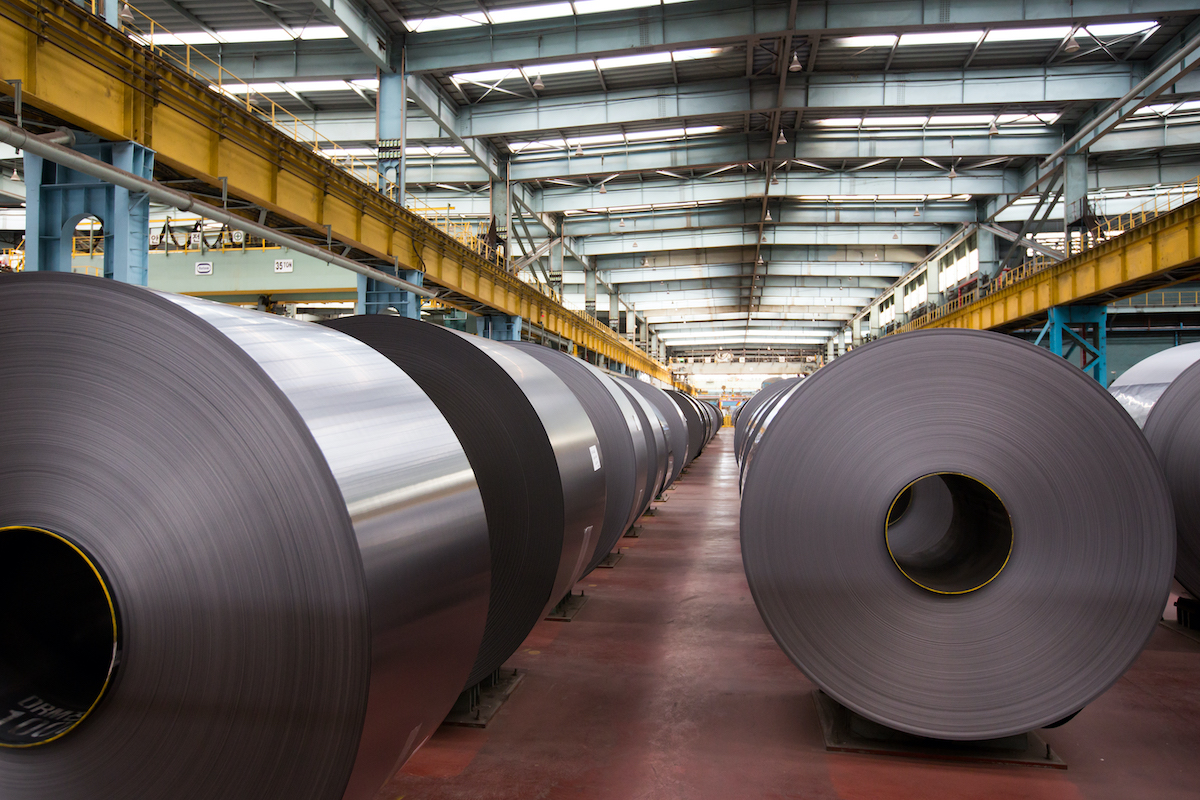
HRC prices in Europe stay flat on near-zero trades
Fastmarkets calculated its daily steel HRC index, domestic, exw Northern Europe, at €628.75 ($674.79) per tonne on Wednesday, stable day on day.
The index was down by €0.63 per tonne week on week and by €4.58 per tonne month on month.
“Nothing is happening in the market,” a buyer in Germany told Fastmarkets. “Some German federal states will be starting holidays [from July 8], so consumption is slow and any effects from the new safeguards are likely be delayed.”
Buyer sources estimated the tradable value for HRC at about €610-630 per tonne ex-works – although not all considered the lower end of the range to be workable.
Despite the lack of trades, buyers and sellers all agree that HRC prices have probably reached a bottom, but the usual September rebound is still open to question.
“There are no signs of a demand rebound, but mills are selling close to the cost line. sp there will probably be a price rise announced for September-delivery HRC,” a second buyer in Germany said.
In Southern Europe, Fastmarkets calculated its daily steel HRC index, domestic, exw Italy, at €621.04 per tonne on Wednesday, up by only €1.04 per tonne from €620.00 per tonne the day before.
The index was down by €3.96 per tonne week on week and by €8.34 per tonne month on month.
The Italian market was said to be almost totally quiet, with no trading of significance reported and one local integrated mill out of the market since last week.
The latest deals were heard done at €630 per tonne delivered – equivalent to €615-620 per tonne ex-works – in late June. For September deliveries, new offers have yet to be issued, but market participants expect to see attempts to raise prices, despite there being no room for an increase.
“A cost-driven price increase is always hard to push through,” a buyer in Italy told Fastmarkets.
The HRC import market in Europe was understandably quiet just a few days after the start of the new EU import quotas, sources told Fastmarkets.
The allocation for “other countries” HRC quotas have not yet been updated, but market participants said it was likely to be quickly exceeded, with an estimated duty rate around 10%.
Because of the 15% cap per country in the “other countries” quota initially available in each quarter, introduced for HRC from July 1, they added that they also expect Europe to see a reduction in import volumes of around 1.0-1.5 million tonnes under that category.
Vietnam, Japan, Taiwan and Egypt have previously been the principal suppliers of HRC to the EU under the “other countries” category, with Asian suppliers offering the most competitive prices, according to market participants in Europe. No new import offers were reported on Wednesday, however.
Published by: Julia Bolotova


ArcelorMittal Spain names new president
ArcelorMittal has named French Philippe Meyran as the new head of ArcelorMittal Spain, Kallanish learns from the company.
Meyran replaces José Manuel Arias, who leaves due to retirement after heading ArcelorMittal Spain for almost ten years. The newly elected executive is the first non-Spaniard in this position.
Meyran is the chief executive of the company’s Asturias steelworks. He started working at the company’s Spanish unit in 2009 in different positions, such as chief technology officer and chief operating officer.
The steelmaker operates 11 mills and has 14 distribution centres in Spain. The group’s Spanish crude steel production was 4.8 million tonnes in 2023, representing 41.7% of total national output.
Todor Kirkov Bulgaria
Nippon executive returns to US, continues acquisition negotiations
Nippon Steel is sending vice chairman Takahiro Miro back to the US as the Japanese steelmaker lobbies for support of its deal to acquire US Steel, Kallanish learns from a report by Reuters.
Miro’s itinerary is unavailable, but a source mentions that the Nippon executive will meet with various community officials and workers in states where US Steel operates.
The Nippon vice chairman has been acting as the company’s primary negotiator in the acquisition. His travels to the US in May and June failed to shore up any support from the United Steelworkers
(USW) union. Nor have political opponents of the deal publicly changed their positions. US President Joe Biden has said US Steel should remain American-owned (see Kallanish passim).
USW leadership has told union members that language in correspondence with Nippon is inconsistent and potentially harmful to workers and US national security (see Kallanish 1 July).
US Steel and its shareholders agreed to sell to Nippon Steel for roughly $15 billion after refusing a bid from domestic steelmaker Cleveland-Cliffs.
Kristen DiLandro USA


Thyssenkrupp Schulte appoints new chief executive
Effective 1 July, Astrid Meicherczyk has taken over as chief executive of thyssenkrupp Schulte, the German stockholding distribution subsidiary of thyssenkrupp Materials Services.
She succeeds Detlef Schotten, who has now assumed responsibility for the pan-European materials distribution and trading business of tk Materials Services.
Meicherczyk has extensive international general management and sales experience spanning over 25 years in leading industry positions. Most recently, she headed the European plastics distribution business of tk Materials Services. Before joining thyssenkrupp, the industrial engineer spent many years at Bertelsmann, in leading positions in Germany and abroad.
In April, thyssenkrupp Schulte announced a structural transformation of its business model, which involves the cutback of 450 jobs and the closure of locations. The company’s aim is to sustainably improve competitiveness and profitability, and meet changing customer needs by focusing on the material-related services business.
Christian Koehl Germany

Multiple origins exceed EU HRC safeguard quota cap
Egypt, Vietnam, Japan and Taiwan have each exceeded their 15% EU hot rolled coil safeguard quota cap for the third quarter, as expected, immediately after the opening of the new quota term. India has meanwhile exhausted over two thirds of its HRC quota.
Egypt, Vietnam, Japan and Taiwan have each had their allowance capped at 141,850 tonnes for Q3, after the European Commission introduced a hotly contested amendment to the Category 1 “other country” quota, alongside extending safeguard measures to mid-2026.
According to EU TARIC data, as of 2 July, Egypt has 176,626t awaiting allocation for customs clearance, while Vietnam has 208,880t, Japan 209,403t and Taiwan 228,520t. Tonnages exceeding the quota will need to pay duty to enter the EU market or be subject to costly storage until the following quota period.
Based on feedback from buyers interviewed by Kallanish, the average duty to be paid will amount to approximately 8%.
Indian HRC, meanwhile, has 209,807t awaiting allocation out of a total quota of 301,704t. Because Indian mills were largely out of the export market in the second quarter due to maintenance, the remaining quota may not get filled quickly.
South Korea, which almost exhausted its Q2 EU HRC quota, has only 1,386t awaiting allocation so far in Q3.
On Category 16 – wire rod, whose other country quota has also been capped at 15% per origin, in other words, at 18,413t, Algeria already has 27,702t awaiting allocation. Egypt has 7,858t awaiting allocation, South Korea 10,745t and Indonesia 14,965t.
Various speakers at Kallanish Europe Steel Markets 2024 in Milan last month lamented the lack of notice given by the European Commission that it plans to implement the 15% cap. The other country HRC quota had been exhausted within days for consecutive quotas, and several buyers had already ordered material from the impacted origins before the Commission notice was published in late May.
Adam Smith Poland

Blastr sources Lhoist lime to reduce carbon emissions
Blastr Green Steel has partnered with Lhoist for the supply of low-carbon lime for its future steel plant in Inkoo, Finland, Kallanish learns from the start-up venture.
Blastr and Lhoist aim to reach an agreement on the future supply of Lhoist’s mineral products, to reduce Scope 3 emissions of the Inkoo plant by up to 50kg CO2 per tonne of steel, it says.
The supply encompasses Lhoist’s proprietary “Level|Green” low-carbon lime and dolime. The latter – calcium magnesium oxide (CaO.MgO) – is also called burnt dolomite or dolomitic lime. Dolime is obtained by calcining dolomitic limestone. Soft-burned dolomite and hard-burned dolomite differ in terms of their calcining techniques, Lhoist explains.
The partnership will include technical support for selecting lime and dolime products and implementing them into the steel production process. “Access to large quantities of high-quality lime and dolime is essential for Blastr to produce high-quality strip steel products for our end-customers,” says Antti Kaikkonen, country manager at Blastr Finland.
Christian Koehl Germany

UK stockholder ASD acquires Atlantic Steel assets
Stockholder ASD Limited has acquired the assets of Birkenhead-based plate service centre Atlantic Steel Processing.
Atlantic went into administration earlier this year and initiated an asset sale after weak demand led to cash flow difficulties.
The move marks “a new growth chapter” for ASD under the umbrella of Hierros Añon, one of the largest mill-independent steel distributors in Europe, ASD says. With a site at the Port of Liverpool, ASD will enhance its presence in the UK’s northwest and enable cost-effective distribution to Northern Ireland and the Republic of Ireland markets, it adds.
Additionally, ASD will introduce a new product line to its portfolio – de-coiled hot rolled sheets and reversing mill plate. With expanded capability to stock and de-coil 2,500mm wide coils in gauges from 5mm to 20mm, ASD becomes the only distributor in northern Europe with such an extensive capability, the firm notes.
ASD’s new owner, Spanish group Hierros Añon, also agreed last year to buy Klöckner & Co’s France, UK, Netherlands and Belgium units (see Kallanish passim).
Adam Smith Poland

Almost all potential buyers abandon Ascometal purchase
According to sources familiar with the matter, there is currently only one offer on the table, from British fund Greybull, for the French plants located in Hagondange, Custines, Saint-Etienne, and the Leffrinckoucke-based les Dunes unit in the north.
Acciaierie Vente, Sidenor, and France’s Europlasma were among the steel companies that had initially submitted offers to acquire the units but have since withdrawn. Marcegaglia acquired Ascometal’s Fos-sur-Mer site in the south of France in May and has intentions to convert it into a coil production plant (see Kallanish 3 June). If the Greybull offer fails to meet the requirements, the tribunal may opt for a liquidation process, Kallanish notes.
Greybull plans to make investments and foster collaboration between the plants, specifically Hagondange and les Dunes. With the goal of diversifying production and expanding sales, the fund plans to install a new ingot line in Hagondange and revamp the rolling mill in Les Dune. This will help reduce the sites’ reliance on the automotive sector, reveal the Ascometal trade unions. Greybull plans to finance the investments through debt, Kallanish understands.
In March, Ascometal, part of Swiss Steel was declared insolvent and went into receivership after the proposed sale of its units to Italian long steel producer Acciaierie Venete was terminated (see Kallanish 28 March).
Greybull acquired what is today known as British Steel from Tata Steel in 2016 but the steelmaker then went into administration in 2019 before it was bought by Jingye Group. Greybull was also reported interested in buying the Ascoval plant and Hayange rail mill from Liberty in 2021, although they were ultimately acquired by Saarstahl.
Greybull did not comment before press deadline.
Natalia Capra France