

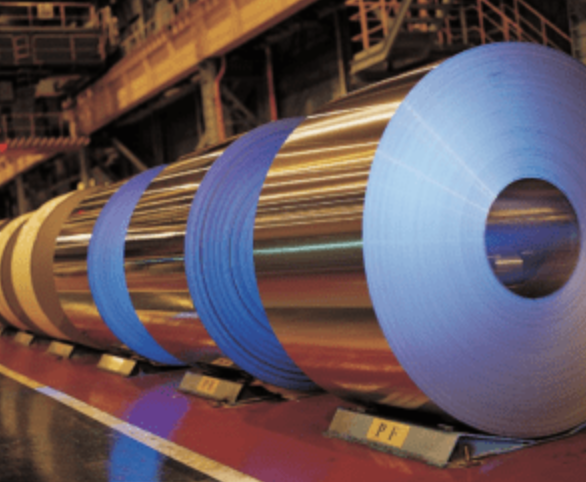
Gestamp sources Arvedi low-emission steel, to return scrap
Gestamp has signed an agreement with Italian steelmaker Acciaieria Arvedi for the purchase of low-emission steel for its components production, Kallanish learns from the Spanish supplier.
According to Gestamp, the partnership with Acciaieria Arvedi is a further step in the circular economy that the company is applying throughout its business model.
The company will use Arvedi’s carbon-neutral certified “ARVzero” steel produced from high-quality scrap. This is produced in an electric arc furnace using renewable energy.
“This partnership marks a step towards circularity and the goal of contributing, in the long term, to the Net-Zero car,” Gestamp. “The agreement allows us to return steel scrap generated during the production of stamping parts to Acciaieria Arvedi. This enables the Italian steelmaker to reprocess the high-quality scrap and reintroduce it into the production cycle, laying the groundwork for a circular economy,” the company adds.
The integration of scrap management into Gestamp’s business strategy allows for complete life-cycle traceability by integrating the collection, sorting, and reuse of quality scrap into its production chain.
Last year, Arvedi obtained the carbon neutrality certificate for its Cremona plant. This is after drastically reducing scope 1 and scope 2 emissions by investing in a new EAF supplied by Tenova and cutting the use of pig iron and other polluting raw materials.
The first carbon neutral certificate for Arvedi’s coils was will be issued for a large contract with Mercedes Benz that started in 2023. Chief executive Mario Caldonazzo revealed last year the steelmaker has demand for carbon-neutral steel and is in talks with other automakers.
Natalia Capra France , Todor Kirkov Bulgaria

UK electricity cost double Spain/France, says UK Steel
It is critical the next UK government tackles energy prices after new data showed the UK’s electricity wholesale price over the past three months is more than double the cost of French and Spanish electricity, says UK Steel.
With an impending switch to EAF steelmaking in the UK, it is expected the steel sector’s electricity consumption will roughly double, making electricity price “paramount”, UK Steel says in a note seen by Kallanish. Price data show that UK producers faced average wholesale prices of almost £66 ($84) per MWh in the past three months compared to France’s £27/MWh and Spain’s £28/MWh.
High electricity consumption can represent up to 180% of steel producers’ Gross Value Added (GVA) in the UK. The previous government introduced the British Industrial Supercharger in April, which reduced policy costs – such as renewable levies and the Capacity Market levy – and partly lowered network charges. “However, UK steelmakers still face substantially higher wholesale costs than key competitors and network charges ten times higher than in France,” UK Steel notes.
“We must not lose sight of how important electricity costs are in the move to green steel as we fully switch to electric arc furnace technology to secure steel for our nation,” says UK Steel energy and climate change policy manager Frank Aaskov. “The UK steel industry cannot continue to face electricity prices that are more than double what our main European competitors benefit from.”
“For the UK steel industry to prosper and deliver on its decarbonisation targets, a new Government must deliver the lowest electricity prices in Europe,” he adds.
Adam Smith Poland
ArcelorMittal Hamburg suffers steel spill
A spill of hot molten steel occurred in the night from Tuesday to Wednesday at ArcelorMittal Hamburg. No people were injured.
Local press reported on Wednesday that 80 tonnes of molten metal had leaked. In a statement sent to Kallanish upon request, the company confirms 140t leaked in a container. The company does not provide further details, including on the extent of potential interruption to production. It states that “the damage is under repair, so that we can resume production as soon as possible.”
ArcelorMittal Hamburg is Europe’s only direct reduced iron-based steelworks.
Christian Koehl Germany

Prices remain stable across Southern European steel longs market; mills prepare for summer closures
Prices in the Italian rebar market could rise before summer closures begin amid high energy costs and stable demand, sources told Fastmarkets.
Mills reported good order books and minimal surplus stock for the coming month.
“Long production stoppages and increased energy costs could push up prices in the month, especially as producers don’t have high unsold stocks to worry about this summer,” one producer source said.
Fastmarkets’ price assessment for steel reinforcing bar (rebar), domestic, delivered, Spain was €645-650 per tonne, stable week on week.
Southern European wire rod
Fastmarkets’ price assessment for steel wire rod (mesh quality), domestic, delivered Southern Europe was €625-640 per tonne on Wednesday, stable week on week.

European HRC prices flat; post-summer rebound put into question
Fastmarkets calculated its daily steel HRC index, domestic, exw Northern Europe, at €631.13 ($679.62) per tonne on Thursday, up by €2.38 per tonne from €628.75 per tonne the day before
The index was up by €1.13 per tonne week on week but down by €3.29 per tonne month on month.
Trading remained quiet in the region, with both sellers and buyers trying to gauge the effects on the market of the new regime of EU safeguards that came into force at the start of this month.
“Mills and buyers are waiting to see what will happen… now that the new safeguards are in place,” a buyer in the Netherlands said. “But in general, suppliers [of HRC] are very quiet, and we expect them to come back with new, higher, prices next week.
“There was talk of base prices of €670 [per tonne ex-works] up to €690 [per tonne ex-works] for delivery in September,” the buyer added.
Buyer sources estimated the tradable value for HRC about €620-630 per tonne ex-works on Thursday. This was in line with the latest booking for July/August-delivery HRC.
Industry sources questioned the price rebound for September tonnages, claiming that end-user demand was insufficient to support any rise.
Some buyer sources, however, suggested that an increase in domestic prices could be partially accepted considering the effects of the safeguards on imports.
“New import tonnages will be subject to duty, which will push up import costs by €40-60 per tonne, offsetting the price advantage for imports. This might help European mills to get some uptick [in prices], but it’s not going to be easy,” a buyer in Germany said.
“The market is rather unpredictable at this stage. Demand is disappointing,” a second German buyer said.
Market sources pointed out that, in the secondary market, there was “a battle for tonnages” between distributors and steel service centers. Companies had high stocks of coil, a consequence of weaker-than-expected demand from the automotive industry in the first half of the year, and were becoming aggressive with prices in trying to get rid of the surplus.
In Southern Europe, Fastmarkets calculated its daily steel HRC index, domestic, exw Italy, at €623.75 per tonne on Thursday, up by €2.71 per tonne from €621.04 per tonne the day before.
But the index was down by €1.67 per tonne week on week and by €8.25 per tonne month on month.
In the Italy market, firm offers have been rare so far this week.
Local buyers estimated tradeable prices at €630-640 per tonne delivered, equivalent to €620-630 per tonne ex-works, which would be in line with trades for July/August-delivery coil.
For September deliveries, industry sources expected a €20-30 per tonne price increase.
The HRC import market in Europe remained quiet, with very few suppliers active.
“The new safeguard period has just started, [and it] looks like quotas are already being used by some suppliers, so the market is waiting,” a buyer in Italy said.
Offers of August/September-shipment coil were heard from Egypt, Indonesia and India at $610-650 per tonne CFR.
Published by: Julia Bolotova


HRC market digests effects of new EU safeguards on price; some suppliers already exceed Q3 quotas
News of changes to the European Union’s steel safeguard measures first appeared at the end of May and the European Commission confirmed the new measures a month later.
For the HRC market, the major change was to residual HRC quota access, adding a 15% cap per country over the total residual quota volumes introduced.
Market participants said they expected the changes to limit imports of HRC to the EU. Notably, a market source told Fastmarkets they expected Europe to see a reduction in import volumes of around 1.0-1.5 million tonnes under the “other countries category.”
Vietnam, Japan, Taiwan and Egypt have previously been the principal suppliers of HRC to the EU under the “other countries” category, with Asian suppliers offering the most competitive prices, according to market participants in Europe.
Shortly after the announcement of the 15% cap on residual HRC quotas, some European steelmakers even made attempts to increase domestic prices in June, as Fastmarkets reported at the time.
Those attempts were largely unsuccessful, however, due to the lack of demand from key steel-using sectors, leaving domestic prices for HRC in Europe broadly flat for more than a month.
Fastmarkets calculated its daily steel HRC index, domestic, exw Northern Europe at €628.75 ($674.79) per tonne on Wednesday, stable day on day.
The index was down by €0.63 per tonne week on week and by €4.58 per tonne month on month.
Industry sources now expect European producers to move to increase offers for September, in anticipation that a shortage of cheaper imports will support the rebound.
Yet market sources told Fastmarkets that this could be countered by low end-user demand that has continued to be the main driver of price direction.
Besides, the European market is still oversupplied meaning even a loss of 1-1.5 million tonnes of imports might not be enough to balance the markets.
So far, there was still no shortage of import material – on the contrary, stocks in ports were full with imported coil, and according to different estimations, it might take up to nine months to clear the stock of coil ordered before safeguard review went into effect.
Actual quota use
EU customs data as of July 3 shows that some countries have already significantly exceeded their allocation for the third quarter of 2024, and some suppliers used over half of the allocation just a few days after the new period began.

For tonnages that exceed the quota allowance, either the safeguard duty will need to be paid, or buyers can only custom clear tonnages that meet the quota and store the rest in the port. The second option would incur substantial storage costs, sources said.
Published by: Julia Bolotova

The new quota period in the EU has started as of July 1
Although the volumes awaiting at the ports are not cleared through customs yet, given the high volumes of imports waiting at the ports, for some products, the quota volumes have already been exhausted.
In the table below, you can see the products for which quotas have already been exhausted and also those for which more than 50 percent of quotas have been used up.


Brussels imposes provisional duties on Chinese BEV imports
Brussels on Thursday imposed provisional countervailing duties on China-made battery electric vehicles as planned, though negotiations with Beijing continue, Kallanish reports.
The European Commission confirmed the additional tariffs on BEVs have been slightly reduced based on comments on the accuracy of the calculations submitted by interested parties. The investigation resulted in individual duties based on carmakers’ circumstances and cooperation.
Chinese carmakers BYD will be subject to an additional tariff of 17.4%. Geely’s tariff now stands at 19.9% and state-owned manufacturer SAIC’s – the parent company of MG Motors – at 37.6%. The average duty for BEV producers in China that cooperated with the EC, but were not sampled, is 20.8%. Non-cooperating firms will be hit with an import tariff of 37.6%, on top of the existing 10% duty.
These provisional duties will apply from 5 July for a maximum duration of four months, when a final decision must be taken through a vote by EU member states. “When adopted, this decision would make the duties definitive for a period of five years,” the EC explains.
Following an “exchange of views” between EC’s vice-president Valdis Dombrovskis and Chinese trade minister Wang Wentao, bilateral consultations have “intensified,” the EC adds. Contacts are continuing on a “technical level” aimed at reaching a WTO-compatible solution, it notes.
“Any negotiated outcome to the investigation must be effective in addressing the injurious forms of subsidisation identified [in China],” the commission states.
A spokesperson for the Chinese commerce ministry suggested on Thursday that despite Beijing’s “strong opposition” to the investigation, there is hope for a positive outcome.
“There is still a 4-month window before the final ruling. We hope that the EU will work with China to meet each other halfway, show sincerity, speed up the consultation process, and reach a solution acceptable to both sides as soon as possible based on facts and rules,” says He Yadong. “China hopes that the EU will seriously listen to the voices within the alliance and conduct consultations with China rationally and pragmatically to avoid anti-subsidy measures that harm the mutually beneficial cooperation and common development of the China-EU automobile industry,” he adds.
It follows the German auto association VDA’s statement saying the tariffs will harm the interests of European manufacturers operating in China, but may also restrict European access to critical raw materials.
Italy’s Arvedi signs deal with Gestamp to supply low emission steel
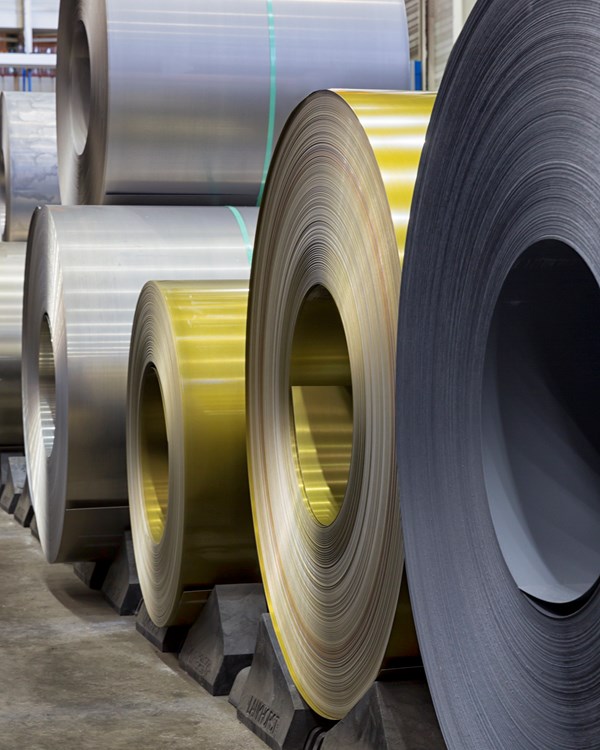
Italian steelmaker Arvedi has signed an agreement with Spanish multinational Gestamp on the supply of its low-emission steel brand, Arvzero, the company said July 3.
The agreement will also allow Gestamp, which makes metal components for the automotive industry, to return scrap steel from the production of stamping parts to Acciaieria Arvedi, Italy’s largest flat steel propducer.
The steel supply deal will have immediate effect, an Arvedi spokesperson told S&P Global Commodity Insights, although neither company gave any details on the volume involved.
“With this agreement, we continue our circular economy roadmap in line with Gestamp’s ESG strategy,” Gestamp Chief Purchasing Officer Javier Imaz said.
“Our collaboration represents an important step for steel products with a sustainable supply chain,” Acciaieria Arvedi Vice President Fabio Baldrighi said.
Acciaieria Arvedi produces hot and cold-rolled flat products, welded tubes, and precision strips, with a total yearly production of over 5 million mt. It manufactures steel coil from recycled scrap for various sectors, including the automotive industry.
The company makes the Arvzero carbon steel product at its Cremona works and processes it at the Cremona and Trieste sites. All direct emissions from the production process are compensated in accordance with the parameters set by Scope 1 and Scope 2 of the Greenhouse Gas Protocol, the company said.
Many companies in different industries across the steel value chain are buying increased volumes of low-carbon and low-stainless “green” steel to reduce their Scope 2 and 3 emissions, closing supply agreements to secure low-emission steel for their products.
Platts, part of Commodity Insights, assessed Northwest European hot-rolled carbon-accounted coil down Eur10/mt on the day at Eur750/mt ($805.275/mt) ex-works Ruhr July 2. The assessment was calculated in line with the sum of the Platts daily carbon-accounted steel premium (CASP) assessment and Platts daily hot-rolled coil price assessment in Northwest Europe.


EU shipping emissions plunge in 2023 but Red Sea tensions could reverse trend
Sluggish industrial activity and declining imports of goods dragged carbon emissions from Europe’s shipping sector down sharply in 2023, but emissions are widely expected to be either marginally up or stable this year as many vessels sail longer distances to circumvent attacks near the Red Sea.
Ships traveling within the EU territorial waters emitted 116.6 million mtCO2e in 2023, down 15% from the previous year, an analysis of provisional data released by the European Maritime Safety Agency showed.
Containerships and tankers were the biggest emitters, releasing 38 million mtCO2e and 26 million mtCO2e respectively in 2023. Almost all ships types (container, tanker, dry bulk, ferry, gas, RoRo) except for cruise ships recorded year-on-year falls in emissions.
Mattia Ferracchiato, head of carbon markets at BRS Shipbrokers, said the emissions decline was a consequence of weaker demand for commodities and consumer goods in Europe.
“[There was] lower demand for coal and energy raw materials from non-EU countries, especially due to the ban on Russian imports. Inflation has deteriorated the purchasing power of European citizens. Reduced European production led to lower imports of metals and cement,” he said.
2024 emissions outlook
Looking forward, EU shipping emissions are likely to stay at similar levels in 2024 even as emissions from the global shipping sector rise due to the escalation of tensions in the Middle East.
“We believe that potential increases caused by the situation in the Red Sea could be offset [in European terms] by the cancelation of emissions from trips between small islands, to places like the Canary Islands, and the still slow economic recovery in the EU,” added Ferracchiato.
“Additionally, please remember that this year, emissions will be monitored much more precisely than in previous years, where companies often reported emissions differently for the same identical voyage. Now that the cost of CO2 is significant, ship speeds may be reduced, and some initial use of green fuel blends might already begin this year, helping to further reduce total ETS emissions.”
An escalation in attacks by Yemen’s Houthi rebels on merchant shipping in response to the Israel-Hamas war has pushed a number of shipping companies to divert vessels from the Suez Canal and go via the longer Cape of Good Hope route.
Rerouting vessels from the Suez Canal to the Cape of Good Hope increases bunker consumption due to the longer voyage and typically higher speeds travelled at, raising emissions.
Among container ships, a 1% increase in speed typically leads to a 2.2% rise in fuel consumption, according to a recent report by the United Nations Conference on Trade and Development.
For example, accelerating from 14 to 16 knots increases fuel use per mile by 31%. As a result, the longer distances caused by rerouting from the Suez Canal to the Cape of Good Hope imply a 70% increase in greenhouse gas emissions for a round trip from Singapore to Northern Europe, UNCTAD said.
Shipping in EU ETS
The fall in shipping emissions last year also comes amid a backdrop of economic malaise in Europe.
Emissions from the industrial sector have been down due to reduced output and efficiency gains, which are mainly visible in cement, iron and steel.
This comes as the EU continues to face macroeconomic headwinds due to high inflation, weak manufacturing data and weak industrial output.
Regulated CO2 emissions from power plants and factories under the EU Emissions Trading System in 2023 also fell 15.5% from 2022, the steepest decline since this compliance carbon market was established in 2005.
The plunge in emissions was also due to a substantial increase in renewable electricity production led by wind and solar, at the expense of both coal and gas as the bloc’s power sector has made significant strides to decarbonize its operations.
From Jan. 1, 2024, the maritime sector was also incorporated in to the EU ETS. Demand from this sector for trading EUAs is still very slow, according to trading sources.
This lack of interest is also because the EU has only required shipping companies to surrender EUAs for the first time by Sept. 30, 2025 for this year’s emissions.
The cost of the EU ETS for the entire maritime industry is expected to be Eur2.2 billion in 2024, assuming emissions in are in line with 2023 and an average price of Eur70/mtCO2, according to BRS Shipbrokers.
Platts, part of S&P Global Commodity Insights, assessed the EUA contract for December delivery at Eur70.92/mtCO2e ($77.14/mtCO2e) on July 2.
The EU has also agreed on a phase-in period to give the industry some preparation time, with the ETS covering 40% of the emissions in 2024, 70% in 2025 and 100% from 2026 onward.
This industry is expected to be spot price takers in the world’s largest compliance carbon market.
The shipping sector is projected to add emissions of 90 million mtCO2e this year and 86 million mtCO2e in 2025, as part of the EU ETS supply volumes, according to Commodity Insights estimates.