


Europe still lacks green steel necessities
There was consensus among panellists that a green steel revolution is taking place, but they disagreed on the order of magnitude.
Carlo Beltrame, chief executive at Donalam & LME at AFV Beltrame Group, said few are willing to pay a premium for green steel at present.
“From my perspective, [the revolution] should [be] derived from the market. And from the market nothing is coming. Nobody is ready to pay anything on top,” Beltrame observed.
Beltrame noted that within Europe itself, there are different takes on electric arc furnaces, electricity supply, levels of state aid for CO2 and data for decarbonisation. As a result, Europe is already creating several different playing fields.

“The direction to a greener Europe is inevitable. It will come,” proclaimed Henrik Adam, vice president of Europe corporate affairs at Tata Steel. But, with new rules comes the reality of people trying to bend those rules.
”I think we must be aware that wherever there is regulation, there is a circumvention,“ Adam added.
Adam cited green steel coming into Europe that is not impacted by the Carbon Border Adjustment Mechanism (CBAM).
“We must have appropriate protection for the industry, cars, steel and other sectors to be able to spend money to become green without cutting the tree for which we are sitting – in terms of no jobs in the future to pay the taxes for the next generation,” Adam urged.
Adam said optimistically that Europe is approximately one or two more years away from appropriate hydrogen supplies.
Harssha Shetty, ceo of Jindal Shadeed Iron & Steel, offered a different angle toward Europe’s green steel transition.
“Europe can focus on engineering and use other pockets in the world to get low-carbon raw material,” he explained.
Shetty also highlighted China’s trend. “China is decarbonising fast. And China just recently announced 150 million tonnes of their steel production is going to be converted from blast furnace to EAF capacity,” he noted.
John Isaacson USA

USS ceo ‘extremely confident’ Nippon deal will close
US Steel’s (USS) top executive still expects that the takeover of the iconic Pittsburgh, Pennsylvania-based company by Japan’s Nippon Steel will receive all approvals by the end of 2024, Kallanish hears at the Global Steel Dynamics Forum in New York.
Speaking on the conference stage late Tuesday, USS president and chief executive officer David Burritt reiterates that a merger with Nippon is “the right choice” for his 123-year-old company and for US national security and economic well-being.
“I’m extremely confident that we will be able to close the deal this year,” Burritt proclaims.
The acquisition agreement, announced last year, has faced opposition not only from the United Steelworkers but also from both major US presidential candidates and members of Congress in Pennsylvania and other states. The arrangement is undergoing an in-depth review by the US Department of Justice (DoJ).
Burritt says his employees will come to understand that they will benefit from the takeover. He says Nippon pledges to honor current labour contracts through 2026 and will invest over $1 billion in the business, a capex commitment that exceeds existing thresholds in pacts with the union.
“They’re experts in integrated mills, and they want to invest here,” Burritt explains. “They’re upping the ante beyond what’s in the basic labor agreement.”
He argues that the “friendshoring” arrangement with a buyer based in Japan, a key US ally in the Asia-Pacific region, “strengthens national security.” Additionally, Burritt finds it a breath of fresh air that there will be technology transfer into the US instead of the usual route out of the US.
The USS ceo says there was so much interest in acquiring his company that “something like 19 NDAs” were signed, referring to non-disclosure agreements that precede negotiations. Some proposals would have bumped into antitrust roadblocks, but not with Nippon.
“Customers love it so much that they have written letters to the DoJ saying this deal will strengthen competition,” Burritt states.
Dom Yanchunas USA
French longs buyers see no market rebound
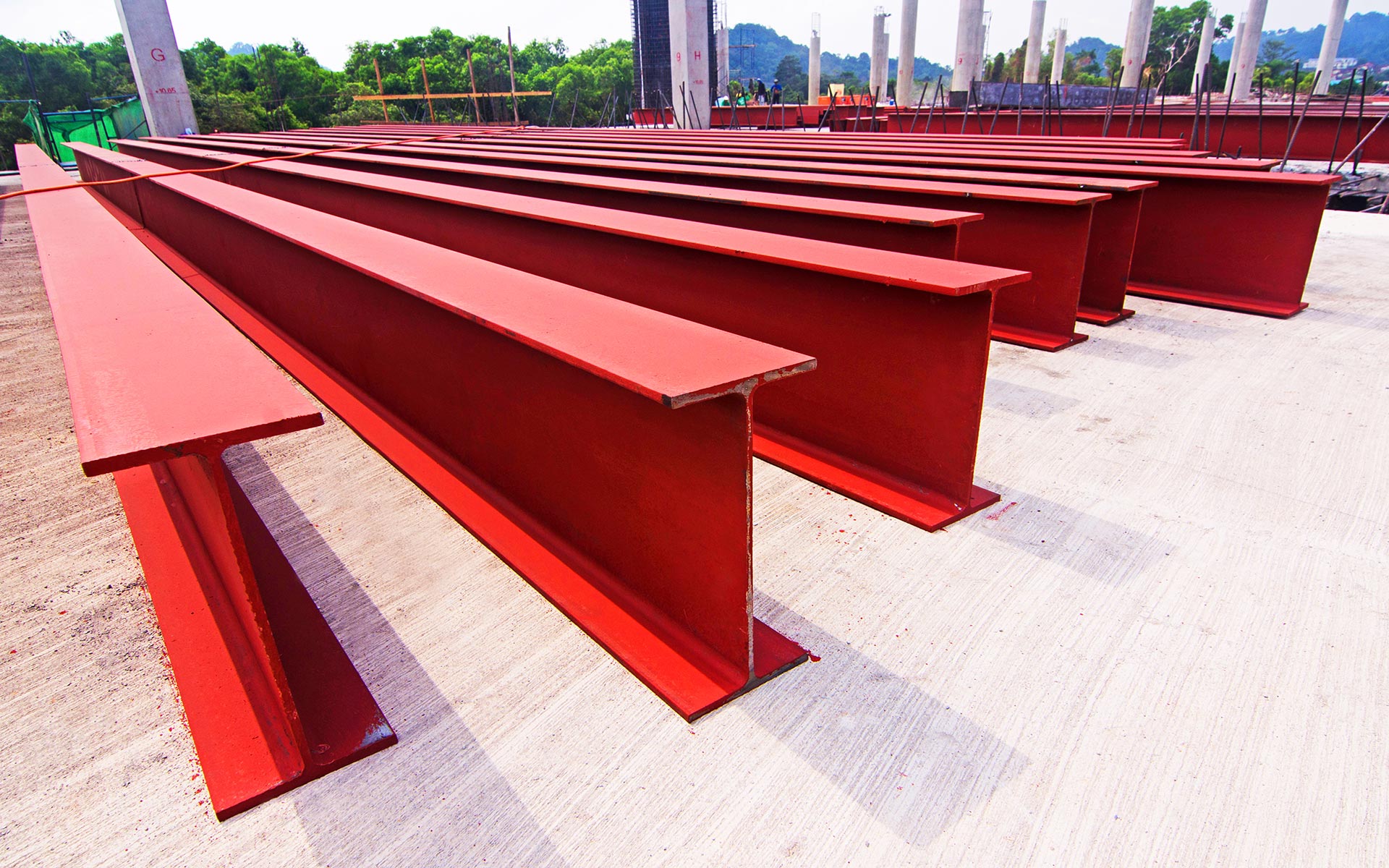
The French long steel market appears to still be experiencing stagnation, based on feedback from various distributors and buyers. There has been no significant improvement in activity across the value chain, except for a slight increase in apparent demand for rebar, associated with the Olympic Games in the Paris area.
Suppliers involved in construction works in the area are under pressure to deliver material before the planned closures of several axes in Paris from mid-July, Kallanish notes.
“We have not observed any improvement in consumption for either longs or flats. Demand is currently unfavourable due to the consumption crisis and the inclement weather, which is causing delays at building sites,” one major longs buyer says. “The Olympic Games are slowing building sites [in other parts of France], new construction is in freefall, and the political instability is not helping.”
Producers are eager to raise prices but this is not being well-received downstream. Values have remained relatively stable, with only minor fluctuations. Stockists are expected to make fewer purchases this summer, while the distribution sector is taking a cautious approach and construction companies are experiencing a decline in production volumes and order books.
“Prices are stagnating. They are neither increasing nor decreasing. Our members expect a negative 2024,” a purchasing group manager says. He adds that the sector is experiencing financial challenges this year and buyers are refusing any price increases.
Longs buyers are struggling to predict the future direction of the market. The stable prices are a cause for concern, as there is a possibility of a downward shift. Rebar values have seen a slight increase of €10/tonne ($10.7) on average since the beginning of the month, with the current domestic price at around €620/t delivered. According to sources, merchant bar prices are expected to remain steady, at €660-670/t delivered, while the first category of sections is estimated to be at around €750-770/t delivered.
The French construction crisis is continuing, as reported by national construction federation Fédération Française du Bâtiment (FFB). By the end of April, year-on-year, new building permits and new residential construction fell by 10.2% and 10%, respectively. In the first quarter, there was a significant decline in sales within the private property sector, with a drop of 29.9%. Similarly, sales of private properties experienced a sharp decline of 25.9% compared to the previous year.
Natalia Capra France

Scrap supply tightening, Red Sea disruption ‘decisive’
Largest scrap suppliers the EU and US will see exports halve in the next 5-6 years due to increased domestic demand as steelmakers decarbonise. This means current scrap importers will need to find alternative sources or use more ore-based metallics, according to McKinsey & Company associate partner Alexander van de Voorde.
Scrap generation in the mature supplier economies will grow only slowly and barely for prime scrap. This will see regulators holding scrap closer to demand centres, which will lead to reduced interregional trade flows, van de Voorde said at Kallanish Europe Steel Markets 2024 in Milan last week.
Decarbonisation will also lead to a larger oversupply of lower-grade iron ore, especially on the blast furnace side, but will cause a large deficit of higher grades, such as 67% Fe. The premium between those grades will be stretched.
Coking coal, meanwhile, “will remain an expensive commodity that people will fight for,” van de Voorde noted. Over the next 15 years, various mines will close, while new development in recent years is not sufficient to keep up with seaborne coal demand. Prices will not explode but will remain elevated, he added.

Derek Langston, global head of dry research at Braemar Shipping, meanwhile pointed out that freight rates in 2024 are elevated versus a year earlier. Bunker ships started avoiding the Panama Canal due to low water levels and then, months later, Houthi attacks started diverting shipping away from the Red Sea. The fact this happened simultaneously is “unprecedented”, Langston exclaimed.
Shipping scrap from Houston to Mundra – which normally goes via the Red Sea – now costs $54/tonne going around the Cape of Good Hope, the same price as transiting the Red Sea would cost with insurance.
Red Sea rerouting has added 1.7% to ship demand, which although does not appear like much, is enough to tighten the market, pushing prices several thousand dollars higher. “The overall effect on the market has been quite decisive,” Langston said of the Red Sea issue. The Panama Canal water levels are nevertheless expected to return to normal in the second half-year.
There has been some hesitance in recent years to order new ships due to questions over decarbonisation. This has kept the Capesize market in balance, he concluded.
Adam Smith Poland

Bullish momentum fades in European HRC market
Slow demand from the key steel-using sectors in most EU nations was keeping spot trading weak.
Industry sources said that, due to lower order volumes from the automotive industry, European steelmakers had tonnages available to sell in the spot market.
“European mills are actively looking for orders. Many suppliers still have end-July delivery available,” a buyer in Germany said.
Despite the expected positive effect on the market of newly adjusted safeguard measures, the bullish momentum stalled.
“The key issue is the bad demand. And we are heading into summer – the market is usually dead in August,” a steel-service center in the Netherlands said. “[A leading European steelmaker] seems to have dropped the idea of increasing prices [for HRC] in the current conditions.”
Offer prices for July-August delivery HRC from German mills were reported at €640-650 ($686-696) per tonne delivered, sources said, which would net back to €630-640 per tonne ex-works.
Offers from suppliers from the Benelux area for July August-delivery HRC varied between €620 per tonne and €650 per tonne ex-works, depending on the mill.
Buyer sources estimated the tradable price about €620-630 per tonne ex-works, with transactions for small lots reported at €630 per tonne ex-works in Germany.
Fastmarkets calculated its daily steel hot-rolled coil index, domestic, exw Northern Europe, at €632.50 ($677.71) per tonne on Tuesday, down by €1.25 per tonne from €633.75 per tonne on June 17.
The index was down by €2.92 per tonne week on week and by €5.83 per tonne month on month.
Fastmarkets calculated its corresponding daily steel hot-rolled coil index, domestic, exw Italy, at €629.58 per tonne on Tuesday, down by €1.05 per tonne from €630.63 per tonne on Monday.
The index was down by €1.67 per tonne week on week, and down by €3.34 per tonne month on month.
July-August delivery coil was offered by a local supplier at €650 per tonne delivered (€640 per tonne ex-works).
“Mills seem to have ended their attempts to increase prices,” a buyer source in Italy said. “Demand is very weak and there is no ground for [HRC] prices to move up. Stability is probably the best option for mills at the moment.”
Buyers estimated the market no higher than €630-635 per tonne delivered (€620-625 per tonne ex-works).
Prices for imported HRC were largely unchanged, and the number of offers was limited.
Suppliers from Taiwan were offering August-shipment HRC to Italy at €610 per tonne CFR.
But considering the high risks related to safeguarding quotas, most buyers said that these offers were not attractive.
“For Asian coil, prices should be €550-560 [per tonne CFR] at the most, to [be accepted]. But there are no such offer in the market,” a second source in Italy said.
From Ukraine, two sources reported an offer at €580 per tonne CFR.
One Turkish supplier was seeking a €30 per tonne price rise, with new offers for August shipment HRC heard at €640 per tonne CFR to Italy, including the duty. But this price was not considered workable by Italian buyers.

Domestic HRC prices stable across Europe, trading flat
In Northern Europe, trading remained sluggish, with a “no restocking” attitude being adopted by buyers, sources said.
An integrated mill in the Benelux region was offering July-August delivery HRC at €650 ($695) per tonne ex-works.
Mills in Germany were offering HRC at €640-650 per tonne delivered, sources said, which would net back to €630-640 per tonne ex-works, for July-August delivery.
A re-roller from the Benelux region was said to be offering August-delivery HRC at €620 per tonne ex-works.
A major European steelmaker, which had expected to be able to increase its offer prices, was said to have opted for a price rollover for July-August deliveries in the face of weak demand.
“The market has been stable for more than a month now and there are no fundamentals for a price increase, despite some attempts by mills [to increase prices],” a German buyer told Fastmarkets.
Sources estimated the tradable price at about €620-640 per tonne ex-works.
Fastmarkets calculated its daily steel hot-rolled coil index, domestic, exw Northern Europe, at €633.75 ($678.04) per tonne on Monday, down by €1.25 per tonne from €635.00 per tonne on June 14.
The index was down by €1.00 per tonne week on week and by €4.58 per tonne month on month.
Fastmarkets calculated its corresponding daily steel hot-rolled coil index, domestic, exw Italy, at €630.63 per tonne on Monday, down by €1.25 per tonne from €631.88 per tonne on Friday.
The index was up by €0.63 per tonne week on week, but down by €2.29 per tonne month on month.
In the week to June 14, sources said one Italian integrated steel mill had raised its offer price for HRC by €30 per tonne, to about €680 per tonne delivered.
On Monday, however, most sources said that, for July-August delivery coil, that local supplier was still accepting €650 per tonne delivered (€640 per tonne ex-works).
“The move to announce a price increase to the market was [intended] to [promote] buying activity. There is no chance [of getting an additional] €30 [per tonne for HRC] in such a dull market,” a local buyer said.
Buyer estimates of tradable values for July-August delivery HRC were no higher than €630-635 per tonne delivered (€620-625 per tonne ex-works).
“A rollover [of the HRC price] for August delivery is the best-case scenario for mills,” a second buyer said. “There is no restocking activity.”
Prices for imported HRC have been largely flat on Monday so far.
Suppliers from South Korea and Taiwan were offering August-shipment HRC to Italy at €600-610 per tonne CFR.
“Practically all Asian imports consolidate around €600 [per tonne CFR] plus or minus a few euros,” a steel-service center source in Italy said, “but there is no interest due to new [EU import] safeguard rules.”

Europe low-emission steelmaking buildout could struggle
New low-emission steel mills are more likely to be built where costs and regulation are favourable, in other words not Europe, but CBAM is likely to alleviate some overcapacity pressure in Europe’s steel market. So was the conclusion of a panel at the Kallanish Europe Steel Markets 2024 conference in Milan last week.
Green steel production growth should be catalysed by “new kids on the block” such as H2GS in Sweden and Vulcan Green Steel in Oman, input cost panel participants agreed.
Europe, where 19 mills are planning to produce 48 million tonnes/year of low-emission steel by 2030, “is on track to reinvent itself at a scale that we’ve not seen before. We built up the industry over centuries and now we’re rebuilding it over 10-20 years,” said McKinsey & Company associate partner Alexander van de Voorde. However, the region faces challenges, such as financing, manpower, metallics supply and renewables capacity.
Building green steelworks fuelled by imported hydrogen or ore-based metallics might not be cost-effective. “Green steel mills will be built where policies are more effective,” noted GMK Centre chief executive Stanislav Zinchenko. H2GS has chosen to build its second plant in North America. “Why not in Europe?” Zinchenko asked rhetorically.
On labour availability, van de Voorde added: “Can we in Europe match a project engineer salary in the Middle East? Can we attract expertise from Asia where plants have been built recently?” Given it is not just steel capacity that needs to be built but the necessary networks, pipelines and cement capacity that go with it, the labour market will only tighten further, he added.
Italian steel mills are meanwhile suffering greatly from overcapacity amid weakened demand, which is crimping their margins, said Siderweb chief analyst Stefano Ferrari. Mills’ scrap-rebar spread, traditionally at €100-200/tonne in Italy, has fallen to below €50/t. Italy possess a large number of small EAF mills between which competition is intense. Increasing exports to offset domestic weakness would be difficult to do profitably, however, Ferrari noted.
Nevertheless, the Carbon Border Adjustment Mechanism (CBAM), when it comes fully into force from 2026, will stop 3 million tonnes/year of long steel imports coming into Europe, providing a great opportunity for Italian suppliers to meet demand, Zinchenko pointed out. But it will be mills all across Europe, and not just the Italians, competing for this demand, he added.
Adam Smith Poland

Steel market demand rebound expected in 2025
Lack of trust, not simply high interest rates, concerns panellists at the Kallanish Europe Steel Markets 2024 conference in Milan.
As a result of both, the market participants are hesitant to suggest that demand will increase before 2025.
Alessandro Fossati, managing director of Gamma Trade, says he does not believe a lowering of borrowing costs would be enough to stimulate more consumption this year.
“It’s not enough to cut interest rates to boost demand. Demand depends on trust,” Fossati asserts. “We should have a way to earn back the trust in the economy. That would allow investors to invest and consumers to consume.”
S. Polo Lamiere SPA’s chief executive officer, Tommaso Sandrini, underscores Fossati’s sentiment.
“I do not see any possibility of significant recovery in the investment cycle. …We have all the geopolitical elements that we are discussing, and there is a huge lack of confidence in Europe from my point of view,” Sandrini declares: “I do not see any possibility for demand to increase before the end of the year.”
Julian Verden, Stemcor Group’s managing director for Europe, offers a counter stance.
“If you look at steel consumption, it’s pretty steady globally,” observes Verden. “There is very good demand. It is just not great demand in Europe. The European industries are struggling, but I think that protectionism, like that in the states, will protect our industries.”
Kristen DiLandro USA

Italy tubemakers increase prices, in line with HRC
As a result of Europe’s safeguard quota revision, all Italian welded tube re-rollers are raising their prices to reflect the growing expenses related to hot rolled coil imports, market sources tell Kallanish.
One HRC manufacturer in Italy is increasing pricing by €30/tonne ($32), asking for a base ex-works level of €660/tonne, as present contract rates are very close to actual costs. This is being done despite market uncertainty and slow demand.
A re-roller reports that discounts were effectively decreased by two points last week, or €30/t. The company is further reducing discounts by two points this week. Other tube makers are cutting their discounts by four points with immediate effect. However, the first source says the market is moving up by no more than two points every week, and the source expects a gradual but steady rise.
Italian tube discounts stand at 40 points at the moment, down from 42 at the beginning of June. By the conclusion of this week, the goal is to cut discounts to 38 points. Coil derivative pricing is considered unsustainable. Processed products should cost at least €70/t more than they do now, according to one source.
The EU steel safeguard measure may be extended by two more years, until June 2026, the European Commission announced last month. In order to keep the market stable, it wants to impose a 15% cap per origin over the “other nation” tariff-rate quota for HRC.
As a result, starting on 1 July, European tube makers would see a rise in costs. Two sources suggest that the import duty associated with clearing HRC through customs may hover at €70–80/t, to be paid on 1 July. In reaction to the large cost rise, some are thinking about clearing some material at the start of the fourth quarter.
Natalia Capra France

European hot-rolled coil market remains in trading lull
Trading activity in the European hot-rolled coil market remained muted June 17, with sources commenting that the summer slowdown started several weeks too early.
“It’s too quiet in the market,” a German service center source said. “Summer holidays have not even started. Ex-stock demand is ok, it’s back to back, but new orders are lacking,” the source added.
Sources said that while industrial customers report a slight improvement, automotive demand remains uncertain.
While Turkish import offers have been heard to have moved up to Eur650-660/mt CIF Antwerp including antidumping duties, Asia-Pacific offers were heard scarce June 17. Sources said that the price gap between domestic and import is too narrow to consider import material.
“Imports need to be Eur30-50/mt below Europeans to make sense,” another German buyer said, adding that European mills are currently at their lower limit and would be holding official offer prices.
Lead times from European mills were heard to be still in July to August for HRC, with one German mill working on backlog orders due to maintenance works in May.
The Platts Northern European HRC assessment moved up Eur5 on the day to 635/mt EXW Ruhr June 17, while the Italian assessment for HRC remained stable at Eur620/mt EXW Italy.
Italian mills were heard to be offering Eur650-660/mt EXW Italy, with some concessions made.
One mill agent said that they expected higher demand following European elections and the safeguard quota announcement, but so far there has not been an uplift in demand or prices despite mills’ attempts a few weeks ago.
