


Unesid appoints Carola Hermoso as general director
Spanish steel association Unesid has appointed Carola Hermoso, as its new general director. She will replace Andrés Barceló, who has been in the position since July 2009, Kallanish notes.
“Barceló will continue in his duties until January, to guarantee an orderly succession and after he will continue as an advisor to the Unesid Council until June 2025,” the association says.
Hermoso is currently the executive chief of the Spanish Galvanizers Association ATEG and president of the European Galvanizers Association’s environment and safety committee. The newly elected director worked at Unesid between September 2008 and October 2019, with role in the environment, institutional relations, sustainability and corporate.
Todor Kirkov Bulgaria

Italian sellers attempt coil derivative increases
Coil derivatives are still experiencing weak prices, while sales volumes for sheet are struggling to improve. Some service centres are raising sheet pricing in line with re-rollers, but there is little push for hikes right now, and slow consumption is hurting any hike attempts. The outlook remains negative and market participants believe the impasse will continue throughout the third quarter, Kallanish hears.
Coil service centres report a lack of demand, with agents stating that customers are purchasing 1,000 kilogrammes, “one pack at a time”, demanding quick delivery and showing no commitment. On average, customers are purchasing much smaller quantities than previously.
Within this slow market, some service centres are actively pursuing higher volumes and are willing to offer discounts to ensure sales. Some service centres are raising hot rolled sheet prices to €750/tonne base ($805) ex-works, which barely allows them to make a profit given the cost of hot rolled coil. The current price tag has not yet been realised, with the prevailing range now at around €710-730/t delivered. “Customers are unwilling to increase their bids beyond that,” one source comments.
A service centre that sells most of its production on the export market is successfully offsetting the sluggish domestic market through its well-established international sales channels. However, it does not see higher consumption and prices abroad. Meanwhile, as a result of Europe’s safeguard quota revision, all Italian welded tube makers are raising their prices, to reflect the growing expenses related to HRC imports.
One HRC manufacturer in Italy is increasing pricing by €30/t, asking for a base ex-works level of €660/t, as present contract rates are very close to actual costs. This is being done despite market uncertainty and slow demand. Domestic prices have not yet increased and remain at €620-630/t base ex-works.
A re-roller reports that discounts were effectively decreased by two points last week, or €30/t. The company is reducing discounts by a further two points this week. Other tube makers are cutting their discounts by four points with immediate effect. However, a source says the market is moving up by no more than two points every week, and he expects a gradual but steady rise. Italian tube discounts stand at 40 points at present, down from 42 at the beginning of June (see Kallanish 7 June).
Natalia Capra France

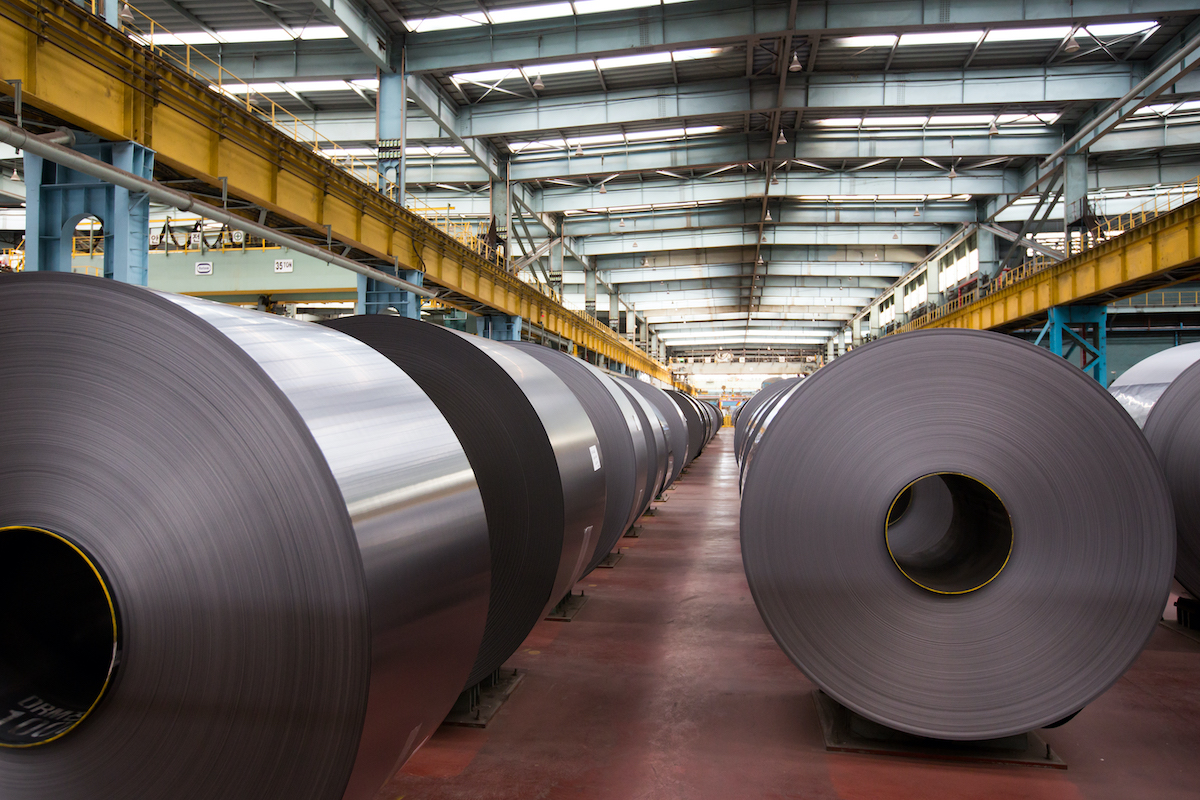
European mills fail to push HDG prices up; struggle to compete with CRC imports
HDG
Slow demand from the major end-use sectors, especially the automotive and construction industries, kept trading quiet in the HDG market.
Mills have thin order books with August lead times still widely available.
Sources said that some Spanish suppliers tried to increase offers by €40 ($43) per tonne to €780 per tonne delivered, to reflect higher input costs, but buyers deemed the new prices too high.
“Apparently, feedstock for HDG production, especially imported feedstock, will get more expensive due to new safeguards. But thin demand will not allow for such a price rise [for HDG],” a buyer in the Iberian market said.
In Italy, offers for HDG coil were heard at €750-760 per tonne delivered, which nets back to €740-750 per tonne ex-works.
Buyer estimates of achievable prices were heard at around €730-740 per tonne ex-works.
Fastmarkets’ price assessment for steel hot-dipped galvanized coil domestic, ex-works Southern Europe was €740-750 per tonne on Wednesday, stable week on week.
Import offers were scarce, with overseas suppliers reportedly awaiting official documents confirming the new safeguards.
One Vietnamese mill was offering 0.5 mm HDG with z100 coating at $840 per tonne CFR, for August shipment.
Another Vietnamese mill was aiming for $865-870 CFR for 0.5 mm HDG with z140 coating, sources said.
Several sources reported offers from Indian suppliers for 2 mm HDG with z120-140 coating at €745-755 per tonne CFR to Italy.
CRC
Offers of CRC from European mills were very rare due to high costs of production and tough competition with imports in commodity-grade markets.
“Annealing [the heat treatment procedure for CRC production] is very energy-intensive and therefore CRC production is not commercially viable,” a mill source said,
“Mills reduce our output of commodity-grade CRC and focus on special grades and thicknesses, or produce more HDG instead,” a buyer source in Europe said.
In Italy, only one supplier was offering CRC, with offers reported at €750 per tonne delivered (€740 per tonne ex-works), and buyer estimates of tradeable values heard at €730-735 per tonne delivered at the highest (€720-725 per tonne ex-works)
Fastmarkets’ weekly price assessment for steel cold-rolled coil domestic, ex-works Southern Europe was unchanged at €725-730 per tonne on Wednesday.
Meanwhile, offers from Asian and Indian suppliers for August-shipment CRC to Southern Europe were heard at €675-695 per tonne CFR during the week to Wednesday.
Sources pointed out that the European market for commodity-grade CRC was dominated by imports due to price disparity.
Published by: Julia Bolotova


US Steel Kosice reignites BF2 despite sluggish demand for flat steel in Europe
The 1.7 million-tonne-per-year BF No2 at Kosice steelworks was idled for a planned maintenance in early March, but the company decided to extend the downtime into the second quarter amid persistently weak demand for steel and deteriorating prices, Fastmarkets reported.
BF No2 was reignited in June.
USSK has three blast furnaces with a combined capacity of around 4.5 million tpy of pig iron; all three of them are operational, the spokesperson told Fastmarkets.
“I can confirm that all three BFs are running. Our production capacity is 4.5 million tonnes of steel products per year when running our three furnaces,” the spokesperson said.
USSK produces hot-rolled, cold-rolled and hot-dipped galvanized coil.
News about the BF restart flustered flat steel buyers across Europe because demand for coil has been subdued and producers have been “chasing orders,” sources said.
“We’ve been talking for months that [steel] output cuts are needed to balance the market, not the opposite,” a buyer in Europe said.
USSK did not comment on the current market situation.
“We do not provide any expectations regarding demand, and we manage our furnaces in line with our planned maintenance schedules and customer demand. We are confident that all our customers will receive what they have ordered, and we will continue to manage our furnace(s) according to our operating customer and maintenance needs,” the spokesperson said.
In late May-early June, producers in Europe were expected to begin seeking higher prices, following news about a review of steel import safeguards in the EU and its consequences for the market. But the bullish momentum has stalled, lacking support from real steel demand, Fastmarkets reported.
Fastmarkets calculated its daily steel hot-rolled coil index domestic, exw Northern Europe at €630.88 ($676.97) per tonne on Wednesday, down by €1.62 per tonne from €632.50 per tonne on Tuesday June 18.
The index was down by €4.33 per tonne week on week and by €7.45 per tonne month on month.
Published by: Julia Bolotova

European HRC producers keep offer prices flat in quiet market
Slow demand and a downtrend in raw materials prices were unsupportive of an HRC price increase, sources said.
Most mills in Northern Europe were offering August delivery HRC, but offer prices were broadly unchanged compared with those offered for July delivery – although some suppliers were rumored to still have limited tonnages for July delivery.
“We are heading into the summer lull; trading is not going to rebound. If someone needs September delivery, mills try to charge some €20 per tonne higher; but those attempts [have not been] successful so far,” a buyer in Germany said.
Another buyer source in Northern Europe said. “All European steelmakers are in a tough situation – no demand means no [price] increases.”
German mills were heard offering HRC at €640-650 ($687-697) per tonne delivered, which would net back to €630-640 per tonne ex-works; sources said, with buyers bidding at €10-15 per tonne below that.
And a booking of Italy-origin coil to Germany was reported by several sources around €640-650 per tonne delivered.
Fastmarkets calculated its daily steel hot-rolled coil index domestic, exw Northern Europe at €630.88 ($676.97) per tonne on Wednesday, down by €1.62 per tonne from €632.50 per tonne on June 18.
The index was down by €4.33 per tonne week on week and by €7.45 per tonne month on month.
Fastmarkets calculated its corresponding daily steel hot-rolled coil index domestic, exw Italy at €628.13 per tonne on Wednesday, down by €1.45 per tonne from €629.58 per tonne on Tuesday.
The index was down by €3.75 per tonne week on week and by €4.79 per tonne month on month.
Market conditions in Italy were similar, with mainly sporadic deals for limited tonnages heard since Monday.
Official offers from a local mill were still at €650 per tonne delivered (€640 per tonne ex-works), sources said, but deals were reported at €620-630 per tonne ex-works.
Buyer estimates of tradable prices were around €610-630 per tonne ex-works.
“The slow summer season is almost here and the mills still have a lot [of HRC] to sell, so discounts are possible for August delivery,” a steel service center source in Italy said.
Mills, meanwhile, were reportedly planning to increase prices for September-delivery HRC, although it remains to be seen whether the market will be ready to accept higher prices.
New import offers were scarce, sources told Fastmarkets.
Turkish mills reportedly increased offers by €30 per tonne to around €640 per tonne CFR, including the EU anti-dumping duty, before stepping away for the Eid-al-Adha holiday on June 16-21.
But buyers said the new offers were not attractive, being basically the same as European prices.
“The gap with imports needs to be at least €40-50 per tonne to make [imports] workable,” a buyer source in Italy said.
Asian suppliers, meanwhile, largely stayed on the sidelines, awaiting official confirmation of the new EU steel import safeguard measures.
Published by: Julia Bolotova

Beltrame advocates ‘buy green’ to support Europe’s EAFs
Labelling steel products’ carbon footprint based on scrap usage risks misleadingly equating the more sustainable electric arc furnace steelmaking process with the significantly more carbon-intensive integrated one. This has prompted objections from the EAF industry, which has already made significant CO2 reduction investments, according to Giovan Battista Landra, AFV Beltrame Group sustainability and environment director.
Despite significant investments in CO2 reduction and efficiency improvements, the EAF sector faces an “enormous” burden to further cut emissions, while battling proposals that favour primary steelmaking and “misinform the market”, Battista said at the Kallanish Europe Steel Markets 2024 conference in Milan last week.
AFV Beltrame Group is a 100% EAF, 100% scrap-based steelmaker, noted Carlo Beltrame, chief executive of Beltrame France and Romania. State aid for BF-BOF mills is creating an unlevel playing field in Europe for EAF mills, he added.
“In reality, the steel industry is an electrical furnace, too!” he exclaimed. “Europe is creating a different level playing field … Inside Europe, we have a different kind of approach …we have a different state aid on CO2.”
The American model of protectionism, exemplified by Section 232, should be an example for the EU, Beltrame continued. ETS will dramatically affect the cost structure of blast furnaces in Europe after 2027 and even more so after 2030, whereas EAFs will not face such burdens.
If Europe adopts a “buy European” or “buy green European” policy, it will simplify and accelerate the energy transition. Adding a premium, such as €200/tonne, to the price of green steel products could drive the market to find solutions more quickly and effectively, Beltrame said.
Meanwhile, unlike the automaking sector, which is reportedly ready to pay a premium, the construction sector is not yet prepared to do so, he added.
Despite having a far-lower-than-average carbon intensity, its production, mainly used in the construction sector, does not get a premium over the regular steel price in the market. The green revolution should be driven by market demand, Beltrame emphasised.
The steel industry’s transition towards net-zero emissions requires significant advancements in hydrogen-based direct reduced iron (H2-DRI) production plants and full-scale high-power electrolysers, Battista noted.
The availability of abundant renewable or non-fossil energy sources, such as small modular reactors and Generation 4 nuclear reactors, is crucial. Enhancing energy transmission and distribution networks is also essential. Additionally, developing innovative technologies like carbon capture, utilisation, and storage (CCUS) or direct air capture (DAC) is necessary, along with improving efficiency in plant engineering, operations, and maintenance procedures, Battista said.
From a business standpoint, increasing the use of steel scrap raises concerns about its availability, cost, and quality, considering it is a critical raw material at EU level. Strengthening secondary raw material production and supply chains is vital for promoting a circular economy while reducing bureaucratic burdens. Adopting an open-minded and technology-agnostic approach to greenhouse gas emission reduction is important. Significant public policies and financial resources are required to ensure an affordable green transition without causing heavy industrial drawbacks, Battista concluded.
Elina Virchenko UAE

Günther + Schramm rüstet in Königsbronn auf
Neuen Herausforderungen begegnet man mit der entsprechenden Technik. Günther + Schramm und entschied sich vor diesem Hintergrund für eine neue automatisierte Schnellkreissäge mit Roboteranbindung am Standort Königsbronn.
Die neue Schnellkreissäge vom Systemdienstleister Günther + Schramm am Standort Königsbronn zeichnet sich durch eine hohe Präzision und Wiederholgenauigkeit aus. Die Komplexität der neuen Anlage liegt in ihrer Vielseitigkeit: Sie sägt, entgratet und verpackt. Damit bietet sie einen großen Vorteil gegenüber der Monosäge, die zuvor bei Günther + Schramm im Einsatz war. Da diese lediglich sägen konnte, musste ein Mitarbeiter die Produkte aus Stahl, Aluminium oder Eisen manuell entnehmen, entgraten und verpacken. Durch die neue Schnellkreissäge mit Roboteranbindung entfallen diese Arbeitsschritte für die Belegschaft.
„Roboter und Roboterperipherie sind vollständig in die Maschinensteuerung integriert. Auftragseingabe, Auftragsverfolgung, Visualisierung, Diagnose usw. erfolgen ausschließlich über die Maschinensteuerung. Dies stellt eine große Entlastung für unser Team dar“, sagt Volker Walz, Betriebsleitung bei Günther + Schramm. „Mit dieser Investition können wir unsere Produktionsprozesse weiter optimieren, die Effizienz steigern und gleichzeitig die Qualität unserer Produkte erhöhen. Wir sind überzeugt, dass wir damit unsere führende Position in der Branche weiter ausbauen können.“
Günther + Schramm: Roboter unterstützt Mitarbeiter
Die vollautomatische Kreissäge ist CNC-gesteuert. Das heißt: Sie ist durch den Einsatz von Steuerungstechnik in der Lage, Werkstücke mit hoher Präzision automatisch herzustellen. Sie zeichnet sich durch eine robuste Bauweise aus und ist mit einem hinter der Sägemaschine positionierten Roboter ausgestattet. Dieser übernimmt die Abschnittsentnahme mittels Vakuumsauger oder mit einem mechanischen Greifer und ermöglicht die Stapelung auf bis zu acht Behälter- beziehungsweise Palettenplätzen. Durch das Roboter-Handhabungssystem wird die vollautomatische Abstapelung der Sägeabschnitte sowie die Entsorgung der nicht weiter verwendbaren Restlängen gewährleistet.
Ein weiteres Highlight der Anlage ist die Möglichkeit des beidseitigen Entgratens auf Kundenwunsch. Mittels eines zusätzlichen Handhabungsroboters und zweier automatisch verstellbarer Spannvorrichtungen werden Sägeabschnitte beidseitig in einem Arbeitsgang entgratet. Darüber hinaus werden den Paletten automatisch Materialbegleitscheine zugeordnet, sodass diese direkt versandfertig sind. So muss der Mitarbeiter die fertig beladenen Europaletten nach dem Sägeprozess nur noch zum Versand bringen.
Die vollautomatische Kreissäge ist in der Lage, Vollmaterial, Profile und Rohre in allen Qualitäten zu trennen, einschließlich schwer zerspanbarer Werkstoffe im Hartmetallbereich. Zum Vorlagern und automatischen Nachladen von Materialstangen mit unterschiedlichen Materialabmessungen, Qualitäten und Formen dient ein Universalmagazin mit zehn Vorlagefächern für Herstellungslängen bis 6.000 Millimeter. Das Magazin kann bis zur vollen Tragkraft von 7.500 Kilogramm ausgenutzt werden.
Foto: Günther + Schramm


Liberty’s Ostrava sale garners mostly local interest
The sale of Liberty Steel’s Czech Ostrava iron and steel works has garnered interest from a number of parties, mostly local but including Indian company Jindal Steel, a delegation from which showed up at the mill in May, industry sources said June 18.
Other potential buyers included Trinecke Zelezarny, another major steel producer in the Czech Republic with a capacity of 2.5 million-2.6 million mt/year, Czech industrial holding CE Industries (CEI) known in the steel industry for having provided Czech third-largest steel producer Vitkovice Steel with tolling financing, and Czech energy company Sev.en Group, the sources said.
Liberty Steel declined to discuss the sales process and the above-named entities were not available for comment.
Given the ongoing risks and uncertainties, Liberty Steel last week announced a sale of Ostrava and its judicial reorganization under the Insolvency Act.
It had worked on several restructuring plans for Ostrava, including a mid- to long-term transition to electric arc furnace technology.
In April, Sanjeev Gupta, head of GFG Alliance, an umbrella group which Liberty Steel is part of, met Czech finance and industry ministers but the latter found the plans “weak” and “unconvincing” with no breakthrough achieved on the mill’s restart, sources said.
Steel production at Ostrava was halted in the fourth quarter of 2023 when Liberty Steel in October idled blast furnace No. 3, the last remaining operational BF at its Ostrava steelworks, citing poor demand in Europe as the main reason.
Some downstream mills continued rolling, using up previously acquired semi-finished steel stock. Ostrava’s blast furnace No. 2 was idled in July 2022 for repairs and an upgrade but has never been restarted.
Ostrava’s restructuring was hampered by external factors, primarily a further deterioration of market conditions in Europe, an indefinite delay in the allocation of emissions allowances to the business from Czech authorities, Liberty Steel said, adding Ostrava was filing for a judicial reorganization which will provide the time and protection to undertake its sale.
The sale decision was in the best interests of Ostrava’s creditors, employees and customers, said Liberty, which intends to maintain the few assets which cover their own costs and support employees in applying for the state’s Wage Guarantee Scheme.
The Ostrava plant is the Czech Republic’s biggest steel producer capable of making up to 2 million mt/year at full steam. Liberty Steel acquired it from ArcelorMittal in July 2019. After years of underinvestment, it says it injected Eur143 million ($153 million) in the plant and led to its best performance in a few years in 2021-22.
In 2021, Ostrava produced a five-year high of liquid steel at 2.28 million mt with the plant’s two blast furnaces producing 1.93 million mt of hot metal during the year, but last year, its steel production declined to 1 million mt, according to local media reports.
Katya Bouckley

SSAB and UK’s Firth Steel in deal for SSAB Zero steel deliveries
Swedish steelmaker SSAB and Firth Steels have entered a long-term partnership for the supply of SSAB’s Zero, a product made of recycled steel and produced with fossil-free electricity and biogas.
The partnership will help Firth Steels, one of the UK main manufacturers of steel profile products for wall and roof systems, to further improve its sustainability and reduce the CO2 footprint of its products.
The steel from SSAB will be used as a key component of Firth Steels’ brand-new product series Protex Voyage, a low embodied carbon building envelope solution.
“As a UK-based roll-former of steel profiles, Scope 3 emissions represent the largest portion of our carbon footprint,” James Firth, Managing Director of Firth Steels Limited said.
“By forming strategic partnerships with the world’s leading mills, we can significantly reduce these emissions and forge a sustainable future for our planet from the outset, not offset,” Firth said.
“We are happy to add fossil-free steel to our collaboration with Firth Steels, which already uses our bio-based GreenCoat color coated steel in their products,” Dave Williams, Managing Director, SSAB Swedish Steel Ltd, said.
“By cutting our own carbon emissions, we can help our customers reduce their indirect emissions from the materials they use — it is a win-win,” Williams said.
Many companies in different industries across the steel value chain are buying increasing volumes of low-carbon and low-stainless “green” steel to reduce their Scope 2 and 3 emissions, closing supply agreements to secure low-emission steel for their products.
Platts, part of S&P Global Commodity Insights, assessed Northwest European hot-rolled carbon-accounted coil at Eur760/mt ($815/mt) ex-works Ruhr on June 17, up Eur5/mt on the day.
The assessment was in line with the sum of Platts daily carbon-accounted steel premium assessment and Platts daily hot-rolled coil price assessment in Northwest Europe.
On June 18, SSAB also said its near- and long-term carbon emissions reduction targets have been approved by the Science Based Targets initiative.
Approval means the targets are scientifically based and in line with the SBTi’s raised requirements for companies to deliver on the goal of limiting global warming to 1.5 C.
SSAB’s now validated long-term target is to reach net-zero greenhouse gas emissions for Scope 1, Scope 2 and Scope 3 by 2045. The updated near-term target is a reduction of 48% in greenhouse gas emissions in Scope 1, Scope 2 and parts of Scope 3 by 2033 compared with 2018 as the base year, the company said.
It is a raised ambition compared with SSAB’s previously validated near-term target of a 35% reduction in Scope 1 and Scope 2 emissions by 2032 compared with 2018.
With this approval SSAB is one of the first steel companies globally to receive validated decarbonization targets according to the SBTi’s steel sector guidance released in 2023.

Federacciai: Italy May crude steel production falls on year for fourth consecutive month
Italian crude steel production declined for a fourth consecutive month in May, falling 3.5% to 1.9 million mt, according to data released by Italian steel producers’ association Federacciai.
Production was weighed down by weak demand as well as low output at the country’s second-largest domestic steel producer, ADI.
In the first five months of the year, crude steel production fell 5.5% to 9 million mt.
Flat steel production saw the heaviest decline in May, falling 7.5% to 765,000 mt. Over the first five months of the year, flat steel production fell 9.3% to 3.76 million mt.
ADI has been operating at its lowest-ever rate since February, with the new management working to increase production.
Long steel production in May dropped 1.8% to 1.18 million mt, reflecting a weak construction industry, with January-May output falling 1% to 5.30 million mt.
Italian HRC prices dropped to Eur629/mt ex-works Italy by May 1 from Eur685/mt base ex-works at the beginning of January, according to assessments by Platts, part of S&P Global Commodity Insights. In May prices moved sideways and stabilized. They were last assessed at Eur620/mt base ex-works on June 17.
In April domestic hot-rolled coil prices fell to their lowest level since the beginning of the year at Eur620/mt base ex-works.
Meanwhile, Federacciai members last week confirmed Antonio Gozzi as the association’s president for the two-year period 2024-2026.
Gozzi will be supported in his role by vice presidents Antonio Beltrame, Mario Caldonazzo, Michele Della Briotta, Giuseppe Lucchini, Federico Pittini and Claudio Riva.