

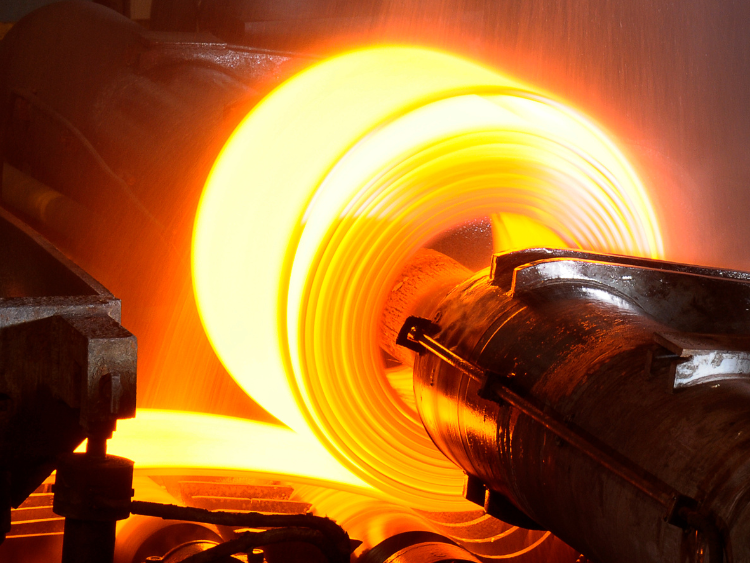
European coils market prepares for safeguard duty start amid quiet trading
“People are worried about import safeguard measures and the HRC coil cap,” a service center source said. “A lot of them will need to pay safeguards on the 1st of July.”
The EU steel safeguard measures include a new restriction cap of 15% on six countries that used to ship their HRC under the residual tariff-rate quota: Egypt, Vietnam, Japan, Taiwan, Australia, and Brazil.
Sources said that even though market participants are discussing adding duty-sharing clauses to contracts in which buyer and seller share the duty costs, it is unlikely to be sufficient to alleviate the impact of the new safeguard measures, and that buyers should think of exploring opportunities in countries that are not subject to the 15% cap.
One Benelux source said that traders are trying to get exclusive contracts with one Taiwanese mill because, as the predominant exporter of Taiwanese HRC to Europe, it could navigate the 15% cap.
“Duty sharing agreements are in discussions,” another service center source said. “But I don’t think it will be a disrupting event for quotas. I don’t think having support from sharing duties will convince buyers to buy. It’s better to find new opportunities in other countries that are not subject to the 15% cap such as Indonesia, Malaysia, and Saudi Arabia.”
Sources also agreed that demand and trading activity remained low, heading into the summer holidays.
“Real demand is down 50%-60% as compared to last year,” the source said. “The level of transaction in the European market is limited. It is a very concerning situation margin-wise and volume-wise.”
Platts assessed Northwest European HRC at Eur630/mt June 25, down Eur5/mt on the day.
Meanwhile, Platts assessed domestic prices for HRC in South Europe Eur625/mt EXW Italy June 25, up Eur6/mt on the day.
Interest in imported HRC also remained dull due to impact from the new safeguard measures.
Buying interest for carbon accounted HRC was heard to remain muted as well. Platts assessed the carbon-accounted premium for HRC in Europe at Eur125/mt June 25, unchanged on the day.

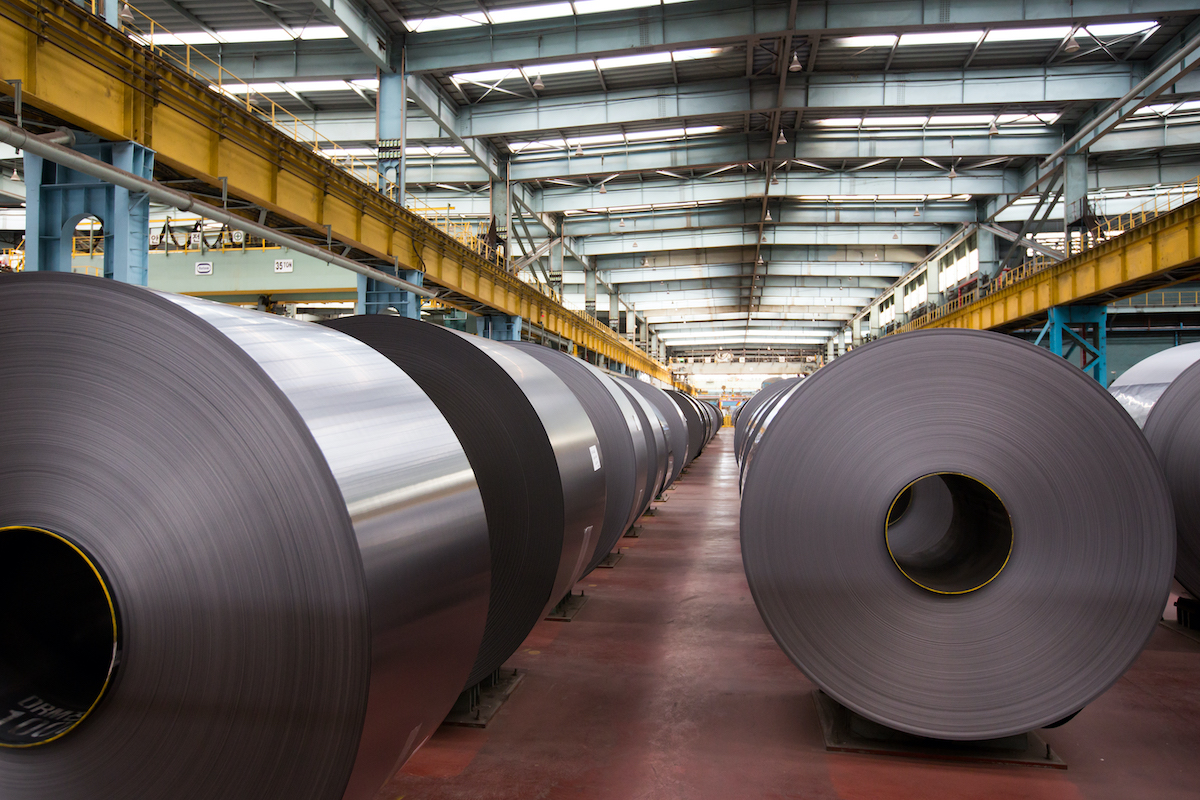
European HRC prices edge down on emergence of bearish sentiment
Demand from the main steel-consuming sectors remained limited, with oversupply adding downward pressure to HRC prices, Fastmarkets understands.
Fastmarkets calculated its daily steel hot-rolled coil index domestic, exw Northern Europe at €630.00 ($675.22) per tonne on Tuesday, down by €2.00 per tonne from €632.00 on Monday.
The index was down by €2.50 per tonne week on week and by €7.37 per tonne month on month.
Offers of HRC in Northern Europe varied between €640 per tonne ex-works and €650 per tonne ex-works, sources told Fastmarkets.
For larger volumes, however, sources said that mills in the region were likely to agree to sell at about €630 per tonne ex-works.
Market participants estimated the tradable price level at €620-630 per tonne ex-works.
“Demand for HRC is still slow. Besides, the summer period is coming, when trading is not so active,” a producer source told Fastmarkets.
The source said that demand from the automotive sector was also not so good recently, with HRC purchases recently postponed, while demand from the construction sector was steady. The source added, however, htat overall sentiment was less positive.
A distributor source told Fastmarkets that negotiations between producers and consumers for the long-term half-year contracts were continuing, with consumers pushing for lower levels because spot prices for the first half of the year appeared to be €50-60 per tonne lower than long-term contract prices.
“Producers are hoping that the new [EU] safeguard measures will have some impact on the market as of the beginning of July,” the distributor source said, but added that such optimism was probably misplaced.
Fastmarkets calculated its corresponding daily steel hot-rolled coil index domestic, exw Italy at €625.00 per tonne on Tuesday, down by €2.50 per tonne from €627.50 per tonne the previous day.
The Italian index was down by €4.58 per tonne week on week and by €5.00 per tonne month on month.
Suppliers in Italy were heard offering HRC at €640-650 per tonne delivered, which nets back to €630-640 per tonne ex-works.
But market participants put the workable price at €620-630 per tonne ex-works.
Demand in Italy also remained weak, sources told Fastmarkets.
In terms of flat steel imports, from the start of July there will be more clarity on the EU safeguard taxes, which will need to be paid by Asian suppliers, including Japan, Taiwan, and Vietnam.
Published by: Darina Kahramanova


Assofermet demands pre-June contract 15% safeguard cap exemption
The revised safeguard measures announced by the European Commission pose a significant risk to EU steel users, warns Italian steel trade association Assofermet.
The Commission confirmed on Tuesday the extension of safeguards till 2026 and the imposition of a 15% cap per origin over the “other country” tariff-rate quota (TRQ) for hot rolled coil.
According to Assofermet, there will be an annual shortage of over 1.6 million tonnes of steel, leading to increased costs for steel importers and processors who will face a decline in competitiveness. The association has been advocating for a relaxation of safeguards and requested that contracts signed before 31 May 2024 should not be subject to the 15% cap.
“We believe that the steel purchased by this date should follow the rules under the Safeguard measures currently in place – it would not be fair to penalise trade deals that were concluded before the EU Commission’s notification to the WTO … These are contracts signed by operators in complete good faith, relying on the progressive liberalisation of the measure. On the contrary, the rule appears to be extremely worsening compared to current conditions: the liberalisation rate has even dropped to 1%,” Assofermet says in a note sent to Kallanish.
The association has also examined the safeguard and Carbon Border Adjustment Mechanism (CBAM) overlap for the first half of 2026. The two measures are overseen by different departments at the European Commission; therefore, the implementation of both measures may result in double taxation.
“We have informed the Ministry about the potential impact of safeguard and CBAM on the cost of steel, which will have a ripple effect on EU manufacturing and the overall economy,” Assofermet states. It aims to assist institutions by offering practical proposals to minimise the adverse effects on the sectors it represents.
Natalia Capra France


EU prolongs steel safeguard measure until June 2026
The European Commission published today an implementing regulation confirming the extension of the current steel safeguard measure for two more years, until June 2026.
The regulation also adjusts the functioning of the measure, to adapt it to market conditions.
This decision follows an investigation requested by fourteen EU Member States, which showed that the safeguard measure continues to be necessary to prevent or remedy serious injury to the EU’s steel industry.
The European Commission explains that the prolongation and adjustments are justified by a combination of factors that resulted in significant import pressure on the Union market:
- high levels of global steel overcapacity and the surge of exports from China to third countries, notably in Asia, resulting in increased exports from those third countries to the EU;
- the increased number of trade defence measures and other trade restrictive measures imposed by other third countries, and;
- the significant reduction of demand in the EU.
Next steps
The technical adjustments will enter into force on 1 July 2024.
The measure will expire on 30 June 2026, eight years after its first imposition, which is the maximum application period of a safeguard measure allowed under EU and WTO rules.
The Commission may still review the functioning of the measure before 30 June 2026 if it considers that further adjustments are necessary.

European HRC prices remain stable on low demand
Domestic prices for European hot-rolled coil remained stable June 24 on low demand and muted activity in the market.
“Market has been quiet because inventories are high,” a service center source said. “Everybody is looking for orders and consumption is low.”
Platts assessed Northwest European HRC stable on the day at Eur635/mt June 24.
Sources said that a lack of production cuts has put pressure on mills, whose margins have diminished.
“Capacities are not being reduced,” the service center source added. “There is a lot of pressure from the production side, and there is no margins for mills.”
A similar environment persisted in South Europe, with poor demand and negative market sentiment.
“Demand is very poor, and no improvement is expected anytime soon,” an Italy-based distributor source said.
Platts assessed domestic prices for HRC in South Europe stable on the day at Eur619/mt EXW Italy June 24.
Interest in imported HRC remained dull in light of the changes to the safeguard measures.
EU member states approved June 11 the European Commission’s proposal to extend the bloc’s steel safeguard measures.
The EU steel safeguard measures will start on July 1 with a new restriction cap of 15% on six countries that used to ship their HRC under the residual tariff-rate quota. As HRC imports from Japan, Taiwan, Vietnam and Egypt will likely be reduced as a result, Europe-based buyers will have to substitute the material with either European coil or alternative non-EU suppliers without country-specific quotas.
Platts assessed imported HRC in Northwest Europe stable on the day at Eur609/mt CIF Antwerp.
Meanwhile, Platts assessed imported HRC in South Europe stable at Eur595/mt CIF Italy, down Eur5 on the day.
Offers for Asia-origin and Turkey-origin material were reported at Eur600/mt CIF Italy.
Buying interest for carbon accounted HRC was heard to remain muted as well. Platts assessed the carbon-accounted premium for HRC in Europe at Eur125/mt June 24, unchanged on the day.
Devbrat Saha
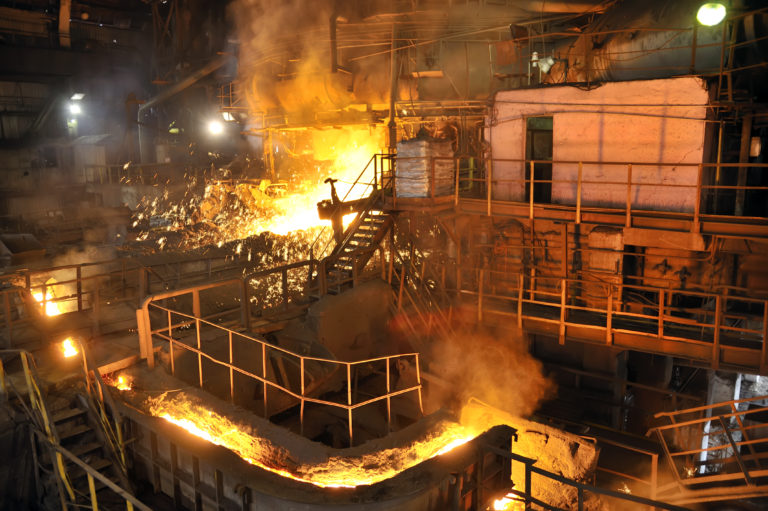
Liberty Czestochowa enters receivership, still seeking production restart
Troubled Polish steelmaker Liberty Czestochowa has been directed into receivership. Liberty Group tells Kallanish it is considering legal options and remains committed to the Polish heavy plate mill’s production restart.
Talk has been circulating for weeks of the plate maker entering insolvency proceedings, with its difficult financial situation and lack of production being discussed at a recent industry event.
“We are disappointed with the Court’s decision, which is based on the action of a single, small supplier. We are now considering our legal options but continue to be committed to the restart of LIBERTY Czestochowa,” a Liberty spokesperson says.
Last month, Tomasz Slezak, the chief executive of Poland’s state-owned Weglokoks, said his firm would consider acquiring Czestochowa if the opportunity arose. The mill’s heavy plate output will be in demand from Polish offshore wind power investments and for defence purposes, making it an important plant for Poland’s national security, he pointed out.
The Polish plant said in March it was gearing up for resuming production following a long period of stoppage. Former Sanjeev Gupta advisor Raghav Aggarwal was brought in to lead the firm’s “war cabinet”, supporting the management and Liberty European upstream businesses chief executive Theuns Victor in implementing a turnaround plan.
The mill’s trade unions meanwhile met with the Czestochowa City Council to highlight the steelworks’ need for working capital, resulting in the Council wording an appeal for help to the Polish government.
Liberty Czestochowa has a 700,000 tonnes/year EAF and 1.2 million t/y heavy plate capacity. Its operational problems have mirrored those at Liberty’s other mills in Central and Eastern Europe.
Adam Smith Poland

Europe’s steelmakers should give up ironmaking: GravitHy’s Noldin
Steelmakers in Europe should give up ironmaking to specialist companies and focus on their core competency of steelmaking and value addition, says José Noldin, chief executive of prospective France-based low-emission ironmaker GravitHy.
The firm aims to commission its plant in Fos-sur-Mer by 2028 and will have its own captive hydrogen production. The location was chosen for its access to land, water and especially electricity. France has a stable and reliable grid system which is fed by a clean, low-CO2 energy mix, and GravitHy will be connected to the grid, Noldin said at Monday’s Fastmarkets International Iron Ore & Green Steel Summit 2024 conference in Vienna attended by Kallanish.
The firm is looking at other locations for further plants. One of these is Finland but the majority are outside of Europe due to more favourable conditions for producing green iron, he noted. “We believe iron production can stay in Europe but it doesn’t need to be only in Europe,” Noldin said.
The main enablers needed for decarbonisation to take place are access to different financial instruments for capital and operational expenditure, and the need for government to create demand for green steel. The automotive sector has started buying green steel already, but public procurement is also necessary to create sufficient demand, he noted. Moreover, clear green steel standards are needed to avoid greenwashing.
Recent years have seen lots of hydrogen project announcements based on enthusiasm, Noldin pointed out. “There was lots of hype … You needed to be seen doing something with hydrogen.” However, the fundamentals have not been there.
“The market is coming to its senses. For good projects, the money is there. It’s a question of risk profile for the different investors … and how early or mature each one would like to see the different opportunities … There is a genuine interest,” he added.
In terms of markets to sell green HBI to, “we need to generate a snowball effect,” Noldin said. When one market becomes really committed, other customers will follow, the ceo noted, adding that “a combination of carrot and stick” is necessary. The EU is a good location for this as the Green Deal enshrines into law the need to deliver green products.
Europe alone is likely to see 15-30 million tonnes/year of merchant metallics demand by 2035.
Ideally, there should be a sufficient number of merchant metallics producers to create security of supply and liquidity in the market, Noldin said, describing this as his “dream”. The market is likely to be a combination of spot and long-term contract business.
“European iron and steel can be competitive but it’s a competitive based on sustainability. We need to look beyond pricing and cost criteria. Transparency is key. Traceability is key. Circularity is key,” the ceo said. “We are not competing for the same applications” as the cheap steel from other countries, he concluded.
Adam Smith Poland

Ukraine ore exports recover, further expansion unlikely: Zinchenko
Ukraine’s seaborne iron ore shipments have stabilised this year, and are outmuscling Russian supply in China and Turkey, but there is little room for further growth due to electricity and labour shortages, according to GMK Center chief executive Stanislav Zinchenko.
Following the outbreak of war with Russia, Ukrainian exporters creatively turned to shipping cargoes by river to Romanian Black Sea Ports or by rail to Polish Baltic Sea ports for onward shipment. While this did not lead to increased export volumes, it was “key” to miners’ survival in 2022 and 2023, Zinchenko said at the Fastmarkets International Iron Ore & Green Steel Summit 2024 conference in Vienna attended by Kallanish.
Since the Ukrainian sea corridor was set up, several successful cases of shipment have enabled reduced insurance costs and seen iron ore shipments return to 50% of pre-war volumes, with lead times also back to pre-war levels.
While Ukrainian volumes are recovering, Russian iron ore export geography has narrowed, Zinchenko noted. Ukraine accounted for over 50% of iron ore pellet tonnages imported by Turkey in the first quarter, while Russia-origin imports fell 70%. In China, Ukraine recovered to supply more iron ore than Russia. In Europe, despite no sanctions on iron ore, “steelmakers are voluntarily refusing to import from Russia,” Zinchenko said. Lower European sinter feed demand is however impacting Ukrainian miners, he added.
The ceo says electricity shortages, amid Russian attacks on Ukrainian energy infrastructure, will prevent Ukrainian iron ore export growth. At least 80% of electricity needs are supplied from the EU, making energy in Ukraine costlier than it is in the bloc. If iron ore prices drop below $100/tonne, therefore, Ukrainian exports will become unprofitable and output will decline.
Moreover, labour shortages due to army conscription will hamper any expansion of operations.
Ukraine could however position itself as a supplier of green metallics after the war ends. While the green DRI making push started in Europe, the momentum is shifting to the Middle East thanks to the region’s ideal conditions. Ukraine is also well-suited to provide this material. The country has the potential to supply 20-25 million tonnes/year of low-emission merchant DR feed, but the demand for this has to be created and premiums agreed on, he concluded.
Adam Smith Poland

German steel production recovery loses momentum
In May, crude steel production at German mills totalled 3.19 million tonnes, 2% lower than in May last year, according to latest figures by national steel federation WV Stahl.
It is the first month of this year that saw a lower output than the corresponding 2023 month, which is why the federation states that the “recovery of Germany’s steel production loses momentum.” The apparent recovery, however, so far is questionable and more an expression of wishful thinking, Kallanish understands.
Although previous months had seen a slight increase of output year-on-year, WV Stahl in April still expressed an expectation of a sustained trend for the better. It explained the increases with a cyclical restocking that caught up on the notable declines seen last year.
Over the period from January through May, output totalled 16.17mt, 4% higher than the first five months of 2023. The recovery at electric-arc furnace mills (+6.5%) was more pronounced than for oxygen-route mills (+2.5%), attributable to the base effect that EAF mills last year kept production low due to peaking electricity prices.
Christian Koehl Germany
German machinery exports further decline in Q1
The nominal decline amounted to 4.6% compared with the previous year, according to latest figures by the Federal Statistics Office. Adjusted for prices, the result was 7.0% below the previous year’s figure. A total of €50 billion ($55 billion) worth of machinery and equipment was exported.
Deliveries to the European Union’s partner countries fell more sharply than to the rest of the world, a trend all the more significant as the EU is by far the most important sales markets, VDMA notes. Still, VDMA believes that the EU economy is now on a moderate recovery path.
“Private consumption is likely to be the driving force behind this recovery. However, the capital goods industry will usually benefit only after a delay of several months,” Kallanish hears form VDMA economist Benedikt Jeske.
Demand from the US, the largest single market for German machinery exporters, was already weakening at the end of last year. However, a double-digit nominal growth of 12.6% was still achieved for 2023 as a whole. In the first quarter of 2024, growth only reached a small nominal increase of 2.1%.
Business in China remains weak for machinery exporters. In the first quarter of 2024, exports from Germany were down 2.1% in nominal terms from the previous year’s result, which was already not very high.
Some large emerging markets such as Mexico, however, are developing well. Machinery exports from Germany to Mexico rose by a nominal 22.9% in the first quarter, having already increased significantly in the previous year, VDMA notes.
Christian Koehl Germany