


Steel destocking ends in Europe but customers still cautious, ArcelorMittal says
ArcelorMittal added that apparent demand had improved slightly in the first quarter of the year, January 1-March 31, but it still reflected the lackluster economic backdrop. Despite that, the company reasserted its forecast that apparent steel consumption in Europe would grow by 2-4% in 2024.
ArcelorMittal predicted the same growth for the European market in its fourth-quarter report and full-year 2023 results.
In its latest financial report for the first quarter of 2024, the company added that European steel price spreads have somewhat normalized from the unsustainably low levels of the previous quarter.
Fastmarkets’ daily steel hot-rolled coil index, domestic, exw Northern Europe, confirmed that trend because the average price of such material for the first quarter of 2024 was calculated at €721.30 ($770.16) per tonne, compared with €651.08 per tonne for the last quarter of 2023.
The improved apparent steel demand in January allowed European steelmakers to secure price rises in the spot market. But sluggish real steel demand affected the apparent demand and, since the beginning of February, HRC prices in Europe have been decreasing repeatedly.
Apparent demand in European flat steel market only started to show signs of improvement in late April, and into early May, following nearly three months of pricing downtrend.
Thus, in the second half of April 2024, producers in Europe were expected to begin to seek higher prices, with cautious restocking and an uptrend in imports supporting bullish sentiment.
ArcelorMittal Europe’s key indicators
ArcelorMittal’s crude steel production from its European operations reached 7.60 million tonnes in the first quarter of 2024, compared with 6.54 million tonnes in the previous quarter.
The company’s steel shipments increased in the first quarter of the year to 7.24 million tonnes from 6.41 million tonnes in the fourth quarter of 2023. Higher figures were achieved mainly thanks to improved apparent demand in the region at the beginning of the quarter.
Sales in the first quarter of 2024 increased by 18.4% to $7.8 billion, compared with $6.6 billion in the previous quarter.
“[This was] primarily due to the improved shipment volumes, following the end of destocking, which affected the previous quarter,” the company said.
According to ArcelorMittal Europe, the average steel selling price for the first quarter of this year was $945 per tonne, up by $10 per tonne from $935 per tonne in the fourth quarter of 2023.
The operating income of the European division of the company reached $69 million in the first quarter of the year, compared with an operating loss of $4 million in the fourth quarter of last year. According to ArcelorMittal, the improved financial result was due to the higher steel shipment volumes, offset in part by higher costs.
The same factors influenced ArcelorMittal Europe’s earnings before interest, taxes, depreciation and amortization (Ebitda), which increased by 21.1% to $343 million compared with $283 million in the fourth quarter of 2023.
Sustainable development
ArcelorMittal expected that demand for its low-carbon steel would grow globally.
“Sales of our XCarb® product, which can have a carbon footprint as low as 300kg CO2 per tonne, reached 229,000 tonnes in 2023, and are expected to more than double in 2024,” the company said.
But according to Fastmarkets’ sources, the overall demand for steel with reduced carbon dioxide emissions remained comparatively low in Europe, mainly driven by the automotive and construction industries. The biggest uptake of the material was in the Nordic states, the Benelux region and Germany.
Fastmarkets’ most recent weekly assessment of the green steel, domestic, flat-rolled, differential to HRC index, exw Northern Europe, was €150-250 per tonne on April 25, unchanged since mid-December.
“Maintaining our position as the lead supplier of low-carbon steels is a clear priority, and the planned ramp-up at Sestao [in Spain], along with the new [electric-arc furnace] in Gijon [also in Spain], which will break ground imminently, will both have an important role to play,” chief executive officer Aditya Mittal said.
“Meanwhile, our XCarb recycled and renewably produced steel will be on show to the world during the Paris Olympics,” he added, “in both the Olympic and Paralympic torches and in the Spectacular, which will be erected on the Eiffel Tower.”
According to Fastmarkets’ information, ArcelorMittal Sestao has installed capacity for about 2 million tonnes per year of crude steel. The plant also produces hot-rolled strip steel.
The Sestao mill produces recycled and renewably produced (RRP) steel, a high scrap-content product made via EAFs that use 100% renewable energy.
Carbon dioxide emissions at Sestao are around 0.5 tonnes per tonne of steel produced, compared with 2.1 tonnes of CO2 per tonne of steel produced via the traditional blast furnace route.
As ArcelorMittal previously reported, its 1.1 million tpy EAF in Gijon will become operational in the first half of 2026. At that time, the site will be able to switch to producing low carbon-emissions steel for the long products sector.
Contracts for the construction of the new capacity were signed in November last year.
According to Fastmarkets’ information, ArcelorMittal operates two BFs in Gijon with total capacity for 4.65 million tpy of pig iron. The Gijon steelworks has capacity for about 600,000 tpy of heavy plate, 600,000 tpy of wire rod, and 400,000 tpy of steel rail.
The company started low-carbon heavy steel plate production in Gijon in July 2023.
Published by: Darina Kahramanova


Import green steel not hydrogen, ‘deindustrialisation misleading’
Countries with limited potential for renewable power generation could fare better by importing low-emission steel from overseas rather than importing hydrogen to feed domestic ironmaking, according to a new study seen by Kallanish.
According to the Potsdam Institute for Climate Impact Research (PIK), such countries would save around 20% of costs for green steel if they import from countries where renewable energy is cheaper.
Philipp Verpoort, lead author of the study published originally in Nature Energy, names steelmaking regions like the EU, Japan and South Korea, as those which could save 18-38% in costs by employing this strategy. “Focusing on downstream production and refinement could be a cheaper and more robust strategy for securing competitiveness,” says Verpoort.
The scientists looked at the green value chains of three primary basic materials: steel, urea and ethylene. They argue that an electricity price difference of €0.04/kWh ($0.04) can be expected by 2040 in favour of locations like Australia, Chile and South Africa.
Apart from the immediate cost savings, the study also discusses other factors that will influence investment decisions by companies, such as benefits of short and integrated value chains, reliability of supply chains, quality requirements, and public subsidies.
The “deindustrialisation” label in this regard “is both inaccurate and misleading”, notes Falko Ueckerdt, co-author of the study. ”It is only the first few steps of the long value chains of energy-intensive basic materials that will likely be relocated.”
He claims that the shift presents a potential win-win scenario, as industrialised countries can focus on their economic strengths by specialising, for example, in making green steel from sponge iron and then further processing it.
Christian Koehl Germany

European HRC prices stable in quiet market; sentiment cautiously positive
Still, sentiment remained cautiously positive and European mills were aiming for higher prices, Fastmarkets heard.
An uptrend in the imported coil market and improved restocking supported European steelmakers’ attempts to raise prices.
“The cheapest import prices are gone and those suppliers who can offer discounts have huge safeguard quota risks and quite distant lead times,” a trading source in the Netherlands said. “Apparent demand is still quite slow but customers have low stocks.”
Integrated mills in Northern Europe have stopped granting lower prices for June-delivery coil, several sources told Fastmarkets.
“We’ve booked coil at €630 ($674) per tonne ex-works but, when we tried to increase volumes for the same price, the mill rejected the bid,” a buyer in Northern Europe said.
Offer prices for June delivery HRC from integrated mills in Northern Europe were reported in the range of €640-670 per tonne ex-works, with lead times reported at four to five weeks.
A leading European steelmaker raised its offers to €670 per tonne ex-works earlier this week.
Buyers’ estimates of tradeable values were heard within €630-640 per tonne ex-works, with deals reported within this range earlier in the weak.
Fastmarkets calculated its daily steel hot-rolled coil index domestic, exw Northern Europe at €632.00 ($676) per tonne on May 1, unchanged day on day.
https://dashboard.fastmarkets.com/p/MB-STE-0028
The index was up by €6.58 per tonne week on week but down by €31.75 per tonne month on month.
In Southern Europe, Fastmarkets’ daily steel hot-rolled coil index domestic, exw Italy was calculated at €627.25 per tonne on Wednesday, also unchanged day on day.
https://dashboard.fastmarkets.com/p/MB-STE-0892
The index was up by €6.62 per tonne week on week but down by €17.75 per tonne month on month.
The Italian market was quiet on Wednesday due to a public holiday.
Offers for HRC with a lead time of four-to-five weeks from a local supplier were at €660-670 per tonne delivered (€650-660 per tonne ex-works), up from €640-650 per tonne delivered (€630-640 per tonne ex-works) in early April.
But buyers estimated tradeable values at no higher than €630-640 per tonne delivered (€620-630 per tonne ex-works).
At the same time, some sources suggested that local suppliers had that chance to increase prices incrementally given uncompetitive imports and buyers’ need to restock.
“End-user demand remains sluggish so major price rises are unlikely to be accepted. But small steps — [up by] €10-15-20 per tonne – are quite possible since there are no import alternatives,” a buyer source said.
Import offers for HRC have risen by €10-20 per tonne in the past two weeks, making overseas coil purchases less attractive for European buyers, especially taking into consideration long lead times. Asian mills were offering material for June-July shipment, which means arrival in August.
Prices for HRC from Vietnam, South Korea and India for June-July shipment were consolidating around €600-620 per tonne CFR.
From Turkey, June-shipment coil was offered at $660 per tonne CFR to Antwerp, without anti-dumping duty.
Published by: Julia Bolotova

EU reviews duties on Organic Coated Steel from China
The EU has initiated two separate expiry reviews of the anti-subsidy and the anti-dumping measures on imports of organic coated steel (OCS) from China, based on the request from European Steel Association EUROFER, according to Official Journal of the European Union, monitored by Kallanish.
The investigation is expected to last 12 months, and will cover the period from 1 January 2023 to 31 December 2023.
The products under review are OCS including flat-rolled products of non-alloy and alloy steel (not including stainless) which are painted, varnished or coated with plastics on at least one side. They currently fall under CN codes ex 7210 70 80, ex 7212 40 80, ex 7225 99 00, and ex 7226 99 70 (TARIC codes 7210708011, 7210708091, 7212408001, 7212408021, 7212408091, 7225990011, 7225990091, 7226997011 and 7226997091).
The expiry of measures would likely result in continuation of dumping and recurrence of injury to the EU industry, , according to the two separate notices. This is due to the existence of substantial unused capacity in China, a slowdown in domestic demand, the attractiveness of the EU market, and trade restrictive measures introduced by other jurisdictions.
Elina Virchenko UAE

Sülzle acquires German rebar distributor
Sülzle Stahlpartner, one of Germany’s large rebar distribution and bending groups, has expanded its regional range with the acquisition of P. T. Post Eisenhandel, based in Langenfeld, North Rhine-Westphalia
Founded in 1970 by Peter Thomas Post as a one-man business, the company was the largest family-owned rebar distributor between Cologne and Düsseldorf, Kallanish understands. Until the takeover, Peter Paul Post was the sole owner, partner and managing director in the second generation.
According to Sülzle, P.T. Post operates with state-of-the-art production facilities and innovative high-bay warehouses. It has an extensive range of rebar in commercial lengths, fixed lengths and prefabrication, in a warehouse area of 23,000 square metres in nine halls. The enterprise has 60 employees and 16 trucks. It serves the regional construction industry and building materials distributors with a construction steel centre.
Sülzle group has more than 1,000 employees, and operates 16 rebar sites in Germany.
Christian Koehl, Germany

Scrap, steel trade becoming more regionalised: Irepas conference
Leader of various Irepas committees envision more regionalisation, and less globalisation, of scrap flows, with European markets currently underperforming, Kallanish hears while attending the organisation’s spring conference in Berlin.
Evaluating the regions separately, producers committee chairman Murat Cebecioglu from İçdaş Çelik finds that market conditions are more optimistic in the GCC, Saudi Arabia and Kuwait given the new big infrastructure projects that are expected to direct producers to their domestic markets. Egyptian market conditions are getting better as the currency issue has mostly been solved and inflation is expected to drop, although the Suez Canal crisis continues to cause trouble.
Cebecioğlu says inflation is under control in Italy, there is Turkish and Italian competition in Greece and demand is still weak in Spain and Portugal. Housing in general is an issue in the EU.
“High interest rates and inflation are causing problems in many regions in terms of demand. I am afraid China’s exports will reach 2015 levels this year although the number of export markets is limited this time due to increased protectionism,” observes Cebecioğlu. He expects European safeguard measures to continue for another two years as already 14 countries applied for the extension of the quotas.
Responding to a question regarding the increase in Turkish steel production in the first quarter of 2024, Cebecioğlu states that exports to the EU contributed to the improved sales this year.
Raw material suppliers committee chairman Jens Björkman from Stena Metal says scrap generation in the EU is down by 15-50% depending on the region due to slow economic conditions although the market is hopeful for improvement after the start of expected interest rate cuts.
“Scrap flow will change significantly in the next 10 years and we will see more regionalisation and less transportation to far distances. Steel producers have already started looking for alternatives such as HBI, DRI and pig iron,” observes Björkman. He expects European scrap exports to Turkey, which has a significant demand for scrap, to drop with he arrival of the carbon border adjustment mechanism.
Björkman noted that the market feels fairly comfortable at scrap prices at $380-400/t and the generation might improve in the US as the US economy is doing well. He expects higher demand to continue in India.
“Global trade is becoming more local trade,” adds traders committee chairman F.D. Baysal from Seba International. Baysal notes that there are only limited markets left for Turkey with possibilities of Africa, Syria, Iraq, Eastern Europe and Yemen. He observes that the US market is showing healthy and steady growth while the EU market is the slowest among all. He also expects the quantity of Chinese exports, which increased 14% year-on-year in the first quarter, to continue growth this year.
“Nobody can compete with China at price,” contends Baysal.
Commenting on Turkey, Baysal says there is not much Turkish producers can do on their own and the Turkish government should get involved to lift current barriers.
Burcak Alpman, Turkey
SSAB’s Lindqvist joins Swiss Steel’s supervisory board
Following the issuing of new shares, Swiss Steel has announced changes to its supervisory board, which include the proposed appointment of Martin Lindqvist, the outgoing chief executive of Swedish steelmaker SSAB, Kallanish notes.
Besides Lindqvist, nominations for election to the board at the annual general meeting on 23 May will include Alexander Gut and Karl Haider.
Gut would represent BigPoint Holding, which in the wake of the share issue has emerged as Swiss Steel’s majority stakeholder with two thirds of shares (see Kallanish 19 April).
In addition to him, Lindqvist and Haider would be nominated as independent board members. Haider is chief executive of Semperit Holding. His previous involvement with the steel industry included positions at Tata Steel Europe as well as the performance metals division of voestalpine.
According to the announcement, Lindqvist is expected to join the board from 1 October at the latest. SSAB is yet to appoint someone to succeed him as ceo. Of Swiss Steel’s existing board members, Jens Alder, David Metzger, Mario Rossi and Michael Schwarzkopf are standing for re-election, while Emese Weissenbacher is not.
Christian Koehl Germany


Ugitech to decarbonise operations with hydrogen plant
Swiss Steel’s France-based stainless subsidiary Ugitech will build a green hydrogen production plant at its Ugine site in Savoie, in the French Alps, to help decarbonise part of its steelmaking process. The plant will be supplied and installed by local green hydrogen producer Lhyfe.
Ugitech produces around 200,000 tonnes/year of steel. By replacing with green hydrogen the natural gas used in some of its thermoprocessing equipment including burners, reheating furnaces, and heat treatment furnaces, it expects to cut about 16,000t of annual CO2 emissions. The new unit is scheduled to produce up to 12 t/day of hydrogen for a maximum electrolysis capacity of 30 megawatts.
The green gas produced on-site will mostly be consumed by Ugitech. Lhyfe is also considering supplying hydrogen to local mobility and other industry players in the area. It intends to help develop the local hydrogen ecosystem, particularly in the run-up to the 2030 Winter Olympics.
The project is now entering the feasibility study phase, a source close to Lhyfe tells Kallanish. She adds the Ugitech project is still at an early stage of development and there is no date yet for the beginning of construction.
In parallel, Ugitech is coordinating the HYdreams project that kicked off in April 2023 and will end in 2027, supported by EU funds. HYdreams aims to demonstrate the feasibility of replacing natural gas with decarbonised hydrogen in reheating and heat treatment furnaces.
“Using laboratory tests and industrial demonstrators, this project … will verify that hydrogen combustion will have no negative impact on processes and products. The next step is to roll out this new solution to all systems for which direct electrification is not a compatible option,” the steelmaker said.
Natalia Capra France
Imports mirror EU consumption rebound, following consecutive declines
EU apparent steel consumption fell 9% on-year in 2023 to 126 million tonnes, compared to earlier projections of a 6.3% drop. This was despite fourth-quarter demand rising 2.8% on-year, following six consecutive quarters of decline, Eurofer points out.
The Ukraine war impact and high energy costs put steel demand into a downtrend since the second quarter of 2022. This deteriorated until Q4 2023 as a result of growing global economic uncertainty, high interest rates and overall manufacturing weakness.
EU apparent steel consumption is seen rebounding 3.2% in 2024, but this compares to the previous projection of 5.6% growth (see Kallanish passim).
EU domestic deliveries also rebounded in Q4, by 1.3%, after seven consecutive drops, but full-year deliveries remained down 7.9%.
Steel imports into the EU reflected the demand rebound, surging 11% in Q4. They dropped 8.5% over the full year, but so did EU demand, meaning imports’ share of apparent consumption remained high, at 27%, Eurofer says.
In January-February 2024, the growth continued as imports rose a further 4% on-year, with flat steel imports alone surging 33%. For finished steel imports, India had a share of 13.3%, then Turkey with 11.4%, South Korea with 10.6%, Vietnam with 10% and Taiwan with 9.6%.
EU finished steel exports fell 2% in 2023 due to a 7% drop in flats shipments and despite 10% growth in longs. January-February 2024 finished steel exports rose 9%, but overall steel shipments abroad fell 2%.
Two-month finished steel exports surged to United Arab Emirates by 252% and Ukraine by 56%, as well as Egypt and the UK by 24% and 22% respectively. They fell however to the US by 4%.
The EU’s total steel trade deficit narrowed in 2023 to 1.3mt from 1.6mt in 2022.
Adam Smith Poland
Tubos Reunidos eyes fourth-quarter first zero-emissions pipe launch
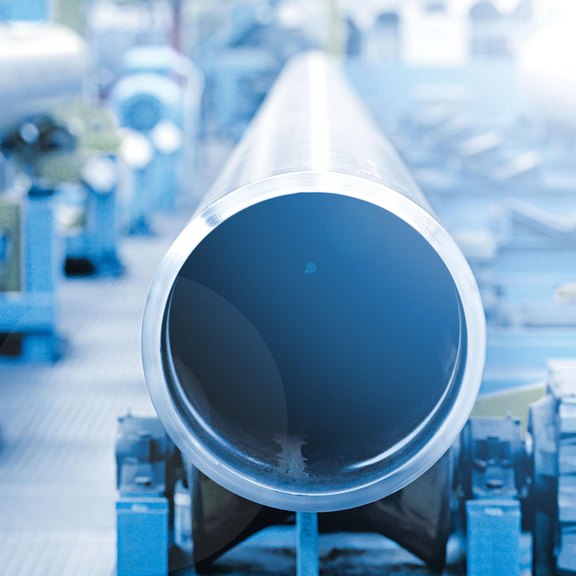
Spanish tube supplier Tubos Reunidos (TR) plans to become the world’s first producer of seamless pipe without emitting CO2 from its operations and energy consumed, Scopes 1 and 2, Kallanish notes.
The tube supplier confirms a significant part of its activity in 2024 will focus on low-emission production. This will strengthen a segment that will be one of the key areas of its growth and value generation.
The company will start producing the so-called O-Next pipe in the fourth quarter, with initial output of 2,000 tonnes. TR says it has already secured its first orders.
“Our commitment to the decarbonisation of the industry will be reflected with the introduction of this kind of new tube to the market,” TR comments. “This range of products responds to the growing market demand for sustainable steel and is the result of the industrial and investment commitment that we carried out within the company’s 2021-2026 Strategic Plan, as well as the measures implemented to advance in energy efficiency, environmental footprint reduction and circularity.”
Tubos Reunidos’ low-emission production is based on electric arc furnaces. The company developed its first zero-emission seamless pipe using recycled raw materials and renewable energy. Electricity is supplied through the installation of more than 30,000 solar panels on the roofs of its plants. This means TR is among the companies in the northern Iberian Peninsula with the largest installed solar capacity for self-consumption.
Todor Kirkov Bulgaria