


thyssenkrupp Materials Processing Europe to provide low carbon steel to Autoliv
Steel and aluminum service center thyssenkrupp Materials Processing Europe has agreed to supply global automotive safety systems provider Autoliv with its low-carbon steel, bluemint, from the end of 2026, it said May 7.
The bluemint steel will be produced by thyssenkrupp Steel Europe from its planned direct reduction plant in Duisburg that is expected to start in 2027, with thyssenkrupp Materials Processing Europe processing the master coil into slit strip for just-in-time delivery to Autoliv.
thyssenkrupp said the agreement expanded the two companies’ existing steel supply collaboration to include low carbon steel.
“The plan underlines the long-term partnership between thyssenkrupp Materials Processing Europe and Autoliv: both companies are consistently pursuing their sustainability activities and have set themselves the goal of operating climate neutrally by 2030,” thyssenkrupp said.
Autoliv aims to achieve net-zero emissions across its entire supply chain by 2040, for which CO2-reduced and CO2-neutral materials are essential.
“The collaboration with thyssenkrupp Materials Processing will be a significant step in our aim to reduce greenhouse gas emissions in our products by utilizing low-emission steel and to achieve our goal of net-zero emissions across our supply chain by 2040,” Autoliv Global Raw-Material Area Director Cosmin Bakai said.
thyssenkrupp said it was starting the first joint projects with its bluemint CO2-reduced steel in 2024, with the aim of gradually increasing quantities over the next few years.
“We process the emission-reduced and emission-neutral materials steel, stainless steel and aluminum for our customers,” thyssenkrupp Materials Processing Europe CEO Marcus Wohl said.
This is the second low carbon steel supply agreement signed by Autoliv in a week. On April 30, it signed a supply agreement with Italian steel producer Acciaieria Arvedi for the delivery of its low-carbon steel product Arvzero.
Platts, part of S&P Global Commodity Insights, assessed domestic hot-rolled coil prices in Northern Europe at Eur635/mt ex-works Ruhr on May 3, down 8% since the start of 2024.


European Commission approves Nippon-US Steel acquisition
The European Commission has approved the acquisition of US Steel by Nippon Steel Corporation, it says in a note seen by Kallanish.
The Commission concluded the transaction would not raise competition concerns, given the companies’ limited market positions resulting from the proposed transaction. The notified transaction was examined under the simplified merger review procedure.
US Steel owns the 4.5 million tonnes/year crude steel capacity blast furnace-based steelworks in Kosice, which has been touted to transition to electric arc furnace steelmaking. Although the investment has received Slovakian government backing, the plant’s new owner will also need to provide capital for the project’s financing requirement to be covered.
In the US, the Nippon acquisition has hit a political stumbling block, with President Joe Biden and the US Steel union both opposing the deal.
The Japanese steelmaker said last week the transaction will be delayed to the third or fourth quarter. Nippon and US Steel have each received a request for additional information and documentary materials from the US Department of Justice in connection with the DOJ’s review of the proposed acquisition.
Adam Smith Poland

Action needed to accelerate ‘green iron corridors’: RMI
There is a clear business case for top importer regions Europe, Japan, and South Korea to establish “green iron corridors” for the sourcing of competitive low-emission metallics from regions with more favourable criteria for production, says the Rocky Mountain Institute (RMI).
“Current subsidies will unlock cost reductions for hydrogen-based iron production in developed countries today, but ultimately the supply chain will be optimised around competitive renewable energy resources,” RMI says in a note seen by Kallanish.
Looking at subsidies, iron ore quality and management, shipping distances, and renewable resources, RMI has developed a model to identify cost-competitive regions for green metallics supply. The modelling confirms the lowest-cost export options with high-grade iron ore co-located with favourable renewable energy resources and enabling policies can produce iron at $390/tonne – comparable to recent global prices.
These export locations include the US – due to IRA subsidies and tax credits – South Africa, Canada – with tax credits – Mauritania, Australia, Brazil, and Chile. They could be paired with importers with strong steelmaking capacity, reliance on iron ore imports, and demand for green hydrogen to meet energy security and decarbonisation targets.
“Transporting finished green iron sees both cost and energy savings compared to transporting hydrogen and ore separately,” RMI observes.
It would help importers lower costs and enable a faster transition for their steel sector, helping to avoid some of the domestic hydrogen-based DRI production infrastructure spending that is required for 1.5°C alignment.
“At least $5.5 billion has been allocated to ten commercial-scale hydrogen-ready DRI facilities by government funds in Europe, but even with these generous subsidies companies are struggling to reach final investment decisions, citing high costs for domestic hydrogen as a financial barrier,” RMI notes.
While the iron can be imported, domestic steelmaking activities can be maintained, and these make up approximately 75% of the iron and steel direct jobs, it adds.
“In Europe, the combination of committed buyers demanding green steel who are willing to pay 20-30% premiums for green products and implementation of carbon taxes makes a strong business case for establishing these trade corridors sooner rather than later,” RMI says.
As free emissions allowances are phased out and CBAM phased in, steel made, for example, in Germany from the lowest-cost green iron imports compared to domestic fossil-based steel with projected ETS carbon taxes will be a roughly similar cost in 2028. In 2030, it will be significantly cheaper, the institute observes.
“Action is needed across the value chain to make this [green iron corridors] a reality: governments must show intent, steelmakers in importing regions must show appetite, and iron producers and iron ore miners in exporting regions must begin laying the investment foundations,” RMI concludes.
Adam Smith Poland

Italian distribution sector reports negative outlook
The Italian distribution sector forecasts declining volumes in the second quarter compared to the same period last year.
While flat and long steel producers are trying to increase values, consumption downstream continues to be sluggish, sources in the sector tell Kallanish.
Some distributors reported a volume decline in Q1 of between 4% and 5%. The first quarter was “saved” for most companies by reasonable shipments in January and February. “Since March, the slowdown is tangible. Margins were also acceptable in the first two months of the year but have deteriorated since March. In certain regions of northern Italy, April was not bad in terms of volumes but it was slow in other parts of Italy, particularly the south,” one source comments.
Margins remain under pressure. “It is a disaster for flat products, namely welded tubes and sheets. Prices are not managing to increase and tube discounts remain high … Some re-rollers are trying to reduce discounts but it is a tough fight. The only way to stimulate demand and prices is to cut capacity. The overcapacity is causing a strong pressure on distributors’ margins,” another source says.
While producers of coil and derivatives are trying to push up values, distributors are continuing to ask for discounts. Month-on-month, sheet and tube prices are stable. Tube discounts remain at 38-39 points with re-rollers trying to decrease by at least two points. Hot rolled sheets are hovering at €690-700/t ($743-754) ex-works.
On long products, steelmakers are also talking about price increases but face resistance from distributors. This month, hikes are expected for beams and merchant bar, while producers of wire rod and rebar have communicated increases to customers but have had a tepid response so far.
Merchant bar and beam prices also remain mostly stable at €700-710/t and about €750-770/t delivered respectively. “Since the Tube&Wire in Dusseldorf, we have not really worked in Italy because of the bank holidays. If some demand comes back, it will be from Monday 6 May,” a source states.
A purchasing group says its outlook for volumes and margins in Q2 remains negative. It expects poor consumption and buyers’ fear of committing to persist. “The latest Eurofer report is very close to the reality we are living. Europe is going through a recessive phase which will last the entire year. Price increases only have the effect to slow the slide but will not bear fruit,” it concludes.
Natalia Capra France

German stockholders’ sales fall in Q1 2024
Sales by Germany’s stockholding distributors in the first quarter totalled 823,000 tonnes, which is 12% lower than in the corresponding previous-year quarter, Kallanish learns from their federation, BDS.
The difference is even more pronounced when looking at the most recent month of the statistics, March, when sales were only 817,00t, compared with 1.05 million tonnes in March 2023.
Looking at the main product groups, the drop was less steep in the category of flat products than for long products. Sales of flat products in Q1 fell by not quite 7% to 522,000t. Against that, long products plummeted by 22% to 298,000t.
This reflects the slowdown of business in construction, the main customer sector of long products like rebar and structural steel, which deteriorated further throughout 2023. The segment was also affected by a peaking of power prices last year, as most long products are made at electric arc furnace mills.
The total tonnage also considers “other products” like wire rod.
Inventories at the end of March stood at 1.96mt, which was considerably below the 2.23mt seen a year earlier. Flat product inventories were at 1.29mt versus 1.4mt last year, while longs were down from 779,000t to 646,000t.
Christian Koehl Germany

IREPAS in Berlin : Weak demand, great uncertainty and aggressive Asian exports
The 90th meeting of IREPAS (the International Rebar Exporters and Producers Association) was held in Berlin on April 28-30 in conjunction with the SteelOrbis Spring’24 Conference.
There were 104 representatives from 41 different producers among the 445 registered delegates from a total of 57 different countries. There were also 91 registrations representing 52 different raw material suppliers.
At the opening of the conference, Murat Cebecioglu, chairman of IREPAS, emphasized that demand in the global long steel products market continues to lag behind supply. He added that the situation was getting worse because of China’s aggressive export policy and that Chinese exporters would continue to be aggressive, which of course would drive other Asian exporters to be aggressive also.
The IREPAS chairman said the situation in the global long steel products market is deteriorating, adding that there is huge uncertainty on what the next couple of quarters will bring for the global long products market, where it seems the situation will be extremely difficult.
On the last day of the conference, producers of long steel products, as well as traders and raw material suppliers, shared the conclusions reached at their special committee meetings regarding the current situation in the markets with the general participants at the event.
Raw Material Suppliers at IREPAS: General market mood hopeful for improvement
Jens Björkman, the chairman of the raw material suppliers committee, summarized the committee meeting findings regarding the general situation in the global steel and raw material markets, noting that the markets have been struggling this year compared to the past few years amid the worsening of economies due to high inflation and interest rates. However, he stated that the general mood is hopeful for a return to something slightly more forward-looking and optimistic.
Regarding Western countries, he stated that high interest rates and inflation have been putting pressure on scrap generation in the US and the EU, and added that the interest rates in the EU are expected to be cut during the spring. With the anticipated increase in scrap demand due to electric arc furnace investments especially in the US, Canada and Europe, Mr. Björkman noted that scrap flows will change significantly in the next 10 years, regionalizing scrap generation where scrap demand is high. In addition, he stated that steel producers have started to look for alternatives to scrap like pig iron, HBI and DRI to cover their needs for raw material. Indicating that scrap generation in Europe is down by 15-50 percent depending on the part of the region, Björkman said that, with the Carbon Border Adjustment Mechanism (CBAM), European scrap suppliers will try to keep scrap volumes within the regional market, reducing scrap exports from the region especially to Turkey, which operates mostly with electric arc furnaces and has significant demand for scrap.
Looking at China, noting that the country’s economy was expected to rebound after the Chinese New Year holiday but that these expectations did not materialize, he stated that China’s economy is going through a period of normalization. Meanwhile, pointing out that before the recent rebound iron ore prices had fallen to $100/mt CFR in the first quarter this year from the higher-than-expected level last year of $120/mt CFR, he said that the factors contributing to the price drop included high iron ore inventories at Chinese ports, slow demand and lower steel production. He concluded by saying that the market in China is adjusting to the lack of recovery of demand after the Chinese New Year holiday, adding that he expects iron ore prices to remain at quite high levels.
Traders at IREPAS: Global demand to be supplied locally, market conditions lead to regionalization
F. D. Baysal, the chairman of the traders committee, stated that there is demand globally but that it will be supplied locally, adding that ongoing trade tensions, global conflicts and political instability have changed trade routes, resulting in regionalization.
Looking at the other factors that lead to regionalization, Mr. Baysal expressed the view that the EU’s safeguard measures will be extended for another two years and that its quota volume adjustment will be minimal if any. Regarding the EU’s Carbon Border Adjustment Mechanism, he stated that it will put pressure on other countries, especially on blast furnace-based producers.
Remarking that Turkey’s export markets have been limited due to the US safeguard measures, the EU quota restrictions and the geopolitical tensions in the Middle East, the chairman of the traders committee stated that there are still some export opportunities for the country, including Syria, Iraq, eastern Europe, Africa and possibly Yemen. In addition, noting that the shipping crisis in the Red Sea has affected freight rates and container shipments a lot more than bulk shipments, shipments had to be shifted from containers to bulk, leading to additional costs.
Looking at China, Baysal said that the low steel demand in the country amid cancelled infrastructure projects has resulted in an increase in the country’s exports, with China dominating the global market with its lower prices and higher quality of steel, leading the strong competition. He also cited the Chinese Metallurgical Industry Institute’s prediction for a 1.7 percent drop in China’s steel demand in 2024, after a 3.3 percent decline in 2023, while further noting that China’s steel export volume increased by 14 percent year on year in the first quarter, though the value of its steel exports during this period was down by 20 percent year on year.
Producers at IREPAS: Low demand and Chinese exports weigh heavily on global steel market
Murat Cebecioğlu, chairman of IREPAS and also chairman of the producers committee, shared with participants the conclusions reached by producers regarding the current situation in the markets. He said that the GCC region is more optimistic in terms of business given the big infrastructure projects in the pipeline there, while market conditions in Egypt are getting better and better as the country’s currency issue has mostly been resolved, though the Suez Canal crisis remains a challenge. In some EU markets, the economy is picking up and inflation seems to be under control, while in others demand still remains quite low.
Commenting on the situation in China, the hot topic at the conference, Mr. Cebecioğlu said that Chinese exports will definitely affect the global market negatively and will reach high levels as they did back in 2015. However, this time the number of export markets is limited because of protectionism and Chinese exports will be more problematic in terms of competition. He went on to say that, apart from China, Malaysia, Indonesia and Vietnam are also exporting heavily and competing with each other. This will affect other suppliers and, as one of the biggest long steel exporters, Turkey is already feeling the effects, the chairman of the producers committee noted. Chinese exports are also taking a toll on the EU market, which is also struggling with very low demand especially in the northern part of the region.
Other exporters to the EU have to deal with quota measures as well as the Chinese competition. Cebecioğlu said the EU will most probably extend its quotas for another two years and, with new suppliers such as the GCC and North Africa, things will be tough this year before picking up and getting better next year.
Responding to a question regarding how Turkish mills managed to increase production in the first quarter of the current year, the committee chairman said that, in terms of sales, the first quarter this year was much better than the corresponding period last year. Turkish mills were able to sell considerable amounts to the EU and, with the quotas opening up, they had a window for exports. Commenting on the reconstruction works in Turkey’s southern region which was devastated by earthquakes last year, Cebecioğlu stated, “Construction activity has already started in the region, and it is mainly the mills in the region that are benefitting from all this. Since export activity is very low, this gives these mills a little bit of a break, and also funding should not be a problem as these projects are being financed by the government.”


Kallanish Green Steel report with 94 decarbonisation projects
Kallanish published the 2nd edition of the Kallanish Index Services Green Steel Monitor report.
This second edition contains details for 94 steel decarbonisation and low-carbon steelmaking projects by 38 companies around the world.
This resource will help you understand the status of global steelmaking decarbonisation projects underway and in the pipeline globally, and zero in on the scope and scale of the transformation taking place.
More details:
- 94 Projects
- 42 Maps
- 47 Charts and Tables
- 50 Pages
- PDF format
- Price: 350$ USD
- Order by email or online
Projects covered range from research initiatives, through demonstration and pilot plants to full-scale investments in a range of established and new technologies, including: carbon emission reduction targets for each company.

Austria’s steel production rebounds in March, flat on-year
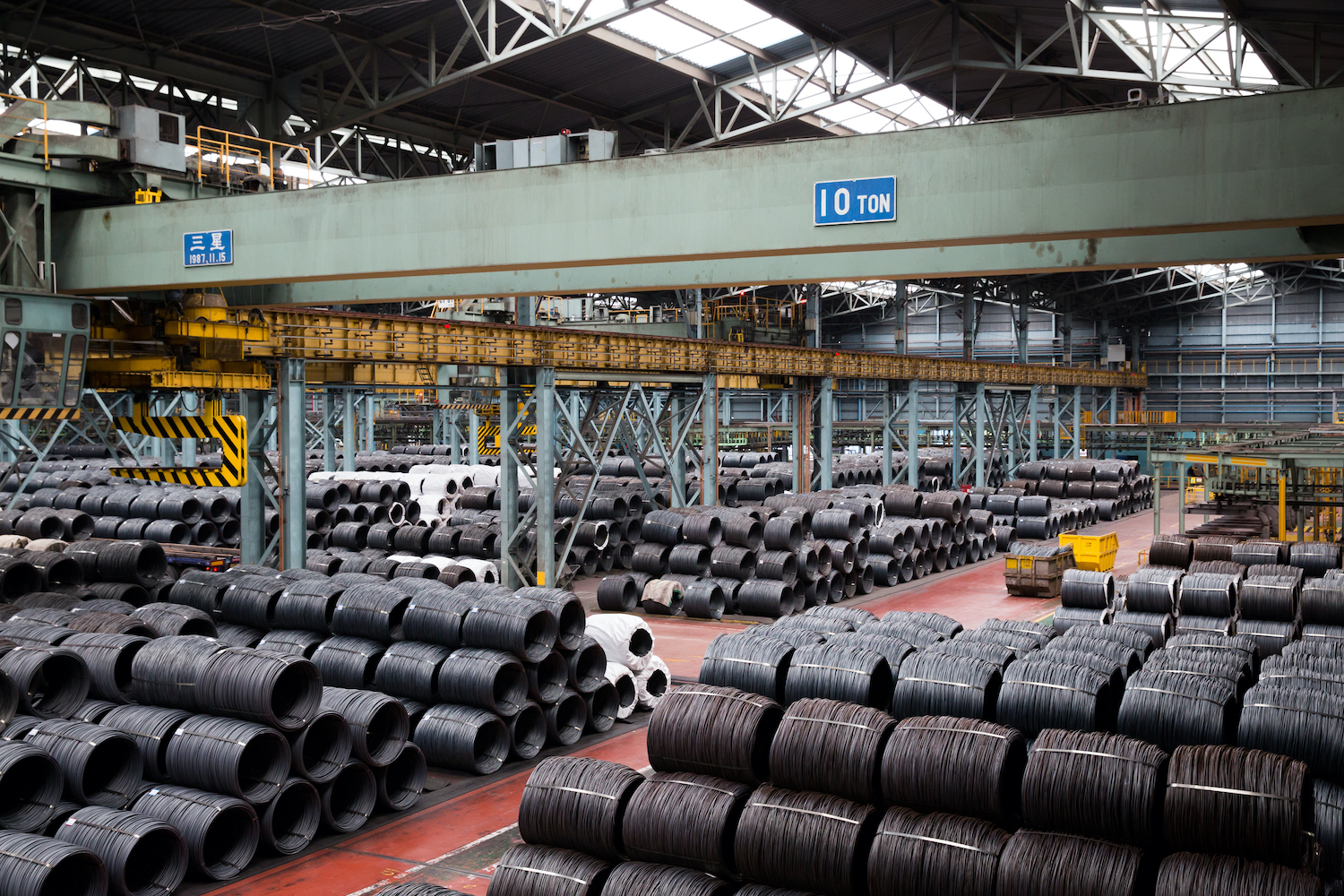
Austria’s steelmakers increased crude steel production in March compared with the previous month, according to worldsteel data.
Output amounted to 680,408 tonnes, up by 13.4% from February but almost flat year-on-year, Kallanish notes. Austria remained in 21st place in the ranking of top ten global steel producers in March, worldsteel data show.
In January-February, the country produced 1.89 million tonnes of steel, up 0.7% on-year.
Overall EU output in March decreased by 13.4% on-year to 11.6mt. In the first quarter, steel production was 7.5% less on-year versus January-March 2023 at almost 33mt.
In April, Austria’s largest steelmaker, voestalpine, has launched production of what it says is the world’s first high-quality “greentec” wire rod from hydrogen-reduced pure iron and scrap at its site in Donawitz (see Kallanish passim).
It has the goal of researching the use of hydrogen to reduce fine iron ore. In the future, the resulting hot sponge iron could be melted down in an electric arc furnace or used to produce hot-briquetted iron.
Earlier, the steelmaker placed an order with Primetals Technologies for an 850,000 tonnes/year capacity electric arc furnace to be implemented at its site in Linz. Startup is scheduled for 2027. An EAF of the same capacity, supplied by Danieli, is planned in the same timeframe for Donawitz.
In 2023, Austria’s commerce chamber, Wirtschaftskammer Österreich (WKO), expressed concern over the crash in demand and orders for commodities in the country (see Kallanish passim). WKO saw orders declining by as much as 30%, with no relief in sight.
Svetoslav Abrossimov Bulgaria
British Steel secures Scunthorpe EAF planning permission
British Steel has been granted planning permission to build an electric arc furnace at its Scunthorpe headquarters, following approval by North Lincolnshire Council.
The steelmaker was granted planning permission last month to build the other proposed EAF at its Teeside site (see Kallanish passim).
The firm remains in talks with government over support, despite fellow UK steelmaker Tata Steel UK being guaranteed £500 million ($629m) of government funding last September. Government representatives are reported to be concerned that British Steel has not yet submitted plans which would allow it to receive a similar subsidy.
“It is crucial we now secure the backing of the UK Government … We are committed to working with the UK Government and need to reach an agreement quickly,” says British Steel president and chief executive Xijun Cao.
The steelmaker said late last year its proposed £1.25 billion transformation to EAF steelmaking could see commissioning potentially by end-2025.
Adam Smith Poland
European coil producers consider increasing prices
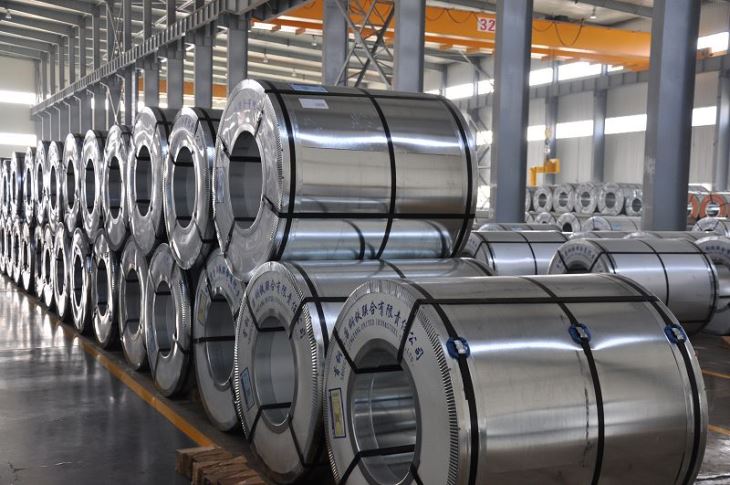
European coil producers are mulling increases. Market sources tell Kallanish some are considering a €20/tonne ($21.4) hike. According to several buyers and sellers, import prices from Asian suppliers are not decreasing anymore and offers are ticking up in some cases to the level of €600/t cfr southern European port.
In Italy, hot rolled coil producers are pushing up prices for new contracts by an average of €20/t and asking for €660-670/t base delivered, depending on volume. Demand has been quiet in all markets this week as several executives are on holiday in European markets due to Labour Day. Next week in France and other European countries, demand is also not expected to resurface owing to the 8 and 9 May bank holidays, as well as the 10 May bridge and school holidays.
Sources at EU producers are aware that consumption remains limited and believe the price uptick will benefit margins in the entire supply chain. A service centre in Italy reports increased demand downstream but at low prices. This is putting strong pressure on margins and causing companies to lose money.
European steelmakers’ lead times are reported at between June and July. At present, HRC prices in Europe are at €630-640/t base ex-works, with the low point of the range seen in southern Europe.
Import prices are hovering at around €600/t cfr northern and southern European ports, or slightly below depending on volume and quality. Some producers in countries such as India and South Korea are not quoting HRC for Europe. Buyers are lamenting the long lead times. Turkey seems to be the most attractive supplier at present in terms of delivery time and prices, but quality issues are being reported. Turkish producers are offering material at €610-620/t cfr Italy duty paid.
Producers in the EU are slowing output, but no stoppages are officially planned. According to a source, the only way to address the issue of tight margins and stalled prices throughout the value chain is to cut output.
Natalia Capra France