


Ukraine cuts pig iron exports to retain raw materials for domestic steel: GMK Center
Ukraine’s exports of pig iron plunged to 55,710 mt in April, down almost 40% from March and by a third on the year as the country withheld more iron for domestic production of steel, Kyiv-based iron and steel consultancy GMK Center said May 13.
Over January-April, pig iron exports were 21.7% lower year on year at 418,000 mt. Exports to the US dominated, with sales to the country generating almost 77% of total revenues.
The US does not buy pig iron from Russia, which delivers to Italy, Turkey and even India.
A tight pig iron market recently has pushed up prices, with leading Platts assessing FOB Black Sea pig iron $7.50/mt higher on the week to $400/mt on May 10. Platts is part of S&P Global Commodity Insights.
The market tightness is in part down to Ukraine struggling to maintain exports, according to sources, with the Ukrainian industry having to cope war-induced bottlenecks. While seaport operations remain irregular, it will be impossible to restore pre-war levels of pig iron production and sales, according to GMK Center’s CEO Stanislav Zinchenko.
However, the slump in Ukraine’s pig iron exports is also directly related to recovery in the country’s steel output and exports, he told Commodity Insights.
Over the first four months of 2024, Ukraine doubled its exports of semi-finished steel and grew exports of rolled steel by 120%, according to Zinchenko.
The blast furnaces that have been brought back online were all operating at full rates, and since there are no plans to restart more furnaces, production of finished steel is prioritized over making more pig iron available for sale, said Zinchenko.
In January-April Ukraine’s crude steel output increased 32.8% on the year to 2.4 million mt.
EU becoming more accessible
Last year the country’s pig iron producers — Metinvest-owned mills and ArcelorMittal Kryvyi Rih — utilized their iron smelting capacities at around 65%-75% and 20%-30%, respectively.
Ukraine exported 1.25 million mt of pig iron in the year, only marginally less than in 2022 but down by 61% or 2 million mt compared with 2021, according to GMK Center.
Although they now mostly rely on the US, Ukrainian pig iron producers raised 13% of their export revenue over January-April from sales to Italy and Poland, and they expect the EU market to become more accessible going forward.
The 12th package of sanctions the EU adopted at the end of 2023 imposes a ban on imports of Russian pig iron. This comes in to effect in 2026, but the quotas that are in place until then already provide for a reduction in supplies from Russia.
This year’s quota for imports of pig iron from Russia amounts to 1.14 million mt, of which 300,000 mt or 26.5% had been used by the end of the first quarter, Commodity Insights data shows.

Salzgitter lowers 2024 forecast for steel market
Salzgitter has lowered its 2024 forecast for the steel market as signs of a recovery are weaker than originally anticipated, the German steel producer said during its Q1 2024 earnings call on May 13. The company now expects sales of around Eur10.5 billion ($11.30 billion) for full-year 2024 against the previous guidance of Eur10.5-11 billion.
“Neither a continuation of the slight recovery tendencies discernible at the start of the year, nor the originally anticipated gradual brightening of the market environment have so far materialized,” Chief Financial Officer Birgit Potrafki said. “An economic rebound in Germany and in Europe is only likely to manifest at a later point in time and be weaker than predicted a few months ago,” he added.
“In Germany, our key customer markets of construction, automotive and mechanical engineering in particular experienced a partly pronounced phase of weakness throughout the first quarter. This had, and continues to have, a direct impact first and foremost on the performance of our group’s steel-related companies whose results are not a reason for us to be satisfied,” he said.
In Q1 2024, total crude steel production of the company was 1.68 million mt compared with 1.56 million mt registered over the same period in 2023, with order intakes and shipments down across all of the company’s units. Overall company sales went down to Eur2.7 billion compared with Eur3 billion in Q1 2023.
The results of the companies forming part of the Steel Production Business Unit mirrored the ongoing sluggish economy in the first quarter of 2024 with the company’s crude steel production in Q1 being 1.37 million mt against 1.27 million mt in Q1 2023.
“We anticipate that shipments in the strip steel business will be marginally lower due to the persistently subdued demand from the non-automotive sectors. Crude steel production will be slightly curtailed and run on the basis of three-furnace operation,” the company stated.
In terms of the sections business, the company has forecast that volumes are gradually set to stabilize over the course of 2024 following a muted start to the year. In Q1, the unit produced 324,000 mt of crude steel against 310,00 mt over the same period of 2023, with order intake dropping to 462,000 mt from 702,000 mt a year earlier.
For the Steel Processing Business Unit, the company predicted that the economy will remain weak as it expects heavy plate order intake to range around the low year-earlier level, with prices under intense pressure. Pipe plate production is likely to benefit from the awarding of large-diameter pipes projects in the second half of the year at the earliest.
Gunnar Groebler, Salzgitter AG’s Chief Executive Officer said in the earnings call that the oil and gas sector has been “surprisingly low in the first quarter, some pickup to be seen now but relatively low.” The company noticed delays in infrastructure projects compared with their estimations such as the German hydrogen network, which saw a consequent drop in their sales of pipes as well as a decrease in prices.
The company said that its capital-intensive transformation towards its low carbon production SALCOS projects is on schedule. The CEO also stressed that there was large demand for low steel carbon products, which is key for its customers to cut CO2 emissions. When asked if the delays in the hydrogen network could be a problem to deliver SALCO’S project, he stressed that SALCOS can also work with natural gas until hydrogen becomes available, which would already lead to a 60% CO2 reduction.
Salzgitter’s SALCOS
Platts, part of S&P Global, launched its carbon-accounted price assessments in May 2023 following the market trend of demand for lower-carbon steel.
Platts assessed Northwest European hot-rolled carbon-accounted coil stable on the day at Eur770/mt ($829.213/mt) ex-works Ruhr May 10. The assessment was calculated in line with the sum of the Platts daily carbon-accounted steel premium (CASP) and Platts daily hot-rolled coil price in Northwest Europe.

EU HRC prices remain unchanged on flat demand
Domestic prices for hot-rolled coil remained unchanged in Europe May 13 on limited end-user demand.
“Demand is not good enough,” a trader source said. “But mills are trying to keep prices higher.”
Mills in the EU pushed offers higher, as import offers from Asia became uncompetitive due to longer lead times and risks related to safeguard measures in the EU.
Buyers have been re-stocking in limited volumes, as they avoid building up inventory at high levels, even as public holidays in most European countries further slowed demand.
“Market is challenging,” a service center source said. “Even though our turnover has improved on re-stocking demand, I expect prices to decrease further.”
Platts assessed domestic prices for HRC in Northwest Europe stable on the day at Eur635/mt ex-works Ruhr May 13.
Tradable values were reported at Eur620-640/mt EXW Ruhr. No offers or deals were heard.
Meanwhile, Platts assessed imported HRC in Northwest Europe stable on the day at Eur610/mt CIF Antwerp.
Offers for imported HRC from Taiwan and India were heard at Eur615-630/mt CIF Antwerp, while rejected firm bids for 5,000mt were heard at Eur595/mt CIF Antwerp.
Platts assessed domestic prices for HRC in South Europe stable on day at Eur630/mt EXW Italy May 13.
Import offers from Asia did not support the sentiment in the market. Offers of HRC from Taiwan, India and Japan were heard at Eur620-630/mt CIF Italy for end of July shipment.
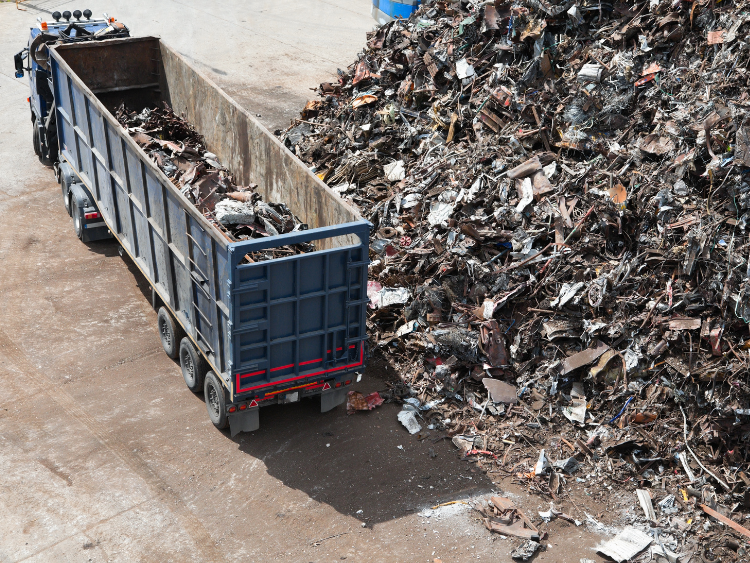
Western Europe scrap rises moderately compared to south
French and Luxembourg scrap prices are rising between €5-10/tonne ($5.3-10.7) for some grades, while other qualities are flattening depending on each mill’s needs.
One steel producer in France is strongly reducing output this month and buying lower scrap tonnages. While finished product order books are far from improving, scrap availability remains short, Kallanish hears from market sources.
Suppliers say export volumes to Turkey continue to stagnate. Last week, however, Benelux exporters were forced to increase their dock prices due to weak inflow, although scrap values in Turkey are under strong downward pressure. On Monday, Benelux dock prices were mostly pegged at around €305-310/t, down €10/t on-week (see separate story).
In western Europe this month, E40 is hovering at €375/t delivered, or slightly more depending on transport costs. E8 new arisings is at €365-375/t, also depending on needs and transport costs. E3 stands at €360-365/t and E1C is at €340-350/t delivered, sources suggest.
Scrap prices this month are feeling upward traction from southern Europe, where material is being lifted significantly by short availability and some degree of speculation on the merchants’ side. While scrap price increases in Spain are more moderate, at about €10-15/t depending on grade, the market in Italy “is completely delirious”, a source says. Offers of mixed E40 grade are at as high as €420/t delivered, with other grades somewhat below €400/t delivered.
Natalia Capra France


Europe BFs stay longer, CCUS has limitations
The lack of sufficient energy supply and capital means steel industry decarbonisation is likely to take some time and coke will remain a necessary reductant in steelmaking. Carbon capture, utilisation and storage (CCUS) can significantly reduce blast furnace emissions but comes with limitations. So said panellists at last week’s European Economic Congress in Katowice.
Asked if hydrogen can replace coke in blast furnaces, Polish Steel Association (HIPH) chief executive Mirosław Motyka said 1 tonne of hydrogen used saves 28t of CO2. However, hydrogen electrolysis requires vast amounts of energy, while it has been found that using hydrogen in a BF results in higher energy demand, therefore, paradoxically, requiring more coke. Syngas injection meanwhile reduces BF emissions only by up to 15%.
Having exhausted all blast furnace CO2 reduction possibilities, therefore, the “only solution is CCUS”, Motyka said at the event attended by Kallanish. Although capturing the CO2 is not an issue, the question is how to then use it. Some, like ArcelorMittal Gent, are using it for chemicals/fuels production, while re-injection is also possible but does not occur in Europe so far, Motyka pointed out. In any case, CCUS is also very energy-intensive.
ArcelorMittal Poland chief executive Wojciech Koszuta highlighted the firm’s recent investments in its BF-based production route but conceded that decarbonisation will influence its production process in the medium term. “We are investing even in those lines that we know in a few years will reduce their output,” he observed.
CCUS is not yet commercially adapted to requirements, he said, adding: “The question is … will this [CCUS] capability be attractive enough from an economic standpoint to see it widely adopted?”
Marek Serafin, chief executive of Polish coke producer Koksownia Czestochowa Nowa, proclaimed coke demand is safe for the time being as no competitive alternative to the BF/BOF route will appear in at least the next decade. Moreover, since the pandemic and Ukraine war, access to capital needed for investments into decarbonisation and defence has become more limited.
Jastrzebska Spolka Weglowa (JSW) commercial director Jolanta Gruszka pointed out that many of the alternative ironmaking technologies are still in the pilot stage and will take time to roll out, meaning coal will remain important. Moreover, even EAFs depend on a form of coke, petroleum coke, which is produced from oil and used as the raw material for graphite electrode production, she added.
JSW meanwhile plans to sign the Antwerp Declaration, which aims to stop industry migrating outside the EU. However, it is disappointing coking coal is classified only as a critical rather than a strategic raw material, which would afford it additional protection, Gruszka added.
Motyka appealed to Polish government representatives to fight for the conclusion of the Global Arrangement on Sustainable Steel and Aluminium (GASSA), and to ensure ETS and CBAM revenue is used to fund steelmaking decarbonisation.
Przemyslaw Sztuczkowski, ceo of Polish steelmaker Cognor, bemoaned the EU’s approach to ensuring industry’s global competitiveness but also competition within the EU itself. He gave the example of rebar that was transported from Italy to Poland by train last year, a journey that would usually make the product uncompetitive. However, on this occasion, the Italian government compensated the costs using funding from an EU programme, he explained, bemused.
Adam Smith Poland

Thyssenkrupp Materials opens service centre in Texas
Thyssenkrupp Materials Services has opened its new steel service centre (SSC) in Sinton, Texas, in which the company invested €30 million ($32m).
The new location will be part of US unit thyssenkrupp Materials NA. It will serve markets in the region and neighbouring Mexico, which previously had to contend with long delivery times due to their geographic location.
The company underlines the site’s strategic role as an addition to tk Materials’ three existing steel service centres in Richburg, South Carolina; Woodstock, Alabama; and Detroit, Michigan. The move continues the German-based group’s expansion in North America, where it has invested more than €100m in the past two years, Kallanish hears.
The SSC is located on the premises of steelmaker Steel Dynamics, Inc. “The logistically favourable location – including direct rail and port access – in Sinton allows us to bridge the gap to markets that were dependent on distant suppliers,” says Steve McGee, chief operating officer of thyssenkrupp Steel Services.
In addition to a building of around 15,000m², the investment also includes new slitting and cut-to-length lines. The mill has the capability to produce advanced high-strength steel and other grades that are rarely found in the US, according to the company. The centre uses wind and solar power as well as electric forklifts. The site spans nearly 33 acres and has adequate space for several future expansions. The new plant commenced operations in April, with 15 employees.
Christian Koehl Germany

European HRC prices remain mostly stable in slow market
Domestic prices for hot-rolled coil were largely unchanged in Europe May 10 as trading activity in the market remained muted.
Distributors have been avoiding building inventories, limiting restocking to needed minimum, as they have been uncertain about price sustainability. Holidays in some European countries this week further slowed demand, sources said.
“Stocks are not high, which means that the distributors need to make some bookings, but this also means that the order books are not as good as real demand has not improved,” a Northwest European service center source said.
Platts assessed domestic prices for hot-rolled coil in Northwest Europe stable on the day at Eur635/mt ex-works Ruhr May 10.
Tradable values have been reported at Eur630-650/mt ex-works Ruhr, with the majority of data heard at Eur630-640/mt ex-works Ruhr.
Offers were reported at Eur640-670/mt ex-works Ruhr.
The mills have been offering June-July delivery material.
Platts assessed domestic prices for hot-rolled coil in South Europe up by Eur5/mt on the day at Eur630/mt ex-works Italy May 10.
The assessment was based on deals and tradable values reported at the equivalent of Eur630/mt ex-works Italy.
Some declines in import offers from Asia have not supported the sentiment in the market. Offers of HRC from Asia have been heard at Eur600/mt CIF Italy, but buyers believe they can achieve prices of Eur570-580/mt CIF Italy.
Maria Tanatar | Devbrat Saha


EU scrap supply, economic independence critical
The EU’s failure to classify scrap as a Critical Raw Material (CRM) is baffling, given the EU’s scrap surplus will likely soon turn to a deficit amid steelmakers’ EAF transformation. However, the list is subject to revision and could soon see scrap added, concluded a panel at this week’s European Economic Congress in Katowice attended by Kallanish.
Scrap was not made a CRM solely because the EU is a net scrap exporter, but steelmakers are already looking ahead. “It’s absolutely the last chance to understand what is going to happen,” warned chief executive of Polish steelmaker Cognor, Przemyslaw Sztuczkowski. The circa 60% of EU steelmaking that is blast furnace based will, due to decarbonisation, soon need to source scrap feedstock.
When it comes to hydrogen, “our belief in it, as steelmakers, is limited because the technology is futuristic and very expensive,” Sztuczkowski commented. The EU’s 30 million tonne scrap surplus will likely turn into a 30mt deficit, he added. There will be a “mad rush” for steel scrap in Europe and globally, he continued. Scrap should therefore be added to the CRM list at some point. For now, it should be monitored and licensed, while its export from the EU should be levied with a duty.
Ryszard Pawlik, parliamentary advisor to European Parliament Member Jerzy Buzek, pointed out that EU officials fought to include scrap on the CRM list, and this was the case initially. However, it was removed again following consultation with individual EU Member States. Nevertheless, “there is still hope” as the list is periodically reviewed, he added.
As for coking coal, this will likely remain an EU CRM for as long as steel remains a strategic material amid Europe’s need to strengthen its defence industry and decarbonise, said Weglokoks chief executive Tomasz Slezak. Global iron ore supply is plentiful, but coking coal sources are more limited. Europe is unlikely to move quickly away from BFs because decarbonising steel is complex, costly, and needs infrastructure to be built using steel, he added.
The panel also saw discussion on other CRMs. Herbert Wirth from the Faculty of Geoengineering, Mining and Geology at the Wroclaw University of Science and Technology, said significant volumes of cobalt and vanadium are found in Polish copper waste. However, these are not systemically documented and they are not recovered. There needs to be impetus from the state to change this. Sodium is also available in abundance in Poland.
Opening the panel, Jerzy Buzek noted: “If we don’t want to … slow our fair green transformation, or weaken the economic resilience of the EU, wise management to secure critical raw materials, including the diversification of their import and, where possible, domestic production and recycling, are key. If we don’t do this, we will be unable to fulfil the most important expectation of our citizens, but also the business world – to continue to have a competitive, prosperous and secure European economy.”
This is far more important today than resisting environmental measures, as is the case in some EU circles. Russia’s aggression in Ukraine has shown the EU must act to ensure it has a strong defence industry but also that its economy is independent, he added.
Adam Smith Poland

ArcelorMittal Spain begins hybrid EAF construction
ArcelorMittal began construction of its new hybrid electric arc furnace at the Gijón mill in Spain during an official ceremony held on Thursday. The project is a priority for the steelmaker’s CO2 emissions reduction goals in Europe.
The execution of the project is moving forward after it received the construction licence from the Gijón City Council on 8 May. This was the last step required before starting work, the company tells Kallanish.
The investment will allow ArcelorMittal to produce high-value-added wire rod, placing the plant in a highly competitive position, particularly in long products-consuming sectors with strict carbon footprint criteria for public administration contracts.
“Maintaining our position as the lead supplier of low-carbon steels is a clear priority and the planned ramp-up at Sestao, along with the new EAF in Gijon which will break ground imminently, will both have an important role to play,” ArcelorMittal chief executive Aditya Mittal commented during the company’s first-quarter earnings call last week.
Last November, the steelmaker contracted Spanish technology supplier Sarralle Group to execute the project. The furnace will have an annual capacity to produce 1.1 million tonnes of low-emission steel. As part of the project, Sarralle will also install a dust collection system and waste heat recovery system to maximise the EAF’s energy efficiency.
The facility is expected to be operational in Q1 2026, ArcelorMittal estimates.
The firm’s decarbonisation programme in Spain includes the construction of a 2.3m t/year green hydrogen-based DRI plant, which is still awaiting the final consent of the company’s board.

Todor Kirkov Bulgaria
Security considerations justify state’s steel industry involvement
A key theme discussed across the three conference days was security of critical materials supply, at a Polish and EU level. The steel panel saw the discussion explode into life when the moderator suggested Polish state-owned Weglokoks could consider acquiring plate producer Huta Czestochowa, currently owned by Liberty Steel and facing serious financial problems.
Marek Serafin, chief executive of Polish coke producer Koksownia Czestochowa Nowa, said he is firmly against any state involvement in operating the steel industry. “The government is for regulation and the environment and not for investing – it should leave that to the professionals,” he noted.
Marto Jarno, director of analysis at Poland’s industry ministry, agreed but added that national defence is an important consideration in the current geopolitical climate.
Polish Steel Association president ceo Mirosław Motyka added that the state is also responsible for delivering energy and other utilities, developing a hydrogen transmission pipeline and renewable energy transmission network from new Polish offshore wind farms. This will be built using low-emission steel, the production of which requires state-private sector cooperation.
Steelmakers therefore hope for the conclusion of a European Industrial Deal, as called for in the Antwerp Declaration, Motyka pointed out.
Weglokoks chief executive Tomasz Slezak said that while steelmakers should be run by private companies, “I don’t agree with the theory that the state should not care [about the steel industry]. The state should care”. It needs to ensure steelmakers are competitive both in Europe and abroad, he added. Huta Czestochowa is worth saving and if a deal appeared to acquire it, “it would be worth going for”, he added.
Henryk Orczykowski, ceo of distributor Stalprofil, noted that while he is also a supporter of private business, the state must have an influence in industry. “We can’t talk about national security if you have no influence on the production of steel products required to ensure this security. What will we build tanks from? What will we build critical infrastructure from?” he asked.
In 2004, Poland’s steel industry was in state hands and 60% of demand was met by local output, while in 2023 the state owned zero and imports met 88% of demand, Orczykowski pointed out, adding: “This must be changed immediately.” The state must act, whether it is to acquire Czestochowa, or Celsa’s Polish plant, which is also up for sale, or form a public-private partnership, to ensure steel security, he observed. The EU could go in the same direction, he warned.
The government will support Poland’s steel industry, without getting involved in running it, and will ensure production capacity to support defence, Jarno observed.
Przemyslaw Sztuczkowski, ceo of Poland’s only indigenously-owned steelmaker, Cognor, said that while he believes all business should be in private hands, there may be a temporary need, for defence purposes, for the state to acquire Czestochowa. But it should ultimately be privatised again, he concluded.
Adam Smith Poland