


Eurofer again downgrades European steel demand outlook for 2024
Apparent demand was expected to recover by 3.2%, rising to 130 million tonnes in 2024, Eurofer said in its report, published on April 29. It revised downward its previous, more optimistic forecast in February of a 5.6% recovery to 137 million tonnes for the year.
“The overall evolution of steel demand remains subject to very high uncertainty,” Eurofer said. “Quarterly improvements in apparent steel consumption are expected to continue throughout 2024, albeit resulting in volumes still below pre-pandemic levels.”
For 2023, Eurofer reported apparent steel demand in the bloc to have declined by 8.7% year-on-year, to 126 million tonnes, compared with 138 million tonnes in 2022, marking the fourth annual downturn in the past five years.
Apparent steel consumption in the EU did improve in January-February, however, with flat steel prices recovering, supported by restocking.
Fastmarkets’ daily steel hot-rolled coil index, domestic, exw Northern Europe, averaged €731.73 ($784.15) per tonne in January, sharply up from a monthly average of €688.20 in December 2023. The January average was the highest since May 2023.
In February, however, the situation changed and prices started to decline due to a lack of both apparent and real demand.
In March 2024, Fastmarkets’ Northern Europe HRC index averaged €691.99 per tonne, and the price has continued to decline in April.
“The key problem is lack of end-user demand,” a distributor in Germany said. “In the first quarter of 2024, we saw 15-20% fewer orders from the automotive industry compared with the previous year.”
Since early February 2024, HRC prices in Europe have been going down practically non-stop, hitting rock-bottom in late April.
End-user outlook
Automotive
The automotive industry in Europe was one of the few steel-consuming sectors to perform well in 2023, with data from the European Automotive Manufacturers Association showing that new car registrations rose by almost 14% in 2023, with more than 10.5 million new vehicle sales.
Eurofer said that automotive output in the bloc increased by 8.5% overall in 2023, revised slightly downward from its previous recovery rate prediction of 8.8%.
But overall output levels in the sector remained low in historical terms, with the industry continuing to be exposed to external factors and expected to remain at the levels seen in 2018-19. The sector was expected to decline by 0.4% in 2024 (revised down from 0.1% growth in a previous outlook) and to increase by 0.8% in 2025 (revised up from 0.2% growth).
Market participants said that demand for steel coil from the automotive industry was broadly stable at low levels through 2023 and was not expected to show any significant rebound in 2024.
Market sources said that some mills have already started negotiations for long-term contracts with end-users in the automotive industry for the second half of 2024, with HRC target prices reported around €780 per tonne, compared with around €750-800 per tonne for the first half of 2024.
“Mills want a rollover [in long-term contracts], but end-users are trying to bring [HRC] prices down,” a steel service center said.
Construction
The construction industry, meanwhile, declined by a moderate 1% in 2023, Eurofer said, revised from a 2.1% decline forecast in February, after having grown by 4.8% in 2022.
The construction sector accounts for 35% of steel consumption in the EU
For 2024, Eurofer said that construction activity would continue to decline, falling by 1.9% rather than its previous prediction of a 0.4% decline.
“While overall construction activity is expected to continue benefiting to a limited extent from governmental housing support and public construction schemes,” Eurofer said, “the effect of these publicly funded construction schemes is expected to significantly decrease in 2024 due to multiple downside factors.
“[These include] the shortage of construction materials, their rising prices, as well as reduced fiscal room for construction spending in EU countries,” it added. “These issues have resulted in declining construction confidence.”
Weak construction demand has taken a toll on the European long steel market in recent months, with high interest rates limiting activity, especially in the residential sub-sector.
“Civil engineering is expected to continue to provide the strongest contribution to the construction sector’s performance, but to a lesser extent,” Eurofer said. “This sector will continue to be supported by EU-wide public policies, but their effects have become increasingly uncertain and difficult to quantify due to the recent deterioration of the economic outlook.”
Fastmarkets’ price assessment for steel reinforcing bar (rebar), domestic, delivered Northern Europe, averaged €648.75 per tonne in March 2024, down by €8.75 per tonne from a monthly average of €657.50 per tonne in February 2024. The assessment was sharply down, however, from a monthly average of €720.00 per tonne in March 2023.
Published by: Julia Bolotova


ArcelorMittal closes coke plant in Zenica but keeps long-steel production
The process started gradually on April 25, with the suspension of the coke battery firing, and ended on the next day, when the plant’s coke ovens were discharged.
“The company has taken all the necessary measures and operations to ensure that the above-mentioned process went safely and with minimum impact on the environment,” the spokesperson said.
The closure of the coke plant was announced at the end of March, with ArcelorMittal Zenica citing rising production costs — particularly of electricity, natural gas and logistics — and reduced demand for finished steel. According to the company, sales in 2023 were historically low.
ArcelorMittal Zenica will continue to produce long steel via blast furnace (BF), purchasing coke from external sources, according to the spokesperson.
“After stopping the coke battery, total emissions of the Zenica plant will go down to the lowest level since the beginning of operation of the steelmaking factory in Zenica, which started 132 years ago,” the spokesperson said.
ArcelorMittal Zenica has a BF with a capacity for 1.10 million tonnes per year and a basic oxygen furnace with a capacity for 1.14 million tpy. According to Fastmarkets’ information, the plant outputs around 800,000 tpy of steel rebar and wire rod, which places it among the largest producers of long-steel products in the Balkans.
ArcelorMittal Zenica operates in long-steel markets, which have been weak across Europe due to slow demand from the construction sector, which is a key end user.
For instance, Fastmarkets’ price assessment for steel wire rod (mesh quality) domestic, delivered Southern Europe averaged €645.63 ($694) per tonne in March, down from an average of €693.00 per tonne in March 2023.
Long-steel producers across Europe have been pushing for higher prices in the past two weeks, Fastmarkets reported.
But buyer sources told Fastmarkets that a strong rebound in prices was unlikely due to ongoing sluggish demand from the construction sector.
According to ArcelorMittal, the coke plant in Zenica produced an average of around 350,000 tpy of coke.
ArcelorMittal Zenica emphasized that it was working on a reassignment plan for about 200 people who were employed in the coke plant.
“Most of these employees will be reassigned to other production facilities, and the possibility of offering 10-15% of employees a transfer to other ArcelorMittal units in Europe is being checked,” the spokesperson said.
Published by: Darina Kahramanova

European HRC prices inch up, but still below target offers
Fastmarkets calculated its daily steel hot-rolled coil index domestic, exw Northern Europe at €632.00 ($677) per tonne on Tuesday, up slightly by €2.42 per tonne from €629.58 per tonne on Monday.
The index was up by €6.58 per tonne week on week but down by €31.75 per tonne month on month.
European steelmakers were testing the market with higher offers for June-delivery HRC, but higher prices were not sealed in deals.
Notably, an integrated mill in Benelux area was reportedly planning to increase offers from €640 per tonne ex-works to €660 per tonne ex-works for June-delivery HRC.
Another major producer was aiming for €650-660 per tonne ex-works for June-delivery coil.
At the same time, deals were still reported at lower prices — in Germany, a sale of limited-size tonnage was heard at €630 per tonne ex-works earlier this week.
In general, buyers’ estimates of tradeable values were heard within €620-640 per tonne ex-works, but the lower end of the range was reportedly not accepted by mills.
“Even if you bid for bigger [HRC] tonnage, mills are reluctant to give discounts — they clearly signal to the market that lower prices are not available anymore,” a buyer in Germany said.
Sources noted slightly improved apparent buying in the past couple of weeks due to some limited restocking, but real demand was still subdued, so sources were unconvinced about the sustainability of the uptrend.
In Southern Europe, Fastmarkets’ daily steel hot-rolled coil index domestic, exw Italy was calculated at €627.25 per tonne on Tuesday, increasing by €2.25 per tonne from €625.00 per tonne on Monday.
The index was up by €7.25 per tonne week on week but down by €17.75 per tonne month on month.
Offers for HRC with four-to-five-week lead times from local suppliers were at €660-670 per tonne delivered (€650-660 per tonne ex-works), compared with €640-650 per tonne delivered (€630-640 per tonne ex-works) in early April.
But tradeable values were estimated by buyers at no higher than €630-640 per tonne delivered (€620-630 per tonne ex-works).
A transaction was reported at €630 per tonne delivered (€620 per tonne ex-works) for June-delivery HRC on Tuesday.
“Real demand is still weak, while apparent demand improved a bit due to restocking at rock-bottom prices in the second half of April,” a steel service center in Italy said.
“The recent move to increase [HRC] prices indicates the downtrend is over and helps to stabilize the market, but so far buyers are not ready to pay higher prices,” a distributor in Italy said.
In the secondary market, 4 mm HR sheet was traded at €700-740 per tonne CPT from local suppliers and at €690-700 per tonne CPT from a Central European mill.
Import offers for HRC have increased recently, making overseas coil purchases less attractive for European buyers. This was also supportive for domestic prices to increase.
In general, prices for Asia-origin HRC for June-July shipment were consolidating around €600-620 per tonne CFR.
Published by: Julia Bolotova

European stainless supply chain disruption intensifies
Stainless steel supply disruptions in Europe are expected to persist for the remainder of the second quarter before abating in the summer months.
Supply tightness can occur when end-user demand increases at a faster pace than supply. However, the present challenges are largely the result of strike action and delivery delays from several EU stainless mills. MEPS respondents continue to report no increase in end-user requirements for stainless flat rolled material.
The Spanish steelmaker, Acerinox, has been unable to produce or ship any material from its Cadiz site since February 5, due to ongoing industrial action. Several MEPS respondents suggested that some material was being shipped from its Columbus subsidiary in South Africa to fulfil outstanding end-user orders. Distributors and stockists, however, are having to wait until the strike action ends.
A number of buyers had been informed that the situation at Acerinox may be reaching a conclusion as the workers of the plant may be offered the opportunity to vote on the mediator’s proposal. However, the strike committee opposed this option, and the vote did not take place.
Despite efforts to resolve the conflict at Acerinox Europa, there are “no guarantees that it will be resolved in the short term” the company stated in an April 25 update. The steelmaker also confirmed that its Bahru Stainless site in Malaysia will cease production in the second quarter due to the current market situation.
Political strikes in Finland were suspended on April 7. Many purchasers confirmed that, although they had promptly started receiving material from Outokumpu’s Tornio site, most orders would be delayed by three to four weeks. Buyers remain concerned that if the negotiations fail, and the countrywide strikes are reinstated, their deliveries will be postponed further.
Europe’s other domestic mills are, consequently, under pressure. An increasing number of buyers are experiencing delivery delays and some report having experienced issues with the quality of delivered material.
Very little imported stainless steel is arriving at the European ports to help alleviate the effect of these domestic supply issues, due to the lack of overseas orders placed earlier this year. As a result, inventories across the region are falling and low stocks are being reported in some product lines.
Most respondents commented that activity increased this month but that this due to supply disruptions rather than a rise in end-user demand. Most buyers anticipate that the supply problems will ease in July, when much of the delayed tonnages should have been delivered and recently placed import orders have started to arrive.
Many respondents are concerned that the summer months may bring a rapid turnaround in the market, putting prices back under downward pressure.

Acciaierie d’Italia to target 6 million mt of crude steel coming years
Acciaierie d’Italia’s special commissioners are targeting crude steel production of 6 million mt at the mostly shuttered plant by 2027, union officials told S&P Commodity Insights April 30.
The commissioners told the union officials April 29 they will build two electric arc furnances each with capacities of 2 million mt/year of liquid steel from the second half of 2025 and they forecast that they would come into operation in the second half of 2027.
During the transition period, the union officials said ADI will revamp its No. 2 blast furnace that will restart production this September and BF No. 1 that will restart production in eight-nine months as it needs work in the heart of the furnace, the so-called “crogiolo” and they will run until the new EAFs will start production. BF No. 2 stopped production in January this year, while BF No. 1 suspended its production in August 2023. Both have a capacities of around 1.8 millon-2 million mt of crude steel.
Currently, BF No. 4 is working at 60% of capacity, producing 4,000 mt/d of crude steel. The ADI commissioners plan to increase its production.
Unions officials said they were disappointed with the “relatively new plan,” similar to one presented in 2018, because it does not take into consideration the revamping and modernization of BF No. 5, once the largest European blast furnaces, with a capacity of 4 million mt/year, with also a direct-reduced iron plant. Unions said the company decided to scrap the idea of BF No. 5 as too expensive as it would cost between Eur500 million ($536 million) and Eur600 million. BF5 was shut in 2015.
Unions also reported that Italian economy minister Adolfo Urso said companies interested in buying ADI will start to visit the plant from the second half of May.
The Italian government on Feb. 20 put ADI under special administration following a request from state investment agency Invitalia, despite opposition from ArcelorMittal, ADI’s biggest shareholder. ArcelorMittal bought ADI — formerly Ilva — from the Italian government in 2018 for Eur1.8 billion. The special administrators are also in change to prepare a sale tender with the tender is expected to take place at the end of summer. Among the potential buyers are Ukraine’s Metinvest, Italy’s Arvedi, India’s Vulcan Steel and Steel Mont, an India-based trading and producer steel company that it also has offices in Italy.


Ulrich Leuchtmann at IREPAS: Inflation rates after pandemic fail to fall as much as expected
Speaking at the SteelOrbis Spring 2024 Conference & 90th IREPAS Meeting held in Berlin on April 28-30, Ulrich Leuchtmann from Commerzbank AG talked about global inflation rates and compared the current rates with the levels recorded in 2019 before the pandemic.
He also advised global steelmakers to be cautious regarding capacity investments in the face of ongoing low demand and high inflation rates.
“Looking at the inflation rates in 2019, the economists thought it will not increase ever again”, Mr. Leuchtmann, said and added that the pandemic affected inflation rates as the lockdowns resulted in supply chain disruptions. Stating that, while in general central banks had been seeking to keep inflation rates at around two percent, the pandemic period led to a global inflation shock. He noted that, even though the market has slightly recovered from the lockdowns, the inflation rates have not fallen as much as expected, with the central banks having had to assume the burden to bring inflation down and prevent it from increasing further.
Looking at the GDP growths in the US, the euro zone, the UK and Japan, the only one to recover quickly was the US, Leuchtmann stated, and the reason for this quick recovery was assumed to be the aggressive monetary policy in the US, leading inflation to go down to the targeted levels and the economy to grow faster than the other three economies.
Regarding China, Leuchtmann said that the economic growth in China is due to its integration into the global market, while any decline in growth would be evaluated as a normal process.


IREPAS: China’s exports rising, EU demand will not recover before H2
Murat Cebecioğlu, chairman of IREPAS, the global association for longs exporters and producers, has given the welcome speech at the SteelOrbis Spring 2024 Conference & 90th IREPAS Meeting taking place in Berlin on April 28-30.
The conference has attracted approximately 450 participants, including 105 representatives from 41 steel producers and 95 delegates from 52 raw material suppliers.
In his speech, the IREPAS chairman stated that the global long steel market is still facing unfair trade conditions, with aggressive exports coming from China. Apart from the unfair trade conditions, he said that the market is deteriorating due to ongoing geopolitical issues, huge uncertainties, and economic problems.
Regarding China’s exports, he stated that China’s aggressive exports have driven other Asian exporters such as Vietnam, Taiwan and South Korea to adapt a similar stance on prices this year in order to remain competitive, resulting in a further worsening of global steel market conditions.
Mr. Cebecioğlu also noted that the positive expectations for the period after the Chinese New Year holiday did not materialize, disappointing market participants.
Meanwhile, he noted that demand in the global long steel market continues to lag behind supply.
Stating that steel demand in the EU will not recover before the second half of 2024, the IREPAS chairman noted that prices in the US market are fluctuating with some product prices up and some down, while the market players in the US, the EU and Canada are waiting for interest rates to ease.

Alexander Gordienko: Chinese exports may hit record levels of 2015
During his presentation at the SteelOrbis 2024 Spring Conference & 90th IREPAS Meeting held in Berlin on April 28-30, Alexander Gordienko, export director of Spain’s CELSA Group, said that, despite gloomy projections, the global economy still sees steady growth, with 3.2 percent GDP growth expected both in 2024 and 2025.
In particular, growth in the EU will rebound from very low levels, with strong EU economies underperforming, while countries such as Greece and Spain are doing much better than expected. Mr. Gordienko pointed out that the US economy is overheated, while the Chinese economy has been struggling with the downturn in its property sector. As domestic demand remains weak in China, its exports will become the main source of growth which will bring risks of trade tensions. On the other hand, the emerging markets are performing strongly, benefiting from the trade tensions between China and the US.
Regarding steel production, the CELSA official noted that, according to the worldsteel figures, global steel production in the first quarter of the current year decreased. In the given period, while China, Japan, US, South Korea and the EU registered declines, steel production increased by six percent in Brazil, by 9.7 percent in India, by 16.3 percent in Iran and by as high as 28.4 percent in Turkey, a fact to which he drew attention.
In 2023, global long product consumption decreased by 5.3 percent, down from the peak of 2021 and in 2024 it is expected to see a 0.5 percent decline, which would be another 12 million mt loss of consumption compared to the previous year. Looking at the products individually, wire rod was the one which saw the biggest decline, while in 2024 wire rod consumption is expected to decrease by 8 million mt.
Mr. Gordienko pointed out that, since the last conference, prices have remained stable, reacting very slowly to changing demand and raw material prices. He mentioned that capacity utilization rates have been very low and small regional niches have appeared in the market and these are being defended by tariffs and quotas. Looking at the evolution of the rebar price spread, CELSA’s export director said that 2023 was tough on steel producers and that 2024 will be even tougher, with demand not expected to recover until 2025. He added, “It will take some extraordinarily good news to revive demand, but no good news yet unfortunately”.
Remarking that the Chinese government has started investigating possible fraud in the non-VAT export trade, Gordienko said that it is his personal view that, although the investigation may cause a temporary slowdown in exports for a couple of months, the Chinese market will find a way to continue to export as it is the major source of growth for the country given its weak domestic market. In March this year, China exported 9.9 million mt, which would project 103 million mt of exports for the whole year. Based on the export volumes in the first quarter of the current year, Chinese exports are expected to reach the record levels of 2015.

Has Celik to reduce carbon footprint with new EAF, reshape supply chain
Large Turkish special steel bar producer Has Celik aims to reduce carbon footprint with a new electric arc furnace steel mill, currently under construction in Bilecik province, it said in an April 28 statement.
It is aiming to produce low-carbon steel grades at the new mill, with full production scheduled to start in Q4 2024.
The company introduced its new industrial product brand “Crombar” at the Wire and Tube Fair in Germany, with CEO Adnan Naci Faydasicok saying it aimed to expand export destinations by focusing on low-carbon steel production.
“To build a sustainable future, we will also reshape our supply chain,” he said, adding the company would invest to raise the energy productivity of its facilities by 30% by 2030 and to become carbon neutral by 2050.
The new EAF mill will be equipped with an electro-magnetic liquid steel stirring system, a ladle furnace and a twin vacuum degasser.
Has Celik will produce steel billets between 160 x 160 mm and 240 x 240 mm in a wide range of steel grades that include low, medium, high and micro alloyed grades for the automotive, mechanical engineering, and aerospace industries.
The company currently has 300,000 mt/year special steel bar production capacity.
Platts assessed Turkish exported rebar at $585/mt FOB April 26, flat on the day, according to S&P Global Commodity Insights data.
Cenk Can
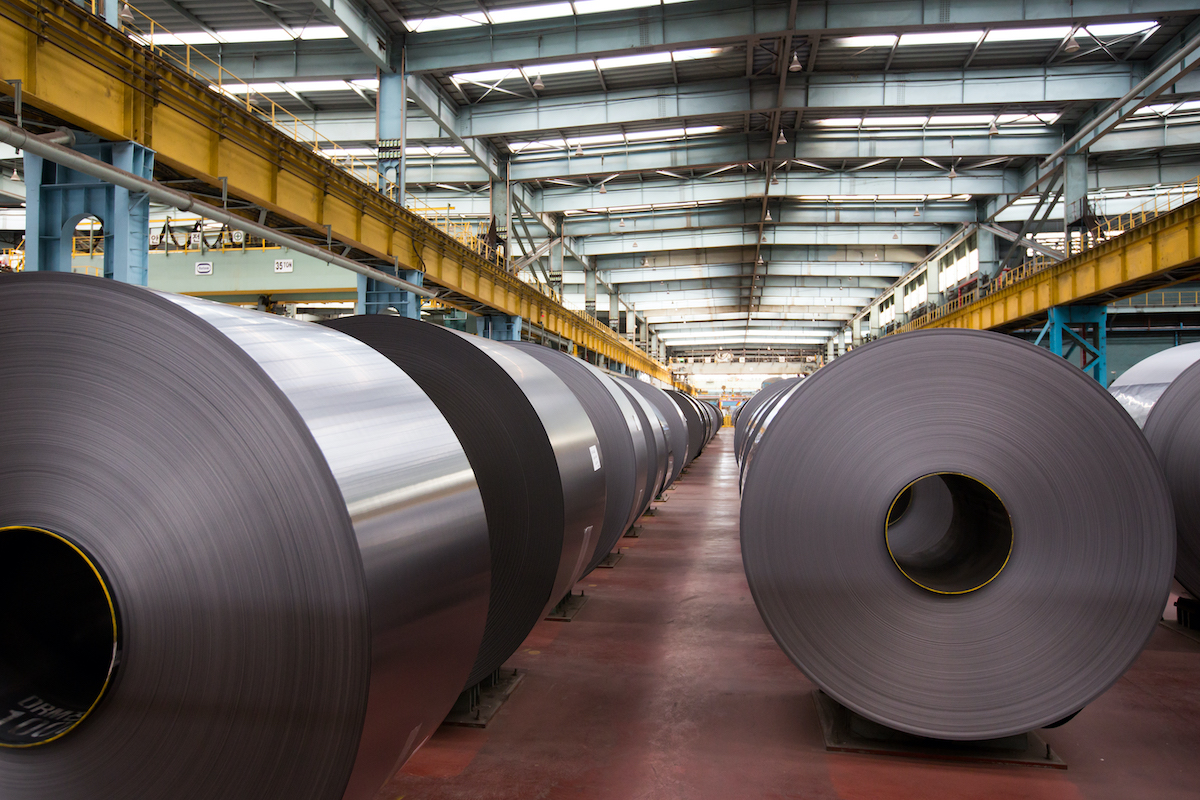
European HRC prices rise as restocking activity picks up
Domestic prices for European hot-rolled coil rose on April 29, as buyers accepted higher offers from mills amid a pickup in restocking demand in the market, according to sources.
“Demand is better as distributors have started to restock, but the volumes remain limited as end-user demand is still low,” a service center source said. “Prices will rise, but I do not expect any major movement.”
Market participants said mills need to be consistent with their offers, and too much of a price rise would not be accepted because of limited end-user demand.
“As long as mills stand firm on the target prices, they would be successful,” a trader source said. “Unless they try to ask for a high price rise of Eur50/mt. That would slowdown restocking.”
Platts assessed hot-rolled coil in Northwest Europe at Eur635/mt ex-works Ruhr April 29, up Eur10 on the day.
Deals have been heard at Eur630-650/mt EXW Ruhr, but the higher end of the range was only achieved in deals for small tonnages.
Tradable values were reported at Eur630-640/mt EXW Ruhr and offers have been reported at Eur640-645/mt EXW Ruhr.
Interest in imports remained low due to uncompetitive offers resulting from a higher Euro to US dollar exchange rate and longer lead times.
Platts assessed prices for imported hot-rolled coil in Northwest Europe at Eur610/mt CIF Antwerp April 29, stable on the day.
Meanwhile, Platts assessed domestic prices for hot-rolled coil in South Europe at Eur629/mt EXW Italy April 29, up Eur4 on the day.
Offers and tradable values were reported at Eur630/mt EXW Italy.
Platts assessed prices for imported hot-rolled coil in South Europe at Eur600/mt EXW Italy, stable on the day.
Devbrat Saha | Maria Tanatar