


German states form ‘Stahlallianz’, demand safeguard extension
Representatives of the 11 German states home to steel mills met on Monday with federal economy minister Robert Habeck in Berlin to found a new national steel initiative.
The so-called ”Stahlallianz” intends to combine the common interests of the states, most of them represented by their minister presidents, in order to form one voice to the federal government. They are essentially asking the government for strong support for the domestic steel industry, in view of future investment prospects.
In its statement, the alliance highlights European safeguard measures against imports as a key theme. It asks the German government to advocate at EU level for an extension until mid-2026, “to prevent a diversion of trade routes that distorts competition”.
At the national level, the partner states address high costs for power and the resulting disadvantages in international competition. They approve the Berlin government’s decision to lower the electricity tax for manufacturing industries, but caution this is not sufficient. They maintain their demand, for example, for a stabilisation of grid fees and a period of bridge financing of electricity for power-intensive industries (see Kallanish passim).
Another main theme is the technical transition following last year’s court decision that blocked €60 billion ($66 billion) in reserve funds from the Covid period from being used to de-carbonise industrial processes. In that context, the alliance highlights the importance of medium-sized companies along the production chain, which must not be overlooked for public support. That point was earnestly addressed earlier by WSM, the federation of steel-using industries.
The alliance consists of Baden-Württemberg, Bavaria, Brandenburg, Bremen, Hamburg, Lower Saxony, North Rhine Westphalia, Saarland, Saxony, Sachsen-Anhalt and Thuringia.
Christian Koehl Germany


Thyssenkrupp Materials Services liefert mit Wasserstoff aus
Seit Januar 2024 nutzt Thyssenkrupp Materials Services die ersten wasserstoffbetriebenen LKW, um seine Kunden zu beliefern. Für das Tochterunternehmen Thyssenkrupp Plastics sind seit Jahresbeginn zwei neue Fahrzeuge des Logistikpartners ep-Gorup mit dem umweltfreundlichen Antrieb im Einsatz.
Das Erscheinungsbild des 15-Tonners ist auf dem ersten Blick vergleichbar mit einem Diesel-Fahrzeug. Doch die Perspektive von oben auf die Sattelzugmaschine lässt erkennen: Hier steigt Wasserdampf statt Abgas in die Luft. Der Dampf entsteht in einer Brennstoffzelle, die aus Wasserstoff den Strom für den Elektroantrieb erzeugt und damit eine Alternative zum herkömmlichen Verbrennungsmotor bietet.
Zu erkennen sind die beiden LKW durch ihre gestaltete Plane, die auf die Nutzung von Wasserstoff hinweist. Bei einer jährlichen Laufleistung von rund 76.000 Kilometern beträgt die CO2-Einsparung eines einzelnen LKW laut Thyssenkrupp bis zu 40 Tonnen CO2 pro Jahr.
Thyssenkrupp Materials Services prüft verschiedene Antriebe
Mit einer Reichweite von etwa 450 Kilometern und einer Höchstgeschwindigkeit von 85 km/h werden die LKW zunächst auf den Straßen Nordrhein-Westfalens anzutreffen sein. „Düsseldorf und Umgebung ist der optimale Einsatzort für die neuen Fahrzeuge, da die Erreichbarkeit der nahegelegenen H2-Tankstellen gewährleistet ist, die bei jeder Routenplanung berücksichtigt werden müssen“, erklärt Nicolas Neuwirth, Vorsitzender der Geschäftsführung von Thyssenkrupp Plastics.
Neben Thyssenkrupp Plastics sollen auch weitere Tochtergesellschaften noch in diesem Jahr mit dem Einsatz von wasserstoffbetriebenen LKW folgen. Darüber hinaus prüft Thyssenkrupp Materials Services eigenen Angaben zufolge „weltweit verschiedene Antriebsmöglichkeiten für den Transport mit schweren Nutzfahrzeugen“. So laufe für die eigene Flotte in Nordamerika aktuell ein Pilotprojekt für den Einsatz von regenerativem Biogas, das aufgrund der Verfügbarkeit und Infrastruktur „eine attraktive Alternative“ darstelle.
Lesen Sie auch: Kloeckner Metals bringt ersten E-LKW auf die Straße
Source: stahleisen.de

Industeel supplies XCarb steel to Salzgitter’s Universal
Industeel, a European business division of ArcelorMittal Downstream Solutions, is now supplying XCarb recycled and renewably produced plate under the Relia product name to Universal Eisen und Stahl, Germany, Kallanish learns.
Relia 400 is made from recycled steel scrap in an electric arc furnace powered by wind energy, resulting in a carbon footprint reduction of around 60% compared with traditional steelmaking, ArcelorMittal Europe explains. The plate is available in thicknesses of up to 100mm and is third-party certified with a product carbon footprint of 1.1 tonne of CO2 equivalent per tonne of plate, the producer says.
Universal Eisen und Stahl is a distribution unit of Salzgitter AG that mainly handles plate. At warehouses in Neuss and Hanover, it stocks about 60,000 tonnes of steel in 40 grades.
Christian Koehl Germany
Metinvest chief says open to future Ilva involvement
Despite prioritising its future Italian flat steel mill in Piombino, Metinvest says it may consider in future the possibility of becoming a shareholder in troubled steelmaker Acciaierie d’Italia.
Metinvest is currently supplying Taranto with raw materials and sourcing slab from Taranto for its Italian facilities. “Today, Taranto is far below its capacity but there is potential,” Metinvest chief executive Yuriy Ryzhenkov says in an interview with Italian broadsheet Corriere della Sera. “The Italian government is looking for private investors … Our primary objective at the moment is Piombino. In the future, if we see an opportunity in Taranto, why not? We may look into it.”
He adds the Taranto plant is a very difficult case where an investor already exists and authorities are working to sort out issues with it. “There are many problems and I do not think that one investor can singlehandedly resolve them all … If the government wants to involve other players, we will carefully consider it. And if we can help, we will,” Ryzhenkov concludes.
Piombino was chosen as a location for Metinvest’s future flats plant also thanks to the strong commitment to the project from all local stakeholders, including local and central authorities, as well as the city. The project responds to the steelmaker’s need to replace its destroyed Mariupol facilities. According to the ceo, Metinvest as well as its partner Danieli, will invest significantly in the new facility but will seek the support of authorities and the EU, particularly for decarbonisation. The project will be a mix of private funds, debt and public subsidies.
In January, Italy’s Minister of Enterprises and Made in Italy (MIMT), Adolfo Urso, Metinvest, equipment maker Danieli, the region of Tuscany and the city of Piombino signed an agreement to accelerate the troubled Piombino steelmaking site relaunch. This site is now part of JSW Italy.
The new facility will entail an investment of €2 billion ($2.1 billion) and produce 2.7 million tonnes/year of hot rolled coil from the electric arc furnace route. JSW and Metinvest will co-exist on the site without overlapping, as JSW would retain production of rails. The aim is to commission Metinvest’s prospective hot strip mill in Piombino by 2027 (see Kallanish passim).
Natalia Capra France , Emanuele Norsa Italy
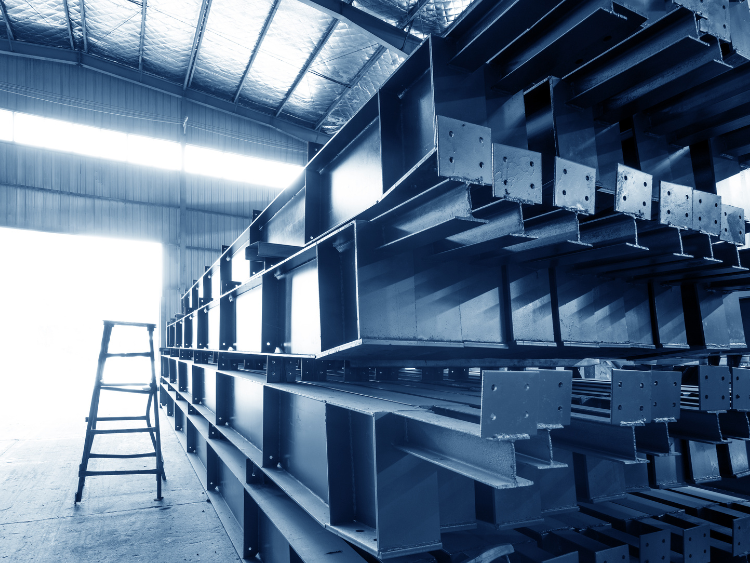
Italian longs stagnate, but wire rod derivatives boom
Italian long products prices are not increasing as was hoped, following weak demand in January and limited consumption.
Merchant bar transaction values are mostly flattening compared to the beginning of the month. A European mill source says it is particularly difficult to raise prices in any EU country because of continuously subdued consumption and only back-to-back sales.
Italian distributors and agents however had a relatively satisfactory month in January in terms of sales, thanks to other products such as beams and wire rod derivatives, sources tell Kallanish.
Domestic merchant bar values are hovering at €340-360/tonne ($368-389) base delivered. Including size extras, prices are at €750-770/t, sources suggest.
Demand for wire rod derivatives is sizzling. Sellers report full order books and lengthening lead times. A source believes this is happening because a steelmaker an eastern European is allocating fewer tonnages to Italy. Prices for wire rod derivatives are therefore on the upward trend, with delivery at the end of the first quarter.
Sources do not expect other long product values in Italy to rise next month and consumption is seen mostly remaining at the weak levels of Q4 2023.
Natalia Capra France

Thyssenkrupp Materials, CarbonChain to develop emissions tracking tool
Thyssenkrupp Materials Services and CarbonChain have announced a partnership to advance low-carbon procurement with a new carbon traceability and intensity tool.
Tk Materials will enhance its product and carbon “footprinting” capabilities by means of an innovative traceability and carbon intensity tool, powered by CarbonChain’s carbon accounting software. This will be rolled out to customers and suppliers of the company’s distribution units, Materials Eastern Europe and Materials Western Europe.
According to CarbonChain, the tool will use asset-specific emissions factors and activity-based methods, instead of relying on global averages. This allows customers to easily identify lower-carbon materials, CarbonChain explains.
Tk Materials’ product carbon footprint reports will be provided on request, quote or delivery, and detailed emissions breakdowns by lifecycle stage and source. It will identify carbon hotspots and encompass all greenhouse gas emissions from the point of origin till the gate of the customer, Kallanish understands.
Last year, the two companies announced their first cooperation to establish what they called an ecosystem of carbon transparency in eastern Europe. CarbonChain describes itself as a carbon accounting platform using artificial intelligence in order to automate emissions tracking. It is also a member of the ResponsibleSteel movement.
Christian Koehl Germany

Revista InfoAcero Enero 2024
En el siguiente enlace pueden acceder a la edición de Enero de nuestra revista INFOACERO.
Destacamos a continuación algunos de sus contenidos:
- Opinión – “El Panorama de la Distribución de Acero en España para 2024: Una mirada desde la UAHE”
- Evolución del Índice de Precios de Productos Siderúrgicos – UAHE
- Información Asociativa: Asamblea de la Asociación de Alm. De Hierros de Galicia // Próximos Cursos UAHE
- Sector Metal: Informe de Coyuntura del Metal y Comercio Exterior- Confemetal
- Colaboración UNESID: “Tubos chinos vs instalaciones renovables frágiles” – D. Alfonso Hidalgo- Director Estudios Económicos
- Colaboración ASCEM: “Porque necesito un plan de prevención de riesgos laborales en mi empresa”- Sr. Joan Carles Codina- Secretaría Jurídica
- Próximo Steel Net Forum Iberia: 11 y 12 de Abril en Santiago. Programa preliminar

European Commission extends first CBAM report submission deadline
“In accordance with the guidance provided to National Competent Authorities (NCAs), no penalties will be imposed on reporting declarants who have experienced difficulties in submitting their first CBAM report. Delayed submission of a CBAM report due to system errors would, by definition, be deemed justified as long as the submission occurs promptly once the technical errors are overcome. In any event, penalties will not be imposed by NCAs before a correction procedure has been opened, allowing reporting declarants to provide justifications and correct any potential inaccuracies in their CBAM report,” the European Commission explains.
During the ongoing transitional phase of CBAM, European importers of steel need to file quarterly reports in the European Commission system, starting from those for the fourth quarter of 2023. During the transitional period, importers are to report on the quantity of imported goods, direct and indirect emissions embedded in them, and any carbon price due for those emissions, including carbon prices due for emissions embedded in relevant precursor materials; no payment will be due. The transitional phase is planned to conclude at the end of Q4 2025.
Emanuele Norsa Italy
Healthy inventories, near-term price uncertainties slow down EU HRC trades
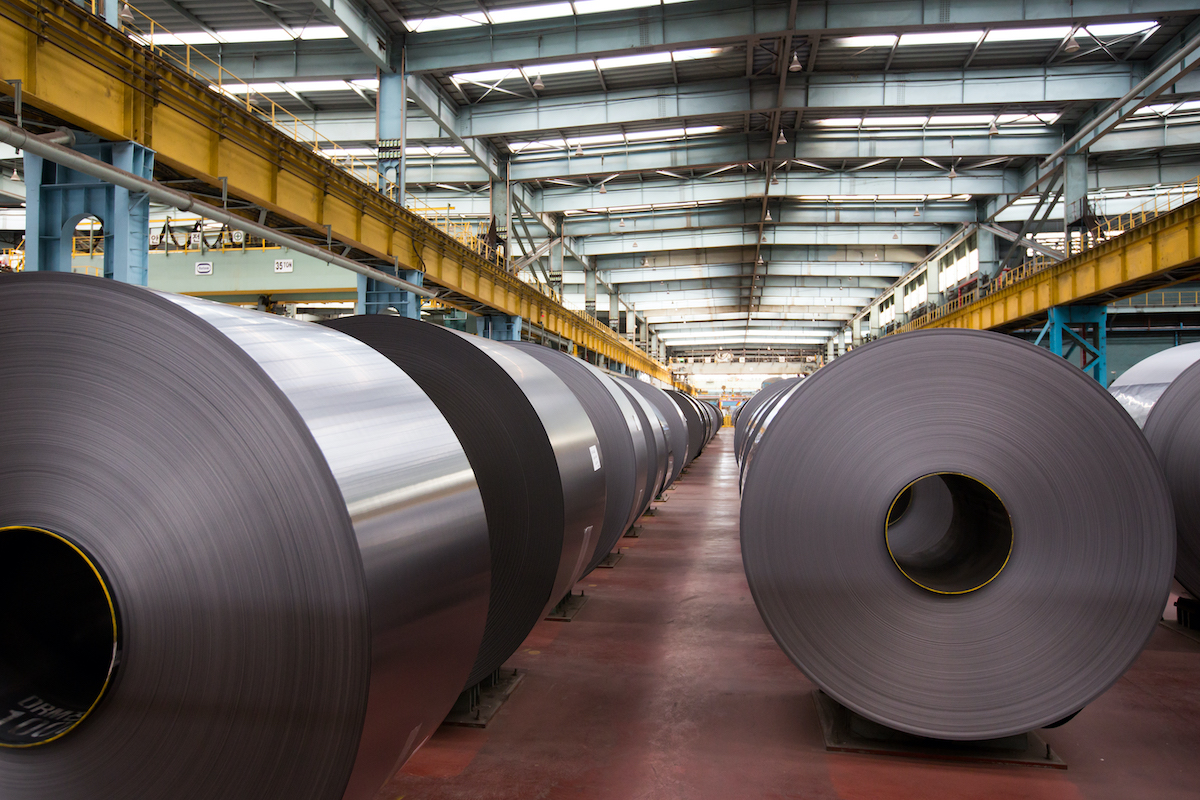
European domestic hot-rolled coil trades slowed down Jan. 29 amid healthy inventory levels along with uncertainty about sustainability of the current price trend in the near-term due to buyers’ reluctance to meet mills’ targets.
“The sentiment remains negative with the market generally well-stocked,” a trader said. “End-user demand does not seem to be enough at this point to support higher prices.”
Buyers resorted to buying smaller volumes as mills remained firm on offers due to healthy order books for the first quarter.
“So many blast furnaces are back online which will add to supplies, and that can make mills reduce prices as demand is poor,” a Northwest European service center source said. “By April-May, mills’ books will be empty again.”
Market participants estimated tradable value for domestic HRC in Northwest Europe at Eur740-780/mt ex-works Ruhr. Deals for smaller tonnages were heard concluded at Eur750-800/mt EXW Ruhr with mills also offering at those levels.
Platts assessed the price of domestic HRC in Northwest Europe at Eur760/mt EXW Ruhr Jan. 29, up by Eur10.
Interest remained mild for imported HRC due to longer lead times and geopolitical situations.
Offers were heard at below Eur700/mt CIF Antwerp for imports. However, no deals were heard concluded and the assessment moved up to the level between fresh offers and Jan. 28 assessment.
Platts assessed the price of imported HRC in Northwest Europe at Eur680/mt CIF Antwerp Jan. 29, up by Eur20.
Author Rituparna Nath, rituparna.nath@spglobal.


German steelmaking states push for safeguard import quota extension
Germany’s steel producing states urged the German government to push for a steel safeguard import quota extension until mid-2026, the states said in a roadmap for Germany’s steel industry published Jan. 29.
The safeguard quotas on steel imports into the European Union were introduced in 2018 following the move by the US to introduce tariffs on steel imports. The safeguards are due to end mid-2023, but the 11 German states that are part of the “steel alliance” argue that import restrictions would be needed to avoid an influx of imported material.
“The steel alliance is pleading to the German federal government to advocate at European level for a limited extension of the steel safeguard measures, in line with WTO-rules that allow for an eight-year duration of safeguards,” the states said in a document published Jan. 29.
The steel alliance is also asking that more iron and steel products are included in the Carbon Border Adjustment Mechanism (CBAM) to protect steelmaking in Europe. CBAM is due to start in 2026 and will put a levy on higher-emission metals imports.
The document further said that the German steel industry would need a “level-playing field” to continue steelmaking with lower carbon emissions, with more renewable energy and energy storage, and infrastructure for hydrogen.
About hydrogen the steel alliance said there should be consistent certification and standards to trade green hydrogen at international level.
Since many steel mills are moving to electric arc furnace production which has lower carbon emissions than the traditional blast furnace route but is more energy-intensive, the alliance is also asking the government to address the rising cost of energy to keep this production method viable.
German steel federation welcomed the roadmap Jan. 29 as a commitment on state level for the transformation of the steel industry, but said that more specific political solutions are needed to address the issues.
Platts, part of S&P Global Commodity Insights, assessed Northwest European hot-rolled carbon-accounted coil stable on the day at Eur875/mt ($945.60/mt) ex-works Ruhr Jan. 29.
Author Laura Varriale, laura.varriale@