


Prices edge downward in Southern European rebar market; wire rod price stable
Market participants reported confusion and mixed signals in the Italian rebar market, with producers attempting to raise prices, but the market unwilling to support any price rises.
Fastmarkets’ price assessment for steel reinforcing bar (Rebar) domestic, exw Italy was €660-680 ($718-740) per tonne on Wednesday, dropping by €10 per tonne from €670-690 per tonne week on week.
Prices edged downward in the Italian rebar market amid weak demand and a bearish outlook among buyers.
“There is significant instability in prices now. There are few requests for new material and demand is not good, but scrap prices are increasing, so there is pressure on mills to raise prices,” a buyer source said.
“The market is so strange these days. Producers would like to put up the price, due to scrap price increase, but demand is low and consumption from the building sector is weak,” a second buyer source said.
“We hope the last January days will bring us a turn in the trend, but is not so probable,” the second buyer source added.
Turkey’s scrap prices rose significantly at the beginning of January; however they have since edged downward through late January.
Fastmarkets’ calculation of its daily index for steel scrap HMS 1&2 (80:20 mix) North Europe origin, cfr Turkey was $407.62 per tonne on Wednesday, down by $7.48 per tonne week on week from $415.10 per tonne.
Meanwhile, Fastmarkets’ price assessment for steel reinforcing bar (rebar), domestic, delivered, Spain was €655-660 per tonne on Wednesday, down by €10 per tonne from €665-670 per tonne the previous week.
Southern European wire rod
Fastmarkets’ price assessment for steel wire rod (mesh quality), domestic, delivered Southern Europe was €640-650 per tonne on Wednesday, stable week on week.
“Little has changed in the wire rod market since last week; however, mills are targeting for February some additional increases. The main driver of the last increases is the trend of scrap, which has really increased in past few weeks,” a wire rod buyer source said.
There is little demand for wire rod imports due to high, uncompetitive offers, sources said.
“Imports are not interesting, with final prices being too close to what local mills are offering,” the wire rod buyer source said.
Published by: India-Inés Levy

Lack of regulation keeps demand low for reduced carbon steel, premiums steady
Fastmarkets’ inaugural assessment of the flat steel reduced carbon emissions differential, exw Northern Europe, was €40-60 ($44-65) per tonne on January 25.
Market sources said that this price range has been quite stable in recent weeks, with steelmakers seeing sales of material with 30% emissions reduction (1.55-1.65 tonnes of CO2 per 1 tonne of steel) as the option with the greatest commercial viability so far.
Most European steelmakers have announced significant investments in green steel projects to reduce emissions and to comply with strict EU regulations. These projects largely make use of hydrogen-based direct-reduction iron (DRI) and electric-arc furnaces (EAFs), while in the shorter term scrap-based flat steel production has increased.
But the majority of flat steel production in Europe was still achieved using traditional blast-furnace (BF)-basic oxygen furnace (BOF) methods. Major European mills were offering reduced carbon emission steel solutions for flat products produced via the BF-BOF route with more “digestible premiums” as opposed to “fossil-free” steel produced via the EAF route.
“The use of ‘greener’ steel is not well regulated in the EU. Many customers can start with around a 30% reduction,” a mill source said.
“Premiums for steel with 30-50% carbon emissions reduction are more affordable for buyers,” a second mill source said.
In general, market sources agreed that, at the moment, buyers felt no pressure to book “cleaner steel” although such demand was expected to rise gradually in the years ahead, with the EU’s Carbon Border Adjustment Mechanism (CBAM) being phased-in and the free allocations under the former Emissions Trading System being phased-out.
Fastmarkets’ will assess the flat steel reduced carbon emissions differential weekly, against its established Northern Europe hot-rolled coil (HRC) price index.
Meanwhile, Fastmarkets’ weekly assessment of the green steel, domestic, flat-rolled, differential to HRC index, exw Northern Europe, was €150-250 per tonne on January 25, unchanged since mid-December.
One producer source reported a premium for steel with “CO2 emissions close to zero per 1 tonne of steel” around €300-350 per tonne. This price point, however, was not included in the assessment because most sources, including mills, said that buying interest in such material was very low. There was also the very high premium to consider, and the lack of pressure on end-users to procure such steel.
“There is very little demand for even smaller premiums, while [material with premiums of] €300-350 per tonne might mainly be booked by end-users directly and in really small volumes,” a producer source in the European market said.
The same producer estimated achievable premiums for steel with CO2 emissions content about 0.4-0.6 tonnes of CO2 per 1 tonne of steel at €150-250 per tonne.
Buyers’ price ideas for such material were around €100-150 per tonne.
Published by: Julia Bolotova

HRC bucks EU imports decline in 2023
EU hot rolled coil imports in 2023 increased by almost 18% year-on-year, according to the latest data shared by EUROMETAL and compiled using official customs numbers.
Overall, HRC imports surpassed 18 million tonnes. Italy was the largest importer with over 3.5mt, followed by Spain with 1.3mt, and Belgium with 900,00t, Kallanish notes.
The recovery in HRC imports nevertheless bucked the overall import trend last year in Europe. According to the same data, EU imports of flat products – including non-alloy and stainless – decreased 3% y-o-y to 19mt.
Similarly, all other major steel products imports registered a decrease in 2023.
Metallic coated sheet imports fell 18% y-o-y to 3.6mt, while cold rolled coil imports were down 1.5% to 2.5mt.
On the longs side, overall imports of non-alloy and stainless products registered a decrease of 20% y-o-y to 7.5mt. Rebar imports were down 29% to 1.2mt and wire rod imports decreased 25% to 2mt.
Emanuele Norsa Italy

UK government disadvantages Tata Steel
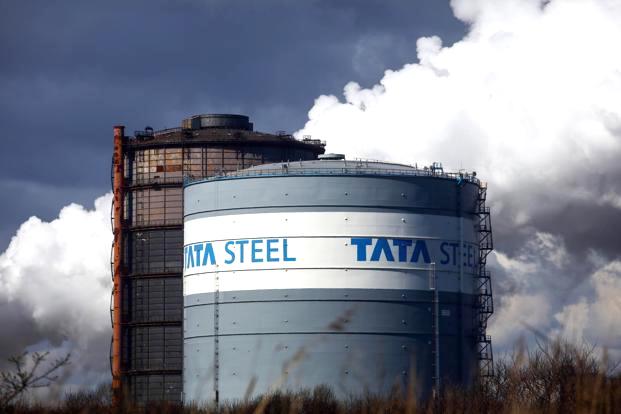
The UK government is putting Tata Steel at a disadvantage compared with its European peers with the comparatively low level of funding it is providing to help the company decarbonise.
The government has committed to provide Tata with £500mn ($635mn) towards the cost of decarbonising its Port Talbot plant in South Wales, which will have an electric arc furnace with a capacity of about 3mn t. This equates to £166/t worth of assistance.
That level of funding would be insufficient to enable other technologies such as two electric arc furnaces or direct reduced iron. Tata itself is investing £700mn in the move, which has widely been criticised by unions and the Labour opposition as a “bad deal”.
In comparison, the German government is giving Salzgitter more than €525/t ($568.80/t) to facilitate its movement to hydrogen-fed green steel. Germany’s ThyssenKrupp will receive almost €870/t to help it transition to green steel at its flagship Duisburg site.
ArcelorMittal is receiving more than €600/t to help decarbonise its Sestao plant in Spain. At its Dunkerque site in France, it has received funding of €850mn to produce 4mn t of lower-carbon steel, equating to €212/t worth of financial assistance. Therefore, most European competitors are receiving greater state assistance.
To feed its electric arc furnace, Tata will still need to import direct reduced iron, pig iron or other metallics to complement the reservoir of domestic scrap. Sources suggest this could be as much as 1mn t/yr.
Should UK electricity prices remain high compared with Europe, there is a risk Tata’s electric arc furnace will still struggle to compete, although the reduction in fixed costs from job cuts and the ability to adjust output quickly will be financially beneficial.
“This steel plant was losing more than £1mn a day, putting it at risk of closure and threatening 8,000 jobs in South Wales and thousands more in the wider supply chain,” a government spokesperson said.
“The government’s unprecedented £500mn grant as part of the £1.25bn investment by Tata Steel will build a new electric arc furnace that protects thousands of long-term jobs, as well as delivering a much greener way of producing steel, cutting carbon emissions in Wales by 22pc.”


European CRC offers scarce, import prices competitive
Reduced availability had little impact on prices as real demand has been slow, and buyers were able to source imported CRC at competitive prices.
“The supply is short at present,” a German service center source said. “Offers from both Italian and Northwest European mills are scarce.”
Mills offered CRC at Eur850-890/mt ex-works Northwest Europe and tradable values were estimated at Eur830-850/mt EXW Ruhr by market participants.
Platts assessed domestic prices for cold-rolled coil in Northwest Europe at Eur850/mt EXW Ruhr Jan. 24, down by Eur15 on the day and steady on the week.
In South Europe, tradable values have been heard at Eur860-880/mt EXW Italy.
Platts assessed the price of domestic cold-rolled coil in South Europe at Eur860/mt EXW Italy Jan. 24, up Eur10 on the week.
Deals for CRC imported from Asia were reported at Eur740-760/mt CIF Antwerp.
Platts assessed prices for imported cold-rolled coil in Northwest Europe at Eur750/mt CIF Antwerp Jan. 24, down by Eur20 on the day and Eur10 on the week.
Offers for hot-dipped galvanized coil remained bullish even though no deals were heard concluded.
Mills offered HDG at Eur870-880/mt EXW Northwest Europe for March shipment and at Eur900-930/mt EXW Northwest Europe for second quarter shipment. Tradable values were estimated at Eur830-870/mt EXW Northwest Europe.
Platts assessed the price of domestic hot-dipped galvanized coil in Northwest Europe at Eur860/mt EXW Ruhr Jan. 24, down Eur10 on the week .
In South Europe, tradable values were heard at Eur860-880/mt EXW Italy and mills made offers at Eur920-930/mt EXW Italy.
Platts assessed the price of domestic hot-dipped galvanized coil in South Europe, stable on the week at Eur870/mt EXW Italy Jan. 24.
Author Rituparna Nath, rituparna.nath@spglobal.
Platts is part of S&P Global Commodity Insights.

Labour calls for UK primary steelmaking impact report
The opposition Labour Party has called on UK business and trade secretary Kemi Badenoch to report to Parliament by 27 February with an assessment of the impact on the UK of the loss of primary steel production capabilities.
In an intriguing year for both the UK’s steel industry and politics, Tata Steel has confirmed the closure of both Port Talbot blast furnaces by end-2024 and commissioning of a 3 million tonnes/year capacity electric arc furnace by 2027. This follows a deal agreed with the Conservative government last year for £500 million ($636m) in funding.
The Competition and Markets Authority is due to publish a report on the grant’s compliance with the subsidy control requirements on 6 February.
The Labour Party however leads the polls and could win the next UK general election, which Prime Minister Rishi Sunak is expected to call in the second half of this year. Labour has pledged it would invest up to £3 billion over ten years to decarbonise the steel industry, Kallanish notes.
The UK government allowing blast furnace no.4 at Port Talbot to close is “an act of economic vandalism” and sends a message that “decarbonisation effectively means deindustrialisation”, says UK shadow secretary of state for business, energy and industrial strategy Jonathan Reynolds.
“The claim that 90% of what Port Talbot does could be met with an electric arc furnace does not stand up, as key products in packaging and automotive materials cannot be produced in one,” Reynolds told a House of Commons debate on Tuesday.
Addressing UK industry and economic security minister Nusrat Ghani, Reynolds added: “I am asking the Minister – quite honestly, I am begging her – to consider the arguments and what is really value for money, and not to make decisions that are irreversible and prevent a far better outcome in future.”
The UK’s other primary steelmaker, British Steel, meanwhile remains in talks with the government to agree funding following its proposal announced last November to replace its blast furnace with two EAFs. The plan has been criticised by unions, who will be closely watching developments at Port Talbot.
Holly Mumby-Croft, Member of Parliament for Scunthorpe, where British Steel is located, said: “I have no problem with building electric arc furnaces – it is a good idea – but I passionately believe that the UK should retain, at least in the medium term, some blast furnace capability alongside that. After the sad news in Port Talbot, that has to be in Scunthorpe.”
“If we are to give British Steel hundreds of millions of pounds of public money, we need to ensure that it retains those blast furnaces until the transition. In short, that must be written into the deal,” she added.
Some concern has been raised about the UK not being able to supply its own steel for defence purposes were it to lose primary steelmaking capability. UK Secretary of State for Wales David Davies however pointed out that Port Talbot does not supply the defence industry, which sources steel from Sheffield Forgemasters, produced in an EAF.
In the Welsh Parliament on Tuesday, First Minister of Wales Mark Drakeford said his government did not agree with the blast furnace no.4 closure and called the alternative Syndex/multi-union plan credible. This proposes to keep the 2m t/y BF4 running while the new EAF is built, and thereafter until 2032.
Welsh economy minister Vaughan Gething pointed out there is a contrast between the UK approach and the more favourable one being taken by the Netherlands government towards investment in hydrogen and direct reduced iron making. Tata contracted in 2022 Danieli and Hatch to provide an engineering package for the transition to hydrogen-based DRI-EAF steelmaking at its IJmuiden plant.
On Wednesday during Prime Minister’s Questions, meanwhile, UK PM Rishi Sunak stressed that 8,000 jobs had been on the line at Tata Steel UK, far in excess of the 2,800 slated to go. “Because of the government’s investment and support, and partnership with Tata, we have safeguarded 5,000 direct jobs, thousands more in the supply chain, and ensured the long-term sustainability of that steel plant.”
Tata Steel published its December-quarter earnings on Wednesday, showing that its UK business posted 720,000 tonnes of liquid steel output and 640,000t of deliveries, flat and down 3% on-year respectively. Revenue was down 12% to INR 6,294 crores ($757 million) and Ebitda loss deepened 12% to INR 1,657 crores.
Adam Smith Poland

Outokumpu completes Cronimet North-East stake acquisition
Outokumpu has completed the acquisition of a 10% minority interest in Cronimet North-East after fulfilling closing conditions.
The latter is the German holding company of Cronimet’s business in northeastern Europe, holding subsidiaries in the surroundings of Outokumpu’s European production sites. Outokumpu and Cronimet announced last November the expansion of their long-term collaboration to further secure the sourcing and retain the supply of high-quality scrap within northeastern Europe (see Kallanish passim).
“We want to accelerate the circular economy in the Northeastern European market area and source recycled steel, which is collected here in the area, close to where it is needed. This is about expanding our existing successful cooperation to ensure that recycled steel that we acquire has the best possible quality and comes from as close as possible, allowing us to decrease the carbon footprint of our production,” says Outokumpu chief procurement officer Marc-Simon Schaar.
The parties will also cooperate on joint innovation and research with the goal to improve technologies to further reduce CO2 emissions, lower costs through better predictability and drive waste reduction within the supply chain, the steelmaker says.
As a shareholder, Outokumpu acts as a strategic partner in Cronimet’s northeastern business, while Cronimet retains full operational control of the companies involved. “Outokumpu does not see vertical integration into the supply chain of stainless steel scrap as part of its raw material strategy but considers cooperation and partnerships as the way forward,” the firm says.
Adam Smith Poland

Thyssenkrupp preparing clean hydrogen tender for Duisburg steel works in Germany
Thyssenkrupp is preparing a tender to purchase up to 151,000 mt/year of renewable and low-carbon hydrogen under 10-year contracts, with lower volumes starting from 2028, for pipeline delivery to its Duisburg steelworks in Germany.
The steelmaker will seek an expected 104,000 mt of hydrogen in 2028, rising to 143,000 mt/year over 2029-35 before reaching 151,000 mt/year over 2036-37 as it seeks to decarbonize the plant.
The tendered volumes must meet the EU’s Renewable Energy Directive requirements for renewable hydrogen and low-carbon hydrogen under current provisions on CO2 emissions reductions, it said in a tender information document.
A first phase of the tender will open in February, with requests for information from interested companies, a Thyssenkrupp spokesperson told S&P Global Commodity Insights Jan. 23.
“With this tender, we want to kick-start the market for green hydrogen and create the necessary infrastructure to supply our Duisburg site with hydrogen,” the company said.
In a second phase, Thyssenkrupp will issue requests for proposals in the second quarter of 2024 before a request for quotations in the third quarter.
The hydrogen price will be determined during the tendering process, the company told S&P Global.
The Duisburg steel plant will be connected to Germany’s planned national hydrogen pipeline network at an early stage, Thyssenkrupp said on its website.
The planned pipeline between Dorsten and the Duisburg district of Hamborn will provide a secure connection to the hydrogen network, with links envisaged to Rotterdam by 2030, it added.
Germany has committed Eur20 billion to constructing its core 10,000-km pipeline, expected online by 2032, with 13 cross-border interconnection points.
Platts, part of S&P Global Commodity Insights, assessed the cost of producing hydrogen via alkaline electrolysis in Europe at Eur4.80/kg ($5.21/kg) Jan. 22 (Netherlands, including capex), based on month-ahead power prices. Proton exchange membrane electrolysis production was assessed at Eur5.74/kg, while blue hydrogen production by steam methane reforming (including carbon, CCS and capex) was assessed at Eur2.52/kg.
Author James Burgess, james.burgess@

EU HRC buyers avoid stockpiling due to uncertain short-term price trend
The buyers of domestic European hot-rolled coil avoided stockpiling due to uncertainties about short-term price trend on Jan. 23.
Steelmakers held to bullish offers due to healthy order books in Q1 but were yet to achieve their target as buyers remained reluctant to pay up.
“Buyers are just booking the volumes they absolutely need and avoid building stocks,” a German service center source said. “Such approach does not help the mills’ attempts to raise the prices.”
Real demand remained lackluster, which concerned several market participants about the sustainability of the current price trend especially with several blast furnaces back online which would add to supplies in the coming months.
Deals for domestic HRC in Northwest Europe were heard at Eur750-770/mt ex-works Ruhr. Mills continued to offer April-May delivery cargoes at Eur800/mt ex-works Ruhr.
Platts assessed the price of domestic HRC in Northwest Europe up Eur15/mt on the day at Eur760/mt ex-works Ruhr Jan. 23.
Tradable value was estimated at Eur740-750/mt ex-works and at Eur770/mt delivered Italy. Italian mills made offers at Eur760-780/mt delivered Italy.
Platts assessed the price of domestic HRC in South Europe up Eur10/mt on the day at Eur750/mt ex-works Italy Jan. 23.
Buyers in Italy were heard vetting import offers made by Indian and Turkish mills as they still had safeguard quotas left for Q1.
Indian and South Korean mills offered HRC at Eur670-680/mt CIF Italy. Mills from Turkey made offers at Eur690-700/mt CIF Italy.
Tradable values were estimated at Eur660-680/mt CIF Italy for imports from India and South Korea.
Platts assessed the price of imported HRC in South Europe stable on the day at Eur670/mt CIF Italy on Jan. 23.
Author Rituparna Nath, rituparna.nath@spglobal.
December steel sales, stocks fall on month and year
Steel product sales in the German distribution and stockholding system in December fell 56% month on month and 14% year on year to 465,000 mt, according to data from sales and stockholder association BDS.
Sales of flat products totaled 289,758, down 55% month on month and 18% year on year, while longs steel products sales totaled 143,297 mt, down 54% month on month and 6.2% year on year.
All other products sales totaled 31,946 mt in December, compared to 61,677 mt in November and 38,584 mt in December 2022.
Steel product stocks fall
Stocks of all steel products in the German stockholding and distribution segment in December 2023 totaled about 1.85 million mt, down 5.1% year on year and 2.9% month on month.
Flats stocks in December fell to 1.165 million mt, down 3.8% month on month but little changed year on year.
Long stocks in December were at 652,347 mt, down 13% year on year and down 1.2% month on month.
All other products stocks in December totaled 36,702 mt, down from 38,645 mt in November and 39,786 mt in December 2022.
Platts, part of S&P Global, assessed hot-rolled coil in Europe at the beginning of December at Eur680/mt ($739/mt) base ex-works Ruhr to Eur690/my base ex-works.
Author Annalisa Villa, annalisa.villa@