


Coil-carrying vessel hijacked en route to Turkey
A vessel carrying steel coils from Korean steelmaker Posco — with the business executed via trading company Samsung — to a number of Turkish buyers has been hijacked by pirates off the coast of Somalia.
The mill is in negotiations with the pirates with a view to freeing the vessel — the Maltese-flagged 41,607dwt Ruen — which was on its way to Gemlik port in Turkey, as of 13 December. There is about 40,000t of coil on board for a handful of buyers, including a pipemaker and automaker, according to market sources.
The vessel entered the risk area of the Gulf of Aden/Southern Red Sea on 15 December, and has been off the central Somalian coast since 18 December, according to vessel tracking software.
“We are working in close co-operation with the relevant authorities on this matter and are unable to comment further at this time,” a spokesperson for the West of England Insurance Services, which insures the vessel, said.
Mill sources in Turkey said the seizure could interrupt shipments from Asia into the region, supporting coil prices. Traders and Turkish buyers suggested shipowners and charterers may try to avoid the Red Sea/Suez Canal route, opting for the much longer and costlier alternative of travelling around the Cape of Good Hope and up the eastern coast of Africa. This would also impact costs for sailing into the Mediterranean region. Some estimated it could add 35 days of transit time.
Shipping through the Red Sea/Suez Canal route has already been complicated by recent attacks on container vessels, with a number of carriers saying of late they would also sail around the Cape of Good Hope, increasing costs and adding transit time. Some mills will stop selling on a cfr basis, leaving the risk with buyers, one trader said.
A Turkish buyer of Asian slab said it could increase costs by about $25-30/t. There is also a risk that EU buyers with material on the water intending to clear into the 1 January quota may see their shipments delayed.
By Colin Richardson and Lora Stoyanova


European HRC market slows ahead of holidays, prices largely flat
European mills continued to offer HRC in the range of €700-740 ($764-808) per tonne ex-works for February-March delivery. But market activity was seen as gradually slowing due to the approaching Christmas holidays and no major deals were heard.
According to a producer source, the workable market level for Northern Europe varied in the range of €700-710 per tonne ex-works.
But buyer sources estimated the workable level to be lower, between €680 per tonne and €695 per tonne ex-works.
Thus, Fastmarkets calculated its daily steel hot-rolled coil index domestic, exw Northern Europe at €690.42 per tonne on December 19, decreasing slightly by €2.71 per tonne from €693.13 per tonne on December 18.
The index was up by €3.92 per tonne week on week and by €32.50 per tonne month on month.
Market participants told Fastmarkets that prices could increase further in Northern Europe in the first quarter of 2024. But this might be hard to achieve if more blast furnaces restart operations next year and supply increases.
Meanwhile, offers in the Italian market remained unchanged in the range of €685-725 per tonne ex-works, depending on the supplier.
Two buyer sources estimated the workable level in the range of €670-680 per tonne ex-works. But a third buyer source indicated that a slightly higher level can be achieved, reaching €685-695 per tonne ex-works.
A fourth trading source told Fastmarkets that he estimated the workable level at €705 per tonne ex-works.
In Southern Europe, Fastmarkets calculated its corresponding daily steel hot-rolled coil index domestic, exw Italy at €686.25 per tonne on December 19, increasing by €0.42 per tonne from €685.83 per tonne on December 18.
The Italian index was up by €13.96 per tonne week on week, and up by €43.33 per tonne month on month.
A fifth trader source told Fastmarkets that buyers would have to accept the new prices after the holidays. The reason for that is the limited offering in the Italian market.
The source added that the European producer with the highest prices offered a larger range of products. Thus, buyers who needed products covering particular specifications would have no choice but to pay higher after the holidays.
Regarding imports, very few offers were currently available in the Italian market. “Some offers from Japan and Taiwan were heard at $660 per tonne CIF for March shipment and expected delivery in May”, the fifth source said.
According to them, “slightly lower offers were heard from India” for shipment in February.


EU confirms quota extension of Russian slab until 2028, but volumes to be reduced
The European Commission has moved to extend import quotas for Russia-origin steel slab for four more years, according to an official notice published on Monday December 18 in the Official Journal of the EU.
This comes after multiple sources told Fastmarkets last week that it was likely the quotas would be extended for a further four years, with an annual decrease in quota volumes.
The details of the new twelfth package of the EU sanctions against Russia in response to its invasion of Ukraine were published in the EU Official Journal on December 18. These included restrictions on imports of some ferroalloys and pig iron.
While the main purpose of sanctions is to limit trade flows, sources were quick to point out the latest package is set to extend the existing quotas for Russian slab until 2028.
Notably, the EU document said that from September 30, 2024 until September 30, 2028, a total of 10.9 million tonnes of semi-finished steel products falling under CN code 7207 12 10 (steel slab) would be allowed to enter the EU market without restrictions.
The annual quotas, however, are set to be reduced each subsequent year.
Notably, 3.185 million tonnes of Russian slab will be allowed to enter the EU between 1 October, 2024 and 30 September, 2025; 2.998 million tonnes between 1 October, 2025 and 30 September, 2026; 2.623 million tonnes between 1 October, 2026 and 30 September, 2027; and 2.061 million tonnes between 1 October, 2027 and 30 September, 2028, according to the EU Official Journal.
The current quota for Russian slab, which runs until September 30, 2024, is set at 3.75 million tonnes.
Meanwhile, Russia-origin billet imports (code 7207 11) will be banned effective 1 April, 2024. Billet and slab quotas were the part of the Commission’s eighth sanction package against Russia in response to its war in Ukraine.
The lobby to extend quotas was led by the European re-rollers, the main consumers of slab, namely in Belgium, Italy, Czech Republic.
Following the news of the slab quota extension, market sources told Fastmarkets they had seen an immediate increase in prices for Russia-origin slab to the EU.
Notably, the only non-sanctioned slab supplier to the EU has increased offers to Italy to $640 per tonne CFR, in line with offers of “premium mills” from China for plate-quality slab, sources said.
In the week to December 15, December offers from this supplier had stood at $600 per tonne CFR, to Italy.
“This decision [to extend the quotas] practically legalizes import of Russian slab and gives buyers a green light to book from Russia. Such a disgrace,” a source in the EU market told Fastmarkets, expressing their disappointment at the move.
Vlada Novokreshchenova in Dnipro contributed to this report.


Europe’s wrangle over domestic metal scrap exports seen continuing in 2024
Author Laura Varriale
Trade restrictions have long been a frontier for lobby groups voicing their concerns to legislators. As Europe’s metals industry embarks on the energy transition journey and governments set their climate targets, recycled scrap exporters and European producers remain at odds — and their lobby groups are wrangling over whether secondary raw material exports should remain in Europe to supply regional producers.
The European Union is looking to make several changes to export rules in early 2024. These changes include mainly obligations for secondary raw material exports, which are expected to be sought-after products in the coming years as European producers fear a supply gap.
European producers of steel or aluminum are driving toward lower carbon emission production, which is expected to come with a change in demand for secondary raw materials.
Although the EU’s Waste Shipment Regulation (EUWSR) is, after intensive lobbying by recyclers, not banning scrap exports outright, recyclers will still have to bear the burden of increased regulation. The EU classified recycled steel, copper and aluminum as waste.
The proposal is expected to be formerly adopted at the final stage in early 2024 with implementation in around three years and foresees scrap exports to non-OECD countries following certain environmental obligations needing to be audited. The audits would prove that the facilities treat waste in an environmentally sound manner and operators would only be allowed to export waste to these facilities if this were the case. Exports to OECD countries will also be more closely monitored.
Thomas Junker, president of German steel scrap association BDSV, told S&P Global Commodity Insights that the exact details how this will be enforced and realized are still unknown. The EU is the world’s largest exporter of ferrous scrap and traditionally a net exporter.
European recyclers association EuRIC told S&P Global that they would continue working on achieving the best possible preparation for these legislative changes.
“Export rules for ferrous and non-ferrous scrap will become more restrictive,” said Antoine Stilo, EU policy adviser at EuRIC, calling the EU’s export/import rules “asymmetric.”
“For steel scrap, the EU exports around 20% of scrap generated in the EU, due to insufficient uptake of steel scrap by European steel mills.”

German crude steel production expected to drop to 14-year low: industry body
Author Laura Varriale
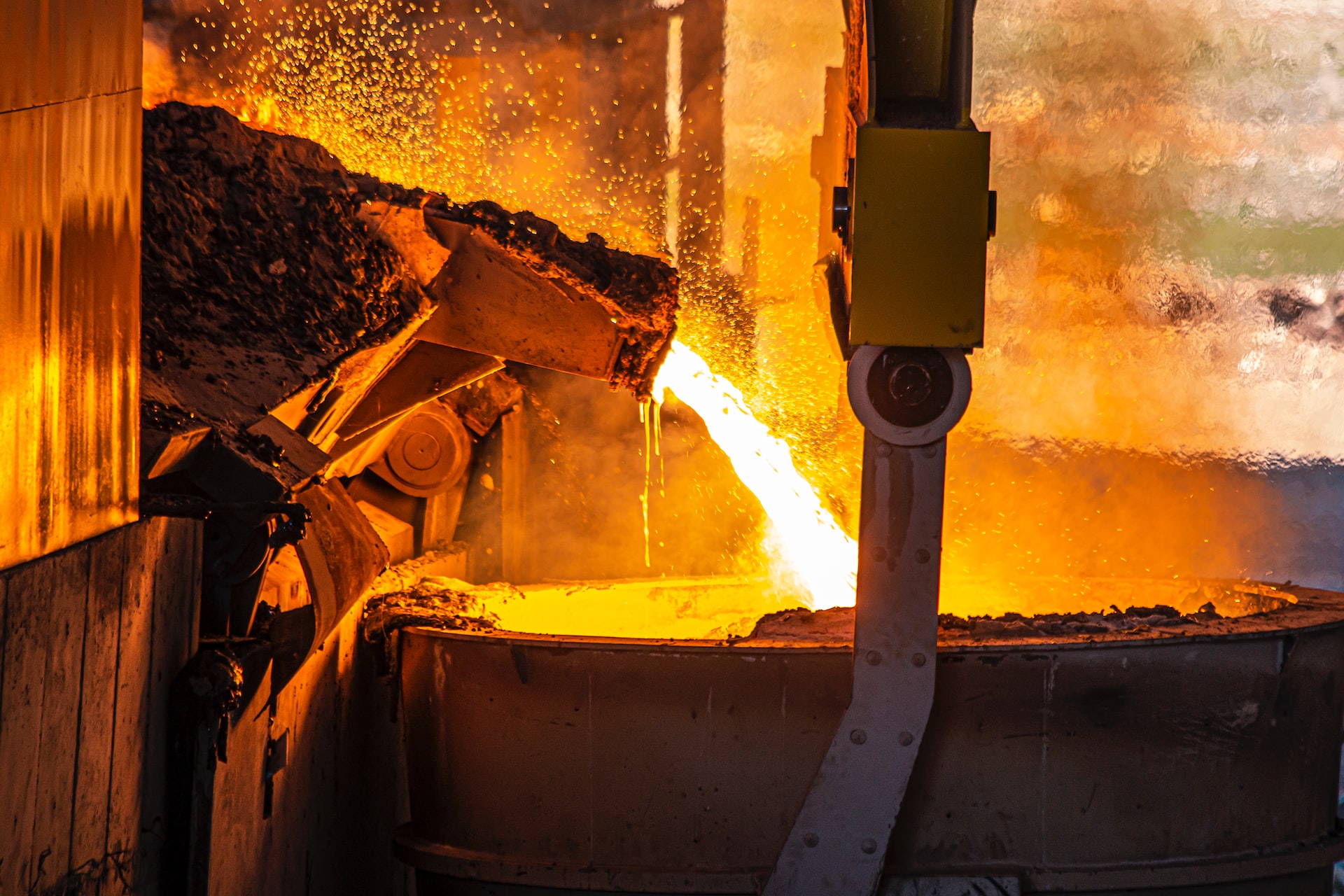
German crude steel production is expected to drop 4% year on year in 2023 to 35.5 million mt, the lowest production level recorded since 2009, German steel federation WV Stahl said Dec. 19. Crude steel production stood at 32.7 million mt in 2009.
The energy-intensive electric arc furnace-based production has been affected the most, expected to drop to 10.1 million mt in 2023, a drop of 11% on the year. The production route has seen consecutive drops for 21 months.
The construction industry has been subdued with Germany’s rising inflation holding investments back. Long steel used in the construction industry is produced via EAF-based production.
According to latest available detailed data from October, steel production via EAF Electric Arc Furnace route fell by 20.9% in October to 799,000 mt year on year, and by 12.9% year to date to 8.4 million mt compared with the same period in 2022. Crude steel production via Blast Furnace route decreased by 3.1% last month to 2.08 million mt year on year and by 0.2% to 21.70 million mt from January to October compared with the same period a year before.
Platts daily price for domestic produced hot-rolled coil, predominantly produced via blast furnace, was assessed at Eur685/mt EXW Ruhr Dec. 18, down Eur5/mt on the day following some positive price movement in the fourth quarter. The weekly Platts rebar assessment was last assessed at Eur620/mt EXW Northwest Europe, stable on the week. Rebar, which is produced via EAF-production, has seen subdued prices over the course of this year between Eur590-620/mt EXW, levels last seen in 2020.
“Steel production is currently in free fall,” said Kerstin Maria Rippel, managing director of WV Stahl, adding that the German government should be working on providing “affordable” energy prices.
Earlier in October, the World Steel Association cut its forecast for steel demand growth in 2023 by 0.5 percentage point to 1.8%, saying the global economic outlook has worsened, but it raised its forecast for 2024 by 0.2 point to 1.9%.

US, EU extend metal duty exemptions to 2025 as GASSA talks continue
Author Nick Lazzaro
The US and EU will extend the suspensions of their respective tariffs and retaliatory tariffs involving steel, aluminum and other goods beyond January 2024 after agreeing to continue work on a larger trade deal that was expected to be finalized this year, the governments said Dec. 19.
The EU will continue to pause its retaliatory tariffs until March 31, 2025. Meanwhile, the US plans to officially extend the timeline of its duty-free quota program on EU metal imports in the coming days.
The dual moves will provide the governments additional time to reach a more comprehensive trade agreement, known as the Global Arrangement on Sustainable Steel and Aluminum, or GASSA, to address both carbon emissions and global overcapacity in the steel and aluminum industries, especially in relation to third-party countries.
“We are giving our importers and exporters the market stability and business confidence to continue to trade smoothly,” Valdis Dombrovskis, the EU’s executive vice president and trade commissioner, said in a statement. “Second, it provides us with the necessary space to continue pursuing the full and permanent removal of 232 tariffs on EU exports, as well as working on addressing global overcapacity and decarbonization of the steel and aluminum industries.”
History of tariffs
The US introduced a 25% tariff on steel imports and a 10% tariff on aluminum imports from most countries in 2018 under Section 232 of the Trade Expansion Act, a provision that allows tariffs for national security purposes. In response, the EU imposed what it called “rebalancing tariffs” on various US goods.
The US has since repealed or modified the metal tariffs for many of its trade allies. In 2021, the US replaced the 232 tariffs with a tariff-rate quota scheme for metal imports from the EU that would remove the duties for certain volumes of shipments. In turn, the EU suspended its rebalancing tariffs.
The dual tariff suspensions were given a provisional deadline of Jan. 1, 2024, with the understanding that the tariffs could resume if the GASSA was not reached. The US and EU ultimately failed to reach an agreement on the GASSA this year.
US Trade Representative Katherine Tai welcomed the EU’s tariff suspension and acknowledged the need to extend the timeframe on the GASSA.
“These are technically complex negotiations, and the United States remains committed to our partnership with the EU and to staying at the table to continue the progress we have made so far,” she said in a separate statement.
“Since we began our negotiations in 2021, two new wars have started and global economic disruptions continue,” she added. “The spirit of cooperation and partnership forged between President Biden and President von der Leyen is embodied in our efforts to address our shared global challenges.”
The US imported about 4 million mt of steel products and 283,000 mt of aluminum products from the EU in 2022, according to US Commerce Department data.
Industry lauds move, but EU groups call to end 232
Industry associations in both the US and EU welcomed the decision to suspend tariff programs and sustain work on the GASSA.
Axel Eggert, director general of the European Steel Association, or EUROFER, said the Dec. 19 announcements allow for continued cooperation to foster trade relations and tackle global industry challenges.
“The [GASSA] framework will need to address global non-market excess capacity and carbon intensity in the steel industry — which are the two existential challenges affecting the sector — through close EU-US policy alignment,” he said in a statement. “A structural, long-lasting solution to the Section 232 dispute will be a natural part of such framework.”
The American Iron and Steel Institute echoed the sentiment expressed by EUROFER.
“AISI continues to support the negotiation of a new international arrangement that will effectively address both non-market excess capacity in steel and the carbon intensity of steel imported from around the world, as these two related issues are critical to the future of both the US and EU steel industries,” AISI president and CEO Kevin Dempsey said in a statement.
However, the mutual tariff suspensions represent a temporary solution, according to Thilo Brodtmann, executive director of the Germany-based Mechanical Engineering Industry Association.
“It is clear that a 15-month extension of the suspension of punitive tariffs will not be enough to improve trade relations between the EU and the US in the long term,” he said. “The industries on both sides of the Atlantic need a clear political signal, especially in view of the upcoming elections in the US and Europe, that the trade barriers for steel and aluminum will be permanently removed and another costly trade dispute can be prevented.”

AISI lauds US/EU extended arrangement on tariff-rate quotas
The American Iron and Steel Institute (AISI) is reacting favorably to news of the latest agreement between the United States and European Union extending US tariff-rate quotas (TRQs) on steel and the EU suspension of its retaliatory tariffs into 2025, Kallanish reports.
In an accord reached this week, the US has agreed to continue suspending Section 232 tariffs on EU steel and aluminium in exchange for the EU suspension of its retaliatory tariffs through 31 March 2025 (see separate story).
“AISI welcomes the agreement by the US and EU to extend the steel TRQs and the suspension of retaliatory tariffs to allow for further negotiations toward the proposed Global Arrangement on Sustainable Steel and Aluminum,” says AISI ceo Kevin Dempsey.
He adds: “AISI continues to support the negotiation of a new international arrangement that will effectively address both non-market excess capacity in steel and the carbon intensity of steel imported from around the world, as these two related issues are critical to the future of both the US and EU steel industries.”
Global Arrangement on Sustainable Steel and Aluminum negotiations were initially set to be finalised by a self-imposed deadline of 31 October or Trump-era Section 232 tariffs would go back into effect 1 January 2024. The discussions resulted in progress, but not a final agreement, and the deadline was extended (see Kallanish passim).
Kristen DiLandro USA

NLMK boosts French coil galvanizing line productivity
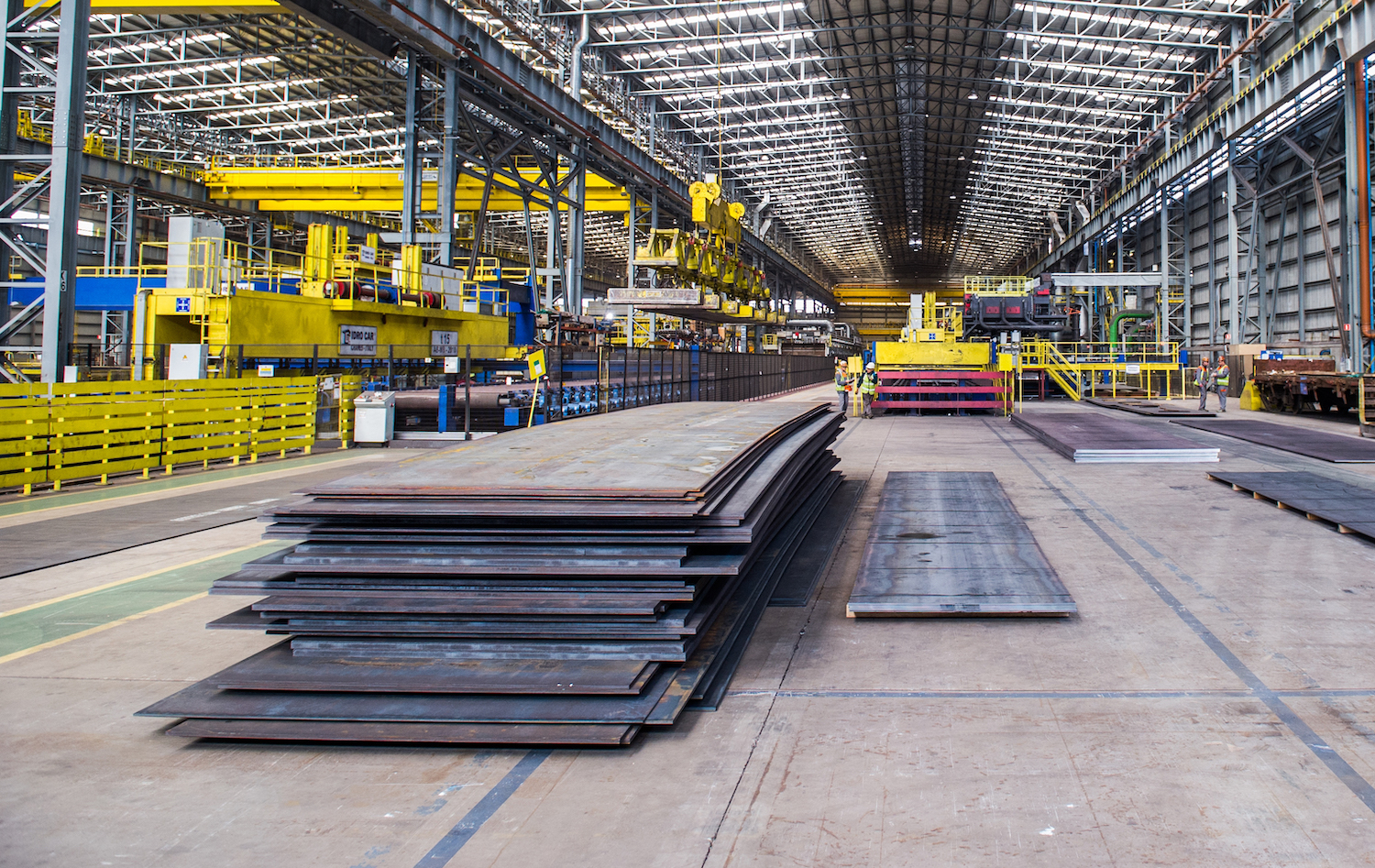
NLMK France is investing in process management at its 400,000 tonnes/year coil galvanizing line in Strasbourg, to boost productivity and prevent human error.
The producer has installed a predictive furnace control solution designed by French equipment maker Fives called “VirtuoTM”. The digital system has been customised according to the furnace features and the need to boost quality as well as limit losses, Fives says.
While modern lines are equipped with gradual temperature rise features, the line in Strasbourg featured a furnace that generated rapid temperature increases over short distances. A better temperature variation control avoids rejects as well as financial losses.
“Conventional control methods proved inadequate due to latencies, downtime, and non-linear process effects … The deployment of VirtuoTM-L began with simple modelling based on physical equations and complex parameters to adjust to the atypical furnace. Later, it transformed into a hybrid model, combining recorded data with automatic coefficient calculations,” Fives tells Kallanish.
“This transformation allowed the furnace to compensate for physical phenomena not captured by the initial model,” it adds.
The adapted solution is now capable of reading the furnace’s response to temperature variations. Thanks to a gloss metre at the furnace’s entrance measuring strip brightness, it allows furnace readjustments to resolve quality issues related to the surface condition of incoming coils.
The customised system has resulted in continuous improvement of product quality, reduction of downgraded coils, and simplification of the operators’ work, NLMK says in a joint statement.
Natalia Capra France
Czech consumption sinks to ten-year low
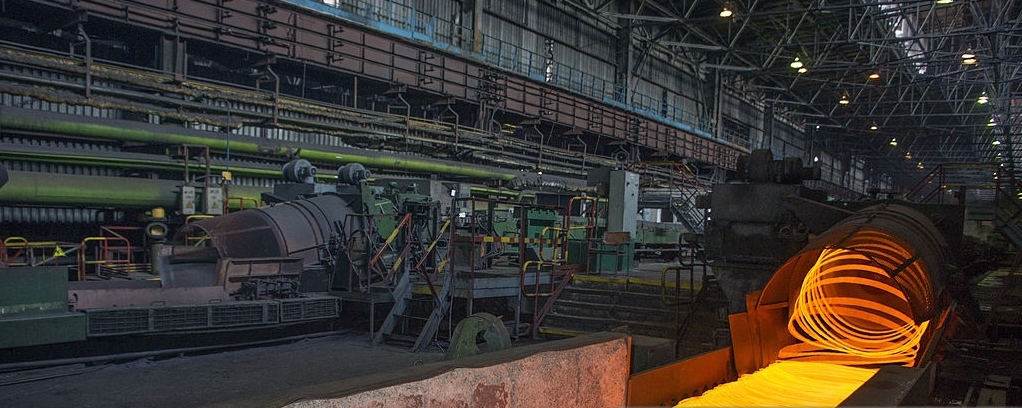
Czech apparent steel consumption sunk to a ten-year low in the third quarter of 1.37 million tonnes, taking nine-month consumption down by 700,000 tonnes on-year to 4.4mt, says Czech and Slovak steel association Steel Union. Nine-month crude steel output dropped 21% to 2.64mt.
Although nine-month output of all product categories fell, long products were hit the hardest, with production dropping 27% on-year to 1.52mt, while flats and pipe fell 3% and 9.5% respectively to 720,000t and 263,000t. Overall rolled steel output fell 19% to 2.51mt. Pig iron output fell 20% to 2.16mt.
This is attributed to the ongoing crisis in the construction industry, not only in the Czech Republic, but also in neighbouring countries, especially Germany. “The situation has not been normal for a few years, so it is very difficult to predict what will happen next. The construction industry is not in order here, the situation in Germany is not in order. I don’t expect a quick turn for the better, rather sometime in the middle of next year,” Steel Union chairman Daniel Urban says in a note seen by Kallanish.
Czech steel exports also fell in Q3, to 842,000t, their lowest quarterly level since the 2009 crisis. Imports, however, inched up slightly to 1.52mt.
Adam Smith Poland

European Commission approves Stahl-Holding-Saar decarbonisation state aid
The European Commission has approved the €2.6 billion ($2.8 billion) in German state aid to be provided to Stahl-Holding-Saar (SHS) for its transformation to low-emission steelmaking.
Plate maker Dillinger Hütte and SBQ maker Saarstahl, coming under SHS, started planning earlier this year for the construction of a direct reduction plant and two electric arc furnaces at their sites in Dillingen and Völklingen (see Kallanish passim). They currently operate a combined two blast furnaces and five basic oxygen converters.
Natural gas, initially used in the new DRI plant, will gradually be phased out of the steel production processes. Ultimately, the new installation will operate using mainly low-carbon and renewable hydrogen.
SHS intends to organise a competitive tendering process to select renewable hydrogen suppliers. The successful bidders will install electrolysers near SHS’s facilities, thereby kickstarting the development of a renewable hydrogen value chain in the Saarland region, the Commission says. At a later stage, SHS expects to be connected to the German hydrogen network, which should result in access to larger and cheaper volumes of hydrogen.
The group is targeting production of up to 3.5 million tonnes/year of green steel starting in 2027/2028. The public funding that has now been announced is essential for the projected investments of around €3.5 billion, SHS said earlier this month.
Adam Smith Poland