


EU confirms duties on Brazil, Iran, Russia HRC
The European Commission has this week concluded its review of the existing hot rolled coil anti-dumping duties on imports from Brazil, Iran and Russia, and confirmed these will remain in place.
The duties were originally imposed in October 2017. These are designed as a fixed duty of between €17.6-96.5/tonne depending on the country and mill of origin. Russia’s Severstal is subject to the lowest level of duty, while MMK has the highest.
Originally, in 2017, duties were also imposed on imports of Ukrainian HRC; the measure was then cancelled following the Russian invasion of Ukraine last year, Kallanish notes.
“The Commission concluded that there were no compelling reasons of Union interest against the continuation of the existing measures on imports of certain hot-rolled flat products of iron, non-alloy or other alloy steel originating in the Federative Republic of Brazil, the Islamic Republic of Iran and the Russian Federation,” the official notice of the European Commission explains.
“Following the imposition of anti-dumping measures against imports of HRC from Brazil, Iran and Russia in 2017, imports from Brazil decreased, while imports from Russia remained overall at similar levels compared to the original investigation. In the case of Iran, imports of HRC into the Union stopped completely in 2020, allowing the Union industry to start recovering from the injurious effects of the dumped imports from the countries concerned,” the notice adds.
Emanuele Norsa Italy


European mills see positive automotive coil contract talks
In the ongoing northwest European annual coil contract negotiations for 2024 with carmakers, automotive suppliers and other OEMs, the first signals of resolution have been heard this week.
Apparently, the tension created by the two sides being far off an agreement has now eased, much to the relief of the mills, who were preparing to come to terms with a price decline of at least €100/tonne. That was the tone heard from various sources on the buyers’ end, who said they would ask for a three-digit y-o-y reduction.
Last year, contracts struck early were heard signed at below €800/t, but many deals closed later would have been above that mark, as the talks occurred during a period of surging spot market prices.
Three digits could of course mean more than a €100 decline, with one manager at a large automotive supplier telling Kallanish last week that “we will enter talks with the proposal of minus €150”.
However, market chatter now tells of the first deal struck between a German carmaker and a mill at a reduction of around €50/t y-o-y, and that same manager says he is quite happy with the outcome. “The carmakers see that they ought to let the mills breathe if they want to keep them as suppliers,” he notes.
Mills are pressured by high input costs, power prices, and a critical lack of demand. Adding to that, they have been dismayed by the other negotiations they are partaking in, with union IG Metall demanding wage increases of 8% for steelworkers.
According to the manager, another big carmaker is eager to have its contracts secured in December still, and possibly with the same conditions as the previous outcome. The other carmaker, too, has lowered its request for a reduction from minus €100 to minus €50-60.
“That would set the trend for all smaller players, who follow the example of the big ones,” the manager says. “Once this happens, the avalanche cannot be stopped any more.”
Christian Koehl Germany

PWO-Gruppe treibt Nachhaltigkeitsstrategie mit dem Einkauf von „Grünstahl“ ab 2026 voran
Die PWO-Gruppe setzt ihre Nachhaltigkeitsstrategie weiter mit hohem Tempo um. Für die Reduzierung der Treibhausgasemissionen (THG-Emissionen) beim Einkauf von Stahl, dem für unser Geschäft bedeutendsten Rohmaterial, haben wir heute mit der Salzgitter Mannesmann Stahlservice GmbH – einem Tochterunternehmen der Salzgitter AG – eine Partnering-Vereinbarung unterzeichnet, um ab 2026 „Grünstahl“ aus Salzgitter zu beziehen. Damit werden wir unseren Kunden künftig eine umweltfreundliche Alternative zu herkömmlich erzeugtem Stahl anbieten können.
Mit dem Transformationsprogramm „SALCOS® – Salzgitter Low CO2 Steelmaking“ wird der Salzgitter-Konzern seine Stahlherstellung schrittweise auf wasserstoffbasierte Verfahren umstellen. Ziel ist eine nahezu CO2-freie Produktion ab 2033. Dabei soll die klassische Hochofenroute durch eine Produktionsroute mittels Direktreduktion und Elektrolichtbogenöfen ersetzt werden.
Jochen Lischer, CFO, unterstreicht: „Die heutige Vereinbarung stellt einen Meilenstein für die Dekarbonisierung unserer Wertschöpfungskette dar. Bis 2030 wollen wir unsere absoluten THG-Emissionen im Scope 3 gegenüber dem Basisjahr 2019 um 28,0 Prozent reduzieren. Der Bezug von „Grünstahl“ der Salzgitter Mannesmann Stahlservice GmbH mit einem um bis zu 95 Prozent geringeren CO2-Fußabdruck in der Produktion wird hierzu positiv beitragen.“
Michael van der Vlist, Geschäftsführer der Salzgitter Mannesmann Stahlservice GmbH ergänzt: „Wir freuen uns, die Zusammenarbeit mit der PWO-Gruppe so zukunftsorientiert auszuweiten. Die Transformation hin zu einer klimaneutralen Wirtschaft kann nur in einem Netzwerk starker Partner gelingen, die dafür sorgen, dass der Markt für CO2-reduzierte Stahlprodukte stetig wächst.“
Source: salzgitter-ssc.de
GHG emissions data from all three scopes needs to be collected and measured, said experts
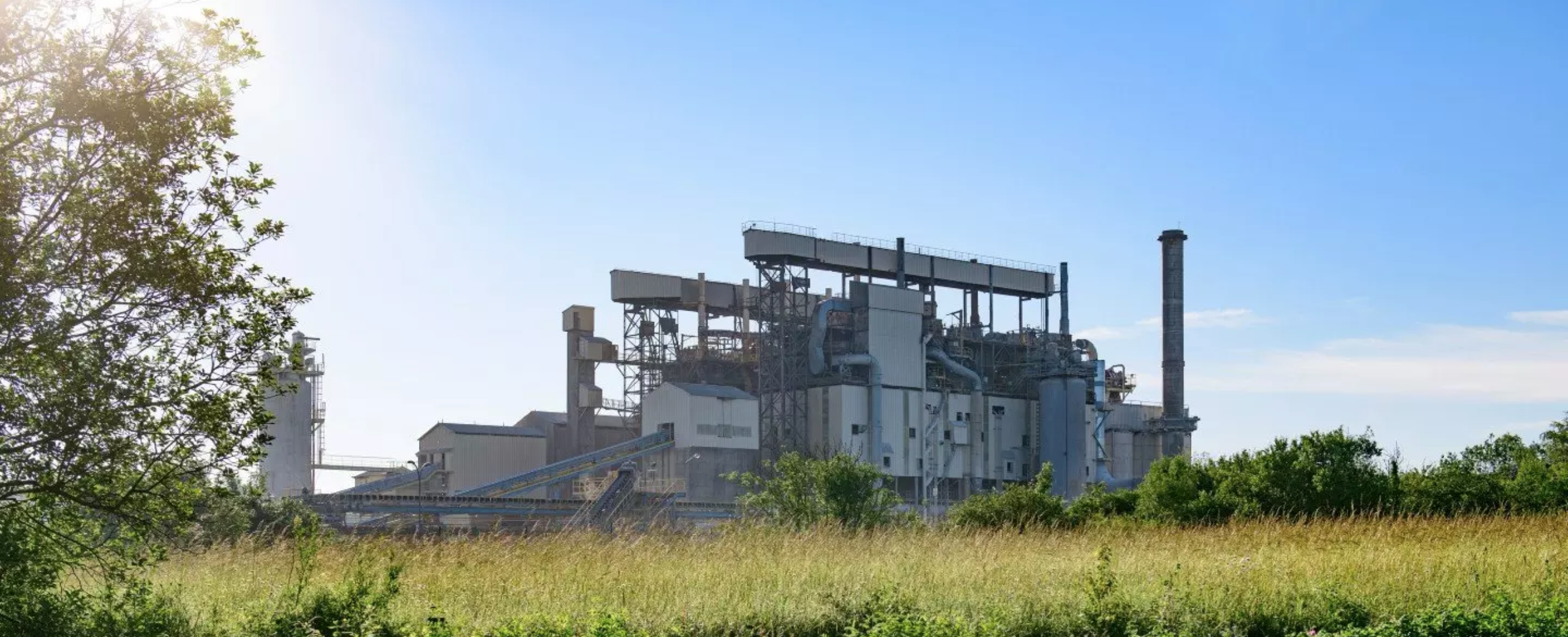
Collecting and measuring emissions data from all three scopes are crucial in the investigation of greenhouse gas (GHG) emissions intensities in the US steel and aluminum industries, witnesses testified at a hearing at the US International Trade Commission (ITC)
“It is critical that the US International Trade Commission (ITC) collect scope 1, 2 and 3 data on all aluminum and steel products covered by [section] 232 on a cradle-to-gate basis,” Jeff Hansen, vice president of human resources, health and safety, and environmental sustainability at Steel Dynamics Inc, said at the hearing in Washington, DC.
Fellow steel producer Nucor echoed the sentiment, highlighting emissions generated from iron ore mining.
“The Commission should measure actual Scope 1, Scope 2 and significant Scope 3 emissions. Measuring all emissions associated with iron ore mining is critical. Mining-related emissions — like pelletizing — are a significant portion of the total embodied emissions of a steel product. Plus, mining is a key difference between integrated producers using blast furnaces and [electric-arc furnace] producers,” David Miracle, Nucor general manager of environmental affairs, testified.
The steelmaker established new carbon-intensity targets on November 13 to lower greenhouse gas (GHG) emissions by accelerating and expanding its scope of decarbonization.
Emissions are divided into three scopes: those directly produced by company (Scope 1), those indirectly generated from electricity or steam energy (Scope 2) and those from upstream and downstream partners in the supply chain (Scope 3). Scope 3 emissions have long been the most difficult to quantify, since they are usually emitted by third parties.
To combat that, domestic steelmakers have been focusing on collaborating with suppliers of scrap, iron, alloys and coal that are significant sources of GHGs to cut emissions, sources told Fastmarkets in September 2022.
Need for product-specific emissions accounting
Witnesses at the hearing also expressed a need for emissions to be measured at the product category level, pointing out limitations to current data sources.
Accounting the emissions intensity on a product-specific basis is needed to implement a carbon tariff system, Kevin Dempsey, president and chief executive officer the American Iron and Steel Institute (AISI), said.
“This is essential because there can be significant differences in emissions intensity across product types. The form and function of steel products vary widely and demand different mixes of raw material inputs — especially the percentage of ferrous scrap used, which directly correlate to emissions intensity,” Dempsey said.
There are restrictions to current emissions methodologies, steel producers said, highlighting the Environmental Protection Agency’s (EPA) Greenhouse Gas Reporting Program methodology.
The EPA method requires certain companies and sites located within the US that are significant emitters of greenhouse gasses to report their Scope 1 emissions, Jeffrey Becker, US Steel’s research consultant for sustainability and strategy, said at the hearing.
Becker added that the method can lead to “apples-to-oranges comparisons” among domestic mills and even within the same company.
“In the case of EPA’s mandatory reporting, it is not a product-specific intensity reporting methodology, and it does not include Scope 2 and material upstream Scope 3 data,” Patrick Bloom, VP of government relations at Cleveland-Cliffs, said.
Bloom explained: “Both EPA’s Scope 1 reporting and many voluntary emissions reporting methodologies aggregate emissions at the facility-level or company-level, and do not establish product category-level emissions figures.”
Specifically, accounting for the emissions from stainless steel products was highlighted, with witnesses explaining a disparity in emissions intensity compared with that of carbon steel.
The difference — due to the addition of ferro-alloys to obtain the preferred corrosion resistance and other physical properties — makes it essential for a separate accounting for stainless steel products, Dempsey said.
Camilla Kaplin, stainless steel producer Outokumpu’s head of sustainability data, further explained the significance of accounting for stainless steel.
“Stainless steel needs metallic alloying agents such as nickel and chromium to impart its essential characteristics. Failure to account for the emissions embodied in these materials, whether or not their extraction and processing is undertaken by the steel producer, would ignore up to two-thirds of a stainless steel product’s embodied emissions.”
By Alesha Alkaff

European HRC buyers question further price rises
Fastmarkets calculated its daily steel hot-rolled coil index domestic, exw Northern Europe at €686.50 ($738.78) per tonne on December 12, up by only €0.50 per tonne from €686.00 per tonne on the previous day.
The index was up by €9.00 per tonne week on week and by €33.83 per tonne month on month.
Offer prices for February-delivery coil were heard at €700-720 per tonne ex-works from integrated mills in the region and at €685 per tonne ex-works from a reroller.
But sources said that mills in Germany were still selling only limited tonnages of HRC at €690-695 per tonne ex-works to fill order books.
Alternatively, some integrated mills were reportedly fully booked until March and therefore had a limited room for negotiations, not accepting bids below €700 per tonne ex-works.
Tradeable values were reported by buyers at €680-700 per tonne ex-works.
“Some mills in the north are fully booked until March, mainly because of output limitations,” a trading source said.
Market sources believe that further price rises would only be possible if domestic supply remains limited.
“Demand [from the end-user side] is not rising, so the major driver for prices is reduced supply. If we see blast-furnaces reignited in Q1, the uptrend most likely won’t continue into Q2,” a steel service center source in Germany said.
There was market chatter about new offers for February-March delivery HRC from one of the leading European steelmakers at €750 per tonne delivered. Notably, several sources in Central Europe have reported receiving such offers, while buyers in the Southern and Northern Europe did not confirm receiving new offers yet.
Meanwhile, Fastmarkets calculated its daily steel hot-rolled coil index domestic, exw Italy at €672.29 per tonne on December 12, up by €3.96 per tonne from €668.33 per tonne on the previous day.
The index was up by €7.29 per tonne week on week and by €42.29 per tonne month on month.
Trading was also slowing down ahead of a holiday in Italy, with very little activity reported in the spot market recently.
“Buyers have mostly secured volumes for January and are not in a hurry for now,” a trader in the nation said.
Offers for February-delivery HRC from local suppliers were heard at €720 per tonne delivered (around €705 per tonne ex-works).
Meanwhile, buyers’ estimates of achievable prices were heard at no higher than €660-680 per tonne ex-works.
Slow consumption was also one of the key concerns for the Italian market. Notably, sources pointed out that reduced supply, caused by output cuts and uncompetitive imports, was supporting the bullish trend while real demand was quite slow.
“Everyone is only buying hand-to-mouth. People are not sure if the current prices can be sustained next year,” a buyer told Fastmarkets.
Import HRC offers were stable on December 12 from a day earlier, while long lead times and safeguards-related risks were limiting interest for overseas coil.
At the same time, prices for overseas HRC also rose with some suppliers making offers in line with European mills, while lead times were between three and four months for imports.
From Asian suppliers, offers for February shipment were heard at €640-650 per tonne CFR. But sources said that Vietnam-origin coil could be booked at €635 per tonne CFR.
Offers of February-shipment India-origin HRC were heard at €650-655 per tonne CFR.
February-shipment HRC from Turkey was reported to be available to Italy at €670-680 per tonne CFR, including anti-dumping duties.
Published by: Julia Bolotova

Thyssenkrupp starts slab caster, HRC mill construction
Thyssenkrupp Steel has started construction of the new slab caster and hot strip mill at its Bruckhausen site in Duisburg, Germany.
The steelmaker held a cornerstone ceremony that marked the start of on-site pre-assembly work for both continuous caster No. 4 and hot strip mill No. 4. The Bruckhausen project will separate the existing casting and rolling line into a revamped caster and a modernised hot strip mill, Kallanish learns from the technology supplier, Primetals Technologies.
The existing integrated mill can no longer meet the demanding needs of the automotive industry as well as other rapidly growing markets, Primetals explains. Separating the casting and rolling sections will ensure highly effective production of high-strength steel grades and premium end products, it adds.
“Our rebuilt facilities will enable us to meet the changing needs of the market, e.g. the demand for higher strength steel grades, lower tolerances, and optimised surfaces,” notes tk Steel chief operating officer Heike Denecke-Arnold.
In 2021, thyssenkrupp Steel placed a major order with Primetals Technologies for a reversing
cold mill, the hot-strip mill, and two thick slab continuous casters. The projects are scheduled to be completed over the course of 2025.
The ceremony for the caster and hot strip mill took place only several days after the inauguration event for the two-stand reversing cold mill at tk Steel’s Bochum site, also supplied by Primetals.
Christian Koehl Germany

EU recyclers voice concern over free ETS allocations
European recyclers have voiced in an open letter their concerns regarding the proposed review of the free allocation regulation (FAR) for the European Emissions Trading System (ETS) published last week. The letter was signed by a number of climate action organisations and by German recyclers association BDSV.
The letter criticises the proposal to give free ETS allocations to carbon-intensive feedstocks used in iron ore processing. As a consequence, the signatories of the letter believe that the review would make it “economically disadvantageous to include more ferrous scrap in the steelmaking processes”.
The draft of the FAR addresses free allocations for the period 2026-2030, when the new Carbon Border Adjustment Mechanism (CBAM) will be fully operational. The way the FAR review is designed, primary steelmakers, producing from iron ore, will receive more free allocations in absolute terms than secondary producers – scrap-based EAFs.
“To align the FAR review with EU climate and circularity goals and to maintain consistency with the ETS Directive text, the EC must adopt a methodology for free allocation that is independent of feedstocks and that shifts from a process-based to a product-based approach (treating the emissions of all steel producers equally). This would help establish a level playing field and promote fair competition across the different steel manufacturing routes, while also encouraging the substitution of transformed ore with ferrous scrap in existing steel plants,” the letter explains.
The FAR review was published last week and it is now open for public consultation until the beginning of January. The European Commission aims to adopt the new regulation by April 2024, Kallanish understands.
Emanuele Norsa Italy
Germany offers €2.6 billion for Saarland green steelmaking
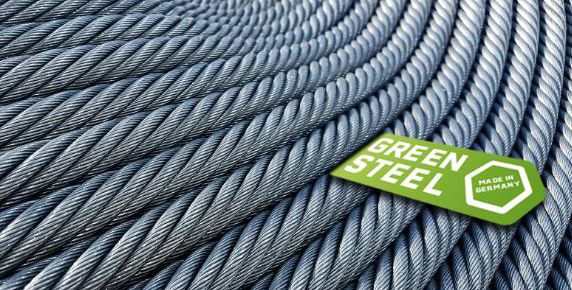
German economy minister Robert Habeck announced planned funding this week to the tune of €2.6 billion ($2.8 billion) for the conversion of steel mills in Saarland state towards zero-emission steelmaking.
During a visit to the state, Habeck made the pledge in the presence of state minister president Anke Rehlinger and mill representatives. The grant would be bestowed to the state’s three main operations – plate maker Dillinger Hütte, SBQ maker Saarstahl, and their joint pig iron plant Rogesa. All three operations are encompassed under the roof of Staar-Holding Saar (SHS). The minister’s pledge will still be subject to approval by EU competition authorities, Kallanish understands.
“This is momentous news for Saarland’s steel industry. It enables us to make a historic transition in production,” says Stefan Rauber, chairman of SHS as well as chief executive of Dillinger and Saarstahl.
The transformation project is aiming for climate neutrality by 2045. To achieve this, Dillinger and Saarstahl are focused on the use of hydrogen, on electric steel production and on recycling steel scrap. Taking the funding conditions into account, planning began this year for construction of a direct reduction plant and two electric arc furnaces at the mills’ sites in Dillingen and Völklingen.
The group targets production of up to 3.5 million tonnes/year of green steel starting in 2027/2028. The public funding that has now been announced is essential for the projected investments of around €3.5 billion, SHS says.
Christian Koehl Germany

Italian CRC, HDG tick higher
Italian cold rolled and hot-dipped galvanised coil prices are continuing to tick up in both transactions and mill offers. Demand remains dynamic, although slightly quieter as the Christmas holiday break approaches and only ten days of work are left before winter stoppages start, market sources tell Kallanish.
Some sellers are still quoting end-February delivery, but others have filled order books quickly for the first two months of the year and are now quoting March lead times. The steep and quick transaction price increases registered in Europe for hot rolled coil, for which asking prices are now at €690-720/tonne ($745-777) delivered in Italy, have caused HDG and CRC to soar. Asking prices for both products are now at €800/t base ex-works.
Demand and higher sales volumes are also back for CRC, which is seeing limited availability. Some import transactions from Asian countries took place at €710-720/t cfr Italy. HDG imports remain unattractive and European mills are the only source of procurement.
Sellers report a good level of demand and prices also elsewhere in Europe, such as in the east of the continent and the Balkans. Italian HDG is being sold in Europe at €810-820/t base delivered. Domestic HDG prices are now at €780-800/t base ex-works. CRC is lagging behind in contracts, hovering at €760-780/t, sources suggest.
Natalia Capra France

HRC producers in Europe target higher prices for Q1-rolling coil despite limited demand
Trading remained quiet in the European HRC market with buyers holding back and making mainly hand-to-mouth purchases.
Offers of February-delivery coil from integrated producers in northern Europe were heard at €710-730 ($764-785) per tonne ex-works, with “very limited room for negotiations,” sources said.
“Mills in Europe are keen to raise prices at €700 [per tonne ex-works] minimum, but this increase is rather cost and supply driven; demand remains slow,” a trading source in the region said.
An offer of January-rolling HRC from a re-roller in the region was heard at €685 per tonne ex-works.
Tradeable values were reported by buyers at €680-695 per tonne ex-works.
Fastmarkets calculated its daily steel HRC index, domestic, exw Northern Europe at €686.00 per tonne on Monday, up by €0.58 per tonne from €685.42 per tonne on December 8.
The index was up by €9.33 per tonne week on week and by €33.33 per tonne month on month.
Most sources agreed there still was room for price upticks because availability in the market was reduced due to output cuts and because mills had good order books.
“It is likely that another €20-per-tonne increase could be achieved for the first-quarter-rolling coil, simply because buying options are quite limited at the moment,” a steel service center in Germany said.
But sources questioned the sustainability of the uptrend into late first quarter due to expected restarts of blast-furnace operations at some European mills in the first quarter of 2024.
Fastmarkets calculated its daily steel HRC index, domestic, exw Italy at €668.33 per tonne on Monday, up by €2.91 per tonne from €665.42 per tonne on Friday.
The Italian index was down by €1.67 per tonne week on week but up by €38.33 per tonne month on month.
The Italian market was quiet after a long weekend.
Offers for February-delivery HRC from local suppliers were heard at €720 per tonne delivered (around €705 per tonne ex-works).
This compares with offers and transactions for January-delivery coil in the nation at €680 per tonne delivered (€660-665 per tonne ex-works).
Several buyers suggested that €700-710 (€685-695per tonne ex-works) could be achieved for February-delivery HRC in the nation due to limited supply.
“Steel service centers and distributors are still late on passing the increase of coils to end-users due to low real consumption. So they are trying to negotiate slightly lower prices [for HRC] with mills,” a trader in the nation said.
Meanwhile, prices for overseas HRC also rose with some suppliers making offers in line with European mills, while lead times were between three and four months for imports.
Offers of February-shipment HRC of India origin were heard at €650-655 per tonne CFR.
January-February-shipment HRC from Turkey was reported to be available to Italy at €670-680 per tonne CFR, including anti-dumping duties.
From Asian suppliers, offers for February shipment were heard at €640-650 per tonne CFR.
Published by: Julia Bolotova