


Lhyfe eyes steel collaboration, hydrogen DRI scale-up
French hydrogen producer Lhyfe is in talks with steelmakers in Europe for possible collaborations and hydrogen production plant development, head of the industry division Frederic Naudi tells Kallanish.
In the short term, the firm aims to switch from grey to green H2 in heat treatment, as well as the annealing process where grey H2 is already used in limited quantities. The company is also targeting the use of hydrogen in reheating and electric arc furnaces. The challenge is to “test and prepare the ground for this transition”, including scaling up both H2 production and renewable energy procurement. Lhyfe is currently testing the use of hydrogen in high volumes for direct reduced iron plants.
As storage and transport technology would make costs rise, and DRI and EAFs require high volumes of hydrogen, Naudi believes the best option is “on site supply”. This means building dedicated production plants close to the equipment they will feed.
“We need high-capacity production plants in hundreds of megawatts and that’s what we are working on, not only on possible steel industry applications but also on other sectors such as chemicals. The challenge is now to implement mega units,” Naudi explains. He adds that the company is collaborating with electrolyser producers, with the aim of building new, larger equipment capable of guaranteeing industry supply. It is also boosting renewable energy supply security.
“We need to have extra capacity of [energy] supply in order to have … maximum availability … but for that, we need to get this energy from further away, a longer distance, which is something that will get more and more complicated in the future, because to qualify as green energy it needs to be close to the user. Maximising the green energy in hydrogen production is the challenge,” Naudi observes.
Lhyfe is not importing renewable sources today as it manages to satisfy its needs locally, “but as the projects become larger the issue will be on the table and it is going to be difficult to source green energy from countries outside Europe,” he says. Procuring an energy mix including low-carbon nuclear sources, abundant in France, is not an option for the company, which is focusing on 100% green power.
“But we are open to that in case of impossibility to get hold of renewable sources … If we put together all the industry sectors to supply in Europe, a huge amount of clean energy will be required in the future. The mix between low-carbon and renewable energy will probably exist. If there is such a mix and if there are different actors in the sector, our strategy is to stick with the green part,” Naudi notes.
The executive is convinced that hydrogen-based DRI is the best option for steel industry decarbonisation. Switching from natural gas to hydrogen feed in annealing furnaces, meanwhile, will reduce the amount of hydrogen needed thanks to oxygen treatment, Naudi says.
“An electrolyser’s green hydrogen processing produces large amount of oxygen – for 1kg of hydrogen we produce 8kg of oxygen … When you mix them in the combustion, performing an oxy-combustion, you reduce the amount of hydrogen you need, that is why the amount of hydrogen produced is not the same as gas because we improve the combustion by using oxygen,” Naudi explains.
By 2030, hydrogen demand from industry will outstrip supply. The sector needs time and investment to build European gigafactories for electrolysers and train new skills. Naudi believes it is only a matter of time before European players scale up supply and see a future supply and demand balance.
“We are trying to do as much as possible at the maximum speed to sort all the current constraints,” he notes. Lhyfe plans to decrease green H2 prices by scaling up technology. At present, the company is producing and selling H2 at competitive prices thanks to French subsidies, which are designed to fill the gap between green H2 and fossil-fuel hydrogen prices. By scaling up production, in time, costs of electrolysers and components will reduce, making green hydrogen competitive.
A start-up created in 2017 with a presence in 11 countries and looking to expand, the French hydrogen firm is involved in 93 projects – 20 of which are at an advanced stage of development. Aiming to be one of the leaders in green hydrogen production in Europe, the company is targeting a total installed capacity of 55MW in 2024, 200MW in 2026 and over 3GW by 2030.
Natalia Capra France


Beltrame raises merchant bar prices in Europe
Italian merchant bar maker Beltrame is raising its offers in all European countries by €30/tonne ($32) effective this week, a source close to the company confirms to Kallanish.
The steelmaker is said to have enough orders until the end of the year from European countries and sees some demand dynamism across the continent.
The increases are in line with high processing costs, including the shortages of and price hikes for scrap, whose prices are forecast to continue to increase in December.
Merchant bar stocks throughout Europe are medium-low and customers are in need of purchasing for year-end delivery, for book-keeping reasons.
With scrap forecast to continue to increase, the steelmaker is considering a second step of hikes for merchant bar for January delivery, Kallanish notes.
Natalia Capra France

European HRC buyers cautious with bookings, but mills remain bullish
The pace of restocking was quite slow in the spot market, with buyers seen unwilling to commit to big tonnages.
“Buyers are still unsure what will happen with prices, so they are very careful about buying for stock,” a steel service center source in Northern Europe told Fastmarkets.
Deals for German HRC with six- to eight-week delivery were done at €650-660 ($710-721) per tonne ex-works, sources said, while offers for similar material from an integrated mill in Northern Europe were heard at €660-680 per tonne ex-works.
For first-quarter production, some mills are looking to increase prices further, sources said, with price indications heard at a minimum of €700 per tonne ex-works.
“The current price rises are cost-driven, supported by a revival in apparent steel demand amid lower supplies. But consumption is still weak, so any new rises [would be] questionable,” a buyer source told Fastmarkets.
Producers negotiating long-term contracts with end users for the first half of 2024 were said to be looking for €750 per tonne for HRC and €850 per tonne for hot-dip galvanized (HDG) coil – in line with flat steel contracts for the second half of 2023.
“Mills are unwilling to drop prices in the spot market just two weeks after they announced price rises, especially while they negotiate with the automotive sector,” a trader source in German told Fastmarkets.
“We will see the outcome of negotiations closer to mid-December,” the source added.
Several buyer sources told Fastmarkets that they planned to restock for February delivery in mid-December because they expected to have a “more clear market picture by that time.”
Fastmarkets calculated its daily steel HRC index, domestic, exw Northern Europe at €656.25 ($717.19) per tonne on Tuesday, up by €1.25 per tonne from €655.00 per tonne on Monday.
The index was up by €3.25 per tonne week on week and by €43.12 per tonne month on month.
In Southern Europe, Fastmarkets calculated its corresponding daily steel HRC index, domestic, exw Italy at €635.00 per tonne on Tuesday, unchanged from Monday.
But the index was up by €5.00 per tonne week on week and by €38.33 per tonne month on month.
For January-February delivery, Italian mills plan to increase offers by another €40-50 per tonne, with price ideas voiced at €660-680 per tonne ex-works, sources said.
In contrast, market participants told Fastmarkets that the tradable value was about €630-640 per tonne ex-works on Tuesday.
Market activity in Italy was quite slow on Tuesday due to still-weak real steel demand, sources said.
“Consumption is still weak, but prices [for HRC] in November still increased due to restocking production cuts at mills. The question is whether the uptrend will stick in Q1 [2024],” a steel service center source in Italy said.
Import offers were also moving up, with January shipment Asia-origin coil on offer to Italy at €620-640 per tonne CFR.
And Indian HRC was on offer in Italy at €640 per tonne CFR.


Turkish steel distributor Ozkanlar enters EV production sector
Ozkan said Nov. 19 that the company’s first mini commercial electric vehicle, which will have a 19.2 KWh lithium iron phosphate battery, is targeted to be available in the second half of 2024.
Several other Turkish steel companies have also focused on EV production in recent years.
One of the country’s largest steel producers, Habas, is also targeting production of electrical buses at its Manisa facility and hybrid and electrical automobiles at the purchased Honda facility in Gebze, near Istanbul.
Sales of electric vehicles have increased substantially in Turkey recently, climbing by by 890% on the year to 48,883 units in the first 10 months of 2023, since its first domestic EV producer, Togg, launched sales in April.
Platts, part of S&P Global Commodity Insights, last assessed domestic Turkish HRC at $650/mt EXW Nov. 17, up $20/mt on week, amid higher imported scrap pricing.

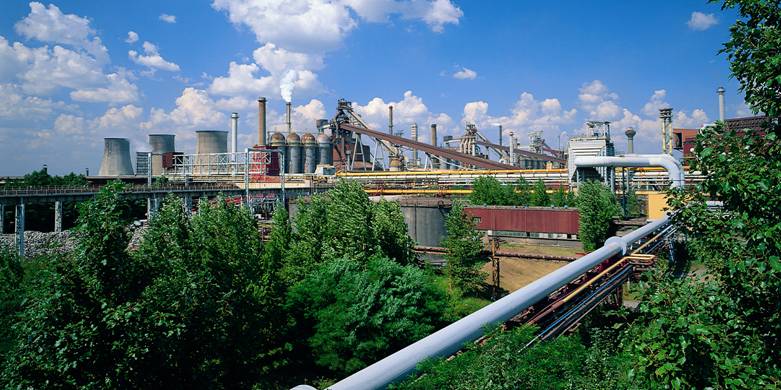
ArcelorMittal Poland says temporarily halting Sosnowiec wire rod mill operations on low demand
ArcelorMittal Poland stopped production at its Sosnowiec wire rod mill from Nov. 18, with plans to restart Nov. 27, due to lackluster demand in the domestic market, a spokesperson told S&P Global Commodity Insights Nov. 20.
The decision has been taken “following in-depth analyses of all available options,” by AM Poland, the spokesperson said, mentioning a 17% year-on-year drop in apparent steel consumption in Poland, citing the Polish Steel Association.
Sosnowiec is a downstream plant producing wire rod and cold-rolled strip.
According to the European Commission, the Polish economy remains weak, with falling private consumption. Poland’s gross domestic product in 2023 is expected to be only 0.4% and its inflation is projected at 11.1%, though the former is to projected to pick up to 2.7% in 2024 and inflation is expected to fall to 6.2%, the EC said.
European rebar prices reflect the weak economic status of Poland, with prices falling to Eur595/mt base ex-works Ruhr on Nov. 15 from Eur745/mt at the beginning of January, according to Platts’ weekly assessment.
Sources have reported weak demand for some long steel products in Northwest Europe including rebar. Mills have made efforts to raise offers for long steel products but were unsuccessful in achieving desired transaction levels. The Platts assessment of Northwest Europe rebar was down Eur5/mt week on week to Nov. 15 at Eur595/mt ex-works. Platts’ assessment of European medium sections price (category 1, S235 JR) was also down Eur5/mt week on week on Nov. 15 at Eur765/mt delivered.
Sources also reported that the customers might be avoiding restocking activity given weak seasonal demand at the end of the year. Market participants told S&P Global that inventory levels were reportedly low and customers might maintain them at those levels because demand is usually slow as the year ends.

European HRC producers remain bullish despite absence of end-user demand
European hot-rolled coil producers remained bullish Nov. 20 despite the absence of demand from end-users.
“There is no real demand from end-users and they have healthy stocks and can wait up if mills intend to hike prices,” a service-center source said.
According to another source, mills in Northwestern Europe were aiming to hike offers to Eur700/mt in first-quarter 2024, although no offers were heard at that level yet.
A deal for a smaller volume was concluded at Eur650-670/mt ex-works Ruhr with tradable values heard ranging Eur640-670/mt EXW Ruhr.
Platts assessed the price of Northwestern Europe domestic HRC down Eur5/mt from Nov. 17 at Eur660/mt Nov. 20.
In southern Europe, Italian mills were heard aiming to offer at Eur660-670/mt for deliveries in January.
However, dull demand made market participants skeptical about the sustainability of these price levels.
Platts assessed domestic prices for HRC in South Europe stable from Nov. 17 at Eur645/mt EXW Italy on Nov. 20, reflecting tradable values reported at Eur640-650/mt EXW Italy.
Limited demand was seen coming for imported material amid uncertainty prevailing about safeguard quotas in addition to talks about production cuts.
Platts assessed the import price of HRC in South Europe flat from Nov. 17 at Eur630/mt CIF Italy on Nov. 20, reflecting tradable values heard at Eur620-630/mt.
Platts is part of S&P Global Commodity Insights.

Small-tonnage restocking reported in European HRC market
But industry participants remain optimistic for a rebalancing of supply and demand dynamics as a result of production cuts and customer restocking, sources said.
While restocking has increased, customers were not in the market for large tonnages, Fastmarkets heard.
Fastmarkets calculated its daily steel HRC index, domestic, exw Northern Europe at €655.00 ($715.70) per tonne on Monday, down by €2.92 per tonne from €657.92 per tonne on Friday.
The index was down by €3.63 per tonne week on week but up by €42.79 per tonne month on month.
Sources reported an uptick in restocking, but only for small tonnages, they said.
Market participants said they were uncertain about whether the market could support an uptrend in the mid to long term.
“Customers are still unsure if an uptrend is sustainable so they are careful with what they buy for stock,” a trader source told Fastmarkets.
European mills may look to raise offer prices before the Christmas holidays, Fastmarkets heard, despite customer resistance to price rises.
Workable prices were reported by buyers at €650-660 per tonne exw. Meanwhile, a deal was reported by a buyer at €650 per tonne exw.
In Southern Europe, Fastmarkets calculated its corresponding daily steel HRC index, domestic, exw Italy at €635.00 per tonne on Monday, down by €7.92 per tonne from €642.92 per tonne on November 17.
The index was up by €5.00 per tonne week on week and by €38.33 per tonne month on month.
Tradeable values were estimated by buyers at €640-650 per tonne ex-works.
Despite a lack of real activity and demand remaining weak, sources said they expect mills to increase prices by up to €50 per tonne by January 2024.
“Real activity is very weak but we expect an uptrend due to restocking and mill production cuts,” a buyer source said.
Import HRC offers for January shipment were reported to be on offer from India and Turkey to European ports at €630-640 per tonne CFR.
Published by: India-Inés Levy

ArcelorMittal becomes steel powder supplier
ArcelorMittal is entering into the additive manufacturing market (ADM) as a steel powder supplier, the company tells Kallanish. The steelmaker is building an industrial-scale inert gas atomiser in Avilés, in Spain, to produce high-quality steel powders for multiple additive manufacturing technologies.
The output will be supplied by the Group’s new business unit, ArcelorMittal Powders.
“From our facility in Spain, we will offer a range of steel powders tailored to our customers’ needs,” says ArcelorMittal Powders chief executive Colin Hautz. “This technology … not only allows us to think about changes in the design and manufacturing process of many parts and components we use today, but also exploit one of the inherently sustainable characteristics of steel, its recyclability.”
The atomiser, which will produce powders from scrap steel and use renewable energy, is expected to be operational in January. It will have a large batch-size production capability of 200kg to 3 tonnes, and an initial annual capacity of 1000t.
ArcelorMittal’s so-called AdamIQ brand will include 316L, 430L, 17-4PH stainless steel, tool steels (H11, H13, M300) and low alloy steels. Products will be mainly supplied to the aerospace, military, automotive, medical, and energy sectors.
ArcelorMittal Powders will add further steel powder products for customers to test in 2024, the company concludes.
Todor Kirkov Bulgaria
ArcelorMittal produces first ethanol through Belgium-based carbon capture
ArcelorMittal has produced the first industrial ethanol from its capture and utilisation (CCU) Steelanol plant at its Gent facility in Belgium. This month, one of the four bioreactors produced ethanol for the first time and a production ramp-up is scheduled in the coming months, Kallanish notes.
In partnership with LanzaTech, Primetals Technologies and ERM, the steelmaker designed the Steelanol unit, the first of its kind in Europe, to capture carbon-rich waste gases from steelmaking and biologically convert them into advanced ethanol through LanzaTech’s bio-based process.
“LanzaTech’s technology works like a brewery, but instead of yeast consuming sugar, proprietary bacteria known as a biocatalyst consume carbon gas and convert it into essential chemical building blocks such as ethanol,” ArcelorMittal says in a note.
The facility was inaugurated in December 2022, with cold commissioning taking place thereafter (see Kallanish passim). The biocatalyst was then introduced into the plant with a process known as inoculation to grow microorganisms and verify the production of new molecules. The inoculator produced the first samples containing ethanol in June. In November, one of the four bioreactors produced the industrial ethanol. Steelanol has the capacity to produce 80 million litres of ethanol with the potential to reduce annual carbon emissions from the Gent plant by 125,000 tonnes.
ArcelorMittal says it has been awarded funds from different sources to scale up the project, including the European Union’s Horizon 2020 programme and the European Investment Bank.
Natalia Capra France
Bekaert sees market remaining challenging amid slow demand
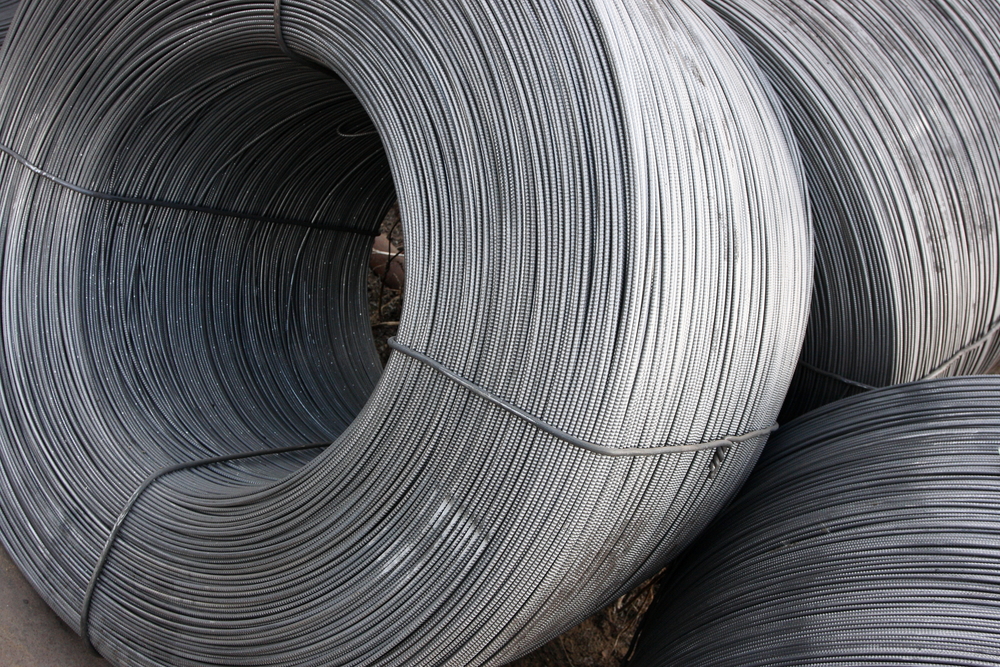
Belgian wire rod maker Bekaert sees the challenging market conditions persisting in most regions into the first quarter of 2024. To weather the slow demand, the group intends to focus on margin growth and cash flow generation., as well as growth opportunities, the firm says in its nine-month earnings report obtained by Kallanish.
In January-September, Bekaert registered a difficult environment in several of its end markets as “uncertainty remains for the financial year 2023”, it says.
Sales decreased by 13% year-on-year to €3.3 billion ($3.6 billion) due to lower prices and volumes, reflecting lower raw material costs and high inflation. For the full year, Bekaert anticipates €4.3 billion in revenue.
“The phasing out of previous wire rod price increases and energy surcharges reduced revenues by approximately €350 million and the lower overall volumes reduced revenues by approximately €180 million in the first nine months,” the report says.
The Steel Wire Solutions segment posted revenue of €912m in the first three quarters of 2023. This represented a 17% decline versus the same period last year due to lower sales prices, negative currency effects, and slow demand in Europe and Latin America, particularly from markets such as construction and agriculture. As demand from the energy and utility markets is proving resilient, Bekaert forecasts some demand growth from this sector in the coming months.
The Specialty division’s revenue also saw a 15% decrease y-o-y to €512m, driven by slower demand, currency impact, lower selling prices and the construction market crisis in Europe.
The disposal of Steel Wire Solutions’ businesses in Chile and Peru is now completed, the company concludes.
Natalia Capra France